Friday, May 22, 2026


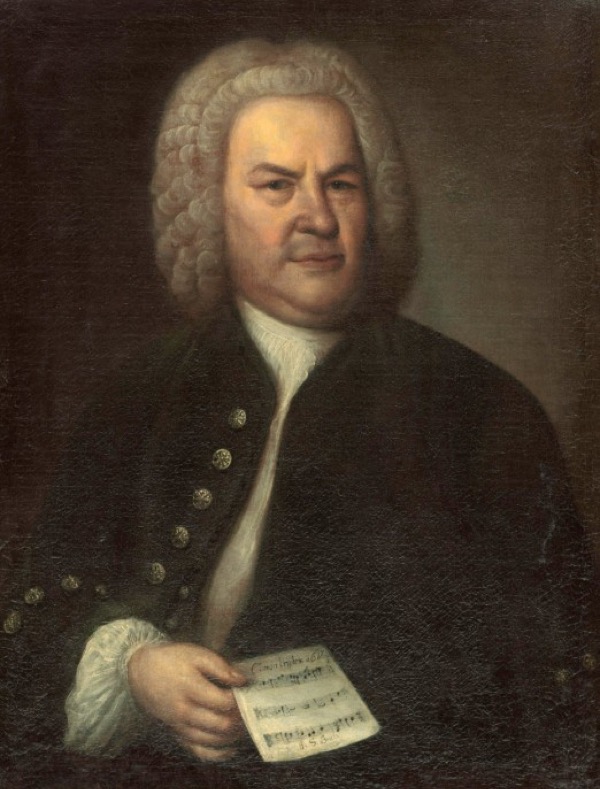
Johann Sebastian Bach

Johann Sebastian Bach

These lost works span categories including sacred and secular cantatas, Passion settings, and instrumental compositions.

Their disappearance can be attributed to various historical factors, including neglect after Bach’s death, the scattering of manuscripts among heirs, wartime losses, and more.

Today, we’re looking at the stories behind these lost Bach masterpieces – and how they might have been lost to time.

What Happened to Bach’s Manuscripts After He Died?
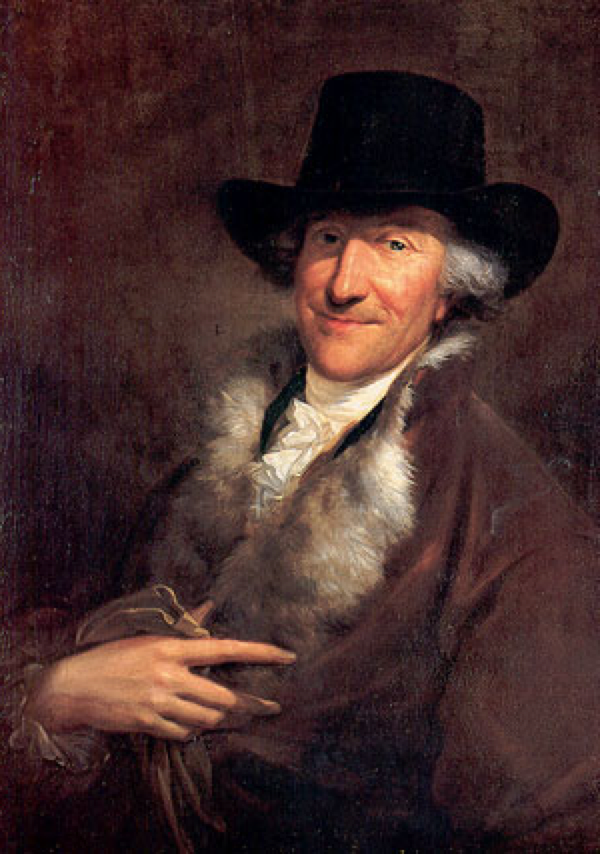
Wilhelm Friedemann Bach

Wilhelm Friedemann Bach

After Bach’s death in 1750, his manuscripts were divided among his family members, especially his widow Anna Magdalena and his sons Wilhelm Friedemann and Carl Philipp Emanuel Bach.

Wilhelm Friedemann sold his father’s scores piecemeal during various periods of financial struggle.

After his death in 1784, the remaining manuscripts were auctioned off to various collectors – including one of his students, Sara Itzig Levy, best-known today for being Felix Mendelssohn‘s great-aunt.

Carl Philipp Emanuel inherited another chunk of his father’s estate: the manuscripts of Bach’s Passions and other major works. He died in 1788, and his collection was passed to his granddaughter.

After she died in 1805, many of the manuscripts were sold off. A large portion was eventually purchased by a musical society and archive founded in Berlin known as the Sing-Akademie.

The Sing-Akademie’s Role In Preserving Bach Manuscripts
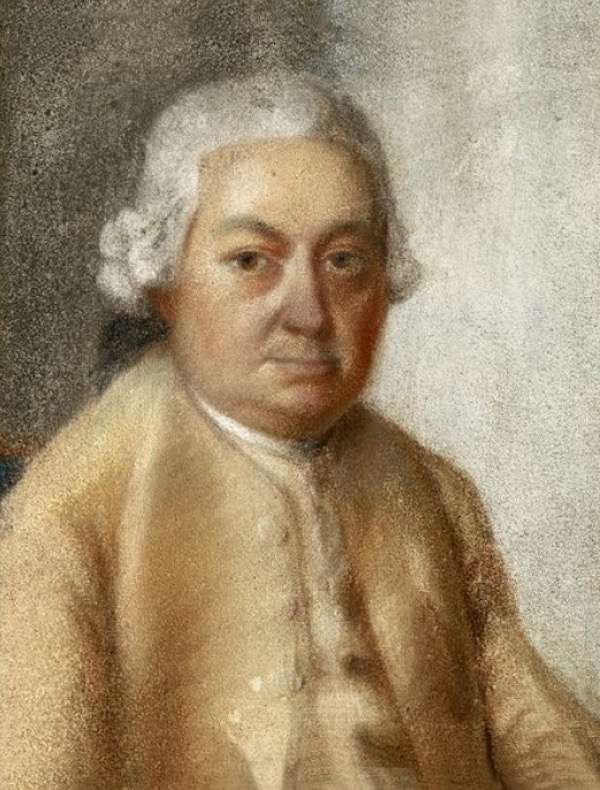
Carl Philipp Emanuel Bach

Carl Philipp Emanuel Bach

In 1800, German composer and conductor Carl Friedrich Zelter became the leader of the Sing-Akademie. His star student, Felix Mendelssohn, became fascinated with the Bach works that were in the musical society collection, as well as the ones that his great-aunt had saved for her own private collection.

Over the generations, wartime upheavals took a toll on Bach’s works.

During World War II, the Berlin Sing-Akademie archives were moved for safekeeping and then seized by the Soviet army.

For decades, it was believed the archives had been lost, but in 1999, they were found in Ukraine intact. The rediscovery of the old Sing-Akademie archives yielded some previously lost Bach works and documents.

Other Bach Rediscoveries
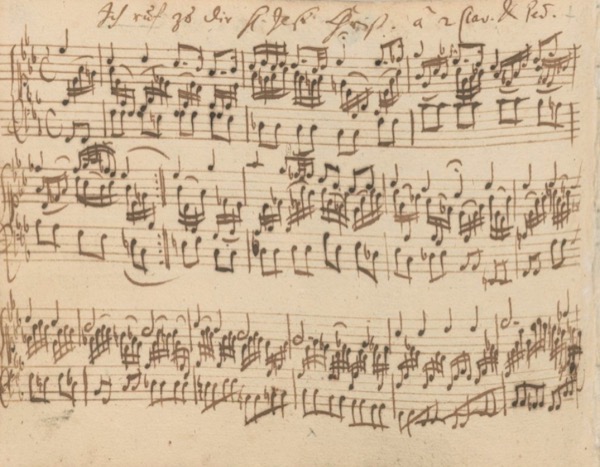
Bach manuscript

Bach manuscript

This isn’t the only place where undiscovered Bach manuscripts have been found, either.

In 1992, Peter Wollny, the present-day director of the Bach Archive in Leipzig, came across two unsigned and undated music manuscripts at the Royal Library of Belgium.

Years later, Wollny discovered that the handwriting in the manuscripts belonged to a student of Bach’s named Salomon Günther John, and that John may have copied them out.

The works – two Ciaconas for organ, likely dating from Bach’s teenage years – were authenticated and were performed for the first time in centuries in November 2025.

The discovery suggests that more lost Bach works might be uncovered someday.   

What Were the Lost Works?

The lost Bach works fall into a few baskets:

  • Sacred cantatas
  • Secular cantatas
  • Passions
  • Instrumental works

Why Are So Many of Bach’s Sacred Cantatas Lost?

Throughout his career, Bach’s job description often included writing sacred cantatas for performance on Sunday services and feast days.

While Bach worked in Leipzig between 1723 and 1750, his responsibilities included composing cantatas.

Carl Philipp Emanuel Bach claimed that he composed five full annual cycles of church cantatas.

Each annual cycle would consist of around 60 cantatas. Five full cycles’ worth would suggest the existence of 300. However, we only know of around 200, meaning around a hundred are presumably missing.

Another contributing factor to the confusion was the fact that Bach frequently (and understandably) reused or adapted parts of older cantatas as part of his newer versions.

After Bach’s death, there were simply too many pieces – and too many heirs – for the cantatas to remain a unified collection, so they were ultimately split up.  

What Happened to Bach’s Secular Cantatas?

Bach also composed numerous secular cantatas, i.e., celebratory works for royal birthdays, weddings, city officials, and the like.

Because they were often written for a single specific occasion, their scores were less likely to be preserved. Sometimes those scores might have been gifted to dedicatees or patrons as gifts.

One example is Bach’s Birthday Cantata for Augustus II (BWV 1156) from 1727. The libretto survives today because it was presented in print to Augustus, but Bach’s music hasn’t survived.

It has been theorised that portions of Bach’s Mass in B minor, dating from 1749, were adapted from this cantata, as pieces of the Mass appear to fit Haupt’s text.

If that theory is true, it means that Bach may have reused secular music in his later sacred music, or vice versa, even decades after the fact.  

Why Are So Many of Bach’s Passions Lost?   

Only two authentic Bach Passions have survived in their entirety: the St. John Passion from 1724 and the St. Matthew Passion from 1727.

We also have the libretto of a third: the St. Mark Passion.

However, Bach’s obituary lists five Passions, suggesting there might be two we don’t know about.

A payment record exists from 1717, paying Bach (referred to as “Concert Meister Bachen” in the paperwork) for a Passion music performance. However, we don’t have any trace of this hypothetical work at all.

As for the fifth, if it ever existed, we have no concrete evidence about it.

There’s an outside possibility that while writing his obituary, Bach’s family incorrectly ascribed a Passion to him. A surviving manuscript of a St. Luke’s Passion copied by Bach and his son Carl Philipp Emanuel exists, and for a while, historians believed that Bach had written it. However, it has since been attributed to another unknown composer.

If the obituary was correct, and there were indeed three other complete passions by Bach that we know nothing about, as gutting as the loss would be, it would also make a certain amount of sense. The Passions were massive works meant for performance during Holy Week, which only happened once a year, so these weren’t works that were intended to be preserved and performed long-term.

What Happened to Bach’s Lost Instrumental Works?

Scholars believe that we have far fewer instrumental works by Bach than we should, given that he had two appointments – one in Weimar from 1708 to 1717, and one in Köthen from 1717 to 1723 – where his primary responsibilities would have included writing instrumental music.

It is believed that his Harpsichord Concerto in D-minor (BWV 1052) was adapted from a lost violin concerto; transposing the keyboard part to violin suggests an original string version.   

In fact, reconstructions have been made for about ten instrumental concertos that Bach likely wrote but are now lost.

Bach’s obituary also mentions that he composed “many trios”, but not many survive.

There’s also an excerpt from a Sinfonia in D-major that ends abruptly and has no known accompanying sections; we simply don’t know where the rest went.  

Conclusion

Johann Sebastian Bach’s surviving output is vast, but, unbelievably, it represents only a fraction of what he actually composed during his lifetime.

The story of those lost pieces reminds us that there is much we still don’t know about Bach’s work – even though he is arguably the single most important figure in the history of classical music.

But there are still plenty of archives to comb through. So who knows? In the years to come, we may yet discover more of Johann Sebastian Bach’s lost works.

Elegant Plagiarisms: Classical Themes in Popular Songs


Listeners who were familiar with classical music would probably recognise them, but listeners who were unfamiliar could enjoy the pieces without knowing of the connection. In several cases, major performing artists who embraced such material had beautiful voices and could well have become classical singers had they so chosen.

A fine example is the pop song “Tonight We Love” (1941), which was an adaptation of the piano concerto number 1 in B flat minor by Peter Tchaikovsky (1875).

Tchaikovsky – Piano Concerto No. 1 – 1st Movement   

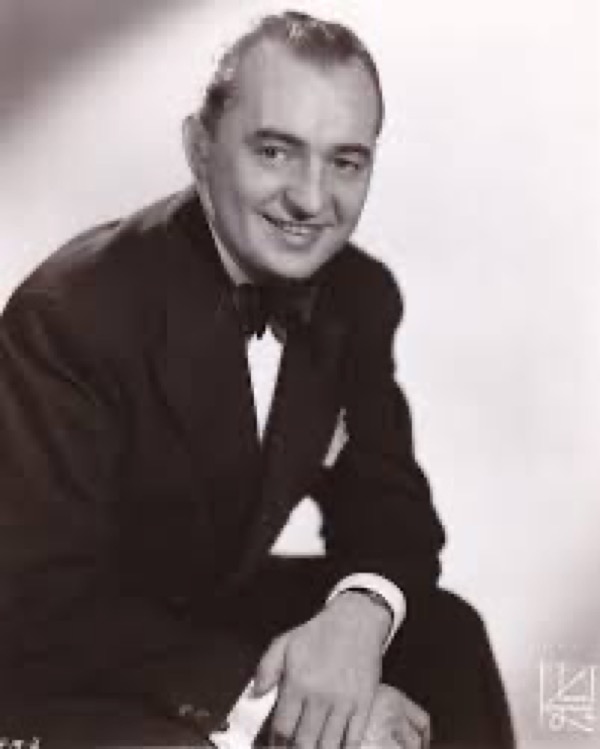
Orchestra leader Freddy Martin arranged the music and Bobby Worth wrote lyrics for it. It became a major hit for Martin in 1941.

Freddy Martin

Freddy Martin

Martin’s arrangement is taken from a very long passage of Tchaikovsky’s original work. He recorded it twice with two different soloists. The soloist on this one is tenor Tony Martin (no relation to Freddy Martin).  

The pop song “Till The End of Time” (1944) was an adaptation of Frédéric Chopin‘s Polonaise in A flat major, Op. 53 — the “Polonaise héroique” (1842).  

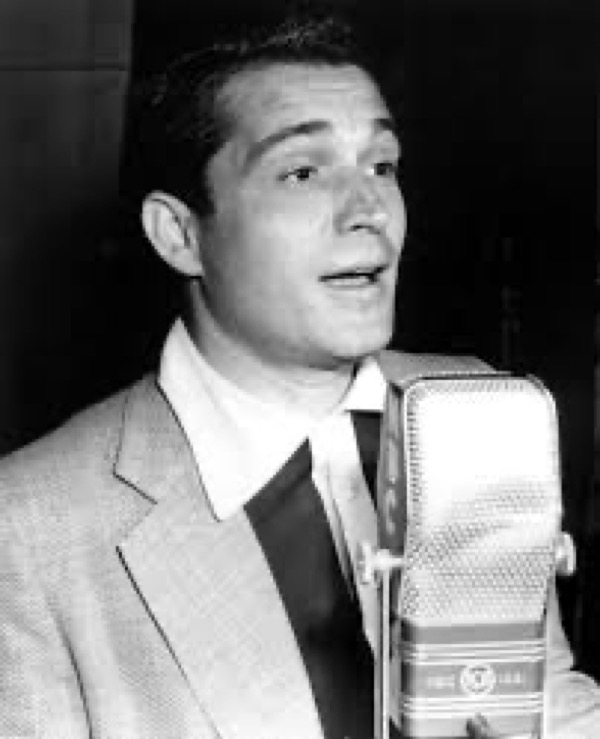
The pop song was written by composer Ted Mossman and lyricist Buddy Kaye. It was a major hit for Perry Como in 1945.

Perry Como

Perry Como

He said it was his favourite of all the songs he recorded in his long career.   

The pop song “Full Moon and Empty Arms” (1944) was an adaptation of the second theme of the third movement of Piano Concerto number 2 in C Minor, opus 18 by Sergei Rachmaninoff (1901).

Bruce Liu – Rachmaninoff: Piano Concerto No. 2, Op. 18: III. Allegro scherzando   

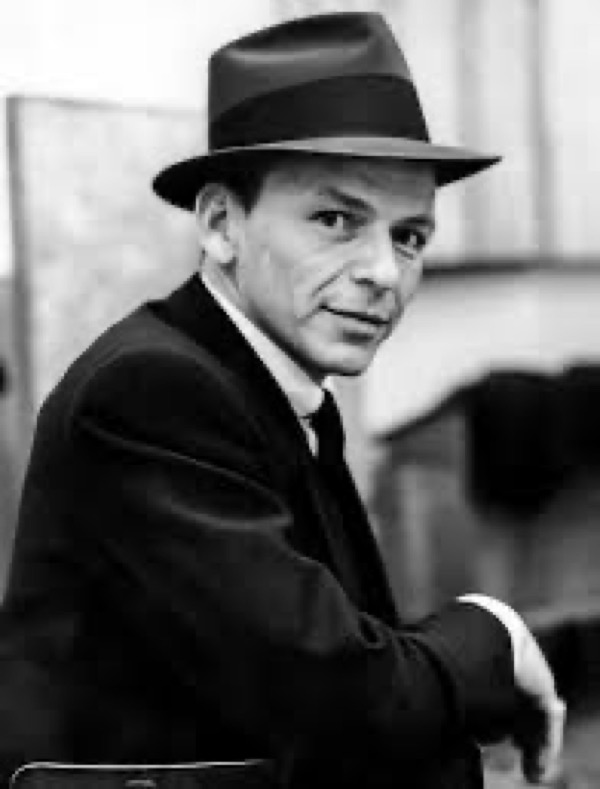
This pop song was also written by composer Ted Mossman and lyricist Buddy Kaye. It was a major hit for Frank Sinatra in 1945.

Frank Sinatra

Frank Sinatra


Symphonic Gems: Borodin’s Prince Igor – Polovtsian Dances – Noseda | Concertgebouworkest  

The pop song is from the musical Kismet (1953) by Robert Wright and George Forrest.

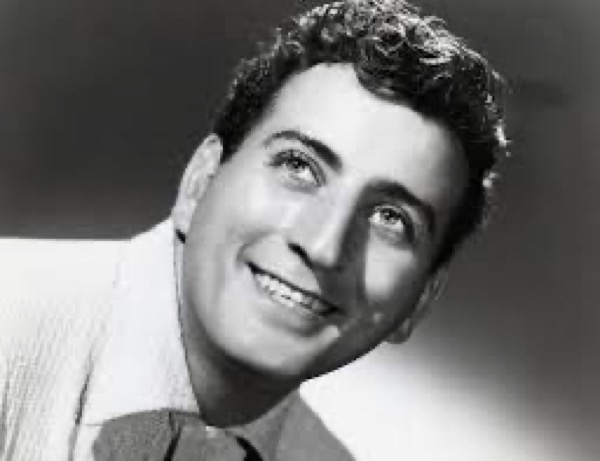
In this performance, the soloist is Tony Bennett, for whom it was a major hit in 1953.

Tony Bennett

Tony Bennett

Tony Bennett “Stranger In Paradise” on The Ed Sullivan Show   

The pop song “I’m Always Chasing Rainbows” (1918) was an adaptation of a passage from Frédéric Chopin’s Fantaisie-Impromptu in C sharp minor, op. posthumous (1834).

Dmitry Shishkin – Fantasy-impromptu in C sharp minor Op. 66 (third stage)  

Harry Carroll composed the music and Joseph McCarthy wrote the lyrics for the pop song for the musical Oh Look in 1918. In this clip from Ziegfeld Girl (1941), a movie about the Ziegfeld Follies, Judy Garland sings a particularly emotional rendition of it that depicts her successful audition to become a Ziegfeld girl.

Judy Garland

Judy Garland

I’m Always Chasing Rainbows-Judy Garland   

The era that inspired these transformations had faded by the 1960s. However, the use of classical themes in popular songs continues in full force to this day, but now it encompasses many vastly different styles that appeal to vastly different audiences. In contrast, in the years of the Great American Songbook, those early examples would have reached a much broader spectrum of the American public and had a much wider influence than any particular style of popular music does today.

For those of us who love classical music and perhaps are intrigued by those elegant plagiarisms and want to explore them further, opportunities abound. Thanks to recording and film technology, there is a treasure trove of them waiting for us to enjoy.

Donna Arnold is the long-time music reference librarian at the large music research library at the University of North Texas in Denton, Texas. She answers questions on a wide range of subjects for the university community, national, and international patrons. She holds a Ph.D. in musicology from the University of North Texas. Her many research interests include the Great American Songbook.

The 10 Saddest Pieces by Frédéric Chopin


Across his nocturnes, preludes, mazurkas, ballades, and other works, Chopin returned again and again to expressing emotions of longing and resignation.

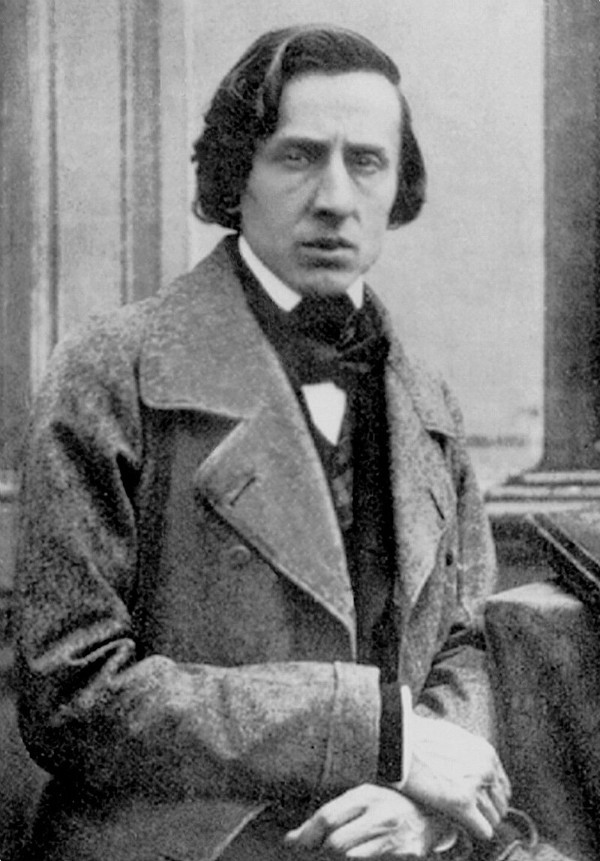
Frédéric Chopin

Frédéric Chopin

Those feelings were shaped by exile, chronic illness, and a persistent sense of isolation.

Today, we’re looking at ten of Chopin’s saddest pieces and tracing how he portrayed all the different shades of sadness: melancholy, grief, bitterness, and even numbness.   

Few pieces in the piano repertoire sound as immediately personal as this nocturne.

Its almost unbearable intimacy makes sense given its background: it was composed when Chopin was just twenty years old as an exercise for his beloved pianist sister Ludwika, who was about to embark on a study of his second concerto.

It would remain a private shared statement of grief between them for 45 years, only being published in 1875.

The only reason it survives at all is that Ludwika ignored her brother’s dying wishes to burn his unpublished manuscripts, meaning its very existence is a poignant symbol of a sister’s belief in her late brother’s talent.   

This prelude is part of a set of 24 preludes, one in each major and minor key.

Its right-hand melody is relatively static. The real movement here comes in the left-hand harmonies, constantly changing and slipping despairingly downward.

That steady sinking motion creates a sense of inevitability, as though the music already knows how it will end: on a quiet, heartbroken – although maybe reluctantly accepting – note. 

Waltzes are famous for being light and joyful dances. Therefore, at first glance, this waltz might seem to not belong on this list.

However, the more you listen, the more you hear emotions here that are usually not associated with dance music. This waltz has a sarcastic character and mocking undertone.

Chopin allows for a number of subtleties, tugging around the tempo in such a way that would make it very difficult to actually dance to. As a result, this is less a practical waltz and more a bitter portrait of one.  

Throughout his life, Chopin’s depression was often triggered by feeling like an outsider – culturally homeless and distanced from family and friends.

These emotions were especially strong during his first years in Paris in the early 1830s, after the failed November Uprising in Poland, which left him feeling unsafe returning home to Warsaw.

Here he channelled those emotions into a stylised version of a famously Polish dance: the mazurka.

Like the waltz in C-sharp minor, this is less a practical dance than a dance-tinged meditation on what it feels like to remember a lost place and time.   

Chopin continued writing mazurkas throughout his life; this one was written the year of his death, when it was becoming increasingly clear that he’d never see his beloved Poland again.

This final mazurka feels both more mature and cynical than the earlier one in A minor. This is the work of a composer who, over the years, had learned how to box up his emotions in a supremely artful fashion.

Taken together, these two mazurkas tell a story about how Chopin’s relationship with the mazurka and his exile changed: it’s the same sorrow, but he has lived nearly two decades with it, and the edges have softened.   

This brief prelude – under two minutes long – transforms sadness into something more monumental.

Its stark chordal writing and unyielding marchlike rhythm make that emotion feel massive: heavy, immovable, unconquerable.

Hans von Bülow

Hans von Bülow

Conductor and pianist Hans von Bülow went so far as to nickname this prelude the Funeral March.

Pay attention to the pattern of the notes in the bass. That particular pattern is known as the “lament bass”, and you can hear it in other famous works like Henry Purcell‘s “Dido’s Lament” from his opera Dido and Aeneas.

However, unlike Purcell, here Chopin employs it in a context without words, leaving the listener to imagine their own tragic narrative.   

Unlike the introverted intimacy of the C-sharp minor nocturne that opened this list, this nocturne in C minor turns into the equivalent of a scream in a crowded room.

Pianist Theodor Kullak wrote of this nocturne, “The design and poetic contents of this nocturne make it the most important one that Chopin created; the chief subject is a masterly expression of a great powerful grief.”

At the work’s midpoint, its central climax swells into something truly operatic, requiring the performer to employ desperate octaves. This is loud, virtuosic grief, verging on crazed.   

Chopin’s first ballade is the most narrative-driven work on this list. It lasts around ten minutes, giving Chopin the time and freedom to craft an entire story.

Here, the grief and sadness are no longer static, like in some of the shorter works on this list. Instead, it evolves with all kinds of colours and shades of grief and pain.

Moments of lyric calm become overwhelmed by turbulence, and the ending is both virtuosic and catastrophic.

This is Chopin at his most dramatic.  

Chopin’s “Funeral March” (the third movement of his second piano sonata) is undoubtedly the most famous expression of grief in his entire output. In fact, its opening theme has become a cultural shorthand for death.

That memorable main theme comes across as monotone, calling to mind a mourner at a funeral who is feeling deeply emotional but numbly holding it together for the sake of ritual. The intensity of the delivery of the theme ebbs and flows.

In between, there are contrasting sections that call to mind that same mourner daydreaming of happier times.  

Polonaises – like mazurkas – are another uniquely Polish genre, tied closely to Chopin’s identity and his lifelong emotions of alienation and depression.

Some of Chopin’s polonaises are heroic. (One – his Polonaise in A-flat major – is actually outright nicknamed the “Heroic.”)

By contrast, this one feels tragic. The harmonies are dark; the chordal writing is thick in the bass.

Any sense of celebratory national pride is replaced by sadness and disillusionment. Pianist Arthur Rubinstein went so far as to call this polonaise a symbol of Polish tragedy.

However, its grief is not localised to a specific time or location; it is timeless. It portrays the kind of empty sadness everyone feels after the worst of acute grief has passed, in the numb, messy aftermath.

This was always one of Chopin’s greatest gifts as a musician: the ability to turn the sadness of his unique experiences into expressions of both sadness and beauty.

Conclusion

Sadness in Chopin’s music never registers on a single emotional register, but rather encompasses an entire spectrum of feelings. It can be confessional or ceremonial, restless or resigned, private or collective.

Taken together, these ten pieces offer a portrait of a composer who experienced sadness as a whole rainbow of emotions: a quality that has ensured his music’s relatability and popularity for nearly two hundred years.

That emotional breadth is what continues to draw listeners back to Chopin’s music – often at moments when they are searching for language for their own sadness.

Friday, May 15, 2026

The Sorcerer’s Apprentice Friedrich Gulda and Martha Argerich


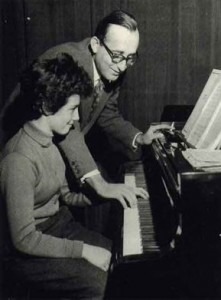
a6c1fcdad71990aabdfd835c73be09caAround Martha Argerich’s 5th birthday, her mother placed her under the pianistic tutelage of Vicente Scaramuzza. Even though Mr. Scaramuzza was considered a sadistic fanatic, he gave her a superb technical grounding and laid the foundations for her unique cantabile style.
When Martha was asked at age 12 about her biggest dream, she unabashedly told President Peron that she wanted to study with Friedrich Gulda in Vienna. And Peron made it happen! Gulda had won the International Geneva Competition at age 16, and his lifelong passion would be to break down the barriers between the classical music and jazz idioms and successfully combine the two genres.

Gulda, like Martha, was a free and eccentric spirit! Both were fiercely independent, allergic to the rules imposed by career, fame, agents and concert halls. Martha admired Gulda for “his spontaneity, curiosity, and a love for music—for all music, not only for classical. He was such an open-minded person, so vital in this sense. He told me once ‘you have to learn everything before turning sixteen because later on gets a little stupid!’

She was fascinated by his sound and by the paradox of his controlled expressiveness. Argerich acknowledges Gulda as her biggest pianist influence. He recorded their lessons, and made her critique her own performances. He also told her to learn Ravel’s Gaspard and Schumann’s Abegg Variations in five days. “I did not find it difficult at all,” she said, “because I did not know it was supposed to be.” Argerich was Gulda’s only student, and she studied with him for only 18 months. Unimpressed by her subsequent fame and the personal chaos that surrounded her, he cried upon meeting her later, “What have you done with your life?” Essentially, we are talking about 2 extroverted recluses producing chaotic brilliance at the piano! A great number of pianists play difficult pieces and many photograph well. However, it is “her naturalness of phrasing that allows her to embody the music rather than interpret it.” Her native language is music, and she warmly credits Gulda with “having taught me how to listen.”

7 of the Largest Pianos Ever Built


While most concert halls are designed for instruments around nine feet long, a handful of piano makers have pushed far beyond those limits.

These largest and longest pianos in history were built for many reasons: to expand tonal range, replicate the power of an organ, commemorate royal jubilees, or simply to push boundaries.

Today, we’re counting down seven of the biggest pianos ever built, from extended concert grands to colossal one-of-a-kind instruments that border on architectural installations.

#7: Bösendorfer Imperial Concert Grand

Bösendorfer Imperial Concert Grand

Bösendorfer Imperial Concert Grand       

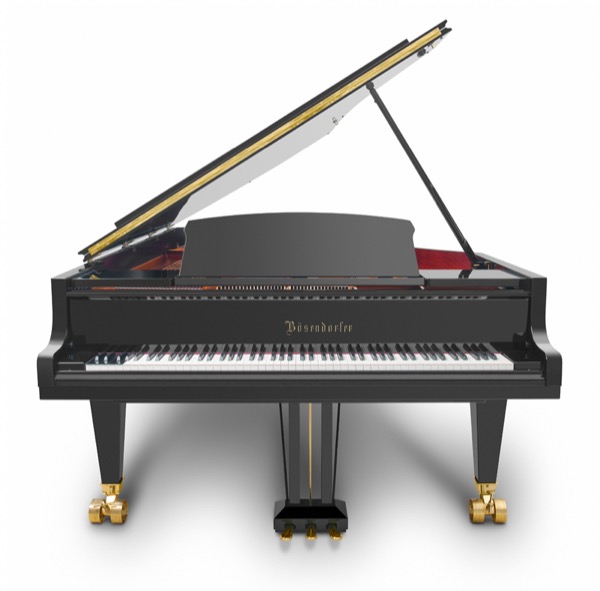
In the late nineteenth century, composer and pianist Ferruccio Busoni transcribed Bach‘s organ works for piano. He dreamed about having a piano with an increased range that would better replicate the range of an organ.

To realise those dreams, the Bösendorfer piano building company came up with the Imperial Concert Grand piano design. This model consists of eight octaves over 97 keys, and it is 9 feet, 6 inches long (2.9 meters).

As the official Bösendorfer website points out, there are works by Bartók, Debussy, and Ravel that can employ these newly available pitches.

It’s unclear whether those composers expected – or even wanted – those notes to be physically played, but it’s interesting trivia to know that this instrument can handle them.

#6: Fazioli F-308

Fazioli F-308

Fazioli F-308   

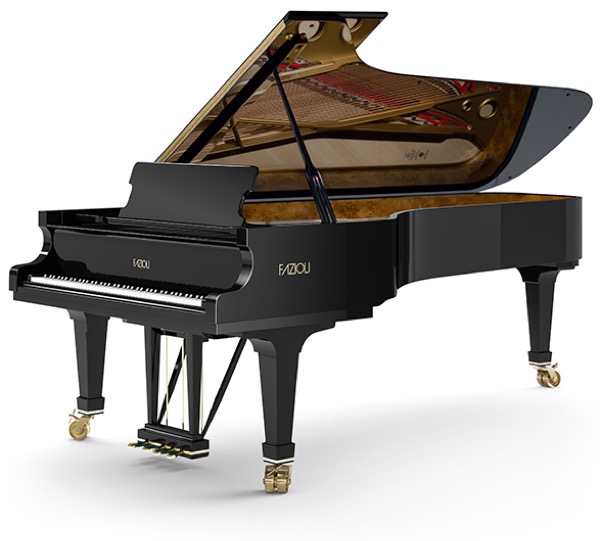
Fazioli is a high-end Italian piano company founded in 1981 and based in Sacile, Italy. They are well known for building only 140 pianos a year.

Their F-308 model is 10 feet, 2 inches (3.1 meters) long and weighs a whopping 1550 pounds (or 703 kilograms).

Interestingly, it also has a fourth pedal in addition to the traditional three. That pedal is used to create a pianissimo effect.

Fazioli claims that the F-308 is the largest piano in production. Over the years, only twenty have been made.

#5 and #4: Charles H. Challen Grand Pianos

Charles H. Challen Grand Piano

Charles H. Challen Grand Piano

Charles H. Challen and Sons was an English piano manufacturing firm founded in 1804.

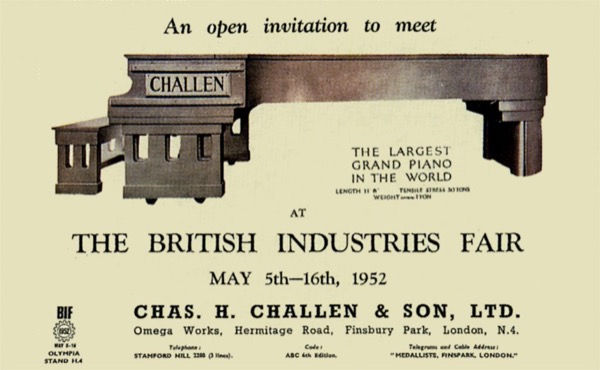
In 1935, they constructed the world’s largest grand piano to honour the Silver Jubilee of King George V and Queen Mary (Queen Elizabeth II’s grandparents).

The company built two big instruments for the big event. Each one measured 11 feet, 8 inches (3.6 meters) long.

The first one made its debut at the British Industries Fair, the most visited attraction in England at the time, where it made a big splash.

For a while after the Fair ended, it kept popping up in various exhibitions, as well as posh department stores like Selfridges and Harrods.

Sadly, this giant appears to have met its demise in 1959, when it was purportedly brought to a garden party, left outdoors, and left to sink into the dirt. However, that story has never been officially confirmed, and apparently, nobody knows for sure where this landmark instrument ended up.

Its twin was far luckier. “Piano-2” also popped up at a variety of venues, including the British Industries Fair.

It found a permanent home in 1969, when it was bought by the owners of Gwrych Castle in Wales. It was later sold again and ended up in France.

In 2020, piano restorer Andrew Giller brought it back to the United Kingdom, and he and his team spent two years restoring it.

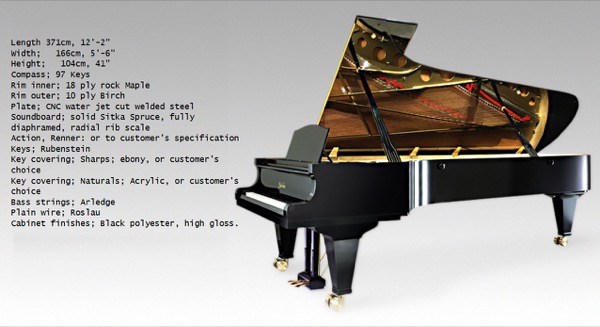
#3: Rubenstein R-371

Rubenstein R-371

Rubenstein R-371   This piano was built by American David Rubenstein, owner of Rubenstein Pianos in El Segundo, California. He had never built a piano before attempting to build this one.

As he said in a 2009 interview, “I built it ‘just because.’ It was a highly organised, well-thought-out whim.”

Rubenstein said of the process of building the piano: “Sometimes I was happy and sometimes I was miserable. When you’re making something this big, you forget its final use – the fact that you can play this – and only think about the thing in front of you right now. At the end, it dawns on you that you’ve done something.”

One pianist who played it reported, “You would think a bigger piano would sound louder, but that is not the case. This piano has been built with such refinement that it is very responsive to touch and allows hundreds of gradations of loud and soft.”

This model is 12 feet, 2 inches (3.7 meters) long. Like the Bösendorfer Imperial, it has 97 keys.

#2: Alexander Piano

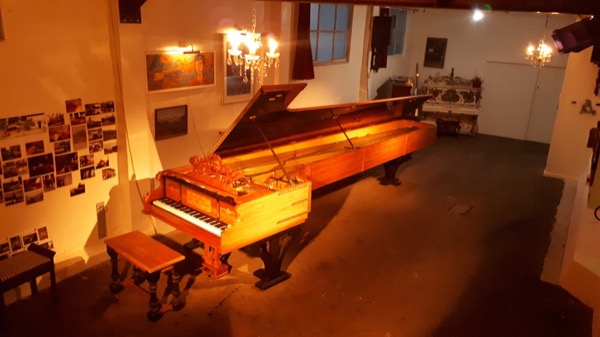
The Alexander Piano

The Alexander Piano

In 2004, Adrian Alexander Mann was a fourteen-year-old piano student in New Zealand.

He learned from his teacher about how copper wires are wrapped around modern pianos’ lower strings, giving them a deeper tone without necessitating excessive length.

Mann asked his teacher how long a theoretical piano would have to be to not need the copper wire. His teacher wasn’t sure, so Mann ran some experiments and started building his own in a neighbour’s empty garage.

Five years later, at the age of twenty, he emerged with the Alexander Piano. The end product was a staggering 18 feet, 9 inches (5.7 meters) long.

Mann dubbed his creation the “Alexander Piano” in honour of his grandfather. The Alexander Piano has become a destination for curious pianists traveling through New Zealand, and Mann is always at hand to document his visitors’ music-making.

Not surprisingly, Mann grew up to become a piano technician. After sending his jaw-dropping invention to various showcases around the world, he brought it home.

In 2017, he told Atlas Obscura that he wants to build another one.

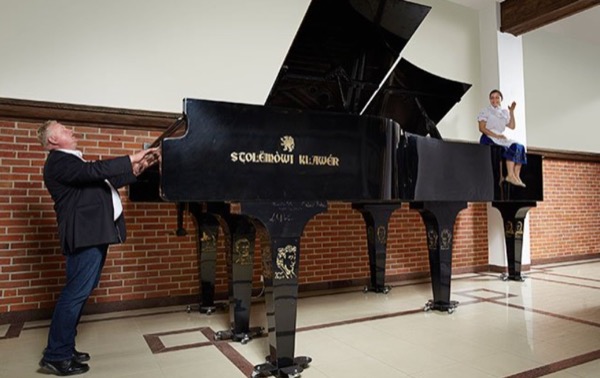
#1 Stolëmowi Klawér (“Giant Piano”)

Stolëmowi Klawér ("Giant Piano")

Stolëmowi Klawér (“Giant Piano”)   The Stolëmowi Klawér (“Giant Piano” in Polish) pushes the concept of a piano to its absolute extreme. It was built by Daniel Czapiewski in Poland in honour of the bicentenary of Chopin‘s birth in 2010.

Huge doesn’t begin to describe this instrument:

  • It is nineteen feet, eleven inches (6.1 meters) long.
  • It is six feet (1.8 meters) tall and requires a special raised area for the pianist to place their bench on.
  • It has 156 keys – and two keyboards.

Czapiewski died in 2013, but he certainly left a massive legacy in the piano building world.

Conclusion

Many of these giants are impractical for everyday performance, and some were never meant to be widely replicated. All have quirky origin stories. Yet they’ve left a lasting imprint on music history.

Even if they’re rarely played, their sheer existence has reshaped how we think about resonance, scale, and the piano’s potential. All seven of these largest pianos ever built stand as inspiring monuments to pianistic creativity and craftsmanship.

Salvador Dalí (Born on May 11, 1904): The Excesses of Life


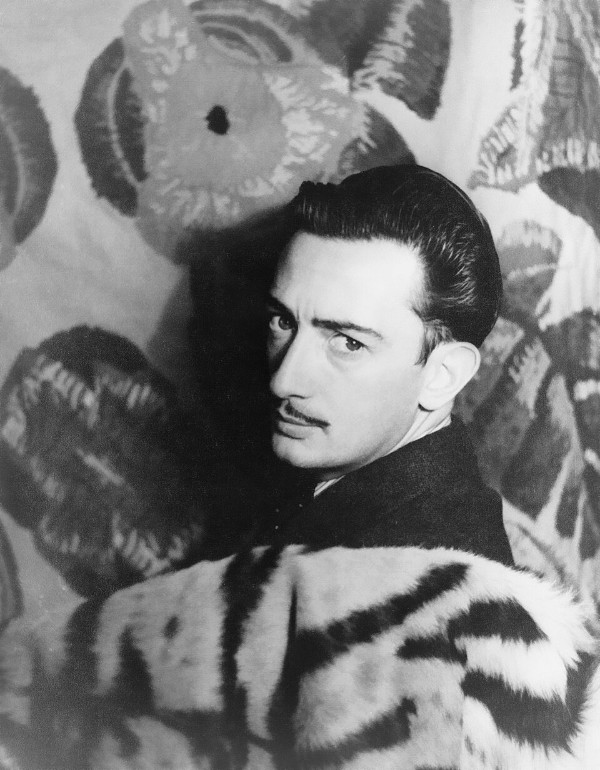
Carl van Vechten: Salvador Dalí, 1939 (Library of Congress: cph.3c16608)

Carl van Vechten: Salvador Dalí, 1939 (Library of Congress: cph.3c16608)

His art may have been surreal, but it was backed by technical skill and precise craftsmanship. Although he started his work in the late 1920s, it wasn’t until 1940, when he moved to the US, that he started to achieve commercial success. It wasn’t until 1948, after the war, that he returned to Spain.

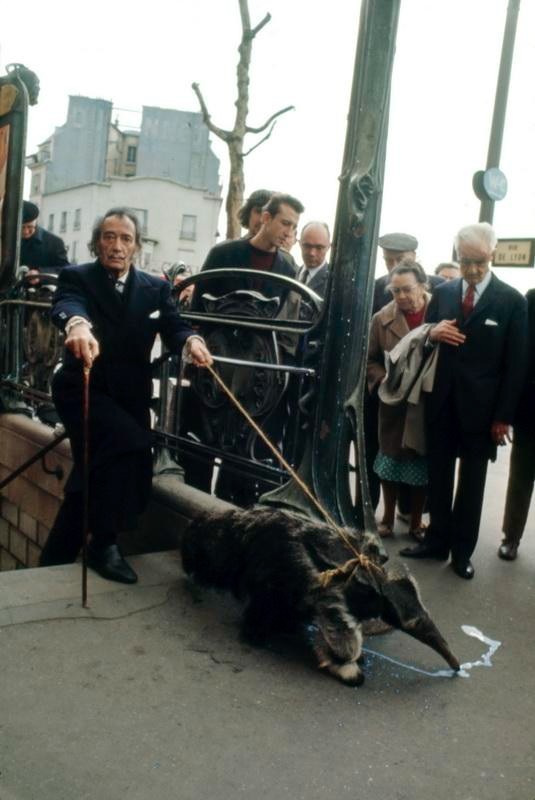
Name any field in the arts, and Dalí was there: painting, sculpture, film, graphic arts, animation, fashion, and photography saw his efforts. He also wrote fiction, poetry, essays, and criticism. In both art and writing, he saw himself as a subject, through self-portraits (the first in 1919) and autobiographies. Often, his ostentatious public behaviour was more famous than his artwork, such as when he took his anteater for a walk in Paris.

Dalí walks his anteater in Paris, 1969

Dalí walks his anteater in Paris, 1969

He made his first trip to Paris in 1925, when he met one of his artistic heroes, Pablo Picasso. The Catalan painter Joan Miró had mentioned Picasso to him and introduced him to the idea of Surrealism. Even as Dalí developed his own style, he made visual reference to both Picasso and Miró in his work.

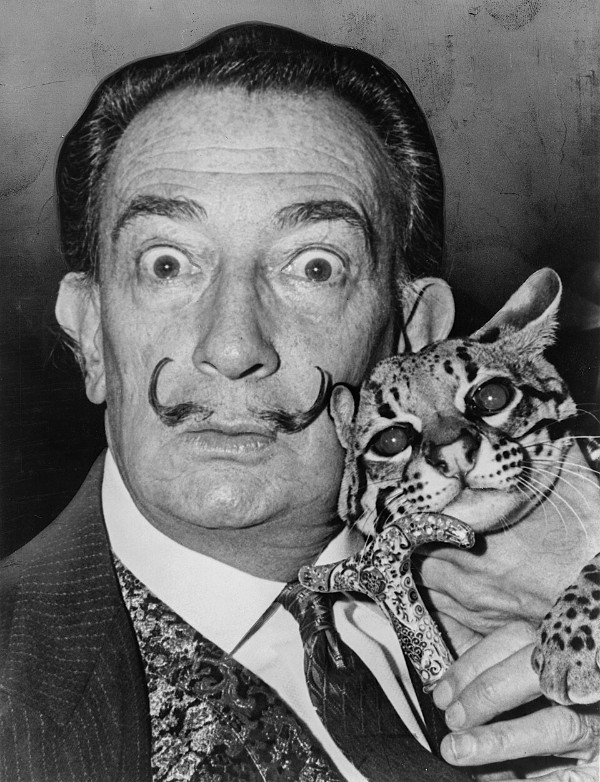
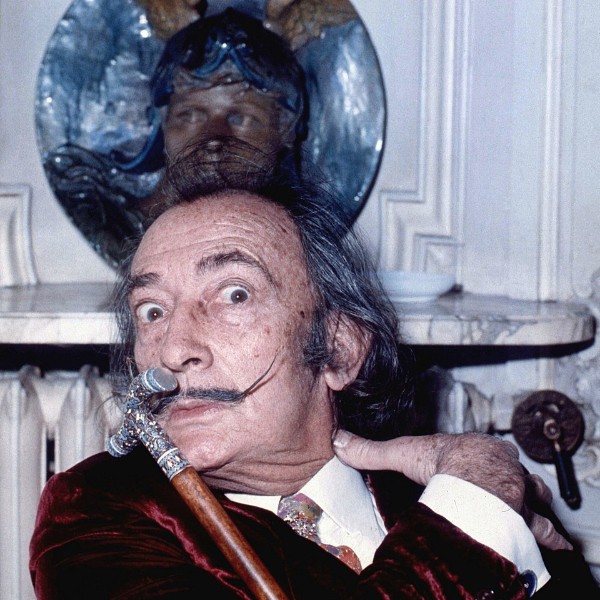
He grew his first moustache in the mid-1920s (as seen above), but later, his moustache grew to magnificent proportions, almost becoming an icon of the icon. Dalí referred to this version as his ‘very aggressive’ moustache.

Roger Higgins: Salvador Dalí and his ocelot Babou, 1965 (Library of Congress: cph.3c14985)

Roger Higgins: Salvador Dalí and his ocelot Babou, 1965 (Library of Congress: cph.3c14985)

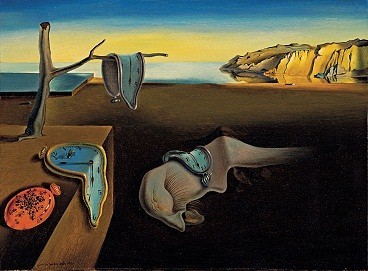
His most famous work, The Persistence of Memory, was completed in 1931 but seems new for each generation. The melting watches get us to think about the rigidity of time and whether it’s real. Behind the focus on the watches, the landscape expands out to sea.

The image reverses reality: hard objects lie limply curved, ants are attracted to a metal watch case, and yet in the background are the very realistic cliffs from Dalí’s native Catalonia coast. The figure draped along the ground isn’t a horse but rather Dalí’s own face in profile, with his long eyelashes carefully presented.

Dalí: The Persistence of Memory, 1931 (New York: Museum of Modern Art)

Dalí: The Persistence of Memory, 1931 (New York: Museum of Modern Art)

This painting, in turn, has inspired many different composers. Spanish composer Javi Lobe has woven a melancholic story in his piano piece.  

English composer Richard Causton, on the other hand, uses the imagery of Dalí in combination with a memory of a strange sound phenomenon he encountered in India. Ill and confined to bed, he heard the sounds of the world around him but in a strange and altered timescape. Workers on the rooftops of factories around his room would strike the hours by banging on slats and pieces of metal. As the composer drifted in and out of wakefulness, time expanded and contracted – did 4 am really come before 2 am, or was that the fever bending time? 

Composer and pianist Jeffrey Jacob focuses on musical memory in his work, noting that it explores the impact of the past upon the present through the juxtaposition and combination of older and contemporary musical styles. Set in a haunted landscape that seems quite close to Dalí’s imagined setting, he alternated between the past and the present. Each movement starts us in a different world.  

The second movement takes us through three different periods of musical time. We start with the percussive drive of Bartok, before wandering back in time to Schubert. The composer has taken an accompaniment pattern from a Schubert song and created a ‘misterioso’ piano sonority around it. Finally, we’re in the late 19th century, experimenting with Impressionism with a soaring melody. In each section, melody is the driving element.  

That’s only one of the many paintings and works that Dalí created that were an inspiration for the composer. The database of Music based on Pictures (Musik nach Bildern) lists dozens of works based on Dalí’s images. Not many have been recorded, but it gives a view of how popular and inspirational his surrealism has been in the imagination of composers everywhere.

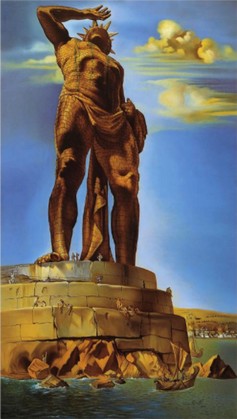
The Finnish composer Uljas Pulkkis (b.1975) put together three Dalí works in his 2002 work, Symphonic Dalí: Three paintings for orchestra. Dali’s 1954 painting The Colossus of Rhodes was behind the first movement. The Colossus of Rhodes was one of the seven wonders of the ancient world. The tallest statue of the ancient world was a statue 33 m (108 feet) high of the sun god Helios that stood in the city of Rhodes. Built in 280 BC, it collapsed in the earthquake of 226 BC; after the collapse, although parts of the statue were preserved, it was never rebuilt, and the final remains were destroyed in AD 653.

Dalí: The Colossus of Rhodes, 1954 (Bern: Kunstmuseum)

Dalí: The Colossus of Rhodes, 1954 (Bern: Kunstmuseum)

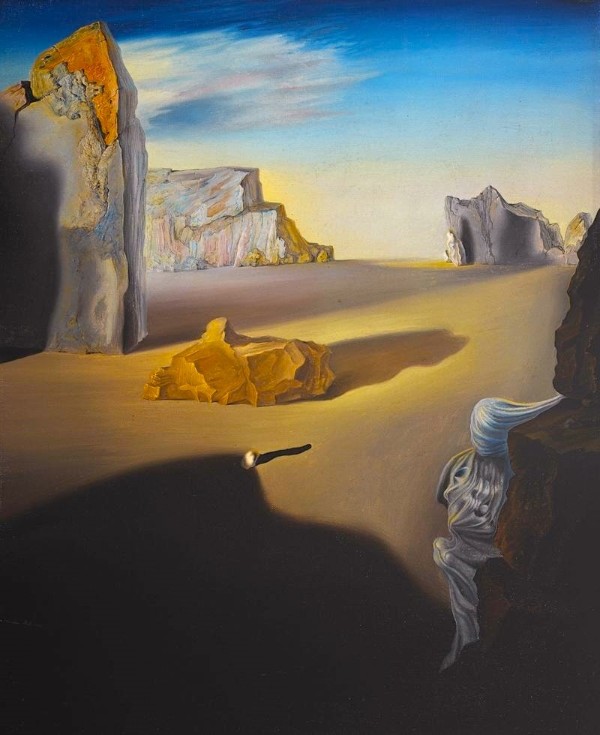
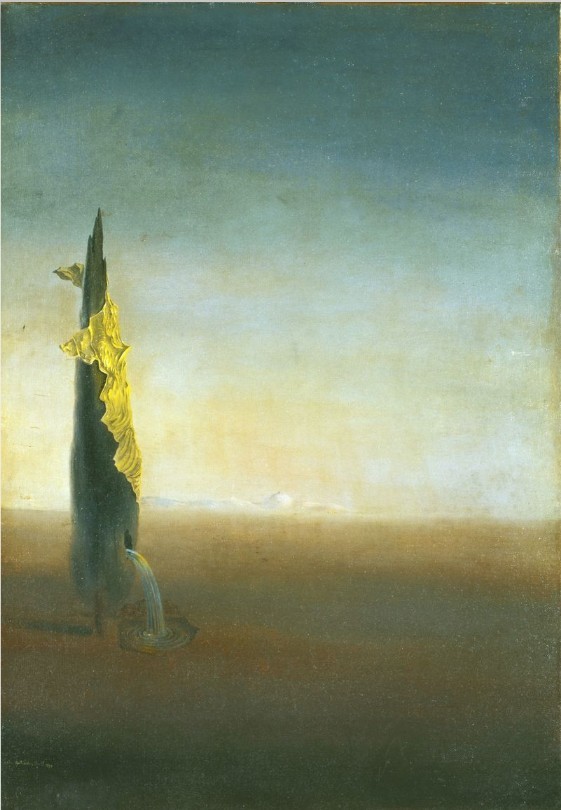
The second movement was inspired by Shades of Night Descending, from 1931. It seems to be set in the same landscape as The Persistence of Memory.

Dalí: Shades of Night Descending, 1931(St. Petersburg, FL Salvador Dali Museum)

Dalí: Shades of Night Descending, 1931(St. Petersburg, FL Salvador Dali Museum)

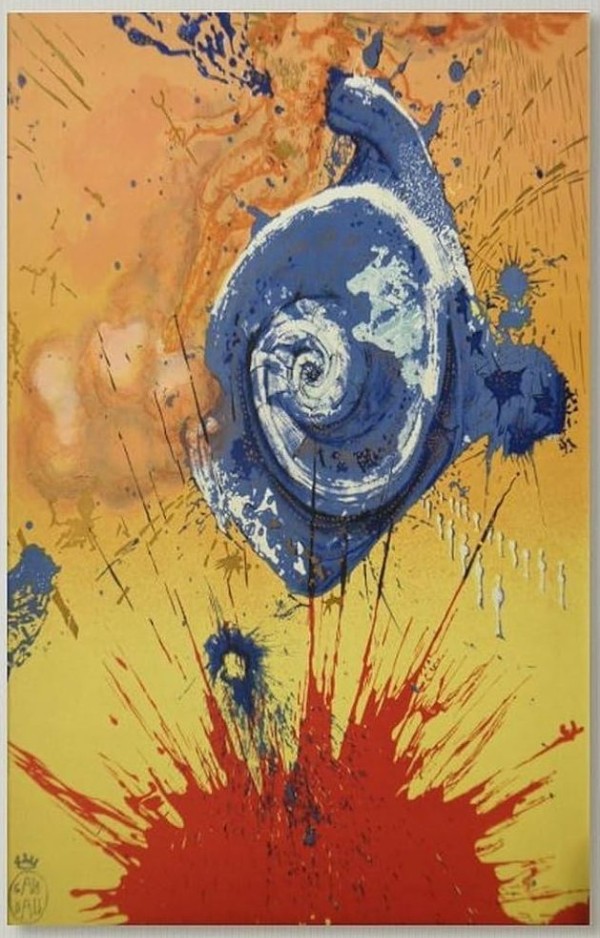
The third movement, Dawn, is an explosion of colour, literally, because Dalí loaded a gun with snail shells filled with ink and fired them at his lithography stone.

Dalí: Dawn from Pages Choisies de Don Quichotte de la Mancha, 1957

Dalí: Dawn from Pages Choisies de Don Quichotte de la Mancha, 1957


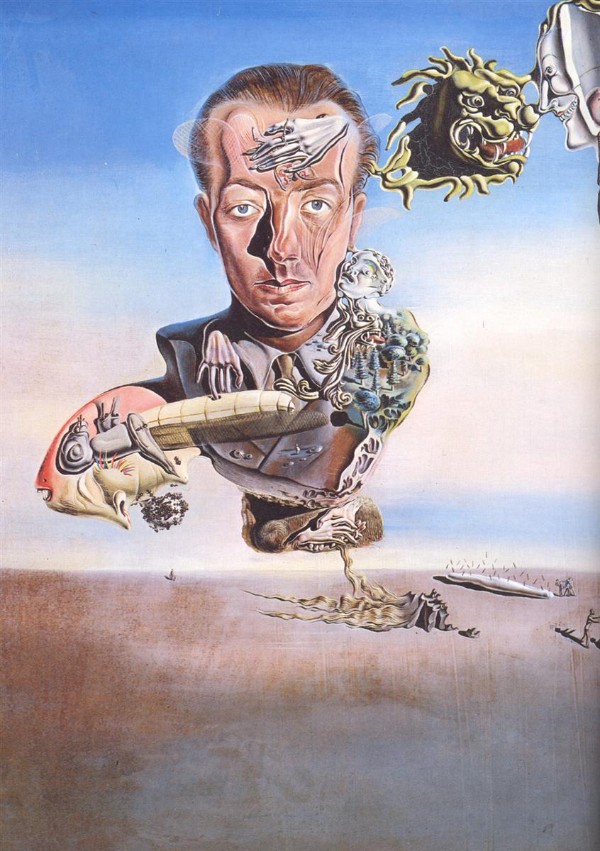
The Polish composer Joanna Bruzdowicz (b. 1943) made her own pictures at an exhibition, but based them on an exhibition of the works of Dalí. Her selection included many different styles of Dalí’s works, ranging from his early works of 1927 to 1970. She, of course, did a movement on The Persistence of Memory, but let’s look instead at his 1929 painting Portrait de Paul Élouard

Portrait de Paul Élouard, 1929 (Figueres, Spain: Dalí Theatre and Museum)

Portrait de Paul Élouard, 1929 (Figueres, Spain: Dalí Theatre and Museum)

This surrealist portrait of French surrealist poet Paul Éluard, who was married to Helena Diakonova, aka Gala, who left him in 1929 for Salvador Dali, marrying him in 1934. In the portrait, the poet is ‘dissected’ by the painter – the Zeppelin may indicate modernism as does the fact that everything in the painting is in the same plane. It’s a dreamscape with many different elements juxtaposed.

In her piano work, Bruzdowicz opens with a busy world, always in motion. A point of reflection quickly spins back everything into the movement of the opening section.

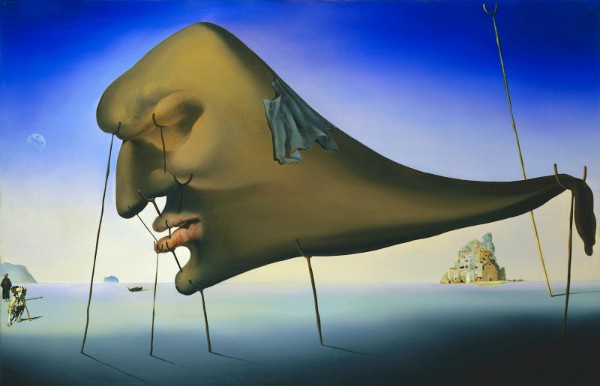
Spanish composer Cristóbal Halffter (b. 1930) created his work for chamber orchestra, Daliniana, on three Dalí paintings: Relojes blandos (Soft watches), El sueño (The Dream), and El nacimiento de las angustias líquidas (The birth of liquid anguish). Relojes blandos refers to the melting watches of The Persistence of Memory, while El sueño is another of the dreamscapes.

Dalí: El sueño

Dalí: El sueño

A pseudo-self-portrait set on fragile supports exists in a sleeping world (note the shadowy sky and the moon hanging on the left side). These are the kinds of poles used to support fruit trees when they’re heavily laden, and are a strong reference to the countryside. The massive head rests uneasily in space.

Halffter’s world seems equally fragile and disjointed.

The final work in the set is based on El nacimiento de las angustias líquidas, an image of instability and anxiety – a solid is converted to liquid, a common Dalí theme.

Dalí: El nacimiento de las angustias líquidas, 1932 (Figueres Fundació Gala-Salvador Dalí)

Dalí: El nacimiento de las angustias líquidas, 1932 (Figueres Fundació Gala-Salvador Dalí)

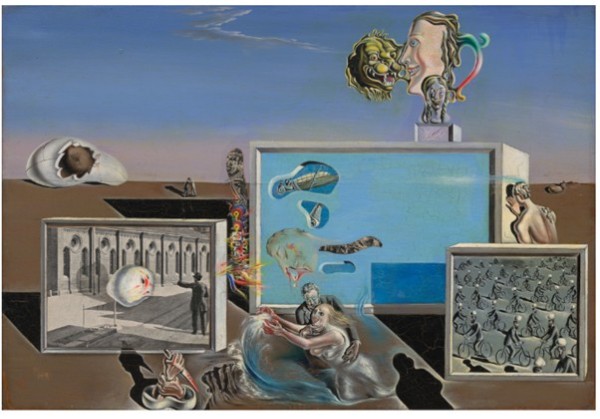
Dalí’s complex image Plaisirs illuminés (Illumined Pleasures) from 1929 is the basis for a double concerto for violin, cello, and chamber orchestra by Francesco Coll.

Created to illustrate the shooting script for Un chien andalou when it was published in the journal La Révolution surréaliste, the painting is filled with a number of shadow boxes representing the disjunctions between reality and illusion as experienced in a movie theatre. Note the two heads in the sky that also appeared in similar form in the Portrait de Paul Éluard. This collage of dreams and anxieties, both personal and universal, includes Dalí’s disembodied head in the middle box. Some very surrealist images are in each box: rows of bicyclists with lights on their heads, a hand with a bloodied knife, and an egg-like object in front of a church wall. And, at the back right, what might be another of those watches.

Dalí: <em>Plaisirs illuminés</em> (Illumined Pleasures), 1929 (New York: Museum of Modern Art)

Dalí: Plaisirs illuminés (Illumined Pleasures), 1929 (New York: Museum of Modern Art)

Francesco Coll (b. 1985) studied trombone at the Joaquín Rodrigo Conservatoire of Music in Valencia and the Madrid Royal Conservatory, graduating with honours. He then went to the Guildhall School for a degree in composition, also achieving honours. His reputation is for pushing music to its extremes, and it is known for its surrealistic juxtapositions. It was as composer-in-residence with the Camerata Bern that he wrote Les Plaisirs Illuminés, a double concerto for violin, cello and chamber orchestra, for Patricia Kopatchinskaja and Sol Gabetta as soloists.

Avant-garde French composer Igor Wakhévitch (b. 1948) worked with Dalí in 1974 on an ‘opera-poem’ entitled Être Dieu (To Be God), with a libretto by Spanish writer Manuel Vázquez Montalbán.

The music is a surrealistic mix of speaking voice, choral singing, and a little bit of everything in the world. The work, in 6 parts, ‘Dalí as God, Brigitte Bardot as an artichoke and Catherine the Great and Marilyn Monroe do a striptease’.

Dalí: Self-portrait, 1972

Dalí: Self-portrait, 1972

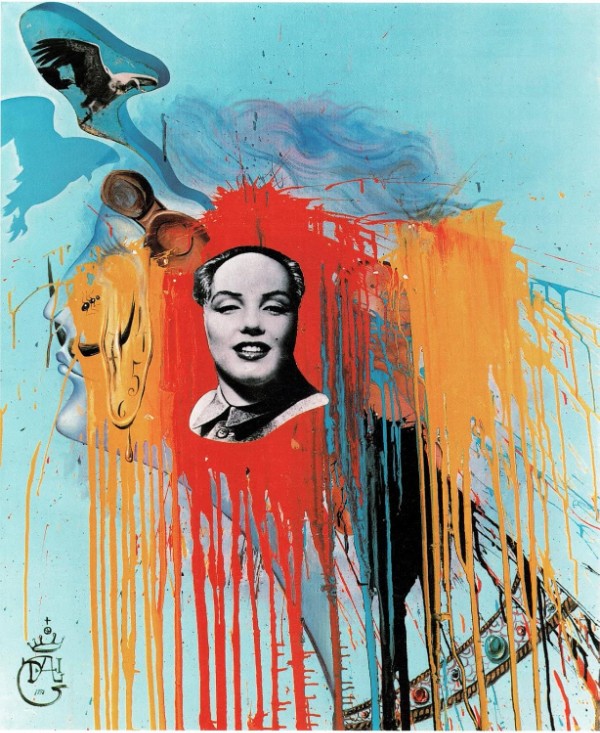
Dalí created a self-portrait, which was combined with ‘the famous “Mao-Marilyn” that Philippe Halsman created at Dalí’s wish’. Note Dalí’s signature in the bottom left, crowned, with an orb and cross, as if royalty…or God. In his self-portrait, his signature moustache is prominent.  

Dalí, of course, has the last word on his work in the world. Often viewed as a madman for his images, he calmly noted that ‘The difference between a madman and me is that I am not mad’.

Allan Warren: Salvador Dalí, 1972

Allan Warren: Salvador Dalí, 1972

The excesses in his images, be it of liquid watches or giant figures from the past or even of himself, can only drive our own imaginations forward.

Featured Post

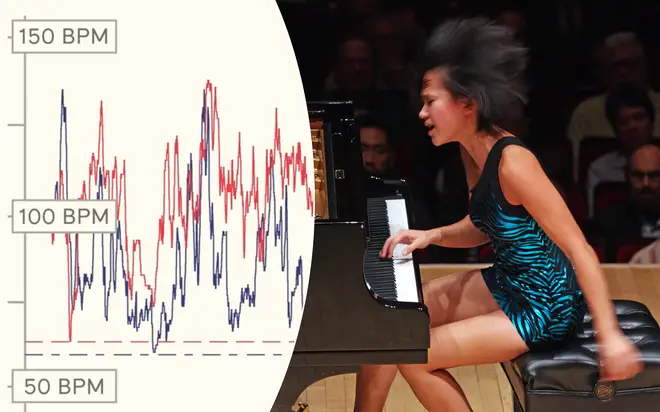
Yuja Wang wore a heart rate monitor in Rachmaninov marathon, with astonishing results

4 April 2024, 17:03 | Updated: 5 April 2024, 15:58 Yuja Wang’s heart rate results revealed, after marathon Rachmaninov performance.  Picture...