Friday, May 8, 2026

Teacher and Student: Arensky and Rachmaninoff Songs


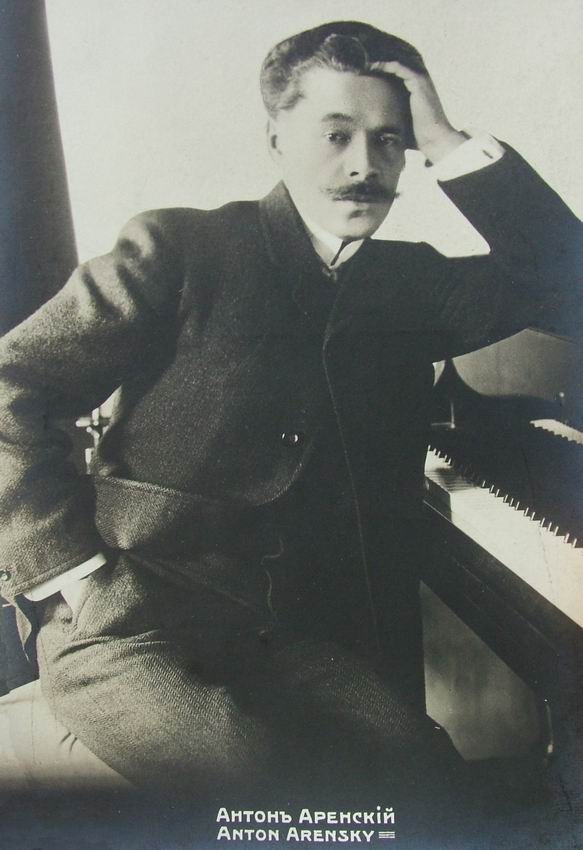
Anton Arensky (1861–1906) studied at the St Petersburg Conservatory with Nikolai Rimsky-Korsakov; upon graduation, he became a professor at the Moscow Conservatory. In his 12 years there, the greatest of Russian composers were his students, including Rachmaninoff, Scriabin, Glière, Grechaninov, and Medtner. After leaving the Moscow Conservatory, he returned to St Petersburg, where he was director of the Imperial Choir from 1895 until his retirement in 1901.

Anton Arensky, 1895

Anton Arensky, 1895

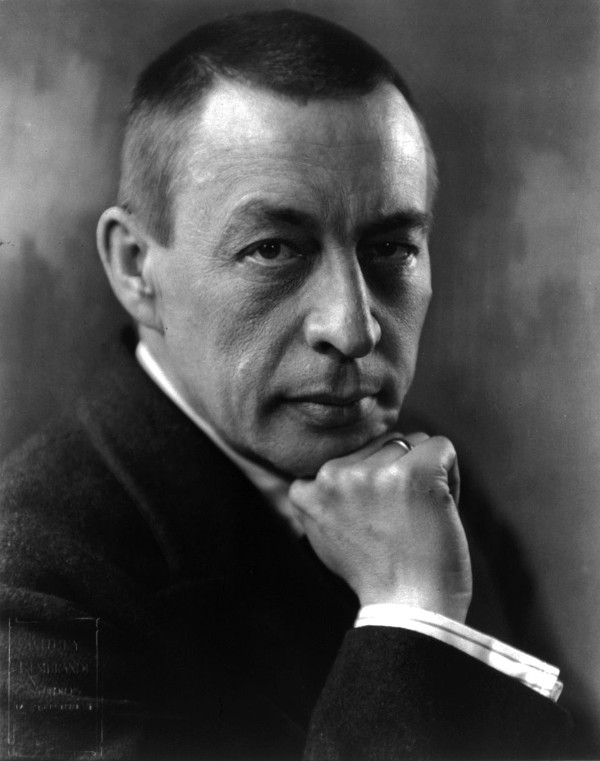
His student at the Moscow Conservatory, Sergei Rachmaninoff (1873–1943), far better known than his teacher, started studying with Arensky in 1885, when he was 12, and remained his student for the next 3 years. Rachmaninoff was aware of Arensky’s contribution to his musical education, ‘often recalled later in life how valuable those lessons had been, saying that Arensky had given him the tools to think more broadly and inventively about his own music’.

Sergei Rachmaninoff, ca. 1921 (Library of Congress, cph.3a40575)

Sergei Rachmaninoff, ca. 1921 (Library of Congress, cph.3a40575)

Arensky’s teacher, Rimsky-Korsakov, thought his work was too influenced by Tchaikovsky, and, indeed, his Variations on a Theme of Tchaikovsky, Op.35a for string orchestra, of 1894, remains Arensky’s most famous work even now. Contemporary critics regarded Arensky as ‘standing…in the shadow of greater figures’ but didn’t give enough credit to his role as a teacher of the next generation of Russian composers.

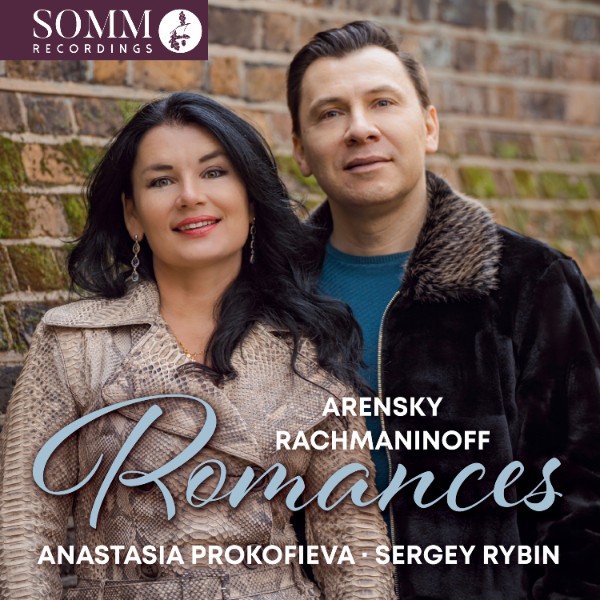
A new album by soprano Anastasia Prokofieva, juxtaposing Arensky’s and Rachmaninoff’s art songs with Sergey Rybin on piano, lets us examine the teacher and his student. The album opens with Arensky’s 5 Romances, Op. 70, setting texts by Tatiana Shchepkina-Kupernik (1874–1952). Their date of composition is unknown, but the Opus number puts the work in 1904 or 1905.

Many of Arensky’s 60-some songs are undated, and he set a large number of Russian poets, from Konstantin Balmont, who wrote poetry based on Shelley’s poems, to Lermontov, Pushkin, and Aleksey Tolstoy.

The songs are beautiful and have a certain Russian sound that emphasises the melancholic side of the texts. One of the most interesting is the song ‘Poetry’ to a text by Semyon Nadson. It starts out as a description of the emergence of Poetry, crowned in roses, from the shelter of heaven. Her motto is ‘Art for Art’s Sake’ and her creed, ‘To Serve Beauty’. But her encounter with the world goes very poorly, ending with her soul in torment and her crown of roses lying in the dust.

Anton Arensky: 5 Romances, WoO, No.1 Poėziya

Rachmaninoff tends towards more dramatic settings than did Arensky. As the next generation of Russian composers, he could be more fantastical in his approach, such as No. 6 from the Romances, Op. 38 of 1916. Our lover is lured into the mountains by her laughter, but there’s no assurance he can find the woman he seeks, no matter how deep he goes into the forest.

Sergei Rachmaninoff: Romances, Op. 38, No. 6. ‘A-u!’

Anastasia Prokofieva’s voice is lower than you might expect for a soprano, and it suits the music and its feelings very sympathetically. The pianist, Sergey Rybin, plays with elegant precision.

The recording is evenly divided between the two composers and gives us an interesting view of the teacher’s work and the student who always credited his teacher with giving him the key to expanding from a beginning level to the greatness he later achieved.

Arensky & Rachmaninoff: Romances

Arensky & Rachmaninoff: Romances

Anton Arensky; Sergei Rachmaninoff
Anastasia Prokofieva (soprano); Sergey Rybin (piano)
SOMM Recordings SOMMCD 0716

Official Website

Twenty Trivia Questions About Classical Music


Today we’re looking at the history of classical music for trivia inspiration. Learn about everything from a composer who murdered his wife, to a Venetian orchestra of talented orphans, to forbidden love affairs, a deaf composer at the premiere of his groundbreaking symphony, and hypnotherapy that inspired a piano concerto.
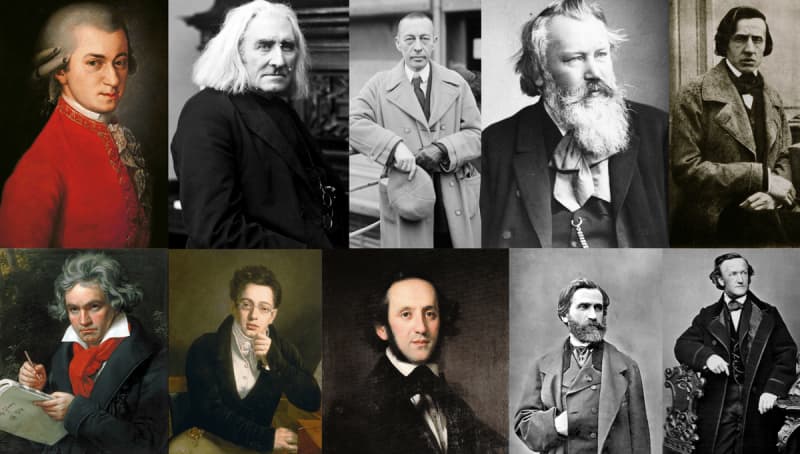
50 Times Great Composers Insulted Other Great Composers

© classicalregister.com

Without further ado, here are our twenty trivia questions from classical music history:

Which composer from Bingen is also known as a saint?

Hildegard of Bingen!

Hildegard of Bingen was born around 1098 in present-day Germany. She started having visions at an early age and joined a Benedictine monastery as a child.

Around 1150 she composed a famous sacred music drama called Ordo Virtutum, or Order of the Virtues.

Hildegard of Bingen wasn’t just a composer. She also wrote theological works based on her visions, as well as scientific and medical texts.

Some modern popes have referred to her as a saint.   

Which composer murdered his first wife and was never punished for it?

Carlo Gesualdo!

In 1586, when he was twenty, Gesualdo married his first cousin, Donna Maria d’Avalos. They had one son.

Four years later, Gesualdo came home and discovered his wife in bed with another man. Gesualdo killed both his wife and her lover with a gun and sword.

The authorities decided he had not committed a crime.   

Which composer died after striking his foot with a staff he used while conducting?

Jean-Baptiste Lully!

Italian composer Jean-Baptiste Lully was both a dancer and musician.

He got a job in the court of Louis XIV. In 1687, to celebrate Louis’s recovery from surgery, he conducted a performance of his Te Deum.

He conducted by pounding a staff on the floor. In the process, he accidentally hit his foot. Gangrene developed and he refused to amputate because he still wanted to be able to dance.

Lully died on 22 March 1687 of his injuries.   

Which composer had seven kids with his second cousin, and thirteen kids with his second wife?

Johann Sebastian Bach!

In 1707, Johann Sebastian Bach married his second cousin, Maria Barbara Bach.

She died tragically and unexpectedly in July 1720.

The following year, Bach married an accomplished young singer named Anna Magdalena. She was twenty and he was thirty-six.

They had thirteen children together. Their youngest child, a daughter named Regina Susanna, was only eight years old when he died.   

Which composer wrote music for virtuoso orchestra of women who had been abandoned as babies?

Antonio Vivaldi!

He was a teacher at a facility known as the Ospedale della Pietà, which took care of orphaned or abandoned children.

As children, the most musically talented girls were chosen to perform in the figlie di coro, or daughters of the choir. They would both sing and play instruments.

Vivaldi wrote many of his works for them.   

Which composer had a dream that the devil played violin for him – and then woke up and wrote it down?

Giuseppe Tartini!

Giuseppe Tartini wrote in Jérôme Lalande’s Voyage d’un François en Italie:

One night, in the year 1713 I dreamed I had made a pact with the devil for my soul. Everything went as I wished: my new servant anticipated my every desire. Among other things, I gave him my violin to see if he could play. How great was my astonishment on hearing a sonata so wonderful and so beautiful, played with such great art and intelligence, as I had never even conceived in my boldest flights of fantasy. I felt enraptured, transported, enchanted: my breath failed me, and I awoke. I immediately grasped my violin in order to retain, in part at least, the impression of my dream.

Even so, Tartini insisted that the work was not nearly as impressive as the one he’d dreamed.   

Which composer was fired by an archbishop and kicked on the behind?

Wolfgang Amadeus Mozart!

In 1781, Mozart was aiming to ingratiate himself with Emperor Joseph II, while still remaining employed with Prince-Archbishop Hieronymus Colloredo in his hometown of Salzburg.

Unfortunately, Colloredo kept Mozart from making lucrative appearances, and acrimony grew between them.

Mozart tried to resign, but Colloredo refused to accept the resignation.

Meanwhile, Mozart’s father was horrified at his son’s behavior and was encouraging him to make nice with the archbishop.

The following month, Colloredo finally accepted the resignation…but not before having his steward kick Mozart on the behind.

Mozart decided to make a go at freelancing in Vienna. The decision would change his life and career and music forever.   

Which composer was also one of the best swordsmen in Europe?

Joseph Bologne, Chevalier de Saint-Georges!

Bologne was the illegitimate son of a white planter named Georges and an enslaved Black woman named Nanon.

When he was seven, he was brought to France to be educated. At thirteen, he enrolled in a fencing academy. He soon proved to be a talented student.

A fencing master derided him by labeling him an “upstart mulatto.” Bologne beat that fencing master in a match, to the intense pride of his father.

Bologne also studied music as a teenager and became a great violinist and composer as an adult.    

Which composer had his skull stolen out of his coffin?

Joseph Haydn!

Haydn died in 1809 in Vienna and was buried. Soon after, the gravedigger was bribed by two men named Joseph Carl Rosenbaum and Johann Nepomuk Peter.

They wanted to examine Haydn’s skull because they were interested in phrenology, the pseudo-science then in vogue of associating character traits or talents with physical features.

Haydn’s skull ended up in Rosenbaum’s possession, and a series of darkly zany misadventures occurred.

Haydn’s skull and body were only reunited in the twentieth century, when a descendent of Haydn’s employer built a tomb for him.  

Which composer went deaf and had to be turned around to see the audience at the premiere of his ninth symphony?

Ludwig van Beethoven!

Beethoven was only in his mid-twenties in the 1790s when he first started noticing that his hearing was deteriorating.

By the time of the premiere of his ninth symphony in 1824, he had been completely deaf for a decade.

After the work’s first performance was over, he didn’t realize how the audience was applauding, and so singer Caroline Unger turned him around so he could see.  

Which composer and pianist were kept from marrying by the pianist’s father?

Robert Schumann and Clara Wieck!

Clara Wieck was born in 1819 and her music teacher father was insistent on molding her into a great musician.

Between his strict teaching regimen, his daughter’s astonishing inborn talent, and a little luck, Clara became one of the greatest pianists in Europe.

Another older piano student named Robert Schumann was rooming with the Wiecks. To Wieck’s horror, Robert and Clara fell in love. Robert proposed when she was eighteen, and she accepted.

Robert and Clara actually went to court to bypass Wieck. The court battle was bruising, but they were married in September 1840, the day before Clara’s 21st birthday.

Their love affair has since become one of the best-known love stories in the history of classical music.

Which composer and violinist did people think had made a deal with the devil?

Niccolò Paganini!

The violin has always had a bit of a demonic connotation (see the Devil’s Trill sonata!). This may have started because portable violin-like instruments were popular in dances during the Renaissance and had connections with physical love.

Violinist Niccolò Paganini was born in Italy in 1782, and he was so good at playing the instrument that audiences struggled to believe his talent had a natural explanation.

His appearance contributed to the myth. He was pale and vampiric, and looked like a cadaver.

He was also said to be a dangerous womanizer, which didn’t help his reputation!  

Which composer almost carried out a mass shooting – but didn’t because he was a composer?

Hector Berlioz!

Berlioz was a promising young composer when he became involved with pianist Marie Moke, sometimes known as Camille Moke. They became engaged when she was nineteen.

Berlioz traveled to Italy to compose. While there, he got news that she’d broken off the engagement and married an heir to a major piano making business by the name Camille Pleyel. (Yep: two Camilles in one marriage!)

Berlioz was so infuriated that he got on a carriage to go to Paris, carrying two pistols. He intended to shoot Moke, her mother, and then himself.

However, his rage eventually abated, and he decided not to go through with his violent plan, in part due to the music that the world would lose out on if he’d kill himself at the start of his career.

Beyond a doubt, it’s one of the most disturbing stories in classical music history.   

Which composer fell in love with Clara Schumann…but never married her?

Johannes Brahms!

Brahms was only twenty years old when he came to visit Robert and Clara Schumann in the autumn of 1853.

Both Robert and Clara were hugely impressed by the young man and took him under their wings. Robert even wrote a famous article in which he hailed Brahms as the savior of music.

In February 1854, Robert’s mental health issues came to a head, and he went to an asylum for treatment, leaving behind a distraught pregnant Clara and seven other young children.

Brahms tried to help Clara how he could, and, awkwardly, fell in love with her.

For a variety of reasons, even after Robert’s death, they never married. But they continued to love each other deeply and inspire one another creatively until Clara died in 1896.   

Which composer died after getting cholera from drinking unboiled water?

Pyotr Ilyich Tchaikovsky!

Tchaikovsky was feeling uncharacteristically optimistic after writing and premiering his famous sixth symphony – also known as the Pathetique – in October 1893.

However, his life was cut short just a few days later, when he went to a restaurant and drank a glass of unboiled water. There was a cholera outbreak in St. Petersburg at the time. Tchaikovsky came down with cholera and after an illness of just a few days’ duration, died.

Rumors have circulated that Tchaikovsky’s death was suicide or forced suicide. The New Grove Dictionary of Music reports, “We do not know how Tchaikovsky died. We may never find out.”  

Which composer and pianist had to get hypnotherapy to cure his writer’s block?

Sergei Rachmaninoff!

In 1897 composer Sergei Rachmaninoff suffered a humiliating premiere of his first symphony. The conductor may have been drunk, and the critics panned the work.

For three years, he couldn’t compose a thing, and he sank into a deep depression. After months of this, his aunt suggested that he seek help from a mental health professional, which he did.

He began working with a doctor named Nikolai Dahl, seeing him daily for four months in early 1900. He was composing again by the summer.

His next big work is perhaps his most famous – his second piano concerto. He dedicated the work to Dahl in appreciation.   

Which composer once claimed he only ate white food?

Erik Satie!

Satie wrote in his book, the amusingly titled Memoirs of an Amnesiac:

My only nourishment consists of food that is white: eggs, sugar, grated bones, the fat of dead animals, veal, salt, coconuts, chicken cooked in white water, fruit-mould, rice, turnips, camphorated sausages, pastry, cheese (white varieties), cotton salad, and certain kinds of fish (without their skin). I boil my wine and drink it cold mixed with the juice of the Fuchsia. I am a hearty eater, but never speak while eating, for fear of strangling.

This portion of the memoir is somewhat satirical, but it’s unclear exactly how much he was exaggerating.   

Which composer left his first wife, who later shot herself?

Claude Debussy!

Debussy met and married his first wife, Lilly Texier, in 1899.

Within four years, Debussy had grown bored of her. She wasn’t a sparkling intellect, and he felt she was too dull. She also never gave birth to a child, which disappointed Debussy.

Debussy’s solution to his marital troubles was to have an affair with a glamorous married singer named Emma Bardac.

The day before their fifth wedding anniversary, Lilly shot herself at the Place de la Concorde. She didn’t die, but the dramatic gesture didn’t save their marriage.

Debussy would eventually divorce Lilly and marry Bardac  .

Which composer never married and had a houseful of Siamese cats?

Maurice Ravel!

The perpetually single composer lived in a magical house called Belvedere outside Paris. Instead of a wife or lover or children, he filled Belvedere with various mechanical trinkets, Siamese cats, and music.

In his opera L’enfant et les sortilèges Ravel wrote an aria called Duo miaulé, or Meowed Duet. This work was clearly inspired by his cats.   

Which American composer died of a brain tumor in his late thirties?

George Gershwin!

In the mid-1930s, at the height of his creative powers, Gershwin began complaining about headaches, stomach aches, and other symptoms.

In 1937, while soloing with the Los Angeles Philharmonic, he had a brief seizure, followed by an olfactory hallucination of burning rubber.

He began deteriorating mentally, rubbing chocolate on his body and trying to shove a man out of a car. Doctors labeled him a hysteric.

However, when he went to the hospital for the last time, it was clear to doctors something was physically wrong. Gershwin was diagnosed with a brain tumor and died on the operating table   .

Conclusion

Classical music trivia is full of facts about generations of musicians and performers. We hope you enjoyed these twenty, and that they’re a good jumping off point to learn more!
Forgotten Pianists: Stanislav Neuhaus


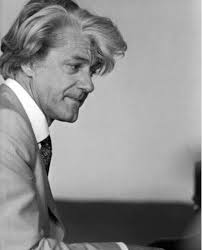
Stanislav Neuhaus

Stanislav Neuhaus

Stanislav Neuhaus (1927–1980) was the son of Heinrich’s first wife, Zinaida, who married the writer Boris Pasternak in 1931 and took Stanislav with her. Despite living with his stepfather, he studied piano with his father, graduating in 1950, continuing postgraduate studies until 1953, and later becoming one of his father’s three assistants, along with Lev Naumov and Yevgeny Malinin.

Stanislav was always in the shadow of his father, considered one of the most celebrated artists of his generation. His father’s pupils included both Emil Gilels and Sviatoslav Richter, and as his father’s assistant, Stanislav would have had teaching responsibilities as well. Outside his work for his father, he had his own teaching studio, beginning in 1957, with students including Vladimir Krainev, Radu Lupu, Brigitte Engerer, and his own son, Stanislav Bunin. In recognition of his artistic achievements, he was designated a People’s Artist of the RSFSR in 1978.

Despite that shadow, Stanislav made his own name and was recognised by Aram Khachaturian, in the paper Soviet Musician, as ‘the best pianist in the Moscow Conservatory’. The International Stanislav Neuhaus Piano Competition, held in Chelyabinsk, Russia, at the Chelyabinsk State Institute of Culture, was named in his honour – the last one was held in 2021.

Few recordings seem to be available, but fortunately, there are many videos of his work.

Chopin program created for The Golden Era of Russian Pianism, vol. 1, gives us a broad selection of études, ballades, a waltz, and a scherzo. Even from this, we can get a feeling for the emotion and interpretation that he brought to his performances.   

Chopin’s Étude Op. 10, no. 3 gives us a better view of his performance style.

Stanislav Neuhaus plays Chopin Etude Op.10-3   

A 1973 live recording of Neuhaus playing Rachmaninoff’s Piano Concerto No. 2 draws us deeply into Russian pianism at its greatest.   

A 1954 video shows Neuhaus’ interpretation of Debussy.

Stanislav NEUHAUS plays DEBUSSY Clair de lune     

We’ll close with a work for piano 4 hands, Mozart’s Sonata for Two Pianos in D major, K. 448, played by Heinrich and Stanislav Neuhaus.

George Enescu


The Greatest Musician You May Not Know

In her Grove Music Online article on George Enescu (1881-1955), Valentina Sandu-Dediu hails her compatriot as “Romania’s greatest composer, the leading figure in Romanian musical life in the first half of the 20th century, and one of the best-known violinists of his generation.” (Sandu-Dediu, GMO, 2015)

Yet, despite his high status within Romanian musical culture, Enescu remains relatively unknown to the wider international public today. His works are far less frequently performed, and they have really never entered the standard Western canon.

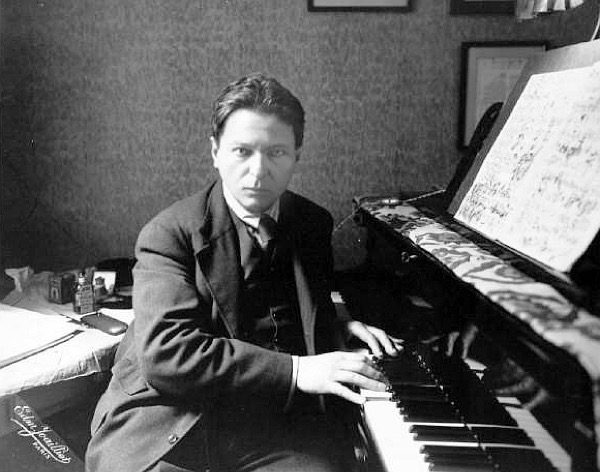
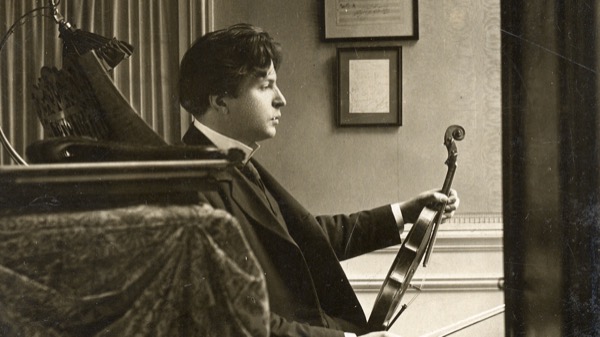
George Enescu, 1930

George Enescu, 1930

Sandu-Dediu’s scholarly assessment, however, is confirmed by a number of high-profile musicians. Pablo Casals described Enescu as “the greatest musical phenomenon since Mozart, and one of the greatest geniuses of modern music.” (Dickerson, Musicweb-International, 2014)

And Yehudi Menuhin, Enescu’s most famous student, said about his teacher, “he will remain for me the absoluteness through which I judge others… Enescu gave me the light that has guided my entire existence.” (Muzeul National “George Enescu”) Such testimonies clearly suggest Enescu’s capacity to shape the artistic worldview of an entire generation of musicians.

To commemorate the passing of George Enescu on 4 May 1955, let us take a closer look at his extraordinary legacy as a performer, teacher, and composer.  

The Making of a Genius

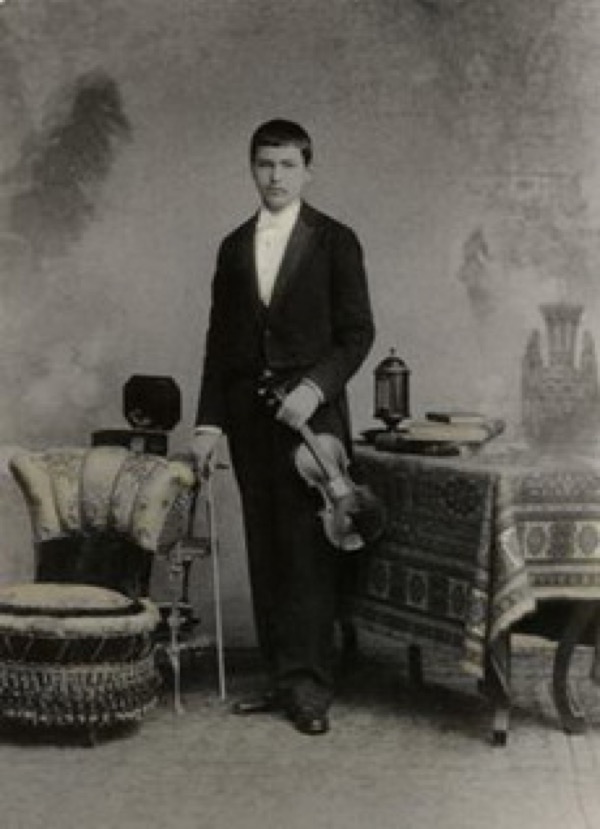
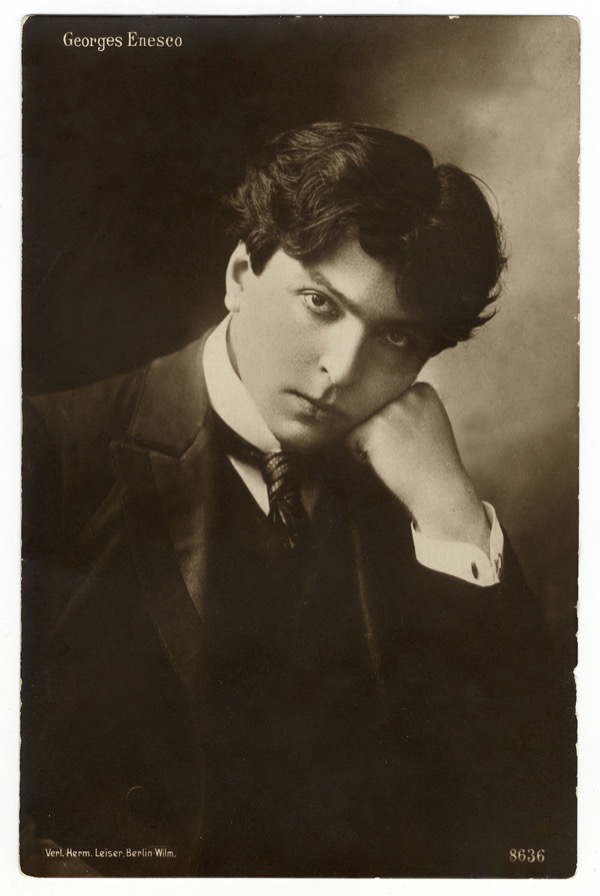
Young George Enescu

Young George Enescu

George Enescu was born on 19 August 1881 in the village of Liveni, Romania. His father, Costache Enescu was an estate manager, and his mother was Maria Enescu (née Cosmovici), the daughter of an Orthodox priest. Enescu’s ancestors in a direct line were all musical and primarily active as church musicians.

George was the eighth child born into a marriage where all previous siblings had died in infancy. His musical genius was discovered early, as he was able to reproduce with absolute fidelity all the melodies he heard. Auditory memory would eventually become one of the defining foundations of his interpretive and compositional approach.

He started to play the violin, taught by a neighbour, at the age of four, and he almost immediately started to compose. As he recalls, “And I began to compose, almost unconsciously…I knew nothing, I had heard practically nothing…yet from my childhood my one idea was to be a composer.” (Enescu, His Life in Pictures)

In 1888, George played for the Romanian opera composer Eduard Caudella, who advised Costache to take his son to Vienna to study. As such, Enescu became the youngest student ever admitted to the Vienna Conservatory on 5 October 1888.   

Among Masters and Legends

George Enescu

George Enescu

His teachers included Joseph Hellmesberger Jr. and Sr., Robert Fuchs, and Ernst Ludwig. The director Joseph Hellmesberger Sr. took young George under his wing, and he introduced him to his hero Johannes Brahms.

Between 1888 and 1894, and as the leader of the first violins in the student orchestra, Enescu played Brahms for Brahms. Greatly enthralled by the music of Brahms, Enescu also got to know the music of Wagner, performed at the Hofoper under Hans Richter.

After three years of study, Enescu graduated with honours at the age of 12, but decided to remain in Vienna for an additional year to further his studies of composition under Fuchs.

Recitals in Vienna featured works by Brahms, Sarasate, and Mendelssohn, and Hellmesberger suggested that George might benefit from spending some time in Paris.

Enescu arrived in Paris in 1895 to continue his studies at the Paris Conservatoire. He studied composition under Massenet and Fauré, and counterpoint under André Gédalge. Fellow students and friends at the Conservatoire included RavelSchmitt, Koechlin, Casella, Cortot, and Thibaud.  

Juvenilia and Early Mastery

Enescu’s main interest was in composition, and on 6 February 1898, at the age of 16, he presented his Op. 1, the Poème Roumain. The work was given in Bucharest two months later, with Enescu conducting, and the composer was quickly hailed as a figure of national importance.

By the time Enescu had reached the age of sixteen, he had composed at least fifty works.

Suggestions of immaturity and youthful doodling, however, are completely out of place when speaking of Enescu. By 1895, if not before, he was already a thorough master of the art of composition.

We know that Enescu composed many youthful study works, including a substantial number of symphonic essays. It is hardly surprising that Massenet described Enescu’s first symphony in D minor as a very remarkable work with an extraordinary instinct for development.

None of Enescu’s works produced before 1897 seems to have been written with publication in mind, and indeed nearly all of them are still unpublished. Thankfully, Enescu preserved the manuscripts of most of them, and they are now in the Enescu Museum in Bucharest.   

Search for Artistic Identity

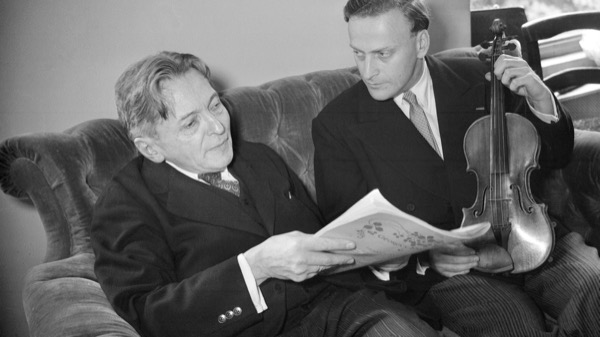
George Enescu with Yehudi Menuhin

George Enescu with Yehudi Menuhin

George Enescu graduated in 1899 with the Grand Prix du Conservatoire, yet his professional and creative paths were still undecided. In his student works from Vienna and early Paris, we find the heavy influence of Schumann and Brahms.

His love for Wagner and his contact with French music made Enescu’s compositional style more clearly defined. As he explained in his Memoirs, “With my Second Sonata for Violin and Piano and with my String Octet, I felt myself evolving rapidly; I was becoming myself.” (Constantinescu, George Enescu, 1981)

The prospects of a career as a composer in Paris were not encouraging, and the same was certainly true of Romania. As such, Enescu led a divided existence between France and Romania, with his energies divided between performance and composition.

As a pianist and violinist, he made Paris his main base, forming a trio with Casella and Louis Fournier in 1902 and the Enescu Quartet in 1904. He toured several European countries as a violinist and conductor.   

Between Composition and Service

Enescu primarily composed during the summer months in the Romanian countryside, and he became an active figure in the musical life of that country. As Noel Malcolm writes, “Enjoying the special patronage of the royal family, he founded the Enescu Prize for Romanian composers in 1912… He formed a symphony orchestra in 1917 and, in 1921, created the first national opera company in Romania.” (Malcolm, GMO, 2001)

The composition of his opera Oedipe took a number of years, interrupted by regular visits to the United States as a violinist. He also had the opportunity to conduct and was even considered a replacement for Toscanini at the New York Philharmonic.

Enescu never contemplated a career as a pedagogue. However, a young Yehudi Menuhin convinced him to accept him as a student from 1927 onward. In due course, Ferras, Gitlis, Grumiaux, and Haendel were greatly influenced by his teaching, and he eventually accepted an appointment at the Mannes School of Music in 1948.

In terms of composition, Enescu freely switched between a variety of styles. Ambitious and sweeping Romantic works are interspersed with neoclassical or neobaroque compositions.     

Folk Influences and Compositional Technique

Current assessments of Enescu’s musical development place great emphasis on the elements of Romanian folk music, which appear in his works at an early stage. Most prominently, we find his two Romanian Rhapsodies of 1901.

Their popularity notwithstanding, Enescu bitterly resented the way they had dominated and narrowed his reputation as a composer. As he remarked in 1924, the only thing a composer could do with an existing piece of folk music was to rhapsodise it, with repetition and juxtaposition.

All protestations aside, Enescu did draw on the flexible and ornamented style of traditional folk melodies in his works. Instead of quoting folk tunes directly, he primarily absorbed their character.

Of particular influence is the “doina,” a traditional Romanian song form marked by melancholy with a flexible line in which melody and ornamentation merge into one. Melodies, superimposed on one another, represented the vital principle of his music.

Malcolm writes, “In his mature works, however, Enescu made increasing use of the less mechanically contrapuntal, more organic technique of heterophony—a form of loose melodic superimposition which was also rooted in Romanian folk music.” (Malcolm, GMO, 2001)   

Exile and Farewell

George Enescu

George Enescu (© Muzeul Național George Enescu)

During World War II, Enescu stayed in Bucharest and lived in the Cantacuzino Palace, now the George Enescu museum, as he had married the aristocratic Princess Maruca Cantacuzino, née Rosetti-Tescanu. Enescu produced several important recordings of his own works with his godson, Dinu Lipatti.

After the Communist takeover, the couple went into exile in Paris in 1947. Enescu was suffering from heart trouble, curvature of the spine, and a hearing problem, which affected intonation. He briefly resumed his career as a violinist and made several important recordings.

Enescu suffered a severe stroke in July 1954 that left him partially paralysed, and he died on 4 May 1955. He was interred in Père Lachaise Cemetery in Paris.

A Life in Service to Music

George Enescu was a musical phenomenon, and he left a profound personal impression on nearly everyone he encountered. He had an extraordinary memory and apparently knew every note in Wagner’s Ring and the complete works of Bach by heart.

As a performer, and avoiding all forms of showmanship, his violin tone was modelled after the human voice, and he had a deep humility towards the music of other composers.

Enescu regarded his own works with great modesty, “and his career as a composer suffered from his dignified but damaging reluctance to engage in any form of self-promotion.” (Malcolm, GMO, 2001)

George Enescu was perhaps the most versatile and most comprehensively gifted musician of his time. It is no accident that Yehudi Menuhin described him as the greatest musician he had ever experienced.

George Enescu was brilliant in everything he touched, excelling as composer, violinist, pianist, conductor, teacher, and musical thinker, all in the service of music itself. His legacy endures in his works and also in the artistic ideal he transmitted to those who followed him.

Sunday, May 3, 2026

Best Yuja Wang Encores (Born on February 10, 1987) Confetti, Fireworks, and Fingers on Fire


Some pianists impress you. Some intimidate you. Some make you want to practice. Yuja Wang does something far more dangerous. She makes you believe, just for a second, that the piano might be capable of flight. Then she laughs, changes shoes, and proves it again.

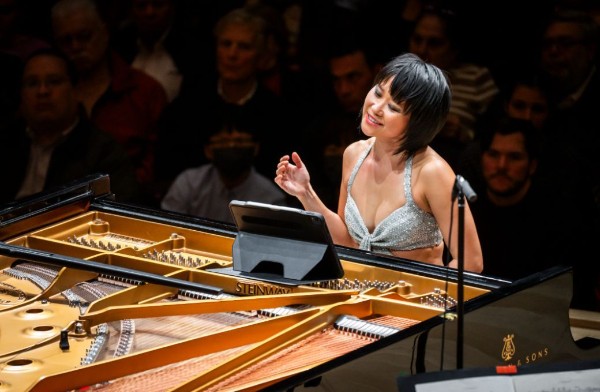
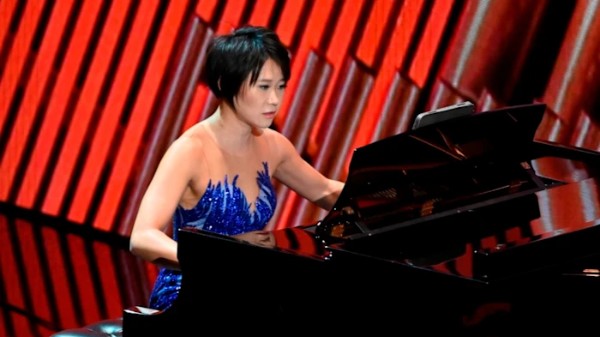
Yuja Wang

Yuja Wang

To hear Yuja play is to witness total command without a trace of heaviness. Her fingers are so impossibly fast that your eyes can’t follow. And it’s all fearlessly clear and comes with ease as notes sparkle, dart, tease, explode, and vanish.

Classical music has long suffered from performers who behave as if joy were somehow unprofessional. Yuja Wang is the antidote. She smiles at the keyboard. She dares. She risks. She throws off ten encores like confetti and somehow makes each one feel like a gift.

Talking about encores, to celebrate her birthday on 10 February, let’s listen to her most jaw-dropping encores, explosions of adrenaline, personality, joy and irresistible brilliance.  

Blink and You’ll Miss It

Rimsky-Korsakov’s “Flight of the Bumblebee” in the arrangement of Cziffra lands like a perfectly timed firework. It’s short, explosive, and utterly irresistible. In fact, it’s a full-blown adrenaline rush.

The piano under her hands doesn’t buzz so much as ignites, flashing past in a blur of precision, speed, and wicked delight.

But it’s not just the incredible velocity that makes this a truly jaw-dropping encore. It’s Yuja’s control that is out of this world. Every note is clean, every accent alive, and every phrase shaped with a wink. How on earth can she make something so ferocious sound so joyful?   

Mozart Meets Modern Fireworks

Yuja Wang takes Mozart’s “Alla Turca” and gleefully rockets it out of the 18th century and straight into now. What starts as a familiar classical wink suddenly sparkles, swerves and struts with crisp elegance, colliding with high-octane brilliance.

And if you’re wondering what magic potion she’s using, the arrangement itself feels like a delicious hybrid. It’s a mischievous mash-up of Arcadi Volodos’ pianist extravagance and Fazil Say’s jazzy bite.

Both are filtered through Yuja’s own fearless instinct, with the result that Mozart becomes part jazz club and part keyboard acrobat. It’s utterly alive, Mozart with lipstick, sneakers, and bursting fireworks.

Where Stillness Turns Electric

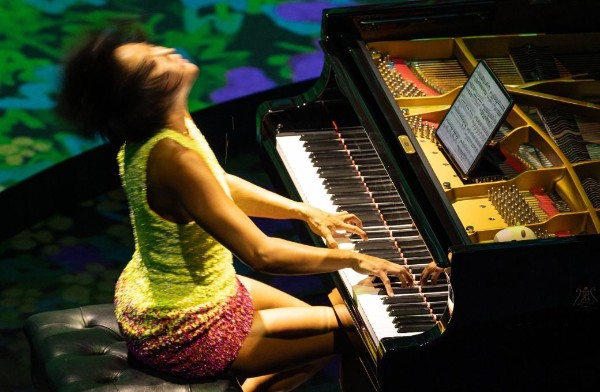
Yuja Wang

Yuja Wang

After fireworks and bravura in the main concert, Yuja Wang occasionally turns to something hypnotic in her encore. Just listen to how Philip Glass’ “Etude No. 6” is taking over the room. The steady pulse begins almost innocently, and then, without warning, it transforms.

Repetition becomes propulsion, and simplicity turns into pure electricity. Every return of the loop feels newly charged, all nudged forward with razor-sharp rhythm and luminous clarity.

As an encore, it’s genius. This is a different kind of thrill; it’s cool, focused, and irresistible. You feel the pulse in your chest, the precision in your bones, and suddenly the hall is vibrating with the quiet, unstoppable confidence of modern music played by someone who absolutely owns it.  

Turbocharged Tea for Two

When Yuja Wang launches into “Tea for Two,” the piano becomes a playground of swing, sparkle, and sheer joy. Inspired by Art Tatum’s legendary jazz arrangements, she takes this familiar tune and turns it into a whirlwind of dazzling runs and playful flourishes.

Every phrase seems to giggle and wink at the audience. It’s not just an encore but a celebration. Let’s call it a little surprise that lifts the hall into laughter and applause.

Everything is effortless: the tricky leaps, the double-note passages, and the rapid-fire ornaments. It basically is unbelievable, as Yuja Wang rolls speed, clarity, and sheer brilliance all into one.  

Rocket-Powered Virtuosity

When Yuja Wang dives into Kapustin’s “Toccatina,” she turns the piano into a dazzling jazz-fuelled rocket ship. Yuja attacks this mischievous whirlwind, part classical precision and part big-band swagger, with that signature fearless confidence.

There is plenty of blinding speed and a blizzard of notes, and Yuja Wang brings sheer personality to every measure. Those dizzying runs don’t just fly; they dance, laugh, and flirt.

This is pure joy, reckless brilliance, and rhythmic exhilaration all wrapped into one ridiculously entertaining encore. Those tricky rhythmic twists trip me up every time, but Yuja makes it gleam like polished crystal.   

Polka Rocket

If virtuosity had a theme song, Yuja Wang would be playing it at full throttle on a grand piano. Just listen to her attack the Cziffra arrangement of Strauss’ “Tritsch-Tratsch Polka.” This isn’t a polka, it’s rock-fuelled finger gymnastics.

Every rapid-fire scale, cascading arpeggio, and whirlwind octave is executed with a precision that makes your jaw drop. She spins Cziffra’s mercilessly difficult passagework with the same ease that a cat might chase a laser pointer.

The almost absurdly difficult technical foundation is made seemingly effortless. By the final barrelling chords, you’re certainly not hearing a polka. You’re riding a rollercoaster designed by a piano wizard where exhilaration is mandatory.   

Melody in Bloom

Yuja Wang

Yuja Wang

Yuja Wang’s take on Gluck’s Melodie from Orfeo ed Euridice (arranged by Sgambati) is like stepping into a sunlit garden of sound. What makes this encore so enchanting is how it contrasts with the firecracker pyrotechnics we usually associate with her.

This encore just delicately floats, with each phrase shaped by a singer’s breath and a painter’s eye for nuance. And with that subtle pedal work that lets the harmonies shimmer underneath, the whole piece just starts to glow.

Here, it’s all about touch, tone and whispered elegance. Yuja caresses each note, letting every delicate turn of the melody bloom. If you really needed proof that Yuja isn’t all about speed and power, this encore showcases her exquisite musicality in every shimmering phrase.  

Horowitz Showstopper

If you’re looking for a whirlwind in a flamenco dress, look no further than Yuja Wang attacking Horowitz’s “Carmen Fantasy Variations.” It’s fiery, dazzling, and absolutely irresistible.

Each variation bursts with personality. One moment it’s a playful flirt, the next a sultry smoulder, and then suddenly she’s launching into a thunderous cascade of scales and arpeggios that leave you breathless.

It’s pure pyrotechnics, but with Yuja, there’s never a sense of chaos, as every blazing run and daring leap is impeccably shaped and perfectly timed. Her touch is electric, and she takes us on a thrilling and utterly exuberant ride through Bizet, Horowitz, and her own unstoppable personality. 


From Counterpoint to Confetti

Here is an encore that Yuja doesn’t play all the time, and it’s not so easy to get good footage of it. However, this Katsaris piano paraphrase of Bach’s “Badinerie” is exactly what Yuja ordered.

In the original, it’s already a cheeky and sprightly dance full of twirls and infectious energy. In Katsaris’s arrangement, however, the infectious spirit is out of this world. Every phrase is packed with tiny virtuosic flourishes, surprising little detours, and sparkling commentary that feels like musical confetti.

And then Yuja steps in, and it feels like a burst of personality. Her rhythmic zing and tonal sparkle bring out the humour and brilliance in Bach’s counterpoint, letting every nimble twist shine. By the time she’s finished, it’s less a performance and more a joyous celebration with a distinctly modern and joyful twist.   

Desert Moon Dance Party

For another novel encore, let’s turn to Yuja Wang’s take on “Danzón No. 2” by Arturo Márquez. This sizzling orchestral showpiece has been cleverly reimagined for solo piano by Leticia Gómez Tagle. And under Yuja’s fingers, it becomes an irresistibly sultry dance party under a desert moon.

From the very first syncopated accents, Yuja brings out the seductive rhythmic flair, her fingers teasing and flirting with the melody like a dancer drawing you into the floor.

The way she balances rhythmic excitement with expressive nuance gives the piano version both the heartbeat of the dance and the sparkle of a showpiece. What can I say? It’s full of flirtatious flair, sparkling fingers, and irresistible joy.

Fingers on Fire

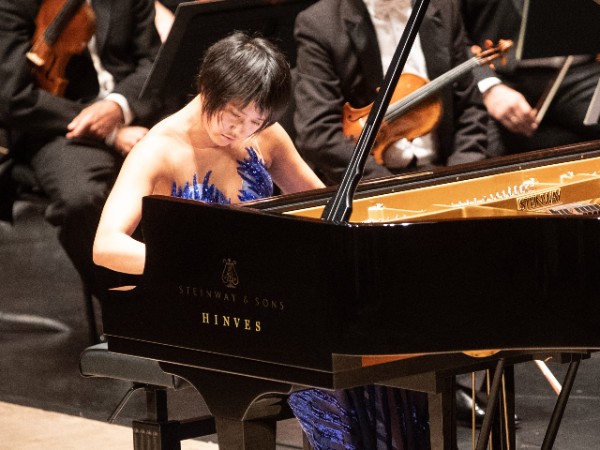
Yuja Wang

Yuja Wang

How about concluding this blog with a lightning bolt, taking a bow? That’s what’s happening when Yuja Wang attacks Prokofiev’s “Toccata.” Her fingers fly with a kind of joyful fearlessness, rapid-fire scales and cascading octaves included.

Every percussive blast is landing with dazzling precision. But here’s the magic. It’s not just a technical tour de force, but even in the midst of this relentless energy, every note sings. Her hands are literally everywhere at once, yet nothing sounds cluttered or mechanical.

I just feel a sense of giddy exhilaration, the kind of thrill that makes you grin and hold your breath at the same time. This is virtuosity that doesn’t just impress the brain. It sweeps the soul along, turning blistering technique into pure musical storytelling.

Whirlwind of Wonder

Yuja Wang doesn’t just play encores. She creates joy, she redefines possibilities, and she reminds us that the piano can dance, soar, and even flirt with the sky.

To love Yuja Wang’s playing is to love risk, brilliance, humour, glamour, and precision, all wrapped into one fearless artist who walks onstage as if she belongs there completely.

But here is the truth. After all the fireworks, the flirts, the sparkling confetti of scales, runs, and octaves, you realise you’ve witnessed more than an encore marathon.

We’ve glimpsed the essence of Yuja Wang. She is a whirlwind of brilliance, bravura, and unabashed delight. And honestly? I can’t wait to see what she’ll throw at the keys next.

Featured Post

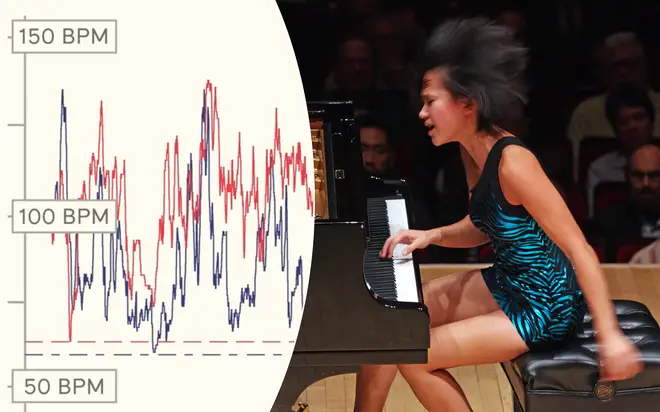
Yuja Wang wore a heart rate monitor in Rachmaninov marathon, with astonishing results

4 April 2024, 17:03 | Updated: 5 April 2024, 15:58 Yuja Wang’s heart rate results revealed, after marathon Rachmaninov performance.  Picture...