Friday, June 28, 2013

The Magic of the Stradivarius

The Alard

The Alard Stradivarius

Antonio Stradivari is one of the most famous makers of stringed instruments (otherwise known as luthiers) of all time. His instruments are highly regarded and often sell for six figure sums at auction thanks to their unique sound and esteemed history. Created in 1715, in Stradivari's 'golden period' this violin takes its name from French violinist Jean-Delphin Alard, its most famed owner. The instrument sold at auction in 1981 to a collector in Singapore for $1.2 million. Look at the ornate carving on the tailpiece.

Monday, June 10, 2013

Eugen d'Albert - His Music and Life


Eugen d'Albert was born on April 10, 1864 in Glasgow/Scotland. His father was the very known dance composer Charles d'Albert (1809-1886), an Italian grand duke's descendant.

D'Albert studied in London, then in Vienna with Hans Richter (1843-1916) and in Weimar with the unforgettable Franz Liszt. As a blessed pianist, he went on several concert tours. D'Albert admired very much Ludwig van Beethoven (by the way: me too!), whom he gave the real monstrous pathos, which Beethoven really deserves.

Johannes Brahms became an intimate friend.

From his compositions are still known and part of stage performances such as "The Concerto for Cello in c-major" from 1899 and
"The Concerto for Piano in e-major" from 1893. Out of 21 operas the following pieces are more then remarkable: "Die Abreise" (The departure, 1898), "Die toten Augen" (The dead eyes, 1916), and most especially "Tiefland" (The Plain, 1903).

Eugen d'Albert passed away on March 3, 1932 in Riga, the capital of Lativa.

Paul Lincke - His Music and Life

Born on November 7, 1866 in Berlin, the German Paul Lincke has become a popular composer.

Lincke's father was a known and successful municipal authorities civil servant. In Wittenberg's Piper College in Eastern Germany, Paul Lincke studied violin and bassoon play.

Then, Linncke became the Director General of the Berlin Apollo Theater.

1897 marked Lincke's first big stage success with a during those times so called "equipment revue" entitled "Venus on Earth". National traditions mixed with a unique and real "Berlinian operetta sound" has been the reasons of Lincke's entire success: "Frau Luna" (Madame Luna, 1899), "Lysistrata" (1902, with the evergreen "The glimmering glow-warm", one of my late grandmother's favourites), or "Casanova" (1914, badly on stage, because World War I just started).

"Berliner Luft" (Air from Berlin) remained as unofficial anthem of Berlin till today.

Paul Lincke passed away in Clausthal-Zellerfeld on September 3, 1946.

Monday, June 3, 2013

10 OMG Moments in Classical Music

Click Here
What are the greatest moments in classical music history? The bits that make you immediately rewind and play them again? Simply, the most surprising, shocking, beautiful or weird bits in classical music? Here are 10 moments that will make you say 'OMG'… 

beethoven OMG
1. The top C in Allegri's Miserere

There you are, just chilling out with a bit of 17th century choral music like any self-respecting person would do, and then all of a sudden, BAM! High C! Emotional overload! Skip straight to it by pressing play below…

2. The climax of Beethoven's 9th Symphony

Everyone sing along! "Freude, schöner Götterfunken, Tochter aus Elysium!" This is such a fist-pumping moment. How fist-pumping? Well, it's supposed to encapsulate the joy of humanity, of being alive, Germanic might, the brotherhood of man and basically all worldly positivity, which is a pretty tall order. Does Beethoven manage it? Take a listen… (the answer's 'yes', by the way.)

3. The opening chords of Elgar's Cello Concerto, played by Jacqueline Du Pré
jacqueline du pre
Few pieces are so iconic that they can be defined by a few chords alone, and few musicians are so iconic that they can be defined by one piece. In a word, 'whoompf'.
Watch the performance here .

4. The Tristan Chord

How can one chord redefine the way we think about music? Well, it's simple. All Wagner did when he plonked this gorgeous little progression into the opening of his opera Tristan und Isolde was use an augmented fourth, an augmented sixth and an augmented ninth above the root to imply a completely different harmonic relation. Easy, yeah? Oh, just listen to it…

5. Don Giovanni is dragged to hell
don giovanni
Much of Mozart's Don Giovanni is actually quite humorous, with amorous japes and farce aplenty, but things take an incredibly sinister turn right at the end when the Don himself (think of him as a folkloric version of Russell Brand with comparable dress-sense) is finally forced to atone for his sins. There's a slow knock at the door, Giovanni opens it and is confronted with a stone state of the Commendatore, who drags the screaming Don into the fiery netherworld. Yikes!
Watch the whole scene here .

6. When all 40 voices come together in Spem in alium

Spem In Alium is a choral classic given a new audience thanks to a certain E.L. James, but we prefer to think of Thomas Tallis' piece as it was intended - a whacking great 40-part motet with one of the most breathtaking ensemble entries in the whole repertoire. Press play below to hear those 40 parts suddenly arrive all at once…

7. "Zaaadoook The Prieeest!"

You know how it is. You're just bumbling along, minding your own business, maybe there's some baroque music in the background… KAPOW! Mass choral entry! Something about a priest! Make sure you're sitting down for this one.

8. The Rite Of Spring causes a riot


Imagine being so maddened and confused by a piece of music that you start a riot. A bit like how parents of Justin Bieber fans must feel, maybe. Anyway, Igor Stravinsky's Rite Of Spring was the original authority-botherer, with its rhythmic and textural originality causing the audience at its premiere to turn into a gibbering rabble, 40 of whom were ejected from the theatre. Give the Augurs Of Spring section a listen and try to resist the urge to flip a table.

9. When Ride Of The Valkyries turns up in Apocalypse Now
When he was composing Die Walküre , it's probable that Richard Wagner didn't have the Vietnam war in mind. However, since Francis Ford Coppola's Apocalypse Now, this exhilarating music has become associated with exactly that. And helicopters. And explosions.


10. The high notes in the Queen Of The Night aria

As well as being an OMG moment, this is a "did I just hear that correctly?" moment. Actually, it's more like an "is that an alien singing, and why has my champagne flute exploded?" moment. Just listen.

Friday, May 17, 2013

Orlando di Lasso - His Music and Life


Lassus, also known by the Italian form of his name Orlando di Lasso, belonged to the Franco-Flemish school of composers whose work was of supreme international importance in the 16th century. He was born at Mons, in Hainaut, in 1532, and as a boy entered the service of a member of the Gonzaga family (hereditary dukes of Mantua). Employment elsewhere in Italy and a stay in Antwerp was followed by a position in the musical establishment of Duke Albrecht V of Bavaria in Munich, where Lassus remained from 1556 until his death. With Palestrina and Victoria, he is one of the most important composers of the period.

Church Music
Lassus wrote a considerable quantity of church music, including over 70 settings of the Mass, settings of the Passions from the four evangelists, and a very large number of motets. From this considerable body of high-quality work, selection is invidious; but mention may be made of the Requiem for four voices, the Missa Qual donna, motets such as Tristis est anima mea, and the setting of the seven penitential Psalms of David and of the Holy Week Lamentations.
Secular Vocal Music

The secular vocal compositions of Lassus include madrigals, in the Italian style, some 150 French chansons, and a much smaller number of German Lieder, all of great interest and forming a large body of work, including settings of Petrarch, Ariosto, Ronsard and Marot, from which selection is again invidious.

Ruggiero Leoncavallo - His Music and Life

Born in Naples on March 8, 1858, the Italian composer studied at the Naples College of Music and became a private music teacher and touring pianist in between those careers.

In 1892, Leoncavallo came out with the opera "I Pagliacci" (The Barber) in two acts. Together with the one act opera "Cavalleria Rusticana" by Pietro Mascagni (1863-1945), "The Barber" constitutes a wonderful one evening stage play in many concert houses and theatres. 

I have been blessed to experience several stage performances in different European cities.

The barber's part, the cheated comedian, has been holding great attractions for many world known tenors.

Unbelievable for me: all other operas of Leoncavallo flopped, even containing wonderful and incredible melodies, who might break your hearts. "Der Roland von Berlin" (1904, dedicated to the last German Emperor II). 

Leoncavalo passed away on August 9, 1919 in Montecatini Toscana County/Italy.

Featured Post

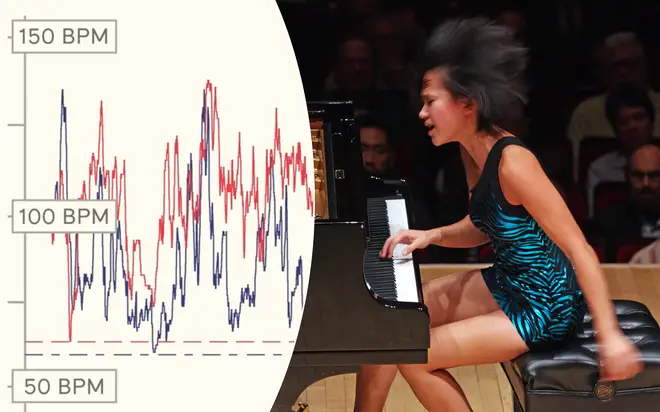
Yuja Wang wore a heart rate monitor in Rachmaninov marathon, with astonishing results

4 April 2024, 17:03 | Updated: 5 April 2024, 15:58 Yuja Wang’s heart rate results revealed, after marathon Rachmaninov performance.  Picture...