10 Beautiful versions for Christmas
By Hermione Lai
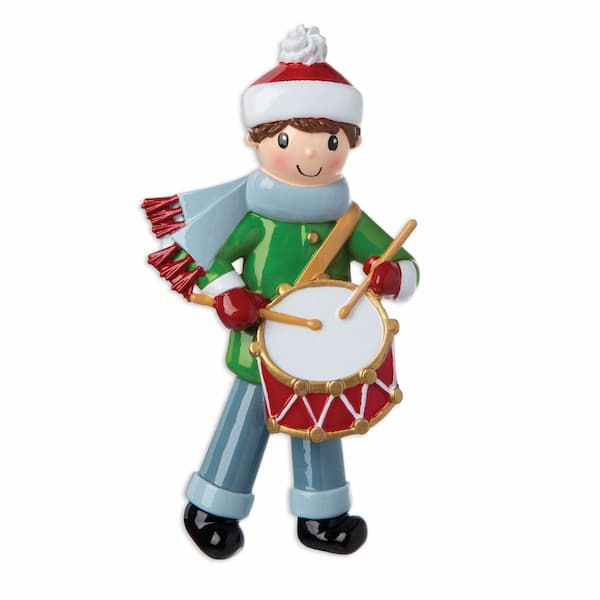
The Little Drummer Boy ornament
One of the most beloved and enduring Christmas carols is “The Little Drummer Boy.” It is a heartwarming and simple story about a poor boy who offers the gift of music to the newborn Jesus. Evoking a sense of humility, innocence, and devotion, it’s no wonder that it is a favourite during the holiday season. With Christmas once again around the corner, I wanted to share 10 beautiful versions of this delightful and touching carol with you.
“The Little Drummer Boy” The Harry Simeone Chorale (1965)
Katherine Kennicott Davis
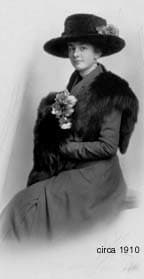
Katherine Kennicott Davis
To me, this lovely Christmas carol initially sounded like an ancient melody, but I was wrong. It was written only in 1941 by the American composer Katherine Kennicott Davis. David studied music at the New England Conservatory of Music in Boston, and also with Nadia Boulanger in Paris. She taught music at two Schools for Girls in Massachusetts and in Philadelphia.
For the choirs at her schools, Davis composed well over 600 compositions, and she also contributed to a multiple-volume set of music and books for educational purposes. Much of her music was published by Schirmer in Boston. Davis left all of the royalties and proceeds from her compositions to Wellesley College’s Music Department, her alma mater, where she studied in her youth.
“The Little Drummer Boy” Bing Crosby/David Bowie (1977)
Marching Rhythm
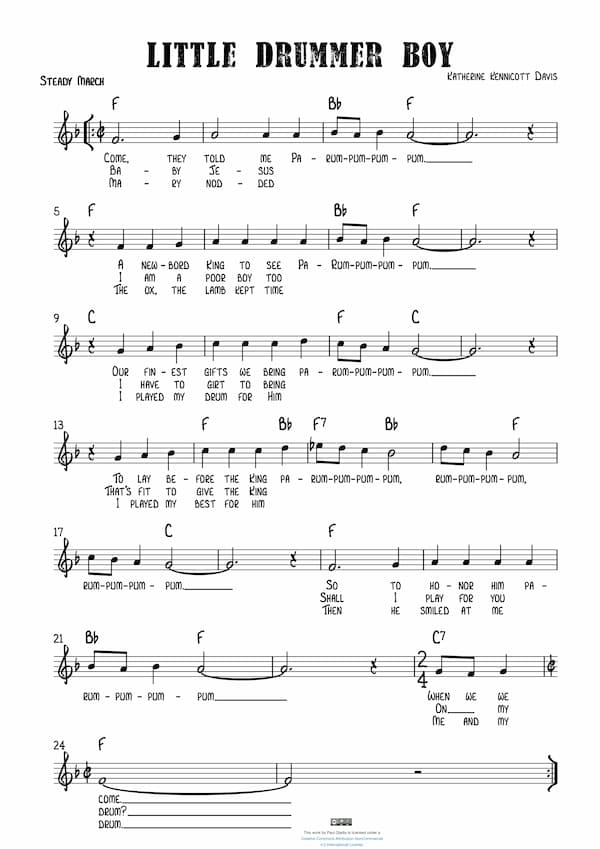
The Little Drummer Boy music score
One of the most prominent features of this beloved Christmas carol is the rhythm. And you can hear how it plays a role in telling the song’s simple and heartfelt message. It’s almost military-like, and while the basic 4/4 rhythm is straightforward, there are moments of syncopation in the vocal line. The steady drumming beat is both humble and profound.
Davis originally called the song “Carol of the Drums,” and she might have suggested that it is based on a Czech carol. However, the chair of the music department at Wellesley College writes. “One day, when Davis was trying to take a nap, she was obsessed with this song that came into her head, and it was supposed to have been inspired by the French song “Patapan.” ‘Patapan’ translated in her mind to ‘pa-rum-pum-pum,’ and it took on a rhythm.”
“The Little Drummer Boy” Celtic Woman
Lyrics
The text of this wonderful carol centres on the themes of humility, generosity, and sacrifice. The narrator is a poor boy who offers the newborn King his musical talent and drumming skills. In a way, the act of giving something of personal value rather than material wealth is a fundamental Christian idea rooted in love and devotion.
Verse 1
Come, they told me
Pa-rum pum pum pum
A newborn King to see
Pa-rum pum pum pum
Our finest gifts we bring
Pa-rum pum pum pum
To lay before the King
Pa-rum pum pum pum
Rum pum pum pum, rum pum pum pum
“The Little Drummer Boy” Pentatonix (2014)
Refrain
Refrain
So to honour Him
Pa-rum pum pum pum
When we come.
The recurring “pa-rum pum pum pum” serves both as a musical refrain and a symbolic gesture. It reflects the sound of a drum, and the repeated drumbeats communicate a sense of ritual and prayer. We might even hear the drumbeat as a metaphor for the boy’s heart beating in rhythm with his faith and his desire to honour Jesus. It also becomes a symbol of unity and community as the boy’s humble gift is part of a universal offering of love.
“The Little Drummer Boy” Thom Hell/Ulvo Andreas (2020)
Second Verse
Second Verse
Little baby, pa-rum pum pum pum
I am a poor boy too, pa-rum pum pum pum
I have no gift to bring, pa-rum pum pum pum
That’s fit to give a King, pa-rum pum pum pum
Rum pum pum pum, rum pum pum pum.
Shall I play for you, pa-rum pum pum pum
On my drum?
In the second verse the poor boy is directly addressing the newborn Jesus Christ. The lines take on an almost lullaby-like quality. As the boy identifies himself as poor, he establishes a connection between them, as both are humble. The boy acknowledges that he has no valuables or conventional gifts, and by recognising his poverty, the boy also becomes vulnerable. He does offer something more valuable than material riches, and that’s the gift of music.
“The Little Drummer Boy” André Rieu/Mik Falize (2023)
Third Verse
Third Verse
Mary nodded
Pa-rum pum pum pum
The ox and lamb kept time
Pa-rum pum pum pum
I played my drum for Him
Pa-rum pum pum pum
I played my best for Him
Pa-rum pum pum pum
Rum pum pum pum, rum pum pum pum
Then He smiled at me, Pa rum pum pum pum
Me and my drum.
The final verse continues with the sentiments introduced in the previous two. The boy’s humble gift of drumming is accepted and acknowledged by Mary, and even the animals, who keep time, participate in the sacred moment. The boy offers his sincere devotion, and we understand that true worship comes from the heart.
“The Little Drummer Boy” Jackson 5 (1970)
The Hit
Initially, “The Carol of the Drum” was not really popular. Remember, it was written during World War II and the public preferred songs like “I’ll be Home for Christmas.” The famous Trapp Family Singers recorded a version in 1951, which provided some exposure. However, it wasn’t until 1958 that “The Carol of the Drum” became an instant hit. At that time, a famous orchestra and choir director, Harry Simeone, got hold of the song.
For one, he renamed the song “The Little Drummer Boy,” and blended voices to create a drum beat. For added effect, he also added finger cymbals. The album and song were an enormous success, “with the single scoring in the top 40 of the U.S. music charts from 1958 to 1962.” But Simeone wasn’t alone, as by 1962, the carol had been recorded more than a hundred times. By the end of that decade, only two other Christmas songs had generated more success, “White Christmas” and “Rudolph the Red-Nosed Reindeer.”
“The Little Drummer Boy” Tori Amos (2007)
Merry Christmas
“The Little Drummer Boy” is one of those Christmas carols that transcends generations. Its universal message of giving, humility, and love resonates with people of all ages and backgrounds, and it continues to be a Christmas favourite year after year. Every year, we welcome new recordings, and the cello version by Hauser is brand-new, dating from November 2024.
“The Little Drummer Boy” Hauser (2024)
It is not a biblical story, but the song holds a special place in Christmas music history due to its gentle reminder that Christmas is not just about wealth or material gifts but about the simple, heartfelt offering of one’s talents, love, and devotion. Whether performed in churches, homes, or concerts, “The Little Drummer Boy” continues to inspire and bring joy to listeners worldwide during the holiday season. We wish you happy and peaceful holidays.