Monday, April 14, 2014

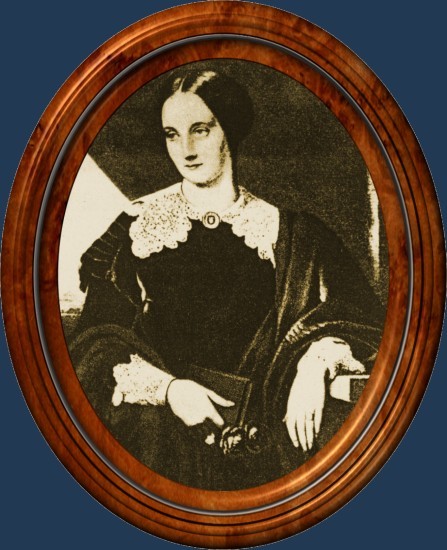
Albert Lortzing - His Music and His Life

The German Albert Lortzing was born in Berlin on October 23, 1801. His father was a leather goods tader and amateurish actor. Lortzing didn't receive any sufficient musical education. "Learning by doing" at theatres in Breslau and Aachen / Germany or the French Strasbourg made Lortzing's incredible education.

In 1824, his first (untitled!) opera premiered in Cologne. His oratorio "The Ascension of Christ" was heard in Muenster/Germany in 1828. Nine years later, Lortzing's successful opera "Zar und Zimmermann" ("Czar and Carpenter") followed. It became also his most famous composition.

"Der Wildschuetz" ("The Deerhunter") from 1842, un fortunately never became such popular as the romantic opera "Undine" from 1845.

Albert Lortzing passed away also in Berlin on January 21, 1851. His tragically end in poverty, loneliness and illness is really an inglorious part of Berlin's music history.

Friday, March 28, 2014

Erich Wolfgang Korngold - His Music and His Life

Erich Wolfgang Korngold was born in Pruenn, former Czechoslovakia, on May 29, 1897. His father, who lived from 1860-1945, was one of the most popular critics in Vienna and wrote especially for the well-known "Neue Freie Press Wien" (New Free Presse Vienna).

At the age of of 11, Korngold started to compose the music for the mime stage play "The Snowman" (1908). Classic music radio stations, for example in Germany, still enjoy playing Korngold's "Tragedy Overture" (1911) or the overture to "Viel Laerm um Nichts" (Much ado about no nothing - Shakespeare).


1920, Korngold reached his careerHamH's pinnacle with his opera "The Death City" in Hamburg.

But even that, Korngold never became an original music inventor. 1938, he went to Hollywood, where he passed away.

Zoltan Kodaly - His Music and His Life

The Hungarian Zoltan Kodaly was born in Kecskemet on December 16, 1882. Kodaly's way of living was very similar to his best friend Bela Bartok. Together with Bartok, Kodaly collected folksongs in Hungary, the whole Balkan and North Africa.

Kodal's biography shows an incredible career: Professor for music theory, vice conductor, music critic and writer for several local and international publications as well as university editor... .

His most popular compositions have been "Psalmus Hungaricus" (1923), "Dances from Galanta" (1931), the symphonic play "The Spinning Room" (1932) or the hymn praise song ""The Budapest Tedeum" (1936). - His last work was a beautiful symphony, which premiered in 1962 with Kodaly's student Ferenc Fricsay (1924-1963).

Zoltan Kodaly passed away in 1972.

Thursday, March 27, 2014

Zoltán Kodály-Dances of Galánta (Rajkó orchestra)

Joseph Lanner - His Music and His Life

The Austrian Joseph Lanner, Godfather of Waltz, was  born in Vienna on April 12, 1801. As a self-educated person, Lanner joined a string quintet together with viola player Johann Strauss, Kind of Waltz ("Blue Danube" and many more).

Langer enlarged this quintet formation gradually up to a wellknown orchestra.

Lanner started to compose dances - all-in-all 200 (!) waltzes! Beethoven and Schubert also used this composition format already in their so-called German dances.

In Lanner's waltzes swing the cozy sound of Vienna's conventional life.

Joseph Lanner passed away in Oberdoebling nearby Vienna on April 14, 1843.


Joseph Lanner - Hoffnungsstrahlen (Waltz)

Friday, March 14, 2014

Joseph Joachim - His Music and His Life

Joseph Joachim was born June 28, 1831 in Kittsee nearby Pressburg (Slovak capital Bratislava) and attracted publicity as child prodigy at the age of 7.

The friendship with Felix Mendelsohn-Bartholdy (1809-1847) supported Joachim's inspiration. In 1844, Joachim toured London. In 1849, he became Concert Master in Weimar, Germany, where he also met the genius Franz Liszt.

In 1866, Joachim became Director of the new "Hochschule fuer Musik" (University of Music) in Berlin. Among the more than  400 students have been Henri Petri, Jenoe Hubay and Karl Klinger - all blessed and popular composers and music creators.

The "Joachim String Quartet" was among the most popular quartets during that time. Joachim's violin play has been described as "blooming sound with godly stylistic purity".

Joachim composed three violin concertos, the "Hungarian Tunes" and overtures for classical poetries such as "Hamlet" or "Demetrius". His cadenzas of violin compositions by Mozart, Viotti or Beethoven are still performed nowadays.

Joseph Joachim passed away in Berlin on August 15, 1907.

Featured Post

The Most Overtly Erotic Works in Classical Music

  by  Emily E. Hogstad    May 28th, 2026 Western classical music is often thought of as cerebral or abstract, but throughout its history, co...