Friday, March 14, 2014

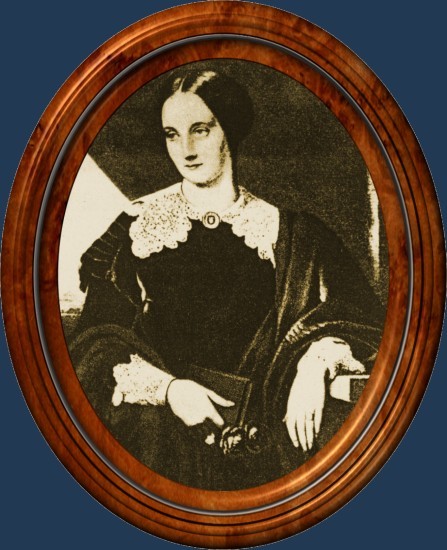
Niccolo Isouard - His Music and His Life

Niccolo Isouard was born December 6, 1775 on the Island of Malta. Billet de Loterie

Who do I like to feature this almost unknown composer? It's very easy to explain: Niccolo Isouard has been one of the history writers of the so-called "Opera Comique". His challenger Francois Adrien Boildieu inspired Isouard to compose more than 50 operas. Nevertheless, critics described them as "fear winged his steps". Well, I am in another opinion.

1802, "Michel Ange" came out; 1810 premiered "Cendrillon", "Aschenbroedel" ("Cinderella") and "Le Billet de Loterie" ("The Lottery Ticket").

Niccolo Isouard passed away in France on March 23, 1818.

Monday, March 3, 2014

Felix Mendelsohn-Bartholdy - His Music and His Life

The German Felix Mendelsohn-Bartholdy was born in Hamburg on February 3,1809. His grandfather Moses Mendelsohn (1729-1786) was a great German philosopher. Felix's father, the banker Abraham Mendelsohn, added his brother-in-law's family name, Bartholdy. A very rich family clan made a many-sided and all-round music education possible, including studies with Ludwig Berger, an art historian and director, and Karl-Friedrich Zelter, a musician and composer.

In 1818, Mendelsohn-Bartholdy, at the age of 9, performed already as a great piano virtuoso. In 1820, he premiered his first two youth operas "Soldier's Love" and "The Two Educationalists". After meeting the great Luigi Cherubini in 1826, Mendelsohn-Bartholdy composed the overture to Shakespeare's "One Summer Night's Dream", which became his real highlight. The other compositions of this stage play have been finished 15 years later.

In 1827, the one and only opera "Camacho's Wedding came out - and flopped.

Mendelsohn-Bartholdy loved traveling. We can notice it very well while listening i.e. the "Hebrides Overture" (Scotland) or the "Italian Symphony". During that time, his "Songs without Words" came into being: Piano pieces, sometimes arranged for violine and viola, which was the ideal house music for people in the 19th century.

Chamber music compositions ("Fine Art Quartets") and two incredible piano concerts in g-minor and d-minor, the "Scottish Symphony", the "Reformation Symphony" and the dramatic tuneful violin concert in e-minor are brilliant achievements of one of the most outstanding German classical composers.

Felix Mendelsohn-Bartholdy passed away in Leipzig on November 4, 1847.


Hochzeitsmarsch Wedding March (Felix Mendelssohn Bartholdy) Ein Sommerna...

Thursday, February 20, 2014

Ludwig Spohr - His Music and His Life

The German Ludwig Spohr was born in Braunschweig on April 5, 1784. Many times, Spohr appeared with the French version of hirst name as Louis.

Spohr's parents were great musicians: his father, a doctor, played the flute while his mother enjoyed the piano play and sung. Spohr studied violine play and joined the Duchess Band Braunschwweig already at the age of 15.

During a period of 20 years, he was fulfilled with anthusiasm while residing in Leipzig. He loved travelling with his wife, who was a blessed harpist. After 25 years in Kassel, Spohr became General Music Director.

Among more or less 150 compositions, we can find ten operas. Very much impressing had been "Faust" (1816) and "Jessonda" (1823) - typical romantic operas. Fire and chivalrous emotions together with lyrical tenderness and conventialism characterized Spohr's compositions.

Nevertheless, Spohr remainded powwerless and feeble. He wasn't able to reach composers like Mozart, Wagner or Brahms. His symphonies are forgotten: only the 4th "Sounds Solemnity" can be listened from time to time in concert houses or classic music radio stations.

Spohr passed away in Kassel on October 22, 1859.

Ludwig Spohr (1784 - 1859) - Fantaisie Op. 35

Friday, February 14, 2014

Engelbert Humperdinck - His Music and His Life

German composer Engelbert Humperdinck was born on September 1, 1854 bin Siegburg/Rheinland. He has - of course! - nothing to do with the identical pop singer. Humperdinck received innumerable awards from the Collee of Music Cologne and the Mozart Award from the Munich Academy of Tone Arts.

During the Bayreuth Festival in 1882, Humperdinck became the assistant of Richard Wagner. Humperdinck's career went on as Professor of Composition in Barcelona (1885-1887) and 1890 in Frankfurt/Germany. In 1900, Humperdinck took over the master director form of the Berlin Academy of Arts.

Humperdinck's compositions started with chorus ballads, simple songs, a humorous orchestral work and a tonal, fine sounding string quartet.

His first opera "Hansel and Gretel" (1893) showed very well that the new generation lacks very much Richard Wagner's pathos. "Hansel and Gretel" became an utterly impossible folksong melodic "Christmas"-opera with the lyrics of Humperdinck's sister Adelheid Wette.

The melodramatic opera "The King's Children" (1897) premiered 1910 in New York, but -admittedly - became never home and familiar. "The Marriage with Reluctance" (1905) flopped because of naive awkwardness and ornate orchestral composition.

The keenness Engelbert Humperdinck passed away in Neustrelitz on September 27, 1921.

"Hansel und Gretel" - "The Overture" by Engelbert Humperdinck

Featured Post

The Most Overtly Erotic Works in Classical Music

  by  Emily E. Hogstad    May 28th, 2026 Western classical music is often thought of as cerebral or abstract, but throughout its history, co...