 / @musicforthesoul1m
Showing posts with label Classics with Klaus Döring Klassik mit Klaus Döring. Show all posts
Showing posts with label Classics with Klaus Döring Klassik mit Klaus Döring. Show all posts
Friday, January 23, 2026
The most beautiful melody in the world! This music can be listened to forever
/ @musicforthesoul1m 
Franz Schubert’s Illness: The Melancholy of an Autumnal Sunset
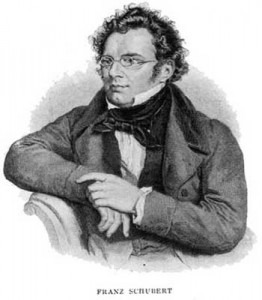
“I am the most unhappy and miserable person in this world… my health will never improve, and in such despair, things will only become worse instead of better…” – Franz Schubert
Austrian Composer Franz Schubert (1797-1828) is enshrined as the pillar of Romantic Western Classical Music who follows after Beethoven*. He had completed a tremendous collection of hundreds of lieder, symphonies, operas, and a large body of chamber and piano music that adds up to over 1000 works during his career. This was prolific for a man who only lived for 31 years. Franz Liszt described him as “the most poetic musician who ever lived.” On his deathbed, Beethoven is said to have looked into some of the younger man’s works and exclaimed, “Truly, the spark of divine genius resides in this Schubert!”
Yet, a number of Schubert’s musical works such as ‘Winter Journey’, ‘the Unfinished Symphony’ and ‘Death and the Maiden’ are said to be filled with elements of death. Indeed, Schubert’s despair during his life is reflected in his own writing, “the brightest hopes have come to naught, to whom the joy of love and friendship can offer nothing but pain at most… Every night as I retire to my bed, I always hope that I would not wake up. Yet every day, the morning breaks into the pains of yesterday’s wounds.”
Why was Schubert so sad?
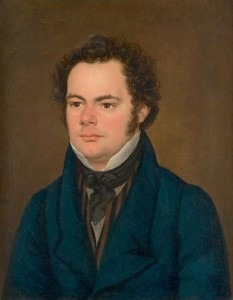 For most of his adult life, Schubert suffered from cyclothymia, a mental illness that resulted in severe mood swings that fluctuated between hypomanic and depressive episodes. His condition became far more extreme during his mid-twenties, and his friends reported periods of dark despair and violent anger.
Physically, Schubert’s life was haunted by varying periods of sickness. In 1822, Schubert began to suffer from headaches, intermittent fever and skin rash. The next year, his scalp began to itch so intensely, that he had his patchy head shaved and bought a wig. He was subsequently admitted to Vienna General Hospital, where he wrote part of ‘Die schöne Müllerin’. Hence began the battle with the illness throughout his life.
Schubert was also an introvert personality who was not considered very attractive. Standing at barely five feet tall, he was a shy, stumpy person whose facial features included a round nose, a long oval face and a deeply cleft chin, topped off by very severe short-sightedness. Romance was hence difficult for the composer, and it is said that was why he turned to prostitutes. This may explain why, at the young age of only 21, he had contracted the sexually transmitted disease syphilis. Although syphilis was prevalent in Vienna at that time, the secondary effects of the disease were so stigmatizing that after his death, Schubert’s friends burnt his letters and diaries so that the true nature of his illness could never be officially announced.
As a composer, Schubert’s work received little recognition during his lifetime. The only two operas he composed were poorly received by the critics. One of them only managed a mere 6 shows before it was forced to close down. Publishers were reluctant to print his works, because he was fairly unknown at the time. As a result, Schubert had no choice but to turn to friends to print his works, but the royalties he could collect were barely enough for even one meal. It was only until Schuman and Franz Liszt performed his work after his death that his work became known.
The Treatment that killed Franz Schubert
In today’s world, people often disregard syphilis, because an early prescription of penicillin is sufficient to treat the condition. Unfortunately for Schubert, the popular treatment by physicians then was to place the patient in a sealed room, and cover the patient’s body with mercury. The patients were therefore forbidden to change their underwear or bed sheets.
The treatment would cause the mouth cavity to heat up and taste of metal, which adversely affected the patient’s appetite. The consequences included mouth cavity pains, difficulty swallowing, excessive drooling, diarrhea, vomiting and excess urination. The doctors explained to the patients that these were simply the side effects of effective treatment. But in fact, these are symptoms of mercury poisoning.
Schubert lived his final days in one of these tightly sealed rooms, and by then he had lost his appetite for more than 10 days. After his death, many articles claim that he died of ‘typhus abdominalis’, but such a disease was not prevalent in Vienna then, nor did he possess the symptoms typical of typhus abdominalis.
Therefore, although Schubert did in fact contract syphilis, it was the mistreatment of his disease that really killed him. Schubert passed away in Vienna in 1828 at the age of only 31.
Music critic Philip Hale’s take on Schubert’s work quite accurately concludes the composer’s life, “when Schubert smelled the mould and knew the earth was impatiently looking for him…it is the melancholy of an autumnal sunset, of the ironical depression due to a burgeoning noon in the spring, the melancholy that comes between the lips of lovers.”
ARTE A Continent in Conversation

At the heart of this vision are the people shaping its programming and outreach. We spoke in particular to Katharina Kloss, head of European Offers, who oversees content in English, Spanish, Polish, Italian, and Romanian; Sophie Roche, project manager for ARTE Concert; and Thomas Hammer, social media manager, driving engagement across YouTube, Facebook, and Instagram.
About 56% of the programmes are documentaries, 19% feature films, drama and series, 14% news-related programmes, while 5% feature music and other performing arts.
The programming and outreach team embody ARTE’s mission to unite audiences across borders through innovative storytelling. In our conversation, we explore how the network’s unique Franco-German roots and pan-European outlook continue to influence its programming philosophy, and what it takes to bring culture to life for a continent.
Arte Concert
Culture Without Borders

Talking to the people behind ARTE, you sense immediately that this is not a platform built by committee, but by conviction. What began as a Franco-German cultural experiment has, over the past decade, quietly become one of Europe’s most ambitious shared spaces for art, ideas, and storytelling.
With support from the European Union since 2015, ARTE has moved decisively beyond its original axis, opening itself to audiences in English, Spanish, Polish, Italian, and Romanian.
The result is not merely a broader reach, but a different way of thinking. Culture no longer exported from a centre, but shaped through many voices at once. Today, roughly three-quarters of Europeans can encounter ARTE’s programmes in their own language, a radical concept in a media landscape still largely divided by borders.
That multilingual ambition is not merely a technical add-on, but it informs how ARTE curates, commissions, and frames its work. Opera seasons stream live from houses across the continent, while ArteKino gives arthouse cinema, so often squeezed out of commercial circuits, the visibility and care it deserves.
Between Tradition and Urgency
© Michel NICOLAS
Emerging directors sit alongside canonical filmmakers, and contemporary social questions coexist with lovingly restored classics. Long-form documentaries remain central, lingering on human stories that resist simplification and refuse to stay neatly within national lines.
When Europe fell silent during the pandemic, ARTE did not retreat into archival comfort. Instead, it leaned into the possibilities of the moment. Daniel Hope’s Christmas Home Concerts offered intimacy at a time of isolation, while United We Stream turned shuttered clubs into unlikely stages, broadcasting electronic music from empty rooms in Berlin, Barcelona, New York, and Detroit.
These options were not substitutes for live culture, but acts of cultural solidarity, essentially reminders that shared experience could survive even enforced distances.
When Culture Goes Live
ARTE Concert, launched long before livestreaming became ubiquitous, embodies this spirit most clearly. Nearly 900 performances a year, spanning opera, classical music, jazz, pop, metal, hip-hop, and experimental forms, unfold not as disposable content, but as events.
Often they are framed in unexpected ways with musicians performing among museum artworks, artists interacting with visual installations, or concerts that incorporate live sign-language translation as a creative presence rather than an afterthought.
Emerging artists such as Hania Rani or Amaia are featured not at the end of a hype cycle, but at the moment when local recognition begins to ripple outward across Europe.
Unity Through Curiosity

At the heart of all this lies a stubbornly unfashionable idea. Culture should be public, ad-free, and accessible, not because it is profitable, but because it is a shared good.
In an age of algorithmic acceleration, misinformation, and shrinking attention spans, ARTE’s commitment to editorial independence and artistic risk feels quietly radical. Public media here is not a defensive gesture, but a forward-looking one.
If ARTE succeeds, it is because it understands something easily forgotten. Europe is not unified by sameness, but by curiosity. Culture still has the power to resonate and connect, just as democracy requires spaces for complexity, imagination, and trust.
Why Mozart Still Makes Us Laugh
Mozart’s music doesn’t stand politely in the corner, but it nudges you in the ribs, rolls its eyes, and occasionally trips over its own feet on purpose.
What makes Mozart remarkable is not just that he was brilliant, but that he is very funny. And not accidentally funny, or funny because you know a lot of music, but genuinely and immediately funny in the way human beings recognise across centuries.
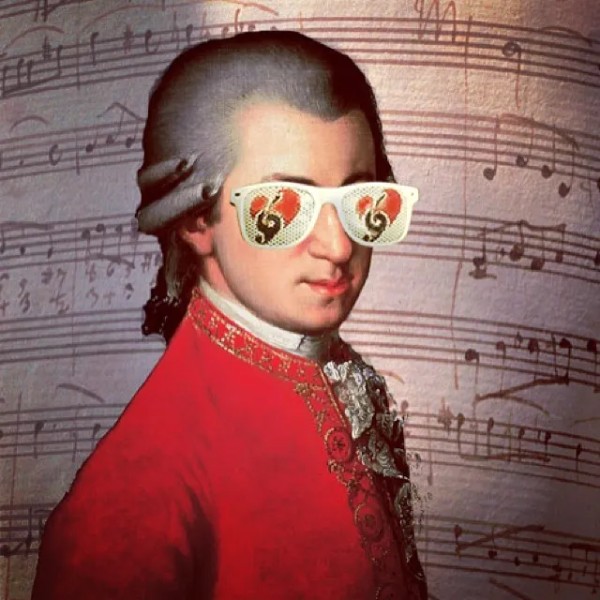
As we celebrate Mozart’s 270th birthday on 27 January 2026, it becomes clear that his humour still works because it is rooted in human behaviour. Things like vanity, impatience, swagger, awkwardness, and the joy of seeing someone slightly overdo things.
The Oldest Joke in the Book
Many Mozart jokes work on surprise, basically the same mechanism as a good punchline. You think you know where something is going, and then it doesn’t go there at all. Take the “Overture” to The Marriage of Figaro.
It hurtles forward at breakneck speed, bubbling with excitement, as if everyone is late and lying about it. There is no grand introduction, no dignified scene-setting. The music bursts in mid-thought, like someone already halfway through a conversation.
It’s funny because it feels completely uncontrolled and is barely containing its own energy. It’s perfect for setting up an opera where plans unravel almost immediately.
Mockery with a Smile
If Mozart had lived today, he might have loved parody videos. His A Musical Joke K. 522 is exactly that. It’s a straight-faced spoof of bad composers and overconfident amateur performers.
The brilliance of the piece lies in how sincerely it pretends to be respectable. Nothing is signposted as a joke. The music smiles politely and behaves itself, at least at first. The opening sounds harmless enough, but soon, tiny cracks begin to show.
Harmonies arrive where they clearly shouldn’t, and melodies wander off mid-thought, distracted by something more interesting. Instruments appear not to be listening to one another, each cheerfully pursuing its own idea while the others carry on regardless.
By the end, the whole thing unravels into a glorious mess. Everyone tries to finish together and fails spectacularly. What makes the piece genuinely funny is Mozart’s restraint. He doesn’t push the joke too far or turn it into a caricature. Mozart knows exactly how close he has to stay to reality.
When Seduction Becomes a Spreadsheet
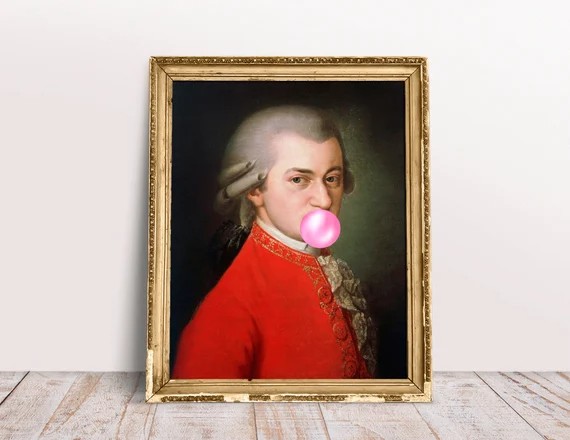
Mozart’s operas are funny because the music refuses to keep secrets. Characters may try to present themselves as noble, innocent, or in control, but the orchestra has other ideas. It whispers, comments, contradicts, and occasionally bursts out laughing.
The result is comic timing of the highest order as people expose themselves not through what they say, but through what the music reveals behind their backs. Nowhere is this clearer than in Don Giovanni, and especially in Leporello’s famous “Catalogue Aria.” On paper, it is a list, but in practice, it becomes one of the most devastating comic portraits in opera.
The tune bounces along with brisk, almost businesslike cheer, as if Leporello were reading out the contents of a ledger or ticking items off a grocery list. The music is jaunty, efficient, and oddly proud of its own organisation. Meanwhile, the content grows more and more outrageous. Seductions blur into compulsions, and charm slides into predation.
The audience is left laughing slightly uncomfortably at the sheer absurdity of treating moral catastrophe as clerical work. That mismatch is the joke. The music sounds far too pleased with itself. Don Giovanni is never defended, never excused, and never directly condemned; he is simply reduced to a spreadsheet.
Sighs, Schemes, and Smirks
In Così fan tutte, the trio “Soave sia il vento” sounds tender, heartfelt, and almost heartbreakingly sincere. And yet, if you know the story, the audience is in on the joke. Every note of beauty is delivered while the characters are actively deceiving each other, pretending to be someone they are not, and scheming with near-perfect dramatic obliviousness.
The humour here is both cruel and gentle. It’s cruel because the characters’ emotions are on display while they are lying, flirting, and swapping identities in ways that would make any bystander raise an eyebrow.
It’s gentle because Mozart never mocks them harshly but simply allows the gap between intention and reality to become laughably obvious. Think of it as the operatic equivalent of someone sending a perfectly earnest text while their friends know they’re setting up a prank.
The music is flawless and serious, while the characters are recognisably human, full of vanity, desire, and clueless overconfidence. It is a masterclass in operatic comedy. It is heartbreakingly beautiful, meticulously tender, and yet utterly aware of how ridiculous human behaviour can be.
The Art of Instant Distraction
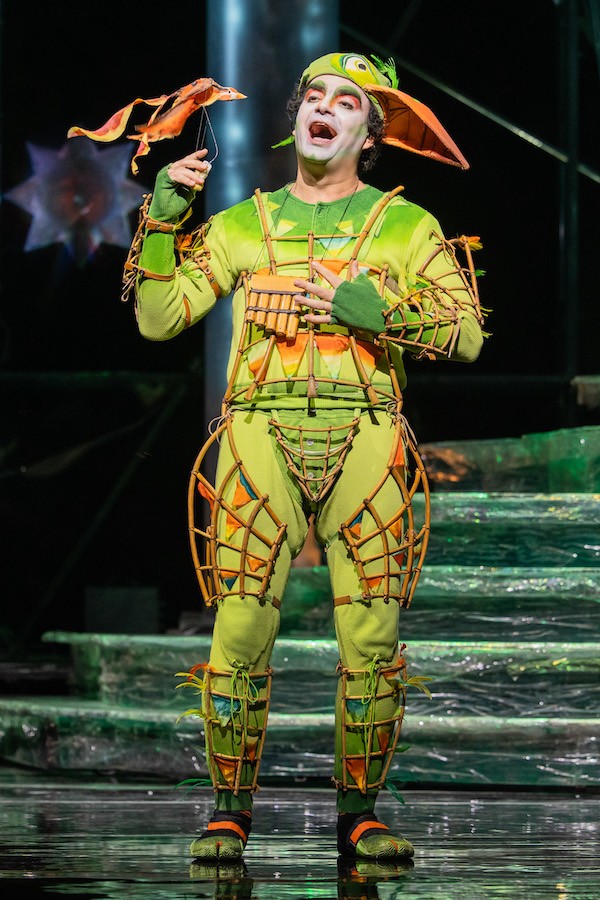
Rolando Villazón as Papageno in Mozart’s The Magic Flute at the Metropolitan Opera © Evan Zimmerman / Met Opera
And then there is “Papageno” in The Magic Flute, one of Mozart’s most delightful comic creations. Papageno’s charm lies not in heroism or sophistication but in his stubborn ordinariness. He whistles, he sulks, he panics, and he makes mistakes that are at once ridiculous and utterly relatable.
One of the best examples is his aria “Ein Mädchen oder Weibchen,” in which Papageno fantasises about finding a partner. The melody is simple, almost plodding, bouncing along like a man trying to march confidently while tripping over his own feet.
He repeats the same ideas with childlike insistence, each iteration more desperate and endearing than the last. And then comes the aria’s comic peak. Papageno, in a moment of theatrical despair, threatens suicide only to be instantly distracted by the sound of bells signalling food or the promise of a wife.
Mozart perfectly times the orchestra to underline the absurdity. Papageno’s despair evaporates in a beat, replaced by delight, leaving the audience laughing at his quick flip-flop between panic and pleasure. Papageno is a reminder that life is absurd, chaotic, and sometimes wonderfully silly.
Not-So-Final Farewells
One of Mozart’s favourite comic tricks is the fake ending. It’s the musical equivalent of saying goodbye three times, waving, and then standing in the doorway like he forgot something important.
It’s a subtle kind of mischief as the music seems to promise closure, only to pull the rug out from under the listener’s expectations. Take the final movement of the “Jupiter Symphony.” Just when you are leaning back, convinced the piece has triumphantly concluded, Mozart nudges the orchestra forward for one more cheeky flourish.
The effect is delightful as the listener is caught between surprise and admiration, laughing along with the composer’s playful audacity. This is comic timing in its purest, non-verbal form. The music is alive, aware of its audience, and utterly confident in its ability to provoke a smile.
Mozart’s genius was never just in the notes he wrote, but in the way he invited us to laugh at life itself. Mozart understood the absurd, unpredictable, and wonderfully human side of existence. Two hundred and seventy years on, his music still grins, nudges, and winks, reminding us that brilliance and humour should live happily together.
Thursday, January 22, 2026
This music can listen forever! Sergey Chekalin! Divine, Unsurpassed music.
/ @music_for_the_soul
There are many beautiful melodies in the world that can comfort, give harmony and peace to the heart and soul! The waves of music can both heal the soul and make us move in its rhythm. Or forget yourself, falling into a trance.
This is an amazing collection of the most beautiful, very tender, sublime, heartfelt, touching and divine melodies that can touch the heart and soul. THE MAIN THING IN THIS MUSIC IS THAT IT IS ABLE TO HEAL THE SOUL.
The best melodies for the soul and heart. Sergey Chekalin
0:00:00 Waves
0:08:49 Islands
0:15:13 Under water
0:22:59 Shores
0:29:19 Scarlet sails
0:35:04 Summer
0:41:02 Hot day
0:47:15 Streams and rivers
0:53:27 Attraction
1:02:35 Elegy
Genres: New age, Ambient, Lounge, Chillout, Modern classics/Modern, Electronic classics, Music for meditation/relaxation, Russian folk music. Beautiful melodies for the soul.Wednesday, January 21, 2026
Tuesday, January 20, 2026
Why Does “Woman In Love” Still Break Hearts?
Why does “Woman In Love” still make listeners feel deeply emotional after so many years? 🎶💔
This timeless romantic ballad, beautifully performed by Dana Winner, tells the story of a woman who loves with her whole heart — vulnerable, devoted, and fearless. Every line reflects the emotional weight of loving someone completely, even when it means risking everything.
With its soft 80s ballad style, clear vocals, and emotional storytelling, this song is perfect for learning English through music — helping you understand romantic expressions, emotional vocabulary, and natural phrasing through melody.
Friday, January 16, 2026
Potpourri: Melodies in Medley
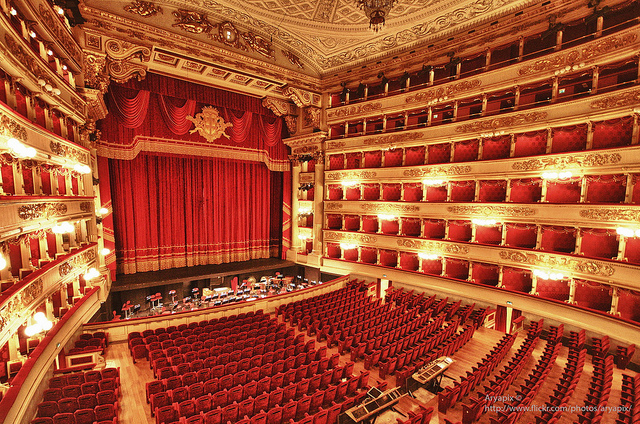
© opera-diary.com
The potpourri appeared prominently in the late eighteenth and early nineteenth centuries, during a time when opera melodies circulated well beyond the theatre. Before recordings, audiences encountered favourite tunes through arrangements for salon performances, home music-making, and public concerts. Potpourris fulfilled a desire for musical recognition while allowing composers and performers to create new works that were both accessible and marketable. Unlike sonata-based forms, potpourris generally avoid motivic development. Instead, they feature a sequence of recognisable melodies, often linked by brief transitions and framed by a dramatic introduction and a virtuosic conclusion. This adaptable structure made the genre perfect for showcasing performers’ technical skills while ensuring immediate audience engagement.
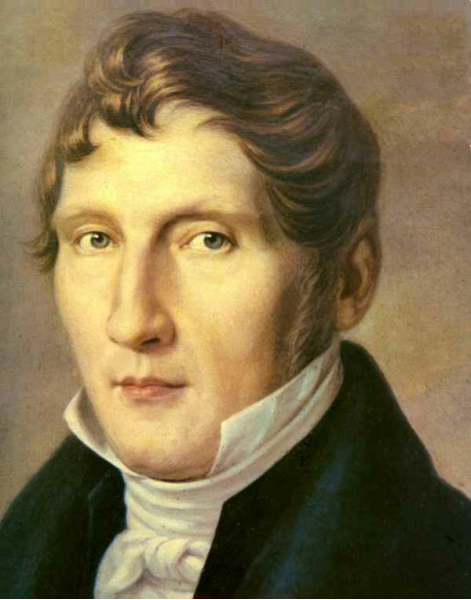
Louis Spohr
The early nineteenth century saw a flourishing of potpourris written for solo instruments with orchestra or chamber ensemble, frequently by composer-performers themselves. Louis Spohr’s Potpourri for Clarinet and Orchestra on Themes by von Winter in F major, Op. 80 exemplifies the genre’s elegance and balance. Drawing on melodies from Peter von Winter’s opera Das unterbrochene Opferfest (The Interrupted Sacrifice, 1811), Spohr transforms operatic arias into a clarinet showcase emphasising lyricism, agility, and expressive refinement.
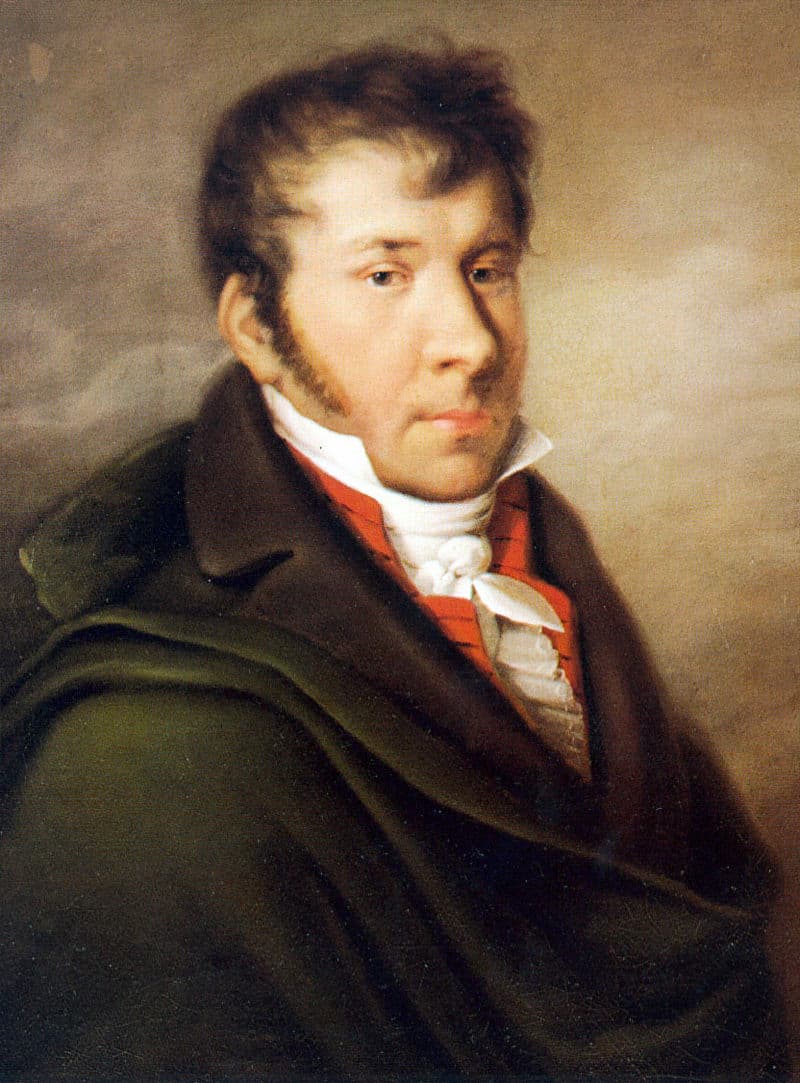
Johann Nepomuk Hummel, 1814
Johann Nepomuk Hummel’s Potpourri, Op. 94 (Fantasie) for Viola and Orchestra occupies a distinctive position in the repertoire. At a time when the viola was rarely featured as a solo instrument, Hummel uses the potpourri format to showcase the instrument’s warmth and agility without the formal weight of a concerto, demonstrating the genre’s adaptability. The work is also one of the earliest substantial pieces written specifically for viola solo with orchestral accompaniment, highlighting the instrument’s lyrical and virtuosic potential in a concert setting. It draws much of its melodic material from well-known opera themes by Mozart, particularly from Don Giovanni, The Marriage of Figaro, and The Abduction from the Seraglio, as well as from Rossini’s Tancredi. These familiar tunes are framed by newly composed introduction and finale sections, allowing Hummel to combine recognizability with virtuosic invention in a format characteristic of early nineteenth-century potpourri traditions.
Mauro Giuliani: Grand Potpourri Op.53 for Flute and Guitar
The potpourri also thrived in more intimate chamber settings. Mauro Giuliani’s Grand Potpourri, Op. 53 for Flute and Guitar reflects the vibrant salon culture of early nineteenth-century Vienna. Drawing on popular operatic melodies, the work unfolds as a dialogue between flute and guitar, with the flute carrying lyrical and decorative lines. In contrast, the guitar provides harmonic grounding and idiomatic figurations. Giuliani’s potpourri demonstrates how the genre could function effectively beyond orchestral contexts, appealing to audiences seeking refinement, intimacy, and melodic familiarity.
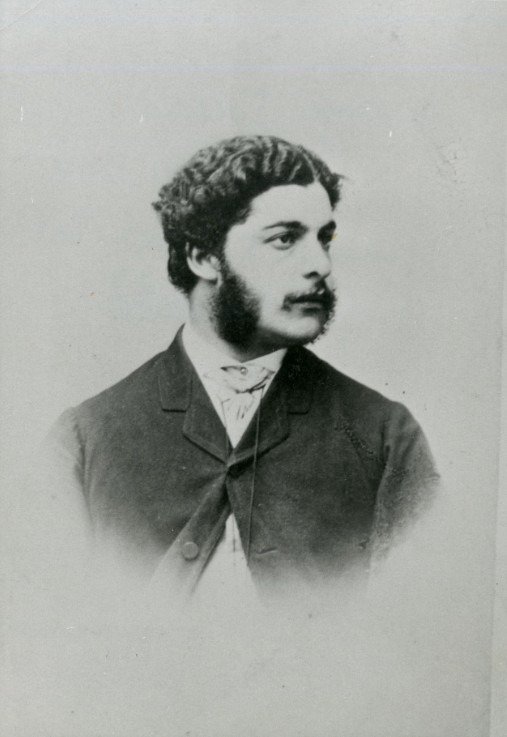
Arthur Sullivan
Arthur Sullivan’s operetta overtures exemplify potpourri practice, particularly in the overtures to H.M.S. Pinafore, The Pirates of Penzance, and The Mikado. These works present a sequence of the operetta’s main melodies with minimal thematic development, linked by brief transitions. The overture to The Pirates of Penzance (1879), largely orchestrated by Alfred Cellier under tight deadlines, strings together well-known tunes such as “Pour, O Pour the Pirate Sherry,” “I Am the Very Model of a Modern Major-General,” and “With Cat-Like Tread,” alternating lively comic passages with lyrical themes. Functioning as musical previews, these overtures rely on audience recognition and contrast, aligning closely with nineteenth-century potpourri tradition. In Sullivan’s hands, the potpourri becomes a theatrical device that shapes audience expectations while showcasing orchestral color, inventive instrumentation, and melodic wit.
The potpourri flourished equally in dance and domestic contexts. Johann Strauss II’s Potpourri Quadrille reflects Vienna’s vibrant ballroom culture, in which popular tunes were repurposed for social dancing. These works blurred the boundary between popular entertainment and compositional craft. For keyboard music, Karol Kazimierz Kurpinski’s Potpourri or Variations on Various National Themes, composed for the seven-year-old pianist Józef Krogulski and published in 1813, blends classical form with Polish folk and dance elements. Its sections include a Poco adagio introduction, a lyrical Dumka, a stately polonaise (Alla polacca), a brief Krakowiak, and a virtuosic Mazur. The work exploits the piano’s full range of techniques while reflecting Kurpiński’s melodic inventiveness and commitment to Polish national style, making it both a virtuosic showcase and a culturally distinctive potpourri.
Franz Liszt’s Réminiscences de Norma, S. 394
By the mid-nineteenth century, distinctions between potpourri, fantasy, and paraphrase became increasingly fluid. At its core, a potpourri presents a succession of recognizable melodies with minimal transformation. A fantasy typically offers greater freedom of form and more extensive thematic elaboration, while a paraphrase implies substantial recomposition, integrating operatic material into a newly conceived musical structure. Franz Liszt’s Réminiscences, including Réminiscences de Don Juan, Norma, and Lucia di Lammermoor, represent the most ambitious evolution of the potpourri principle. Liszt assembles multiple operatic numbers into large-scale concert works, subjecting them to dramatic transformation, contrapuntal treatment, and symphonic pacing. Familiar melodies become vehicles for structural unity and expressive depth, transcending the genre’s earlier entertainment-driven aims.
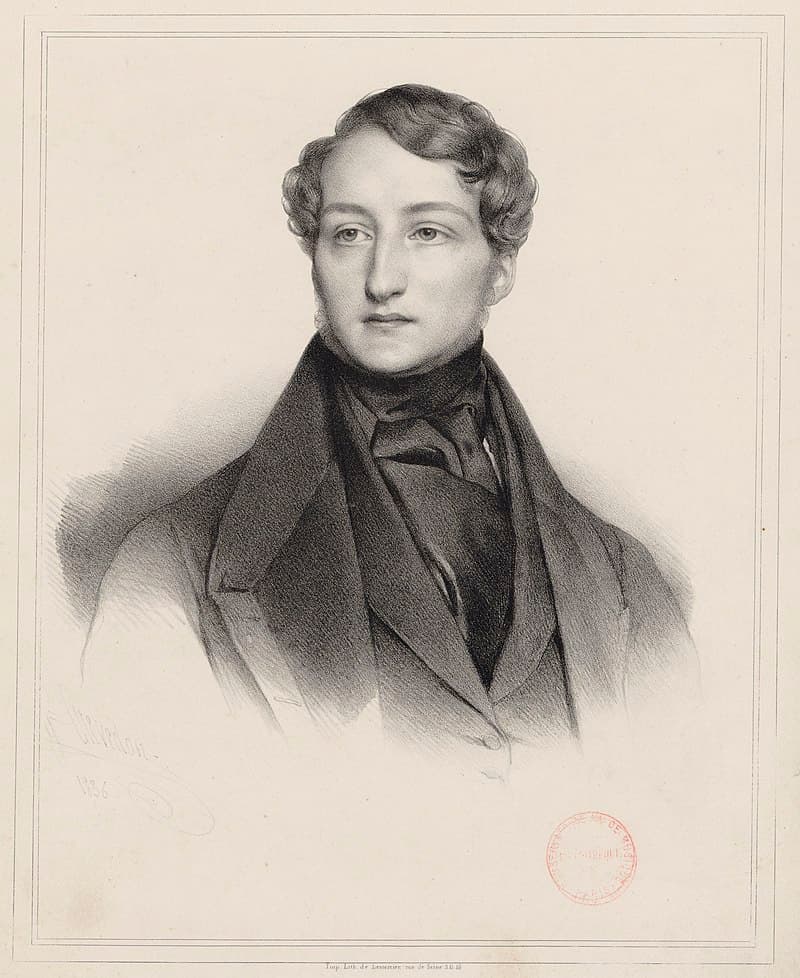
Henry Grevedon: Sigismond Thalberg, 1836 (Gallica, btv1b8425259g)
Sigismond Thalberg’s Grande Fantaisie sur Moïse de Rossini, Op.33, offers a more restrained but highly influential model. While the work features a potpourri-like collection of operatic themes, Thalberg unifies them through lyrical flow and his famous “three-hand effect,” showcasing the refined elegance of mid-century salon culture.
In the violin repertoire, Henryk Wieniawski’s Fantaisie brillante sur des thèmes de Faust shows how potpourri principles extended beyond the piano. Drawing from Gounod’s opera, Wieniawski links well-known melodies within a structure that remains essentially potpourri-based, yet transforms each theme into a display for virtuosity and expressive flair.
By the twentieth century, the potpourri had largely fallen out of favour and was often associated with nostalgia or light entertainment. Nevertheless, some composers continued to engage with its collage-like principles in more reflective and stylistically complex ways. Ernst Krenek’s Potpourri, Op. 54 for Symphony Orchestra (1927) reimagines the genre within a modernist framework, employing fragmentation, sharp contrasts, and stylistic juxtaposition to evoke musical memory and historical continuity rather than simple melodic recognition.
R. Strauss: Die schweigsame Frau – Potpourri, Op.80 (1935)
A similarly late but highly sophisticated rethinking of the genre appears in Richard Strauss’s Die schweigsame Frau – Potpourri, Op. 80 (1935). Drawn from his comic opera Die schweigsame Frau, with a libretto by Stefan Zweig based on Ben Jonson’s Epicoene, the work assembles the opera’s principal themes into a continuous orchestral concert piece. Unlike nineteenth-century potpourris that prioritise immediate familiarity and lightness, Strauss’s treatment is symphonic in scope, with dense orchestration, harmonic complexity, and fluid transitions characteristic of his mature style. While the piece still functions as a concert synopsis of the opera, it simultaneously showcases Strauss’s mastery of orchestral colour, rhythmic vitality, and ironic wit.
Although often marginalised in narratives of “serious” music, the potpourri played a central role in nineteenth-century musical life. It shaped how audiences encountered opera outside the theatre, fueled the rise of instrumental virtuosity, and connected public concert culture with salon and domestic music-making. From Spohr, Hummel, and Giuliani to Sullivan, Strauss, Liszt, Thalberg, and Wieniawski, and finally to Krenek and Richard Strauss, the potpourri emerges not as a peripheral curiosity but as a flexible and enduring practice, one that continually adapted to changing tastes, performance contexts, and aesthetic priorities.
Subscribe to:
Comments (Atom)