Total Pageviews

Showing posts with label Classics with Klaus Döring Klassik mit Klaus Döring. Show all posts

Friday, April 3, 2026

Heartstopping Memory Lapses From Classical Music History

Even the greatest classical musicians – those renowned the world over for their superhuman discipline and focus – have moments when everything just goes blank.

In an era when memorisation is seen as a prerequisite for performing, memory lapses have destroyed confidence and ended careers.

However, these mistakes also highlight the humanity of the musicians who made them…and will hopefully make you feel a little less alone every time you step onstage yourself!

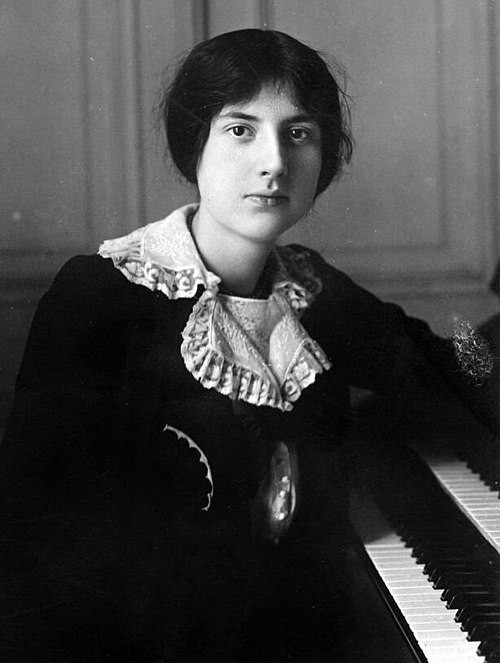
Adelina de Lara, ca. 1907
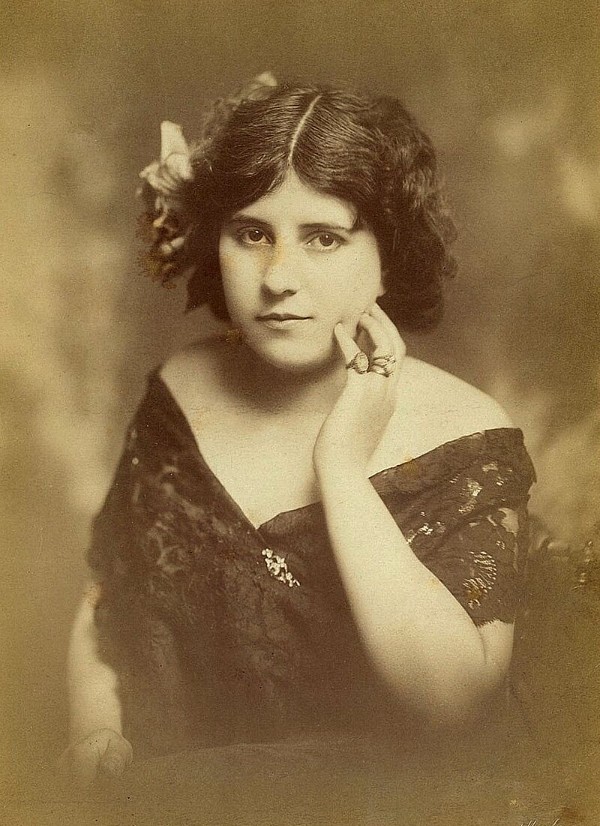
Adelina de Lara

Adelina de Lara

Adelina de Lara was a British pianist born in 1872. Although she is forgotten today, she led a colourful life and career.

In 1955, at the age of 83, she published a remarkably frank memoir called Finale.

In it, she discusses a life-changing memory lapse that traumatised her so badly that she refused to play concertos again for decades afterwards.

She was performing the Robert Schumann piano concerto with conductor Landon Ronald in Birmingham. (The exact date of the concert is unclear, but it would have been sometime around 1907.)

The morning of the concert, Landon told her that she was playing “splendidly” and that he was looking forward to the concert.

He then made a fateful throwaway remark: “The last three times I have conducted the Schumann concerto, the pianist’s memory has failed during the performance!”  

De Lara immediately had a physical reaction. The way she describes it sounds like what we might call a panic attack today: chills, weak knees, an adrenaline rush, and a sudden inability to concentrate.

As she’d recount in her book decades later:

“I played the second movement and began the third. I was making fine progress; Landon was conducting superbly. And then, at the repetition of the brilliant third subject — it happened! I played a phrase with both hands an octave lower than it is written. Only one bar — but I lost my head. It put me right out — panic seized me.”

Landon stopped the orchestra. She rushed backstage and burst into tears. Nobody came to check on her. She was scheduled to play solo works by Chopin after the intermission, but she was so horrified she fled to her hotel instead.

She wrote in her memoir:

“It was the worst thing I could have done. I blamed only myself, but after all these years, other musicians have told me Landon was to blame. He should have gone on directing the orchestra, and I could have come in again.”

She returned to her home in London the next day. Her partner asked what had happened. After she explained, he told her the memory slip wasn’t the problem; it was the fact that she hadn’t gone back to try a second time. In response, she declared that she’d never play another concerto again.

Adelina de Lara ended up having a nervous breakdown over the event. And true to her word, she didn’t accept a single concerto invitation for 27 years afterwards.

Still, she had regrets:

“Only when I did at last play successfully the Schumann Concerto from memory with Claud Powell, conductor of the Guildford Symphony Orchestra, did I write to Landon and tell him. It was a few years before his death. This letter shows how foolish I had been to let my nerves get the better of me for so long. If only I had had it sooner!”  

Olga Samaroff, 1917
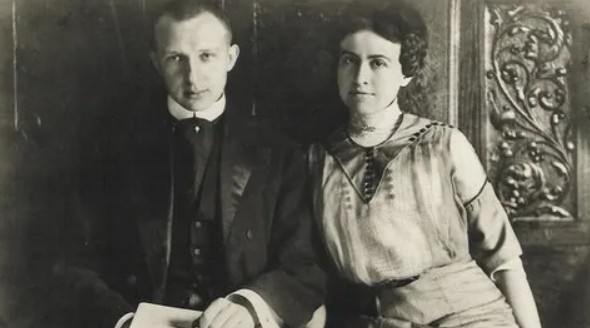
Olga Samaroff and Leopold Stokowski

Olga Samaroff and Leopold Stokowski

Pianist Olga Samaroff – the exotic stage name of American pianist Lucy Hickenlooper – made a disastrous early marriage to a wealthy Russian man in 1900. He forced her to give up her performing career, which was just taking off at the time.

Four years later, she left him and sailed back to America to reinvent herself as a piano soloist. Her hard work paid off, and she became a prominent pianist in both the United States and Europe.

Around 1905, she met the organist and choirmaster at St. Bartholomew’s Church in New York City, a man by the name of Leopold Stokowski. She liked him and pulled strings to help get him the music directorship at the Cincinnati Symphony, which assured his American career.

They ended up marrying in 1911. In June 1912, Stokowski was hired to become the music director of the Philadelphia Orchestra, a post he would retain for decades.

Although Samaroff cut back somewhat on her concert career after the wedding, they did still enjoy performing together, with Stokowski on the podium and Samaroff at the piano.   

Unfortunately, their marriage ran into trouble quickly. Stokowski was terminally unfaithful to Samaroff. World War I was difficult on both of them, given their sympathy for German musical culture. Minor irritations grew more heated, and they started hating the sound of hearing the other practice.

The marital tension came to a head in January 1917, when Samaroff had a major memory lapse in Pittsburgh while on tour with the Philadelphia Orchestra and Stokowski. It was so severe that she was forced to stop and walk backstage to collect herself.

A few months later, she, like Adelina de Lara, had a mental breakdown over it. But she was able to rally and returned to the concert stage before the end of the year. And in 1923, she divorced Stokowski.

Josef Hassid, 1940
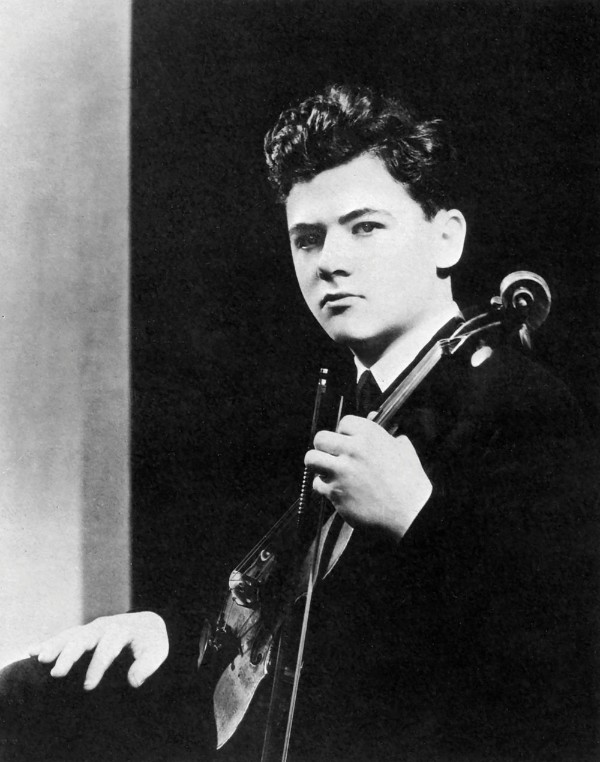
Josef Hassid

Josef Hassid

Josef Hassid, born in 1923 in Poland, is widely considered to be one of the greatest violinists to have ever lived.

In 1935, the year he turned twelve, he competed in a legendary year of the Henryk Wieniawski Violin Competition. His fellow competitors included violin giants Ginette Neveu and David Oistrakh.

While competing, he suffered a memory lapse. However, he was extended grace and allowed to continue.

In the end, he earned an honorary diploma. Fifteen-year-old Neveu placed first in the competition; 27-year-old Oistrakh second.

Still, despite the memory slip, it was clear that Hassid was headed for a major career.

He became one of the best-loved students of violin teacher Carl Flesch, who taught many of the great violinists of the early twentieth century.   

In early 1940, the year he turned seventeen, he made his concerto debut in London in the Tchaikovsky concerto, but suffered more memory lapses during the performance.

They continued with some frequency in the months to come.

A reviewer noted it in a performance of the Brahms concerto in March 1941:

“The solo performance was scarcely more than that of a clever student who has worked hard to memorise the concerto but is still liable to be thrown off his stroke, even to the point of forgetting his notes occasionally.”

He was suffering in his personal life, too. He had extreme mood swings and became unable to recognise people.

In June 1941, he was involuntarily committed to a mental institution and diagnosed with schizophrenia. He received insulin treatment and electroshock therapy.

In October 1950, after his father’s death, his doctors performed a lobotomy on him. He developed meningitis after the surgery and died at the age of 26.

Artur Schnabel, 1946
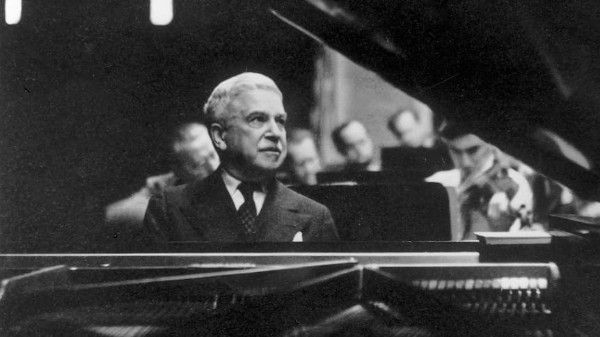
Artur Schnabel

Artur Schnabel

In 1946, while playing Mozart’s Piano Concerto No. 23 with the New York Philharmonic, pianist Artur Schnabel had a memory lapse in the third movement.

He had to stop, stand, and look at the conductor’s score before continuing.

When the live performance was issued on disc, a version without the mistake was included.

In 1991, the National Public Radio program “Fresh Air with Terry Gross” ran a brief segment about this infamous performance, which includes the audio of the breakdown. Contributor and critic Lloyd Schwartz declared the messier version his favourite.   

Arturo Toscanini, 1954
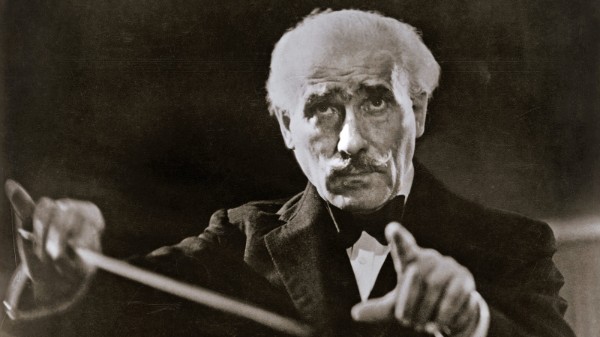
Arturo Toscanini

Arturo Toscanini

On 4 April 1954, indomitable and indefatigable 87-year-old maestro Arturo Toscanini led the NBC Symphony Orchestra in the Bacchanale from the opera Tannhauser. The concert was being broadcast nationally, and millions were listening.

But to his horror, he suffered a memory lapse halfway through the piece. He froze, with his arms falling to his side, his body unsure what to do. The principal cellist had to save the day by cuing in his colleagues.

The experience shook Toscanini so deeply that he decided never to conduct again.   

Arthur Rubinstein, 1964
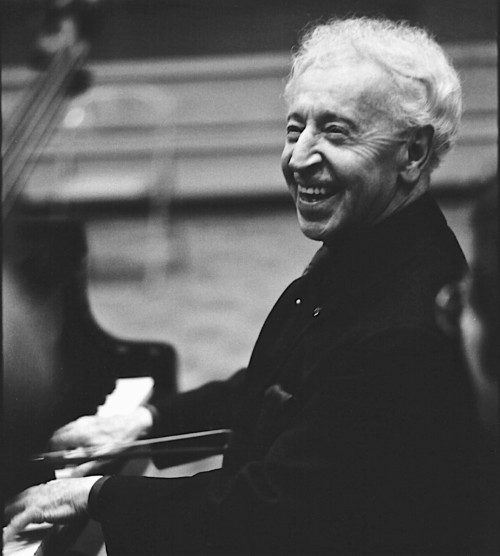
Arthur Rubinstein

Arthur Rubinstein

Once, while concertizing in Moscow in 1964, Rubinstein had a memory lapse playing the scherzo from Chopin’s second piano sonata…and video exists.

Without giving any outward indication that anything was wrong, Rubinstein tried repeating the passage.

When that didn’t work to get him out of his jam, he simply ad-libbed a transition to the next section!

One wonders how many in the audience were any the wiser as to what happened.

The ironic thing is, Chopin himself disapproved of his students playing from memory: he felt that it was disrespectful to the composer and to the music. It was his colleagues, Franz Liszt and Clara Schumann, who popularised the practice, not Chopin!   

Conclusion

For audiences, a memory slip might last only seconds…or perhaps not even register at all!

However, just the memory of a single one can haunt a performer for decades. Some musicians never recovered from theirs; the others figured out how to do the mental work to get back onstage.

It’s important to remember that memory lapses are almost inevitable. They’re also nothing to be ashamed of; on the contrary, they demonstrate a musician’s humanity and artistry. And that humanity is the whole reason anyone wants to hear what you have to say in the first place!

First 5 Women Composers Who Won the Prix de Rome


The Prix de Rome, associated with the Paris Conservatory, was a fiercely competitive award that offered its winners the chance to create with fellow prizewinners for a few years at the Villa Medici in Rome.

For much of its history, women were excluded from even entering. Fortunately, that changed in the early twentieth century.

It didn’t take long before a string of extraordinary women began proving they were up to the challenge of competing in the Prix de Rome…and winning it.

Today, we’re looking at the lives and legacies of the first five women Prix de Rome laureates – Lili Boulanger, Marguerite Canal, Jeanne Leleu, Elsa Barraine, and Yvonne Desportes – and tracing how their courage and creativity contributed to an especially rich era in French music.

About the Prix de Rome

The Prix de Rome was a prestigious French arts prize established in the seventeenth century, during the reign of Louis XIV. An award specifically for musical composition was created in the early 1800s.

For generations, the composition prize was effectively a boys’ club, closed to female competitors.

That changed in 1903, when French Education Minister Joseph Chaumié announced that women would be allowed to enter the competition.

Nadia Boulanger

Nadia Boulanger

Composer Hélène Fleury-Roy won a third prize in 1904, and Nadia Boulanger won a Second Grand Prix in 1908, but neither won the grand prize.

Hélène Fleury-Roy and Nadia Boulanger may have put cracks in the glass ceiling…but the Prix de Rome would require the right woman at the right time to shatter the glass ceiling outright.

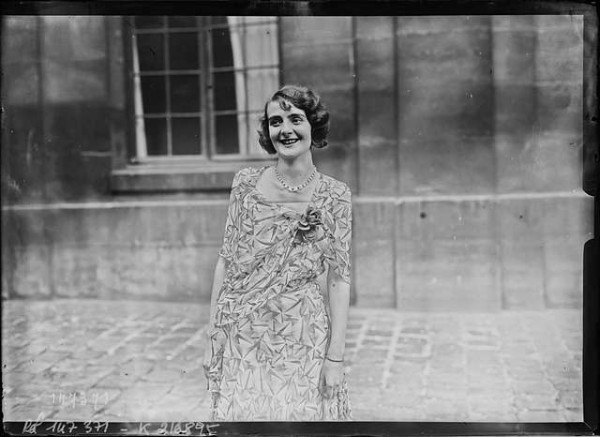
Lili Boulanger (1913)

D’un matin de printemps   

Lili Boulanger came from a distinguished musical family.

Her father was a composer and professor who had once won the Prix de Rome himself, and her elder sister Nadia Boulanger was also a talented musician who helped to teach Lili as a child.

Henri Manuel: Lili Boulanger, 1913

Henri Manuel: Lili Boulanger, 1913

Lili’s talents were evident early in life, but so were her health struggles. She suffered from chronic illness (likely Crohn’s disease or tuberculosis) that made day-to-day functioning difficult.

Despite these challenges, Lili dreamed of following in her father’s footsteps and winning the Prix de Rome, and watched her sister make a go at it herself.

In 1912, Lili competed for the first time, but collapsed from illness and had to withdraw.

Undeterred, she returned the following year, and in 1913 her cantata Faust et Hélène made her the unanimously chosen winner.

Faust et Hélène   

Boulanger’s Prix de Rome victory was hailed in the press as a breakthrough for women in music.

It also became symbolic of the progress of women’s liberation more broadly.

One newspaper contrasted her success with the actions of militant suffragettes, noting that “a maiden of France has gained a better victory” than window-smashing protesters.

Learn more about the Boulanger sisters’ relationship and their attempts to win the Prix de Rome.

Marguerite Canal (1920)   

Born in Toulouse to a musical family, Canal entered the Paris Conservatory at age eleven. She excelled in her studies, taking first prizes in harmony, accompaniment, and fugue.

It was a promising start, but Canal’s path to her Prix de Rome win required years of patience…and persistence.

Marguerite Canal

Marguerite Canal

She first entered the competition in 1914, the year after Lili Boulanger, but didn’t win.

Then the competition was suspended during World War I, so she couldn’t try again until after the Armistice.

During that time, she faced devastating personal loss; her soldier brother died in the opening weeks of the war. (She would try for years to write a requiem for him, to no success.)

In 1919, when the Prix de Rome was reinstated, she came tantalisingly close to winning, earning a Second Grand Prix (a runner-up prize).

Finally, in 1920, she succeeded in her quest, becoming the second woman ever to win the first grand prize with her cantata Don Juan.

Canal spent the years between 1921 and 1924 at the Villa Medici in Rome, where she composed prolifically. One of the works dating from that time was her charming violin sonata.  

After returning to France, Canal joined the faculty of the Paris Conservatory, where she taught for several decades.

Her composing activity slowed as her teaching duties grew in number, but she still completed over a hundred works, including Trois Esquisses méditerranéennes for piano (1930).

Jeanne Leleu (1923)

Quatuor pour piano et cordes   

Pianist and composer Jeanne Leleu was born into a musical family and entered the Paris Conservatory at the age of nine.

At eleven, she made musical history by participating in the premiere performance of Ravel’s Ma Mère l’Oye (Mother Goose Suite).

Jeanne Leleu

Jeanne Leleu

Initially trained as a pianist (she won a premier prix in Alfred Cortot’s piano class in 1913 at the age of fifteen), Leleu eventually turned her focus to composition, studying with Georges Caussade and Charles-Marie Widor at the Conservatory.

In 1922 she earned the Conservatory’s first prize in composition, and Widor encouraged her to attempt the Prix de Rome competition.

Leleu competed for the Prix twice. She failed to clinch the top award during her first attempt in 1922, but in 1923, she won the Premier Grand Prix for her cantata Béatrix.

She took up residency at the Villa Medici in Rome between 1923 and 1927.

Among the works she composed were the Six Sonnets de Michel-Ange (1924) for voice and orchestra, as well as an orchestral suite, Esquisses italiennes (1926), which reflected her impressions of Italy.

In the late 1930s and 1940s, Leleu also composed for the stage: her ballet Un jour d’été was produced at the Opéra-Comique in 1940, and another ballet Nautéos premiered in Monte Carlo in 1947 (later reaching the Paris Opéra and even Covent Garden in London by 1954).

In addition to being a prolific composer, Jeanne Leleu became an influential teacher. In 1954, she was appointed Professor of Harmony at the Paris Conservatory, a position she held until 1965.

Elsa Barraine (1929)   

Elsa Barraine was born into a musical family; her father was a cellist in the Paris Opéra orchestra.

She herself entered the Paris Conservatory as a teenager, studying composition in Paul Dukas’s famous class (her classmates included Olivier Messiaen and Claude Arrieu), where she more than held her own.

Elsa Barraine

Elsa Barraine

In 1928, while still a student, she took part in the Prix de Rome competition and was awarded the Second Grand Prix for her cantata Héraklès à Delphes.

The following year, 1929, she tried again and succeeded in winning the Premier Grand Prix de Rome with her cantata La Vierge guerrière (“The Warrior Virgin”). She was just nineteen years old, and one of the youngest ever winners.

Elsa Barraine’s subsequent career was multifaceted. During the rise of fascism in Europe in the 1930s, she began using her compositions to send political and social messages.

In 1933, she composed Pogromes, a symphonic poem protesting anti-Semitic violence.

During the Nazi occupation of France, Barraine – whose father was Jewish – was dismissed from her positions by Vichy racial laws.

She went underground and joined the French Resistance, operating under the alias “Catherine Bonnard.” At one point, she was arrested by the Gestapo, but fortunately, a sympathetic police officer helped secure her release.  

Barraine survived the war and, after the liberation of France, took on new leadership roles in the music industry.

Between 1944 and 1946 she worked with the Orchestre National, and in 1953 she became a professor at the Paris Conservatory. She also worked in French radio and as a music journalist.

Even as she assumed all of these roles, Barraine continued to compose.

Her catalog includes two symphonies (dating from 1931 and 1938), chamber works such as a wind quintet (1931) and Suite astrologique (1945), choral pieces, and music influenced by her Jewish heritage (e.g. Trois Chants Hébraïques, 1935).

Though her music was long neglected, recent performances and recordings have revived interest in her powerful, distinctly humanist compositions.

Yvonne Desportes (1932)   

Desportes studied at the Paris Conservatory, where her teachers included the renowned composer Paul Dukas (for composition) as well as Marcel Dupré and others.

She was a particularly hardworking, dedicated musician: she won premier prizes in harmony (1927) and fugue (1928) at the Conservatory.

Yvonne Desportes

Yvonne Desportes

She was keen to add the Prix de Rome to that list.

In 1929, her first attempt, she failed to advance to the final round.

In 1930 she returned and earned the Deuxième Second Grand Prix (essentially third place) for her cantata Actéon, with critics praising the delicacy and “femininity” of her harmonic writing.

In the 1931 contest she did even better, winning the Premier Second Grand Prix.

(Notably, that year another woman, Henriette Puig-Roget, won the third-place prize. It was the first time two female composers had ever both been laureates in the same Prix de Rome year.)

Finally, on her fourth attempt in 1932, Yvonne Desportes won the Premier Grand Prix de Rome. She was 25.

She spent the standard residency in Rome and then embarked on a prolific career.   

Desportes composed in many genres – orchestral, chamber, choral, and educational music – and ultimately produced over 500 works.

In addition to composing, she also embraced teaching. Desportes joined the faculty of the Paris Conservatory, where she taught for decades, and she wrote numerous music theory and solfège textbooks that were widely used in French music education for years.

Conclusion

The achievements of these five women – Lili Boulanger, Marguerite Canal, Jeanne Leleu, Elsa Barraine, and Yvonne Desportes – are highlights of a particularly rich era in French musical history.

Over the course of the two tempestuous decades between 1913 and 1932, they broke the glass ceiling of the famously male-dominated Prix de Rome. In the process, they proved they were just as capable as their male colleagues.

Strikingly, all five of them went on to have prestigious musical careers after their wins, helping to clear the way for all the women composers who would follow them in the generations to come.

They are important parts not just of French culture, but of classical musical culture, period.

Tuesday, March 31, 2026

Why a besotted piano student held Liszt at gunpoint

Terry Blain


Liszt's disgruntled piano student threatens to kill him

In mid-October 1871, a message was cabled from New York City to Franz Liszt in Europe. In itself, this was nothing unusual. Nearing 60 years old, the Hungarian composer and pianist had long been a globally famous musician, attracting 2,000 letters a year in correspondence. But this new communication was startlingly different. It was from a former pupil of his, the 26-year-old Olga Janina, and her message was brutal: she was returning by steamship to Europe, and she was going to kill him.

Liszt was no stranger to extremes of human behaviour. As a pianist his extraordinary skill and charisma had roused audiences to unprecedented levels of adulation. Women in particular adored him, fainting at his concerts and scrambling to lay hold of his personal possessions in a frenzied hero-worship known as ‘Lisztomania’. But Janina’s ghoulish cable was something else again – an explicit, unmistakable threat of assassination. Could it possibly be serious?   

'She wore a belted dagger with a poisoned tip'

Those around Liszt certainly believed it could. As a pupil of the great pianist, Janina had cut an arresting figure among her fellow students and acolytes. She cut her hair short, smoked cigars, dressed in jacket and trousers, and wore a belted dagger with (allegedly) a poisoned tip on it. Unnervingly, she also carried a revolver and bit her fingernails so aggressively that blood dripped on the keyboard when she played the piano. Unsurprisingly, Janina was viewed as dangerously unstable by her circle of acquaintances, one of whom advised Liszt to be on his guard ‘against the vengeance of a hysterical madwoman’.  

  • More Liszt at gunpoint...

A dangerous, passionate obsession... made worse by opium addiction

But what was Janina feeling vengeful about? After all, Liszt had, it seems, done much to further the career of the aspiring young pianist from Lemberg (now Lviv, Ukraine). He taught her, gave her work as a copyist, arranged concert opportunities and made her part of his travelling entourage. Janina’s relationship to Liszt, however, quickly became emotionally obsessive. One observer spoke of her ‘headstrong passion’ for her mentor, another described her as ‘a little, witty, foolish person, mad about Liszt’. 

Janina’s unsteady grip on reality was further weakened by an addiction to opium and other pharmaceutical substances. She began styling herself ‘Countess’ and ‘the Cossack’ – images extravagantly at odds with her solidly bourgeois upbringing (her father’s money came from a patented boot polish). She also made several attempts at suicide, prompted by her father’s death in 1870 and her subsequent struggles with money.

More Liszt at gunpoint...

A humiliating public scolding... and rejection

How did these dangerously swirling energies suddenly fasten on a plan to murder Liszt? One possible factor was a series of memory lapses Janina suffered while playing Chopin’s Ballade in G minor at a prestigious house concert hosted by Liszt in Budapest. Visibly irritated, Liszt stamped his foot and ‘upbraided her more than angrily’. A public scolding by the greatest living pianist left painful scars, and further destabilised Janina’s already precarious mental position.   

By now, Liszt was tiring of Janina’s difficult nature and her socially embarrassing habits. He partly engineered her departure for the US in July 1871 as an attempt to relaunch a professional career that had sputtered only fitfully in Europe. But the trip was fruitless, and Janina was angered by Liszt’s ‘pitiless’ reaction to her failures and frustrations. And so the threatening cable to her erstwhile idol and benefactor was sent. 

More Liszt at gunpoint...

She burst into his apartment, a revolver in one hand and poison in the other

Janina was not long in acting on it. On 25 October 1871, she burst into Liszt’s Budapest apartment, a revolver in one hand and bottles of poison in the other. She had, she said, come to shoot Liszt and then die by suicide. A tense few hours followed, as Liszt attempted to talk Janina down. At one point she swallowed the poison and went into convulsions, but a doctor later confirmed that the ‘poison’ was in fact harmless. The ‘terrible disturbance’, as Liszt termed it, appeared to be over.  

Liszt at gunpoint: the aftermath

It did, though, have an unsavoury afterlife. In 1874, Janina published a purportedly autobiographical novel, in which she none too subtly intimated that her relationship with Liszt had been sexual. There is no reliable evidence that this was true, but the book enjoyed a succès de scandale, in the process causing Liszt considerable upset and embarrassment.    

Janina went on to marry twice more, and died aged 69 in 1914. ‘Of all the crises that Liszt was called upon to endure in his long and chequered life,’ writes Liszt biographer Alan Walker, ‘it is arguable that none caused him more anguish.’ Liszt’s own take on l’affaire Janina was notably more phlegmatic. ‘She was not malicious, merely unbalanced,’ he later commented. ‘And, in my opinion, also talented.’ 

Monday, March 30, 2026

YUJA WANG, ALWAYS


In January 2005, the great pianist Rudu Lupu (1945–2022) was absent, for health reasons, from concerts scheduled in the USA and Canada for January and February. Canada's National Arts Centre in Ottawa wrote an article on January 19, 2005, aimed at viewers "for more information":

"Rising star Yuja Wang steps in for pianist Radu Lupu who has been obliged to cancel his Feb. 8-9 NAC Orchestra concerts with Pinchas Zukerman for medical reasons (...) the National Arts Centre is pleased to announce that Lupu will be replaced by rising star Chinese pianist Yuja Wang for these Ovation Series concerts at 20:00 in the NAC’s Southam Hall. (...) Earlier in January, The New York Times wrote: “The Grieg [Piano Concerto] came with another powerful attraction: the remarkable 17-year-old Chinese-born pianist Yuja Wang. Ms. Wang, a student at the Curtis Institute in Philadelphia, performed with an assurance that belied her age, displaying a clean, sparkling technique and plenty of strength but also a fine sense of rhythmic freedom." 

Charles Ives - his music and his life


Born 1874

Died 1954

The devices that Ives introduced into his music – atonality, polytonality, dissonance, multiple rhythms, jazz, collage – were way in advance of the Stravinskys, Schoenbergs and Debussys of this world.

Charles Ives: lonely American giant

'He plunged ahead solely on the basis of his ear, his stamina, his conviction, his talent and his need to create' (John McClure, Gramophone, April 1967)... Read more

Charles Ives left his Concord Sonata for solo piano unfinished for a reason. But what that reason was remains unclear – which, says Philip Clark, presents a challenge to pianists who tackle the work on record... Read more

What an extraordinary man Ives was – and what extraordinary music! One can only sit back and wonder at his stubbornness, the way he expressed his personal vision and refused to be tied to any received wisdom. The devices that he introduced into his music – atonality, polytonality, dissonance, multiple rhythms, jazz, collage – were way in advance of the Stravinskys, Schoenbergs and Debussys of this world. They arrived at their own answers later and their music was widely performed; not so Ives – most of his music was not performed until the 1950s. Only then could it be seen by how much he had been ahead of his time. His stream-of-consciousness technique has been compared with the James Joyce of Ulysses and Finnegans Wake (though Ives anticipated Joyce in this too).

Where did it come from? His father, mostly – a remarkable band-leader who encouraged his son to ‘open his ears’ and listen to the noise made by two military bands playing different marches simultaneously, to note the out-of-tune singing of hymns in church: in other words to accept natural dissonance, not dismiss it. He even encouraged Ives to sing ‘Swanee’ in a different key to the one in which it was being played on the piano. The young Ives began to experiment, writing in a combination of several keys, first as a spoof, then as a serious proposition. No wonder his teacher at Yale was baffled by someone to whom Chopin was ‘soft…with a skirt on’, Mozart was merely ‘effeminate’, Debussy ‘should have sold newspapers for a living’. (He had higher opinions only of Bach, Beethoven, Schumann and Brahms.)

After graduating, Ives, with assured unpredictability, went into insurance. In 1907 he established the firm of Ives and Myrick (afterwards Mutual of New York) and he proved an exceptionally able businessman, for he ended up a millionaire. When, in 1918, he suffered a massive heart attack and was no longer able to work (diabetes added to the complications), he was able to publish at his own expense some of the vast amount of music he had written ‘out of office hours’ and distribute it free to interested parties. Few people were aware of his double life and Ives made no effort to procure performances of his work – he knew he had no hope of commercial success. When his music was performed, he appeared to be indifferent. By 1930 he had all but stopped composing.

He retired to his farm in Connecticut, becoming increasingly reclusive – he never went to concerts and did not have a record player or radio. Gradually, more of his music began to be played (his Third Symphony, written in 1903, won a Pulitzer Prize in 1947) but it was only after his death that his real achievements were recognised and, indeed, he has become something of a cult figure, an example to any composer who feels faint-hearted in following his instincts and developing independent musical thought. ‘Ivesian’ has entered the language to describe a certain kind of music.

Friday, March 27, 2026

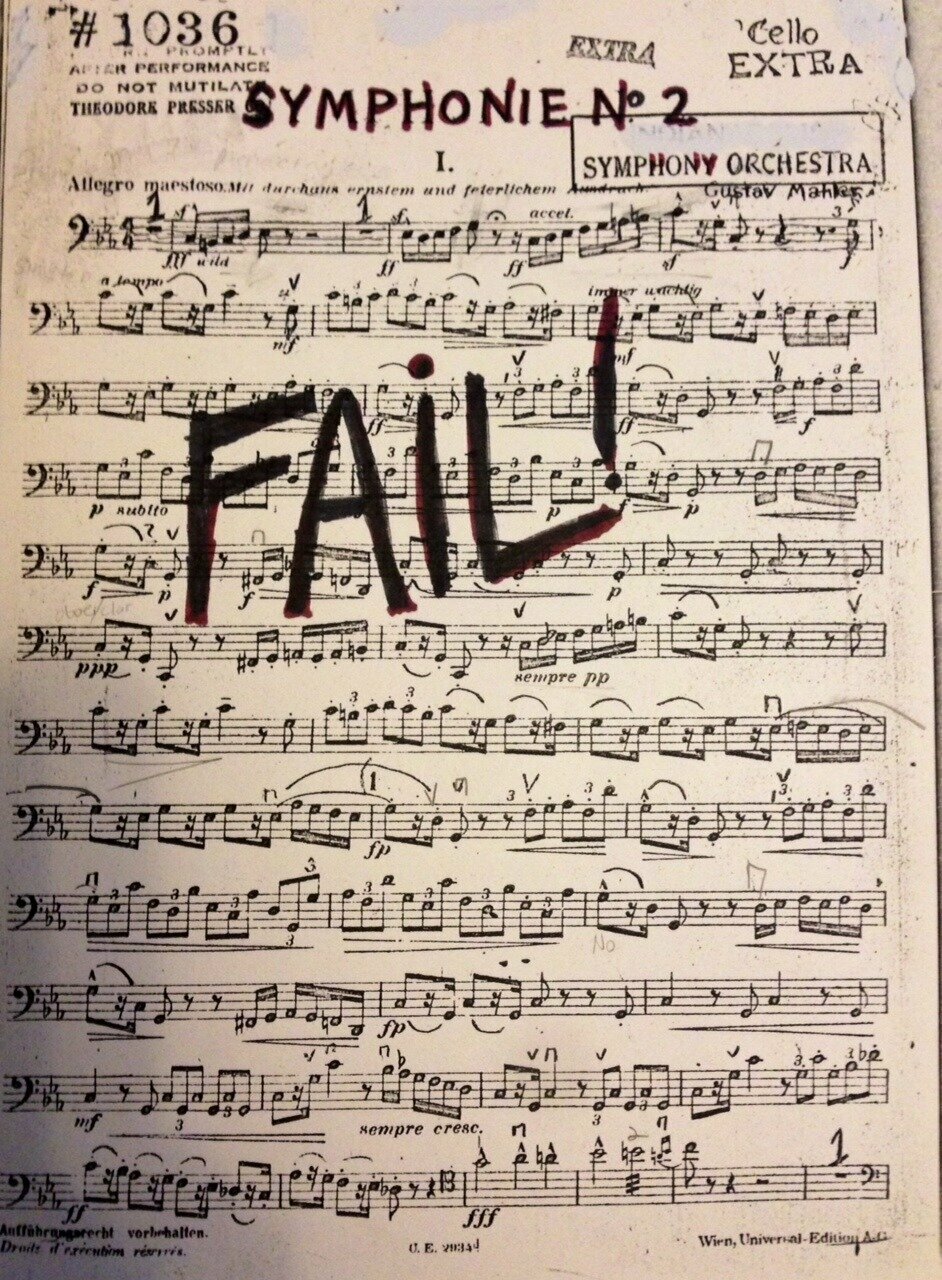
FAIL! – Onstage kind!


But no matter how prepared we are, unforeseen calamities can and do occur in performance. Batons, mutes and bows slip out of hands clattering and careening down the stage and sometimes into the audience.

fail onstage performance

Usually we are prepared for the inevitable string snapping. If it is the soloist or concertmaster, someone will hastily trade violins and then a musician at the back will as unobtrusively and quickly as possible change the string. When it comes to a cello that is easier said than done. My six-foot-four stand partner had a knack for breaking even the thickest string—the C string causing an exploding sound, throwing the entire instrument out of whack. How did cellists react to broken strings on stage?

Guy Johnston BBC Young Musician of the Year 2000   

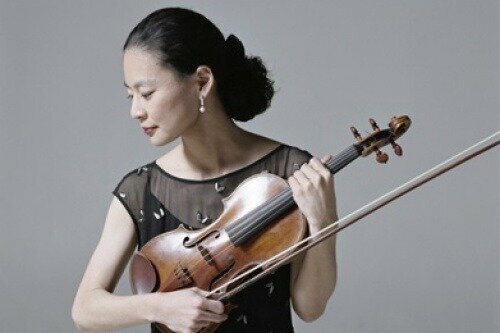
A famous “fail” occurred in 1985 when the then fourteen-year-old Midori had to swap her violin twice due to two broken strings during a performance with Leonard Bernstein. It was her Tanglewood debut with the Boston Symphony. She was performing the 5th movement of Bernstein’s own Serenade After Plato’s Symposium. In the heat of the action Midori broke the uppermost string—the E string. She quickly traded violins with the concertmaster. A few moments later she broke that violin’s E string. This time she was passed the associate concertmaster’s violin—all without missing a beat!

Midori “string fail”   

Certainly I’ve witnessed some startling equipment failures. Yuri Bashmet, world-renowned violist, had a spectacular “fail” during a concert. He was playing his 1758 Testore viola. Suddenly the entire bridge, which holds up all the strings, literally exploded. Dazed, all he could do was shrug.

Yuri Bashmet’s 1758 viola falls apart during performance!   

We musicians are often worried about falling: we might trip dodging all the onstage clutter of chairs, stands, microphones, instrument stands, and risers. Sadly, there have been several well-publicized falls of Maestros falling of their podiums James Levine included. Our principal guest conductor in the 1980’s, Klaus Tennstedt, who was a large man, once came tumbling off the podium toward me. I jumped up with my cello, and grabbed Tennstedt to steady him with the cello between us!

Conductor falls off podium   

It was particularly horrifying when Itzhak Perlman fell in front of our eyes. Fortunately he was not hurt. Another violinist had carried Perlman’s violin. Perlman refused anyone’s help, got up, and then played brilliantly.

Conductor “fails” are more common. They are known to lose their tempers but rarely do the sparks fly as they did with Arturo Toscanini the great Italian conductor of the NBC Orchestra, who threw temper tantrums regularly. There are two famous stories of him actually causing bodily harm. Once, trying to mediate between two feuding musicians, Toscanini started pummeling one of the players with a ferocious intensity. Another time in Turin, in 1919, Toscanini snapped a musician’s bow near the violinist’s face causing injuries and narrowly missing the player’s eye. Despite apologies and some financial compensation the musician sued. Toscanini was acquitted.

Audiences cause concert “fails” too. Recently at a Toronto Symphony concert an elderly gentleman turned up his hearing aids to better hear the mesmerizing opening of the Shostakovich Violin Concerto played by Julian Rachlin. The cellos and basses begin very softly and in a low register. Then the violinist entered playing without vibrato—starkly. A very loud high-pitched squealing ensued. The conductor stopped the soloist and the orchestra, as the ushers scrambled to find the perpetrator. We sat quietly waiting until finally the gentleman was located and led out of the hall saying, “What’s going on? I can’t hear anything!”

An orchestral concert is not usually the site of fistfights, but there have been two of late. In March of 2012 Maestro Riccardo Muti was conducting a performance of Brahms Symphony No. 2. One usually sits motionless and restrained in symphony concerts, but that evening two men started fighting in one of the boxes. A 30-year-old man started punching an older man over a disagreement regarding their seats. Muti continued the concert during the melee, turning around to throw irritated glares at the perpetrators until they could be subdued. No one was charged.

During the first twenty minutes at the Boston Pops’ opening night of 2007, a scream was heard. Conductor Keith Lockhart gave the signal for the orchestra to stop. A scuffle had broken out in the balconies apparently after one man told another to be quiet. “House security and Boston police stopped the fight, and the audience members were escorted out of the hall,” the Boston Symphony Orchestra said in a statement. The concert resumed with cheers from the audience.

Opera with live animals

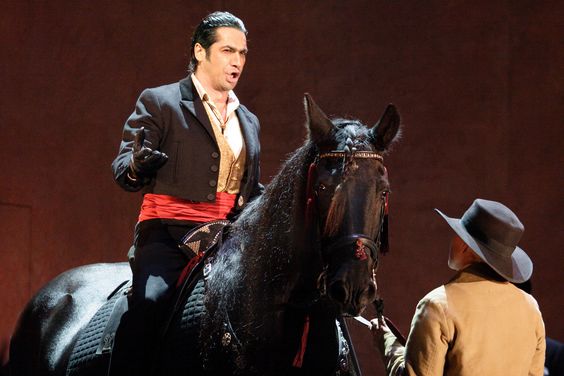
Ildebrando D’Arcangelo in Carmen © ROH/Catherine Ashmore, 2009

Opera patrons more often witness “fails.” One occurred during a performance with Sir Thomas Beecham who was known for his quick wit. In a 1930s production of Carmen at Covent Garden, live animals were part of the action. One of the horses proceeded to ‘do his business’ on the floor. “My God what a critic!” said Sir Thomas Beecham.

We try very hard to keep the show going on no matter what happens. The audience often is unaware of any mishaps onstage and they can enjoy the glorious music uninterrupted. But audiences do love the drama. Anything can happen at a concert hall!