Total Pageviews

Friday, January 2, 2026

What is a prelude in music?


Stephen Johnson gets to grips with classical music's technical terms


A musical prelude is an introduction to a larger piece of music. In some instances, it can stand alone as an independent piece, but most often it is heard as a preface, which may introduce musical themes that are then developed later on in the work.

Here, surely, is a musical term that’s simple enough to define. The word ‘Prelude’ comes directly from the Latin ‘praeludere’ – ‘to play before’. And that, for several centuries, was the Prelude’s function.   

It was partly practical necessity. Lutenists, wanting to test their tuning and the acoustics of the room, would improvise a little warm-up piece before getting down to business.

Fitted out with the title ‘Praeludium’ this soon became a solid part of the ritual of music making. Church organists would also improvise preludes: 1) to create a suitable devotional atmosphere before the service; and 2) to flush out any incipient technical problems.

The ‘chorale preludes’ of JS Bach and his contemporaries (preludes based on a hymn tune) were generally composed with function 1 in mind – and perhaps sometimes function 2 as well.

But the fact that – on paper at least – you could have a separate, self-sufficient piece called ‘prelude’ presaged a momentous change.

In the Baroque era, most pieces called ‘prelude’ were still designed to introduce something: an instrumental suite perhaps, or a grand contrapuntal display, as in Bach’s stupendous two-volume collection of 48 Preludes and Fugues (The Well-Tempered Clavier).     ven there, though, the ‘introductory’ character of some of the preludes is questionable: doesn’t the E flat major Fugue in Book I tend to sound like a relatively lightweight coda to the magnificent ‘Prelude’ that in most performances triumphantly upstages it?

Chopin may have had similar thoughts when he created the first great set of 24 Preludes – it’s tempting to call them ‘Preludes without Fugues’. But by then the word ‘prelude’ had become general Romantic currency.

The Romantics loved incompleteness: ruins, fragments, unfinished utterances that seemed to falter on the edge of the inexpressible. The notion of a ‘prelude to… what?’ fascinated them.

The score of Liszt’s symphonic poem Les préludes has a literary preface which opens with a question: ‘What else is our life but a series of preludes to that unknown Hymn, the first and solemn note of which is intoned by Death?’

And from that to Debussy’s Prélude à l’après-midi d’un faune – a work perpetually poised on the threshold of what the French call ‘le petit mort’ – may not be such a big step after all. All this from a lutenist’s warm-up .   


Andrea Bocelli - Who Wants To Live Forever (with Brian May) -


Maestro Andrea Bocelli joins Queen’s legendary guitarist Brian May Live at “Teatro Del Silenzio” for a breathtaking performance of “Who Wants To Live Forever,” taken from “Andrea Bocelli 30: The Celebration”. A powerful collaboration blending opera, rock, and timeless artistry. Listen here: https://andreabocelli.lnk.to/WhoWants... #AndreaBocelli #BrianMay Andrea Bocelli shines in the star-studded trailer for 'Andrea Bocelli 30: The Celebration' from Mercury Studios and Fathom. This concert film was directed by Sam Wrench & produced by Mercury Studios, Fathom, Maverick, Impact Productions and Almud.

Vienna New Year Concert 2026


Programme Johann Strauß II. Overtüre to the Operetta "Indigo and the Forty Thieves" Carl Michael Ziehrer Donausagen. Walzer, op. 446 Joseph Lanner Malapou-Galoppe, op. 148 Eduard Strauß Brausteufelchen. Polka schnell, op. 154 Johann Strauß II. Fledermaus-Quadrille, op. 363 Johann Strauß I. Der Karneval in Paris. Galopp, op. 100 Franz von Suppè Ouvertüre zur Operette "Die schöne Galathée" Josephine Weinlich Sirenen Lieder. Polka mazur, op. 13 [Arr. W. Dörner] Josef Strauß Frauenwürde. Walzer, op. 277 Johann Strauß II. Diplomaten-Polka. Polka francaise, op. 448 Florence Price Rainbow Waltz [Arr. W. Dörner] Hans Christian Lumbye Københavns Jernbane-Damp-Galop Johann Strauß II. Rosen aus dem Süden (Roses from the South), Waltz, op. 388 Johann Strauß II. Egyptischer Marsch (Egyptian March), op. 335 Josef Strauß Olive Branch Waltz, op. 207

5 Composers Who Were Also Accomplished Visual Artists


From Felix Mendelssohn and his Romantic era landscapes to John Cage and his chance-driven ink washes, these five composers created drawings, sketches, and paintings that help illuminate their artistic inner worlds.

Today, we’re looking at the lesser-known art by five great composers.

Felix Mendelssohn (1809–1847)
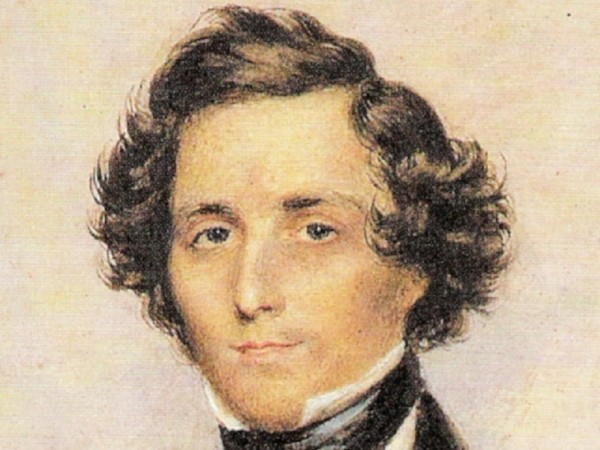
Felix Mendelssohn

Felix Mendelssohn

Mendelssohn was not just a celebrated composer; he was also a prolific visual artist.

He began taking drawing and painting lessons at an early age. Over the course of his lifetime, he produced hundreds of pieces of art in pen-and-ink, watercolour, and oils.

It’s no surprise that this child of the early Romantic era favoured subjects like dramatic natural landscapes and historic architecture.
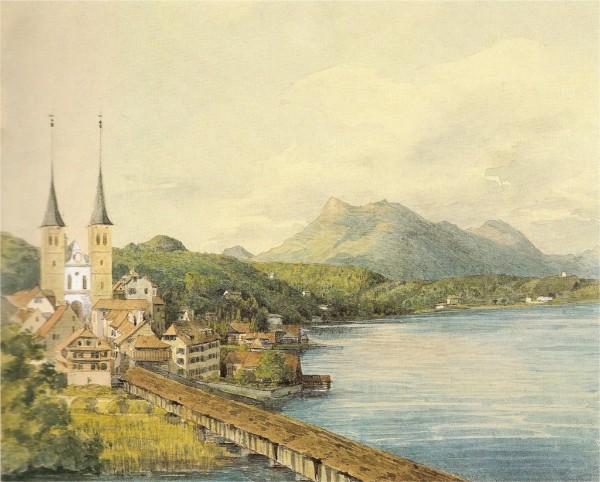
Mendelssohn's landscape painting

Mendelssohn’s landscape painting

During one family tour of Switzerland in 1822, the 15-year-old Mendelssohn drew over forty ink-and-pencil landscape sketches of the Alps.

Later trips to Scotland (in 1829) and Italy (in 1831) likewise inspired numerous scenic drawings and watercolours of breathtaking locales.

He would also create memorable musical portraits of those countries, most famously with his Hebrides Overture and his Fourth Symphony, nicknamed the “Italian.”

Mendelssohn wrote in 1838 that while vacationing in Switzerland, “I composed not even a bit of music, but rather drew entire days, until my fingers and eyes ached.”

The beloved hobby allowed him to remain creative even when he was struggling with finding musical inspiration.     

Arnold Schoenberg (1874–1951)

Composer Arnold Schoenberg is remembered best today as a composer and pioneer of atonality, but he was also a gifted Expressionist painter.

He began painting around 1907 and started focusing on the hobby in earnest months later during a particularly tumultuous period in his life.
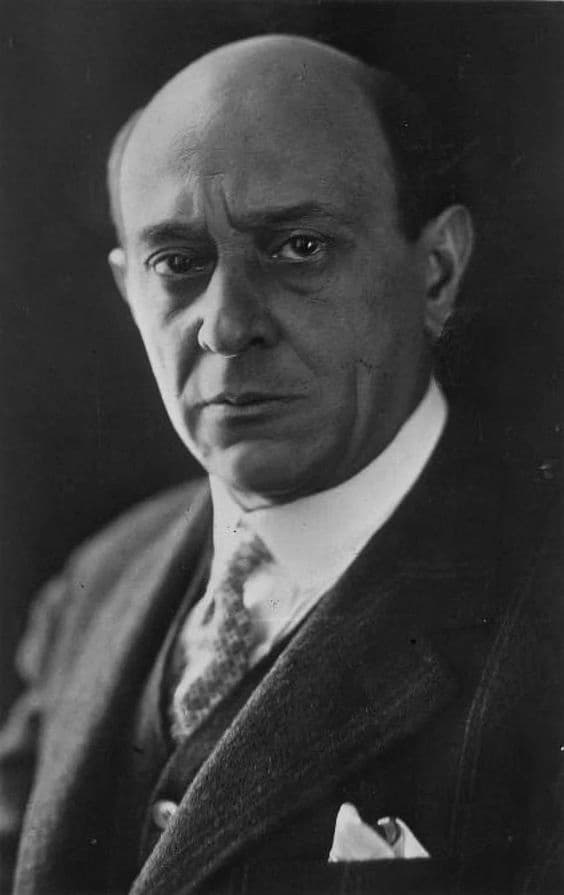
Arnold Schoenberg

Arnold Schoenberg

That year, his wife, Mathilde, left him for several months to have an affair with painter Richard Gerstl. After she returned to Schoenberg that November, Gerstl died by suicide.

While dealing with the emotional fallout, Schoenberg created a series of intense portraits characterised by stark colours, exaggerated features, and haunted gazes.

These paintings – which Schoenberg often titled “Gaze” or “Looking” – were meant to express something profound about his interior emotional state at the time of their creation.   

He ended up aligning with the loose Vienna-based group of artists known as Der Blaue Reiter (The Blue Rider), named after Wassily Kandinsky’s 1903 painting of the same name.

In fact, Schoenberg showed paintings at the Heller Gallery in Vienna (1910) and in the Der Blaue Reiter exhibition in Munich (1911) at Kandinsky’s invitation.

Schoenberg painted around 60–70 paintings, mostly between 1908 and 1912. After 1912, his output dipped, and he returned to focusing on music.
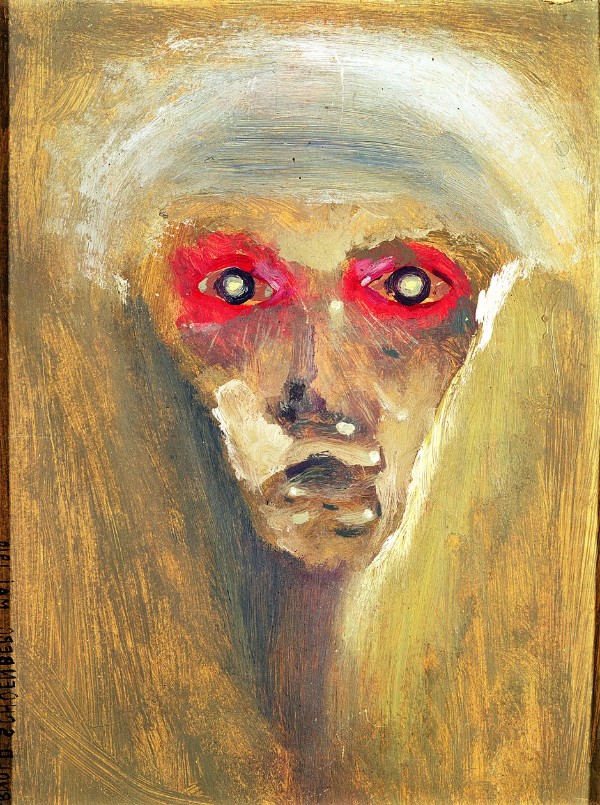
Arnold Schoenberg's self portrait, "The Red Gaze"

Arnold Schoenberg’s self portrait, “The Red Gaze”

He later mused about the connections between the two arts in an interview:

I planned to tell you what painting meant to me. In fact, it was to me the same as making music. It was to me a way of expressing myself, of presenting emotions, ideas, and other feelings.

And this is perhaps the way to understand these paintings, or not to understand them. They would probably have suffered the same fate as I have suffered; they would have been attacked. The same would happen to them that happened to my music.

I was never very capable of expressing my feelings or emotions in words. I don’t know whether this is why I did it in music, and also why I did it in painting.

George Gershwin (1898–1937)

George Gershwin is famed as a composer of jazz-influenced classics, but he was also an avid painter: he created over 100 works during his lifetime.

He took up painting in 1927, encouraged by his younger brother Ira and their cousin, the artist Henry Botkin.

He worked primarily in oil painting and charcoal or pencil sketches, focusing on portraits and figure studies of the people in his world. He was especially fond of impromptu, casual portraiture.
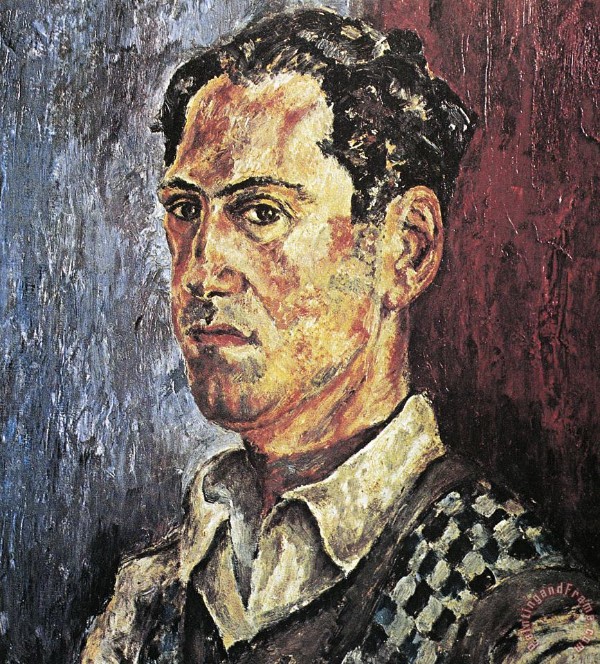
George Gershwin, self-portrait, 1936

George Gershwin, self-portrait, 1936

Among Gershwin’s best-known paintings is his portrait of his Hollywood tennis partner, fellow painter-composer Arnold Schoenberg (c. 1934–36). Today, that painting hangs in the U.S. Library of Congress.
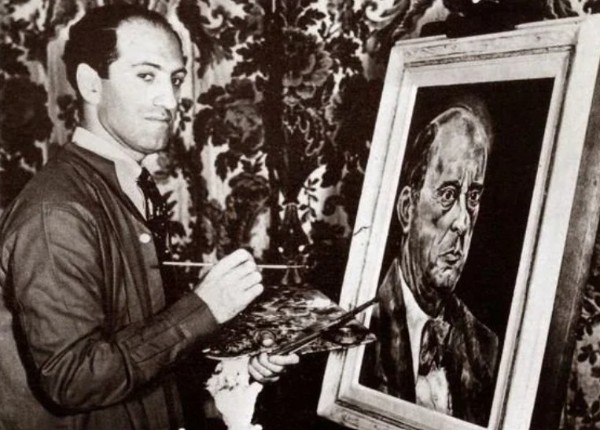
George Gershwin painting Arnold Schoenberg

George Gershwin painting Arnold Schoenberg

One friend, Merle Armitage, noted that Gershwin “was in love with colour and his palette in paint closely resembled the colour of his music. Juxtaposition of greens, blues, sanguines, chromes, and greys fascinated him.” Appropriate favourites for the composer of Rhapsody in Blue!   

It should also be noted that Gershwin was an art collector as well as artist, owning works by Picasso, Chagall, Modigliani, Kandinsky, and others.

He even kept Mark Chagall’s painting, The Rabbi, over his piano, where he would see it every day he went to work.

It’s tantalising to think about how the aesthetics of these artists might have affected his own music.

As he once told a friend, “Painting and music spring from the same elements, one emerging as sight, the other as sound.”

Paul Hindemith (1895–1963)
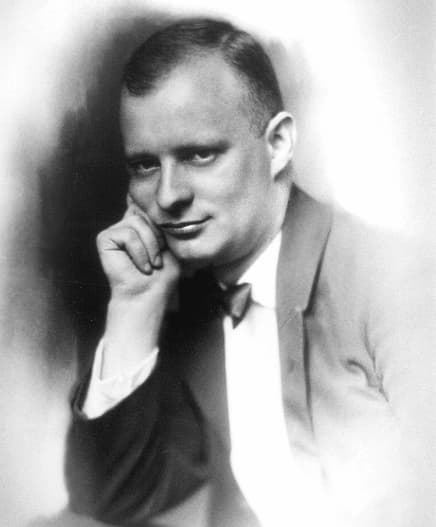
Paul Hindemith, 1923

Paul Hindemith, 1923

In addition to his compositions and viola-playing, German composer Paul Hindemith was known for his whimsical drawings.

Although he never formally trained as a visual artist, he drew prolifically from childhood until the end of his life.

He would regularly seize any scrap of paper at hand – menus, napkins, concert programs – and fill them with impromptu sketches and cartoons.

Hindemith's doodles

Hindemith’s doodles

His subjects were numerous and tended toward the bizarre: he’d portray whimsical, fantastic subjects in a cartoonish style, such as tubas with legs, cats who played musical instruments, or even dancing elephants.   

Hindemith always treated his drawing as a casual, fun outlet. He never catalogued his visual art in any systematic way, or treated them as anything but throwaway doodles.

The only meticulously dated collection of Hindemith’s visual art is his series of Christmas cards, which he drew and sent out to friends, family, students, and colleagues every year. He kept up the tradition for decades, until his final Christmas in 1963.

John Cage (1912–1992)  

John Cage, avant-garde composer of 4’33” fame, created a significant body of visual art during the last twenty years of his life.

During the 1970s and 1980s, Cage turned to printmaking, drawing, and watercolour as extensions of his experimental philosophy. By the time of his death, he had produced a large and distinctive oeuvre of works on paper.

Cage’s visual art is notable for applying the same principles of chance and indeterminacy that he used in music. While making his watercolours and prints, Cage would let random operations guide the creation of the works.
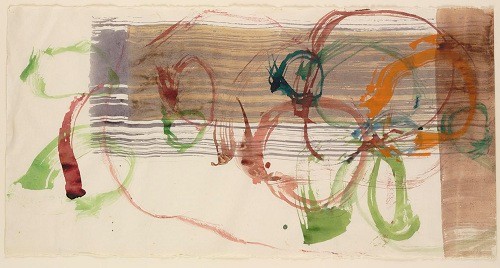
John Cage's painting

John Cage’s painting

As a result, Cage’s art has a uniquely serene yet unpredictable quality – splashes of colour or delicate pencil lines appear according to coin flips and computer-generated randomness, not by his own subjective aesthetic judgment.

Cage’s largest sustained visual art project was done in collaboration with the Mountain Lake Workshop in Virginia. Between 1983 and 1990, he spent several week-long residencies there, creating a total of 125 unique watercolours. All of them were later published in the compendium The Sight of Silence: John Cage’s Complete Watercolors.

Conclusion

The visual artworks these composers left behind are compelling in their own right, but they’re also fascinating for what they say about their creative spirit and vision.

Whether it was Mendelssohn sketching alpine peaks in Switzerland, Schoenberg confronting his inner turmoil on canvas, or Cage embracing indeterminacy with brush and ink, each of these composers used visual media to explore ideas that sound alone didn’t allow them to.

Appreciating their artwork gives us an invaluable lens for hearing – and better understanding – their remarkable music.

Grant Us Peace A New Year’s Journey Through Music and Hope

Although it first appeared in the “Agnus Dei” of the Roman Catholic Mass, this plea has travelled far beyond the walls of any church, finding its way into music across centuries and styles.

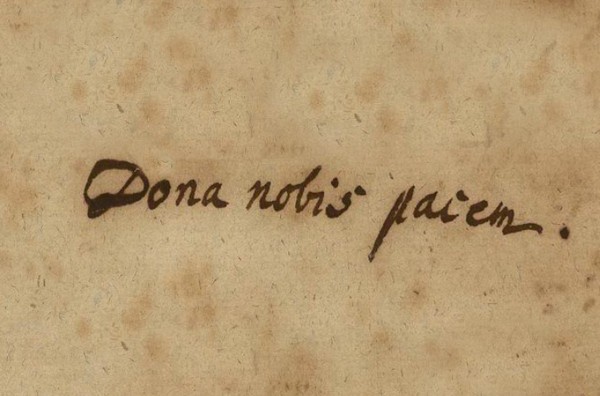
Bach's writing of "Dona nobis pacem"

Bach’s writing of “Dona nobis pacem”

From the serene rounds of the medieval era to the soaring polyphony of the Baroque, the impassioned mass settings of the Romantic period, and the stirring cantatas of the twentieth century, composers have returned again and again to this three-word invocation.

It is at once humble and transcendent, a lyrical prayer for our collective hopes, our sorrows, and our longing for a world at rest. As the calendar turns, let us carry “dona nobis pacem” not just as a musical motif, but as a prayer and a promise.

A Single Line

When we look at the diversity of settings, we first look at the dual identities of the text. In fact, it is both a liturgical fragment and a stand-alone musical symbol.

Musically, dona nobis pacem has been composed as a canon, a choral movement within a mass, a large‑scale choral‑orchestral work, and even modern arrangements for handbells and secular choirs.

Through these settings, composers have revealed not only their personal reflections on peace but also the cultural, social, and historical currents that shaped their lives. Each interpretation becomes a mirror of its time. In every era, “Dona nobis pacem” has offered musicians a way to translate human longing into sound.

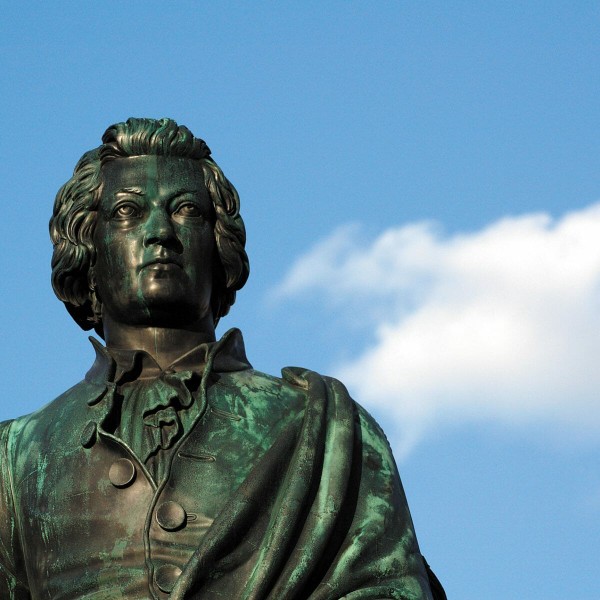
Statue of Mozart in Salzburg

Statue of Mozart in Salzburg

Maybe the famous “Dona nobis pacem” sound isn’t actually by Mozart, but it captures something people long to associate with Mozart. Clarity without coldness, elegance without effort, and the quiet miracle of voices joining, one after another, to ask for peace.   

Two Visions of Peace

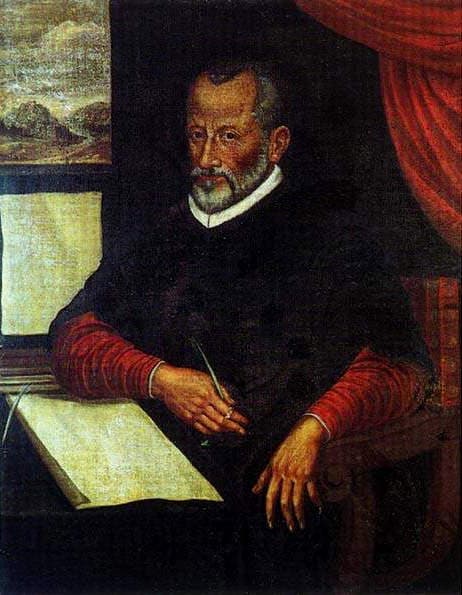
Once we move beyond the intimacy of a simple canon, the Renaissance gave “dona nobis pacem” architectural weight and spiritual depth. The plea for peace, as in the masses of Palestrina, is not whispered but carefully built.

The phrase, within the polyphonic Mass, becomes the destination. It is the final space where all preceding musical thought comes to rest. Peace is embodied rather than described, as the music suggests that peace arises through balance, restraint, and communal listening.

For Johann Sebastian Bach, the final “Dona nobis pacem” is both culmination and transformation. The chorus unfolds in dense, purposeful imitation, propelled by orchestral energy, and the prayer expands beyond a personal plea into collective affirmation.

This is peace earned through striving, and order forged from complexity. Where the Renaissance offers calm equilibrium, Bach offers radiant conviction. His vision of peace is not stillness, but moral triumph. It is hard-fought, structured, and ultimately luminous.

Giovanni Pierluigi da Palestrina

Giovanni Pierluigi da Palestrina


Peace as Architecture of Faith

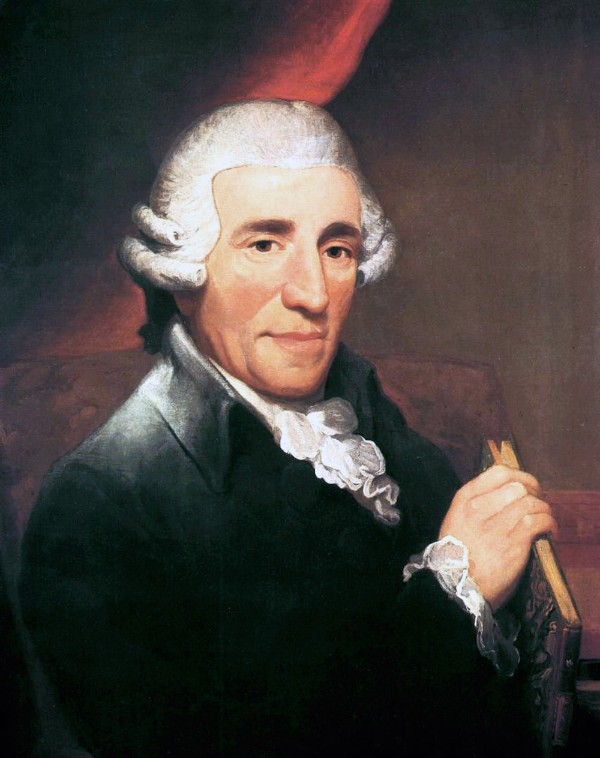
Joseph Haydn

Joseph Haydn

As we move through societal changes and developments, the plea for peace transcends from a communal ritual to an inward, almost existential longing. The words remain the same, but the musical attitude does not. For Joseph Haydn, “dona nobis pacem” belongs to the architecture of faith.

In his late masses, the final Agnus Dei/Dona nobis pacem often begins in gravity or tension and then resolves into buoyant affirmation.

Haydn’s musical language here is public and ceremonial. Rhythmic vitality, clear tonal direction, and bright orchestration suggest peace not as fragile or doubtful, but as something bestowed.

Peace, for Haydn, is communal and stabilising. It belongs to a world where faith, reason, and social order ultimately align. The music reassures, as the pleas for peace have been heard.    

The Fragile Plea for Peace

With Mozart, the plea for peace steps out of ceremony and into lived experience. The plea for peace no longer sounds like a confident conclusion to a ritual already understood, but like a moment of exposure.

Rather than pressing toward emphatic resolution, Mozart allows vulnerability to linger. His lines unfold with a natural, almost conversational lyricism, as if the music itself were breathing alongside the listener.

This is peace understood as a moral and human ideal rather than a guaranteed outcome. Peace in this music is not proclaimed, but carefully and almost shyly, offered. His settings acknowledge that peace is something we long for precisely because it is so easily broken.

Mozart’s Enlightenment spirit comes fully into focus. Faith remains, but it is infused with empathy. Even when he writes for grand forces, the plea for peace feels intimate. It is music that does not assume peace as a conclusion, but asks for it gently and earnestly.   


The Music of Hesitation

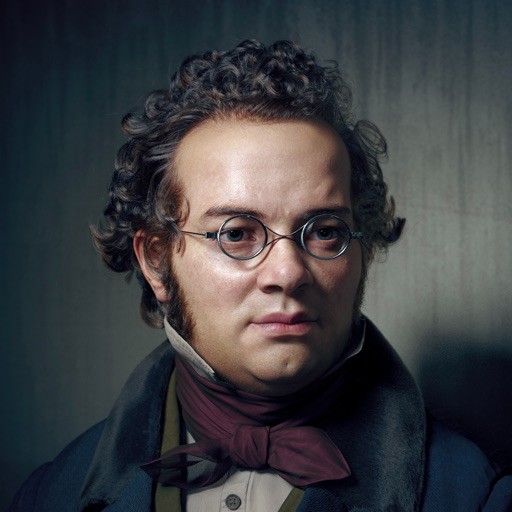
Franz Schubert

Franz Schubert © Hadi Karimi

Once we make it to Franz Schubert, ” Dona nobis pacem ” has crossed a threshold. In his late masses, the plea no longer feels assured of fulfilment. Schubert often avoids emphatic closure, favouring suspended harmonies, unexpected modulations, and an almost questioning tone.

Schubert’s Dona nobis pacem can feel hesitant, inward, and searching. The music does not declare peace so much as hope for it. The sense of consolation is fragile and provisional. A Romantic consciousness is emerging.

Faith exists, but certainty does not. Peace here is not guaranteed by divine order nor resolved through classical balance. It is something yearned for by an individual soul, aware of loss, mortality, and distance from transcendence.

Schubert turns it inward, allowing doubt and longing to remain unresolved. What begins as a liturgical formula becomes, by Schubert’s time, a mirror of changing human self-understanding. The words never change, but the music tells us that we might never fully possess peace.     

A Universal Cry for Peace

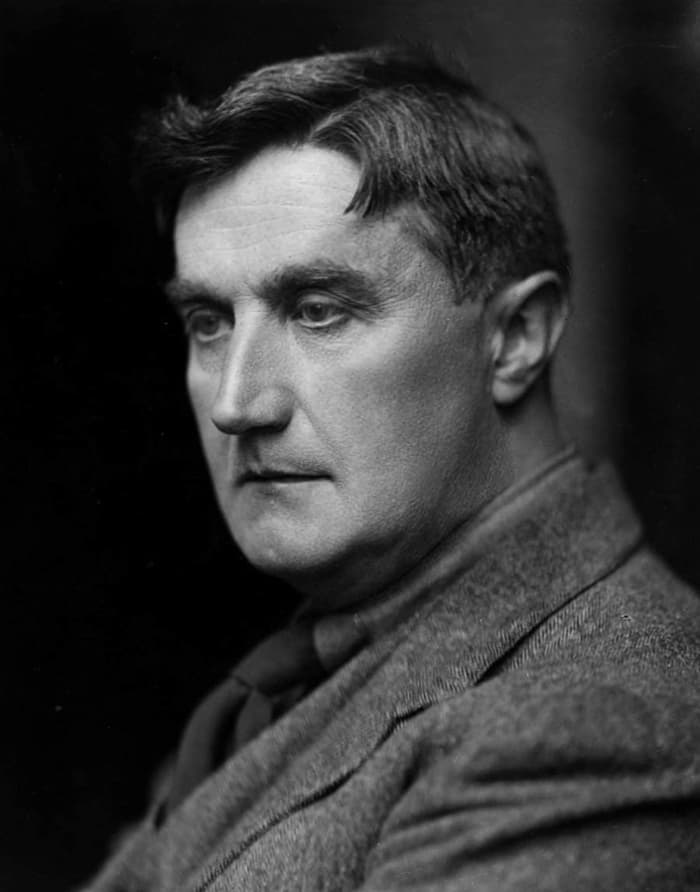
E.O. Hoppé: Vaughan Williams, 1920

E.O. Hoppé: Vaughan Williams, 1920

While settings throughout the 19th century often remained within liturgical boundaries, the 20th century witnessed a dramatic reimagining of this plea for peace as a large-scale artistic statement about war and peace, reaching far beyond liturgical roots.

Probably the most significant example emerges courtesy of Ralph Vaughan Williams’s 1936 cantata Dona nobis pacem. Commissioned for the centenary of the Huddersfield Choral Society, this work blends the Latin Mass text with poetry by Walt Whitman, Biblical passages, and political speech excerpts to produce a sweeping plea for peace during a period of escalating global tension.

Vaughan Williams’ setting opens with the familiar “Agnus Dei” prayer and then moves into movements based on Whitman’s vivid war poetry, which dramatise the intrusion of war into everyday life and explore the emotional and moral complexities of conflict.

Ultimately, the piece returns to the prayer, asserting peace not merely as a liturgical desire but as a deeply human imperative. The work exemplifies how the theme evolved in modern times. Vaughan Williams transforms a liturgical fragment into a political and emotional epic, situating the plea for peace within a universal conversation about war.  

The Enduring Human Plea

In our time, Dona nobis pacem continues to appear in countless settings beyond traditional choral liturgy or large orchestral works. Composers and arrangers have crafted versions for smaller ensembles, educational choirs, and instrumental groups.

Even in secular popular culture, the phrase often appears in contexts divorced from strict liturgy. Its presence in hymnals, children’s choir pieces, and recordings of Christmas and peace songs suggests that Dona nobis pacem has entered the broader cultural imagination as a universal symbol of hope.

Across the centuries, Dona nobis pacem has never belonged to a single style or moment. It has lived as a simple round sung together, as intricate polyphony, as a radiant mass finale, and as an urgent modern cry. Each setting reflects its time, yet all return to the same fragile truth. Peace is never assumed, only asked for.

Perhaps that is why these words continue to move us. In singing “grant us peace”, we hear generations before us voicing the same hope we carry today. Music gives us the hope, if only for a moment, to believe that by listening together, and by singing together, we might edge a little closer to the harmony we so deeply desire.

Friday, December 26, 2025

Happy New Year 2026 🎉 Best New Year Piano & Orchestra Instrumental Covers


Happy New Year 2026 🎉 Best New Year Piano & Orchestra Instrumental Covers ✨ Welcome to Christmas Eve Melodies ✨ A heartfelt home for sacred, warm, and uplifting Christmas music. This channel is dedicated to bringing you traditional Christmas choir performances, orchestral arrangements, and timeless hymns that capture the beauty and wonder of the holiday season. Each piece is crafted to immerse you in an atmosphere of peace, reverence, and festive joy.

For The Patron: The Jour de Fête Quartet

 by 

On Fridays, the publisher Mitrofan Petrovich Belaieff had his musical gatherings, bringing together the cream of the St Petersburg composers. The earlier group, who came together around Mily Balakirev, known as the Mighty Handful, or just The Five (Balakirev, Alexander BorodinCésar CuiModest Mussorgsky, and Nikolai Rimsky-Korsakov), had done their best to embody Russian national music, but fell apart after the early death of Mussorgsky. The timber merchant Belaieff stepped forward next.

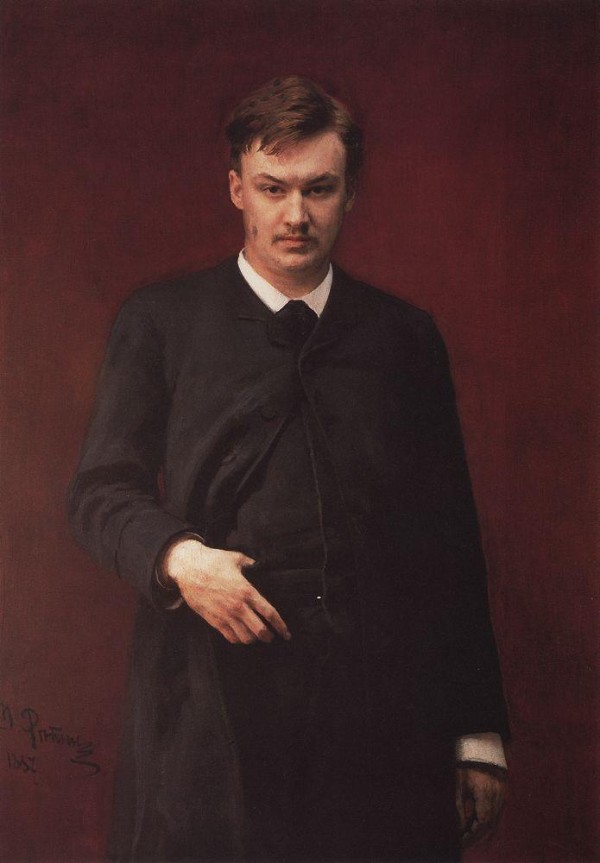
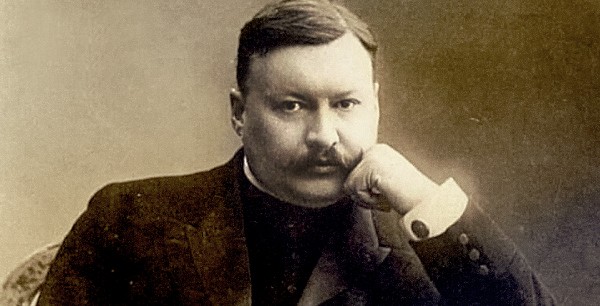
Portrait of Alexander Glazunov

Portrait of Alexander Glazunov

Belaieff, with the family fortune in the timber industry behind him, was also a musician. He played the viola and, through Anatoly Lyadov, was introduced to Alexander Glazunov. In the early 1880s, Belaieff held Friday musical meetings for string quartet concerts at his house. Initially, they were playing through the quartets of HaydnMozart, and Beethoven in chronological order, but soon Russian music was making its appearance.

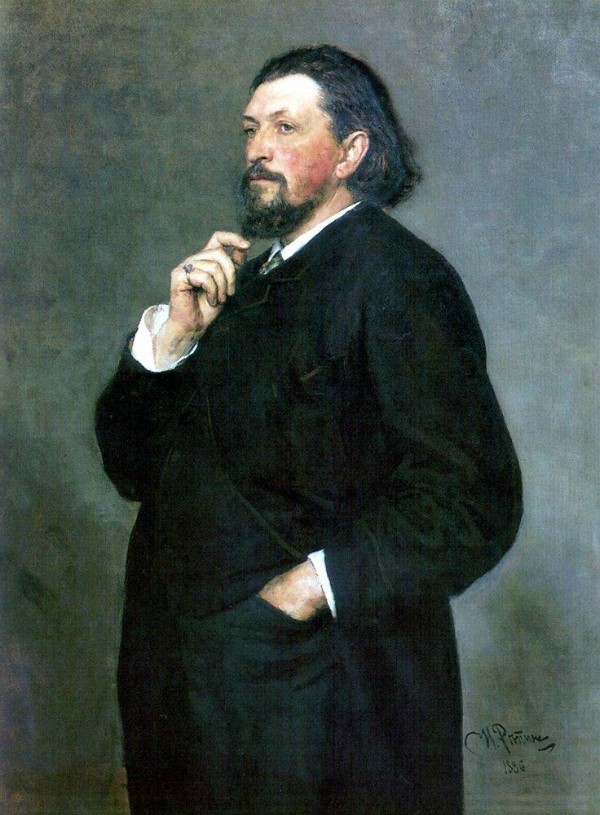
Portrait of Mitrofan Belaieff by Ilya Repin

Portrait of Mitrofan Belaieff by Ilya Repin

Musically, Glazunov was the new driving force behind what became known as the Second Petersburg School. Rimsky-Korsakov, Lyadov, Glazunov, the critic Vladimir Stassov, and many others flocked to Belaieff’s soirees. Rimsky-Korsakov, Lyadov, and Stassov had been important members or adjuncts to The Five. The Belaieff meetings were never cancelled. Rimsky-Korsakov recalled that if a member of the original quartet fell ill, Belaieff quickly found a stand-in. Belaieff always played the viola in the quartet.

A normal evening would include a concert at around 1 am, after which food and wine flowed. After the meal, Glazunov or someone else might play the piano, either trying out a new composition or reducing a symphonic work to a 4-hand version.

The composers would all contribute to a group project, such as the string quartet for Belaieff’s 50th birthday in 1886, composed by Rimsky-Korsakov, Borodin, Lyadov, and Glazunov. Called the String Quartet on the Theme ‘B-la-F’, using the principal syllables of Belaieff’s last name. A year earlier, Glazunov, Lyadov, and Rimsky-Korsakov composed the three-movement ‘Jour de fête’ or ‘Name-Day Quartet’ for their patron.

For the Jour de Fête quartet, Glazunov contributed an opening movement called Les chanteurs de Noël. The Jour de Fête celebrates Christ’s birth, celebrated on January 6-7 on the Orthodox calendar. The Christmas singers bring joy to the festivities.


Felix Galimir at Marlboro

Felix Galimir at Marlboro

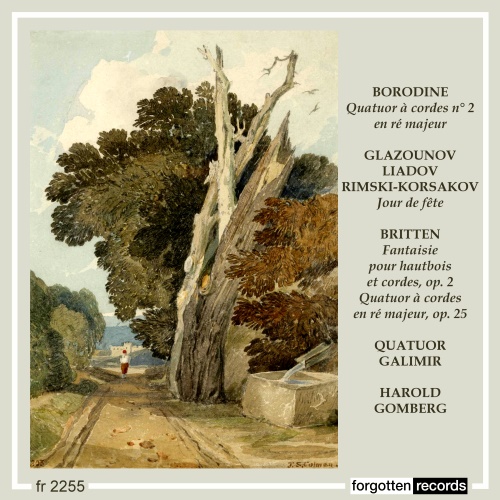
This recording was made in 1950 by the Galimir Quartet. Founded by violinist Felix Galimir (1910–1999) in 1927, the quartet was made up of him and his three sisters (Adrienne on violin, Renée on viola, and Marguerite on cello). They were the right quartet at the right time, recording Alban Berg’s Lyric Suite and the String Quartet of Maurice Ravel under the supervision of the composers, who were present during the rehearsals and recording sessions in 1936. These recordings were awarded two Grand Prix de Disques awards. After fleeing Germany because of his Jewish background, he ended up in Palestine and, together with his sister Renée, was a founding member of what would become the Israel Philharmonic Orchestra. In 1938, he moved to New York, where he re-founded the Galimir Quartet, this time with members Henry Seigl on violin, Karen Tuttle on viola and Seymour Barab on cello. In New York, he was a member of the NBC Symphony orchestra, concertmaster of the Symphony of the Air, and taught at The Juilliard School, the Curtis Institute of Music in Philadelphia, and Mannes College of Music in New York. In the summers, from 1954 to 1999, he was on the faculty of the Marlboro Music Festival.

Borodine-Glazounov-Liadov-Rimski-Korsakov-Britten-Quatuor Galimir-Harold Gomberg

Performed by

Galimir Quartet

Recorded in 1950

Official Website

For more of the best in classical music, sign up for o