Total Pageviews

Showing posts with label Serge Rachmaninoff. Show all posts

Tuesday, November 22, 2022

Rachmaninoff: Rhapsody on a Theme of Paganini - Anna Fedorova -


Tuesday, November 1, 2022

Yuja Wang: Rachmaninov Piano Concerto No. 3 in D minor, Op. 30


207,711 views  Sep 11, 2021
Staatskapelle Dresden conducted by Myung-Whun Chung
September 8, 2019(George Enescu Festival) Sala Palatului, Grand Palace Hall

00:00 I. Allegro ma non tanto
16:42 II. Intermezzo (Adagio)
27:24 III. Finale (Alla breve)


Friday, September 30, 2022

Symphony No. 2, Op 27: III


Symphony No. 2, Op 27: III
31 views  Sep 14, 2022  Provided to YouTube by IIP-DDS

Symphony No. 2, Op 27: III · Silver State Orchestra · Rachmaninov

A Time For Reflection: Classical Music

℗ 2016 Black Barn Music

Released on: 2022-09-14

Composer: Rachmaninov


Thursday, June 23, 2022

Youngest ever Van Cliburn winner moved Marin Alsop to tears with this rapturous Rachmaninov

 By Siena Linton, ClassicFM


The legendary conductor was seen wiping away tears as Yunchan Lim thundered through the finale of Rachmaninov’s third piano concerto.

Six competitors went head-to-head at the weekend in the final round of the sixteenth Van Cliburn International Piano Competition in Fort Worth, Texas.

Over four days from 14 to 18 June, each of the finalists brought two concertos to the stage to perform with the Fort Worth Symphony Orchestra under the baton of legendary conductor Marin Alsop.

18-year-old South Korean pianist Yunchan Lim was one of three finalists to select Rachmaninov’s third piano concerto, which he performed during the third concert of the final round on Friday 17 June.

Throughout the competition, Lim performed a wide range of works by Bach to Beethoven, Chopin to Scriabin, including a highly praised rendition of Liszt’s Transcendental Études. But it was his final performance of Rachmaninov’s Piano Concerto No.3 which would seal his victory.


Lim stormed his way through the finale of Rachmaninov’s mighty work, as Marin Alsop attentively directed the orchestra in keeping with the young pianist’s impressive pace. Alsop could be seen nodding in approval as Lim expertly transitioned from dramatic cadenzas to the sweeping Romantic themes that Rachmaninov is known and loved for.

As Lim finished the piece in a sensational flourish, the world-class conductor could be seen wiping tears from her eyes.

The two performers hugged in a touching moment, and as Lim went to thank the first row of violinists, Alsop could be seen both nodding her head in approval, and shaking it in disbelief, as she and the orchestra marvelled at the young talent. Watch Lim’s full performance below.


Marin Alsop herself was jury chair of the competition, on a panel that also included celebrated names of the piano world, including Stephen Hough, who was recently recognised in The Queen’s Birthday Honours, and Jean-Efflam Bavouzet.

Speaking to Classic FM, Alsop said, “What a joy to be part of this inspiring and compelling performance. Yunchan is that rare artist who brings profound musicality and prodigious technique organically together. The fact that he is only 18 years old is truly awe-inspiring and gives me great hope for the future”.

Lim’s selection as a finalist already made a mark in the prestigious competition’s history books, as the youngest competitor to progress to that stage of the competition, and on Saturday 18 June it was announced that he had been awarded the gold medal.

As winner of the competition, Lim will receive $100,000 (£81,660) and three years of additional support in his career. Second place went to Russian pianist Anna Geniushene, 31, with Ukrainian pianist Dmytro Choni, 28, taking the bronze medal.

Tuesday, June 21, 2022

Moved to Tears

by Frances Wilson , Interlude

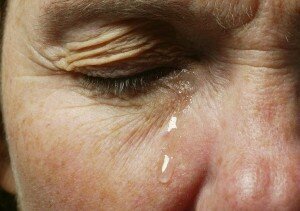
tearsMusic has the power to tug at the heartstrings, and evoking emotion is the main purpose of music – whether it’s joy or sadness, excitement or meditation. A certain melody or line of a song, a falling phrase, the delayed gratification of a resolved harmony – all these factors make music interesting, exciting, calming, pleasurable and moving.
Tears and chills – or “tingles” – on hearing music are a physiological response which activates the parasympathetic nervous system, as well as the reward-related brain regions of the brain. Studies have shown that around 25% of the population experience this reaction to music. But it’s much more than a pure physiological response. Classical music in particular steers a mysterious path through our senses, triggering unexpected and powerful emotional responses, which sometimes result in tears – and not just tears of sadness.

Tears flow spontaneously in response to a release of tension, perhaps at the end of a particularly engrossing performance. Certain pieces of music can remind us of past events, experiences and people, triggering memories and associated emotions. At other times, we may feel tearfully awestruck in the face of the greatness or sheer beauty of the music.

This last response has a name – Stendhal Syndrome – and while the syndrome is more commonly associated with art, it can be applied equally to the powerful emotional reaction which music provokes.

A psychosomatic disorder, Stendhal Syndrome, or hyperkulturemia, causes rapid heartbeat, dizziness, sweating, disorientation, fainting, tears and confusion when someone is looking at artwork (or hearing a piece of music) with which he or she connects emotionally on a profound level. The phenomenon, also called ‘Florence Syndrome’, is named after the French author Marie-Henri Beyle , who wrote under the pen-name of ‘Stendhal’. While visiting the Basilica of Santa Croce in Florence, he became overcome with emotion and noted his reactions:

“I was in a sort of ecstasy, from the idea of being in Florence, close to the great men whose tombs I had seen. Absorbed in the contemplation of sublime beauty … I reached the point where one encounters celestial sensations … Everything spoke so vividly to my soul.”

While there is some debate as to whether the syndrome actually exists, there is no doubt that music (and art and literature) can have a very profound effect on our emotional responses.

Certain pieces are well-known tear-jerkers, including:

Mahler: Adagio from Symphony No. 9 in D
Schubert: Winterreise


Personal tragedy portrayed in hauntingly beautiful music. 

Elgar: Cello Concerto

Wistful soaring melodies and a sense of hope and anguish, particularly in the final movement, this is Elgar’s tragic masterpiece. 

Allegri: Miserere

Ethereal chords combined with plainchant, the exquisite simplicity and beauty of this music is guaranteed to set the tears flowing. 

Rachmaninoff: Slow movement, Piano Concerto No. 2

Put simply, this is sublimely beautiful music.

Wednesday, June 1, 2022

Best Songs in D Minor

by Hermione Lai , Interlude

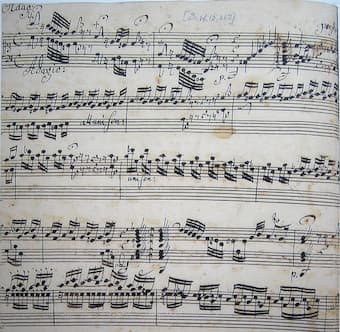
Bach's Toccata in D minor 18th century copy by Johannes Ringk

Bach’s Toccata in D minor 18th century copy by Johannes Ringk

Sometimes, I really don’t understand the descriptions assigned to particular keys. When it comes to D minor, we can read that it represents “dejected womanhood which broods on notions and illusions.” I guess it’s a pretty fancy and period description of a scorned woman in love? Others have said that D minor “expresses a subdued feeling of melancholy, grief, anxiety, and solemnity.” Whatever the case may be, some of the most famous and popular classical pieces ever are written in D minor. And here is my list of personal bests.

Bach: Toccata and Fugue in D minor

I can tell you that it was not a very easy choice because of all the gorgeous compositions in D minor that I have to leave out. However, for me it’s all starting with the Toccata and Fugue in D minor by Johann Sebastian Bach. Today that song is used in a variety of popular media, ranging from film, video games and ringtones. But the association today is not melancholy or a scorned woman in love, but sheer terror. This association with horror and Halloween first appeared in a 1962 film adaptation of “The Phantom of the Opera.” It just goes to show that specific associations are easily formed in connection with visual media, but the D minor Toccata and Fugue is still a most powerful composition, and certainly one of the best songs in D minor. 

Mendelssohn: Piano Trio No. 1 in D minor

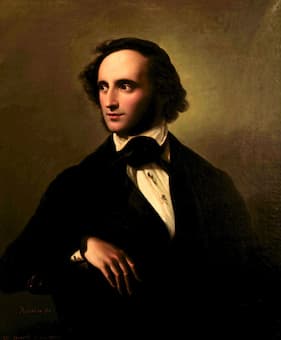
Portrait of Felix Mendelssohn by Wilhelm Hensel, 1847

Portrait of Felix Mendelssohn by Wilhelm Hensel, 1847

Felix Mendelssohn learned a lot from the music of Bach. In fact, he was responsible that the music of Bach found its rightful place on the world’s concert stages. Mendelssohn looked at the styles and compositional techniques of the past and developed a highly personalized music style. Not everybody was enthusiastic for Mendelssohn to go back in time, and Berlioz once said, “Mendelssohn paid too much attention to the music of the dead.” And the always-punchy critic and playwright George Bernard Shaw compared Mendelssohn to a senile academy professor whose exercises in a dead musical language “are as trivial as they are tedious.” Then as now, it’s difficult to please the critics. Mendelssohn complete his piano trio in D minor in 1839, and Robert Schumann wrote in his review that “Mendelssohn is the Mozart of the 19th century, the most illuminating of musicians.” There is a good bit of melancholy yearning in the opening movement, and the slow “Andante” is actually a song without words that turns to passion. The scherzo is light and airy, and it all ends with a passionate rondo. For me personally, this is one of the most powerful and best songs in D minor ever. 

Mozart: Requiem

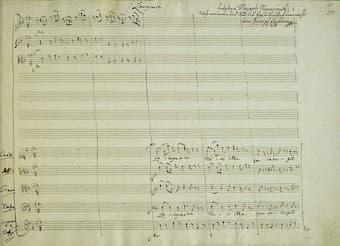
Mozart's Requiem

Mozart’s Requiem

Since the key of D minor is supposed to express grief and solemnity, it’s not surprising to find a good number of Requiems in that category. Composers who have written Requiems include BrucknerRegerFauré, and probably most famously, Wolfgang Amadeus Mozart. The passionate lover of music, Count Franz von Walsegg commissioned the work for his twenty-year old wife Anna, who had sadly passed away.

The Count was a fellow Freemason, but as we all know, Mozart himself died before he could complete the composition. Sorry to disappoint all fans of the movie Amadeus, but Salieri had nothing to do with the Requiem or with Mozart’s death. Mozart’s wife Constanze hired several composers to finish the piece and deliver it to the Count. Constanze did suggest that her husband actually believed that he was writing the requiem for his own funeral. Whatever the case may be, it is one of the most powerful classical compositions I know, and it certainly is one of the best songs in D minor.


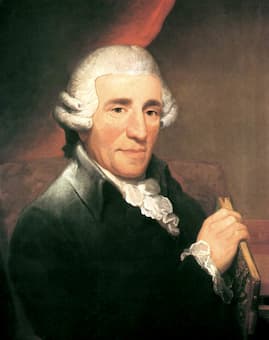
Haydn: Symphony No. 80 in D minor

Joseph Haydn

Portrait of Joseph Haydn by Thomas Hardy, 1791

D minor seemed to have been a highly popular key for composing large-scale symphonies. We have symphonies No. 1 by Dohnányi, IvesRachmaninoff and Richard StraussProkofiev and Balakirev wrote their 2nd symphonies in D minor, the same key used by Bruckner in his symphonies No. 3 and No. 9. Dvořák composed his symphonies No. 4 and No. 7 in D minor, and there are also symphonies by SchumannShostakovichSibeliusVaughan WilliamsGlazunov, and of course the monumental symphony No. 9 by Beethoven. Which one is actually my favorite? To tell the truth, I really can’t decide. So I went back to the father of the symphony, Joseph Haydn, and I found a delightful storm and stress symphony in D minor. His 80th symphony probably dates from 1784, and for some reason it does not have a nickname. However, it is a symphonic gem and Haydn showed everybody coming after him what was actually possible in a symphony. And it is for that particular reason that Haydn’s 80th is my representative for symphonies in D minor. 

Rachmaninoff: Piano Concerto No. 3 in D minor, Op. 30

Rachmaninoff's Piano Concerto No. 3 in D minor and more classical music in the key of D minor

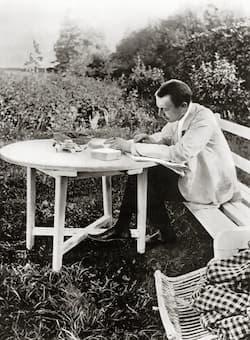
Rachmaninoff proofing a manuscript

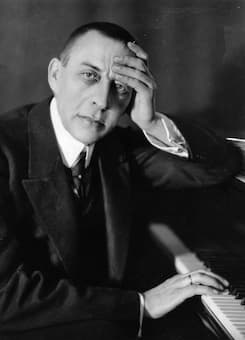
Some composers are actually rather difficult to read. Sergei Rachmaninoff was clearly one of the last great pianist-composers in a long tradition stretching back to Mozart, Beethoven, Liszt and Brahms. He proudly suggested that “a composer’s music should express the country of his birth, his love affairs, his religion, the books which have influenced him, and the pictures he loves… My music is the product of my temperament…” Rachmaninoff was fiercely egotistic in artistic matters, but also frequently depressed without any specific cause. Very few people ever heard him laugh, and only occasionally did he crack a rare smile. He was often grave in expression and mannerism, and seemed to have been stuck in prolonged periods of philosophical longing and melancholy. Almost sounds like Rachmaninoff could be considered the poster child for D minor. And wouldn’t you know it, he did write a great number of works in that particular key, including the fabulous 3rd piano concerto. It is without doubt one of the all-time best songs in D minor. As you can tell, the key of D minor was really popular with composers, and I have tried to find my favorite songs; what is yours? Next time, I will take a look at the best songs in the cheerful key of B-flat major.

Friday, April 1, 2022

Why Rachmaninoff Wrote So Much Music in Minor Keys

by 

Disappointments and tragedies in Rachmaninoff’s life

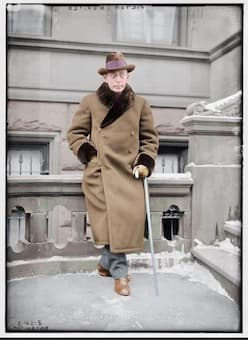
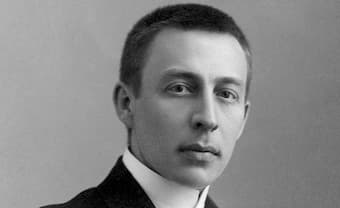
Sergei Rachmaninoff

You have to hand it to composer Sergei Rachmaninoff—his three symphonies, the Symphonic Dances, four piano concertos, and the Rhapsody on a Theme of Paganini are all written in minor keys. Other favorites, perhaps less frequently performed, are also in minor keys. Is there a reason?

Born in 1873, a leading piano virtuoso, composer, and conductor, Rachmaninoff became one of the last major figures of Russian romanticism. As a youngster, he began piano by the age of four, and displayed uncanny talent but he also experienced emotional ups and downs over his relationships and the successes or failures of his music. He lost two of his sisters, one to diphtheria and the other to pernicious anemia, and his father left the family.

The first performance of his Symphony No. 1 in D minor in 1897, a fiasco, led to scathing and caustic reviews. Rachmaninoff, overcome with despair, descended into a depression that lasted four years. The piece was never performed again during his lifetime. It is now said that the conductor of the premiere, Glazunov, was not only incompetent but also drunk at the time of the premiere.

By 1900 Rachmaninoff was paralyzed with self-doubt and unable to compose. After professional help, his creative juices were rekindled. The Piano Concerto No. 2, completed in 1901 and performed by Rachmaninoff himself, was a success and led to a Glinka Award. During the early 1900s Rachmaninoff, successfully toured the US, and lived in Germany for a time.

The Russian Revolution in 1917 caused great turmoil for the family. His estate was confiscated. Trying to keep his family safe from the bombardments, plagued with financial difficulties, he and his family left Russia and moved to New York. The self-imposed exile resulted in a wrenching time for the composer. The family after all relied on his income as a piano soloist and as a conductor. He performed 70 concerts during his tour of America during the 1922-23 season alone. Hence his compositional output was minimal—just six pieces from 1918-1943.

Sergei RachmaninoffArguably one of Rachmaninoff’s most famous pieces The Prelude Op. 3 No.2 is in C# minor and launched Rachmaninoff’s career after he performed this piece in 1892. Composers believe that particular keys evoke discernable and unique feelings. On the piano, this key uses many of the black keys with its slow chords, and one senses anxiety and tension from the beginning. There is a story that the inspiration for this work was a dream Rachmaninoff experienced: Set at a funeral where the coffin is prominently placed, he approaches the coffin, and to his horror he sees himself inside! That calls for a minor key!
Let me draw your attention to a few other works in minor keys.

In 1893, deeply affected by the death of Tchaikovsky, Rachmaninoff composed his Trio Élégiaque No. 2 in D minor Op. 9 in Tchaikovsky’s memory, a piece filled with grief and anguish. The repeated descending notes in the first movement in the piano are decidedly morose with heart-rending cello and violin lines. The movement builds to a feverish climax and then as if spent, the music slows. A poignant melodic section accompanied by palpitating strings interrupts. A brief return to the agitated music precedes fading away in gloom. 

The Cello Sonata in G minor Op.19 from 1901, was one of the first works Rachmaninoff wrote once he emerged from his stupor. How fortunate for cellists. It’s a gorgeous piece extremely tender and lyrical but fiendishly difficult for the pianist. Dedicated to the brilliant cellist Anatoliy Brandukov the first movement opens hesitantly, without a clear rhythm, but a passionate, breathless melody ensues, followed by a turbulent and foreboding scherzo. The four-movement piece includes a ravishing slow movement and a triumphant and massive finale. Perhaps imitating Rachmaninoff’s monumental personal journey? 

Variations on a Theme of Corelli Op.42 is a set of 20 variations, for the piano. All but two variations are in D minor (the 14th and 15th are in D-flat major.) The theme is actually La Folia used by Corelli when he composed his Sonata for Violin and Continuo in 1700, which incorporates 23 Variations also in D minor. Rachmaninoff dedicated his variations to his friend esteemed violinist Fritz Kreisler. It begins in a stately fashion but the piece soon manifests Rachmaninoff’s style—melodies that remind us of his Paganini Variations, dark full passages like in his symphonies, virtuoso sections with big chords and octaves, and suspenseful moments with unpredictable rhythms and harmonies. Rachmaninoff’s originality is impressive and it takes a superb pianist to bring these elements to the fore.

The Isle of the Dead Symphonic Poem Op. 29 is composed in A minor. The piece was inspired by the Swiss symbolist artist Arnold Böcklin’s Isle of the Dead in a black and white rendition. Dark water, a barren island, craggy rocks, haunting hallucinations of a coffin, cemeteries, mourning, and the ancient chant of the dead Dies Irae recurs and alludes to death. The piece had to be in a minor key! It begins ominous, in the low strings, in the unusual and unsettling meter of a slow 5/8. The tension rises to an epic climax punctuated by multiple cymbal crashes. Chilling. Slowly unraveling, the piece returns to the dirge in darkness.

Ultimately Rachmaninoff had reason in his life to resort to minor keys to express his many disappointments and tragedies. And yet there is an infinite inventiveness in his music, which never fails to move us.

Thursday, January 20, 2022

97-year-old pianist, and last surviving pupil of Rachmaninov, signs landmark record deal


97-year-old Ruth Slenczynska is the last-living pupil of Sergei Rachmaninov
Credit: Decca Classics


By Sophia Alexandra Hall, ClassicFM London

On Saturday January 15 2022, American pianist Ruth Slenczynska will celebrate her 97th birthday.

At this landmark age, Slenczynska has achieved an astonishing nine-decade long career, having begun performing as a child prodigy in the 1920s.

To mark the occasion, Slenczynska has announced her resigning with the record label, Decca Classics for her first album with the company since the 1960s; Slenczynska’s new solo piano album, My Life in Music is due to be released later this year.

When asked about the album Slenczynska responded, “Whoever heard of a pianist my age making another album?

“Music is meant to bring joy. If mine still brings joy to people, then it is doing what it is supposed to do”.


Ruth Slenczynska
Ruth Slenczynska. Picture: Meredith Truax

Born in California in 1925, Slenczynska was the daughter of Polish immigrants. She made her concert debut at the age of just four years old, and one year later, performed a work of Beethoven on television (watch below).

At six, Slenczynska made her European concert debut in Berlin, and now 92 years later, this legendary performer is still enchanting audiences across the globe with her piano skills.

Notably, Slenczynska is considered to be composer-pianist Sergei Rachmaninov’s last living pupil.

It is thought that the young pianist even once stepped in for the great Russian musician at the last minute when he was unable to perform due to an injury.

According to sources, the two would often drink tea together and to this day, Slenczynska wears a Fabergé egg necklace which Rachmaninov is said to have gifted her.

Slenczynska also had connections with another prominent composer, American Samuel Barber, and heard his famed Adagio for Strings before the work even had a title.

Slenczynska has performed for four United States Presidents, including playing a Mozart duet with President Harry S. Truman, and performing at President John F. Kennedy’s inauguration.


During lockdown, Slenczynska uploaded videos of herself performing Beethoven sonatas to YouTube, to celebrate the German composer’s 250th anniversary.

Despite her age, the pianist is still an active performer and most recently played at Chopin International Festival and Friends in October 2021 in the Polish Embassy in New York. Next month she will be celebrating her 97th birthday with a recital at Lebanon Valley College, Pennsylvania, on 6 February.

Slenczynska’s album, My Life in Music, explores the music of Chopin, a composer who had a heavy influence on the young pianist’s childhood.

According to her memoir, Forbidden Childhood, Slenczynska was made to practise all 24 Études before breakfast every morning by her father, Josef Slenczynski, who was a skilled violinist.

She would subsequently earn a reputation as one of the most celebrated Chopin interpreters of her time.

The album also features music from composers such as Debussy, Grieg and Bach, who all provide memories of her beloved piano mentors and teachers.

Thursday, January 6, 2022

Serge Rachmaninoff - his music and his life

The Russian Serge Rachmaninoff was born in Onega, Nowgorod on April 1, 1873.

After studying at the Moscow Conservatory of Alexander Siloti (1863-1945), Sergey Tanejeff (1856-1915) and Anton Arenski (1861-1906), Rachmaninoff became piano virtuoso and composer.


In 1903, he left his home country but returned in 1910. Like Peter Tschaikowski, Rachmaninoff remained as very much Western orientied. In his piano compositions lives Slavonic melancholy with -critics described it as - touching drawing room Bolshevist's work.


His most known compositions are the "Prelude cis-moll" (c sharp minor) from 1893 (also known in an orchestral arrangement), as well as the "Rhapsody on a theme of Paganini". Piano summit compositions are his four piano concertos. Serge Rachmaninoff passed away in Beverly Hills on March 28, 1943 just a few weeks after getting his US-citizenship.

Sergei Rachmaninov (also spelled Rachmaninoff, 1873–1943) was a Russian composer, pianist, and conductor. Rachmaninov, it seemed, could do nothing right by most of his contemporary critics' and composers' standards. As a person, he appeared somewhat cold and aloof - Stravinsky once called him "a six-and-a-half foot tall scowl".

Life and Music

Rachmaninov's student years were nothing short of phenomenal. He consistently amazed his teachers with his jaw-dropping ability as a pianist and composer.

In 1891 at the age of just 18, he created a storm with his First Piano Concerto, an incredibly accomplished student work.


Music continued to flow from the young genius, including an apprentice opera, Aleko, in 1892.


Rachmaninov seemed unstoppable, composing a great run of pieces including the Cello Sonata and the Second Suite for Two Pianos, both in 1901.


However, his First Symphony from 1896 was roundly panned by critics, and caused the composer to enter a deep depression.


Rachmaninov's masterpiece was surely the Second Piano Concerto from 1901. It's subsequent use in the film Brief Encounter have made it a constant favourite.


With his phenomenal conducting skills, Rachmaninov was appointed Principal Conductor of the Bolshoi Theatre in 1904 and offered several major posts in America, most notably with the Boston Symphony Orchestra.


He left Russia for good after the 1917 Russian revolution, first heading to Helsinki and finally ending up in the US.


Rachmaninov died of melanoma on 28 March 1943, in Beverly Hills, four days before his 70th birthday.


Did you know?

In 1931 Rachmaninov's music was officially banned in the USSR as 'decadent' with the chilling warning: "This music [The Bells] is by a violent enemy of Soviet Russia: Rachmaninov".

Thursday, December 23, 2021

The Composer’s Block

by Doug Thomas, Interlude

Is the writer’s block (or composer’s block) avoidable? How does one avoid the blank page?

Is the writer’s block (or composer’s block) avoidable? © Goalcast

Being stuck in front of an empty page is quite a common phenomenon for artists, regardless of the medium or format of the art. The writer’s block is the result of the creator not being able to produce new works, and unfortunately it can last for years. It is not only measured by the time elapsed without creating, but also by the productivity over time. A disease that all artists avoid like a plague, yet as much as one can try to steer away from being left with no inspiration, it is at times unavoidable. Some composers have made it a strength, an opportunity to reset, while some have suffered from it forever.

Is the writer’s block — or in this case, the composer’s block — avoidable? If so, how does one avoid the blank page as it is also known?

One of the most famous composers who has suffered from the blank page is Rachmaninoff

Sergei Rachmaninoff © euroarts.com

One of the most famous composers who has suffered from the blank page is of course well-knowingly Rachmaninoff, whose three yearlong depression resulted in a writer’s block, leaving the Russian composer unproductive for a long time. He is not the only composer though, Schubert faced difficulty in composing too when he became ill and depressed towards the end of his short life, and even Beethoven faced a few years of creative block, composing less than ten works for almost seven years!

There are a few ways around the writer’s block. Mozart, and many of his peers — despite having a very fertile brain — always composed following pre-set structures – including the harmonic structure — and all that was left to do was fill in the blanks with melodic material. Composing by numbers as one could call it!

Of course, the more one composes, the more the juices flow. When composing as a duty — in the case of Bach for instance — it is a lot easier to be more tolerant as well as detached from emotional and intellectual opinions, creative ideas are more easily accepted. The work has to eventually be completed! Creativity is like a muscle, it needs daily exercise.

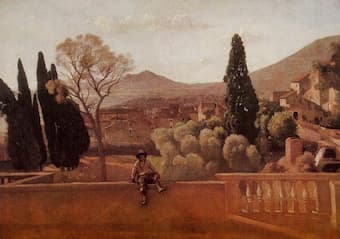
Gardens Of The Villa Deste At Tivoli By Jean Baptiste Camille Corot

Gardens Of The Villa Deste At Tivoli By Jean Baptiste Camille Corot
© Crescendo Magazine

One can use pre-existing material to plant the seed for inspiration, as does Nyman in his own interpretation of Mozart’s Don Giovanni in his In Re Don Giovanni. But the source does not necessarily require an existent musicality; other artistic works — in literature, painting — or even life experiences, such as travels, can provide a great source of inspiration. Think of Liszt’s Années de Pèlerinage, where the landscapes and cityscapes of Italy and Switzerland provide the canvas to the Hungarian composer’s masterpiece.


Eventually, another fantastic way to release the inspiration is of course to think outside of the box; compose for unusual instruments, unexpected settings, or in the case of Cage compose without composing; “4’33”, despite not containing a single note of music, it is one of the most inspired piece of work ever composed.

Some composers seem to have never been affected by the writer’s block and some others are well-known for having benefited from a lack of ideas to express, like Pärt — whose pause and return to music allowed him to come back with his true voice and expression and signature Tintinnabuli style. Outside of the music world, Frank Zappa or Bob Dylan are great examples of musicians whose regular and constant output allowed them not to ever feel the symptoms of the blank page.

One never quite runs out of ideas, rather one forgets how to find and reach them. Creativity is a stew which develops flavours over time and needs constant stirring and heat in order to express itself. The responsibility of the composer is as much to maintain his creativity boiling as to create.

The most adventurous composers rarely suffer from the writer’s block. It is rather for the ones that take shortcuts in their creativity, relying too much on their past achievements and waiting for external triggers to enable it to emerge.