Total Pageviews

Showing posts with label Georg Predota. Show all posts

Friday, November 22, 2024

Franz Schubert (1797-1828): A Piano Duet Tribute

by Georg Predota, Interlude
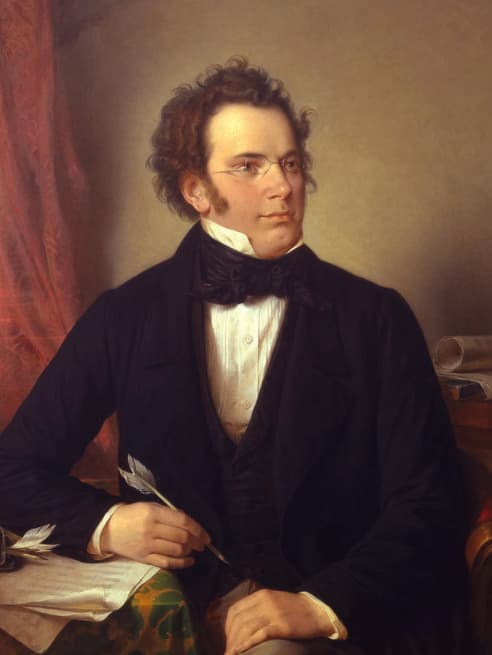
Franz Schubert

Franz Schubert

Throughout the 19th century, piano music for four hands played an important role in the home. Since larger ensembles could only be afforded by the upper classes and the aristocracy, salons everywhere sounded with music for four hands, be it arrangements of works written for larger ensembles, the operatic stage, or original compositions.

For Schubert, the four-hand set-up seemed ideally suited to his temperament as “it was a congenial form of music-making that was emblematic in Biedermeier culture as an activity of friendship and sociability.” These works were a staple in Schubertiade’s gatherings, and they ranked among his most successful publications during his lifetime. As we commemorate Schubert’s passing on 19 November at the age of 31, let us celebrate his genius by exploring some of his genial and charming original works for piano 4-hands.

Franz Schubert wrote to a friend, “Every night when I go to bed, I hope that I may never wake again, and every morning renews my grief.” Yet, it was music that gave him purpose. As he wrote, “I compose every morning, and when one piece is done, I begin another.” In May and June 1828, Schubert composed the Allegro in A Minor, D 947 and the Rondo in A Major, D 951, as a possible two-movement sonata.

The Rondo was published in December 1828, a month after his death, but the Allegro only appeared in print in 1840. Anton Diabelli added the heading “Lebensstürme” (The storms of life), presumably with an eye on prospective customers. This trite sobriquet does not prepare us for the depth of Schubert’s music, as harmonic and structural shifts create subtleties of light and shade. Schubert was the undisputed master of compressing emotional complexity, joy, sorrow, friendship, and solace into a simple change of key.

Turbulent minor chords prepare for an opening statement that emerges from within a deep silence. An introspective melody murmurs in the unsmiling minor key, but the serenity of the second theme, sounding a distant chorale, leaves all storms far behind. However, Schubert has led the music into a highly remote territory, with the harmonic ground shifting restlessly. Suddenly, the music breaks off mid-stream, and an unceremonious plunge takes us to the central development stage. And while the radiant chorale takes centre stage in the recapitulation, the movement ends in the stormy minor key. 

With the “Lebensstürme” Allegro and the “Grand Rondeau,” Schubert completely transcended the confines of the salon and, in the process, wrote highly original and wonderful music for piano duet. The Schubert biographer Christopher H. Gibbs writes, “Such innovations may explain why his attraction to the medium continued even after his energies shifted increasingly to large-scale instrumental works. Indeed, the audacious harmonic and structural adventures in his finest keyboard duets may have pointed the way to orchestral projects that he did not live to realise…The late piano duets exquisitely merge Schubert’s lyrical gifts with daring formal structures.”

Franz Liszt called Schubert “the most poetic musician who had ever lived,” and musicologist Alfred Einstein called the A-Major Rondo D. 951 “the apotheosis of all Schubert compositions for four hands.” The piece is modelled on the lyrical second movement of Beethoven’s Piano Sonata in E minor, Op. 90. It mirrors the tranquillity of mood, the layout, and the harmonic pattern.

The Rondo theme is quietly accompanied by running 16th notes and immediately sounds an octave higher. This theme appears in various keys and registers throughout, and it is interspersed with episodes and subsidiary themes derived from it. A slightly stormy section in C Major is quickly cast aside, and the Rondo theme returns in the cello register to conclude the movement in a warm and quiet manner.

Variations in B-flat Major, D. 968a
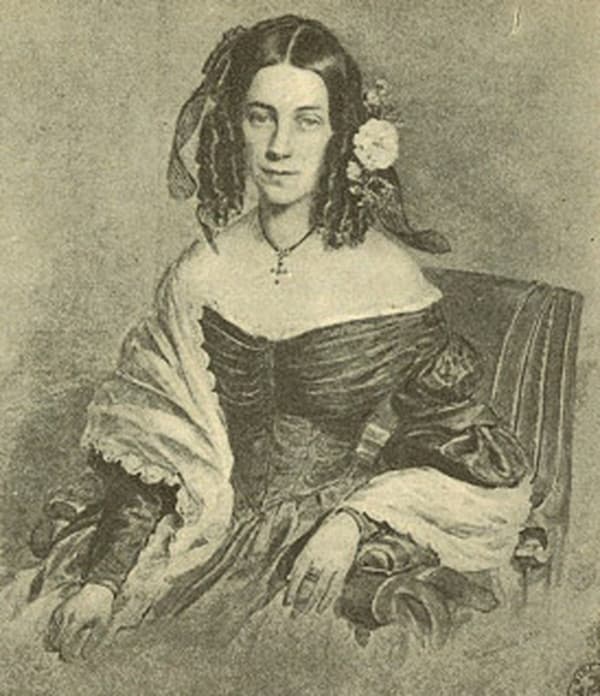
Caroline Esterhazy

Caroline Esterhazy


For Schubert and his friends, four-hand piano music was a natural part of convivial evenings. This repertoire was almost exclusively destined for the private amateur salon market, and the prospects for having such pieces published were higher than they were for solo piano music, specifically when it came to works of the ambitious scope Schubert wanted to write.

Presumably written in 1818 or 1824, Schubert’s Variations D. 968a for piano four hands is one of series of compositions written for the two daughters of Count Johann Karl Esterházy. Schubert was engaged as a music tutor to the two girls and spent two summers at the Count’s estate at Zseliz in Hungary. Schubert wrote to his friend Moritz von Schwind, “I have composed a big sonata and variations for four hands; the latter is enjoying great applause here, but since I don’t quite trust the taste of the Hungarians, I’ll let you and the Viennese decide about them.”

A curiously pompous introduction terminates in a short cadenza for the primo pianist, and it is followed by a simple theme of Schubertian charm. The variations get progressively more brilliant, with Schubert accelerating the rhythms and adding rapid figuration. The third variation is aptly marked “Brilliante,” and it is followed by the mock solemnity of a slower variation. The merry finale features folk-like elements, including a yodelling call. It has been called “one of Schubert’s most jovial and overtly entertaining pieces.”

Sonata for Piano 4-hands in C Major, D. 812 “Grand Duo”

The big sonata Schubert mentioned to Moritz von Schwind turned out to be one of the most monumental and powerful achievements of the composer. Generally known as the “Grand Duo,” the work caused a bit of confusion. As Robert Schumann wrote in 1838, “I thought at first it was a symphony transcribed for piano, but the original manuscript on which Schubert has written Sonata for four hands would suggest I was wrong.”

Schumann continues, “I say I would suggest, for I am still not convinced of my error. A composer as prolific as Schubert may well, in haste, have written Sonata when what he really had in mind was a symphony. Knowing his style and his manner of writing for the piano and comparing this work with his other sonatas where the purest pianistic character is evident, I cannot but think that it was composed for the orchestra. You can hear the strings, the woodwind, the tutti, some solos, the drum roll; the symphonic form in all its breadth and depth.”

Joachim's orchestration of Schubert's Grand Duo

Joachim’s orchestration of Schubert’s Grand Duo

Joseph Joachim went ahead and orchestrated the “Grand Duo” in 1855, and the musicologist and composer Donald Francis Tovey included this orchestration in his book analysing symphonies. He wrote, “there is not a trace of piano style in the work.” More recently, the Sonata has been more readily appreciated as a piano work with orchestral effects, one of many other piano works by Schubert that have been called “symphonies in disguise.” 

Actually, Schubert wrote two sonatas for piano 4-hands. While the “Grand Duo” dates from 1824, the “Grande Sonata” originated in 1818. The two works couldn’t be more different, as the “Grande Sonata” seems very close to the world of Mozart, “the unique combination of purity, subtlety and emotional richness of whose music was an abiding source of wonder to Schubert.”

A grand opening gesture, a wonderful curtain-raiser, proceeds to an easy-going theme. The contrasting second subject sounds in a remote key, but it cheekily meanders back to the correct key just in time to close the exposition. Schubert also introduces a charming new melody in the middle of the development, which will be echoed in the beautiful slow movement. The Rondo finale takes a renewed look at Mozart with a dramatic, almost operatic middle section and replaces the development.

The work stems from Schubert’s time at the Esterházy’s estate at Zseliz in Hungary, and it found the composer in a jovial mood. He writes, “I am in the best of health. I live and compose like a god, as though indeed nothing else in the world were possible… I am really alive at last, thank God!”

Polonaises, D. 599
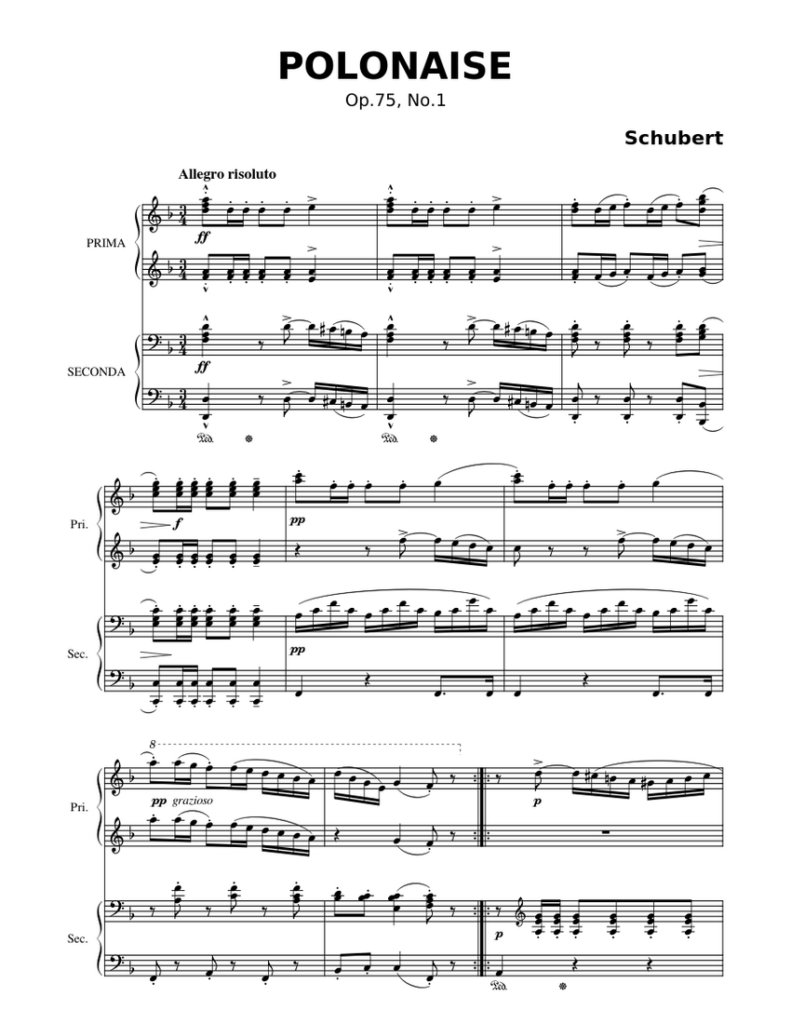
Schubert's Polonaise

Schubert’s Polonaise


Schubert published a couple of sets of Polonaises in 1826 and 1827. The young Robert Schumann, not yet seventeen, was already reviewing for a Frankfurt publication and wrote of “most original and very richly melodious little movements… The execution is difficult at times on account of the sometimes surprising and sometimes far-fetched modulations. Thoroughly recommended.”

Schumann called them “romantic rainbows over a sublimely slumbering universe,” as Schubert turned the Polish courtly ceremonial style of music into his own delightful and sparkling character pieces. The Polonaises for piano 4-hands range from light and airy to robust and balletic, but all unfold in three-part form and venture into unexpected keys.

Fugue in E minor of Piano 4-hands, D. 952
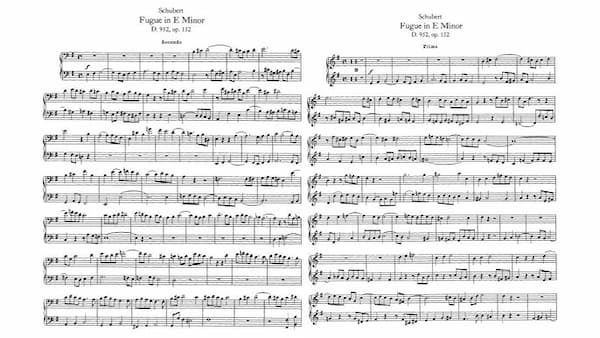
Schubert's Fugue in E minor

Schubert’s Fugue in E minor


In 1828, Schubert and his friend Franz Lachner were invited by Johann Schikh, the editor of a Viennese magazine for art, literature, theatre, and fashion, for a country outing to Baden, near Vienna. Apparently, Schikh told Schubert, “Tomorrow morning, we shall go to Heiligenkreuz to hear the famous organ there. Perhaps you could both compose a small piece and perform it there?” Schubert suggested the composition of a four-hand fugue, which was completed by midnight.As Lachner reports, “on the next day, at 6 in the morning, we travelled to Heiligenkreuz where the fugues were performed in the presence of several monks.” The fugue subject had already appeared in Schubert’s counterpoint lesson with Simon Sechter, and it might well have been his very last completed composition. As he wrote to a friend eight days later, “I am ill. I have had nothing to eat or drink for eleven days now and can only wander feebly and uncertainly between armchair and bed.”

Fantasie in F minor, D 940

Schubert composed a number of Fantasies, but the one in F minor, D 940, is surely one of the best-loved works in the piano duet literature. But what is more, it is widely considered one of Schubert’s greatest masterpieces. Dedicated to Countess Caroline Esterházy, this work completely leaves the sphere of informal social gatherings. During the first months of his last year of life, Schubert created a work of almost symphonic form, whose elegiac atmosphere at the beginning sets the tone for the entire work. Schubert scholar John Reed called it “a work which in its structural organisation, economy of form, and emotional depth represents Schubert’s art at its peak.”

Although Schubert called it a Fantasie and the work unfolds in one continuous flow of music, it might well be structured in the manner of a sonata in four movements. The opening “Allegretto molto moderato” evolves from a murmuring accompaniment that features a theme of halting rhythms and chirping grace notes. When Schubert almost hypnotically repeats the theme, the music has effortlessly shifted from F minor to F Major. The rhythmically conceived second subject drives directly into a powerful “Largo.” We move directly into the “Allegro vivace,” a sparkling scherzo of nostalgia followed by a delicate trio. The trio breaks suddenly, and the music eventually plunges into a complex fugue, which takes us to the point of despair. The concluding section brings back the music from the very beginning, and contrapuntal complexity drives the Fantasie to its climax. It all ends with some heart-rendering chords that bring this masterwork to a quiet close.

A scholar writes, “that a legacy of such beauty should have been bequeathed to all humanity as a result of Schubert’s pain and suffering is a miracle in itself.” And Schubert himself commented in the final moments of his life, “the product of my genius and my misery, and that which I have written in my greatest distress, is that which the world seems to like best.”

Franz Schubert died in Vienna on November 19, 1828, and he was buried at his own request near Beethoven. Schubert had carried the torch at Beethoven’s funeral a year before his own death.

Friday, November 15, 2024

Collaborating With Samuel Dushkin: “Dear Sam”

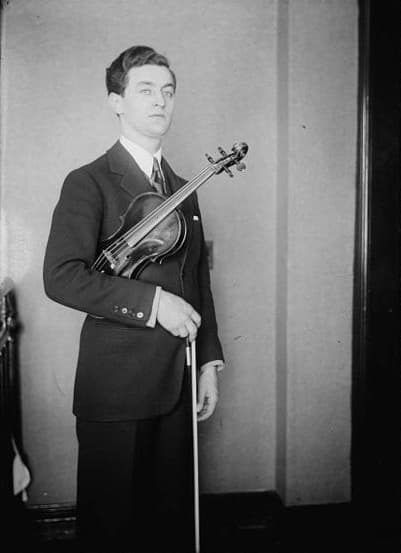
The Polish-born American violinist Samuel Dushkin (1891-1976) is widely known for his extensive collaborations with Igor Stravinsky. The two men were compatible friends from the very beginning and eventually embarked on a concert tour through Europe and the United States, which lasted for the better part of five years. Dushkin was said to have had a gentle, self-effacing, and considerate character, which sharply contrasted with Stravinsky’s fiercely dynamic, egotistical and combative demeanour. A biographer writes, “much of the success of the friendship must be attributed to the violinist’s wholly unaggressive nature, as well as to his rich sense of humour.”

Samuel Dushkin

Samuel Dushkin

Stravinsky and Dushkin first met in Paris in 1931, but both had been in town for some time already. Dushkin had studied at the Paris Conservatoire, taking violin lessons with Guillaume Remy and attending composition classes with Ganaye. He made his Paris début in 1918 and subsequently toured widely, giving many important first performances. One such premiere performance took place on 19 October 1924 in Amsterdam, as Pierre Monteux conducted the Concertgebouw, and Dushkin was the soloist in the orchestrated version of Ravel’s Tzigane

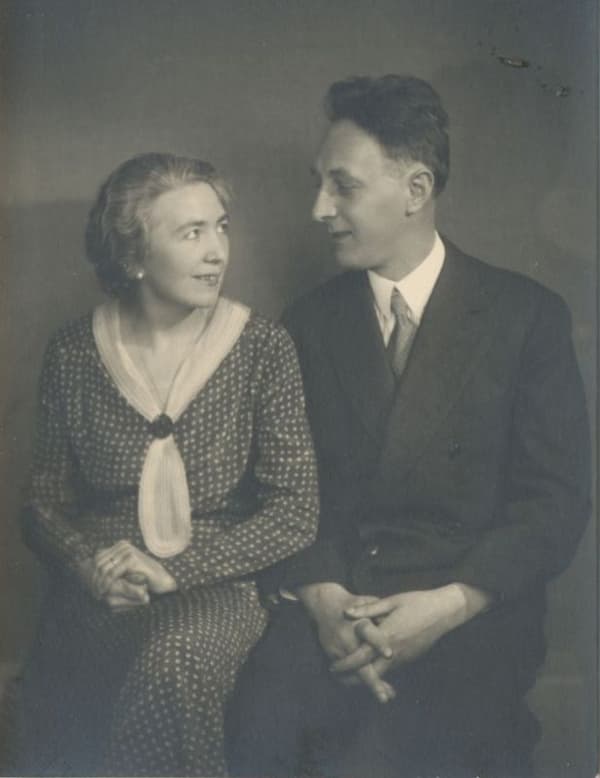
Bohuslav Martinů (1890-1959) had been living in Paris since 1923. In 1931, Dushkin premiered the Stravinsky Violin Concerto after having collaborated closely with the composer. The concerto was a resounding success, and Dushkin was very much the man of the hour. Dushkin was clearly on a roll, and he followed up by commissioning a violin concerto from Martinů in early 1932. The two men became good friends, and on the occasion of a visit, Charlotte Martinů fell ill with double pneumonia and a high fever. Dushkin took charge and had her admitted to the American Hospital at Neuilly, probably saving her life.

Bohuslav writes, “that violinist, Dushkin, is an American and has a lot of connections, so he found some help for us. There’s such an organisation among Americans that takes care of artists when they’re ill. They arranged for us to take Charlotte to the hospital, and they’re going to pay for the hospital care and the entire stay and treatment! Dushkin really devoted himself to her. He saw that I wouldn’t make it on my own.”


Bohuslav and Charlotte Martinů

Bohuslav and Charlotte Martinů

The friendship between Martinů and Dushkin, however, did not make for a smooth collaboration on the violin concerto. Dushkin had been a creative and technical consultant throughout the gestation of the Stravinsky concerto. He offered advice and suggestions to Stravinsky, who had no experience as a string player. Martinů, on the other hand, had formerly been a professional violinist, and he did not need much assistance. Still, Dushkin suggested countless amendments to the solo part of the concerto, and Martinů tried to please his famous soloist. Nonetheless, as late as February 1934, he admitted in a letter to his family that Dushkin was still dissatisfied and that further work was needed.

Both men eventually lost interest in the concerto, and the score was presumed lost. A Martinů biographer wrote in 1962, “from the beginning of the thirties dates an unfinished Violin Concerto for the American virtuoso Samuel Dushkin. I recall the frequent exchange of opinions between the two artists regarding various details in the concerto, which is apparently the reason for the composer not finishing it and the manuscript of which mysteriously disappeared.” However, the complete manuscript did, in fact, exist, and it did not disappear.

The concerto manuscript was not rediscovered until 1968, nine years after the composer’s death. It had probably been sent by Martinů to Boaz Piller, a bassoonist with the Boston Symphony Orchestra and a close personal friend of Martinů, Stravinsky, Bloch, and Casals, in 1937. Martinů had probably been looking to arouse the interest of conductor Serge Koussevitzky, but in the event, the manuscript was deposited by Piller into the archives of the musicologist Hans Moldenhauer in 1961.

Over the course of forty years, Moldenhauer had assembled an unparalleled collection of primary sources documenting the artistic thoughts and compositional process of celebrated and lesser-known figures of western music dating from the Middle Ages through the twentieth century. This collection, now housed at Northwestern University, was consulted by musicologist Harry Halbreich in 1968 during his work on a catalogue of Martinů’s works. Finally rediscovered, the concerto was first performed in Chicago on 25 October 1973 under George Solti, with Josef Suk as the soloist. It was not a rousing success, as a critic wrote, “it isn’t hard to deduce why the composer never promoted performance or publication of this opus during his lifetime.”


Gershwin's Short Story

Gershwin’s Short Story

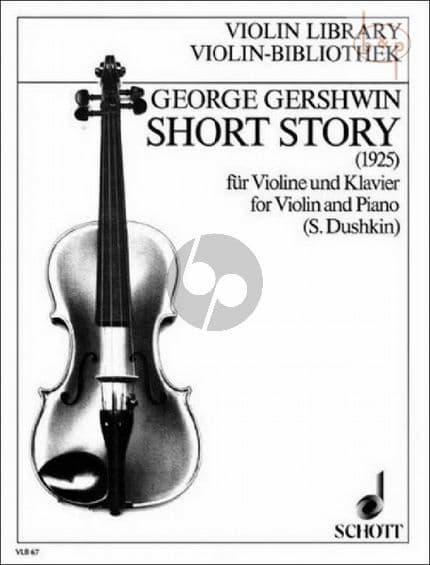
1924 was a hugely successful year for George Gershwin (1898-1937). The premiere of his Rhapsody in Blue had brought down the house, and the musical Lady Be Good! received a wonderfully successful launch. Dushkin was a close personal friend, and he decided to request a recital piece from Gershwin in late 1924. Gershwin was enthusiastic, and the two young men decided to collaborate.

Gershwin was still learning the craft of orchestration and was eager to explore the palette of colours available on instruments other than keyboards. In no time, Gershwin and Dushkin put together Short Story, taking as a starting point two short piano pieces that Gershwin had written a couple of years earlier but had not yet been published. The first piece features a languid and bluesy melody, while the second, more light-hearted syncopated tune, takes on the style of a ragtime. Dushkin and Gershwin premiered Short Story in 1925, and Dushkin programmed it often and recorded it in 1928.


William Schuman

William Schuman

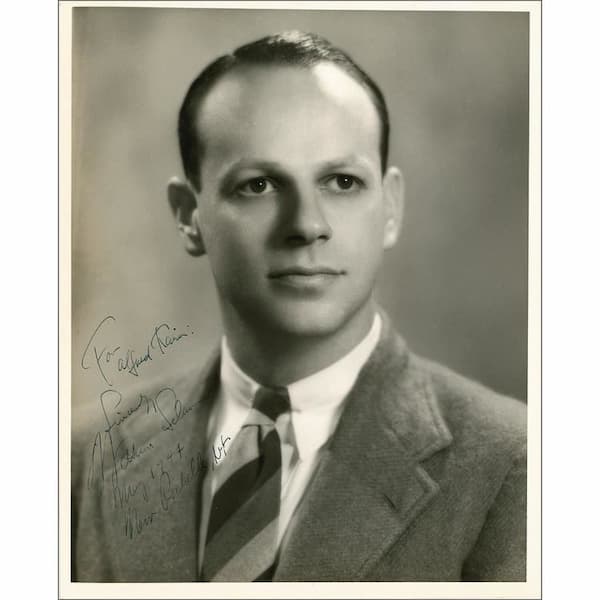
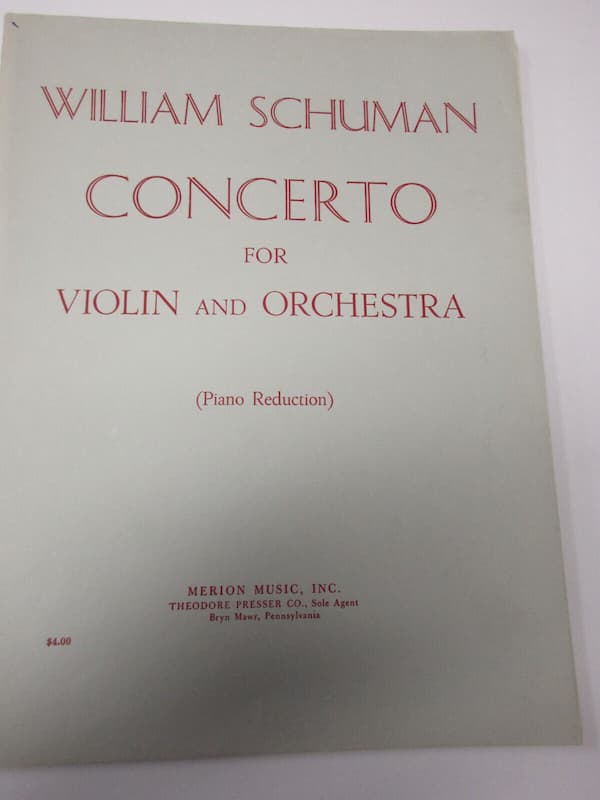
In 1946, Samuel Dushkin approached William Schuman (1910-1992) for a violin concerto he hoped he would be able to premiere with Koussevitzky and the BSO. Once Schuman had completed the score, he sent it to Koussevitzky for review in late 1947. Unfortunately, Dushkin’s playing had significantly deteriorated over the years, and Koussevitzky told Schuman, “I will play it, but not with Dushkin. You must tell Dushkin.” This put Schuman in a rather tricky situation because Dushkin had already paid for the concerto and had exclusive rights to it for three years. Koussevitzky was not interested in legal niceties and said, “I don’t care what your agreement is. Take it away from him. We’ll give it to Isaac Stern and play it with the Boston Symphony.”

Schuman broke the news to Dushkin in a hotel bar, telling him that he could not go on with the Violin Concerto. “I know you were a great performer at one time, but no one is going to play it with you.” Apparently, Dushkin erupted in white-hot anger, snapping the stem of his martini glass in two.


William Schuman's Violin Concerto

William Schuman’s Violin Concerto

Schuman waited for three years, as Dushkin insisted on maintaining his exclusive right to the work. Finally the concerto was scheduled for performance on 10 February 1950 with Isaac Stern as the soloist and conductor Charles Munch. While the conductor loved the work, the composer accused Stern of not having grasped the intellectual underpinnings of the work and, therefore, of not presenting the concerto in its best light.

Schuman writes, “the inability of certain performers who are only conventional literature performers to come to grips with a new piece on its own terms, so Stern never understood it except superficially. He always thought the opening, which he used to sing, was frenetic, even though I want that to be broadly romantic…he would never play it that way.” Dushkin and Schuman did stay friends, and Schuman wrote at the premiere of the concerto’s final version in 1959, “I thought about you during the period of preparation and performance of the Concerto in Aspen. I cannot help but feel that somehow you would have been pleased.”

During his extensive performance career, Dushkin published many arrangements and transcriptions for violin and piano. They are published as the “Samuel Dushkin Repertoire,” and include arrangements of music by Bizet, Rachmaninoff, Albéniz and Wieniawski, and Reger. The Dushkin Repertoire also includes a compilation of arrangements by relatively unknown composers, including C. Artok, R. Felber, A. Sasonoff, and Paul Kirman. The Dushkin arrangements were eagerly taken up by a host of eminent violinists, and they are still part of today’s recital repertoire.

György Cziffra: Transcriptions and Paraphrases

by Georg Predota, Interlude

Childhood

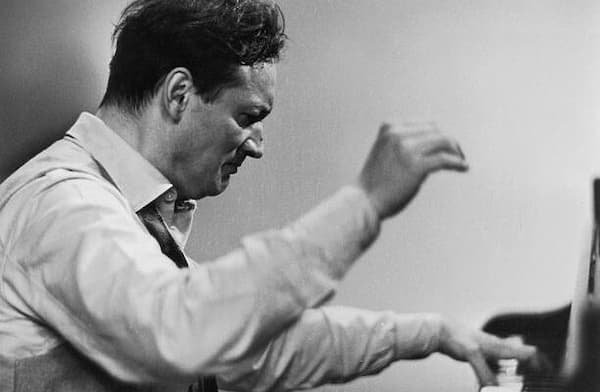
György Cziffra

György Cziffra

Much has been written about his growing up in dire poverty on the outskirts of Budapest and his incredible musical talent on display at an early age. To be sure, the origins of his improvisational art can be traced back to his childhood and his ability to learn music without scores. Essentially, he mimicked the piano playing of his sister and repeated and improvised over tunes sung by his parents. “Thanks to the Strausses, the Offenbachs, and many others,” he later writes, “by the time I was five years old, improvisation at the piano became basically my only daily practice. It was more than mere pleasure; I had the power in my hands, and whenever I liked, I could break away from reality.”

Bar Pianist

Forced to contribute to the meagre household income of his family, Cziffra initially earned money as a child improvising on popular music at a local circus. In the 1930s, and during his studies at the Franz Liszt Academy, however, Cziffra decided to earn money by performing as a bar musician. As he later wrote, “I met some bar musicians, and they gave me some good advice as to how to enter the realm of popular music. Later, they invited me to listen to them play, and slowly, I transformed into a pop musician and, for a while, this was my real profession.” While it was still his ambition to become a concert pianist, Cziffra enjoyed improvising and started to fashion a number of transcriptions of popular American songs and film scores. 

Process of Improvisation

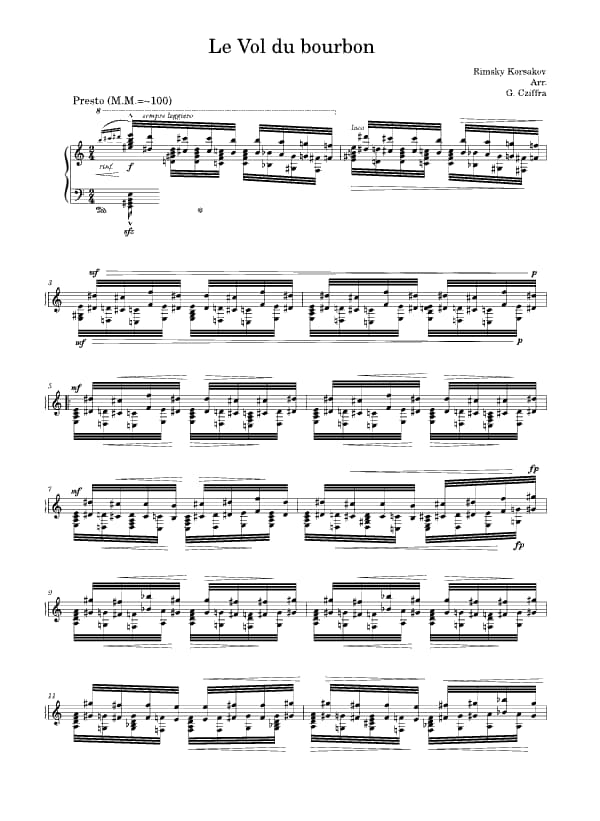
György Cziffra's 'Flight of the Bumblebee' Transcription

György Cziffra’s ‘Flight of the Bumblebee’ Transcription

He greatly enjoyed working in bars and taverns, and everybody knew him for his marvellous improvisations, which went from jazz, the fandango, and the czardas to the pasodoble. As he wrote, “I ended up dividing the nights between several lucrative places, spending two hours or so at each.” Between 1947 and 1950, Cziffra went on European tours with a jazz band, and in his autobiography, he described the process of improvisation.

“While I give myself over completely to the moment of inspiration, while I give the field of form and theme over completely to my imagination, I always try to maintain a discipline of my thoughts on the following two-three measures so that my hands can follow the path of my vision. The practice of this, at one-time tender and at another time enchanting, made it possible for me to discover the future form of piano performance in the moments of creation.” 

First Performances

He quickly became recognized as a superb jazz pianist and virtuoso, and his performances soon became legendary. And in the footsteps of his hero Franz Liszt, Cziffra improvised dazzling fantasies on opera themes. From his earliest concert appearances, Cziffra wanted to finish a recital with “a short piece, that personally, could stand alone, and which was not prepared for eternity. When I improvise, I feel as if I become one with myself, and my body is freed from all earthly pain. It is truly a process of going beyond my talents, which makes it possible on each occasion to step over the known boundaries of the technical side of the piano performance.”

His career was on the verge of collapsing as Cziffra was imprisoned and subject to hard labour after attempting to flee Hungary in 1950. He was tasked with transporting blocks of stone and needed four months of physiotherapy after leaving prison in order for his fingers, swollen by work of a very different nature, to grow used to the piano again gradually. Cziffra’s first concerts after his release from prison were, to quote the pianist, “so dull as to verge on the incompetent. Fortunately, the transcriptions and improvisations I played as encores at the end of each recital compensated for the rest and shook my audience out of their apathy. These intense moments were like the ecstasy of love. One critic went so far as to say that this was the mastery not of a pianist but of the pianist of one’s dream.”

Success in the West

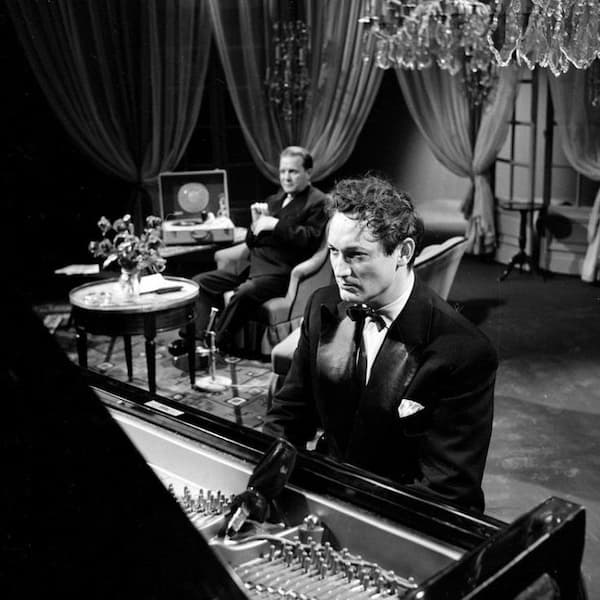
György Cziffra

György Cziffra

When Cziffra made his Paris debut in 1956, he was hailed as “the most extraordinary pianistic phenomenon since Horowitz… Probably the only one of his Generation who can give each note a different colouration without ruining the continuity of the work he is performing.” One performance review even carried the headline, “Franz Liszt has arisen from the dead in a demonic experience, eliciting the landscape and soul of Hungary like a vision in drama and transfiguration.” However, not everybody was enthralled. His recitals featuring his own brilliant paraphrases were considered “brilliantly vulgar confections.” Cziffra himself said about his playing, “I became the profession’s Antichrist due to my improvisations, which multiplied the difficulties ten times over.”

Virtuosity

It was readily assumed that Cziffra’s transcriptions were simply composed for the sake of virtuosity. However, as has been pointed out, the most dazzling passages were born from the composer’s extreme intensity of expression, and the fiery passages were motivated by inner musical force. Cziffra believed that technical mastery should never be displayed for its own sake but rather made subservient to a powerful emotional intellect and a cultured mind. He never accepted praise for his phenomenal technique and sharply reproached admirers, “I don’t care about technique. What you call technique is simply an expression of feeling.”

Franz Liszt

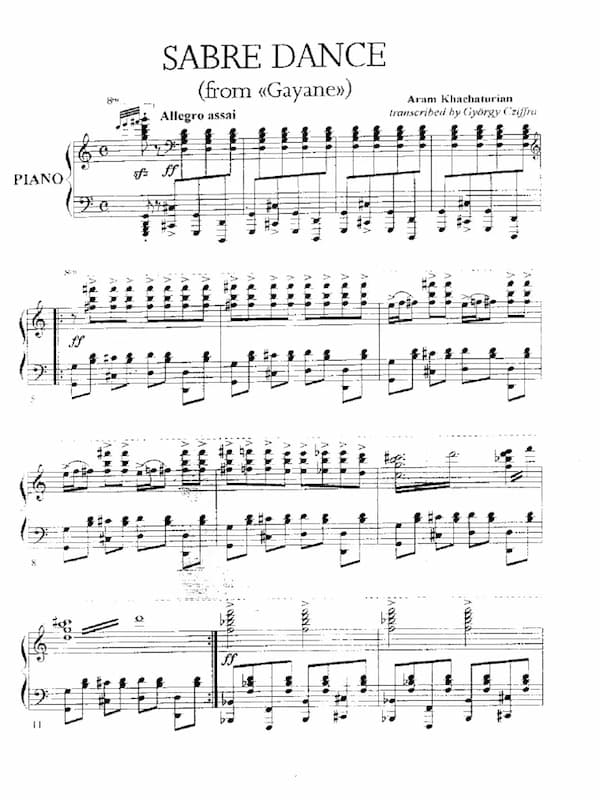
György Cziffra's 'Sabre Dance' Transcription

György Cziffra’s ‘Sabre Dance’ Transcription

During a radio interview in 1984, Cziffra spoke about his close spiritual and artistic connection to Franz Liszt. “I started piano similarly to Liszt at a very early age, and I was making people happy with my improvisations, just like him. And, well, I think that I wasn’t too much below his capabilities in this field. This is not the question of immodesty or modesty; this I know because I was able to improvise in such a way those days that I could think four measures ahead. And I realise that very few people are able to do this. This is similar to a chess game, where one player is playing with twelve others simultaneously. By the time my hands arrive somewhere, my brain has already gone further.”

“And this is perhaps the most difficult thing about it. This is why when I make sound recordings improvising on certain melodies, numerous wrong notes happen, and mistakes; my hands cannot follow the outrageous speed that my brain commands. And at the same time, I shape the form of the piece as well. I am not only interpreting, but I am creating the actual piece at the moment. So, I think I am also a creator from another respect, certainly not to such extent as Franz Liszt was, but some congenial trait we do share.”

Notating Improvisations

Improvising is one thing; committing these flights of fancy and inspiration to paper is another. As Cziffra explained, “to put on paper the uniqueness of the improvisational form is extremely difficult… One needs an ear and untiring patience to put these improvisational sessions on paper.” A good many pianists have tried, and even more have failed and left the task unfinished. “But then my son George said that he would like to give it a try. With a tremendous amount of energy and enthusiasm, he took on the work.”

“Slowing down the tape in both directions, George wrote down the place of each sound, and slowly, after a point, he was able to give form to a certain amount of my musical creations. Finally, I too became involved in writing down the musical notes, which now turned into true compositions, which mirrored my thoughts and emotions.” Cziffra was certainly hoping that the pages of his published transcriptions would open the door to new possibilities and encourage a less stereotypical and more personal approach to performances of classical piano music. 

Historical Legacy

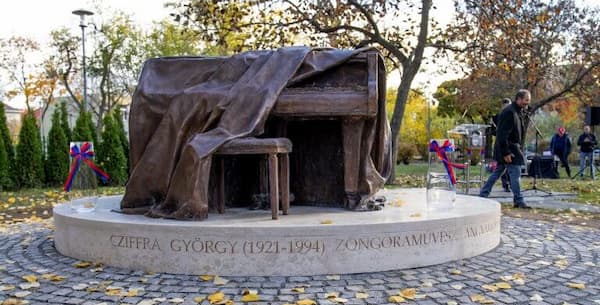
Monument of György Cziffra in Budapest

Monument of György Cziffra in Budapest

Cziffra’s transcriptions and paraphrases left a dazzling record of his seemingly superhuman power. However, at the height of his popularity in the 50s and 60s, he seemingly vanished due to personal tragedy and changing tastes and fashion. He was frequently accused of using composers as a springboard for personal excess and idiosyncrasy, and audiences became weary of Romantic exaggeration and “turned elsewhere in search of greater depth and spiritual refreshment.”

His public image has always been highlighted by the recognition of his prodigious pianistic abilities and achievements. Yet, his critics always saw him as little more than a technician or notable interpreter of Liszt. Indifference to his unique powers has become almost commonplace, and in some quarters, he was even vilified. A French reviewer wrote, “when one plays like this, the best thing to do is to commit suicide.”

Critical Assessment

To be sure, Cziffra could play with pure elegance and simple, direct expression, but he inevitably polarised critical opinion and aroused stormy controversy. A critic wrote, “Cziffra could never play louder without getting faster,” and this particular shortcoming was attributed to haphazard and ill-disciplined technique. As you might well imagine, Cziffra wasn’t particularly enamoured with critics either, calling them “carrion beetles of the mind… easily recognized by their boundless pride and pathetic intellect.” To be sure, Cziffra’s ample use of rubato and variable tempi did not agree with current concert practice “but were the mark of artistic freedom and individuality of earlier times.”

The French-Cypriot pianist Cyprien Katsaris explained in a 2012 interview, “Cziffra had that terrible label as a circus-virtuoso pianist and very few people were willing to speak openly about all the good things about him. I think this is absolutely insane… He used his incredible virtuosity in an expressive way – whether it was revolt, whether it was anger, tenderness, or serenity. He was able to do so much with the wide range of whatever he played.” Cziffra was much more than a mere virtuoso, and his lyricism was sublime and his “personal commitment and distinctive musicianship reveal themselves in a number of fine recordings of keyboard music by C.P.E. BachDomenico ScarlattiFrançois Couperin, Johann Tobias Krebs, Jean-Philippe Rameau, Jean-Baptiste Lully, Mozart, and Clementi.”

His performances were always characterised by an unconditional spontaneity and the impulsiveness of the moment, and many critics denied him the ability “to interpret works that are less virtuosic in a coherent and true-to-the-text manner.” For Cziffra, “the interpreter’s role in society is like a keepers’ watching over people’s emotions to prevent them from being worn away by a soul-destroying everyday existence…Finally, my virtuosity no longer prevented people from seeing the wood for the trees.”

Friday, November 8, 2024

Bruno Walter the Composer

by Georg Predota, Interlude

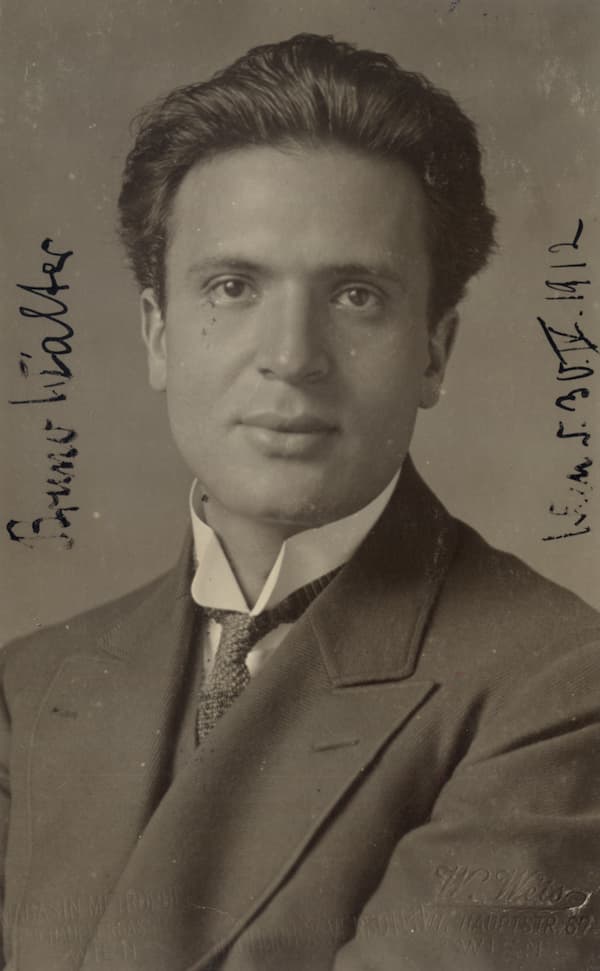
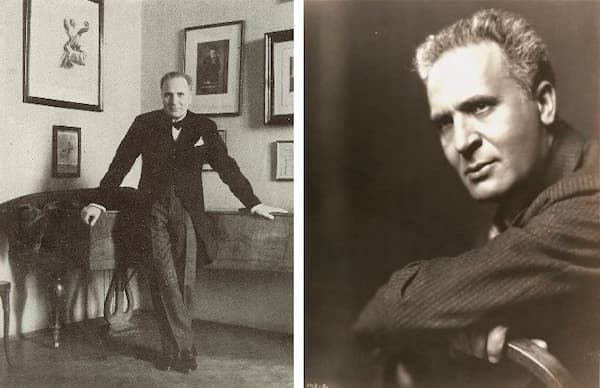
Bruno Walter in 1912

Bruno Walter in 1912

For one, Walter was a founding member of the “Society of Creative Musicians,” founded in 1904 and championed by Alexander von Zemlinsky and Arnold Schoenberg, with Gustav Mahler as the honorary president. The musicologist Guido Adler wrote, “the society aims to give contemporary music an ongoing platform and to keep the concert-going public abreast of current developments in music composition.”

From his earliest days at the Stern Conservatory in Berlin, Walter was interested in composition as he “covered innumerable sheets of music of all kinds… none of them remarkable.” Initially, Walter prepared for a pianistic career but eventually turned towards composing and conducting. His composition activity flourished during his early years in Vienna, and in an article by the Mahler biographer Richard Specht, Walter was counted among the progressive composers of the day.

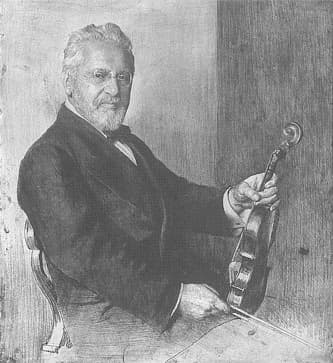
Arnold Rosé

Arnold Rosé

Arnold Rosé

In 1901, Walter was appointed at the Vienna Court Opera at the request of Gustav Mahler. Walter knew Mahler from Hamburg, and he described him as a man “who renewed himself every minute, and who did not know the meaning of slackening either in his work or in his vital principles.” However, Walter initially built his most intense artistic relationship with the violinist Arnold Rosé, concertmaster at the Vienna Philharmonic and leader of a famed string quartet that bore his name.

As Walter writes in his autobiography, “I shall never forget the sublime beauty of his violin solos, and the magic of Rosé’s playing lost none of its enchanting effect on me in the course of a great many years… Never for a moment did the high tension of his playing relax, whether at rehearsals or performances…His musicianship was innate and intuitive, his intonation and sense of rhythm were infallible, and he was gifted with a perfect ear.”

As such, it is hardly surprising that the Rosé Quartet premiered Walter’s String Quartet in D Major on 17 November 1903. Walter told his friend Hans Pfitzner after the premiere, “Rosé performed my quartet exquisitely. The audience received the first two movements warmly, then listened to the third (most important) movement with icy silence, and the last movement ultimately unleashed a veritable battle; the press was at a total loss but were respectful.” The work was never performed again, and parts of the autograph score were presumed lost. Fortunately, a copy of the entire composition has recently been unearthed in Vienna.

Piano Quintet

Bruno Walter

Bruno Walter

The Rosé Quartet with the composer at the piano also performed the premiere of Walter’s Piano Quintet in F-sharp minor on 28 February 1905. This substantial four-movement work is modelled in the tradition established by Schumann and Brahms, and written in a late-Romantic style. As Wolfgang Klos writes, “the work is dedicated to Nina Spiegler (née Hoffmann), who almost became Mahler’s sister-in-law and whose salon brought together the leading intellectuals in Vienna at the turn of the century, including Hugo von Hofmannsthal, Karl Kraus, Alfred Polgar, Peter Altenberg and Arthur Schnitzler.”

Walter composed dense and propulsive outer movements, “tossing out ideas like darts that don’t consistently strike nor stick to the intended target.” Cast in three parts, the second movement marked “Ruhig und heiter” has melodic touches reminiscent of Mendelssohn punctuated by a fiery central section. I hear a bit of Mahler in the third movement, also in three parts, but it seems rather overly busy in parts.

The work was reasonably well received, but it has only recently been recorded. In addition, Universal Edition was an early publisher of Walter’s work, and they have finally issued the first edition as well. Contemporary reviews have been lukewarm at best, describing the Quintet as “a mess with clunky scoring and a dense and opaque texture. Walter chose the right career path.”

Symphony No. 1

Bruno Walter was intimately connected with premiere performances of the symphonies of Gustav Mahler, and he started work on his own Symphony No. 1 in 1906. He played through the work for Mahler in September 1907, but it clearly failed to make an impression. As Mahler wrote to his wife, Alma, “Unfortunately, it means nothing to me, and my frank opinion put him in a state of mild despair.”

The work did premiere on 6 February 1909 at the Vienna Musikvereinssaal with the composer conducting. As Erik Ryding notes, “A large and ambitious work, the symphony runs for nearly an hour, and shows Walter completely in control of his massive forces. For a first symphony, it is a remarkably advanced piece with well-wrought counterpoint and ingenious motivic development both within and across movements. The angular, chromatic lines and the sometimes-tortured atmosphere, specifically in the opening movement, may come as a surprise.”

A critic suggested that “Walter’s music strives to capture chivalric feeling, battle, glory, power, heroic victory and death,” sentiments that do seem to capture much of Walter’s musical expressions. However, Vienna’s most feared critic at the time, Julius Korngold wrote, “Walter’s themes seem artificial, not naturally grown…twisting laboriously, saying little of significance. Even the development, the structuring, indeed the use of material … are lacking in clarity and a deeper inner logic.” Erik Ryding disagrees, and sees the symphony not as an imitation of Mahler, but an original symphony that marks a significant step forward in style.

Lieder

Bruno Walter was a voracious reader who developed a passion for literature during his early years at school. He devoured the poetically inspired fairy tales of Andersen and the collection of Grimm, and he was soon captivated by the fabulous works of Greek mythology. As he recalls in his autobiography, “when I was nine or ten, the attraction to my juvenile books began to fade, and I felt drawn towards the treasures in my parents’ bookcase.”

He was soon reading Goethe, Schiller, Lessing, Heine, Hauff, Rückert and Shakespeare. As he recalled, “my early eagerness for and susceptibility to the drama and my inclination to identify myself with literary figures clearly indicate a dramatic vein in my mental endowment. No wonder then that at the very beginning of my career, I was irresistibly drawn toward the opera.”

Walter soon graduated to a “well-ordered and profound cultivation of beloved authors,” and he found his way into poetry. Besides Goethe, “whose works implanted in me a passionate desire for self-education and the systematic development of my talents,” he became fond of the poetry of Joseph von Eichendorff. Predictably, Walter set a number of poems to music, and the featured Eichendorff selection bears the clear musical influence of Gustav Mahler.

Violin Sonata in A Major

Bruno Walter's Violin Sonata score

Bruno Walter’s Violin Sonata score

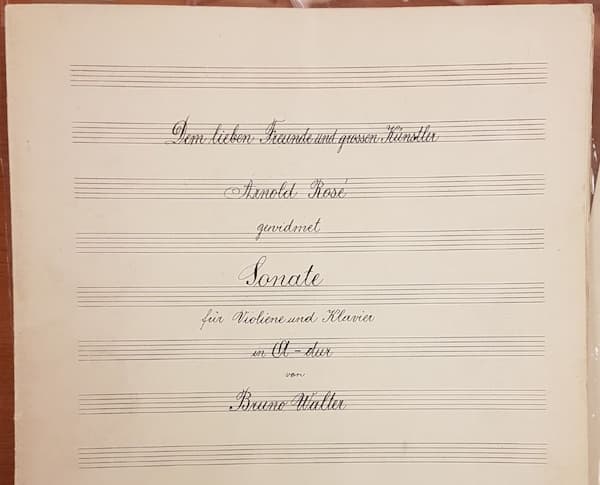
The Sonata for Violin and Piano in A Major, premiered by and dedicated to Arnold Rosé, first sounded on 9 March 1909 with the composer at the piano. The dedication reads, “For my dear friend, the great artist Arnold Rosé.” This would be Walter’s final chamber music composition and the only one published during his lifetime.

The expansive opening movement provides for a rather complicated motivical development, while the “Andante” undergoes a series of mood changes that place serious technical demands on the performers. The “Finale” unfolds in the manner of a Rondo, with the refrain shared between the violin and the piano.

As Erik Ryding noted, “Walter composed in a post-Romantic, expressionist vein, and his well-crafted works are often thick-textured, ecstatic outpourings.” Walter emphatically stated later in life, “I am not a composer… yet there was a time when I still entertained the illusion of being one.”

Friday, October 25, 2024

Composers of the Zodiac: Tropic of Scorpio

by Georg Predota, Interlude

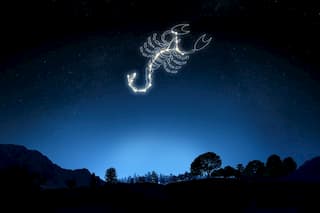
constellation of Scorpio

Constellation of Scorpio

The constellation of Scorpio is associated with a number of myths. In one version rooted in Greek mythology, the legendary hunter Orion boasted to the goddess Artemis that he would kill every animal on Earth. Insulted by Orion’s excessive pride, Artemis sent a scorpion to kill Orion. Their heroic battle caught the attention of Zeus, who raised both combatants to the sky to serve as a stern reminder for mortals.

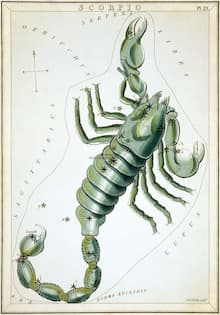
"Scorpio", plate 23 in Urania's Mirror, a set of celestial cards accompanied by A familiar treatise on astronomy ... by Jehoshaphat Aspin. London. Astronomical chart, 1 print on layered paper board : etching, hand-colored.

“Scorpio”, plate 23 in Urania’s Mirror
by Jehoshaphat Aspin

To this day, when Scorpio rules the night sky—from about October 23 to November 21—Orion goes away. It has been said the Scorpio is one of the most misunderstood signs of the zodiac. Because of its incredible passion and power, Scorpio is often mistaken for a fire sign. In fact, Scorpio is a water sign that derives its strength from the psychic and emotional realm. Extremely clairvoyant and intuitive, individuals born under the sign of Scorpio are imaginative and intense. They are ruled by Pluto (god of the Underworld) and Mars (god of War), and always know what they want and how to get it. Composer and pianist Roderick Elms, who for many years was the London pianist to cellist Mstislav Rostropovich as well as organist to the London Symphony Orchestra, provides his musical take on this powerful astrological sign.

Georges Bizet

Georges Bizet

Georges Bizet

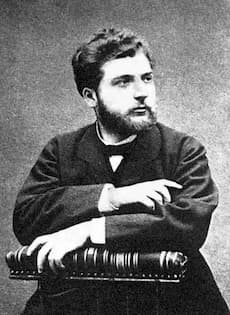
Born on 25 October, Georges Bizet was a brilliant student at the Conservatoire de Paris, winning a great number of prizes including the prestigious Prix de Rome in 1857. Once he had returned to Paris after almost 3 years in Italy, he quickly found out that his music was not in demand. In the true spirit of a Scorpio, Bizet was nevertheless determined to orchestrate a career in music. His intentions weren’t necessarily nefarious, he simply knew what he wanted and wasn’t afraid to work hard to realize his ambitions. He was greatly optimistic about the premiere performance of his opera Carmen on 3 March 1875. In the event, it turned into a veritable disaster. The opera was on the verge of being withdrawn, and it has been suggested that the theater had to give away free tickets in order to boost attendance. Bizet, unfortunately died a mere three months after the premiere, and it is suspected that the negative reception contributed to his fatal heart attack. As a biographer wrote, “The spectacle of great works unwritten either because Bizet had other distractions… or because of his premature death, is infinitely dispiriting, yet the brilliance and the individuality of his best music is unmistakable.”

Aaron Copland

Aaron Copland

Aaron Copland

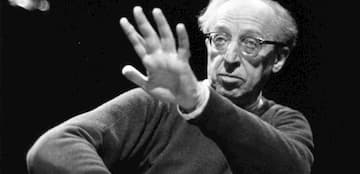
Born on 14 November, Aaron Copland had a gift for natural leadership, and a great talent for management in all walks of life. On the outside, he displayed a deep calm while his true feelings were hidden deep within. Sensitive to the feelings of others, he displayed the greatest tact in all social interactions. Copland had a thorough understanding of the material world, and he clearly knew that his power and influence must be used for the benefit of mankind. And like a true Scorpio, he had the ability to inspire people and direct them to become part of his vision. Copland was a meticulous and hard worker, but he was easy going in almost all social situations. Realism was part of his nature as he dressed simply, yet he remained mysterious and sensitive. Copland easily bounced back from professional and personal failures, and true to his zodiac, he was wisely assertive throughout his life and in his music.

Johann Strauss 

Johann Strauss II

Johann Strauss II

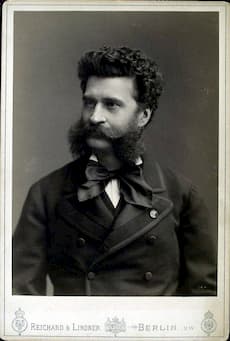
Seductive and beguiling, Scorpio is the sign most closely associated with sex. Sex isn’t solely about pleasure for the sensual scorpions, as they also crave the physical closeness, spiritual illumination, and the emotional intimacy that sex can provide. Well, Johann Strauss II, born on 25 October, certainly wasn’t shy when it came to sexual adventures. Like any good son, he initially tried to outdo his father in all aspect of life, particularly in music and sexual promiscuity. He mesmerized Viennese audiences, and in a blatant repeat of history, Vienna’s female population would swoon at the mere mention of his name. His popularity with the ladies got him into serious trouble, as on more than one occasion, jealous husbands challenged him to duels, and once he even had to seek refuge in the Austrian Embassy, barely escaping a double-barrel shotgun gently inviting him to marry a young Russian maid. When a planned marriage did not materialize, Strauss bedded dozens of eager groupies. Strauss II eventually did marry the mistress to a high-profile banker, but following her death, he frequented the local bordellos and after seven weeks he was married again. Be that as it may, music and sex definitely ruled the life of this Scorpio.

Niccolò Paganini

Niccolò Paganini

Niccolò Paganini

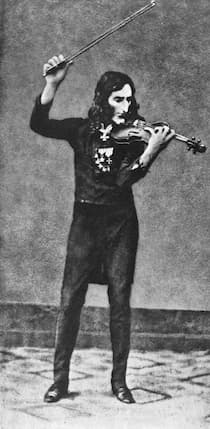
Born in Genoa on 27 October, Niccolò Paganini left an irrefutable mark on the history of instrumental music and 19th century social life. He was a born leader with extra-ordinary drive and determination. Once he made up his mind to study the violin and discover new and hitherto unsuspected effects that would astound people, nothing would stand in his way. He became obsessed with fame and money, and his relentless ambition translated into increasingly bizarre behavior. Supposedly, he was once invited to play at a funeral, but interrupted the ceremony with a twenty-minute solo concerto. And I am sure you’ve heard the story of him spending eight days in jail for drugging his girlfriend and forcing the abortion of his child. There was even a rumor that he had murdered a woman, used her intestines as violin strings and imprisoned her soul within the instrument. Women’s screams were supposedly heard from his violin when he performed on stage. Always concerned about appearances and to project success and self-satisfaction, this Scorpio demanded unconditional respect and attention.