Total Pageviews

Showing posts with label Johann Sebastian Bach. Show all posts

Thursday, February 3, 2022

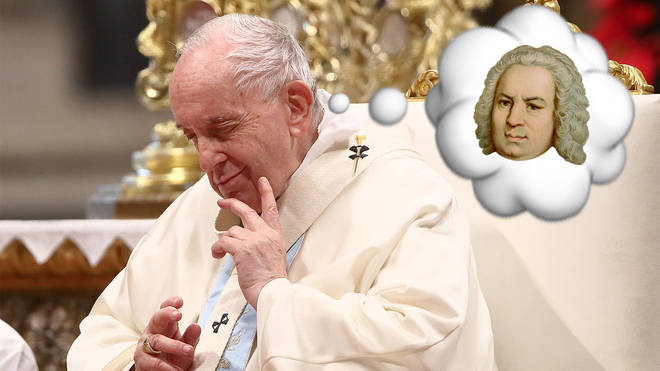
Pope Francis reveals he loves Bach’s Passions and schmaltzy Italian classical-pop

 1 February 2022, 17:21 | Updated: 1 February 2022, 17:26

Pope Francis reveals he loves Bach’s Passions and schmaltzy Italian classical-pop
Pope Francis reveals he loves Bach’s Passions and schmaltzy Italian classical-pop. Picture: Alamy/Emojipedia

By Maddy Shaw Roberts, ClassicFM London

The Pope’s personal playlist is an unexpected marriage of Bach, Piazzolla and Pärt, with Italian pop-opera hits.

Last month, the Pope delighted the music world when he was spotted slipping out of the Vatican to visit a record store in downtown Rome, and leaving with a classical CD in hand.

The Pope has previously professed his love for the music of Bach and Mozart, calling Bach’s Mass in B Minor and Mozart’s Great Mass in C Minor ‘sublime’ and ‘unsurpassable’.

Now, through a tweet from the president of the Pontifical Council for Culture, Gianfranco Ravasi, we have been given a deeper insight into Pope Francis’ curious cocktail of musical tastes.

Cardinal Ravasi posted a photo of the “musical materials” he had received from the Pope in advance of Italy’s iconic Sanremo Music Festival. The cluster of recordings included a vinyl of Bach’s St John Passion, a CD of minimalist composer Arvo Pärt’s Adam’s Lament, and an album by operatic pop trio, Il Volo.

Read more: This is the Pope’s favourite music

“We’re approaching #Sanremo2022, and I have received another set of musical materials from Pope Francis. Best wishes to the festival!” Ravasi tweeted.

Along with the Bach and Pärt, the Pope sent Ravasi an EP of Italian record producer and singer Caterina Caselli’s song ‘Nessuno mi puo’ giudicare’, and an album of music by Argentine composer Astor Piazzolla.

When Pope Francis visited StereoSound, the Rome record store, earlier this year, the store’s owner Letizia Giostra told Italian newspaper Corriere Della Sera that his surprise visit was “an immense thrill.” She added: “The Holy Father is passionate about music and was already our client, years ago, when he was still a cardinal and would pass through Rome. Then, of course, we never saw him again. And now he came to visit us, to say ‘hello’”. The Pope’s music library, curated by Ravasi, is said to include nearly 2,000 CDs and 19 vinyl records, among which tunes by Édith Piaf and Elvis Presley can be found.

Saturday, October 30, 2021

Johann Sebastian Bach and His Circle of Friends I

 by Georg Predota, Interlude

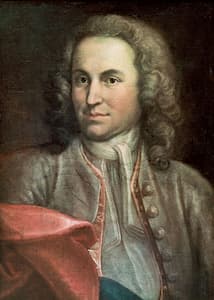
Johann Sebastian Bach

Johann Sebastian Bach

Carl Philipp Emanuel (1714-1788) described his father’s household in Leipzig as a “pigeon coop.” People were constantly swarming in and out all the time, and he told the Bach biographer Forkel, “with his many activities Bach hardly had time for the most necessary correspondence, and accordingly would not indulge in lengthy written exchanges. But he had the opportunity to talk personally to good people, since his house was full of life.”
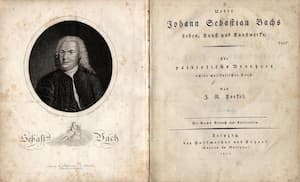
Forkel: J.S. Bach Biography

Forkel: J.S. Bach Biography

Johann Sebastian and his wife Anna Magdalena Bach kept an open house, welcoming friends and colleagues from near and far. “No master of music was apt to pass through Leipzig without making Bach’s acquaintance and letting himself be heard by him.” And that included a good number of the leading figures in contemporary German musical life, including Carl Heinrich and Johann Gottlieb GraunFranz BendaJohann Joachim Quantz and the famous husband and wife team of Johann Adolph Hasse and Faustina Bordoni, who came to Leipzig several times. The Bach family frequently entertained at home, and that always included house concerts. And we do know that Carl Philipp Emanuel performed in his father’s Concerto for two Violins, BWV 1043.
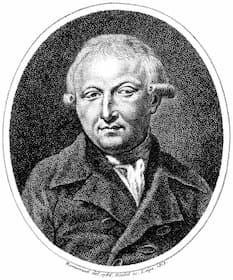
Johann Nikolaus Forkel

Johann Nikolaus Forkel

From 1736 until his death, Johann Sebastian Bach held the title of Royal Polish and electoral Saxon Court Composer. The composer actually never traveled to the Kingdom of Poland or the Grand Duchy of Lithuania, governed by Augustus II (Augustus the Strong,) and his son Augustus III. However, when Augustus III succeeded his father in 1733, he announced a surprise visit to Leipzig one year later. Bach immediately went to work and in a mere three days composed his secular cantata “Preise dein Glücke, gesegnetes Sachsen,” (Praise your good fortune, blessed Saxony) BWV 215.
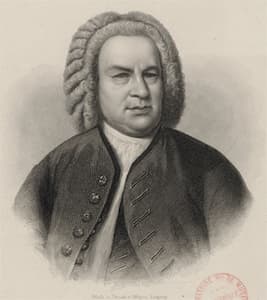
J.S. Bach’s letters, commissions and house concerts with other composers/musicians

August Weger: J.S. Bach

This cantata was first performed on 5 October 1734, in front of the Apels Haus, the Elector’s palace on the market square in Leipzig. Apparently, Augustus III was overjoyed, and he wrote in his official account that he had been “warmly pleased.” Bach had already been in contact with Augustus III in 1733, when he presented the manuscript of a “Missa of Kyrie and Gloria” to the monarch. These movements later became part of the B-minor mass, and Bach eventually did get his “Royal Polish” 1736 appointment.
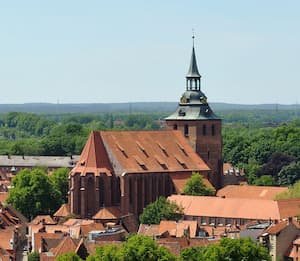

St. Michaelis monastery in Lüneburg

St. Michaelis monastery in Lüneburg

Johann Sebastian Bach lost both parents before the age of ten. He spent the next five years with his older brother Johann Christoph in the town of Ohrdruf. And at school, he became best friends with Georg Erdmann. When Johann Christoph’s ordered his younger brother out of the house, the two friends decided to walk to Lüneburg, a distance of almost 350 miles. There they joined the choir of the wealthy Michaelis monastery, which provided free places for poor boys with musical talent. The boys were inseparable until their paths diverged in 1702. Bach moved back to Thuringia, and we have no idea what happened to Erdmann over the next 27 years.
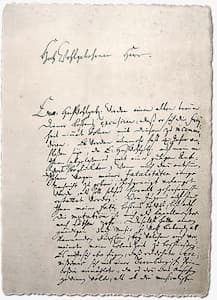
Bach's letter to Erdmann

Bach’s letter to Erdmann

Bach and Erdmann had lost touch, but their friendship endured, as we learn from two surviving letters dating from around 1730. “Dear Friend,” Bach writes, “you might excuse an old friend, who allows himself to bother you with this letter. Almost four years are gone, since you answered my last letter. I remember you asked me to report about my difficulties, which I would like to do now. Since our youth you know my career, until my change as a bandmaster in Koethen…” Bach also reports to Erdmann about personal matters, “I am married for the second time… From my first marriage three sons and one daughter are still living, whom you saw in Weimar years ago. From my second marriage one son and two daughters are living. My oldest son is studying law; the two others still go to school, one in the prima; the other one in the secunda. The children from the second marriage are still little; the oldest is six years of age. They are all future musicians.” The “Partite diverse” BWV 766 dates from around 1700, at a time when both Ermann and Bach were studying at the Michaelis School.
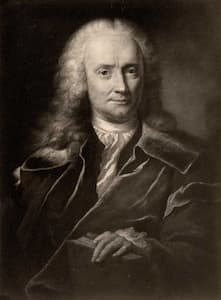
Johann Matthias Gesner

Johann Matthias Gesner

During his time in Weimar, Bach became good friends with the eminent philologist and scholar Johann Matthias Gesner (1691-1761). An expert in Semitic languages, classical literature, metaphysics and theology, Gesner became librarian and vice-principal at Weimar. Eventually, Gesner was appointed rector at the School of St. Thomas, and he therefore became Bach’s boss. As it turns out, Gesner was the only superior in Bach’s 27 years of service in Leipzig who recognized, admired and fostered his greatness. Gesner freed Bach from many unnecessary responsibilities, and since he was an admirer of Bach’s music, “he allowed Bach to assume his social position as a truly great musician and to assert his influence at the school as well.” Gesner raised Bach’s salary, allowed him to travel, freed him from teaching Latin, and asked for advice on updating the curriculum, admissions, and administrative approaches. In fact, Gesner published an extensive description of Bach in 1738, placing the composer far above the musical gods of Greece. In turn, to celebrate Gesner’s 40th birthday on 9 April 1732, Bach adapted his Cantata “Soar upwards in your joy” to celebrate the occasion.
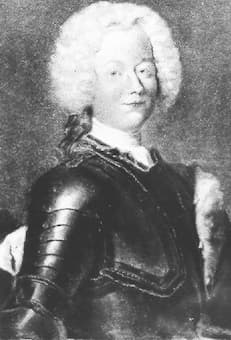

Prince Leopold of Anhalt-Cöthen

Prince Leopold of Anhalt-Cöthen

In 1719, Prince Leopold of Anhalt-Cöthen sent Johann Sebastian Bach on an errand to Berlin. Bach was placed in charge of negotiating for a new harpsichord for the court, and he tried out a number of instruments in the presence of Christian Ludwig, the Margrave of Brandenburg-Schwedt. We don’t know what Bach played on that occasion, but he was invited to send in some compositions.
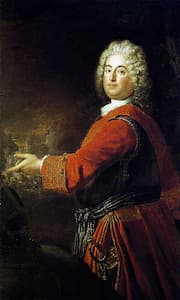
Christian Ludwig, Margrave of Brandenburg-Schwedt

Christian Ludwig, Margrave of
Brandenburg-Schwedt

Initially, Bach did not respond to the commission as he himself said, he “took a couple of years.” Bach changed his mind in 1721, however, as Prince Leopold summarily dismissed him from his services. As such, Bach was forced to look for employment opportunities elsewhere, and he sent the Margrave six instrumental compositions. These compositions became known as the Brandenburg Concertos, and they represent a compendium of highly original and individual compositions for a varied combination of instruments. According to the composer “they were written to exploit the resources of Cöthen.” However, these resources did not seem to have been available to the Margrave of Brandenburg. As such, Bach received no thanks, no fees and no employment offer. 

He was born Christian Friedrich Henrici in Dresden in 1700, but everybody knew him under the pseudonym “Picander”. Picander started his poetic career in Leipzig in 1721, and in time, he would become one of Bach’s most important poets. He probably wrote his first text for Bach in 1723 but there are still some uncertainties as to the authorship of texts during Bach’s first years in the city. However, by 1725 Bach and Picander were definitely working together.
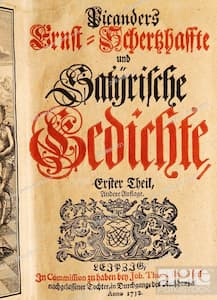
Picander: Book of Poems, 1732

Picander: Book of Poems, 1732

Their collaborations produced some of the most important works in the Lutheran tradition, including the St. Matthew Passion (BWV 244), the funeral music for Prince Leopold of Anhalt-Cöthen, and the St. Mark Passion (BWV 247). Picander claimed that Bach “set a whole cycle of his cantata texts in 1729.” Since only nine of these Bach settings are known to have survived, Picander’s claim must be approached with some caution. Their collaboration, however, wasn’t limited to religious texts, but also produced a number of secular works as well. For one, there is the well-known “Coffee Cantata,” and the delightful “Peasant Cantata,” written at a time when Picander served as a Liquor Tax Collector and Wine Inspector.
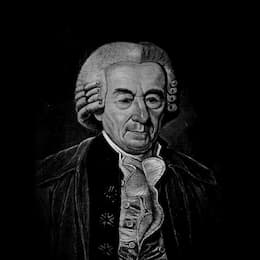

Georg Böhm

Georg Böhm

During his early years at Lüneburg, Bach was probably taking organ lessons from Georg Böhm (1661-1733). Böhm was principal organist at the Johanniskirche in Lüneburg, and the young Bach studied at the Michaelis School between 1700 and 1703.
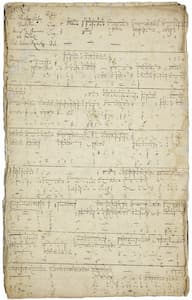
First page of Reincken's An Wasserflüssen Babylon, with an endnote in J. S. Bach's hand

First page of Reincken’s An Wasserflüssen Babylon, with an endnote in J. S. Bach’s hand

Although no formal connection existed between these two institutions, Bach’s son Carl Philipp Emanuel reported to the Bach biographer Forkel in 1775, “My father loved and studied the works of the Lüneburg organist Georg Böhm.” Strong and clear evidence of this teacher/student relationship emerged on 31 August 2006 when the earliest known Bach autograph was discovered. It is a copy of Reincken’s famous chorale fantasy “An Wasserflüssen Babylon,” and Bach signed it “Il Fine â Dom. Georg: Böhme descriptum ao. 1700 Lunaburgi.” It is clear that Bach knew Böhm personally, and they apparently became close friends. This friendship seems to have lasted for many years, as Bach named Böhm as his northern agent for the sale of his keyboard partitas No. 2 and 3 in 1727. 
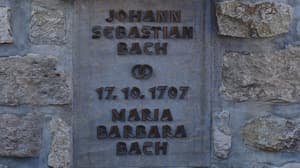

Johann Sebastian and Maria Barbara BachMaria Barbara Bach
 (1684-1720) was the second cousin of Johann Sebastian Bach. She had been orphaned at an early age and was sent to live with relatives in Arnstadt. Johann Sebastian met her after his appointment as church organist in 1703, and for a time they apparently lived in the same house, as relatives do. In 1706, Bach was severely reprimanded for inviting a “strange maiden” into the church organ loft to “make music.” Scholars today believe that the maiden in question must have been Maria Barbara.

Johann Sebastian and Maria Barbara Bach

When Bach’s maternal uncle died in Erfurt, he left Bach a substantial amount of money. As such, Bach was able to marry Maria Barbara on 17 October 1707 in the village of Dornheim, near Arnstadt. Their marriage, by all accounts, was a contented one and four of their seven children lived into adulthood, including Wilhelm Friedemann and Carl Philipp Emanuel Bach.
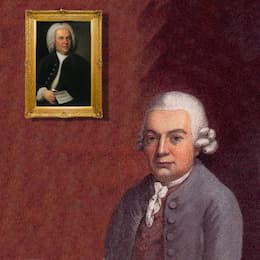
C.P.E. Bach

C.P.E. Bach

In 1720, Bach accompanied his employer Prince Leopold to the spa in Karlsbad. When he returned two months later, he discovered that Maria Barbara had died from a sudden illness, and that she was already buried at Köthen’s Old Cemetery. She was only 35, and the heart-broken composer gave voice to his grief in the monumental “Chaconne,” the fifth and final movement of the Partita in D minor for solo violin. Play
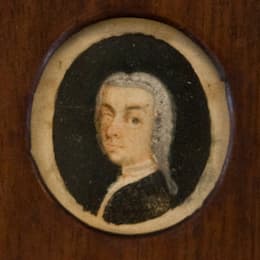
Johann Adolph Scheibe

Johann Adolph Scheibe

The composer, organist, theorist and music critic Johann Adolph Scheibe (1708-1776) considered J.S. Bach and George Frideric Handel to be the finest composers of keyboard music. Yet, on 14 May 1737, Scheibe published a weighty criticism of Bach’s music, claiming “by his bombastic and intricate procedures he deprived music of naturalness and obscured their beauty by an excess of art.”
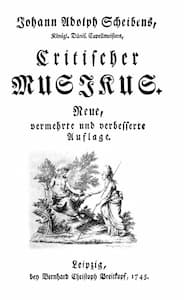
Title page of Scheibe's music criticism, 1745

Title page of Scheibe’s music criticism, 1745

Bach was not amused, and he urged his friend, the Leipzig lecturer in rhetoric Johann Abraham Birnbaum (1702-1748) to write a response. That response was printed in January 1738, and Bach distributed the article among his friends and acquaintances. It discusses the issues of naturalness and artificiality in Bach’s style, and his “definition of harmony as an accumulation of counterpoint,” made an important statement about the unique character of Bach’s compositional art. Scheibe’s attack, as it turned out, stimulated a good bit of sympathy for Bach, and in the end he published a conciliatory review of the Italian Concerto, which included the apology “I did this great man an injustice.” Play
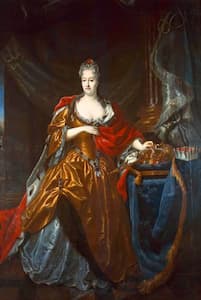
Electress Christiane Eberhardine

Electress Christiane Eberhardine

In order to commemorate the death of the Electress Christiane Eberhardine in 1727, the University of Leipzig planned an extended memorial ceremony. The Electress was somewhat of a religious celebrity, as she had remained a Protestant when her husband, August the Strong of Saxony, had converted to Roman Catholicism.
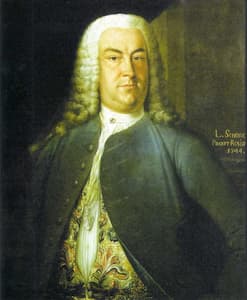
Johann Christoph Gottsched

Johann Christoph Gottsched

Bach was commissioned to set a text by the Leipzig professor poetry, Johann Christoph Gottsched (1700-1766). That commission proofed to be controversial, as the university director of music Johann Gottlieb Görner, considering himself to be Bach’s superior, tried to bar Bach from taking any role in the service. The council thought otherwise and Bach retained the commission. As such, Bach performed the two parts of his Funeral Ode (BWV 198) on 17 October 1727. This cantata unfolds in ten sections, and includes chorales, recitatives and solo arias for soprano, alto, and tenor. Even the bass gets a lengthy accompanied recitative that borders on being an aria itself.

(To be continued!)
Friday, October 15, 2021

Bach and George Martin, the Fifth Beatle

Bach crossover with the Beatles

© medium.com

The English rock band The Beatles, formed in Liverpool in 1960, is widely considered the most influential band of all time. Led by songwriters Lennon and McCartney, the band was part of 1960s counterculture and inspired an international fan frenzy called “Beatlemania.” They stormed the United States pop market in what was dubbed the “British Invasion” and enjoyed huge commercial success. The Beatles essentially wrote simple songs emerging from folklore roots. Although primarily rooted in contemporary rock ’n roll, they absorbed different influences and styles, “having been inspired by everything, from Negro blues to Magyar dances.” And as a scholar writes, “they borrowed here and there with unabashed enthusiasm and made it all their own.” And while they considered “Beethoven a con, just like we are now,” Paul McCartney once said “Bach was always one of our favorite composers.” 

Bach and George Martin, the Fifth Beatle - Explore the classical influences in The Beatles’ music

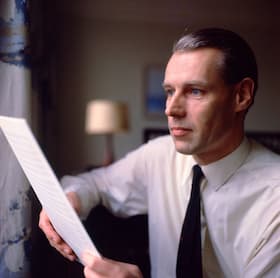
George Martin, 1965

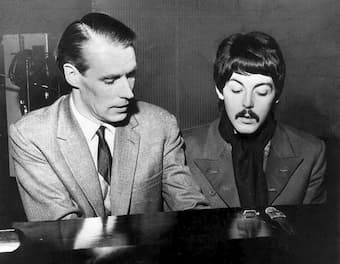
Paul and John sang in the church choirs of St. Peter and St. Barnabas in Liverpool, but none of the Beatles could read music. They certainly had no training in classical music and/or on an instrument. That particular aspect was introduced and fostered by their mentor and producer George Martin (1926-2016), a graduate of the Guildhall School of Music. Martin had studied composition, conducting and orchestration, music theory, harmony and counterpoint, and he usually arranged the songs of the band.

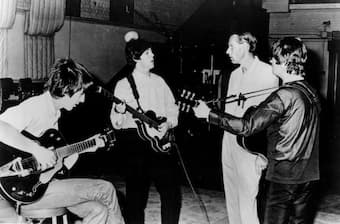
Beatles and George Martin

Beatles and George Martin

Martin strongly denied that he was the real creative genius behind the Beatles. On the contrary, he insisted, “I worked only to their original designs and to their specific requests, even to details of arrangements which they sang to me and which I often transcribed on the spot in the studio.” George Martin was recurrently called the “Fifth Beatle,” and classical influences in the band’s music should essentially be credited to him. 

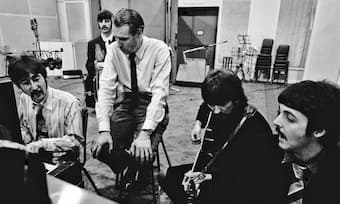
Beatles and George Martin in studio, 1966

Beatles and George Martin in studio, 1966

Prior to working with The Beatles, Martin had worked at Parlophone, a branch of EMI, as a producer of classical and baroque records. Tellingly, he always called “classical music his first love.” Martin himself dabbled in composition, and he orchestrated a number of Bach works in the manner of Leopold Stokowski. In addition, he worked traces of Bach into several Beatles songs, and that included the megahit “Yesterday.” Paul McCartney wrote the melody and chord progression, but it was Martin’s idea to accompany the song with a string quartet. Sir Paul remembers, “that on that session George explained to me how Bach would have voiced it in a choral voicing or a quartet voicing. And he’d say, ‘This would be the way Bach would do it’.”

George Martin and Paul McCartney, 1969

George Martin and Paul McCartney, 1969

Paul also remembered “the original inspiration for “Blackbird” was from a well-known piece by Bach, which I never know the title of, which George and I had learned to play at early age…we felt that we had a lot in common with Bach. For some reason we thought his music was very similar to ours.” That particular famous Bach tune, transformed and transposted in “Blackbird,” turns out to be the “Bourrée” from the Lute Suite in E minor, BWV 996. 

George Martin

George Martin

After Paul McCartney listened to Bach’s Brandenburg Concerto No. 2 on a television program, he had the idea of incorporating the high trumpet sound into one of his songs. “Penny Lane” is a nostalgic celebration of his childhood in Liverpool, and the second part of the song features a tune played by the piccolo trumpet. The song “All you Need is Love” sports a coda by George Martin. The band gave Martin permission to write whatever he wanted, telling him “Put together any tunes you fancy, and just play it out like that.” As such, Martin mingled together the melodies of “Greensleeves,” “In the Mood,” and Bach’s 2-part Invention No. 8 in F Major. A scholar writes, “despite the role of a favorite composer that Bach allegedly played for The Beatles, there are only a few concrete traces in their work, and most of them lead directly or indirectly back to the “Fifth Beatle” George Martin.

Friday, June 16, 2017

Backstreet Boys in the style of a Bach Allemande

The Backstreet Boys' 'I Want It That Way' in the style of a Bach Allemande

14 June 2017, 17:49
1K
The Baroque master meets 1990s boyband, and it's as wonderful as you hoped it would be.
A+ music geek and counterpoint hero Michael Monroe has given us something very special. Something we didn't know how much we needed, until we heard it: Bach meets 1999 pop hit.
Michael renders The Backstreet Boys' 'I Want It That Way' in the style of a courtly German dance, the Allemande, perhaps most famously found in Bach’s solo suites. 
Melodically, every irresistible contour of The Backstreet Boys original is there. Counterpoint is strong. There's no sign of any gelled hair or baggy chinos. But full bravos are reserved for the title: The Bach Suite Boys: Allemande That Way.

The Bach Suite Boys - Allemande That Way
An ingenious Baroque version of The Backstreet Boys' 'I Want It That Way', by YouTuber Michael Monroe.
01:14
and here's the original, for reference (and 90s nostalgia)

Michael has a number of absolute treasures on his YouTube channel. Take a look - and while you're there, don't forget to subscribe and support his wonderful work.
Here's another one that tickled us - Tchaikovsky arranged into a forever ascending audio-illusion, akin to the M. C. Escher endless stairway...


1K
AdTech Ad

Friday, January 15, 2016

Bach: Brandenburg Concerto No. 3 in G major, BWV 1048 (Freiburger Barock...

Johann Sebastian Bach - His Music and His Life


Johann Sebastian Bach was born on March 21, 1685, in Eisenach, Thuringia, Germany, into a large and distinguished family of professional musicians. His father, named Johann Ambrosius Bach, was a violinist and trumpeter, employed by the city of Eisenach. His uncles were church organists, court musicians and composers. His mother and father died before Bach was 10. As an orphan, he moved in with his eldest brother, J. C. Bach, an organist and composer, under whose tutelage Bach studied organ music as well as the construction and maintenance of the organ.

Education: At the age of 14, Bach received a scholarship and walked on foot 300 kilometers to the famous St. Michael's school in Lueneburg, near Hamburg. There he lived and studied for 2 years from 1699-1701. It was there that he sang a Capella at the boys chorale. Bach's studies included organ, harpsichord, and singing. In addition he took the academic studies in theology, history and geography, and lessons of Latin, Italian, and French. Besides his studies of music by the local Northern German composers, Bach had important exposure to the music of composers from other European nations; such as the French composers Jean-Baptiste Lully, Marais, and Marchand, the South German composers Johann Pachelbel and Froberger, and the Italians Arcangelo Corelli and Antonio Vivaldi.

Personality and character: Bach was 17 when he made a 4-month pilgrimage, walking on foot about 400 kilometers from Arnstadt to the Northern city of Lubeck. There he studied with 'Dietrich Buxtehude' and became so involved that he overstayed his leave by three months. Buxtehude being probably the best organist of his time became the living link between the founder of Baroque music Heinrich Schütz and the biggest Baroque genius, Bach. Back in Arnstadt, Bach wrote 'Toccata and Fugue in D Minor' (1702), his first masterpiece; which stemmed from his bold organ improvisations. At that time he was in love with his second cousin Maria Barbara; whom he was taking upstairs to the church organ, where her presence was inspirational for his creativity. Bach was punished for the violation of the restrictions on women's presence in the church and he was fired. However, he eventually married Maria Barbara.

Cross-cultural studies: Bach studied the orchestral music of Antonio Vivaldi and gained insight into his compositional language by arranging Vivaldi's concertos for organ. Six French suites were written for keyboard; each suite opens with 'Allemande' and consists of several pieces, including 'Courante', 'Sarabande', 'Menuet', 'Gavotte', 'Air', 'Anglaise', 'Polonaise', 'Bourree', and 'Gigue'. As suggested by their titles, the pieces were representing songs and dances from various cultures. From the music of the Italians Antonio Vivaldi, Arcangelo Corelli, and 'Giuseppe Torelli'; Bach adopted dramatic introductions and endings as well as vivacious rhythmical dynamism and elaborate harmonization. Bach also performed the music of English, French, and Italian composers; motets of the Venetian school, and incorporated their rhythmical patterns and textural structures in the development of his own style.

Teaching: Bach selected and instructed musicians for orchestras and choirs in Weimar and Leipzig. His work as a Cantor included teaching instrumental and vocal lessons to the church musicians and later to the musicians of the court orchestra. Bach was also a teacher of his own children and of his second wife. In 1730, Bach presented his second wife with a musical notebook for studies, known as the 'Notebook of Anna Magdalena Bach'. Compositions in the notebook were written in a form of minuete, polonaise, gavotte, march, rondeau, chorale, sonata, prelude, song, and aria; written mainly by Bach, as well as by his sons 'Carl Philip Emanuel Bach', Johann Christoph Bach, and composers 'Francois Couperin', Georg Bohm, and others.

Family: Bach married his second cousin, named Maria Barbara, who was the inspirational force for his early compositions. They had seven children, 4 of whom survived to adulthood. W. F. Bach, J. C. Bach, and C. P. E. Bach became composers. Maria Barbara died in 1720. On December 3, 1721, Bach married Anna Magdalena (bee Wilcke), a talented soprano, who was 17 years his junior. They had thirteen children. Bach fathered a total of 20 children with his two wives. His sons 'Friedemann Bach', Johann Christoph Bach, and 'Carl Philip Emanuel Bach' became important composers in the Rococo style. The descendants of Bach are living in many countries across the world.

Social activity: Bach replaced his friend Georg Philipp Telemann as the director of the popular orchestra known as Collegium Musicum, which he led from 1729-1750. It was a private secular music society that gave concert performances twice a week at the Zimmerman's Coffeehouse near the Leipzig market square. Bach's exposure to such a secular public environment inspired him to compose numerous purely entertainment pieces for solo keyboard and several violin and harpsichord concertos.

Politics: Being the undisputed musical genius, Bach still suffered from ugly political machinations. Although the Leipzig Council had enough money, they never honored the promised salary of 1000 talers a year; promised to Bach by the Mayor of Leipzig, Gottlieb Lange, at the hiring interview. Bach worked diligently, in spite of being underpaid for 27 years until his death. On top of that local political factions in the Leipzig Council manipulated Bach's educational work as well as his compositions and public performances. They were pressuring him as the Cantor and Composer and interfering his creative efforts by imposing restrictions on his performances because of their ugly political games. Bach prevailed as he composed and played his "Mass in B Minor" to the monarch of Saxony and was appointed the Royal Court Composer of Saxony.

King Frederick the Great invited Bach to Potsdam in 1747. There the king played his own theme for Bach and challenged the composer to improvise on it. Bach used the 'royal theme' and improvised a three-part fugue on the king's piano. Later Bach upgraded the king's theme to a more sophisticated melody, and composed an array of pieces based on the improved 'royal theme', which he titled "Musical Offering" and later presented this composition to the king.

Legacy: Bach wrote over eleven hundred music compositions in all genres. In Leipzig alone he wrote a cantata for every Sunday and feast day of the year, of which 224 cantatas survive. Some of his compositions were written on the same theme at different times in his life, like choral cantatas and organ works on similar themes with significantly reworked arrangements. The complete list of Bach's works, BWV, has 1127 compositions for voice, organ, harpsichord, violin, cello, flute, chamber music for small ensembles, orchestral music, concertos for violin and orchestra, and for keyboard and orchestra. His music became the essential part of the education for every musician. Bach influenced such great composers as Ludwig van Beethoven, Franz Liszt, Frédéric Chopin, Felix Mendelssohn-Bartholdy, Sergei Rachmaninoff, Sergei Prokofiev and many other prominent musicians.

Bach is by far the most performed and recorded composer in history. His 'Das Wohltemperierte Clavier' (The well-tempered keyboard, or The well-tuned piano, in modern terminology) is the definitive work for all students as well as concert musicians. Bach's 'Orgelbuchlein' (The little organ book) is a staple in the repertoire of organists and pianists, and some pieces from it were arranged for ensembles. Bach's many chorales, especially the "Mass in B Minor" are considered the best works in the genre. His last work 'The Art of Fugue' is best known for it's acclaimed performance by Glenn Gould. Bach's music was used in hundreds of films, thousands of stage productions, and continues being played all over the world.

The definitive biography of J. S. Bach was written by the Nobel Prize Laureate Albert Schweitzer.