
Total Pageviews

Tuesday, March 17, 2026

10 pieces of classical music that will 100% change your life


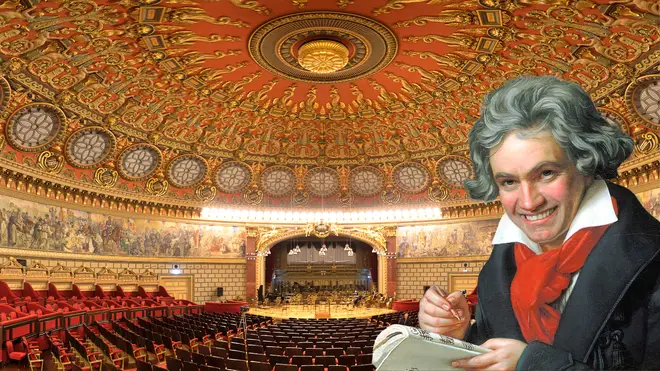
10 pieces of classical music that will change your life (pictured: Romanian Athenaeum)
10 pieces of classical music that will change your life (pictured: Romanian Athenaeum). Picture: Alamy
Classic FM

By Classic FM

Hold on to your hats – if you haven’t heard any of these musical works of genius, your life is about to be changed 10 times in a row.

Classical music can calm nerves, fire up the senses and spark creativity. It can also be uniquely life-affirming.

Here are the 10 major works we recommend you devote some time to. With the depths of their passion and beauty, we think they have the power to move everyone – with life never being quite the same afterwards.

Read more: 30 greatest classical composers of all time

  1. J.S. Bach: St Matthew Passion

    What is it?
    It’s one of two ‘Passion’ oratorios that have survived since Bach died (he could’ve written up to five), but it’s also become one of his most celebrated pieces. The original title is Passio Domini nostri J.C. secundum Evangelistam Matthæum (the ‘J.C.’ stands for Jesus Christ, which is maybe a bit familiar for someone he hadn’t met… but we’ll let him off).

    Why it will change your life:
    If you thought that Baroque music mostly dealt with plinky-plinky harpsichords, the St Matthew Passion will change mind. There are biblical proclamations of impending apocalypse littered throughout, and for each of them, Bach works in some sort of crushing atonality or strange chord, as if he’s wincing with pain each time it happens. This is such a human experience, composed at a time when human experiences weren’t chief among the aims of most Baroque composer composers.

    Read more: 10 of Bach’s all-time best pieces of music

    Bach - St Matthew Passion BWV 244 - Van Veldhoven | Netherlands Bach Society

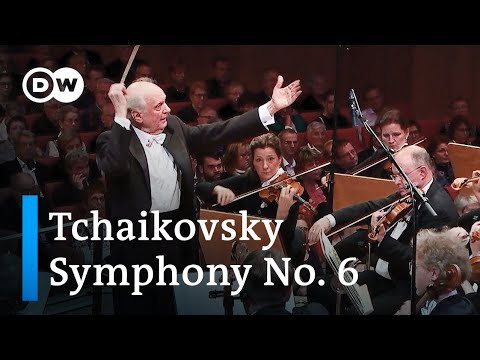
  2. Tchaikovsky: Symphony No. 6

    What is it?
    Tchaikovsky’s final symphony, nicknamed ‘Pathétique’. The premiere performance was given just nine days before the composer died.

    Why it will change your life:
    Tchaikovsky was surely one of the most personally troubled of the great composers – and this symphony was essentially the outpouring of many of his issues, in a way. Many initially thought it was a lengthy suicide note, others pointed to the composer’s torment over his suppressed sexuality, while some thought it was just a tragic, sad, glorious and indulgent artistic expression. But the reason it’ll stay with you forever is that all of these contexts work in their own way, but it never detracts from how magisterial the music itself is. It’s a lesson in the very best ways of expressing emotions through music.

    Read more: 10 of Tchaikovsky’s all-time best works

    Tchaikovsky: Symphony No. 6, 'Pathetique' | Dresden Philharmonic & Marek Janowski

  3. Mahler: Symphony No. 2

    What is it?
    Massive, that’s what it is. Mahler’s Symphony No. 2 (known as the ’Resurrection’) is a 90-minute attempt to put the whole nature of existence into a piece music. So pretty ambitious.

    Why it will change your life:
    If you think any bit of music over three minutes long is a bit indulgent and full of itself, this single piece will convince you that sometimes it’s completely worth spending an hour and a half on one musical concept – even if it is a huge concept. No other composer could’ve made it more entertaining (listen out for death shrieks!), or more rewarding. The epic final few minutes are a stupidly generous reward on their own, but getting there is half the fun.

    Read more: A detailed explanation of how Mahler’s Symphony No. 2 is a heart-shattering work of genius

    Mahler - Symphony No. 2 'Auferstehung' - Mariss Jansons | Concertgebouworkest

  4. Beethoven: Grosse Fuge

    What is it?
    One of the last pieces Beethoven wrote for string quartet, one of his celebrated ‘Late’ quartets. It’s a one-movement experiment in structure that was universally hated when it was first composed.

    Why it will change your life:
    It’s proof that not only can critics and audiences get it really, really wrong, but also that it’s all about interpretation. You can actually hear the struggle and the effort it must have taken to compose, which means it’s not always a relaxing listen, but few pieces in history have so nakedly shown how a composer can throw absolutely everything into a single work. And, in the end, it was hugely influential to serialist composers of the 20th century with none other than Igor Stravinsky proclaiming it a miracle of music. How about that for delayed gratification?

    Read more: Definitively the 20 greatest Beethoven works of all time

    Beethoven: Grosse Fuge, Op. 133 (Danish String Quartet)

  5. Mozart: Requiem

    What is it?
    The piece that Mozart wrote on his deathbed, in a furious fever. Well, if the movies are to be believed, anyway.

    Why it will change your life:
    From the opening Introitus, the mournful tone is set. It might just be us, but doesn’t it actually sound like Mozart is scared of death here? Aside from being spooky as anything, the Requiem is a haunting patchwork of things. Completed by one of Mozart’s pupils, Franz Süssmayr, it’s become a legendary mystery and the perfect way to end the story of one of history’s most celebrated geniuses – in other words, not end it all. What an enigma.

    Read more: 10 life-changing pieces of music by Mozart

    Mozart : Requiem (Orchestre national de France / James Gaffigan)

  6. Monteverdi: Vespers

    What is it?
    It’s Baroque genius Claudio Monteverdi’s defining work, a gigantic noise that some argue bridged the gap between the Renaissance and the early Baroque periods.

    Why it will change your life:
    It makes you realise that just because something’s really old, it doesn’t mean it’s automatically boring, or simply lauded because it was ‘groundbreaking’. Make no mistake about it – Monteverdi’s Vespers are hugely entertaining on their own terms. For starters, it’s simply enormous in scale. If you want to be crude about it (and we do) then you could describe it as Monteverdi taking church music to the opera, with all the drama that implies. Trumpets, drums, massive choruses, florid vocal lines… this really is the greatest hits of the early Baroque.
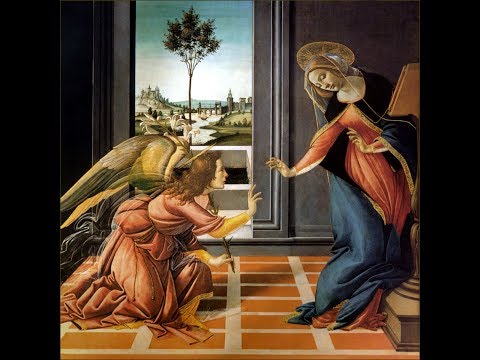
    Monteverdi's Vespers of 1610

  7. Elgar: Cello Concerto

    What is it?
    The only cello concerto that Edward Elgar wrote, and one of the most famous concertos of all time.

    Why it will change your life:
    It’s proof that intense emotion can come from the most unlikely of people. We don’t want to get all mushy on you, but there’s something spectacularly English about how the ultimate stiff-upper-lipped curmudgeon, Edward Elgar, was able to convey his emotions in music rather than in words or actions. His private life was surprisingly tumultuous (that’s another story), and in pieces like the Cello Concerto it’s as if the gasket has blown and Elgar is finally able to let out all the pent-up emotion in a focused blast.
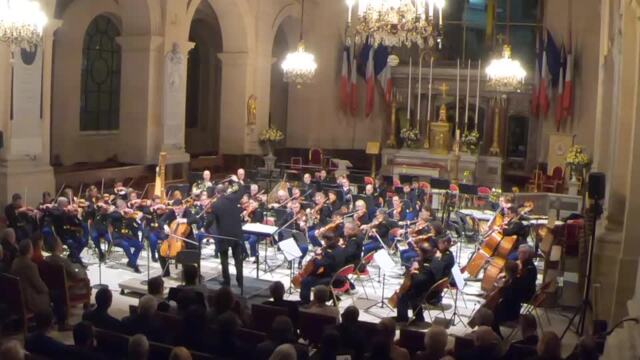
    Cellist Sébastien Hurtaud plays Elgar Cello Concerto (3rd movement)

  8. Wagner: The Ring Cycle

    What is it?
    It is everything.

    Why it will change your life:
    Realising for the first time that the world of opera could actually be this immersive is a very, very special feeling. Wagner’s whole four-opera cycle has a terrible reputation as simply ‘that exhausting long opera’ – but that perception couldn’t be further from the truth. The Ring Cycle is a fundamentally unhinged work of staggering genius, and the peak of operatic indulgence, excess and excellence. Ignore at your peril.

    Metropolitan Opera Orchestra – Wagner: Ride of the Valkyries - Ring (Official Video)

  9. Max Richter: Vivaldi: Recomposed

    What is it?
    A radical, beautiful re-invention of Vivaldi’s Four Seasons concertos, by modern indie-classical composer Max Richter.

    Why it will change your life:
    Listening to Vivaldi: Recomposed is like discovering an old jumper that you used to love has magically, miraculously lost all its bobbly bits and is actually at the height of fashion. What Richter manages to do so incredibly well is to subtly sneak in delightful additions, tweaks and reinventions to a classic you already know extremely well, and freshen it up not just for the modern era, but for the eras to come too.
    Recomposed by Max Richter - Vivaldi - The Four Seasons, 1. Spring (Official Video)

  10. Gorecki: Symphony No. 3

    What is it?
    Possibly the most emotionally draining piece of music ever written.

    Why it will change your life:
    There’s a reason Polish composer Henryck Górecki called his third symphony the Symphony of Sorrowful Songs. Each movement features a solo soprano singing texts inspired by war and separation, but it’s the second movement that really stands out. The text is taken from the scribblings on the wall of a Gestapo cell during the Second World War and, as you can imagine, it’s pretty harrowing stuff – but Górecki makes it sound so transcendental that it’s hard to believe it was written in such dire circumstances. He said himself that he wanted the soprano line “towering over the orchestra”, and it certainly does that.

    Henryk Górecki on his Symphony No. 3

For more great classical music, enjoy our Classic FM Hall of Fame playlist on Global Player.

Friday, March 13, 2026

John Cage - his music and his life

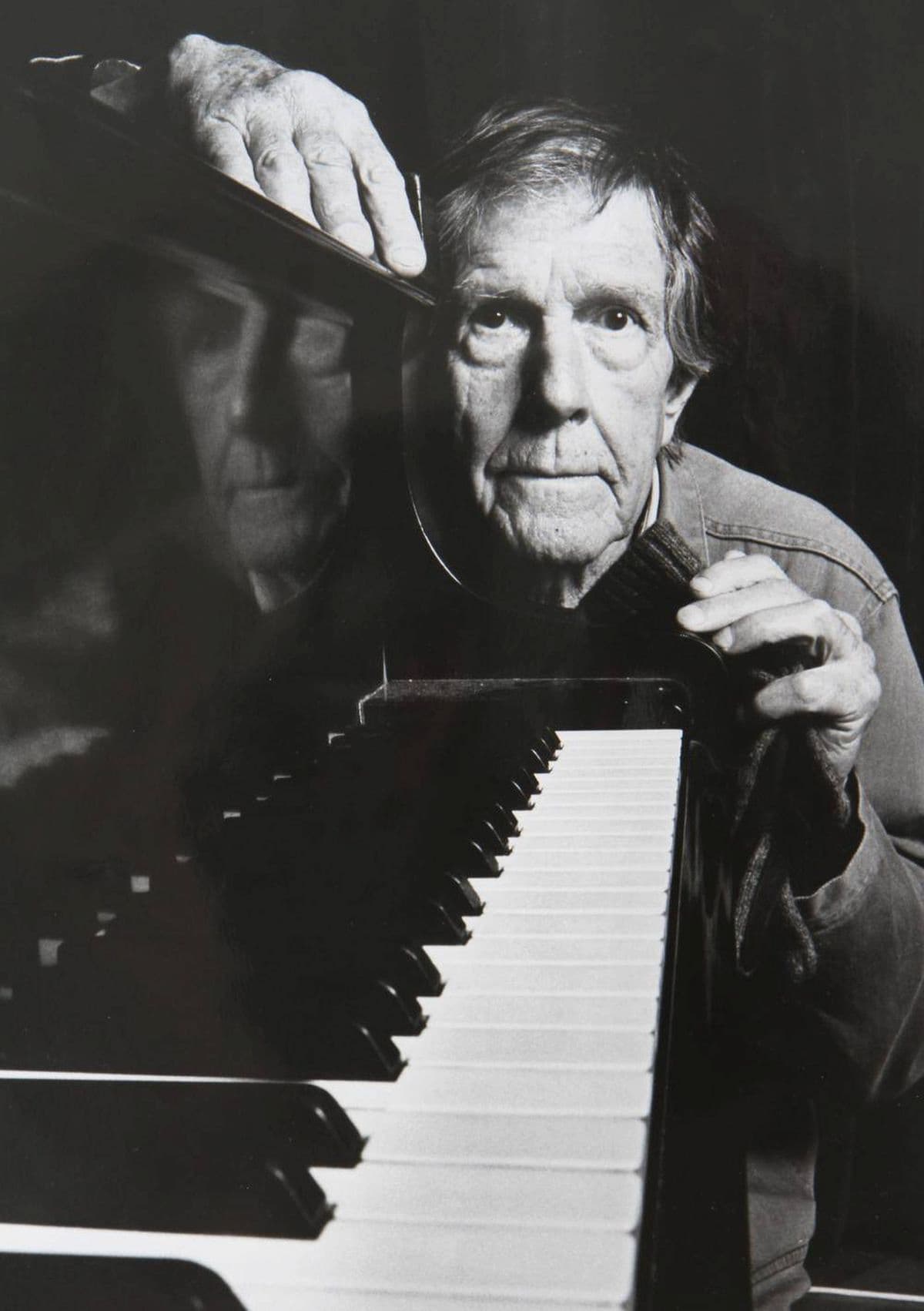
John Cage
Cage in 1988
Born
John Milton Cage Jr.

September 5, 1912
Los Angeles, California, U.S.
DiedAugust 12, 1992 (aged 79)
New York City, U.S.
Alma materPomona College
Occupations
Spouse
(m. 1935; div. 1945)
PartnerMerce Cunningham
Signature


John Milton Cage Jr. (September 5, 1912 – August 12, 1992) was an American composer, artist, and music theorist. A pioneer of indeterminacy in music, electroacoustic music, and non-standard use of musical instruments, Cage was one of the leading figures of the post-war avant-garde. Critics have lauded him as one of the most influential composers of the 20th century.[1][2][3][4] He was also instrumental in the development of modern dance, mostly through his association with choreographer Merce Cunningham, who was also Cage's romantic partner for most of their lives.[5][6]


Cage's teachers included Henry Cowell (1933) and Arnold Schoenberg (1933–35), both known for their radical innovations in music, but Cage's major influences lay in various East and South Asian cultures. Through his studies of Indian philosophy and Zen Buddhism in the late 1940s, Cage came to the idea of aleatoric or chance-controlled music, which he started composing in 1951.[7] The I Ching, an ancient Chinese classic text and decision-making tool, became Cage's standard composition tool for the rest of his life.[8] In a 1957 lecture, "Experimental Music", he described music as "a purposeless play" which is "an affirmation of life – not an attempt to bring order out of chaos nor to suggest improvements in creation, but simply a way of waking up to the very life we're living".[9]


Cage's best known work is the 1952 composition 4′33″, a piece performed in the absence of deliberate sound; musicians who perform the work do nothing but be present for the duration specified by the title. The content of the composition is intended to be the sounds of the environment heard by the audience during performance.[10][11] The work's challenge to assumed definitions about musicianship and musical experience made it a popular and controversial topic both in musicology and the broader aesthetics of art and performance. Cage was also a pioneer of the prepared piano (a piano with its sound altered by objects placed between or on its strings or hammers), for which he wrote numerous dance-related works and a few concert pieces. These include Sonatas and Interludes (1946–48).[12]

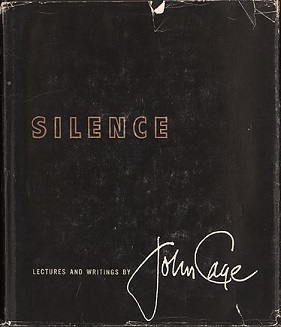
Book Review: John Cage’s Silence


Most famous for his iconic – and polarising – composition 4’33”, John Cage was a composer, artist, and thinker whose explorations and experiments changed the course of classical composition. His compendium of lectures and writings, Silence, will be of interest to anyone who likes to think about musical organisation and value at a meta level, and those who are fascinated by people who live and think eccentrically, which is, I suspect, most of us with any investment or interest in the arts.

John Cage

John Cage

From the onset, this compendium paints a picture of a man who liked ambiguity, the frustration of expectations, and absurdity – a kind of contrariness of spirit reminiscent of Erik Satie. In the foreword he recounts an incident during his Lecture on Nothing delivered at the Artists’ Club on Eighth Street in New Yorkwhich involved the giving of the same six, randomly-selected, pre-prepared answers in response to whatever question was asked, where good friend and attendee Jeanne Reynal stood up and screamed, “John, I dearly love you, but I can’t bear another minute,” and promptly left. The anecdote is recounted not as a triumph at having irritated and frustrated another human being, but as a kind of soft acknowledgement that his way of thinking and making, his explanations of his own artistry, his music – all contain a challenging preoccupation with form, repetition, and meaning that are, in a myriad of ways, crazy-making. Later in the foreword, he acknowledges the influence that both Zen and Dadaism have had on his thinking, while also stating that he does not wish Zen to be “blamed” for his work, and that he wanted “to free Zen of any responsibility for [his] actions.” Instead of aligning himself fully with either school of thought, he gives two explicitly stated reasons or justifications for all of these lectures and writings. The first is that he sought above all else “poetry,” which he defines as “the allowing musical elements (time, sound) to be introduced into the world of words.” The other stated aim was to collapse content and message into form by communicating ideas via their embodiment rather than by abstract description or definition, such as delivering a lecture on repetition by the actual use of extensive repetition. By virtue of this latter aim, Cage’s Silence is a mixture of spatialised poetry, instructions for performance art, text scores, transcribed or written lectures, and everything evading definition in between – making for a varied and amusingly bumpy read.

First edition of John Cage's Silence: Lectures and Writings

First edition of John Cage’s Silence: Lectures and Writings

Of real interest from the 21st-century perspective are Cage’s predictions about the future and purpose of composition. In his lecture ‘Future of Music: Credo’ given in 1958, Cage correctly forecasted the extent to which technology, electronic instruments, and recorded sound would come to dominate music-making, and the ways in which this would blur the lines between music and the “noise” that constantly surrounds us. Some of the conclusions he reaches from the new technologies being discovered in his lifetime – high fidelity recording, and the ability to manipulate those recordings along a continuous spectra like amplitude or overtone structure – are quite extreme. He makes the analogy that writing music with simple rhythms and twelve tones alone is discrete and traditional, like walking, whereas utilising technology to make music of infinite rhythmic and pitch complexity is like flying. The other compositional alternative he seems to endorse is to turn to the sounds of nature, “to give up the desire to control sound, clear [the] mind of music, and set about discovering means to let sounds be themselves rather than vehicles for man-made theories or expressions of human sentiments.” Having presented these two options – making complex noise-music using the outermost limits of technology, or creating sound-art out of randomness and the natural world – Cage then somewhat paradoxically says that nothing need change in music-making at all, that “the more things there are, the merrier.” He goes so far as to say we should embrace a dominant seventh chord every now and then. While none of this hangs together as the most coherent or well-defended musical philosophy, it’s certainly food for thought for anyone interested in the history of modern composition.

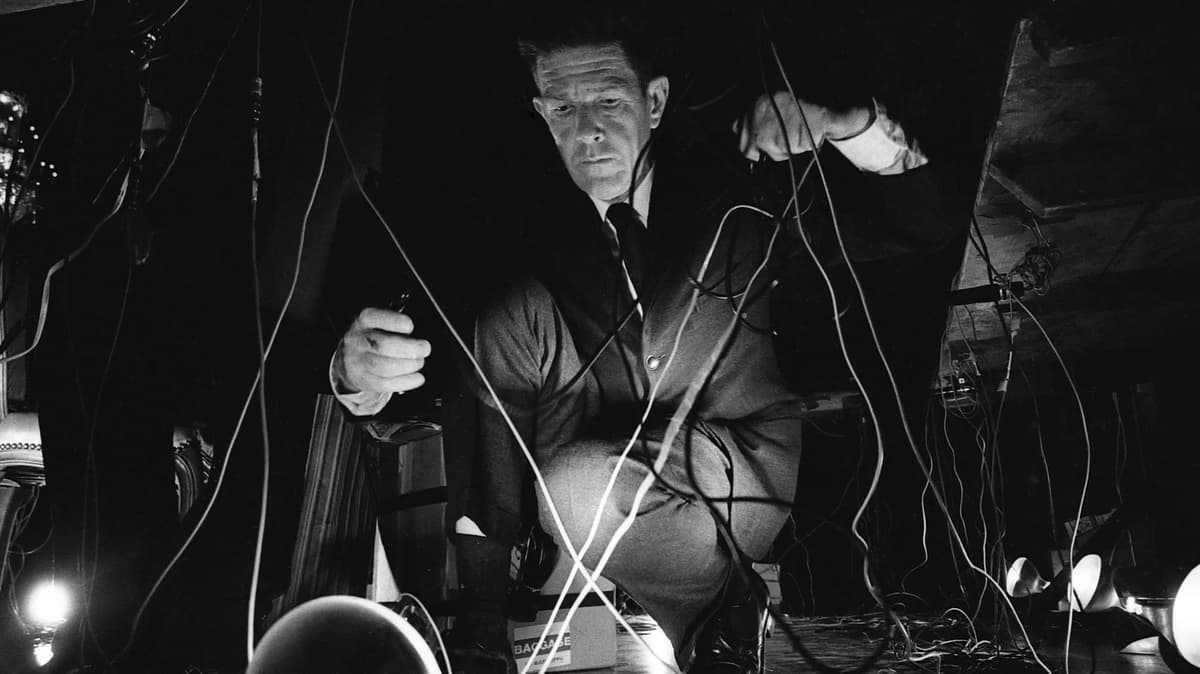
John Cage during his 1966 concert at the opening of the National Arts Foundation in Washington, D.C.

John Cage during his 1966 concert at the opening of the National Arts Foundation in Washington, D.C. © Rowland Scherman/Getty Images

Scattered throughout the book are strange anecdotes from Cage’s life and those of mentors and artist friends. In small italics, these surreal stories of submarines, travel, and mushroom-picking punctuate the ongoing conceptual wrestling, the never-ending tensions between noise and music, sound and silence, choice and non-choice. These serve as nice moments of levity from the dense, sometimes technical, and experimentally formatted meditations on process and musical form. On the whole, the earnestness of Cage’s desire to understand things deeply and well is always tempered with humour and a surrealist, interdisciplinary spirit. The spatialised poetry calls to mind André Breton, and Cage is as versed in theatre, philosophy, and the visual arts – with many mentions of Max Ernst and Gertrude Stein – as he is in music, perhaps more so.

Frustrating, enlightening, thought-provoking, and clever in equal measure, this is the kind of book anyone interested in music would do well to own and return to throughout their lifetime.

Carl Ruggles (Born on March 11, 1876): America’s Uncompromising Composer


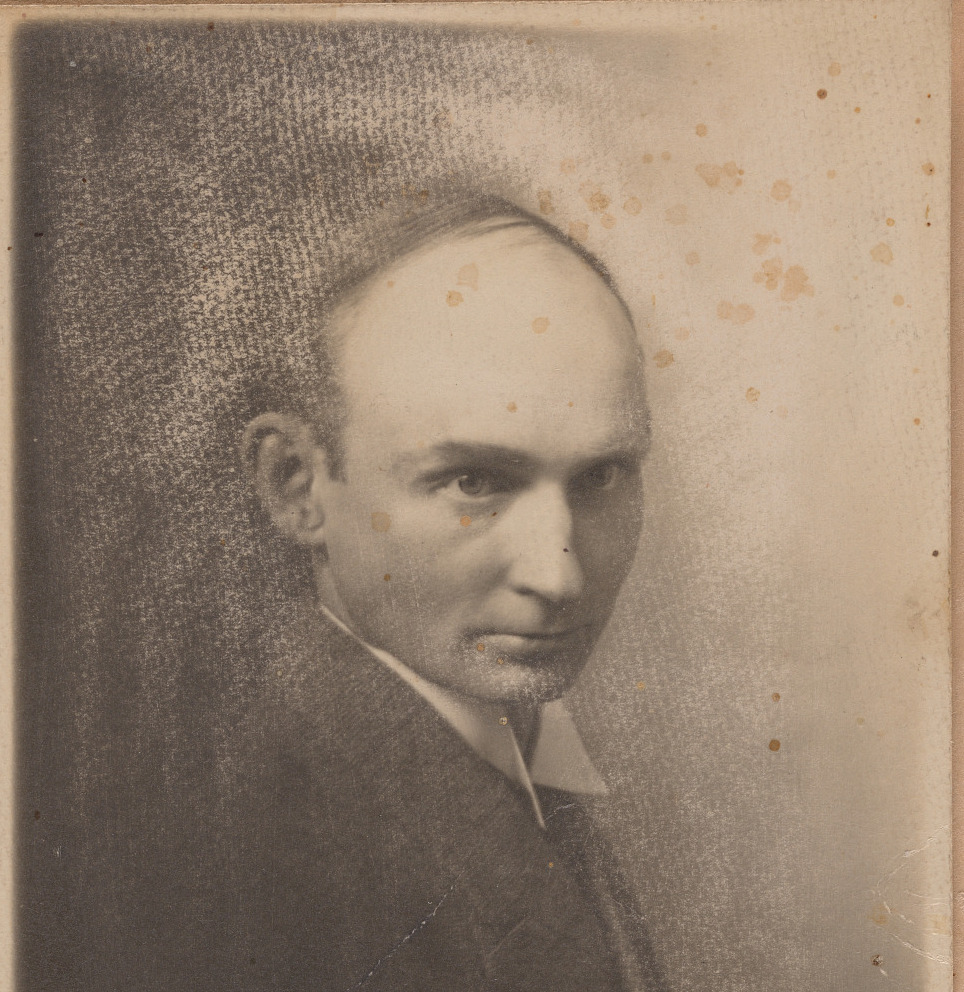
Carl Ruggles (1876–1971) was a musician from a young age, first playing his homemade violin (with a cigar box for the body) and then a quarter-sized violin from a local friend. His mother loved singing, and Ruggles learned his music by ear, being famed locally for the jigs and hornpipes he played on his little violin. Summer visitors to his hometown of Marion, Massachusetts, were entertained, including President Grover Cleveland in 1885. The child musician went on to play violin duets with the First Lady, Rose Cleveland.

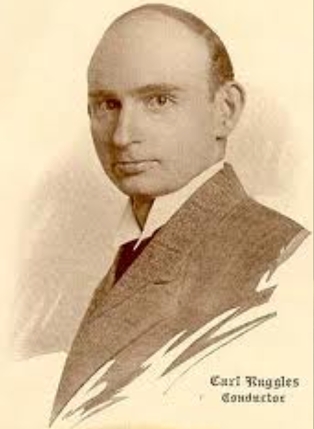
Carl Ruggles, 1911

Carl Ruggles, 1911

The death of Ruggles’ mother when he was 14 signaled a significant change in his life. Responsibility for him was split between his father and his grandmother, and his father’s alcoholism and gambling lost the family their money.

Carl’s first professional appointment occurred in 1892, at age 16, when he was appointed director of the YMCA orchestra in Lexington, Massachusetts.

His first compositions were songs that were published in 1899. As his family’s financial situation worsened, he took on more jobs in music, teaching violin and music theory.

The young Carl Ruggles

The young Carl Ruggles

Around the turn of the century, living near Boston, he took advantage of the music that he could access: he studied violin with Felix Winternitz and composition with Josef Claus and John Knowles Paine. He audited English courses at Harvard, engraved music and title pages for the Stanhope Press, and had a short-lived, and highly contentious, career as a music critic.

In 1906, he married the contralto Charlotte Snell and sought a more stable position at the Mar D’Mar School of Music in Winona, Minnesota, as a violin teacher. He also took a more prominent role as a violin soloist, appearing with the Winona Symphony Orchestra before becoming their director. After the music school and the orchestra closed in 1912, the Ruggles moved to New York City. He started to write an opera, but its German theme did not go well in the anti-German feelings in the US during WWI. He submitted a version of his opera, based on The Sunken Bell by Gerhart Hauptmann, to the Metropolitan Opera, but destroyed his scores when he decided that opera was not his future. He’d been working on the score as late as 1923, but in 1960, the clear copy was destroyed, still unfinished.

His song, Toys, was written in 1919 for his 4-year-old son Micah’s birthday. The dissonance may surprise you, in a work referencing ‘choo-choo cars’ and a balloon, but that is the secret of Ruggles: uncompromising and cutting edge.

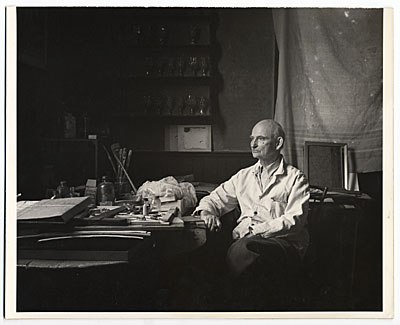
Carl Ruggles at his work table

Carl Ruggles at his work table

Ruggles is paired most with his contemporary, Charles Ives (1874–1954), two years younger. Both sought their own sound worlds, and often it took decades for their listeners to catch up to them.

One of his early works is Angels, a hymn for six trumpets. Written in 1921 for six trumpets, it was rewritten in 1940 for trumpets and trombones and again in 1946 for piano.  

His first significant work is Vox clamans in deserto of 1923. Written for soprano and chamber orchestra, it uses poems by three very different poets: Robert Browning’s Parting at Morning, Charles Henry Meltzer’s Son of Mine, and Walt Whitman’s A Clear Midnight. Each poet has his own characteristics; Browning’s sudden horizons, Meltzer’s pained longing, and Whitman’s “fully forth emerging” soul are delivered by Ruggles with soaring melodies and dissonances.  

This was the last work he wrote with words. Henceforth, he would write music for music’s sake.

His great work is Sun-Treader, and it builds off earlier works. Men and Angels, an orchestral work written in 1921, became Men and Mountains in 1924, and finally morphed into Sun-Treader in 1926. The score was completed in 1931.

Sun-Treader uses what Ruggles called ‘dissonant melody’. Unlike the Viennese 12-tone school, Ruggles used free melodies, not rows. He spoke about his compositional process through a set of questions:

What makes you take the high note? the low note? the middle note? There’s a million things…there’s a whole generation back of that. It’s not environment, it’s not heritage—environment of course prepares things…certain factors come in there. That’s what I believe in…what makes you do that? the feeling that makes you take the right note.

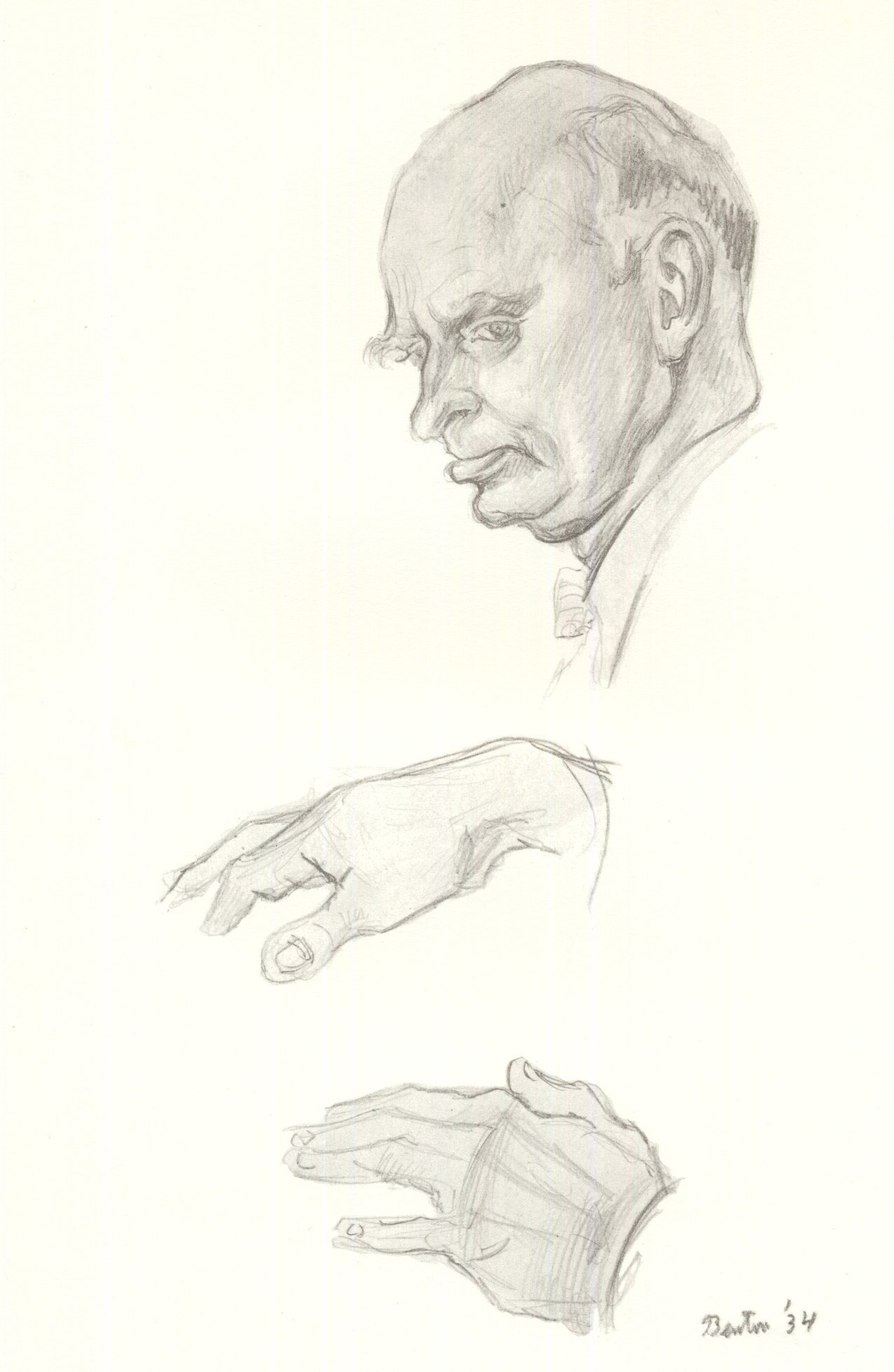
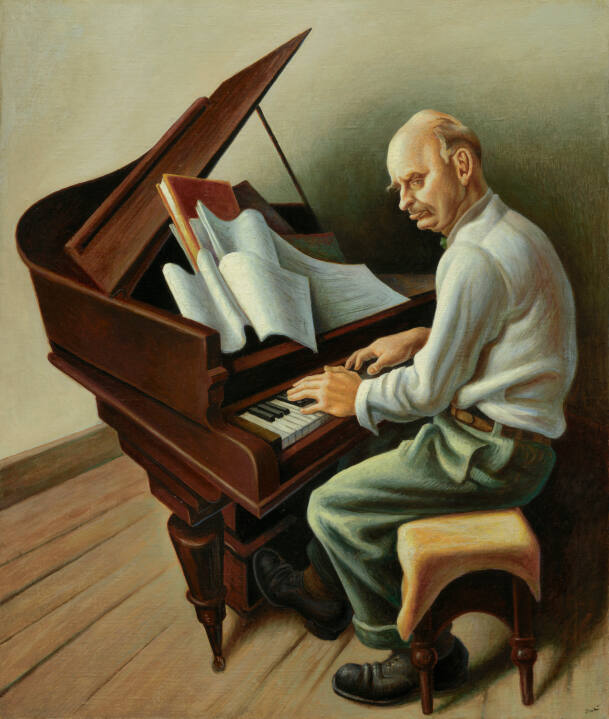
Ruggles’ dissonances create a style where a held note can change definition, can change style, and can change from a melodic note to a member of a chord. The music moves in huge arcs, always releasing at the end by relaxing the pitch or the volume. Arc might be separated by echoes of what happened. One writer sees the piece as having a melody that is so free and matched with a dissonance that is so burning that we seem to be part of the sun itself, in a world of flames. Thomas Hart Benton: Carl Ruggles, 1934 (Benton Testamentary Trust/UMB Bank)

Thomas Hart Benton: Carl Ruggles, 1934 (Benton Testamentary Trust/UMB Bank)

Thomas Hart Benton: The Sun Treader (Portrait of Carl Ruggles), ca. 1934. (Kansas City, MO: The Nelson-Atkins Museum of Art)

Thomas Hart Benton: The Sun Treader (Portrait of Carl Ruggles), ca. 1934. (Kansas City, MO: The Nelson-Atkins Museum of Art)

In 1929, Ruggles met Charles Ives, who did what he could to help him. One thing was to have his best copyist make a score of Sun-Treader, but it was quickly covered in revisions. The score was finally published in 1934, after its premiere in Paris and Berlin, conducted by Nicholas Slonimsky.

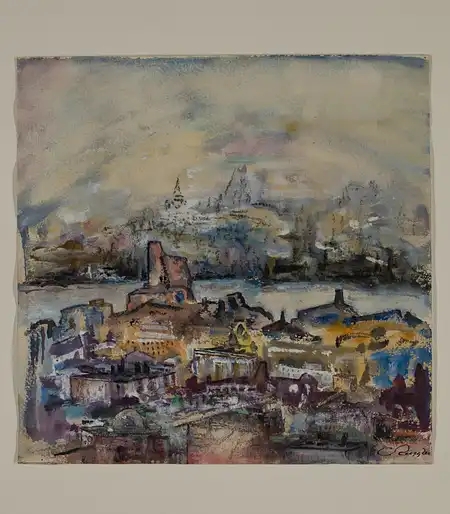
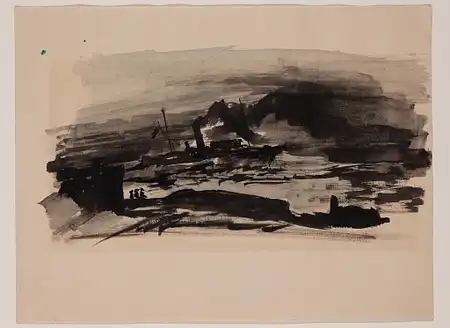
Around 1929, Ruggles took up painting, and his growing abilities had a relaxing effect on his music. His first exhibition was in April 1935, and he continued to have summer shows at the Southern Vermont Art Center for years. He also exhibited at the Chicago Arts Club (1937) and the Detroit Institute of Arts (1941). His paintings were in a modernist style and often more implied than defined their images.

Ruggles: From No. 1, Christopher Street, no date (Detroit Institute of Arts)

Ruggles: From No. 1, Christopher Street, no date (Detroit Institute of Arts)

Ruggles: Sea Impression, no date (Detroit Institute of Arts)

Ruggles: Sea Impression, no date (Detroit Institute of Arts)

His last musical works were a series of Evocations, written first for piano and then orchestrated. His same method of holding melody notes to create a dissonant melody was used, and, in its orchestral version, Evocations is a powerful work.

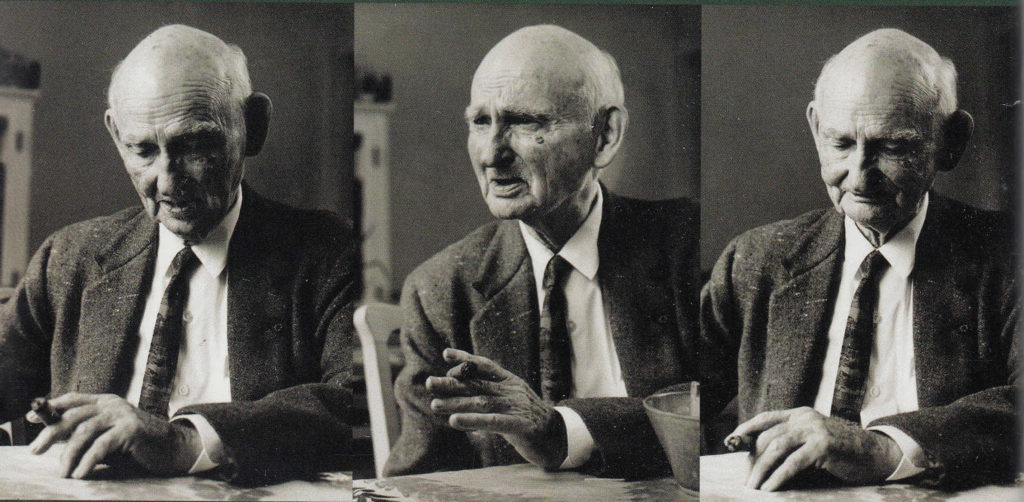
Carl Ruggles in his 90s

Carl Ruggles in his 90s

Each movement was written for a different subject, the first in 1937, then one in 1940 dedicated to Charles Ives, one in 1941 for pianist John Kirkpatrick, and the last in 1943 for his wife Charlotte. The general order of play is 1937–1941–1973–1940, with the Charles Ives movement last.   

We’ll close this life of Carl Ruggles with a work he wrote at the request of his wife. She always wanted a hymn, and so he wrote Evocation. In keeping with his lifelong vow of no more poets, it’s a hymn without words (Although Watts’s “O God, our help in ages past” will fit).   

And so, with his last song, we return to the songwriting of his youth. Ruggles wasn’t a popular composer and didn’t have an extensive output. In many ways, he matches the outliers in other artistic fields, such as Georgia O’Keeffe, Rockwell Kent, and Charles Ives. As a composer, he challenges his listeners; as a painter, he challenges his viewers. As a uniquely American artist, however, he’s unrivaled.

The Tragic Story Behind Leoš Janáček’s “Elegy on the Death of Daughter Olga”

As it turns out, his marriage was just as dramatic as any of his operas.

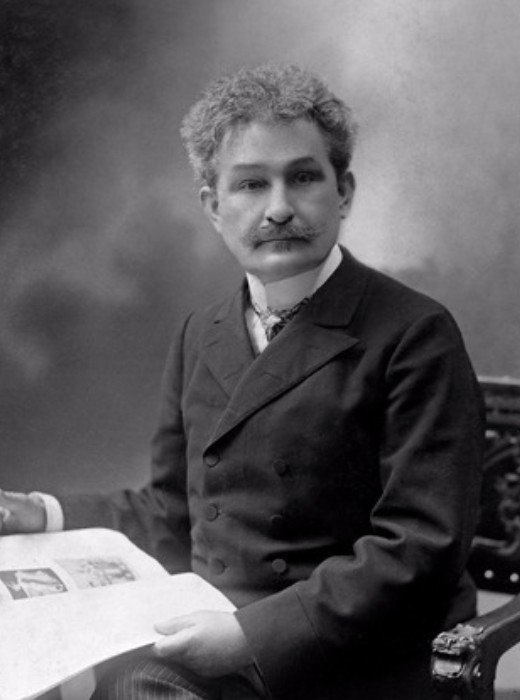
Leoš Janáček

Leoš Janáček

In 1876, he began teaching piano to his future wife, Zdenka Schulzová, the very young daughter of his boss. The two later married despite a large age gap, and the relationship became a rocky one.

Their daughter, Olga Janáková, became the emotional heart of a fractured family, and her tragic early death in 1903 inspired some of Janáček’s most personal music, including the Elegy on the Death of Daughter Olga.

Today, we’re looking at the story of Janáček’s tumultuous marriage, his family struggles, and the music he wrote that was shaped by his wife, Zdenka, and daughter, Olga.

Meeting Zdenka

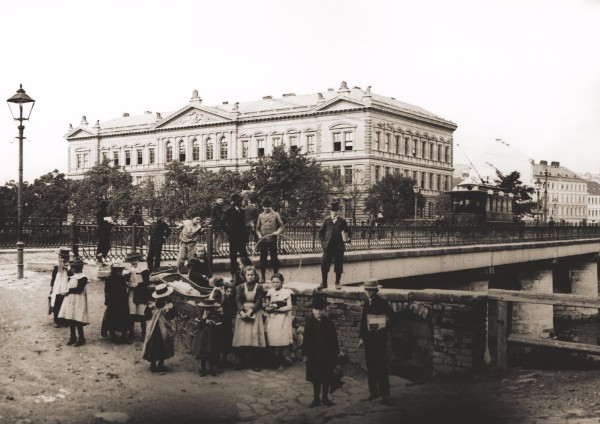
Brno Teachers’ Institute

Brno Teachers’ Institute

In 1876, twenty-two-year-old composer Leoš Janáček began teaching music at the Brno Teachers’ Institute.

His boss, the Institute’s director Emilian Schulz, believed in his talent and had secured the teaching job for the impoverished composer.

Schulz also hired Janáček to teach his twelve-year-old daughter Zdenka piano.

The Schulzes lived in the back of the school, so Janáček would walk from the school back to their home to give her lessons.

It wasn’t long before he began taking a romantic interest in her.  

During the 1879-1880 school year, he left Brno to study in Leipzig. One of the pieces he wrote there was the Zdenka Variations, inspired by his now 14-year-old piano student.

He also spent a few months at the Vienna Conservatory, but, ever prickly, hated his time there, so he returned to Brno. He proposed to Zdenka, and she accepted.

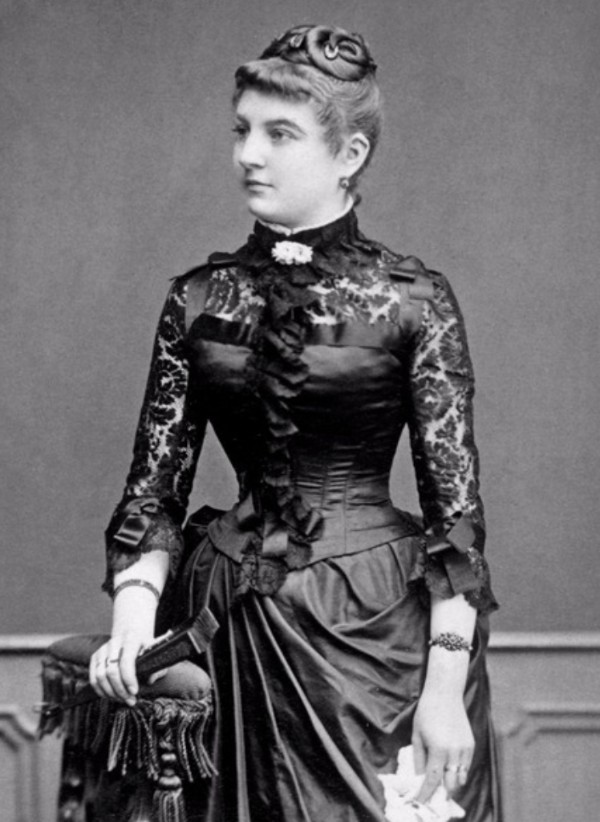
Zdenka Schulzová

Zdenka Schulzová

In the summer of 1881, two weeks before Zdenka’s sixteenth birthday, she and Janáček were married.

The Birth of Olga

A few months later, she became pregnant with their first baby, who arrived in August 1882.

Janáček refused to be present at the birth, despite Zdenka’s wishes. In fact, he only went to see the baby after he was scolded by a priest.

They named her Olga. She would eventually become the apple of her father’s eye…but it would take a while.

The parents’ messy relationship staggered on after Olga’s birth. Janáček became increasingly focused on his flirtations and affairs with other women, ignoring Zdenka.

To her great fury, she once found him hiding a letter from a paramour. He burned the letter before she could finish reading the whole thing, but that did nothing to quell her fury.

The Janáček’s Divorce

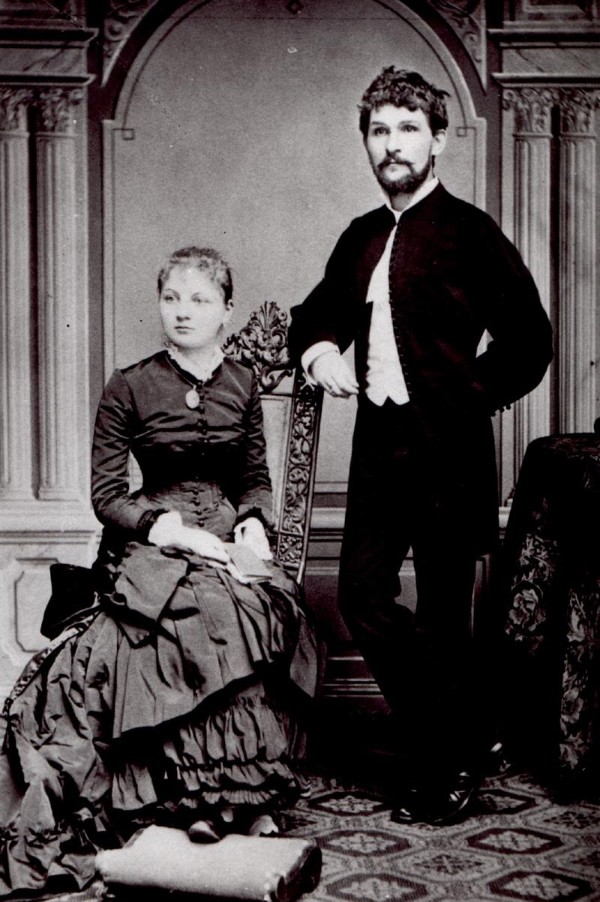
Leoš and Zdenka Janáček

Leoš and Zdenka Janáček

Things got so bad between them that in mid-1884, they divorced.

But as soon as Zdenka became forbidden to him, the attraction reignited. He began courting her again. Thinking he had changed, she had their divorce annulled.

Vladimir Janáček

Vladimir Janáček

In May 1888, they had another baby, Vladimir. Zdenka later remembered that Janáček spent more time with him than he had with Olga because Vladimir was a boy.

But when both she and Vladimir grew ill, and a doctor recommended hiring a wet nurse, Janáček resorted to his old ways, refusing to pay for the expense. Zdenka’s parents chipped in instead.

The Marriage Deteriorates

Predictably, the brief separation had done nothing to address the root problems in their marriage.

According to Zdenka, Janáček hated it when she visited her parents. After she disobeyed his orders and went to see them anyway, he locked the door and left her outside while he whistled inside.

He also allowed her such a small allowance that she and the children began to starve. Once again, she had to come to her parents’ house begging.

“My husband didn’t notice anything: he never cared about how I lived and whether I needed anything,” she later wrote.     

The Loss of Vladimir

Unfortunately, both Olga and Vladimir were sickly children.

Vladimir died at the age of two in 1890, devastating the entire family. Janáček was especially heartbroken by Vladimir’s loss, as he’d already started to show some signs of musical talent…which Olga never had.

Six-year-old Olga was inconsolable, crying at her brother’s casket until her face was stained with tears.

Olga Janáková

Olga Janáková

Although their relationship was falling apart again, Zdenka asked Janáček if they could have another child. He refused.

She later remembered that it was at that point that she finally lost all of her attraction to him, although there were moments sprinkled throughout the rest of the marriage where they were friends again.

Olga’s Childhood

In the year of Vladimir’s death, Olga fell ill with inflamed joints, followed by heart trouble. She endured a lot of chronic pain and was kept from many physical activities during her childhood.

Especially after Vladimir’s life and death, Olga became the emotional glue of the family.

Zdenka later wrote admiringly that Olga “grew up into a lovely girl. Her skin was delicate and smooth with a peach-bloom to it; like her father, she had a dimple in her chin.”

Although he’d been neglectful of her when she was a baby, as she grew up, Janáček gradually became closer and closer to her.

Historian Mirka Zemanová writes of Olga’s teenage years:

“By then, Olga was almost as tall as Janaček. She was slim and had inherited her father’s features and his olive complexion; like Janáček, she was a smart dresser. She had her mother’s blue eyes and long, thick, beautiful hair the colour of ‘dark gold’. Her feet were tiny, and she wore shoes just like those for Cinderella. At her school, she was an outstanding pupil; she had an excellent memory, and her surviving letters show wit and style beyond her years. Everyone seemed to love her — she was sweet-natured, generous and sincere. Yet her letters also reveal a strain of melancholy, confirmed by her photographs: there is great sweetness in her face, but a pensive look in her eyes.”

Janáček eventually bonded with Olga over her interest in the arts (she eventually became an enthusiastic amateur singer), as well as her fascination with the Russian language and Russian culture, a passion that he shared.

Olga’s Final Years

Olga Janáková

Olga Janáková

In 1900, when she was seventeen, she met a medical student at a dance, and they fell in love.

Janáček was upset. Olga (rightly) pointed out that her mother had been even younger when their relationship had begun.

Olga and the medical student were an item for quite a while until Olga began hearing “rumours about his character”, in the words of Zemanova, and she broke up with him. His response was shocking: he threatened to find her and shoot her for breaking up with him.

In response, the Janáčeks sent Olga to St. Petersburg to visit her uncle, ostensibly so she could improve her Russian, but also for her own safety. Janáček chaperoned her there in March 1902, then returned to Brno.

Unfortunately, tragedy struck during the visit: in late April, Olga came down with typhoid fever. She seemed to make a recovery, then fell ill again in June.

Both Zdenka and Janáček traveled to St. Petersburg to be with her. Zdenka stayed while Janáček returned to Brno to keep working.

She improved enough by July to travel back to Brno, but it was to be a temporary reprieve.

In the midst of Olga’s illness, Janáček finished his opera Jenůfa. Olga asked to hear it played on the piano, since she was convinced she wouldn’t survive to see it produced; Janáček agreed. Meanwhile, Zdenka was so upset, she went into the kitchen, unable to listen.   

Janáček stayed by Olga’s bedside and, always fascinated by the “speech melodies” of others, notated his daughter’s final words and vocalisations.

“I don’t want to die; I want to live.”

“Such fear, I will resist it.”

“I’m dying; I’m dying.” (Janáček noted that she repeated this one until she became incoherent.)

He noted that his response to her was “God be with you, my darling.”

Olga died on 26 February 1903. She was just 21 years old.

The Aftermath of Olga’s Death

Olga’s death completely shattered both Janáček parents.

Janáček’s grief manifested in physical gestures. He tore at his hair and shouted, “My soul!” over and over again.

Zdenka later wrote in her memoirs:

“We stayed in our dining room alone. Abandoned, silent. I looked at Leoš. He sat in front of me, destroyed, thin, grey-haired.”

He left the final page of Jenůfa in his daughter’s coffin.   

Ultimately Janáček processed the loss by paying tribute to Olga in his music. Most memorably, he dedicated the opera Jenůfa to her memory.

Elegy on the Death of Daughter Olga

But the music that was most pointedly about her was his 1903 Elegy on the Death of Daughter Olga.

The elegy is a cantata for tenor, chorus, and piano. He used a text by poet Marfa Veveritsa, a poet friend of Olga’s who shared the father and daughter’s love of Russian culture.

It was only premiered 27 years after its composition, two years after Janáček died.

Elegy on the Death of Daughter Olga   

The Elegy isn’t often performed today, but it is a searing work that provides vitally important context to what was happening during the composition of Jenůfa, as well as the family relationships that formed Leoš Janáček as both a human and an artist.