Total Pageviews

Friday, April 24, 2026

Nocturnes and the Fascination of Night Music Susan Tomes


Susan Tomes

Susan Tomes

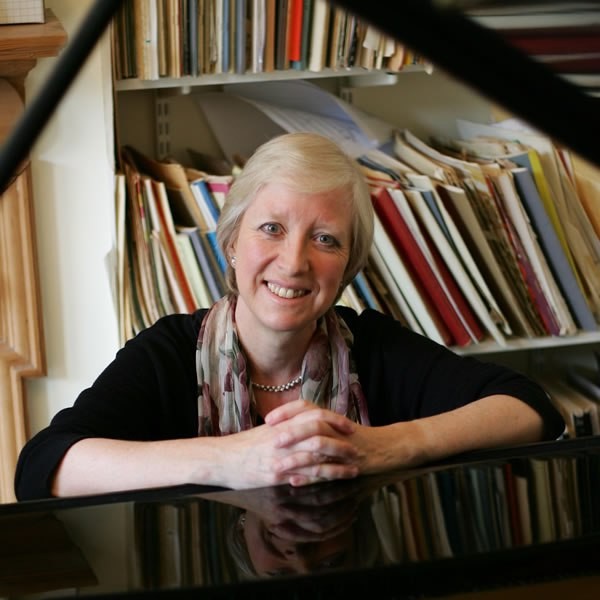
Why has the night inspired composers for so many years? In her new book Nocturnes and the Fascination of Night Music, pianist and writer Susan Tomes looks for answers, exploring one of classical music’s most expressive forms. The nocturne is closely linked to the piano and the quiet, thoughtful moods of the evening. Susan Tomes calls the nocturne “the origin of today’s sleep music….a short, lyrical and usually tranquil piece evoking night.”

When we think of nocturnes, Chopin often comes to mind. He elevated the form, transforming charming salon pieces into concert works, full of expression and pianistic detail. His nocturnes are amongst the most loved pieces for pianists and audiences alike, regularly appearing in concerts and recordings.
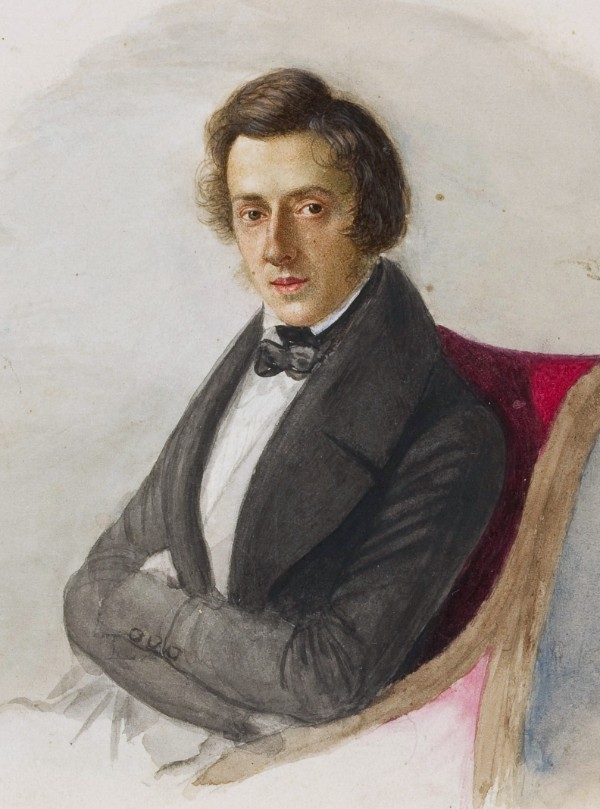
Maria Wodzińska: Frédéric Chopin, 1836 (Wasaw: National Museum)

Maria Wodzińska: Frédéric Chopin, 1836 (Wasaw: National Museum)

But before Chopin, there was John Field, an Irish composer and a pupil of Muzio Clementi, who is credited with creating the genre.
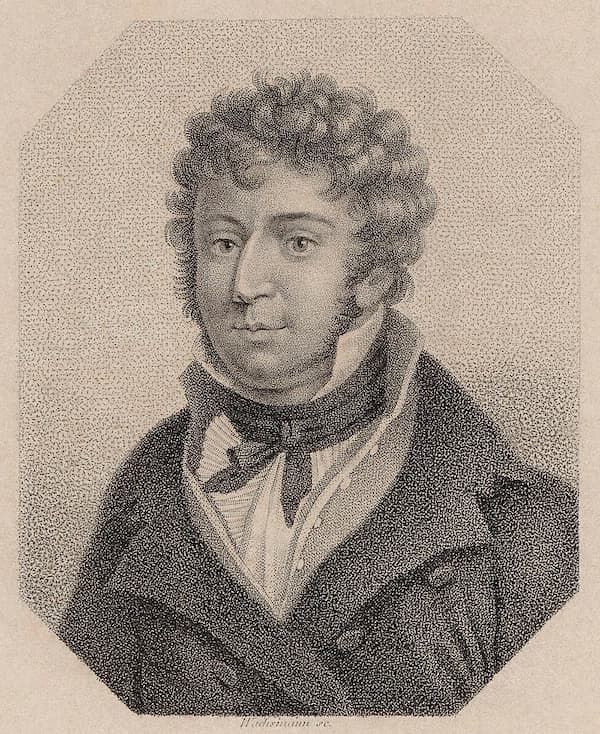
Anton Wachsmann: John Field, ca 1820 (Gallica: btv1b84179686)

Anton Wachsmann: John Field, ca 1820 (Gallica: btv1b84179686)


Susan Tomes looks back to the early nineteenth century, when composers began to write music that captured the quiet, emotional atmosphere of night. She points to pieces that seem to anticipate the nocturne, such as the first movement of Beethoven’s Moonlight Sonata and the slow movement of Mozart’s Piano Concerto K. 467.

Field is, of course, the key figure in the development of the Nocturne, and Tomes devotes considerable attention to his life and career, as well as to the emergence of the genre in his hands.

From there, she traces its evolution through some of the most celebrated figures in classical music – from contemporaries of Chopin like the Schumanns and the Mendelssohn siblings to Chopin’s ‘successor’, Gabriel Fauré, whose early Nocturnes seem close to Chopin’s while his later ones are bleaker, more challenging but no less passionate. Close attention is also paid to some of Fauré’s contemporaries, Tchaikovsky, Vincent d’Indy, RachmaninoffScriabin and Chaminade, for example, before Tomes reaches Claude Debussy.

Debussy may have written only one Nocturne, but his sensitivity to the atmosphere of the evening and nighttime is clearly demonstrated in pieces such as Les sons et parfums tournent dans l’air du soir (Preludes, Book 1) and La soirée dans Grenade from Estampes.
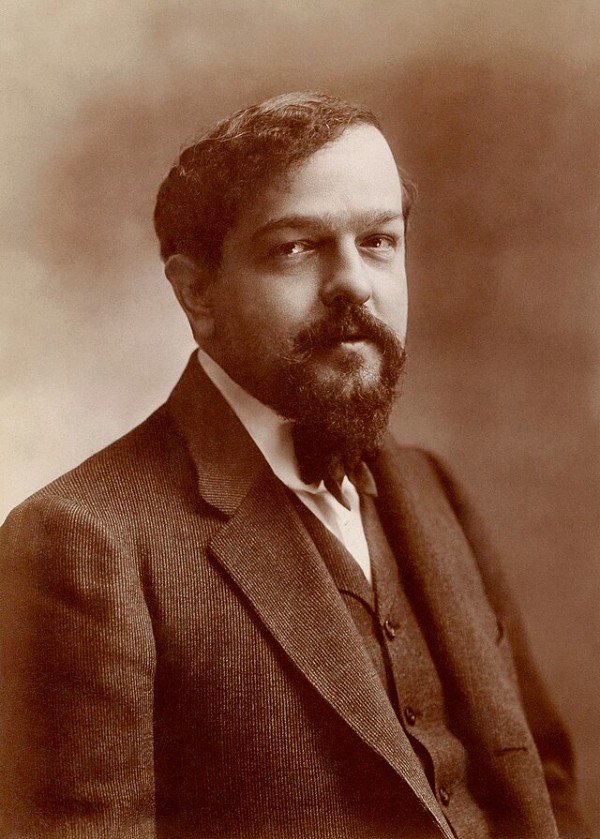
Atelier Nadar: Claude Debussy, ca 1890–1910

Atelier Nadar: Claude Debussy, ca 1890–1910

The piano is at the heart of this story. Tomes explains that its wide range and expressive sound make it perfect for nocturnes. The piano’s intimacy, especially in the smaller, quieter instruments that Field and Chopin played, makes nocturnes feel personal and private, as if they are meant for quiet evening listening instead of big performances. This closeness is a big part of why they remain so appealing.

The latter half of the book brings us right up to the present day. Here Tomes explores wider examples of “night music” – Bartok’s haunting, often unsettling evocations, for example, The Night’s Music from the Out of Doors suite. Tomes highlights the composer Lowell Liebermann (b.1961), who follows “the conceptual line laid out by Faure in his later Nocturnes”, and who, like Bartok, presents nighttime as disquieting and austere. Here, Tomes shows how the nocturne developed from gentle lyricism into a far richer and more complex expressive form.
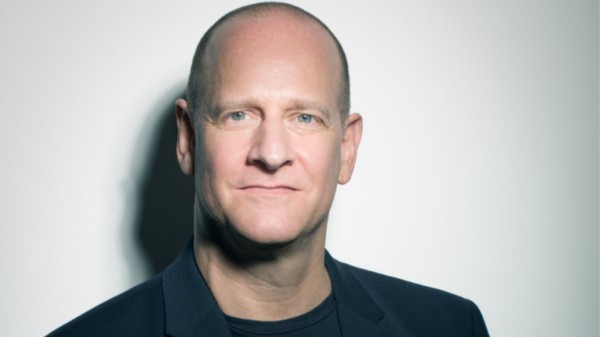
Lowell Liebermann

Lowell Liebermann

A recurring theme throughout the book is the relationship between music and human experience. Night, Tomes suggests, is a time when the boundaries between waking and dreaming blur, thoughts become more fluid and emotions more pronounced. Composers have long been drawn to this atmosphere, using music to explore solitude, memory, and imagination.

The book also looks beyond music to examine how the idea of the nocturne appears in other arts. Painting, literature, and modern culture all share a fascination with night as a source of inspiration. By placing music in this broader context, Tomes reveals the nocturne not just as a genre but as part of a larger tradition focused on mood, atmosphere, and the passage of time.
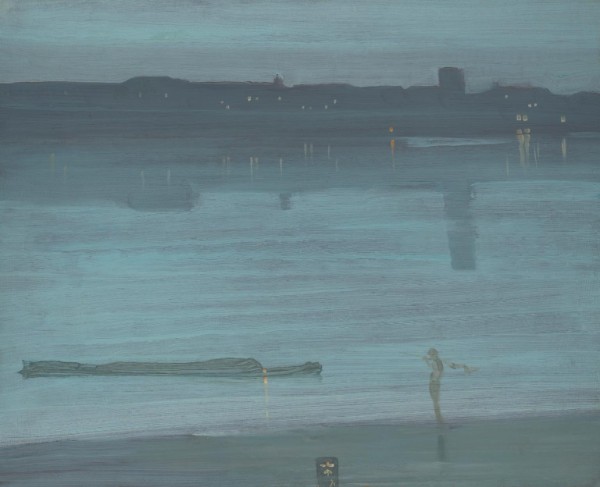
Nocturne by Whistler Nocturne: Blue and Silver – Chelsea (1871), James McNeill Whistler (Tate Gallery, London)

Nocturne by Whistler Nocturne: Blue and Silver – Chelsea (1871), James McNeill Whistler (Tate Gallery, London)

What sets Tomes apart is that she doesn’t see nocturnes as merely soothing or decorative. She presents them as deeply expressive pieces that span a wide range of emotions. Some nocturnes evoke calm, reflection, or a dreamlike feeling, while others suggest restlessness, unease, or even drama. In this way, the nocturne is not just a musical ‘lullaby’ but a genre that captures the uncertainty of night itself.

Susan Tomes writes with clarity and warmth, combining scholarly knowledge with the perspective of a practising musician, offering detailed analyses of works and notes on performance – invaluable insights for pianists and teachers.

As with all her other writing, her approach is accessible, with her reflections grounded in her lived experience as a performer, thereby offering readers a sense not only of how nocturnes are constructed but also of how they feel to play and to hear. Rich in insight, detail, and musical examples, this engrossing, highly readable book is a must for musicians and music lovers.

Nocturnes and the Fascination of Night Music reminds us that night is not merely the absence of day, but a rich and evocative world in its own right, full of nuance, mystery, and creative possibility.
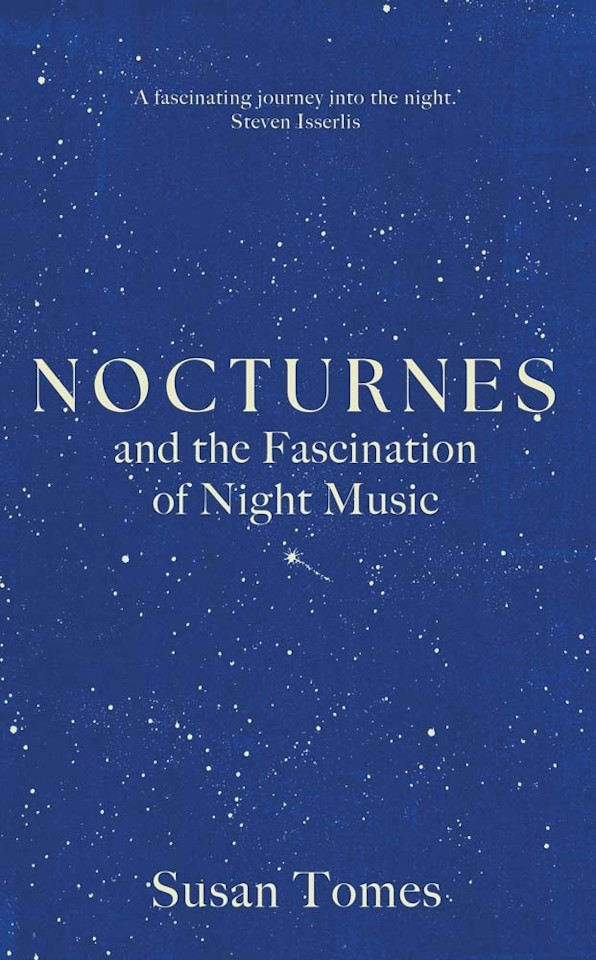
Nocturnes and the Fascination of Night Music book cover

Tuesday, April 21, 2026

10 pieces of classical music that will 100% change your life


3 January 2024, 18:45 | Updated: 3 January 2024, 21:31

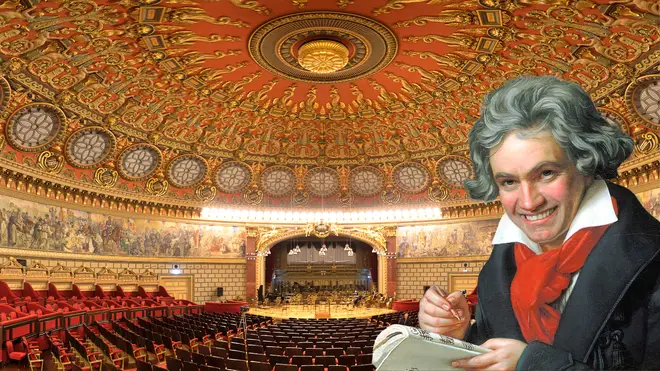
10 pieces of classical music that will change your life (pictured: Romanian Athenaeum)
10 pieces of classical music that will change your life (pictured: Romanian Athenaeum). Picture: Alamy
Classic FM

By Classic FM

Hold on to your hats – if you haven’t heard any of these musical works of genius, your life is about to be changed 10 times in a row.

Classical music can calm nerves, fire up the senses and spark creativity. It can also be uniquely life-affirming.

Here are the 10 major works we recommend you devote some time to. With the depths of their passion and beauty, we think they have the power to move everyone – with life never being quite the same afterwards.


  1. J.S. Bach: St Matthew Passion

    What is it?
    It’s one of two ‘Passion’ oratorios that have survived since Bach died (he could’ve written up to five), but it’s also become one of his most celebrated pieces. The original title is Passio Domini nostri J.C. secundum Evangelistam Matthæum (the ‘J.C.’ stands for Jesus Christ, which is maybe a bit familiar for someone he hadn’t met… but we’ll let him off).

    Why it will change your life:
    If you thought that Baroque music mostly dealt with plinky-plinky harpsichords, the St Matthew Passion will change mind. There are biblical proclamations of impending apocalypse littered throughout, and for each of them, Bach works in some sort of crushing atonality or strange chord, as if he’s wincing with pain each time it happens. This is such a human experience, composed at a time when human experiences weren’t chief among the aims of most Baroque composer composers.

    Read more: 10 of Bach’s all-time best pieces of music

    Bach - St Matthew Passion BWV 244 - Van Veldhoven | Netherlands Bach Society

  2. Tchaikovsky: Symphony No. 6

    What is it?
    Tchaikovsky’s final symphony, nicknamed ‘Pathétique’. The premiere performance was given just nine days before the composer died.

    Why it will change your life:
    Tchaikovsky was surely one of the most personally troubled of the great composers – and this symphony was essentially the outpouring of many of his issues, in a way. Many initially thought it was a lengthy suicide note, others pointed to the composer’s torment over his suppressed sexuality, while some thought it was just a tragic, sad, glorious and indulgent artistic expression. But the reason it’ll stay with you forever is that all of these contexts work in their own way, but it never detracts from how magisterial the music itself is. It’s a lesson in the very best ways of expressing emotions through music.

    Read more: 10 of Tchaikovsky’s all-time best works

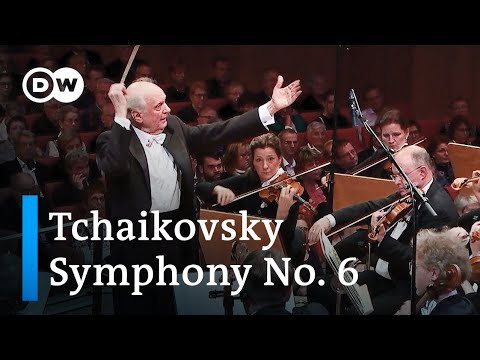
    Tchaikovsky: Symphony No. 6, 'Pathetique' | Dresden Philharmonic & Marek Janowski

  3. Mahler: Symphony No. 2

    What is it?
    Massive, that’s what it is. Mahler’s Symphony No. 2 (known as the ’Resurrection’) is a 90-minute attempt to put the whole nature of existence into a piece music. So pretty ambitious.

    Why it will change your life:
    If you think any bit of music over three minutes long is a bit indulgent and full of itself, this single piece will convince you that sometimes it’s completely worth spending an hour and a half on one musical concept – even if it is a huge concept. No other composer could’ve made it more entertaining (listen out for death shrieks!), or more rewarding. The epic final few minutes are a stupidly generous reward on their own, but getting there is half the fun.

    Read more: A detailed explanation of how Mahler’s Symphony No. 2 is a heart-shattering work of genius

    Mahler - Symphony No. 2 'Auferstehung' - Mariss Jansons | Concertgebouworkest

  4. Beethoven: Grosse Fuge

    What is it?
    One of the last pieces Beethoven wrote for string quartet, one of his celebrated ‘Late’ quartets. It’s a one-movement experiment in structure that was universally hated when it was first composed.

    Why it will change your life:
    It’s proof that not only can critics and audiences get it really, really wrong, but also that it’s all about interpretation. You can actually hear the struggle and the effort it must have taken to compose, which means it’s not always a relaxing listen, but few pieces in history have so nakedly shown how a composer can throw absolutely everything into a single work. And, in the end, it was hugely influential to serialist composers of the 20th century with none other than Igor Stravinsky proclaiming it a miracle of music. How about that for delayed gratification?

    Read more: Definitively the 20 greatest Beethoven works of all time

    Beethoven: Grosse Fuge, Op. 133 (Danish String Quartet)

  5. Mozart: Requiem

    What is it?
    The piece that Mozart wrote on his deathbed, in a furious fever. Well, if the movies are to be believed, anyway.

    Why it will change your life:
    From the opening Introitus, the mournful tone is set. It might just be us, but doesn’t it actually sound like Mozart is scared of death here? Aside from being spooky as anything, the Requiem is a haunting patchwork of things. Completed by one of Mozart’s pupils, Franz Süssmayr, it’s become a legendary mystery and the perfect way to end the story of one of history’s most celebrated geniuses – in other words, not end it all. What an enigma.

    Read more: 10 life-changing pieces of music by Mozart

    Mozart : Requiem (Orchestre national de France / James Gaffigan)

  6. Monteverdi: Vespers

    What is it?
    It’s Baroque genius Claudio Monteverdi’s defining work, a gigantic noise that some argue bridged the gap between the Renaissance and the early Baroque periods.

    Why it will change your life:
    It makes you realise that just because something’s really old, it doesn’t mean it’s automatically boring, or simply lauded because it was ‘groundbreaking’. Make no mistake about it – Monteverdi’s Vespers are hugely entertaining on their own terms. For starters, it’s simply enormous in scale. If you want to be crude about it (and we do) then you could describe it as Monteverdi taking church music to the opera, with all the drama that implies. Trumpets, drums, massive choruses, florid vocal lines… this really is the greatest hits of the early Baroque.

    Monteverdi's Vespers of 1610

  7. Elgar: Cello Concerto

    What is it?
    The only cello concerto that Edward Elgar wrote, and one of the most famous concertos of all time.

    Why it will change your life:
    It’s proof that intense emotion can come from the most unlikely of people. We don’t want to get all mushy on you, but there’s something spectacularly English about how the ultimate stiff-upper-lipped curmudgeon, Edward Elgar, was able to convey his emotions in music rather than in words or actions. His private life was surprisingly tumultuous (that’s another story), and in pieces like the Cello Concerto it’s as if the gasket has blown and Elgar is finally able to let out all the pent-up emotion in a focused blast.

    Cellist Sébastien Hurtaud plays Elgar Cello Concerto (3rd movement)

  8. Wagner: The Ring Cycle

    What is it?
    It is everything.

    Why it will change your life:
    Realising for the first time that the world of opera could actually be this immersive is a very, very special feeling. Wagner’s whole four-opera cycle has a terrible reputation as simply ‘that exhausting long opera’ – but that perception couldn’t be further from the truth. The Ring Cycle is a fundamentally unhinged work of staggering genius, and the peak of operatic indulgence, excess and excellence. Ignore at your peril.

    Metropolitan Opera Orchestra – Wagner: Ride of the Valkyries - Ring (Official Video)

  9. Max Richter: Vivaldi: Recomposed

    What is it?
    A radical, beautiful re-invention of Vivaldi’s Four Seasons concertos, by modern indie-classical composer Max Richter.

    Why it will change your life:
    Listening to Vivaldi: Recomposed is like discovering an old jumper that you used to love has magically, miraculously lost all its bobbly bits and is actually at the height of fashion. What Richter manages to do so incredibly well is to subtly sneak in delightful additions, tweaks and reinventions to a classic you already know extremely well, and freshen it up not just for the modern era, but for the eras to come too.

    Recomposed by Max Richter - Vivaldi - The Four Seasons, 1. Spring (Official Video)

  10. Gorecki: Symphony No. 3

    What is it?
    Possibly the most emotionally draining piece of music ever written.

    Why it will change your life:
    There’s a reason Polish composer Henryck Górecki called his third symphony the Symphony of Sorrowful Songs. Each movement features a solo soprano singing texts inspired by war and separation, but it’s the second movement that really stands out. The text is taken from the scribblings on the wall of a Gestapo cell during the Second World War and, as you can imagine, it’s pretty harrowing stuff – but Górecki makes it sound so transcendental that it’s hard to believe it was written in such dire circumstances. He said himself that he wanted the soprano line “towering over the orchestra”, and it certainly does that.

Sunday, April 19, 2026

Vienna International Virtuoso Festival

 Vienna International Virtuoso Festival


🎵 Calling all musicians! 🌟
Submit your video to the Vienna International Virtuoso Music Competition 2026 and gain global recognition!
• Solo Open Category: Piano, Strings, Winds & more!
• Chamber Music: Duos, Trios, Quartets & Ensembles
Registration Deadline: May 15th, 2026. Apply now at www.viennavirtuosofestival.com/apply
Will you be our next virtuoso? 💫
May be an image of violin, clarinet and text that says 'ИE VIENNAI IENNAINTERNATIONAL irtuasa INTERNATIONAL VIENNA VIRTUOSO MUSIC COMPETITION Piano String Woodwind Harp Vocal Chamber Music All Music Disciplines All Ages Registration Deadline: 15 May 2026 OSO EREMONY TAIA NNM PANer GRAND www. www.viennavirtuosofestival.com'
Vienna International Virtuoso Festival
Send message

All reactions:
1.3K