Total Pageviews

Friday, February 6, 2026

The Most Passionate Composer Love Letters of All Time, Part 1


Today, we’re looking at love letters from ten composers, including Mozart being very saucy on a business trip, Brahms pining over Clara Schumann, and Haydn making a shocking confession to his mistress.

Joseph Haydn, 1791
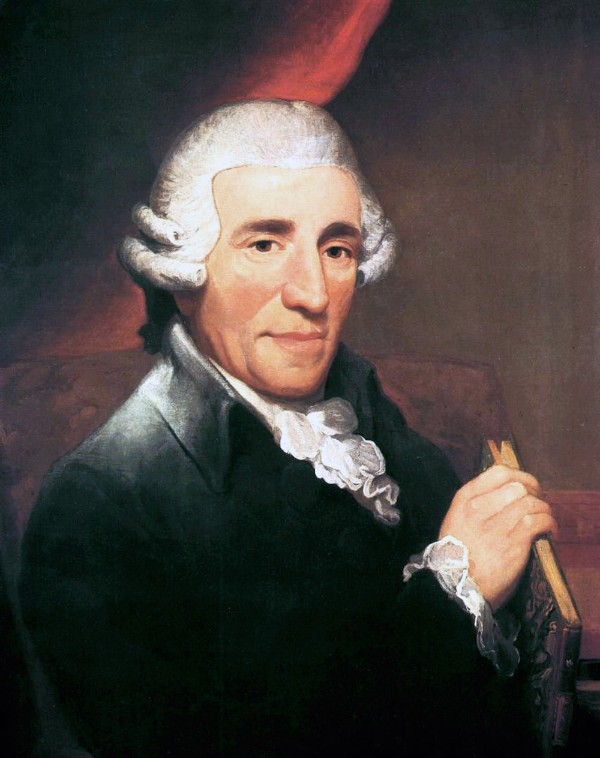
Joseph Haydn

Joseph Haydn

In these two love letters to his mistress, singer Luigia Polzelli, Haydn writes about her husband’s fatal illness…and longs for “four eyes [to] be closed”, a reference to his hope that his own wife will die, too!

London, 14th March 1791

Most esteemed Polzelli,

I am very sorry for you in your present circumstances, and I hope that your poor husband will die at any moment; you did well to put him in the hospital, to keep him alive…

London, 4th August 1791

Dear Polzelli!

…As far as your husband is concerned, I tell you that Providence has done well to liberate you from this heavy yoke, and for him, too, it is better to be in another world than to remain useless in this one. The poor man has suffered enough. Dear Polzelli, perhaps, perhaps the time will come, when we both so often dreamt of, when four eyes shall be closed. Two are closed, but the other two – enough of all this, it shall be as God wills.

Learn more about why Haydn hated his wife so much.

Ludwig van Beethoven, 1812

Beethoven’s Seventh Symphony, finished in 1812   

In 1812, Beethoven wrote an impassioned love letter to an unknown woman. This letter has come to be known as the letter to the Immortal Beloved.
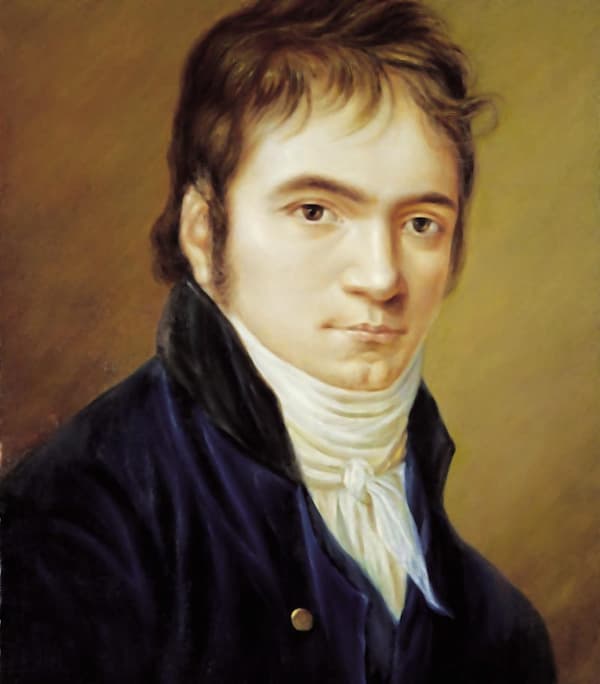
Beethoven in 1803

Beethoven in 1803

Though still in bed, my thoughts go out to you, my Immortal Beloved, now and then joyfully, then sadly, waiting to learn whether or not fate will hear us – I can live only wholly with you or not at all – Yes, I am resolved to wander so long away from you until I can fly to your arms and say that I am really at home with you, and can send my soul enwrapped in you into the land of spirits – Yes, unhappily it must be so – You will be the more contained since you know my fidelity to you. No one else can ever possess my heart – never – never – Oh God, why must one be parted from one whom one so loves. And yet my life in V is now a wretched life – Your love makes me at once the happiest and the unhappiest of men – At my age I need a steady, quiet life – can that be so in our connection? My angel, I have just been told that the mail coach goes every day – therefore I must close at once so that you may receive the letter at once – Be calm, only by a calm consideration of our existence can we achieve our purpose to live together – Be calm – love me – today – yesterday – what tearful longings for you – you – you – my life – my all – farewell. Oh continue to love me – never misjudge the most faithful heart of your beloved. ever thine, ever mine, ever ours…

Read more about Who was the Immortal Beloved?

Wolfgang Amadeus Mozart, 1783

Mozart’s Die Entführung aus dem Serail overture   

Here’s a suggestive love letter from Wolfgang Amadeus Mozart to his wife Constanze, written in 1783 when he was about to return home to Vienna after overseeing a production of his opera Die Entführung aus dem Serail in Prague.

On June 1st I’ll sleep in Prague, and on the 4th – the 4th? – I’ll be sleeping with my dear little wife; – Spruce up your sweet little nest because my little rascal here really deserves it, he has been very well behaved, but now he’s itching to possess your sweet [word erased by some unknown hand]. Just imagine that little sneak, while I am writing, he has secretly crept up on the table and now looks at me questioningly; but I, without much ado, give him a little slap – but now he is even more [word erased by some unknown hand]; well, he is almost out of control, the scoundrel.

Find out what life was like with the Mozarts in the 1780s.

Hector Berlioz, 1832

Berlioz’s Symphonie Fantastique   

Berlioz wrote this letter to actress Harriet Smithson, a woman whom he had been obsessed over and stalking for years, for whom he had composed the Symphonie fantastique and Lélio. He was begging her to return his letter:
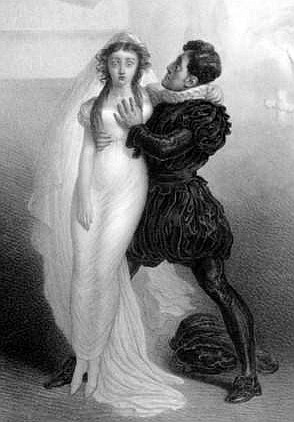
Harriet Smithson in Romeo and Juliet

Harriet Smithson in Romeo and Juliet

If you do not desire my death, in the name of pity (I dare not say of love) let me know when I can see you. I cry mercy, pardon on my knees, between my sobs!!! Oh, wretch that I am, I did not think I deserved all that I suffer, but I bless the blows that come from your hand, await your reply like the sentence of my judge.

Learn more about the insane love story between Hector and Harriet.

Franz Liszt, 1834

Liszt’s Liebestraum No. 3  

In 1834, Franz Liszt wrote this to his new mistress, Countess Marie d’Agoult:
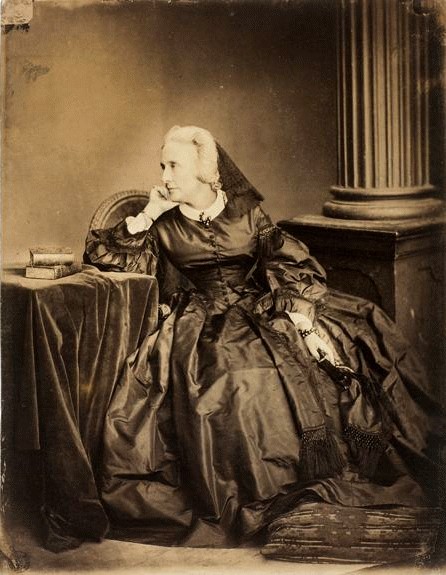
Marie d'Agoult in 1861

Marie d’Agoult in 1861

My heart overflows with emotion and joy! I do not know what heavenly languor, what infinite pleasure, permeates it and burns me up. It is as if I had never loved!!! Tell me whence these uncanny disturbances spring, these inexpressible foretastes of delight, these divine tremors of love. Oh! All this can only spring from you, sister, angel, woman, Marie! All this can only be, is surely nothing less than a gentle ray streaming from your fiery soul, or else some secret poignant teardrop which you have long since left in my breast.

Learn more about the passionate nature of Liszt and Marie d’Agoult’s early relationship.

Robert Schumann, 1837
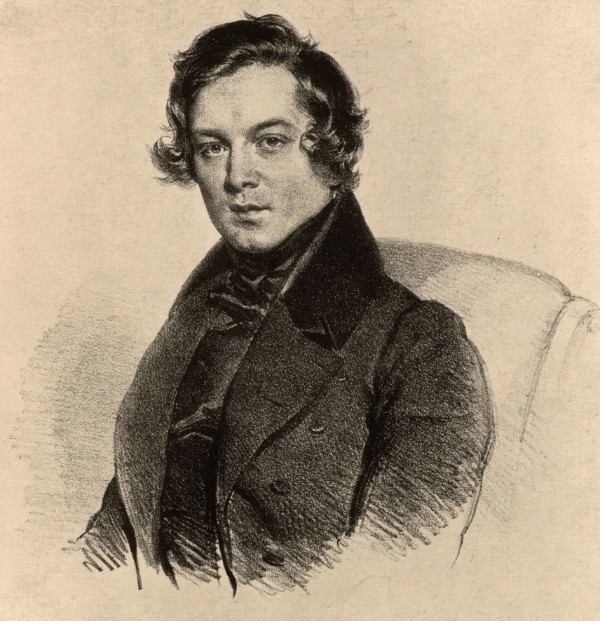
Robert Schumann

Robert Schumann

In December 1837, composer Robert Schumann was in love with virtuoso pianist Clara Wieck. They’d gotten engaged a few months earlier and were doing their best to navigate their relationship, given that Clara’s father didn’t approve of their romance.

New Year’s Eve, 1837, after 11 p.m.

I have been sitting here for a whole hour. Indeed, I meant to spend the whole evening writing to you, but no words would come. Sit down beside me now, slip your arm round me, and let us gaze peacefully, blissfully, into each other’s eyes…

How happy we are, Clara! Let us kneel together, Clara, my Clara, so close that I can touch you, in this solemn hour.

On the morning of the 1st, 1838.

What a heavenly morning! All the bells are ringing; the sky is so golden and blue and clear – and before me lies your letter. I send you my first kiss, beloved.

Learn more about the brutal court case between Robert, Clara, and her father.

Johannes Brahms, 1858

Brahms’s Piano Concerto No. 1, Movement 2 (he once told Clara this was a portrait of her)    

Brahms had complicated feelings for his mentor and dear friend Clara Wieck Schumann.

In 1858, her husband Robert had died two years earlier, and Clara was on tour in the Netherlands to make money to support her family. Brahms came to her home in Düsseldorf, in part to help watch her children. He wrote to her during her tour:

My beloved friend,

Night has come on again, and it is already late, but I can do nothing but think of you and am constantly looking at your dear letter and portrait. What have you done to me? Can’t you remove the spell you have cast over me? …

How are you? I did not want to ask you to write, but do so long for letters from you. Besides, I know only too well how you are – you are holding your head up. So just write me a word or two occasionally, and I shall be happy – just a friendly greeting to say that you are keeping well and that you will be back in 14, 13, 12, 11, 10, 9, 8, 7, 6, 5, 4, 3, 2 days!…

Do cheer me with writing me a few lines. I want them so badly, but above all, I want you.
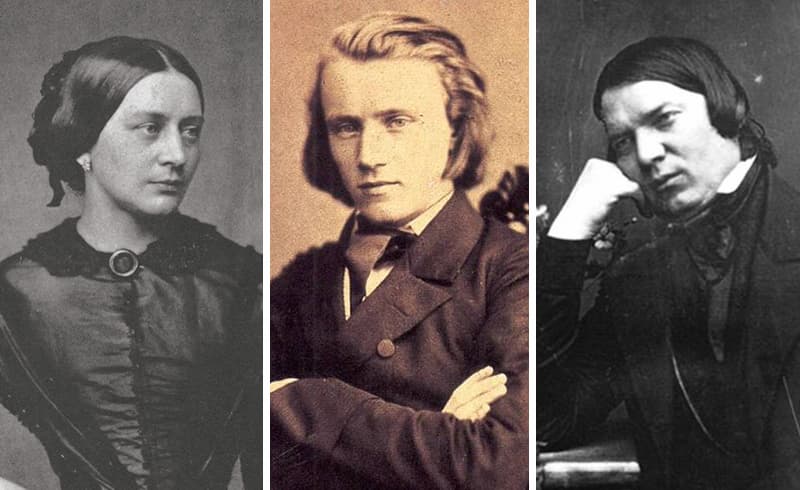
Brahms and the Schumanns

Brahms and the Schumanns

Learn more about the friendship and love triangle between Robert, Clara, and Johannes.

Richard Wagner, 1863
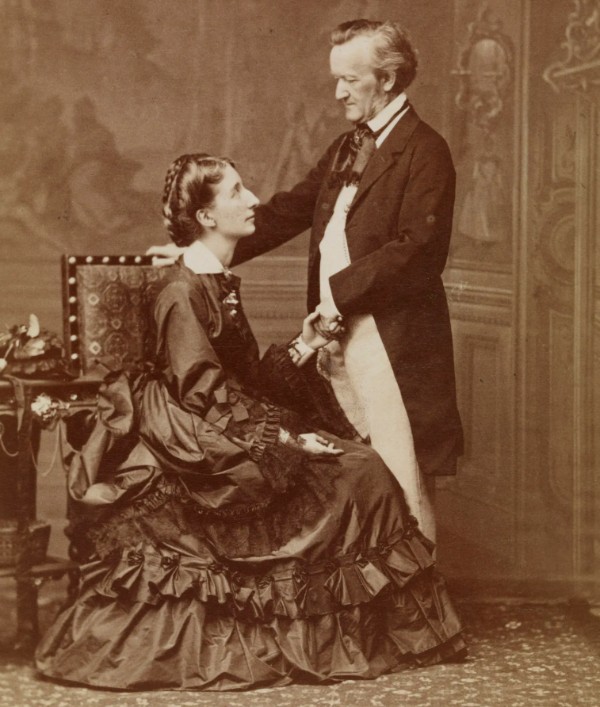
Richard Wagner and Cosima Liszt von Bülow

Richard Wagner and Cosima Wagner

Richard Wagner and Cosima Wagner’s marriage became one of the most influential in music history. However, the relationship had an inauspicious start. Richard wrote this letter to his mistress Maria Volkl shortly after first declaring his love to Cosima (!):

Now, my darling, prepare the house for my return, so that I can relax there in comfort, as I very much long to do… And plenty of perfume: buy the best bottles, so that it smells really sweet. Heavens! How I’m looking forward to relaxing with you again at last. (I hope the pink drawers are ready, too???) – Yes, indeed! Just be nice and gentle, I deserve to be well looked after for a change.

Gustav Mahler

During their engagement, Gustav Mahler wrote this letter to his fiancée Alma, to let her know she must decide between becoming his wife or pursuing her passion for composing music.

Almschi, I beg you, read this letter carefully. Our relationship must not degenerate into a mere flirt. Before we speak again, we must have clarified everything, you must know what I demand and expect of you, and what I can give in return – what you must be for me. You must “renounce” (your word) everything superficial and conventional, all vanity and outward show (concerning your individuality and your work) – you must surrender yourself to me unconditionally… in return you must wish for nothing except my love! And what that is, Alma, I cannot tell you – I have already spoken too much about it. But let me tell you just this: for someone I love the way I would love you if you were to become my wife, I can forfeit all my life and all my happiness.

Learn more about the beautiful Alma Schindler’s background, her marriage to Gustav, and why he wrote this letter.

Jean Sibelius, 1891   

Sibelius wrote this letter to his fiancée Aino in early January 1891:

My own Aino darling,

Thank you for your letter and your Christmas cards. Your relatives have all been very kind to me. Please give them my respects and thank them most warmly, won’t you. But it is you who loves me more than anyone else has done, and I want you to be sure that I love you and belong to you with all my heart. Every time you write to me, I discover some new aspect of your personality. It makes me feel as if you are a store of treasures to which only I have the key, and you can imagine how proud I am to own it. You are so natural and sincere, which I like. When in the future we have a home of our own and are together alone, we must never be anything other than wholly ourselves, natural, tender towards each other, and devoted. I think and hope that you will be content with me in this respect. It is perhaps unmanly to say so, but you know, Aino, that I have always wanted to be caressed and have always missed its absence. At home, I was the only one who was demonstrative, and this in spite of the fact that I was basically very shy. But up to now, only you have caressed me, and perhaps you have thought it tiresome of me to ask you often to do this, my darling. This could well have remained unwritten, but as I am writing as quickly as I am thinking (hence my superb handwriting!), and this came into my head, it can just as well go into the letter. I sometimes cannot believe that a person like you loves me, for you are a wonderful woman.
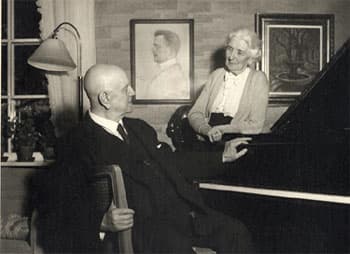
Aino and Jean Sibelius

Aino and Jean Sibelius


Sunday, February 1, 2026

Saturday, January 31, 2026

Jacqueline du Pré (Born on January 26, 1945) Beyond Elgar


At just 20 years of age, this electrifying performance secured her international reputation almost overnight, transforming her into one of the most celebrated classical artists of the 20th century. That single recording of Elgar’s concerto has remained in print for decades and, for many listeners and musicians, stands as the definitive interpretation of the work.

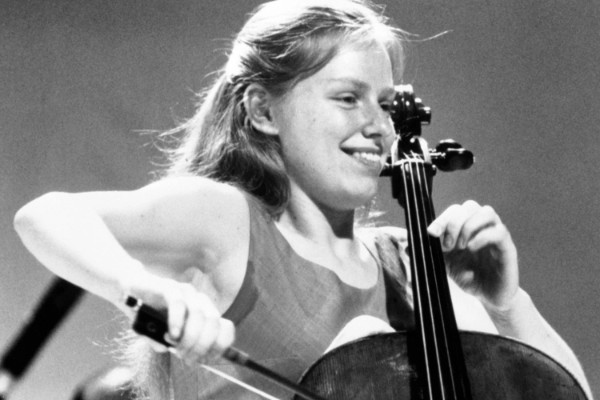
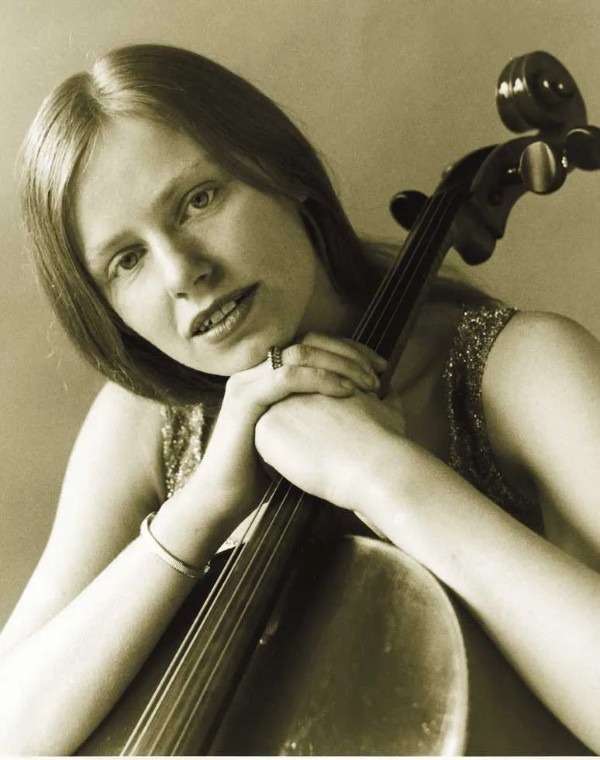
Jacqueline du Pré

Jacqueline du Pré

But to remember Jacqueline du Pré only for Elgar is to undervalue the breadth of her artistry. Though her career was tragically brief, curtailed by multiple sclerosis in her late twenties, she left behind a rich and varied discography spanning concertos, sonatas, and chamber music.

On the occasion of her birthday on 26 January, let’s explore Jacqueline du Pré’s artistry, which revealed the cello’s immense expressive range through her recordings of BrahmsBeethovenSchumann, and Haydn.   

Breathing Life into Schumann

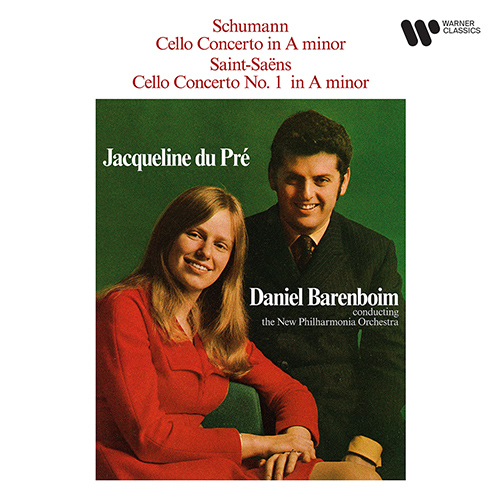
SCHUMANN, R.: Cello Concerto / SAINT-SAËNS, C.: Cello Concerto, No. 1 (Du Pré, New Philharmonia Orchestra, D. Barenboim)

While Elgar remains the work most closely associated with her name, du Pré’s recorded output reveals a musician whose repertoire was both broad and engaging. And it is Robert Schumann’s Cello Concerto in A minor, Op. 129 that perhaps most closely aligns with du Pré’s romantic sensibility after Elgar.

Her recording, made with Daniel Barenboim conducting, captures the concerto’s sustained lyricism and conversational interplay between soloist and orchestra. Where some cellists approach Schumann with restrained elegance, du Pré brings a strong sense of emotional urgency.

Du Pré shapes phrases with a directness that turns inward moments of reflection and outward gestures of intensity into a single, continuous narrative. This approach gives the concerto a strong sense of forward momentum, making its episodic structure feel unified and purposeful rather than fragmented.

At the time, the concerto was still less frequently performed and recorded than it is today, and du Pré’s interpretation played a role in renewing interest in the work. It helped establish the concerto as a central part of the Romantic cello repertoire rather than a peripheral curiosity.   


Narrative and Nuance in Dvořák

Jacqueline du Pré

Jacqueline du Pré © Alamy

One of the greatest concertos in the repertoire, Antonín Dvořák’s Cello Concerto in B minor, Op. 104, is rich in folk-like pathos and expansive thematic writing. And to be sure, du Pré’s recording with the Chicago Symphony Orchestra under Barenboim is another cornerstone of her discography.

Critics at the time and since have pointed to her warm, full-bodied tone, wide dynamic range, and instinctive grasp of the concerto’s large-scale structure. Rather than treating the work as a series of contrasting episodes, du Pré shapes it as a coherent narrative, allowing moments of lyric intimacy and heroic projection to grow naturally out of one another.

The result is a performance that many listeners and commentators continue to regard as both emotionally satisfying and artistically authoritative.

Recordings and filmed performances of this concerto still attract millions of listeners online, a testament not only to the enduring appeal of Dvořák’s music but also to du Pré’s ability to communicate it with uncommon immediacy and conviction.   

Smiling Vitality in Haydn

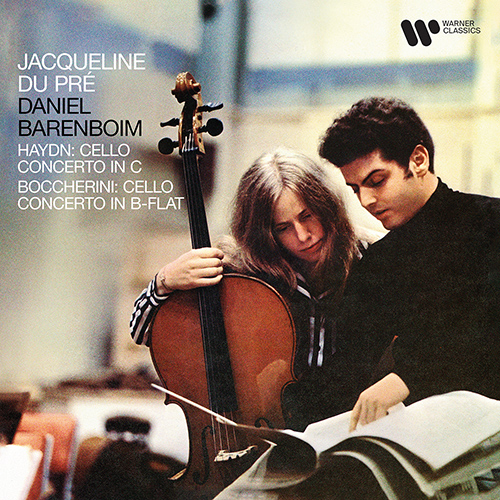
HAYDN, J.: Cello Concerto No. 1 / BOCCHERINI, L.: Cello Concerto, G. 482 (Du Pré, English Chamber Orchestra, D. Barenboim)

Du Pré’s concerto recordings were not limited to the core Romantic repertoire. Her performances of Haydn’s Cello Concerto in C major  demonstrate her capacity for joyful, elegant playing in the Classical era, where clarity of line and rhythmic buoyancy are paramount.

Rather than imposing Romantic weight on the music, du Pré brings a lightness of articulation and a natural sense of forward motion that allow Haydn’s wit and formal elegance to emerge clearly. Critics have often noted this stylistic flexibility.

Reviewing her Haydn performances, one commentator remarked that du Pré played with “a smiling vitality and unfussy grace,” showing that her musical personality was not limited to intensity alone.

Another described her approach as “fresh, buoyant, and direct,” praising the way she combined technical precision with an unaffected sense of joy. Du Pré herself resisted being typecast as a purely passionate or impulsive performer, and her Haydn recordings beautifully support this view.


Dialogue and Balance in Beethoven

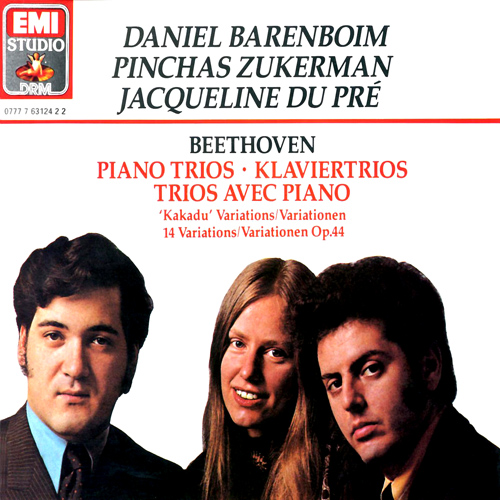
BEETHOVEN, L. van: Piano Trios Nos. 1-3 and 7 / Variations in E-Flat Major / Allegretto, WoO 39 and Hess 48 (Barenboim, Zukerman, Du Pre)

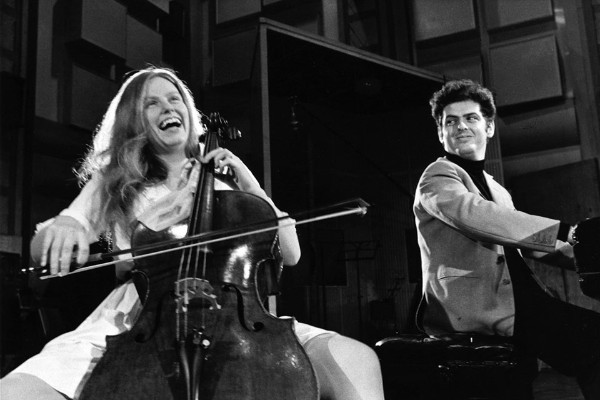
Du Pré was not only a concerto soloist. She was also a consummate chamber musician and interpreter of intimate works. Her collaborations with pianist Daniel Barenboim, her husband from 1967, produced some of her most sensitive and revealing recordings.

In the realm of chamber music, du Pré’s recordings of Beethoven’s Piano Trios, Op. 70 Nos. 1 and 2, made with Daniel Barenboim and violinist Pinchas Zukerman, reveal an important side of her musicianship. Freed from the heroic projection demanded by concerto repertoire, du Pré demonstrates an instinctive understanding of balance, proportion, and musical conversation.

Her cello line is never dominant for its own sake. Instead, it is woven into the ensemble texture with a natural responsiveness that allows Beethoven’s contrapuntal writing to speak clearly.

Contemporary critics frequently remarked on the sense of equality among the players. One reviewer described the trio as performing with “the alertness of three soloists listening intently to one another,” noting that du Pré’s phrasing seemed shaped as much by what she heard from her colleagues as by her own musical impulses.


Intimate Conversations with Brahms

Jacqueline du Pré and Daniel Barenboim

Jacqueline du Pré and Daniel Barenboim

The cello sonatas of Johannes Brahms reveal another layer of du Pré’s artistry. With Barenboim at the piano, these recordings are celebrated for their tenderness and depth by casting Brahms’ rich harmonic writing in a beautifully introspective light.

Her ability to shape phrases with both power and subtlety made these sonatas stand out as profound musical conversations, highlighting du Pré’s emotional range and artistic maturity.

From the mellow lyricism of Brahms to the fiery dialogue of Beethoven, and from the introspective sorrow of Schumann to joyous and agile Haydn, Jacqueline du Pré’s recordings are more than technical achievements. They are testimonials for an intensely felt musical life lived with passion and authenticity.

Though her career was brief, the emotional power, technical brilliance and spirited communication of her playing ensure that Jacqueline du Pré remains not just a historical figure, but a living presence in the classical music world.

Leonard Bernstein and Felicia Montealegre: A Divided Life


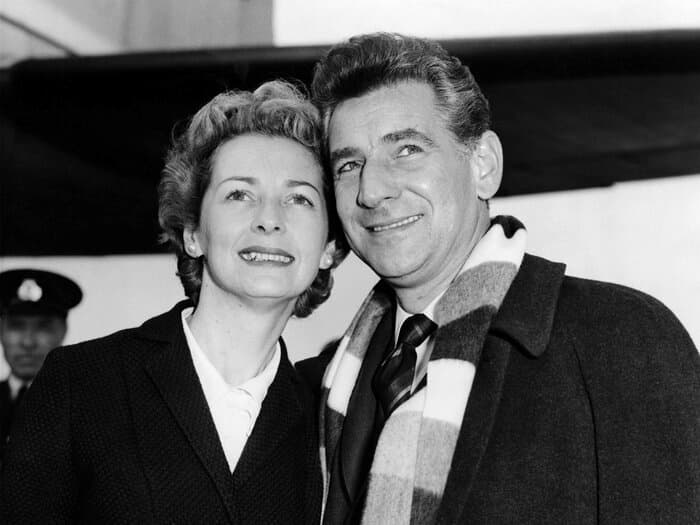
Bernstein and his wife Felicia Montealegre, 1959

Leonard Bernstein and his wife Felicia Montealegre, 1959

During his Harvard years, Bernstein had affairs with famed conductor Dimitri Mitropoulos and the aspiring composer Aaron Copland. And during his visit to Israel in 1948, he fell in love with the young soldier Azariah Rapoport. Bernstein writes, “I can’t quite believe that I should have found all the things I’ve wanted rolled into one. It’s a hell of an experience – nerve-racking and guts tearing and wonderful. It’s changed everything.”

Felicia was fully aware of Leonard’s sexual preferences, but she nevertheless continued to pursue him over the next three years. And Bernstein was worried that his homosexual activities would prevent him from landing a major conducting appointment. The couple married in September 1951 with the clear understanding that as long as Lenny did not embarrass Felicia publically, he was free to pursue his homosexual affairs. Despite this obvious marriage of convenience, there was a good deal of love between them. Soon after their wedding, Felicia openly writes to her husband, “If I seemed sad as you drove away today it was not because I felt in any way deserted but because I was left alone to face myself and this whole bloody mess which is our “connubial” life. I’ve done a lot of thinking and have decided that it’s not such a mess after all. First: we are not committed to a life sentence—nothing is really irrevocable, not even marriage (though I used to think so). Second: you are a homosexual and may never change—you don’t admit to the possibility of a double life, but if your peace of mind, your health, your whole nervous system depends on a certain sexual pattern what can you do? Third: I am willing to accept you as you are, without being a martyr or sacrificing myself on the L.B. altar. (I happen to love you very much—this may be a disease and if it is what better cure?) Let’s try and see what happens if you are free to do as you like, but without guilt and confession, please! The feelings you have for me will be clearer and easier to express—our marriage is not based on passion but on tenderness and mutual respect.”

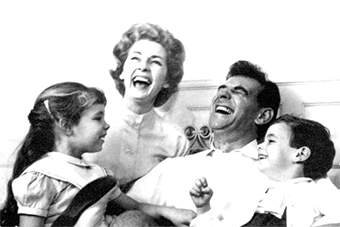
Leonard Bernstein with his wife Felicia and his children Jamie and Alexander

Leonard Bernstein with his wife Felicia and his children Jamie and Alexander

The couple had three children, which led to the assumption that Bernstein was bisexual. However, according to his collaborators in West Side Story, Bernstein was simply “a gay man who got married. He wasn’t conflicted about his sexual orientation at all. He was just gay.” As was customary at that time, Bernstein appeared a devoted husband and father in the public eye, while carrying on a promiscuous homosexual life behind the scenes. It might have been a customary to hide behind a public facade, but Bernstein certainly felt that his homosexuality was a curse. He even underwent psychoanalysis from a specialist “curing homosexual men of their inversion.”

In the end, the only cure was to publicly acknowledge his homosexuality, while taking out his frustrations on his wife. Apparently, Bernstein was having sex with a twenty-year old boy in the hallway while his wife was sitting in the living room. And when he met the young Tom Cothran in 1973, he allowed his wife to catch them in bed together. By 1976, Bernstein had left his wife for his latest male lover. The very next year, Felicia was diagnosed with lung cancer and Bernstein cared for her until her death in 1978. After Felicia’s death, Bernstein gave free reign to his addiction to alcohol and drugs, and engaged in openly crude homosexual activities. Yet, he always felt guilt over how his double life had adversely affected her. He eventually gave voice to his anguish in his 1983 opera A Quiet Place, sequel to his 1951 Trouble in Tahiti. As a close family friend once remarked, “Leonard required man sexually and women emotionally.”

The Tragedy and Trauma of Ravel’s Military Service


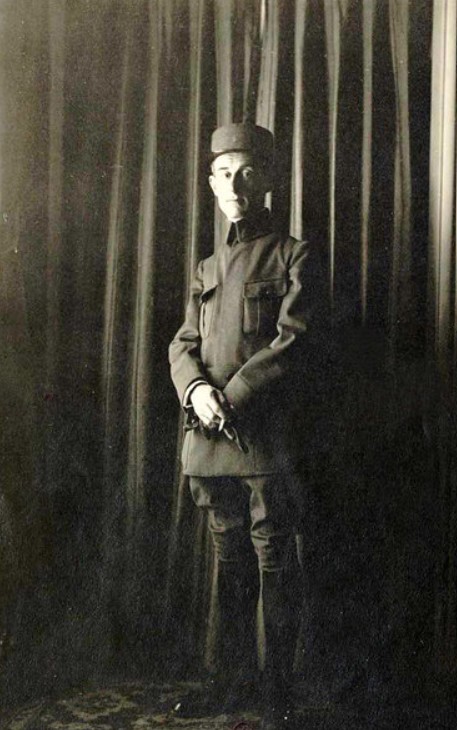
The Franco-Prussian War, the rise of Germany, and the tangled web of European alliances all conspired to pull France into battle in 1914…and Ravel, then nearing forty, was determined to serve in the conflict despite his small stature and frail health.

Maurice Ravel in 1916

Maurice Ravel in 1916

Today, we’re looking at what he experienced and how the horror of war manifested in four of his best-known pieces.

How European Politics Sent Maurice Ravel to War

During the nineteenth century, France and Germany were competing for power and influence in Central Europe.

The Franco-Prussian War, fought between 1870 and 1871, ended in a humiliating loss for France and unification for Germany. An arms race gained speed, along with the race for cultural supremacy.

By the time Maurice Ravel was born in the spring of 1875, the French government was requiring all twenty-year-old men to serve in the military for three years.

However, in 1895, Ravel was so physically small and weak that he was rejected for “frailty.”

Fast forward two decades. In June 1914, Serbian nationalists, furious over oppression by the Austrian Empire, assassinated both Archduke Franz Ferdinand and his wife.

Franz Ferdinand was not minor royalty: he was the presumptive heir to the Austro-Hungarian throne, and his death was a direct shot at the empire’s stability and continuity.

A mini documentary about the causes of World War I   

At the time, European countries were bound by a number of criss-crossing alliances. Austria wanted to respond to the assassination by declaring war on Serbia, and Austria was allied with Germany.

Meanwhile, Germany’s enemy, France, reaffirmed its own alliance with Russia, agreeing to fight with Serbia against Austria.

So to sum up, one side consisted of Austria, Germany, and its allies; the other consisted of France, Russia, Serbia, and its allies.

In the aftermath of the assassination, Austria issued a draconian ultimatum to the Serbs, which was rejected. Austria responded by declaring war on Serbia, and Austria’s ally Germany dutifully followed suit.

From there, the dominos kept falling. Germany also declared war on Russia. Then, in an attempt to avoid a two-front war, Germany tried to knock its old enemy, France, out of the conflict early by invading it, so it could focus on fighting Russia instead.

The seeds of World War I were rapidly sprouting.

The Race to Finish the A-Minor Piano Trio

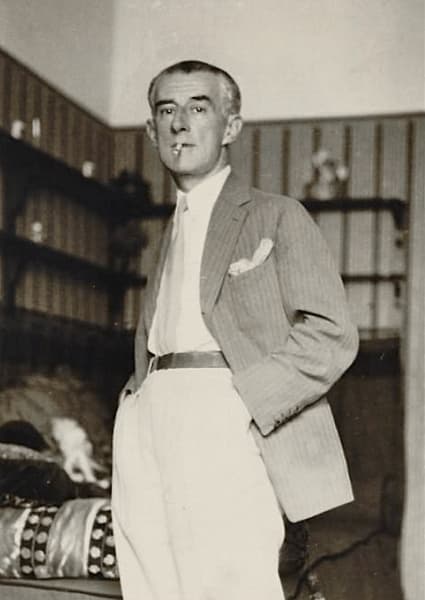
Maurice Ravel

Maurice Ravel

Ravel spent much of 1914 working on his piano trio in A-minor.

As the international situation deteriorated that summer and disaster appeared increasingly inevitable, he was struck by a new sense of urgency. He wrote in early August 1914, “I am working on the Trio with the sureness and lucidity of a madman.”

He told Stravinsky, “I have never worked with more insane, more heroic intensity.”

He intended to join the military to defend his homeland, and he was well aware he might not survive to see the piece’s premiere.

Working madly, he finished the trio – his potential musical epitaph – by the end of August. As a dark joke, he called it a “posthumous work.”   

The War Begins

Maurice Ravel in 1916

Maurice Ravel in 1916

On 1 August 1914, an order for the mobilisation of French troops was issued, triggering the activation of three million French reservists between the ages of 24 and 38.

A quirk of the calendar meant that Maurice Ravel fell just outside that age limit (he had turned 39 in March).

He tried to enlist by joining the French Air Force, believing that his stature would prove handy in the small cockpits of early airplanes, but he was turned down due to his age, weight, and minor heart trouble.

It’s important to remember that aviation technology was in its infancy and deeply dangerous. According to one analysis, the average life expectancy of Canadian fighter pilots during the Great War was around eleven days. In effect, Ravel was volunteering for a suicide mission. Music lovers are lucky he was rejected for the job.

Instead of flying, Ravel decided to contribute to the war effort by volunteering on the home front, assisting wounded soldiers in Saint-Jean-de-Luz on the Bay of Biscay, just across the river from his birthplace, Ciboure.

Ravel Becomes a Military Driver

However, Ravel quickly came up with another plan.

Maurice’s engineer brother Edouard was serving as a military driver, and Maurice – always interested in the inner workings of machinery – found himself attracted to the idea of following in his brother’s footsteps. Maurice began taking daily driving lessons.

Finally, in March 1915, the month of his fortieth birthday, he joined the Army as a truck driver with the 13th Artillery Regiment.

Stravinsky noted, “At his age and with his name, he could have had an easier place, or done nothing.”

For about a year, Ravel was stationed in Paris repairing military vehicles, writing that this was “time spent being busy not doing very much.”

But in March 1916, he was sent to the front lines during the eleven-month-long battle of Verdun, which claimed an average of 70,000 lives a month.

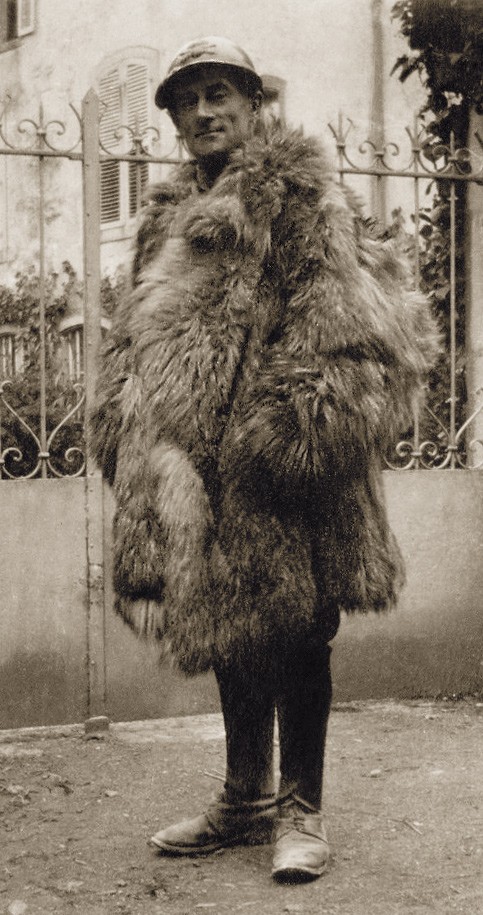
Ravel’s job was to deliver supplies to the front, especially petrol. His truck (which he nicknamed Adélaïde) would often be loaded down with twice the recommended amount of cargo.

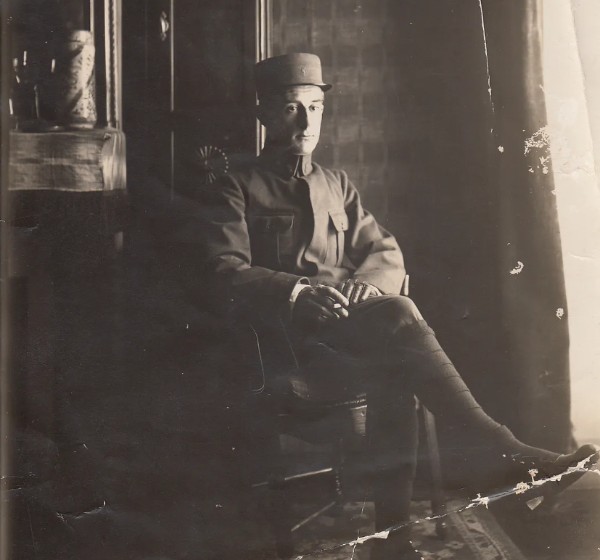
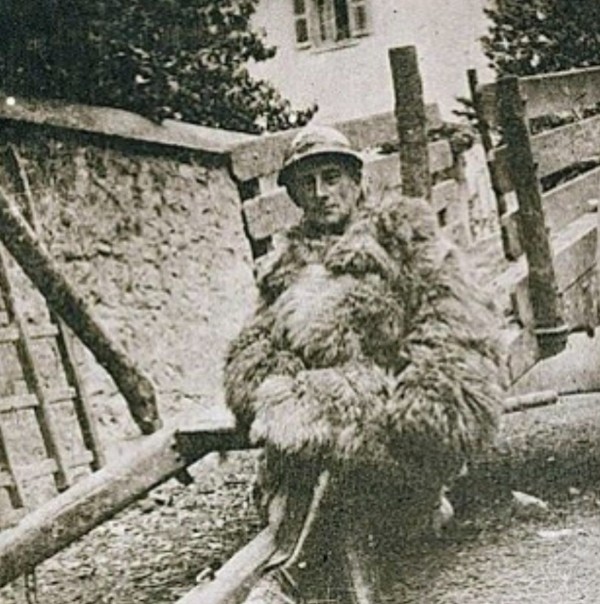
Ravel usually drove at night to avoid being seen. During the winter months, he had to wear a fur coat to have a hope of staying warm.

Ravel: Blacklisted?

In between all this, he remained in contact with what remnants of musical Paris were still active.

In 1916, a group of musicians headed by Vincent d’Indy, Théodore Dubois, and Camille Saint-Saëns founded the Ligue Nationale pour la Défense de la Musique Française (National League for the Defense of French Music).

D’Indy wrote that he wanted French music to “liberate itself from the German musical domination.” The group of influential musicians proposed blacklisting German and Austrian composers from concert programs.

This idea sat poorly with Ravel. In June 1916, he wrote to the group:

“I do not believe that to safeguard our national artistic heritage we must forbid performing German and Austrian works… It would even be dangerous for French composers to ignore systematically the works of their foreign colleagues, and form a sort of national coterie: our musical art, so rich at present, would soon degenerate, locking itself into stale formulas.”

Due to this stance, his own music – arguably the most recognisably French of its generation – was briefly blacklisted in certain Parisian music circles.

Wartime Illness and Grief

Maurice Ravel in uniform

Maurice Ravel in uniform

Understandably, Ravel’s physical and mental health deteriorated over the course of the year.

Six months into his time at the front, he developed dysentery. He was forced to go on medical leave between October 1916 and January 1917.

Tragedy compounded in January 1917 when his beloved mother passed away.

The loss shattered him, especially on the heels of the deaths of so many of his friends and acquaintances in the trenches.

Pianist Marguerite Long (who had lost her own husband in the war) observed that Ravel was “depressed, thin, and suffering from neurasthenia.”

Due to his age and poor health, Ravel was discharged in June 1917. His dream – or nightmare – of military service was over.   

In April 1914, Ravel had begun Le Tombeau de Couperin, a suite for solo piano inspired by the work of French Baroque composer François Couperin.

Between 1915 and 1917, Ravel contributed bits and pieces to the score, but he only finished it after his discharge in 1917.

In the face of the losses of war, the work’s concept had taken on a deeper, more personal meaning.

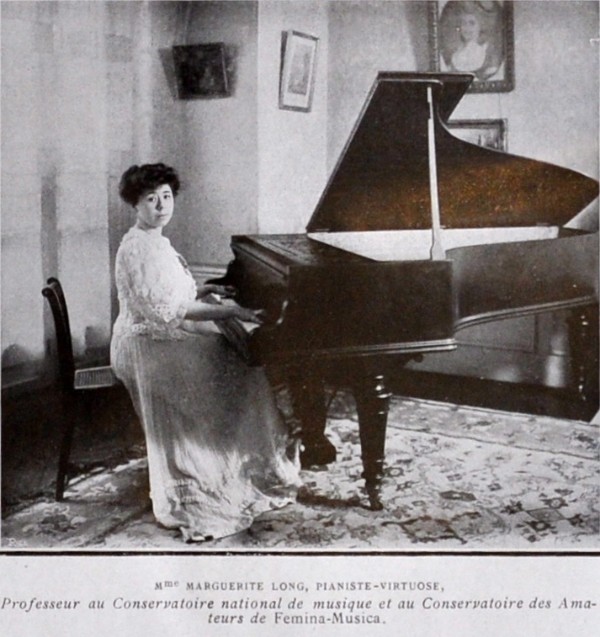
Instead of celebrating French nationalism generally, Ravel dedicated each movement to specific dead friends. (The final movement was dedicated to Captain Joseph de Marliave, a musicologist and husband of pianist Marguerite Long, who gave the work’s premiere.)

Marguerite Long

Marguerite Long

These meditative pieces were light, airy, and beautifully constructed, with not a single extraneous note.

Ravel famously explained why he hadn’t written a more overtly tragic work: “The dead are sad enough in their eternal silence.”

The peerless elegance of the French tradition would serve as his friends’ musical epitaph.

The Lasting Impact of the War on Ravel

Maurice Ravel

Maurice Ravel

Even after the Armistice was signed in November 1918, Ravel’s wartime experience continued to echo in his music.

Between 1919 and 1920, he wrote the dazzling ballet La Valse, which he described as “a sort of apotheosis of the Viennese waltz.”

What better way to process the destruction of the European order than by writing a waltz in which Austria’s national dance tears itself apart?

Ravel himself disavowed any connection between the war and La Valse, but many others read it differently.   

Later, in 1930, he wrote a Piano Concerto for the Left Hand for Paul Wittgenstein, an Austrian pianist who had lost his right arm in the war.

Put another way, just thirteen years after delivering munitions to the front, France’s leading composer wrote a piano concerto for a great Austrian pianist…who could have been hit by those same munitions.

It was a striking finale to Maurice Ravel’s tragic, traumatic, and deeply influential military service.