Total Pageviews

Friday, April 17, 2026

12 Forgotten Women Composers from the Classical Era


Their names may be obscure today, but that’s not because of the quality of their music. Rather, it’s because women were so rarely given the chance to publish or perform on equal footing with men.

Today, we’re looking at twelve unjustly forgotten women composers who were born in the Classical Era.

Marianna Martines (1744–1812)

Martines’s Symphony in C Major  

Marianna Martines was born in Vienna in 1744 to the Pope’s representative in Austria and his wife.

Her father’s friend, the great author Metastasio, lived with them in a large apartment. (For a while, the attic of the building was rented out to Joseph Haydn.)
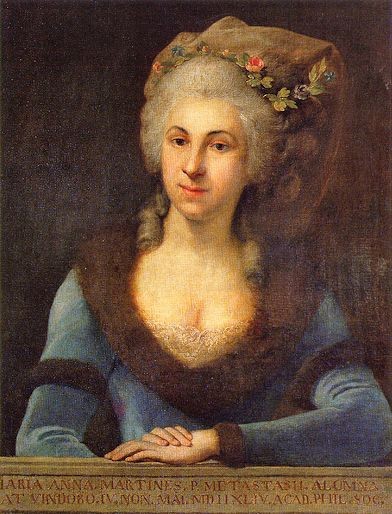
Marianna Martines

Marianna Martines

Thanks to her connections, she received a first-rate musical education and became a favourite of Empress Maria Theresa.

She was a talented harpsichordist, singer, and composer. She wrote oratorios, masses, cantatas, keyboard sonatas, and more.

Maddalena Laura Lombardini Sirmen (1745–1818)   

Maddalena Laura Lombardini was born in Venice in 1745 to impoverished nobility.

Her parents sent their musically talented daughter to study at the San Lazzaro dei Mendicanti. While there, she traveled to take lessons with Giuseppe Tartini, one of the most renowned violin virtuosos of his generation.

In 1767, she married fellow violinist Ludovico Sirmen. The two toured and even co-wrote concertos together.
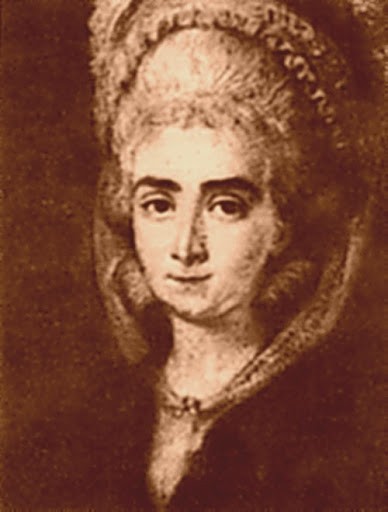
Maddalena Laura Lombardini Sirmen

Maddalena Laura Lombardini Sirmen

She wrote six violin concertos around the same time as Mozart was writing his set of five, and she was also one of the first composers, male or female, to write for the string quartet.

Learn thirteen facts about Maddalena Laura Lombardini Sirmen’s life and music.

Juliane Reichardt (1752–1783)   

Juliane Benda was born to a musical family in Potsdam in 1752. Her father was the concertmaster at the court of Frederick the Great, and he was her first music teacher.

Their suburban house was a popular stopping point for traveling musicians. In 1776, after meeting writer and composer Johann Friedrich Reichardt during his visit to the house, Juliane married him.

They had three children together, including a daughter named Louise, who would go on to become a well-known composer herself.
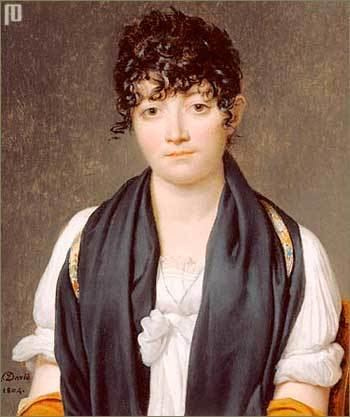
Louise Reichardt

Louise Reichardt © zkm.de

Juliane died tragically young at the age of thirty. She came down with an infection after the birth of her youngest baby.

She’d continued composing through her marriage and pregnancies, and at the time of her death was at the height of her career and creative power.

Francesca Lebrun (1756–1791)   

Francesca Danzi Lebrun was born in 1756 in Mannheim, the daughter of an Italian cellist and dancer. There were a number of professional musicians in her family.

She made her debut when she was sixteen and was promptly hired by the Mannheim Opera as well as the court opera.

In 1778, when she was twenty-three, she married oboist and composer Ludwig August Lebrun. She began to tour with him, and they lived together in England between 1779 and 1781.
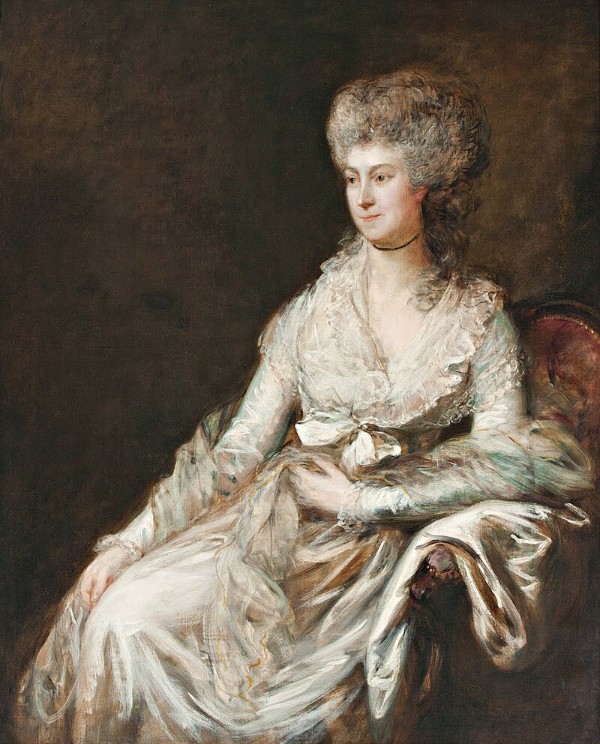
Francesca Lebrun

Francesca Lebrun

It was said that when they performed together, it was impossible to tell what sound was coming from the oboe and what sound was coming from her.

She had two daughters. Both became musicians themselves. Tragically, Francesca died at the age of 35.

Marianna Auenbrugger (1759–1782)   

Marianna Auenbrugger was born in July 1759 in Vienna, the daughter of renowned physician Leopold Auenbrugger, who invented percussion diagnosis (i.e., the practice of tapping on a patient and listening to assess their condition).

She and her sister studied with both Antonio Salieri and Joseph Haydn. In 1780, Haydn dedicated a set of six sonatas to the Auenbrugger sisters as a token of his admiration.
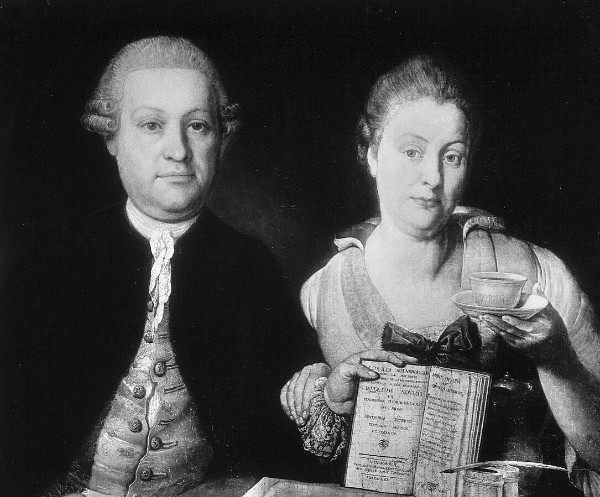
Leopold and Marianna Auenbrugger

Leopold and Marianna Auenbrugger

Marianna died young at the age of 23. Salieri published her keyboard sonata at his own expense so that it could be preserved and distributed.

María Rosa Coccia (1759–1833)   

Maria Rosa Coccia was born in Rome in 1759. She was a child prodigy who by the age of thirteen had produced an oratorio and multiple keyboard sonatas.

Musicians practising in Rome were required by Papal decree to attend the Accademia di Santa Cecilia and pass an exam to become a Maestro di Capella.
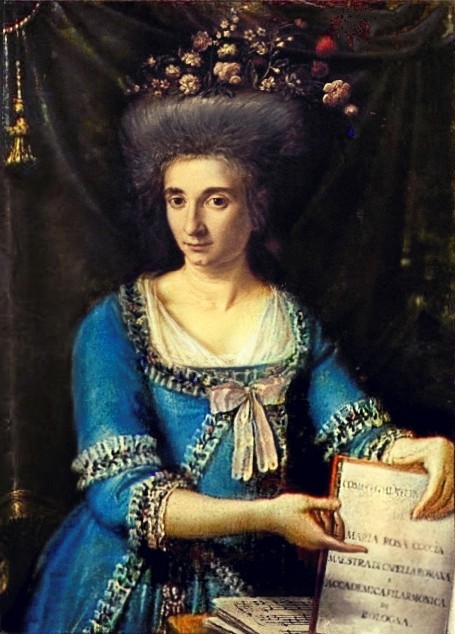
María Rosa Coccia

María Rosa Coccia

Coccia did so. She became maestra di cappella at Congregazione di Santa Cecilia when she was just fifteen.

A few years later, she accepted the same post at the Accademia Filarmonica di Bologna.

The fact that she acquired the title of Maestro di Capella set off a firestorm of controversy. Her work during the exam was criticised. Metastasio (Mariana Martines’s family friend and teacher) and composer Giovanni Battista Martini stood up for her.

Hélène de Montgeroult (1764–1836)   

Hélène de Nervo was born in 1764 to a recently ennobled family from Nice.

As a child, she lived in Paris, where she took piano lessons from Jan Ladislav Dussek. (She may also have studied with Muzio Clementi.)

When she was 21, she married the Marquis de Montgeroult. The couple believed in a constitutional monarchy, but were in danger during the Revolution.
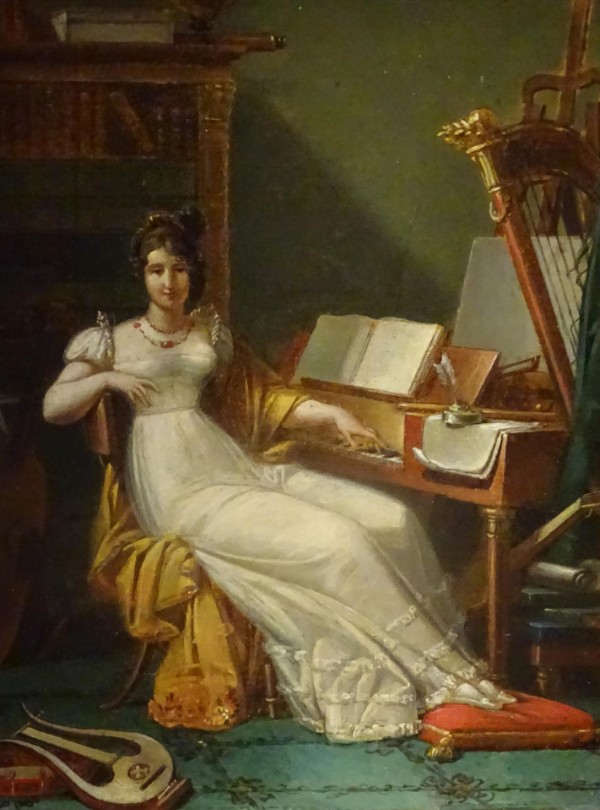
Hélène de Montgeroult

Hélène de Montgeroult

In 1793, while traveling to Italy with a diplomat friend, they were overtaken by Austrian troops, and her husband died in Austrian custody.

She lived a hugely colourful life even after the Revolution, married again (twice), had a son, composed extensively, and opened an influential salon.

It is believed that her etudes may have influenced Chopin and Schumann’s.

Isabella Colbran (1785–1845)
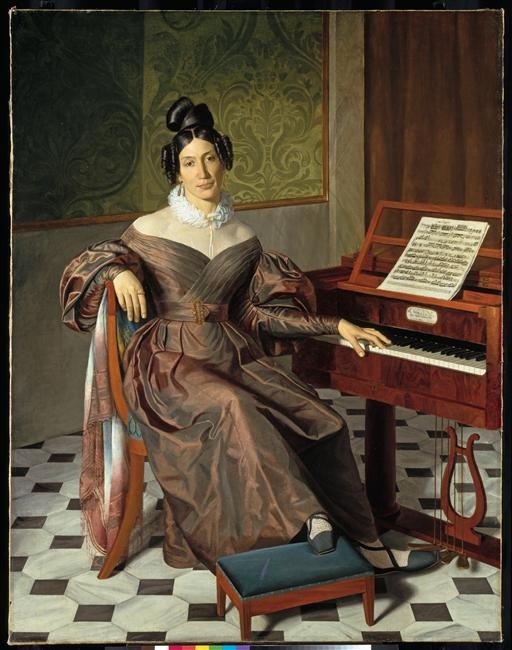
Isabella Colbran

Isabella Colbran


Isabella Colbran was born in Madrid in 1785 to the head court musician and his wife. She began studying music as a child, with the best teachers, and made her operatic debut in Paris when she was just sixteen.

She was famous for her three-octave range and affinity for tragic roles.

She became the mistress of famous opera impresario Domenico Barbaia, then fell in love with Gioachino Rossini, who was seven years her junior. Her voice inspired a number of his greatest operas.

Their marriage was a tragic one for a number of reasons, including the fact that he gave her the gonorrhoea that ultimately killed her.

In between her operatic triumphs, she composed a number of songs that she dedicated to her royal patrons.

Marie Bigot (1786–1820)   

Marie Bigot was born in 1786 in Alsace. We don’t know much about her childhood, but we know that she was clearly musically talented.

She married in 1804, and the couple moved to Vienna. Her husband took a job as the librarian for Count Razumovsky, one of Beethoven’s patrons.
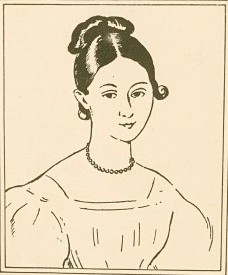
Marie Bigot

Marie Bigot

While in Vienna, her salon became a popular stop for various great musicians. Haydn once praised her effusively after she played one of his works for him: “My dear child,” he said, “I did not write this music – it is you who has composed it!”

Beethoven was also a fan of Bigot’s playing and her musical judgment. She was the first person he played his Appassionata Sonata for.

In 1816, she gave piano lessons to the young Felix and Fanny Mendelssohn, providing a fascinating direct link between Beethoven and Mendelssohn.

She died a few years later of tuberculosis.

Caroline Boissier-Butini (1786–1836)   

Caroline Boissier was born in Geneva in 1786. Her family was not musical, but her father supported her unconditionally.

We don’t even know who her teacher was, or how self-taught she was, but she played piano and composed.
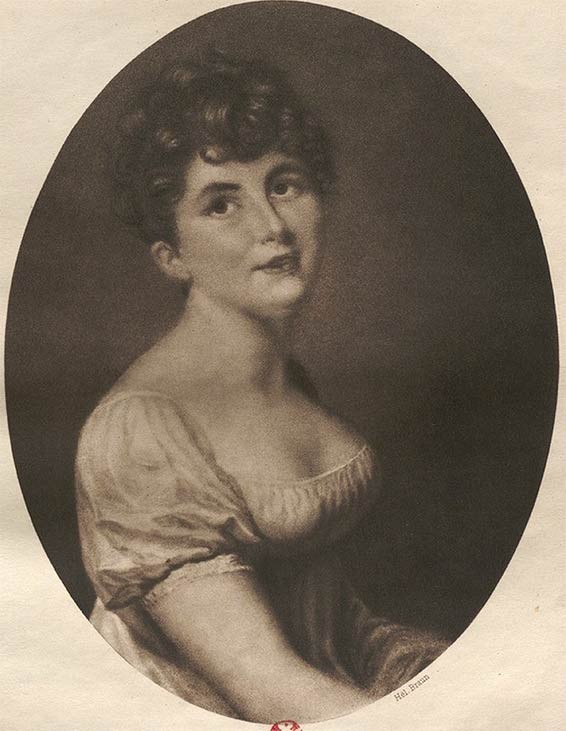
Caroline Boissier-Butini

Caroline Boissier-Butini

She married an amateur violinist, Auguste Boissier, when she was 22. She had two children with him.

Over the course of her life, she wrote a large amount of music, including six piano concertos. She continued her piano studies for the rest of her life.

Maria Szymanowska (1789–1831)   

Maria Szymanowska was born in Warsaw in 1789 to a landlord/brewer and his noble-born wife.

We don’t know who taught her when she was a girl, but we believe she studied composition with Józef Elsner, who would go on to teach Chopin.
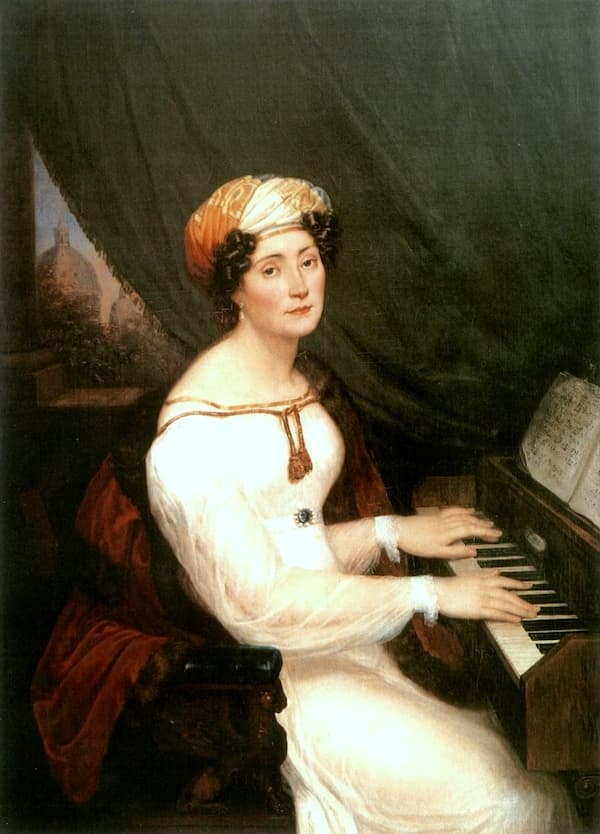
Maria Szymanowska

Maria Szymanowska

She made her debut in Warsaw and Paris in 1810, the year she turned 21.

She was married that same year and eventually gave birth to a daughter and a set of twins. Unfortunately, her marriage was unhappy, and she and her husband parted ways in 1820.

Unusually for the time, she spent much of her marriage touring, composing, and devoting herself to her musical career.

In the late 1820s, she moved to St. Petersburg, where she became the court pianist to the Empress of Russia, Alexandra Feodorovna.

Tragically, Szymanowska died during the 1831 cholera epidemic.

Marianna Bottini (1802 –1858)   

Marianna Motroni-Andreozzi was born in Lucca, Italy, in 1802 to a noble family.

She studied music as a child; in fact, most of her music that survives dates to her teens. That output includes motets, symphoniessacred music, a piano concerto, a clarinet concerto, and an opera.

Her fame grew, and in 1820, she was admitted to the Accademia Filarmonica in Bologna as an “honorary master composer.”
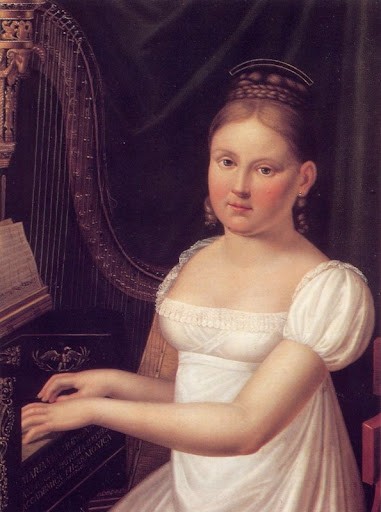
Marianna Bottini

Marianna Bottini

Unfortunately, she stopped composing in 1823, when she married a prominent politician, the Marquis Lorenzo Bottini.

That said, she continued to be passionate about music, working with her harpist mother-in-law to catalogue and preserve their joint music collection.

Conclusion

Taken together, these women’s biographies can help us rethink who the composers in the Classical Era actually were.

As more of their music is recorded and performed, the legacy of these forgotten women composers will hopefully grow clearer.

Listening to their works is a wonderful reminder that classical music has always included extraordinary now-forgotten women whose creativity – happily – still survives to this day.

Who is your favourite woman composer from the Classical Era?

Seven of the Most Popular String Quartet Videos on YouTube


There’s no easy objective way to answer that question, but one way to try is by looking at which YouTube videos of string quartet performances have garnered the most views over the past twenty years of YouTube’s existence.

We searched for string quartets, sorted by most viewed, and here’s what we found.

But first, a few caveats…

  • If a video only consisted of audio with a static image or a score, we didn’t count it. We wanted to focus on video performances today, not audio.
  • We didn’t count electric violin repertoire; we stuck with acoustic instruments.
  • We also didn’t count pop music rearranged for string quartet. The arrangements of pop songs that are played on Bridgerton are great fun, but today we wanted to focus on traditional repertoire.

So with all that said, here in reverse countdown order are seven of the most popular string quartet videos on YouTube, as of early 2026.

We promise you, there are some surprises.

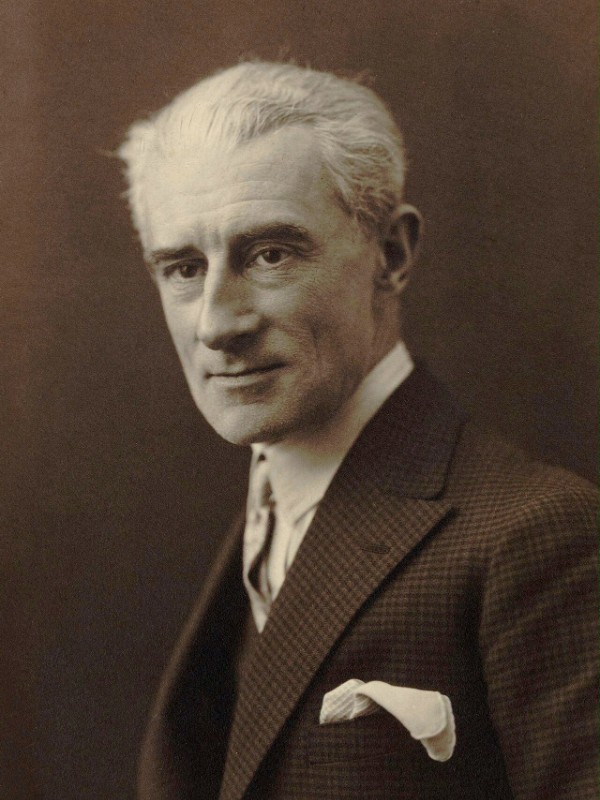
7. Ravel String Quartet  

Ravel was just 28 years old when he wrote his impeccably crafted string quartet.

The second movement is a fiery scherzo featuring bursts of pizzicato fireworks. (That’s the movement featured in this particular video.)

Maurice Ravel in 1925

Maurice Ravel in 1925

Its fascinating colour and texture also foreshadow how Ravel’s genius for orchestration would develop over the course of his career.

The quartet was not an immediate success at its premiere. Critics were lukewarm, noting the debt it owed to Claude Debussy’s string quartet from ten years earlier, and fretting about its “vagueness of significance, incoherence, and weird harmonic eccentricities.”

However, it kept being programmed and played, and today it is widely considered one of the great string quartets of the twentieth century.

According to the YouTube heat map, the most popular part of this video is the first few seconds. That’s understandable, since the opening contains that unforgettable plucky theme.

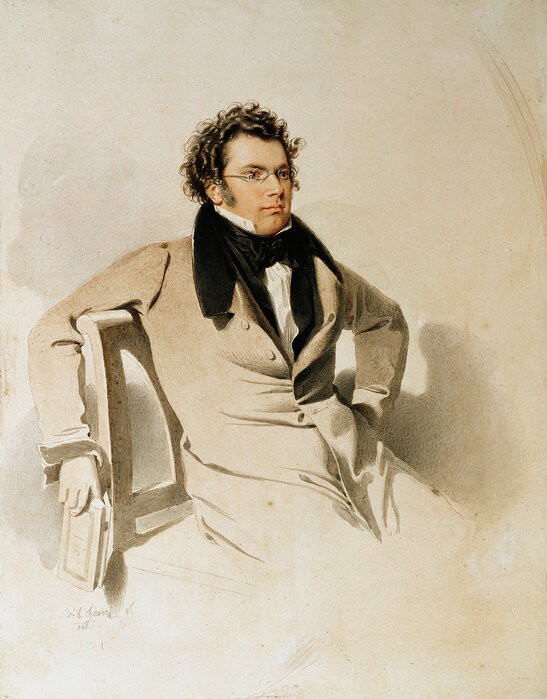
6. Schubert String Quartet No. 14   

In 1824, Franz Schubert was 27 years old and staring down the barrel of his own mortality. Two years earlier, he had contracted syphilis, and the illness was haunting his thoughts and music.

One of the pieces born out of his anxiety was “Death and the Maiden” quartet, one of the most searing works in the entire chamber repertoire.

Franz Schubert

Franz Schubert

The quartet’s dramatic nickname comes from the second movement, where Schubert transforms the melody of his earlier song “Der Tod und das Mädchen” (Death and the Maiden) into a set of variations.

The outer movements rage with a stormy intensity, while the slow movement contains one of the most moving meditations on death in all of classical music.

The quartet was put away for two years after it was written. Its premiere was at a private home in 1826. It wasn’t published until after Schubert died. It wasn’t composed for money or fame; it was composed simply because Schubert had to express himself.

Today, it resonates with listeners for its blend of despair and defiance.

5. Stockhausen “Helicopter String Quartet”   

Yes, this is exactly what it sounds like: a piece written for string quartet being played in four helicopters.

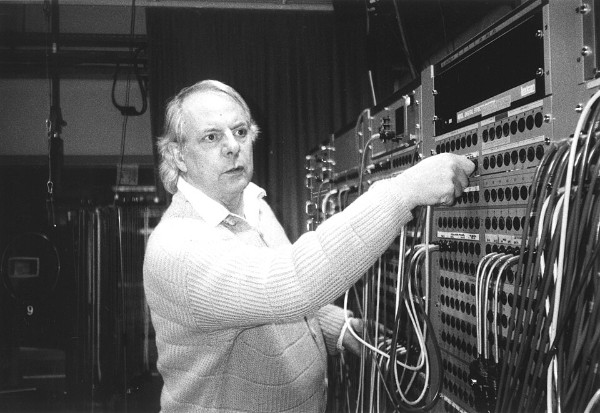
Karlheinz Stockhausen was one of the most polarising composers of the twentieth century, and works like his Helicopter String Quartet are why.

Karlheinz Stockhausen

Karlheinz Stockhausen

Conceived in 1993 as part of his epic seven-opera cycle Licht, the piece consists of four string quartet members performing in four separate helicopters. They listen to each other via headphones, and the piece is mixed for the audience, who watch live from an auditorium.

Stockhausen dreamed of making the tremolo sounds resemble the whirring of the blades.

As you can imagine, the piece is incredibly expensive to mount. It is also objectively unhinged.

However, that quality clearly makes it perfect for a YouTube video. It really is one of those things that you have to see to believe.

4. Glass String Quartet No. 3, “Mishima”  

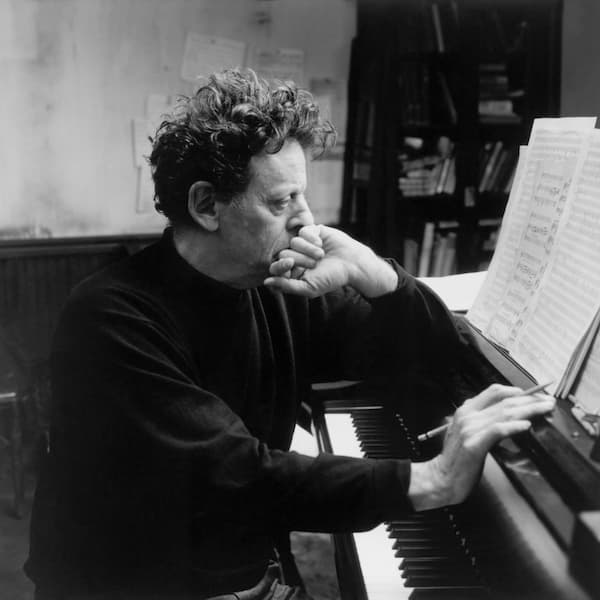
Philip Glass is one of the most famous living composers. His calling card is his propulsive minimalist style.

His third string quartet began life as music for Paul Schrader’s 1985 film Mishima: A Life in Four Chapters, a biopic of the Japanese author Yukio Mishima.

Philip Glass

Philip Glass

Glass arranged six movements from the film score into a quartet, each movement brief and tightly structured.

The music alternates between shimmering stillness and driving pulse.

Although the music is (by design) repetitive, it’s also deeply, strangely touching.

Interestingly, according to the YouTube heat map of where people have rewound to, there is no spike anywhere. Listeners take the movement in as a whole.

3. Beethoven String Quartet Op. 59, No.1, “Razumovsky”   

When Count Andrey Razumovsky, the Russian ambassador to Vienna, commissioned Beethoven to write a set of string quartets in 1806, he couldn’t have begun to imagine the impact the works would have on the history of chamber music.

Beethoven’s three Razumovsky quartets pushed the boundaries of the genteel attitude toward quartets set by Haydn and Mozart, paving the way for the Romantic Era by creating music that was symphonic in both scale and emotional impact.

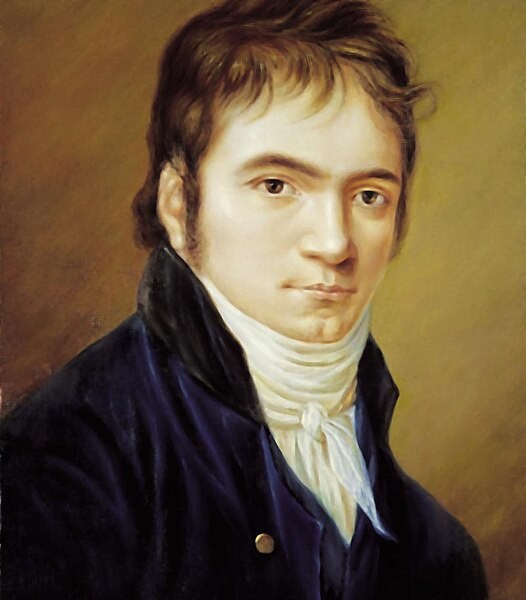
Christian Honeman: Ludwig van Beethoven, 1803 (Beethovenhaus Bonn)

Christian Honeman: Ludwig van Beethoven, 1803 (Beethovenhaus Bonn)

The first of the set, Op. 59 No. 1, is a massive emotional journey. Like the others in the set, it is so large and so complicated that it takes professional musicians to play (or very talented, devoted amateurs with lots and lots of rehearsal time).

Early audiences were baffled by what they heard. Violinist Ignaz Schuppanzigh’s quartet, who premiered the quartets, reportedly struggled to get the works under their fingers.

According to legend, when he heard about Schuppanzigh’s complaints, Beethoven reportedly said, “Does he really believe that I think about his silly fiddle when the muse strikes me to compose?”

That defiant spirit clearly still speaks to modern audiences.

2. Haydn String Quartet No. 62; Op. 76, No. 3, “Emperor”   

Joseph Haydn is called the “father of the string quartet” for a reason: he wrote some of the first string quartets, and over the course of his career, composed nearly seventy of them.

The Op. 76, No. 3 in C major, nicknamed the “Emperor”, is number 62. It contains one of the most famous examples of theme and variations in classical music history.

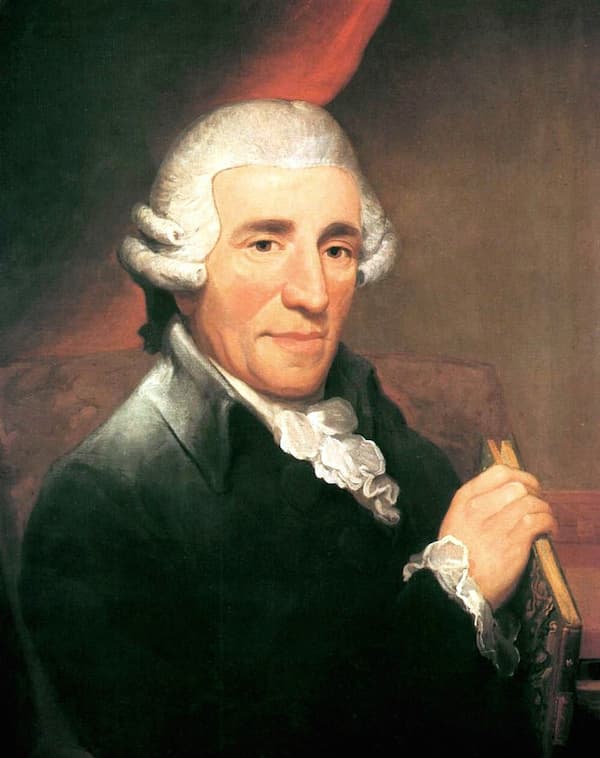
Thomas Hardy: Franz Joseph Haydn, ca. 1791 (London: Royal College of Music Museum of Instruments)

Thomas Hardy: Franz Joseph Haydn, ca. 1791 (London: Royal College of Music Museum of Instruments)

The second movement presents a noble hymnlike melody, with each instrument taking turns “singing” the theme.

Haydn originally wrote it as an anthem in tribute to the Austrian Emperor Francis II. It later became the German national anthem, Deutschlandlied.

The music’s cultural impact, as well as its sheer beauty and importance in the history of the development of the genre, helps explain why it’s at number two on this list.

However, only one work can top the list, and if you’re a classical musician, you knew in your bones this was coming…

1. Pachelbel Canon   

The runaway champion of “the most popular string quartet” on YouTube is Johann Pachelbel’s Canon in D.

That said, we acknowledge we’re stretching the definition of string quartet here a bit, since the Pachelbel was written for three violins and basso continuo instead of the modern instrumentation of two violins, viola, and cello.

So if you’re one of the classical musicians who break out in hives when listening to Pachelbel’s Canon, feel free to pretend that Haydn won the countdown!

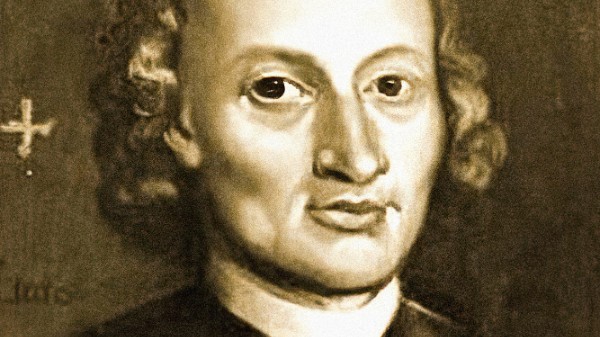
Johann Pachelbel

Johann Pachelbel

The story of this work is wild. It was written in the late seventeenth century, then languished in obscurity for over two hundred years.

It was rediscovered in the early twentieth century and published in 1919, but it only became a staple of the repertoire after a couple of recordings went viral in the late 1960s. People heard it on the radio and lined up outside record shops to buy copies.

The Canon quickly became a staple at weddings and on soundtracks, and although many classical musicians feel it’s overplayed, its popularity simply cannot be denied.

Conclusion

From Pachelbel’s Baroque ground bass to Stockhausen’s midair experiments, the string quartet has proven itself to be endlessly adaptable over centuries.

Taken together, these pieces, written over the course of three hundred years, have attracted millions and millions of YouTube views.

Despite all the handwringing about the future of classical music, the popularity of these performances proves that there will always be something special about what happens when a string quartet sits down to play.

Wednesday, April 15, 2026


Rainelle Krause has died aged 37

Rainelle Krause has died aged 37. Picture: Alamy

By Hazel Davis

The rising operatic star had just made her Met Opera debut in December.  

American soprano Rainelle Krause has died at the age of 37. Her family have confirmed that she passed away on 17 March after a brief hospital stay. No cause of death has been revealed.

Krause’s death comes just months after her debut at the Metropolitan Opera in December, where she appeared as the Queen of the Night in Mozart’s The Magic Flute. She had also been due to appear at Santa Fe Opera this summer.

In a statement, Krause’s family described her as, “a brilliant talent defined by grit, fearlessness, curiosity, intelligence, integrity, and resilience,” adding that “onstage, her voice matched the breathtaking power of her spirit. Offstage, she was a loving, caring soul whose vibrant energy lit up everyone around her.”

Soprano Rainelle Krause flawlessly sings Mozart’s ‘Queen of the Night’ aria UPSIDE DOWN

Krause, a Florida-born graduate of Indiana University’s Jacobs School of Music, gained critical acclaim for her mastery of the notoriously tricky demanding Queen of the Night role.   

AdChoicesAd Choices IconSponsored

She had performed on some of the world’s most prestigious stages, including Deutsche Oper Berlin, the Royal Danish Opera, English National Opera and the Dutch National Opera.

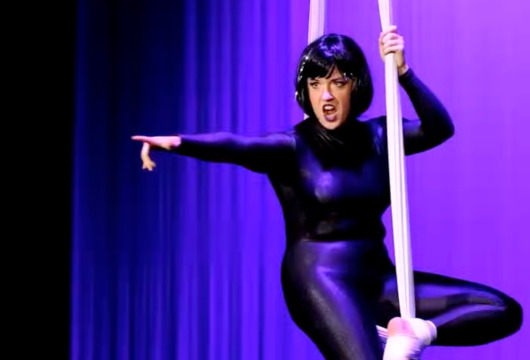
As well as her soaring voice, the coloratura soprano was known for combining her singing with arial acrobatics. Krause has gone viral several time over the last few years for performing the Queen of the Night aria (also known by its German name ‘Der Hölle Rache’) while upside down on aerial silks.

Tuesday, April 14, 2026

Franz Ignaz Danzi


Wind Quintets at 200

Two hundred years ago, on 13 April 1826, Franz Ignaz Danzi (1763-1826) died in Karlsruhe, aged 62. He had known Wolfgang Amadeus Mozart in his youth, had mentored the young Carl Maria von Weber, and had been a contemporary of Ludwig van Beethoven.

Danzi was most famous for his wind quintets, and he composed nine such works between 1820 and 1824. These are genial and gentle works, modest in reach, but beautifully crafted in every detail.

Franz Ignaz Danzi

Franz Ignaz Danzi

The wind quintets were written in part to raise the level of musicianship at the court of Karlsruhe. But that’s not the only reason why wind players should know this music. To commemorate the 200th anniversary of Danzi’s death, why don’t we explore the wind quintets in a little more detail? 

Beyond the Jolly Exterior

Franz Danzi was described as a plump little man with a rounded head and clever eyes which always seemed good-humoured. Don’t let this jovial description fool you. Franz Danzi was a highly competent musician and composer.

He joined the cello section of the famous Mannheim Orchestra at the age of 15, and performed with them for many years. Two of his early stage works were performed in Munich, and he then married the celebrated singer and pianist Margarethe Marchand.

The couple embarked on a concert tour that lasted several years, and Danzi eventually enjoyed some success as an opera composer. Success as an opera composer generally translated into employment opportunities, and such was the case for Danzi.

He took up a post in Stuttgart in 1807, but resigned in 1812 citing poor health. However, within the same year he accepted the post of Kapellmeister at the court in Karlsruhe. By that time he had been cultivating a close friendship with Carl Maria von Weber, and he was highly supportive of Weber’s quest to promote serious German-language opera.  

The orchestra at Karlsruhe was not in great shape, and the Allgemeine Musikalische Zeitung reported in 1817 that Danzi had to stamp the beat with his foot to keep the orchestra together, especially at important entries.

One way of improving the orchestra, especially the wind section, was to compose dedicated wind quintets. The combination of flute, oboe, clarinet, French horn and bassoon, however, was not new, as this instrumentation had been established by Anton Reicha.

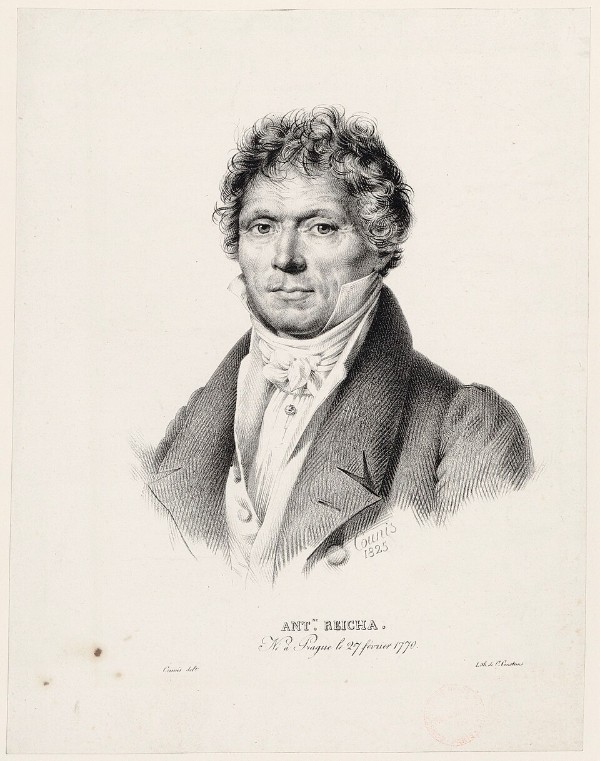
Anton Reicha

Anton Reicha

Reicha was born in Prague, educated in Bavaria, and later became a French citizen. He was friendly with Ludwig van Beethoven, and counted Franz Liszt, Hector Berlioz, and César Franck among his students. Even Chopin considered studying with him, but ultimately decided otherwise.

He is best known today for his 24 wind quintets, composed in Paris between 1811 and 1820. Most of his later wind quintets were premiered in the foyer of the Théâtre Favart by some of the world’s finest wind soloists. Immediately popular, they were played all over Europe shortly thereafter.   

Reicha’s Mission

In his memoirs, Reicha claimed that his wind quintets filled a void. “At that time, there was a dearth not only of good classical music, but of any good music at all for wind instruments, simply because composers knew little of their technique.”

Since Reicha was a flautist, he systematically explored the possibilities of the wind ensemble and came up with a formal variant that could accommodate a great number of principal themes.

The wind quintets also received commercial interest from music publishers during his lifetime. They appeared with Simrock in Bonn and Cologne, with Boieldieu and Richault in Paris, and with Schott in Mainz.

By some accounts, Franz Danzi started to write wind quintets after the tremendous financial success of Reicha’s first set of works, published in 1817. Since Danzi had a gift for writing flowing melodies and had a connection to publishers, he lavished considerable care on his own wind quintets.  

Modest Yet Masterful

The nine wind quintets by Danzi are dedicated to Reicha and published in groups of three. They display a remarkable unity of form. All of them follow the popular four-movement pattern. Sonata form first movements are followed by song-form seconds, and a minuet that occasionally approaches a scherzo character. These works all concluded with rondo finales.

The Danzi wind quintets are modest in reach, yet beautifully crafted in every detail. Players must have solid basic technique and good intonation. However, they focus primarily on ensemble balance rather than extreme virtuosity. And that makes them very approachable for amateurs and students.

Danzi beautifully blends the colourful combinations of the five instruments, with clever use of timbral contrasts. Frequently, the oboe or flute presents the leading melodies, the horn provides harmonic support, and the bassoon anchors the bass line.

Melodic lines are frequently passed between upper winds, with the horn and bassoon providing harmonic foundation and occasional soloistic moments. Danzi always chooses an instrumental combination that suits the character of the material.

Affectionate Respect

I was not able to find specific contemporary reviews of the Danzi wind quintets, but his compositions were overall praised for their melodic quality and craftsmanship. Since his wind quintets were published shortly after Reicha’s more ambitious sets, they seemed to have been positioned as practical and accessible works.

Danzi, as an orchestral cellist and conductor, brought plenty of practical knowledge to these compositions. Composed in the 1820s when Beethoven and Schubert were pushing boundaries, the wind quintets are looked upon with affectionate respect rather than profound intellectual scrutiny.

Essentially, the wind quintets represent a polished late-Classical sensibility. When compared with Beethoven’s contemporary late string quartets, it becomes obvious that Danzi composed in a courtlier vein, favouring elegant and conversational music-making.

Because of their modest technical demands and a focus on ensemble cohesion, they make excellent teaching and community ensemble pieces. They are regularly performed and frequently recorded. If you are looking for charm and playability without all that Beethovenian intensity, the Danzi wind quintets are an ideal choice