Total Pageviews

Friday, April 3, 2026

Behind the Curtain: Brahms’ Funeral Music


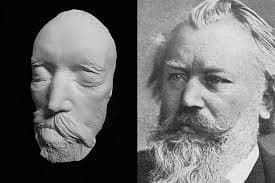
Death mask of Johannes Brahms

Death mask of Johannes Brahms

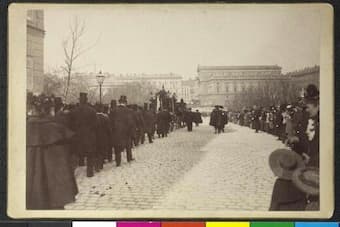
The funeral procession was organized by the Society of the Friends of Music. Brahms had served this association in various capacities for decades, and the Brahms casket was picked up from his residence adjacent to the church of St. Charles. Dignitaries from all walks of life and from all over Europe had gathered, including the composers Antonin Dvořák and Ferruccio Busoni, the pianist Emil Sauer and members of the “Female String Quartet of Vienna,” amongst numerous others. The procession stopped in front of the famous building of the Society—the New Year’s Concert of the Vienna Philharmonic is performed there every year—and a choir sang “Farewell,” from Brahms’ Songs and Romanzes Op. 93a. The procession then passed by the opera house and continued to the protestant church in the Dorotheergasse. The church choir sang the Bach chorale setting of “Jesus my sure Defense,” and Max Kalbeck reports, “Since everybody attending was Catholic, nobody knew the text or the music.”  

The church was clearly unable to accommodate the huge number of mourners, but the service got properly underway with the church choir singing an arrangement of Mendelssohn’s “It is certain in God’s wisdom,” from his 6 Songs Op. 47.

Felix Mendelssohn: 6 Gesänge, Op. 47, No. 4 “Es ist bestimmt in Gottes Rath”   

Funeral Procession for Johannes Brahms

Funeral Procession for Johannes Brahms

In his Eulogy, the pastor honored “a high priest in the truly beautiful art, and a powerful ruler in the kingdom of tones. A soul full of wonderful melodies has breathed its last sigh, and a noble man has completed his earthly troubles. Master Johannes Brahms did not die as his spirit has overcome death and ascended into the bright, blissful world of pure harmony and peace.” Schubert’s “Wanderers Nachtlied I,” setting the famed poem by Goethe, musically reinforced the message of the eulogy.

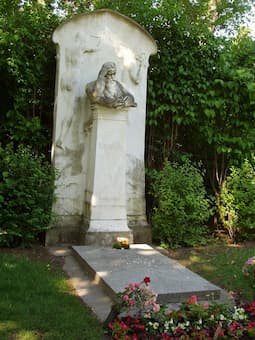
Grave of Johannes Brahms

Grave of Johannes Brahms,
Central Cemetery, Vienna

Brahms had no special wishes regarding the music to be performed at his funeral, but apparently he had quietly mentioned to a friend that he wanted to be buried close to Beethoven and Schubert at the Vienna Central Cemetery. His casket arrived there in the evening of April 6, accompanied by close friends and colleagues. In both the eulogy and the short address at the open gravesite, the speakers made reference to the 4 Serious Song, which Brahms, already sensing the end, had completed shortly before his death. For many listeners then and now, these songs represent “sounds from a higher realm, where love and peace reign forever.” Given the current struggles with Corona around the world, that’s certainly a message to keep in mind.


First 5 Women Composers Who Won the Prix de Rome


The Prix de Rome, associated with the Paris Conservatory, was a fiercely competitive award that offered its winners the chance to create with fellow prizewinners for a few years at the Villa Medici in Rome.

For much of its history, women were excluded from even entering. Fortunately, that changed in the early twentieth century.

It didn’t take long before a string of extraordinary women began proving they were up to the challenge of competing in the Prix de Rome…and winning it.

Today, we’re looking at the lives and legacies of the first five women Prix de Rome laureates – Lili Boulanger, Marguerite Canal, Jeanne Leleu, Elsa Barraine, and Yvonne Desportes – and tracing how their courage and creativity contributed to an especially rich era in French music.

About the Prix de Rome

The Prix de Rome was a prestigious French arts prize established in the seventeenth century, during the reign of Louis XIV. An award specifically for musical composition was created in the early 1800s.

For generations, the composition prize was effectively a boys’ club, closed to female competitors.

That changed in 1903, when French Education Minister Joseph Chaumié announced that women would be allowed to enter the competition.
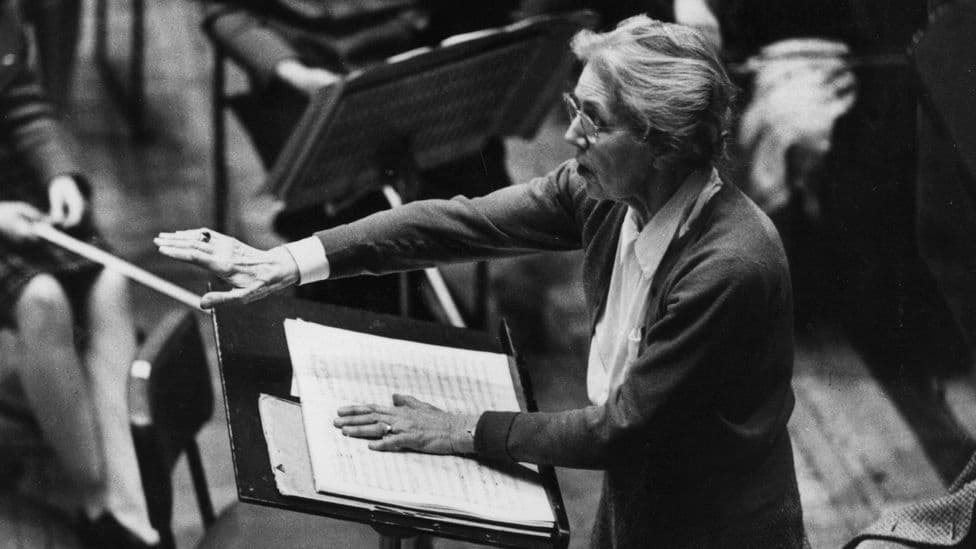
Nadia Boulanger

Nadia Boulanger

Composer Hélène Fleury-Roy won a third prize in 1904, and Nadia Boulanger won a Second Grand Prix in 1908, but neither won the grand prize.

Hélène Fleury-Roy and Nadia Boulanger may have put cracks in the glass ceiling…but the Prix de Rome would require the right woman at the right time to shatter the glass ceiling outright.

Lili Boulanger (1913)

D’un matin de printemps   

Lili Boulanger came from a distinguished musical family.

Her father was a composer and professor who had once won the Prix de Rome himself, and her elder sister Nadia Boulanger was also a talented musician who helped to teach Lili as a child.
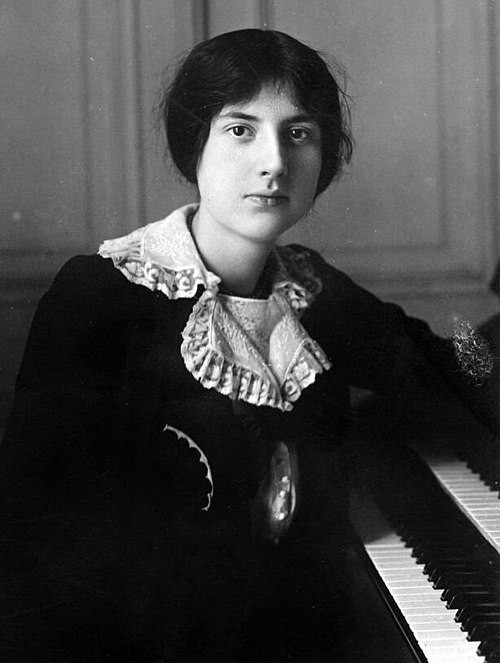
Henri Manuel: Lili Boulanger, 1913

Henri Manuel: Lili Boulanger, 1913

Lili’s talents were evident early in life, but so were her health struggles. She suffered from chronic illness (likely Crohn’s disease or tuberculosis) that made day-to-day functioning difficult.

Despite these challenges, Lili dreamed of following in her father’s footsteps and winning the Prix de Rome, and watched her sister make a go at it herself.

In 1912, Lili competed for the first time, but collapsed from illness and had to withdraw.

Undeterred, she returned the following year, and in 1913 her cantata Faust et Hélène made her the unanimously chosen winner.

Faust et Hélène   

Boulanger’s Prix de Rome victory was hailed in the press as a breakthrough for women in music.

It also became symbolic of the progress of women’s liberation more broadly.

One newspaper contrasted her success with the actions of militant suffragettes, noting that “a maiden of France has gained a better victory” than window-smashing protesters.

Learn more about the Boulanger sisters’ relationship and their attempts to win the Prix de Rome.

Marguerite Canal (1920)   

Born in Toulouse to a musical family, Canal entered the Paris Conservatory at age eleven. She excelled in her studies, taking first prizes in harmony, accompaniment, and fugue.

It was a promising start, but Canal’s path to her Prix de Rome win required years of patience…and persistence.
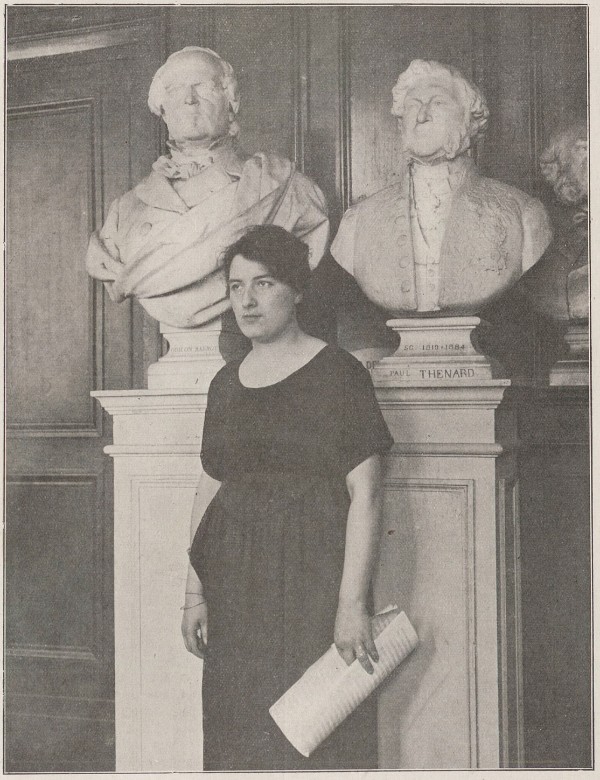
Marguerite Canal

Marguerite Canal

She first entered the competition in 1914, the year after Lili Boulanger, but didn’t win.

Then the competition was suspended during World War I, so she couldn’t try again until after the Armistice.

During that time, she faced devastating personal loss; her soldier brother died in the opening weeks of the war. (She would try for years to write a requiem for him, to no success.)

In 1919, when the Prix de Rome was reinstated, she came tantalisingly close to winning, earning a Second Grand Prix (a runner-up prize).

Finally, in 1920, she succeeded in her quest, becoming the second woman ever to win the first grand prize with her cantata Don Juan.

Canal spent the years between 1921 and 1924 at the Villa Medici in Rome, where she composed prolifically. One of the works dating from that time was her charming violin sonata.  

After returning to France, Canal joined the faculty of the Paris Conservatory, where she taught for several decades.

Her composing activity slowed as her teaching duties grew in number, but she still completed over a hundred works, including Trois Esquisses méditerranéennes for piano (1930).

Jeanne Leleu (1923)

Quatuor pour piano et cordes   

Pianist and composer Jeanne Leleu was born into a musical family and entered the Paris Conservatory at the age of nine.

At eleven, she made musical history by participating in the premiere performance of Ravel’s Ma Mère l’Oye (Mother Goose Suite).
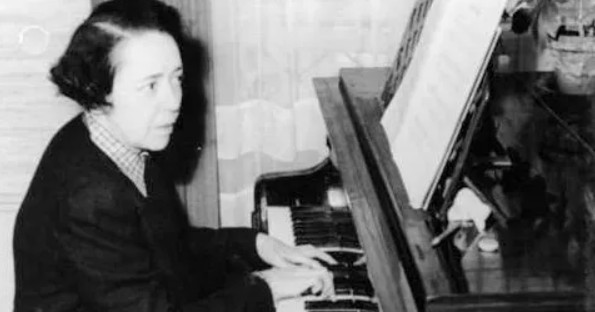
Jeanne Leleu

Jeanne Leleu

Initially trained as a pianist (she won a premier prix in Alfred Cortot’s piano class in 1913 at the age of fifteen), Leleu eventually turned her focus to composition, studying with Georges Caussade and Charles-Marie Widor at the Conservatory.

In 1922 she earned the Conservatory’s first prize in composition, and Widor encouraged her to attempt the Prix de Rome competition.

Leleu competed for the Prix twice. She failed to clinch the top award during her first attempt in 1922, but in 1923, she won the Premier Grand Prix for her cantata Béatrix.

She took up residency at the Villa Medici in Rome between 1923 and 1927.

Among the works she composed were the Six Sonnets de Michel-Ange (1924) for voice and orchestra, as well as an orchestral suite, Esquisses italiennes (1926), which reflected her impressions of Italy.

In the late 1930s and 1940s, Leleu also composed for the stage: her ballet Un jour d’été was produced at the Opéra-Comique in 1940, and another ballet Nautéos premiered in Monte Carlo in 1947 (later reaching the Paris Opéra and even Covent Garden in London by 1954).

In addition to being a prolific composer, Jeanne Leleu became an influential teacher. In 1954, she was appointed Professor of Harmony at the Paris Conservatory, a position she held until 1965.

Elsa Barraine (1929)   

Elsa Barraine was born into a musical family; her father was a cellist in the Paris Opéra orchestra.

She herself entered the Paris Conservatory as a teenager, studying composition in Paul Dukas’s famous class (her classmates included Olivier Messiaen and Claude Arrieu), where she more than held her own.
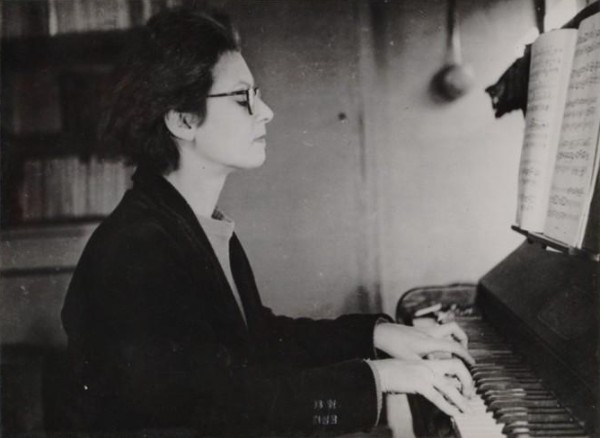
Elsa Barraine

Elsa Barraine

In 1928, while still a student, she took part in the Prix de Rome competition and was awarded the Second Grand Prix for her cantata Héraklès à Delphes.

The following year, 1929, she tried again and succeeded in winning the Premier Grand Prix de Rome with her cantata La Vierge guerrière (“The Warrior Virgin”). She was just nineteen years old, and one of the youngest ever winners.

Elsa Barraine’s subsequent career was multifaceted. During the rise of fascism in Europe in the 1930s, she began using her compositions to send political and social messages.

In 1933, she composed Pogromes, a symphonic poem protesting anti-Semitic violence.

During the Nazi occupation of France, Barraine – whose father was Jewish – was dismissed from her positions by Vichy racial laws.

She went underground and joined the French Resistance, operating under the alias “Catherine Bonnard.” At one point, she was arrested by the Gestapo, but fortunately, a sympathetic police officer helped secure her release.  

Barraine survived the war and, after the liberation of France, took on new leadership roles in the music industry.

Between 1944 and 1946 she worked with the Orchestre National, and in 1953 she became a professor at the Paris Conservatory. She also worked in French radio and as a music journalist.

Even as she assumed all of these roles, Barraine continued to compose.

Her catalog includes two symphonies (dating from 1931 and 1938), chamber works such as a wind quintet (1931) and Suite astrologique (1945), choral pieces, and music influenced by her Jewish heritage (e.g. Trois Chants Hébraïques, 1935).

Though her music was long neglected, recent performances and recordings have revived interest in her powerful, distinctly humanist compositions.

Yvonne Desportes (1932)   

Desportes studied at the Paris Conservatory, where her teachers included the renowned composer Paul Dukas (for composition) as well as Marcel Dupré and others.

She was a particularly hardworking, dedicated musician: she won premier prizes in harmony (1927) and fugue (1928) at the Conservatory.
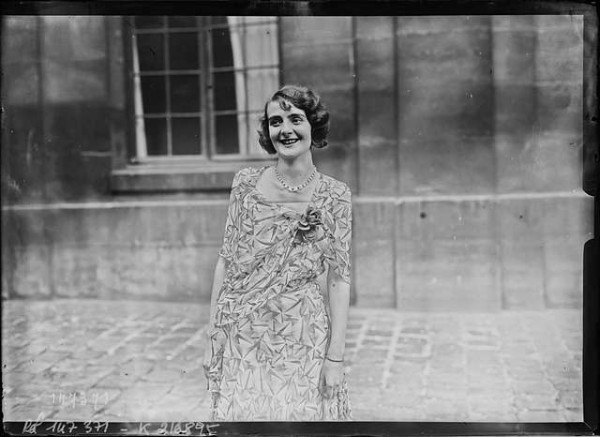
Yvonne Desportes

Yvonne Desportes

She was keen to add the Prix de Rome to that list.

In 1929, her first attempt, she failed to advance to the final round.

In 1930 she returned and earned the Deuxième Second Grand Prix (essentially third place) for her cantata Actéon, with critics praising the delicacy and “femininity” of her harmonic writing.

In the 1931 contest she did even better, winning the Premier Second Grand Prix.

(Notably, that year another woman, Henriette Puig-Roget, won the third-place prize. It was the first time two female composers had ever both been laureates in the same Prix de Rome year.)

Finally, on her fourth attempt in 1932, Yvonne Desportes won the Premier Grand Prix de Rome. She was 25.

She spent the standard residency in Rome and then embarked on a prolific career.   

Desportes composed in many genres – orchestral, chamber, choral, and educational music – and ultimately produced over 500 works.

In addition to composing, she also embraced teaching. Desportes joined the faculty of the Paris Conservatory, where she taught for decades, and she wrote numerous music theory and solfège textbooks that were widely used in French music education for years.

Conclusion

The achievements of these five women – Lili Boulanger, Marguerite Canal, Jeanne Leleu, Elsa Barraine, and Yvonne Desportes – are highlights of a particularly rich era in French musical history.

Over the course of the two tempestuous decades between 1913 and 1932, they broke the glass ceiling of the famously male-dominated Prix de Rome. In the process, they proved they were just as capable as their male colleagues.

Strikingly, all five of them went on to have prestigious musical careers after their wins, helping to clear the way for all the women composers who would follow them in the generations to come.

They are important parts not just of French culture, but of classical musical culture, period.
When Was the First Public Classical Music Concert?


But by the seventeenth and eighteenth centuries, a new idea began to take shape: audiences paying musicians to play music for them.

This evolution from sacred service to ticketed performance changed European culture forever and laid the groundwork for the modern concert tradition we still enjoy today.

Today, we’re asking the question, how did paid public classical music concerts start?

Italy and the Ospedales

It took longer than you might think for the concept of public concerts to flourish in Europe. Each country came to the idea in a different way.

Chronologically, the earliest paid public concerts probably took place in Italy, especially in Venice, where a network of orphanages and music schools developed during the sixteenth and seventeenth centuries.

These institutions, known as ospedales, took in orphans or unwanted children (many of them girls, or the unwanted children of prostitutes), and taught the most talented of them how to perform music.

Read more about the Ospedales, and Vivaldi’s connections to them.

They would hold religious services, such as Vespers, with musical accompaniment, then encourage attendees to donate.

These donations helped keep the institutions running, allowing them to continue their charitable work and musical training… all while funding future concerts.

A re-enactment of a Vivaldi performance at the Ospedale   

John Banister’s English House Concerts

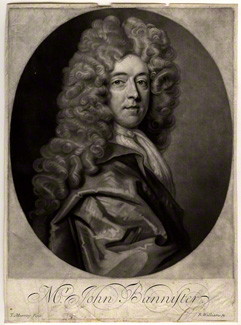
John Banister

John Banister
© Unraveling Musical Myths

In December 1672, an English violinist named John Banister began giving daily concerts at his home. This is the first record of money-making concerts in London.

During each show, he’d play instrumental music, songs inspired by literature, and the like.

He charged a shilling admission fee for the experience and took requests from the audience.

The venture must have been worthwhile, because he continued mounting these concerts until shortly before his death in 1679.

Banister’s 1667 work inspired by Shakespeare’s The Tempest   

Bach and the Collegia Musica

In present-day Germany, ensembles called collegia musica sprang up around the time of the Reformation and focused on the performance of instrumental music.

In 1700, Telemann founded a new incarnation of the old Leipzig collegia musica, and Bach led the group between 1729 and 1737.

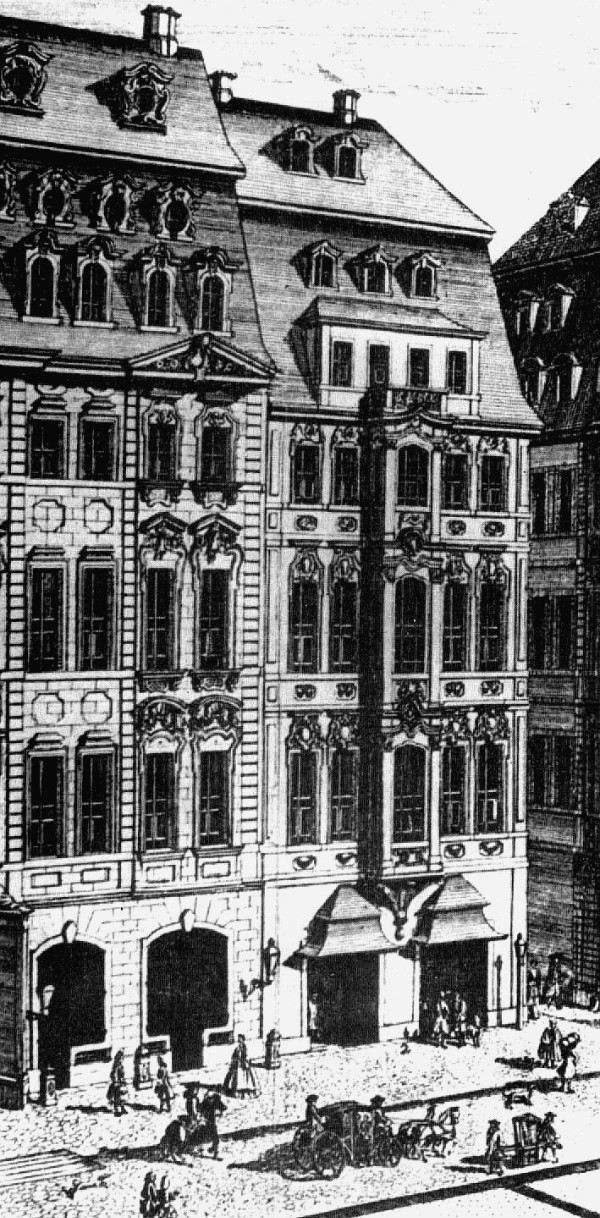
Zimmermann's coffee house

Zimmermann’s coffee house

During the eighteenth century, the Leipzig players gave weekly concerts at a local coffee shop.

In the early 1730s, Bach wrote a secular cantata for this gathering called Schweigt stille, plaudert nicht, or “Be still, stop chattering.”

Bach’s Coffee Cantata   

It’s commonly known as the Coffee Cantata today because it extols the virtues of the drink with lyrics such as “If I couldn’t, three times a day, be allowed to drink my little cup of coffee, in my anguish I will turn into a shriveled-up roast goat.”

The societies were closed to amateurs, but allowed members of the public to attend for a price.

To sum up, as Enlightenment ideals spread, and secularisation and education became increasingly important values in European life, musicians and audiences came closer and closer to the modern idea of giving public concerts.

The stage was set for an official concert series to take off.

France’s Concert Spirituel

Concert Spirituel

Concert Spirituel

The Concert Spirituel series began when a royal musician grew fed up with the quirks of the religious calendar.

Royal court musician and woodwind player Anne Danican Philidor founded the Concert Spirituel series in Paris in 1725.

At the time, it was common for Catholic countries to shut down their opera houses to mark various Christian holidays, especially Advent (roughly the month before Christmas) and Lent (the forty days preceding Easter).

However, Philidor had an idea. What if the calendar could be filled with performances of spiritually uplifting non-operatic music, especially instrumental music?

Philidor’s Sonate in D Minor for recorder and basso continuo   

Philidor was willing to test the economic validity of his theory. He paid the Paris Opera impresario 1000 livres a year for the rights to perform, agreeing to mount no opera.

Philidor staged the first performance on 18 March 1725, between 6pm and 8pm.

The venue was the magnificent Salle des Cent Suisses (Hall of the Hundred Swiss Guards) in the Tuileries Palace in Paris.

That first program included a number of works by court composer Michel Richard Delalande, including a violin suite, a capriccio, and a handful of religious works, as well as Arcangelo Corelli’s Christmas Concerto.

Corelli’s Christmas Concerto   

The Growth of the Concert Spirituel

Music from the Concert Spirituel   

Philidor continued to give a number of concerts, expanding the series, but he died in 1728.

After his death, other musicians took on the leadership roles at the Concert Spirituel. Astonishingly, the concert series continued for decades, under a variety of leaders.

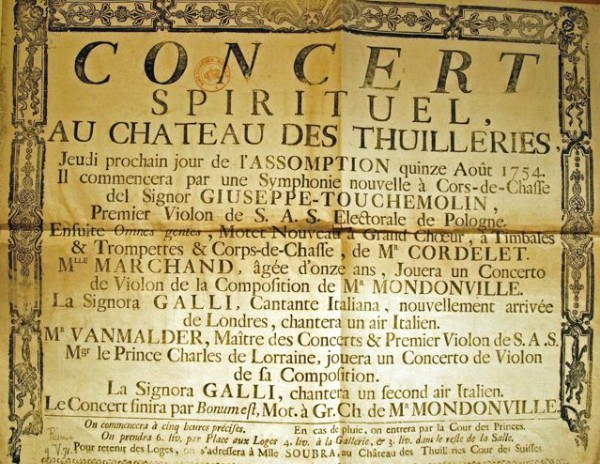
Concert Spirituel poster

Concert Spirituel poster

Between 1734 and 1748, the Académie Royale de Musique oversaw the series. It survived into its third decade, which was no small feat, but it also didn’t reach any new heights of cultural relevance.

Things changed between 1748 and 1762, when entrepreneurs and impresarios Joseph-Nicolas-Pancrace Royer and Gabriel Capperan took charge and made investments in the series.

They increased the size of the orchestra, redecorated the concert hall, and hired expensive Italian singers.

The result was that the series became more prestigious – and profitable – than ever.

The Economics of the Concert Spirituel

The Concert Spirituel series may have been open to all paying audiences, but the tickets were priced for the wealthy.

Admission was by ticket, often advertised in newspapers. Prices were steep: mid-eighteenth-century ticket prices ranged roughly 2–6 livres depending on the seat, and were approximately 4 livres on average.

Before the French Revolution, middle-class workers such as clerks and schoolteachers earned between 600 and 900 livres annually. So a single ticket would have cost around two to three days’ worth of wages for them: doable for a middle-class person if you were particularly passionate about music, but certainly not geared toward the middle class or working class as a whole.

The Final Years

The Concert Spirituel’s greatest years were its last ones.

Between 1777 and 1790, Paris Opera singer Joseph Legros led the series. He dropped seventeenth-century motets from the programs and emphasised new music instead.

He commissioned composers like Johann Christian BachJoseph Haydn, and Wolfgang Amadeus Mozart (1778’s Paris Symphony was written for the series, arguably an organisational high point).

Mozart’s Symphony No. 31 (“Paris”)   

The final concert of the Concert Spirituel took place in the spring of 1790. By that time, the world had changed. Revolution was in the air. The Bastille had been stormed the summer before, and the Romantic Era and cultural upheaval of the Napoleonic Era were just around the corner. Public classical music concerts geared toward the middle class were about to become bigger than ever before.

Conclusion

By the late eighteenth century, Europe had transformed the idea of music-making.

What began in Venetian orphanages as devotional outreach evolved into a sophisticated culture of ticketed public performance.

The Concert Spirituel in Paris was the culmination of this movement, bringing together musicians, aristocrats, and the rising middle class in one shared musical space.

Given a few generations, the concept spread across the continent, shaping the modern concert hall tradition that still defines classical music today.

Conductors on Conducting


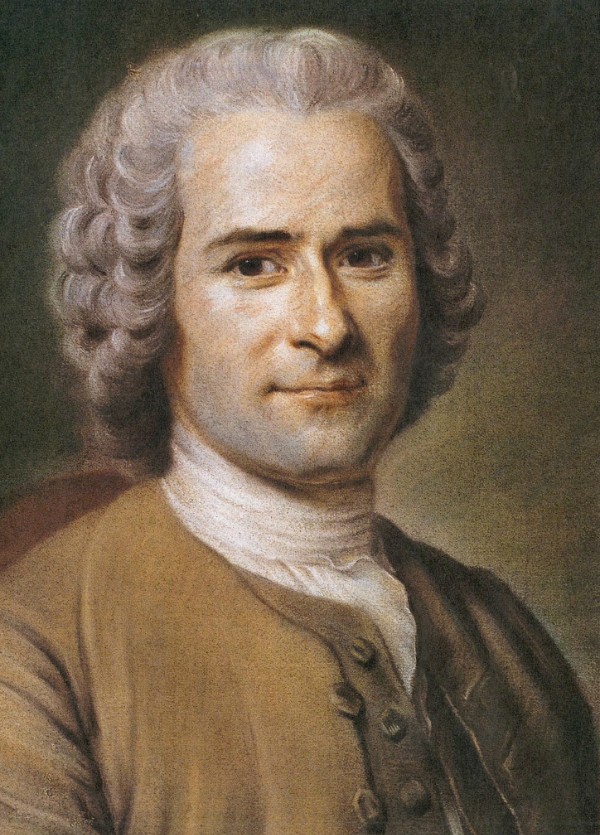
The English historian Charles Burney quotes Jean-Jacques Rousseau, who said:

Maurice Quentin de La Tour: Jean-Jacques Rousseau, 1753 (Musée Antoine-Lécuyer)

Maurice Quentin de La Tour: Jean-Jacques Rousseau, 1753 (Musée Antoine-Lécuyer)

The more time is beaten, the less it is kept…

This is a wonderful way of both condemning conductors who wave their arms too much and describing the attention their orchestras pay them.

Rousseau then goes on to explain what happens when everything falls apart:

…and it is certain that when the measure is broken, the fury of the musical general, or director, increasing with the disorder and confusion of his troops, becomes more violent, and his strokes and gesticulations are more ridiculous in proportion to their disorder.

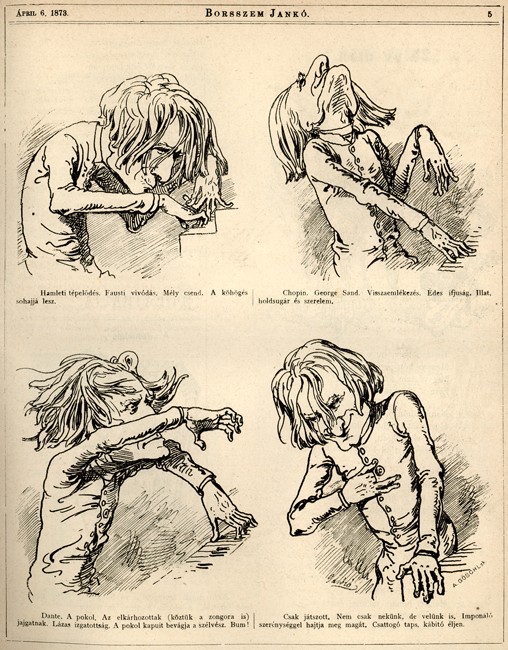
Liszt saw the role of the conductor as very hands-off:

A. Göschl, “Liszt Ferencz,”, Borsszem Jankó 6, no. 276 (1873): 5. (Budapest National Széchényi Library)

A. Göschl, “Liszt Ferencz”, Borsszem Jankó 6, no. 276 (1873): 5. (Budapest National Széchényi Library)

The real task of the conductor consists, in my opinion, in making himself ostensibly quasi-useless. We are pilots, not drillmasters. (1853)

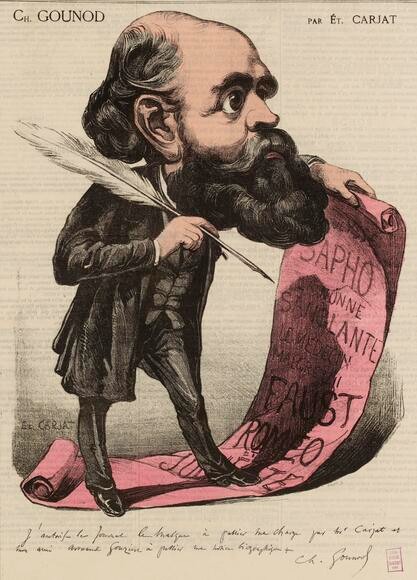
Gounod had a similar view. Instead of being Rousseau’s general, he saw the conductor as someone who had his own taskmaster, the composer:

Étienne Carjat: Charles Gounod

Étienne Carjat: Charles Gounod

The conductor is nothing more than the driver of the coach engaged by the composer. He should stop at every request or quicken the pace according to the fare’s orders. Otherwise, the composer is entitled to get out and complete the journey on foot.

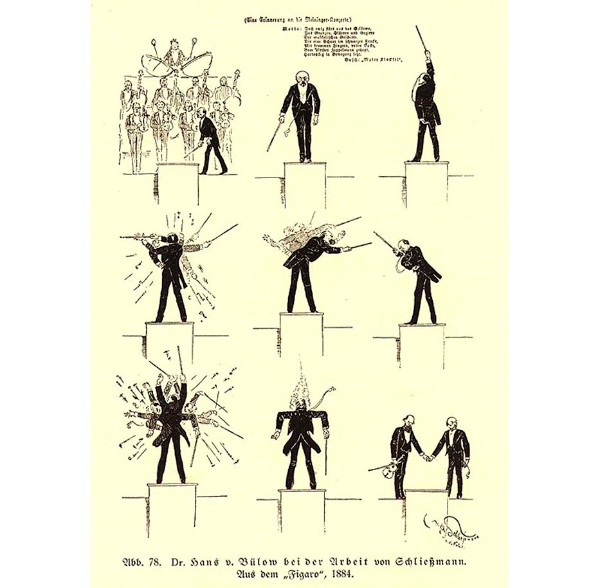
The composer and conductor Hans von Bülow, speaking with the composer and conductor Richard Strauss, talked about musical knowledge:

Hans Schließmann: Hans von Bülow conducting, 1884. (Figaro)

Hans Schließmann: Hans von Bülow conducting, 1884. (Figaro)

You must have the score in your head, not your head in the score.

Rimsky-Korsakov, on the other hand, saw conducting as a particular skill:

Conducting is a black art. (1909)

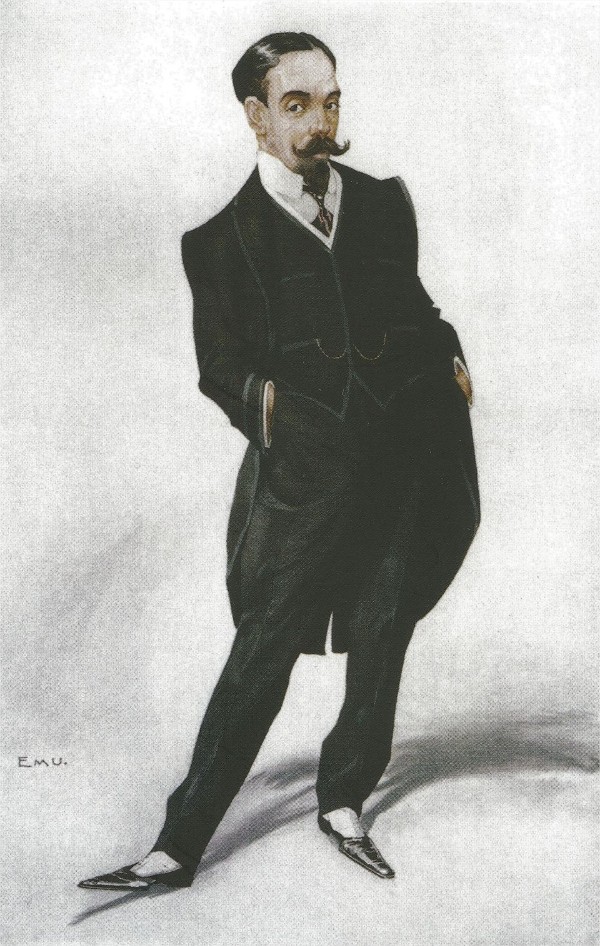
In a note to his 10-year-old sister, Thomas Beecham downplayed the whole performance:

Emu: Thomas Beecham, 1910

Emu: Thomas Beecham, 1910

It’s easy. All you have to do is waggle a stick.

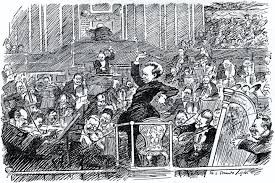
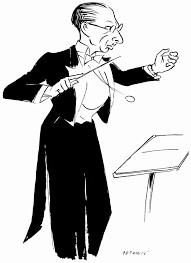
In 1927, Richard Strauss wrote his 10 Golden Rules for a young conductor, and he cautioned that:

Strauss conducting, 1916

Strauss conducting, 1916

You must not perspire while conducting; only the public must get warm.

He also had something against the wind sections:

Never let the horns and woodwinds out of your sight; if you can hear them at all, they are too loud.

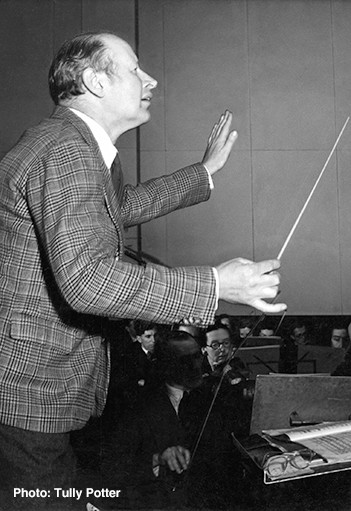
English conductor Eugene Goosens loved the podium:

Eugene Goosens (photo by Tully Potter)

Eugene Goosens (photo by Tully Potter)

It is the most wonderful of all sensations that any man can conceive. It really oughtn’t to be allowed.

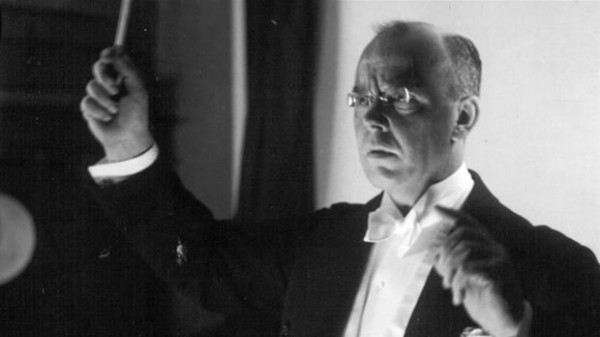
Russian-American conductor Nikolai Malko cautioned against conductors who resorted to other means to get their directions across:

Nikolai Malko

Nikolai Malko

He should rely on gestures more than words. It often happens that a conductor begins to talk when gestures fail him and then becomes accustomed to his own chatter.

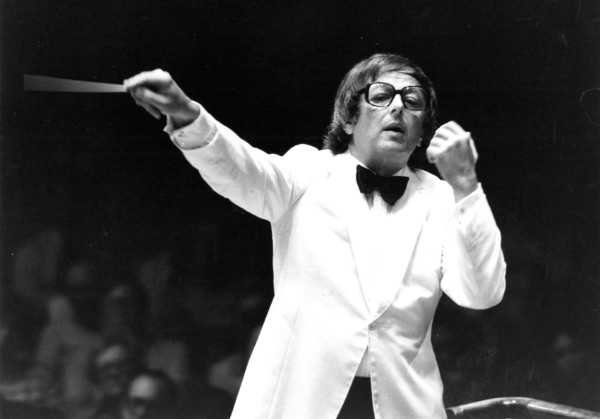
Sometimes the soloist has to reassure the conductor. Hornist Barry Tuckwell told conductor André Previn how to get out of a mess:

André Previn

André Previn

When you get lost, and you will, everybody does at one time or another, just make some elegant vague motion, and we’ll put it all to rights quickly enough.

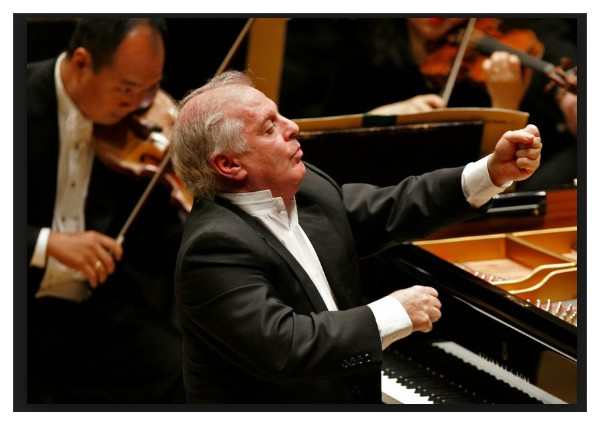
Pianist and conductor Daniel Barenboim had his doubts about conductors and their egos:

Daniel Barenboim

Daniel Barenboim

Today, conducting is a question of ego: a lot of people believe they are actually playing the music.

Barenboim, of course, made his early name conducting piano concertos from the keyboard, thereby knowing that he was actually playing the music in at least one sense!

Russian-American composer and conductor Igor Stravinsky was with Barenboim on how conductors considered themselves:

Stravinsky conducting

Stravinsky conducting

‘Great’ conductors, like ‘great’ actors, soon become unable to play anything but themselves.

Hmmm. Sean Connery, anyone?

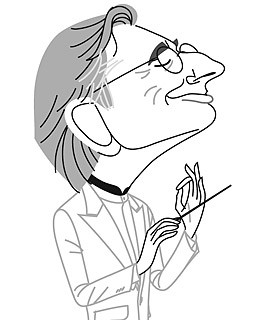
San Francisco Symphony’s conductor Michael Tilson Thomas said it most plainly:

Michael Tilson Thomas (illustration by Zach Trenholm)

Michael Tilson Thomas (illustration by Zach Trenholm)

Conductors are performers.

English clarinettist Jack Brymer wondered why conductors were regarded so highly when they abandoned playing in the orchestra for the podium:

Why is anyone who adopts successfully this strange form of extroversion regarded instantly as being of so much greater moment than he was last week, when he was just a player?

Brymer also saw the orchestra in a different light than many people:

No wise conductor tries to outdo that bunch of professional comics, which is the average symphony orchestra.