Total Pageviews

Showing posts with label Georg Predota. Show all posts

Saturday, January 13, 2024

Let’s meet in the Rat hole! Franz Liszt and Marie d’Agoult


“She was beautiful, very beautiful, a Lorelei: slender, of lofty bearing, enchantingly graceful and yet dignified in her movements, her head proudly raised, with an abundance of fair tresses, which waved over her shoulders like molten gold, a regular, classic profile, which stood in strange and interesting contrast with the modern breath of dreaminess and melancholy that was spread over her countenance; these were the general features which rendered it impossible to overlook her in the salon, the concert-room, or the opera-house, and these were enhanced by the choicest toilets, the elegance of which was surpassed by few, even in the salons of the Faubourg St. Germain.

Portrait of Marie d'Agoult by Henri Lehmann, 1843

Portrait of Marie d’Agoult by Henri Lehmann, 1843

That fantastic dreams were hidden behind the purity of her profile, and passion, burning passion, under the soft melancholy of her expression, was known to but a few, at the time that her connection with the young artist began.” The lady in question — described by the early Liszt biographer Lina Ramann — was none other than Marie Catherine Sophie d’Agoult. Born Marie Flavigy in Frankurt am Main, she was sent to Paris at the age of sixteen. Once she had finished her education at the Sacré Coeur, and after a torrid affair with the poet Alfred de Vigny, she married the Comte Charles d’Agoult in 1827. He was fifteen years her senior, an ill-mannered and hardly functioning war veteran, and love was simply not part of the equation. They did have two children, but by and large, they conducted an open marriage. That left Marie — who described herself as six inches of snow covering twenty feet of lava — with plenty of time to enjoy the sparkling gaiety of the salon. 

In early 1833, the Marquise Le Vayer invited Marie to sing in a women’s choir. The guest of honor was Franz Liszt. In her memoirs, Marie details this first encounter: “I use apparition because I can find no other word to describe the sensation aroused in me by the most extraordinary person I had ever seen. He was tall and extremely thin. His face was pale and his large sea-green eyes shone like a wave when the sunlight catches it. His expression bore the marks of suffering. He moved indecisively and seemed to glide across the room in a distraught way, like a phantom for whom the hour when it must return to the darkness is about to sound. Franz spoke with vivacity and with an originality that awoke a whole world slumbering in me. The voice of the young enchanter opened out before me a whole infinity, into which my thoughts were plunged and lost. Between us there was something at once very young and very serious, at once very profound and very serious.”

Marie was six years older than the young enchanter, and by the early summer of 1833 their affair was in full bloom. Liszt visited her in Croissy, and Marie came to Paris where they secretly met in a small apartment affectionately referred to as the “rat hole.” The chemistry was unmistakable, and by May 1833 she wrote, “Sometimes I love you foolishly, and in these moments I comprehend only that I could never be so absorbing a thought for you as you are for me.”

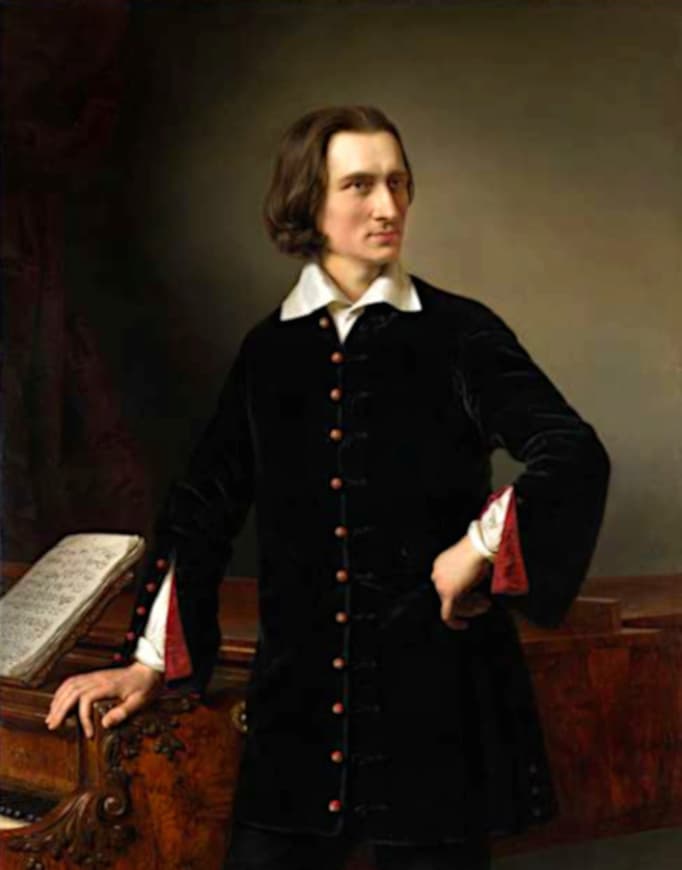
Franz Liszt, 1847

Franz Liszt, 1847


Liszt’s declaration of love was not far behind, and burning with desire he writes: “How ardent, how glowing on my lips is your last kiss! Marie, Marie, let me repeat that name a thousand times. It lives within me, burns me and threatens to consume me. I am not writing you; I am with you. Oh for an eternity in your arms. There is heaven and hell, and everything else, inside you, yes, inside you. Let me be wild and crazy. I am beyond help.” Concordantly, Liszt introduced himself to the public as a mature and original composer with his poetic Harmonies poétiques et religieuses and a set of three Apparitions. However, these early days of courtship did not run entirely smoothly. Some of the love letters he had written to Adèle de Laprunarède following their winter tryst in the Savoy came into Marie’s hands and sparked a violent jealous row. Although he pleaded with her to accept the letters as immature follies, Marie never really forgave him. In addition, Marie’s six-year-old daughter Louise fell ill, and within a couple of days died from massive inflammation of the brain.

It is unclear whether Marie considered this tragedy a punishment for her illicit affair with Franz, but in her state of depression and despair, in which she contemplated suicide, she refused to answer his calls or his letters. After nearly six months of being unable to see Marie, Franz wrote her a letter announcing his intention of leaving France, and expressing his desire to see her one last time. Marie relented and travelled to Paris for an emotional reunion in March of 1835. Blandine, their first daughter, was born nine months later.

Saturday, December 9, 2023

First Concert of the Philharmonic Society of New York 7 December 1842

by Georg Predota, Interlude

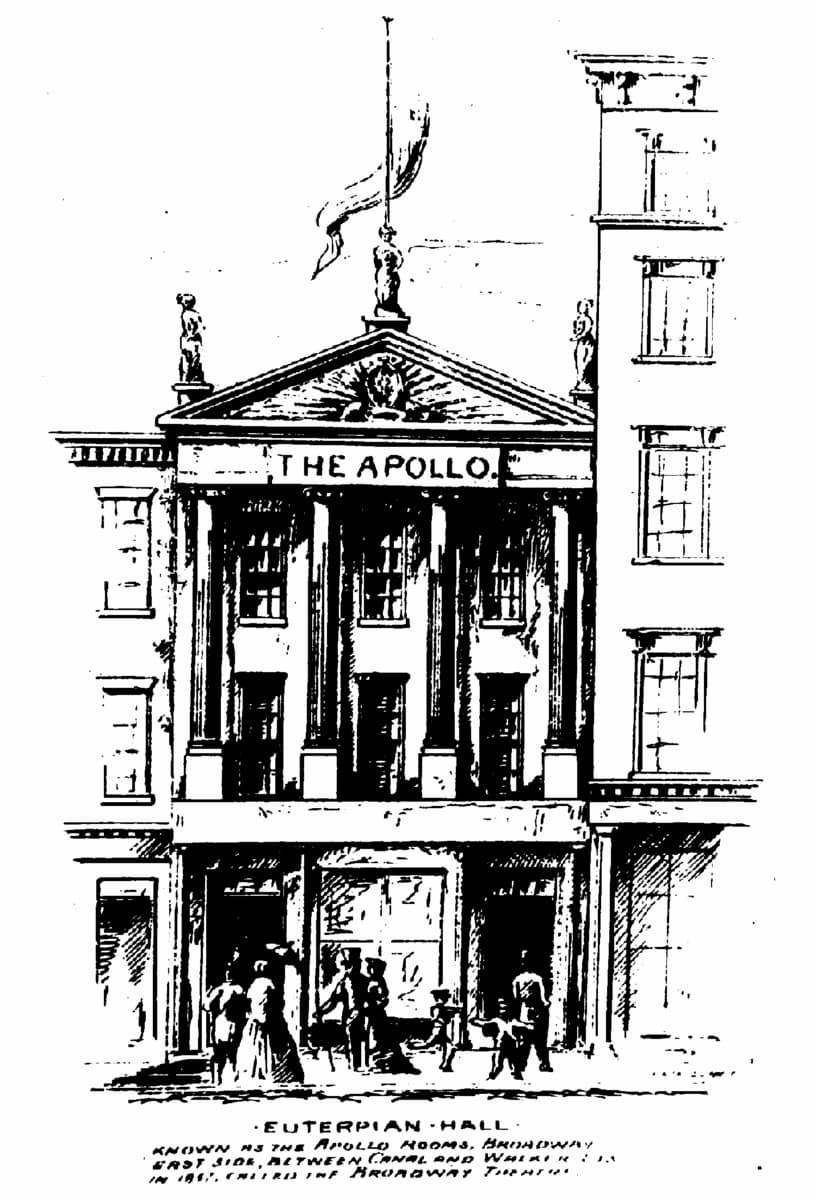
A momentous occasion took place on 7 December 1842 in the Apollo Rooms on lower Broadway. On that day, 600 audience members witnessed the first concert of the Philharmonic Society of New York.

The Apollo Rooms in New York

The Apollo Rooms in New York

Formed as a cooperative organization of about 45 musicians and led by American-born violinist and conductor Ureli Corelli Hill, the principal aim of the society was “the advancement of instrumental music.” Today the orchestra is better known as the New York Philharmonic Orchestra (NYPO), and we thought it might be fun to recreate an abridged version of that first performance. 

The programme for this opening concert was decided upon by a majority vote by the musicians of the orchestra. This performing cooperative also decided who would perform, and who among them would conduct. And at the end of the season, the players would divide the proceeds among themselves.

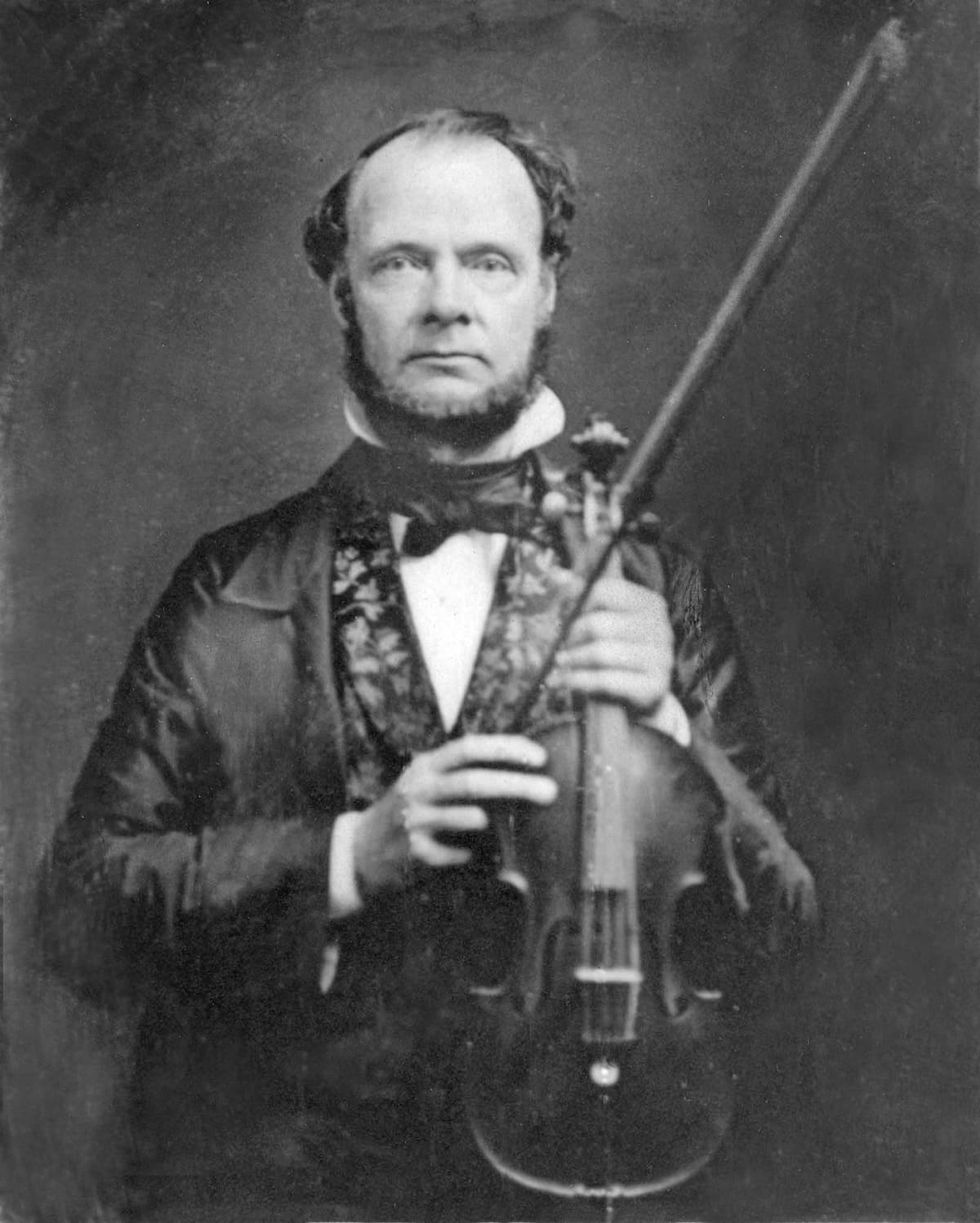
Ureli Corelli Hill

Ureli Corelli Hill

It all opened with Beethoven’s Symphony No. 5, led by Ureli Corelli Hill himself. Hill hailed from Connecticut, and his father was a music teacher and composer. He became the conductor and violinist of the New York Sacred Music Society, and he guided the first American performance of Mendelssohn’s St. Paul. Hill went to Germany to study with Louis Spohr, and organized the New York Philharmonic Society after his return to the States.

Carl Maria von Weber: Oberon, Act II “Ocean! Thou mighty monster”

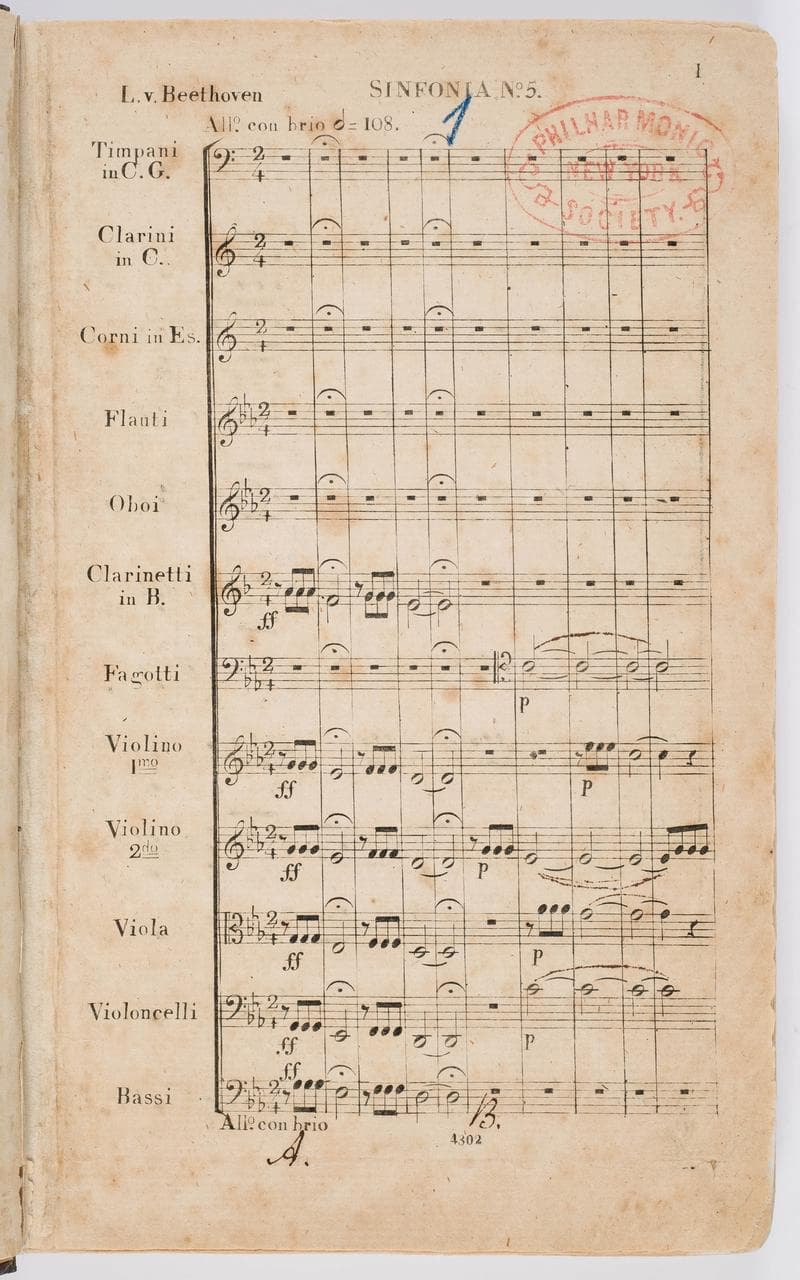
The music score copy of Beethoven's Symphony No. 5 used at the inaugural concert

The music score copy of Beethoven’s Symphony No. 5 used at the inaugural concert

Concert programmes during the mid-19th century were rather eclectic affairs and included chamber music and several operatic selections featuring a leading singer of the day. And audiences got their money’s worth, as concerts of this nature tended to run between 3 and 4 hours. As such, the second selection on that opening programme belonged to Carl Maria von Weber, and an excerpt from his opera Oberon.

The selection is taken from the second act of the Opera, when the heroine Reiza has been left alone and shipwrecked. As her husband has left her to find assistance, she describes the storm in an address to the Ocean. This selection was presented by Madame Otto, who as a critic writes, “has a lovely voice but must allow that she needs the knowledge to direct its use, the taste to render it effective, and the warm and earnest feeling which carries conviction to the heart of the listeners.”

Johann Nepomuk Hummel: Quintet in D minor, Op. 74a

Madame Antoinette Otto was highly active on New York stages during the 1840s. She was part of the operatic corps of the Park Theatre, and as she was married to Henry Otto, a founding member of the New York Philharmonic, she prominently featured in its opening programme. Otto would subsequently be one of the soloists in the Philharmonic’s 1846 American premiere of Beethoven’s Ninth Symphony.

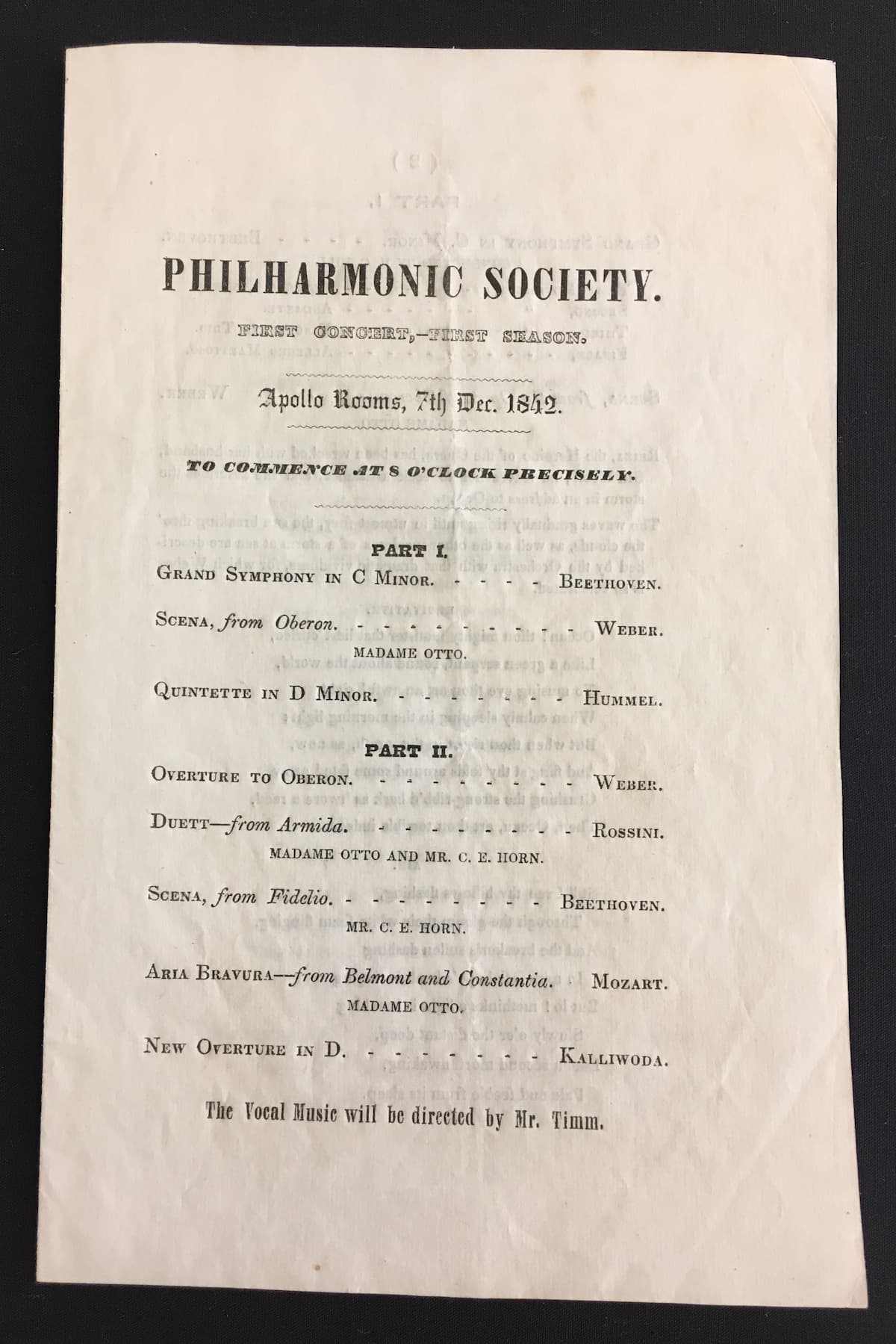
Philharmonic Society of New York first concert program

Philharmonic Society of New York first concert program

The first part of the inaugural concert of the New York Philharmonic concluded with a performance of Hummel’s Quintet in D minor, Op. 74a. Originally composed in 1816 as a Piano Septet, the work adheres to the Viennese classical style, but Beethoven’s influence is heard in the stormy character of the music. Hummel added his own personal pianism of unprecedented virtuosity and brilliance, and Ureli Corelli Hill was part of the performing ensemble.

For the opening number of the 2nd part of the Programme, the Oberon Overture by Carl Maria von Weber, Denis-Germain Étienne took up the baton. He was a pianist, composer and horn player who had graduated from the Paris Conservatoire with a number of prizes. Étienne immigrated to the United States in 1814 or 1815, and performed in various American cities before settling in New York. He was chosen to be the permanent conductor of the newly founded Philharmonic Society in 1824, and he played both piano and French horn in the Philharmonic Symphony Society. 

Immediately following this rousing opener of the second half, audiences were treated to the famous Duet “Amor! Possente nome” from Rossini’s opera Armida. Set during the first crusade near Jerusalem, the sorceress Armida is determined to weaken the Crusaders by dazzling the best soldier Rinaldo with her beauty. However, Armida has secretly fallen in love with Rinaldo, and she confronts him. When she accuses him of ingratitude, he admits that he’s in love with her as well.

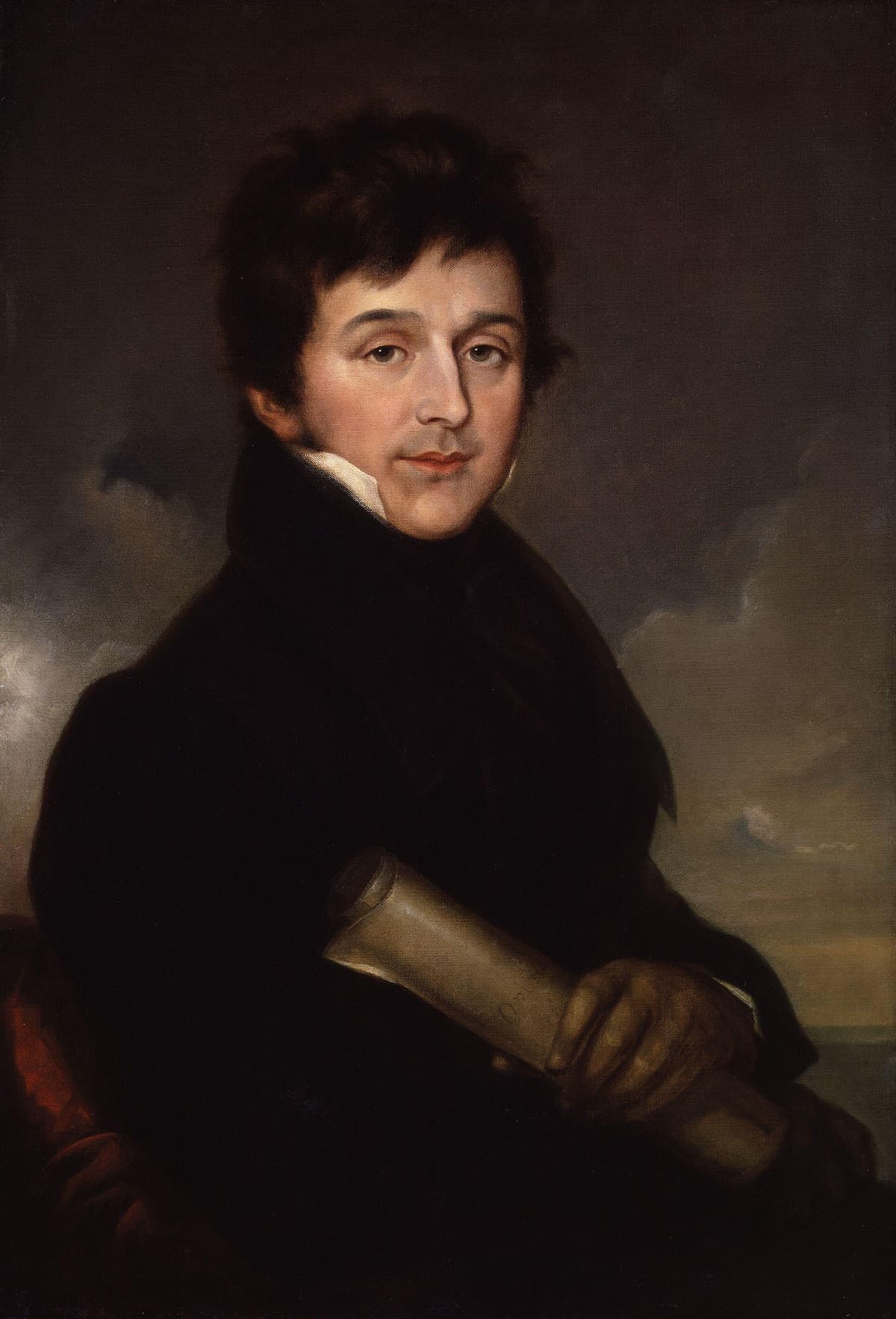
Charles Edward Horn

Charles Edward Horn

For the Armida duet, Madame Antoinette Otto was joined on stage by the English composer and singer Charles Edward Horn. Horn gave his singing debut in 1809 in a comic opera at Lyceum Theatre, London. He rose to prominence with his portrayal of Caspar in the English version of Weber’s Freischütz, and soon also started a career as a composer. In one instance, he was accused of plagiarism but acquitted in court.

Horn first sailed for New York City in 1827 and made a successful American impression in works by Storace, Weber, Mozart, and Rossini. He did return to England to serve as music director of the Olympic Theatre from 1831 to 1832, before returning to New York. 

Horn took on the directorship of Park Theatre, producing and directing performances of his own works and arrangements of works of others. His oratorio The Remission of Sin of 1835 may well been the first oratorio composed in the United States. Horn lost his voice due to illness and became active as a vocal coach.

Luckily, Horn found his voice again, and he now took the solo stage at the first concert of the Philharmonic Symphony Society of New York in the role of Florestan in Beethoven’s Fidelio. At the beginning of Act 2, Florestan is alone in his cell, deep inside the dungeons. He knows who is responsible for his incarceration, and sings of his trust in God, and then has a vision of his wife Leonore coming to save him.

Wolfgang Amadeus Mozart: The Abduction from the Seraglio, “How I loved him, I was happy”

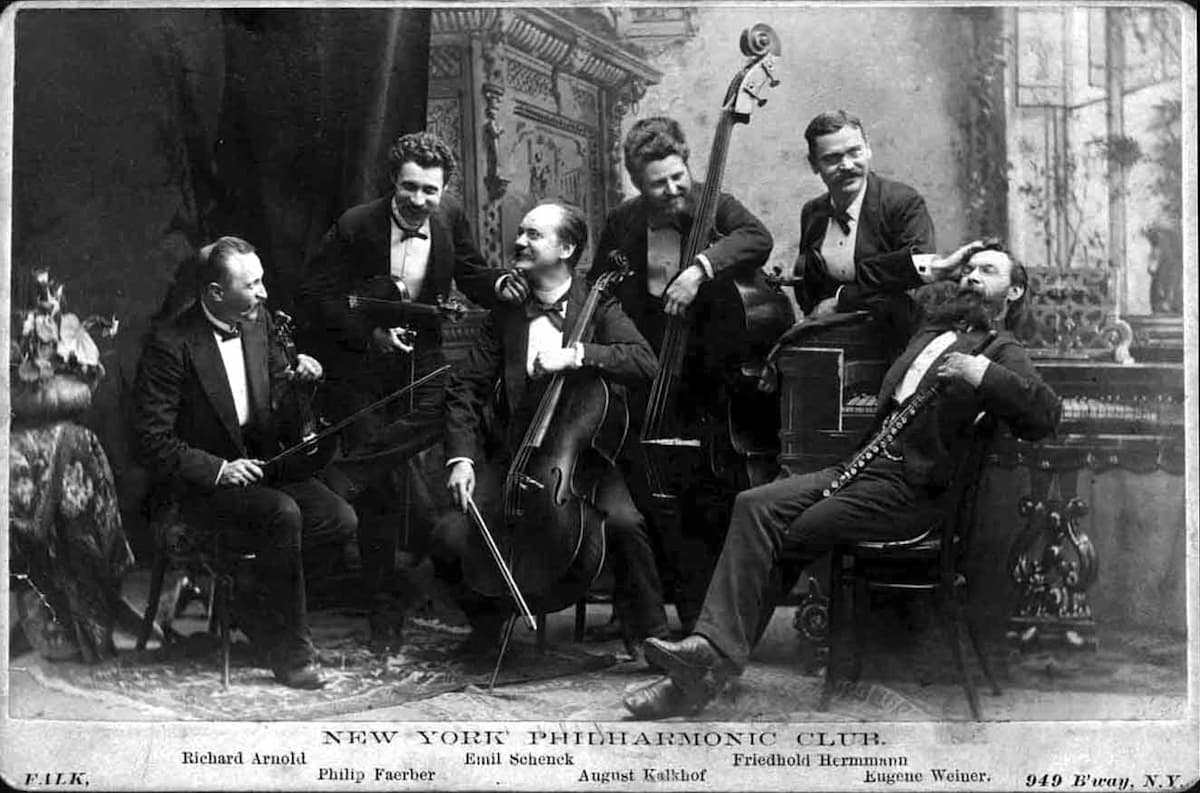
New York Philharmonic Club Chamber Ensemble

New York Philharmonic Club Chamber Ensemble

Charles Edward Horn eventually decided to retire in Boston. He was quickly elected director of the Handel and Haydn Society, and Madame Antoinette Otto was a frequent performer. She again took to the solo stage in the aria “How I loved him,” from Mozart’s Abduction from the Seraglio. As was customary at that time, portions of the libretto were printed in the playbill.

Alas, I loved,
I was so happy;
I knew nothing of love’s pain.
Promised to be true
To my beloved,
And I gave him all my heart.

But how quickly my joy deserted me,
Separation was my unhappy fate.
And now my eyes are bathed in tears,
Grief resides in my breast.

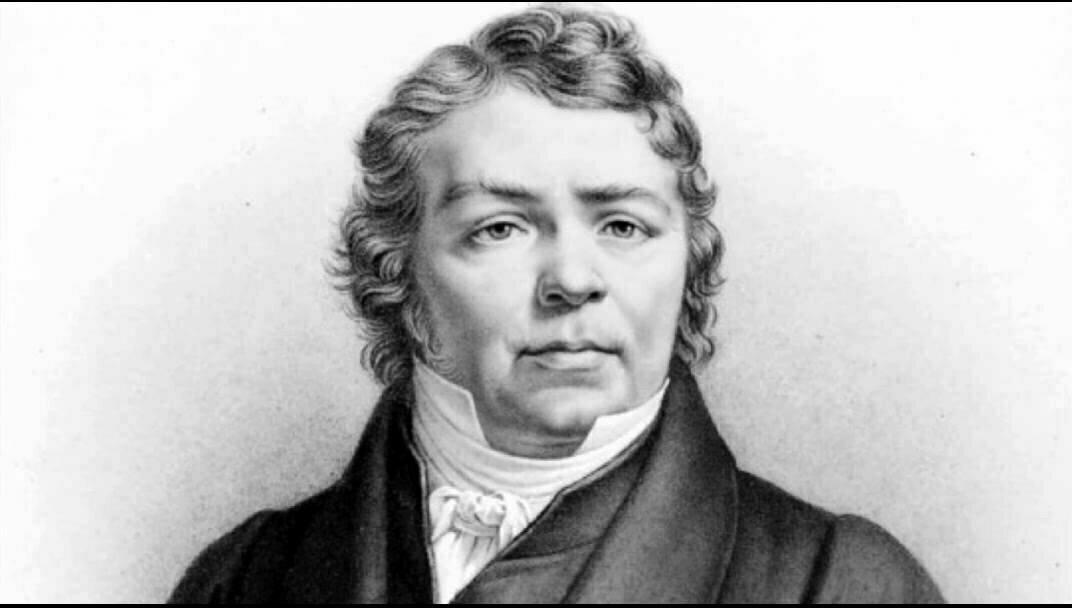
Johann Wenzel Kalliwoda: Overture No. 12 in D Major, Op. 145

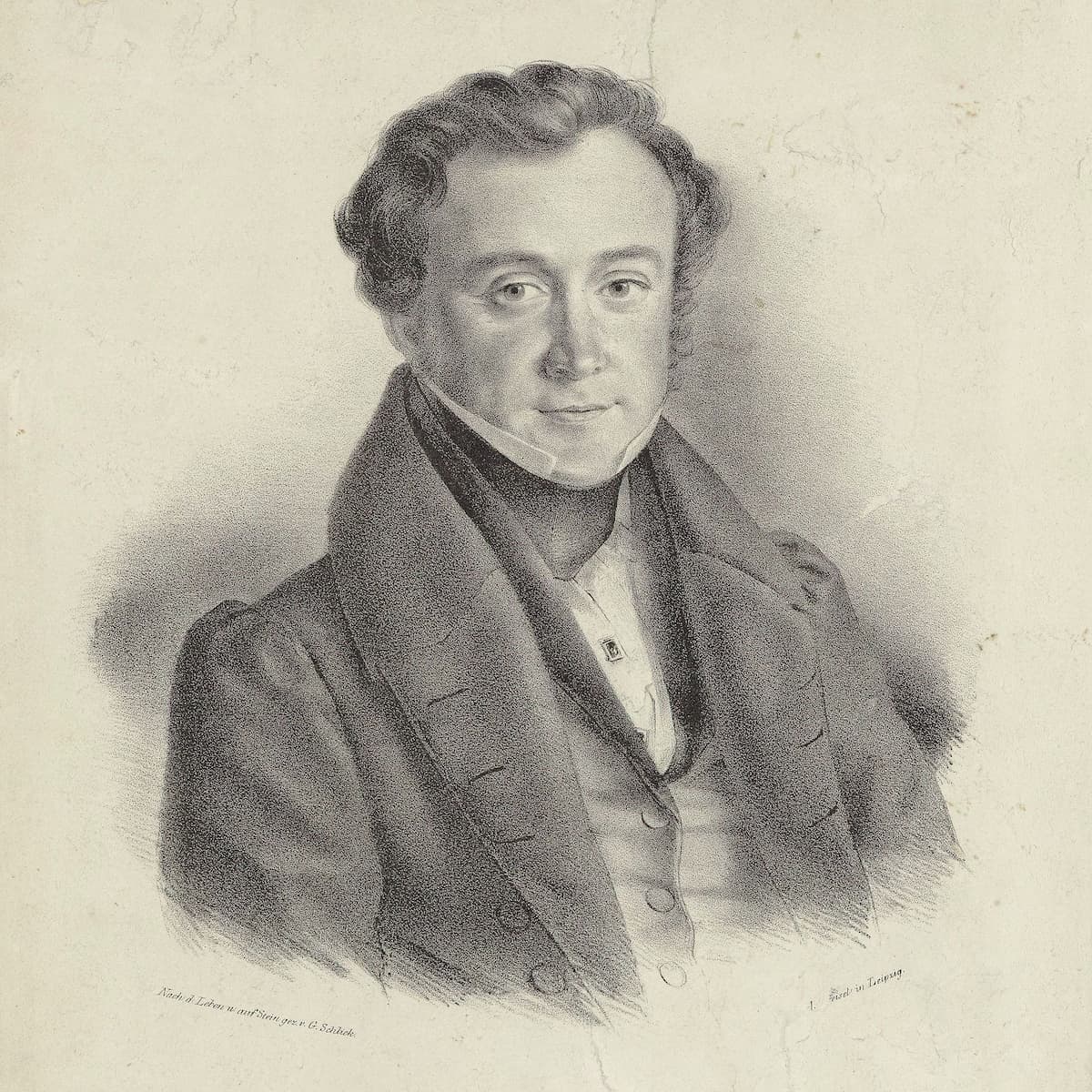
Johann Wenzel Kalliwoda

Johann Wenzel Kalliwoda

To conclude the first concert of the Philharmonic Society of New York, the orchestra decided to perform a newly composed overture by Johann Wenzel Kalliwoda. Kalliwoda seems an interesting choice for us today, but in his day he was described as “a master of the first rank.

Many-sided, sure of himself in every field, often new and original and yet natural and simple, he repeatedly makes the impression of a choice talent and nears the final stage on the way to immortality.”

This final selection, and all the vocal numbers, were conducted by Henry Christian Timm, a German-born American pianist, conductor, and composer. Timm worked in New York City as a concert pianist, teacher, organist, and chamber musician. He served as the president of the city’s Philharmonic Society from 1847 to 1864. Kalliwoda and Timm seemingly did not achieve immortality, but the New York Philharmonic Orchestra probably did. They were certainly off to a great start.

Friday, November 10, 2023

Famous Father, Famous Son! Franz and Richard Strauss

By Georg Predota , Interlude

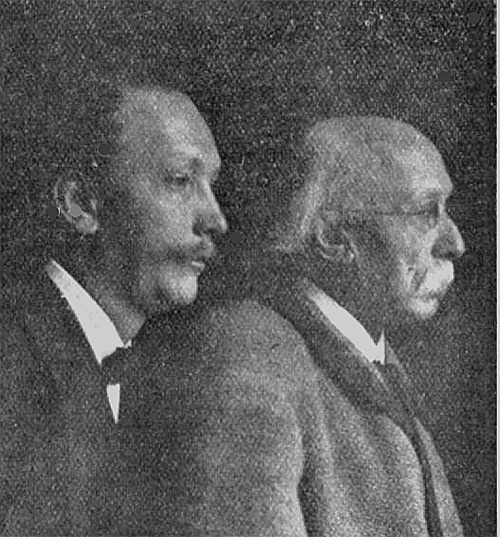
Famous musical sons frequently have famous musical fathers. And Richard Strauss is no exception. In his day, his father Franz was recognized as an important artistic personality. Foremost, he became a celebrated horn virtuoso, by “breathing soul into the unthankful instrument.” Even Richard Wagner, against whom the musically conservative Strauss took literally every opportunity to make his disapproval clear, recognized his unusual talent. “Old Strauss is an unbearable fellow, but when he plays the horn one can’t really mind him.” Franz Strauss became a member of the Royal Court Orchestra in Munich in 1847, and set new standards on his instruments for more than four decades. However, he also dabbled in composition, predictably centered on his favorite instrument.

Franz and Richard StraussCredit: Wikipedia

Franz and Richard Strauss © Wikipedia


Franz Strauss quickly recognized his son’s musical talent and entrusted four and a half-year-old Richard to August Tombo for piano lesson. Before long Richard was able to play the tunes in a book of operatic arrangements, and successfully tackled a Mozart sonata. His older sister remembered, “Richard made swift progress. Sight-reading presented him with no problems. His teacher played with him a great deal, and there was one trick that delighted Richard. His teacher played the bass part with the left hand, the top line with his right hand and the middle part with the tip of his long pointed nose.” Richard first tried his hands at composition at the age of six, when he composed the Schneider-Polka (Tailor Polka) for piano. However, as he was not yet capable of writing music, his father wrote it down for him. 

Young Richard was described by his teacher as “a student with excellent dispositions, good deportment and well behaved; lively, enthusiastic, attentive, sometime over-eager and hasty.” By the time he was 18, Richard had composed roughly 140 compositions, including almost 60 songs and more than 40 piano works. Much of these juvenilia pay homage to the musical creed of his father, who favored the “trinity of Mozart (most of all), Haydn and Beethoven.” The first time Richard heard a Beethoven symphony he did not understand it, he remained unmoved and even said, “he didn’t care of it.” Nor did he understand Beethoven’s sonatas and quartets at that stage. “In his piano lessons he preferred Chopin, Mendelssohn and Bach.” When Richard made his pianistic debut on 20 October 1885, however, he played the Mozart C-minor Concerto with his own cadenzas, which are unfortunately lost. Echoes of Mozart and the Classical style clearly emerge in his Serenade in E-flat for Thirteen Wind Instruments, Opus 7, dedicated to his composition teacher Franz Meyer. 

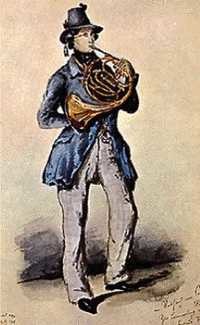
Franz StraussCredit: http://www.hornarama.com/

Franz Strauss ©hornarama.com

At age 21, Richard Strauss took up the post of assistant conductor of the Meiningen Orchestra. Hans von Bülow, a student of Franz Liszt and champion of the music of Richard Wagner and later Johannes Brahms had appointed him. To thank von Bülow, Richard composed a work for piano and orchestra originally titled “Scherzo in D minor.” Bülow considered it a “complicated piece of nonsense and unplayable” and refused to learn it. Strauss made some changes and renamed the work “Burleske” with Eugen d’Albert premiering the work in 1890. Bülow, however, was still not convinced and wrote to Johannes Brahms “Strauss’s Burleske decidedly has some genius in it, but in other respects it is horrifying.” 

Throughout his life, Richard Strauss had the highest admiration for Hans von Bülow. “For anyone who ever heard him play Beethoven or conduct Wagner, who attended one of his piano lessons or observed him in orchestra rehearsal, he inevitably became the model of all the shining virtues of a performing artist, and his touching sympathy for me, his influence on the development of my artistic abilities, were the decisive factors in my career.”

Friday, November 3, 2023

Leonard Bernstein and Felicia Montealegre: A Divided Life

by 

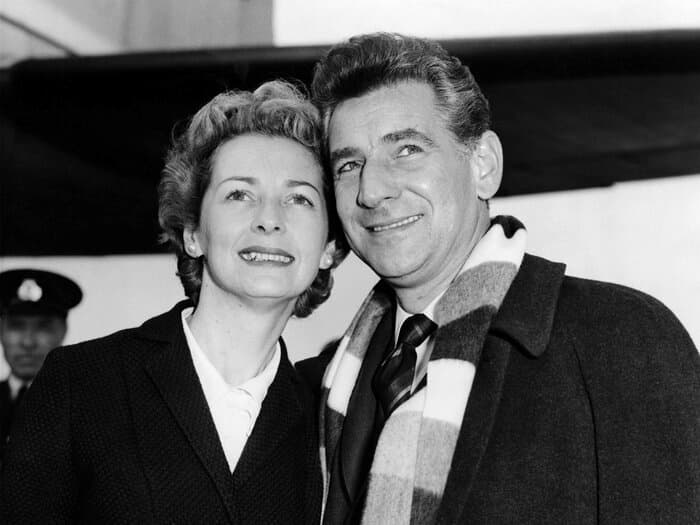
Felicia Montealegre was a stunningly beautiful Chilean stage and television actress making her living in New York. Leonard Bernstein was the wonder boy of the American classical music scene, who had made his spectacular conducting debut with the New York Philharmonic. They met at a party hosted by pianist Claudio Arrau, with whom Montealegre had studied. They were engaged a few months later, but the engagement was broken off after less than a year. The reason for the break-up of the relationship was not a secret, as Bernstein’s homosexual proclivities were undisputed and well documented.

Bernstein and his wife Felicia Montealegre, 1959

Leonard Bernstein and his wife Felicia Montealegre, 1959

During his Harvard years, Bernstein had affairs with famed conductor Dimitri Mitropoulos and the aspiring composer Aaron Copland. And during his visit to Israel in 1948, he fell in love with the young soldier Azariah Rapoport. Bernstein writes, “I can’t quite believe that I should have found all the things I’ve wanted rolled into one. It’s a hell of an experience – nerve-racking and guts tearing and wonderful. It’s changed everything.”

Felicia was fully aware of Leonard’s sexual preferences, but she nevertheless continued to pursue him over the next three years. And Bernstein was worried that his homosexual activities would prevent him from landing a major conducting appointment. The couple married in September 1951 with the clear understanding that as long as Lenny did not embarrass Felicia publically, he was free to pursue his homosexual affairs. Despite this obvious marriage of convenience, there was a good deal of love between them. Soon after their wedding, Felicia openly writes to her husband, “If I seemed sad as you drove away today it was not because I felt in any way deserted but because I was left alone to face myself and this whole bloody mess which is our “connubial” life. I’ve done a lot of thinking and have decided that it’s not such a mess after all. First: we are not committed to a life sentence—nothing is really irrevocable, not even marriage (though I used to think so). Second: you are a homosexual and may never change—you don’t admit to the possibility of a double life, but if your peace of mind, your health, your whole nervous system depends on a certain sexual pattern what can you do? Third: I am willing to accept you as you are, without being a martyr or sacrificing myself on the L.B. altar. (I happen to love you very much—this may be a disease and if it is what better cure?) Let’s try and see what happens if you are free to do as you like, but without guilt and confession, please! The feelings you have for me will be clearer and easier to express—our marriage is not based on passion but on tenderness and mutual respect.”

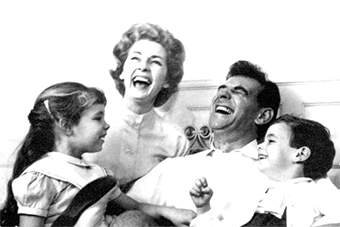
Leonard Bernstein with his wife Felicia and his children Jamie and Alexander

Leonard Bernstein with his wife Felicia and his children Jamie and Alexander

The couple had three children, which led to the assumption that Bernstein was bisexual. However, according to his collaborators in West Side Story, Bernstein was simply “a gay man who got married. He wasn’t conflicted about his sexual orientation at all. He was just gay.” As was customary at that time, Bernstein appeared a devoted husband and father in the public eye, while carrying on a promiscuous homosexual life behind the scenes. It might have been a customary to hide behind a public facade, but Bernstein certainly felt that his homosexuality was a curse. He even underwent psychoanalysis from a specialist “curing homosexual men of their inversion.”

In the end, the only cure was to publicly acknowledge his homosexuality, while taking out his frustrations on his wife. Apparently, Bernstein was having sex with a twenty-year old boy in the hallway while his wife was sitting in the living room. And when he met the young Tom Cothran in 1973, he allowed his wife to catch them in bed together. By 1976, Bernstein had left his wife for his latest male lover. The very next year, Felicia was diagnosed with lung cancer and Bernstein cared for her until her death in 1978. After Felicia’s death, Bernstein gave free reign to his addiction to alcohol and drugs, and engaged in openly crude homosexual activities. Yet, he always felt guilt over how his double life had adversely affected her. He eventually gave voice to his anguish in his 1983 opera A Quiet Place, sequel to his 1951 Trouble in Tahiti. As a close family friend once remarked, “Leonard required man sexually and women emotionally.”

Friday, October 6, 2023

The Music of Poetry

by 


Publication History

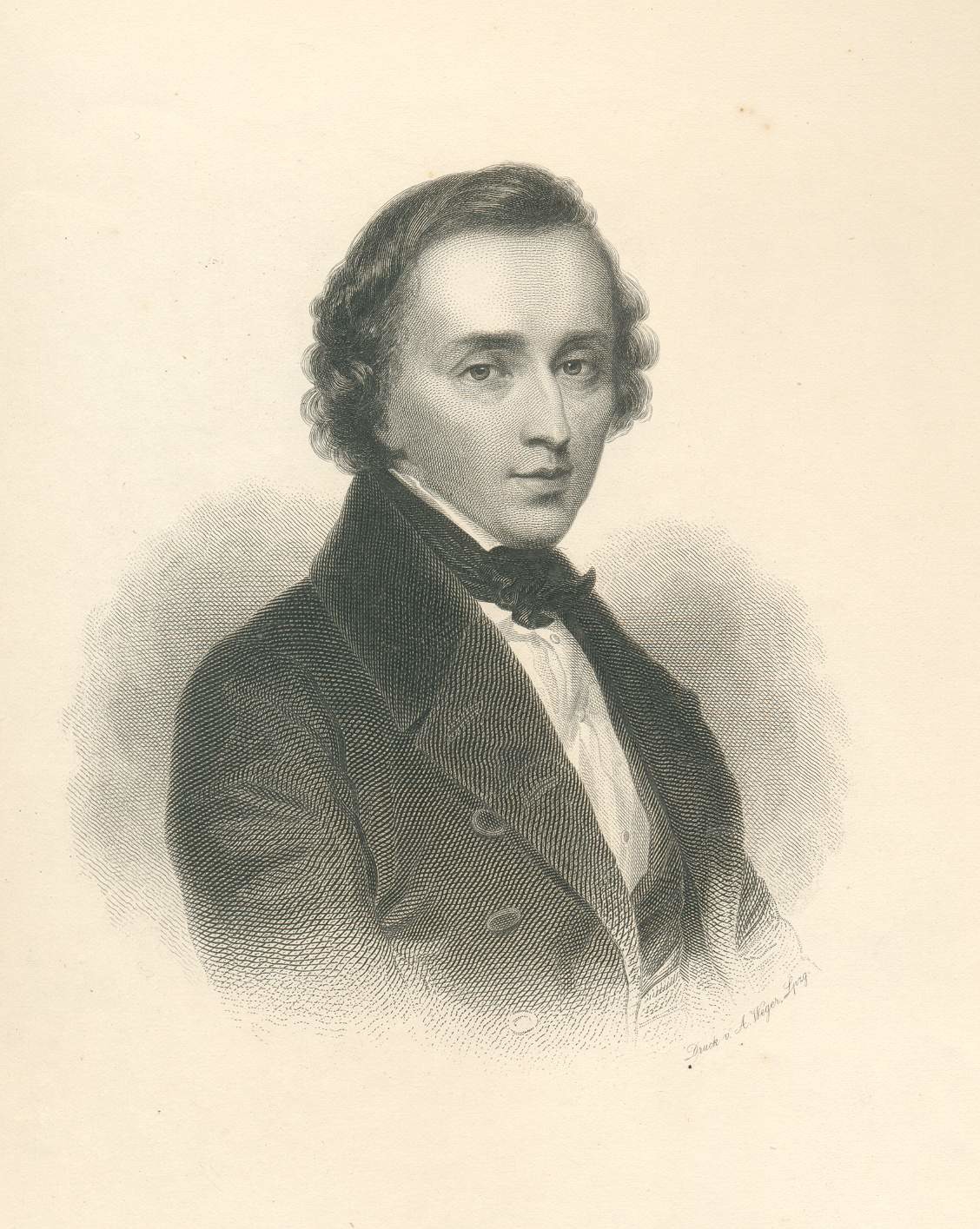
Frédéric Chopin

Frédéric Chopin

Chopin actually did not approve for his songs to be published at all. Juliusz Fontana, the composer’s friend and later the editor of the songs, mentioned that in Paris, at emigrant evenings, Chopin “in the moments of hearty frankness would recite them with intonation and accompaniment of the piano, with a book of poetry in front of him, postponing the moment of writing them down.”

Chopin did extemporize his songs at various times, from possibly as early as 1827 when he was 17, to 1847, two years before his death. All but one of the texts is based on original poems by Polish contemporaries, many of whom Chopin personally knew. As only two of them were published in his lifetime, Chopin’s mother and his sister sought to bring them to the public by looking for a suitable publisher. By 1857 the remaining 17 Polish songs had been collected and issued as Chopin’s Opus 74 by the publishing firm of Heinrich Schlesinger. 

Chopin’s Study With Józef Elsner
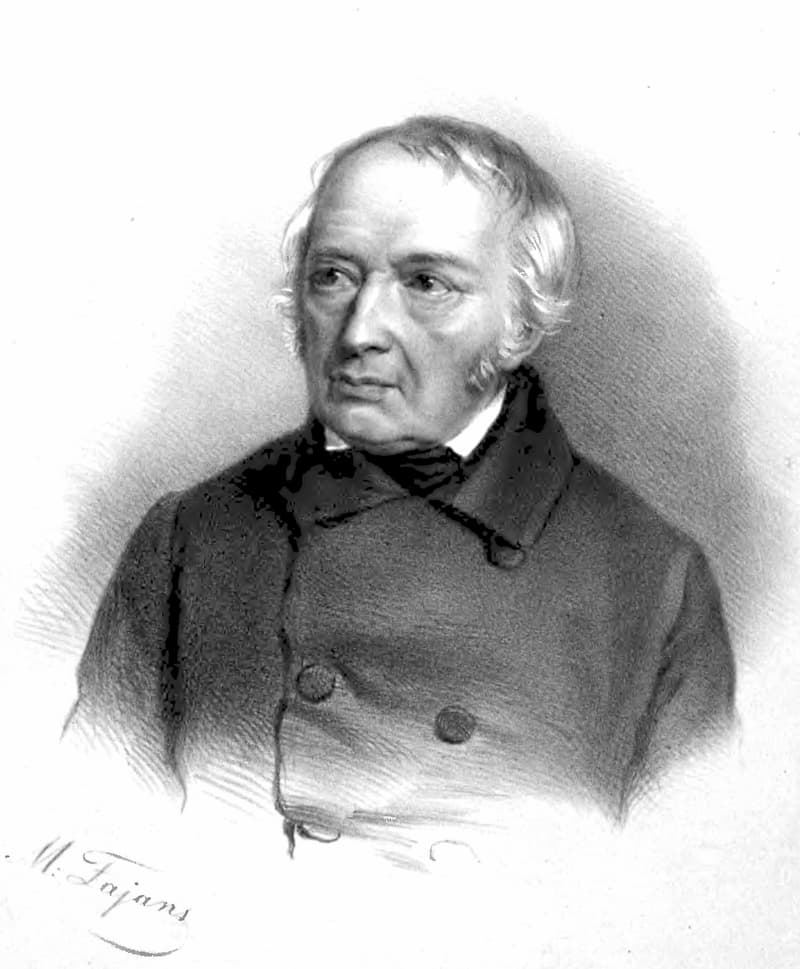
Józef Elsner

Józef Elsner

The Polish composer, music teacher, and music theoretician Józef Elsner is probably best known as the principal composition teacher of the young Frédéric Chopin. In his Treatise on Polish Poetry with Regard to Music of 1818, Elsner explored one of the most significant musical issues of his time. That being the creation of national music through the setting of contemporary, and often radical, Polish texts.

As he writes, “Every intelligent, creative person who understands the relationship between music and poetry, and who is connected to one of the other is deeply moved by it, must be aware of the shared perfection of the two arts. The influence of music on poetry, and poetry on music is so important, that one art form cannot be precisely and fully explained without reference to the other.”

The earliest Chopin art song in his Op. 74 collection was published only ten years after the publication of Elsner’s treatise. In fact, Chopin had been interested in art song composition from the time of his earliest studies with Elsner, and in his early group of songs, Chopin adheres strictly to “Elsner’s rules on the accentuation of penultimate syllables in closing phrases and section.” 

If I were the sun in the sky
I wouldn’t shine just on you.
Neither on lakes
nor forests
but on everything;
Oh the times under your window and only for you
If I could only change into the sun.

If I were a bird from that forest
I wouldn’t sing in any foreign country
Neither on lakes
nor forests
but on everything;
Oh the times under your window and only for you
If I could only change into a bird.
(trans. Christopher Lapkowski)

Songs Composed During His Teenage Years in Warsaw
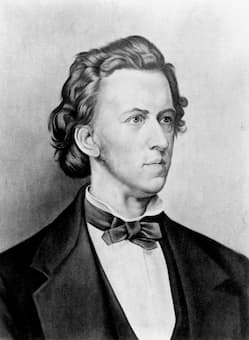
Frédéric Chopin, 1873

Frédéric Chopin, 1873

During his teenage years in Warsaw, Chopin seemed to have spontaneously composed a number of songs in a local coffee house. He regularly attended with his friends, and “Chopin would simply sit down at the piano and play.” The poet Stefan Witwicki (1801-1847) was part of the Chopin circle, and like the composer, he was interested in the ideals of Polish nationalism. Chopin set eight poems by Witwicki, beginning around 1829 with “Życzenie” (A Maiden’s Wish) and “Gdzie lubi” (Where She Loves).

These songs seemed to have quickly gained popularity and were circulated in copies with added accompaniment, and occasionally with changed lyrics. Chopin stayed in touch with Witwicki after he left the country, and in July 1831 the poet sent a letter to Vienna.

“Dear Mr. Fryderyk, let me remind myself to your memory. I would like to thank you for the songs. Both I and everyone who knows them like them very much and you would admit to yourself that they are very beautiful if you heard them performed by your sister. Your friend Witwicki… If you wanted to write music to another song…” 

Chopin’s early songs feature, for the most part, regular four-measure phrasing subdivided into smaller two-measure units. He rarely employs successive melodic accents within the closing phase, “and his songs can perhaps be best interpreted as a transformation of original folk melody and vernacular text. Such melodies and texts are given new interpretations within the art song framework, particularly in terms of dramatic intent and ornamentation of accented syllables.” And while there are tangible allusions to folksong in Chopin settings, there is no documented evidence to suggest that the composer quoted directly from folk sources. My darling, when in a joyous moment

You begin to chatter and wail and coo,
Such lovely cooing, chattering and wailing
Not wanting to miss a single word,
I dare not interrupt, I dare not respond,
I only wish to listen!

But when the vividness of speech lights your eyes
And rosies the berries more intensely
Pearly teeth shine among corals,
Ah! then I will look boldly in your eyes
I hurry my lips and to do not demand to listen,
Only to kiss!
(trans. Jennifer Gliere)

Poetry by Adam Mickiewicz
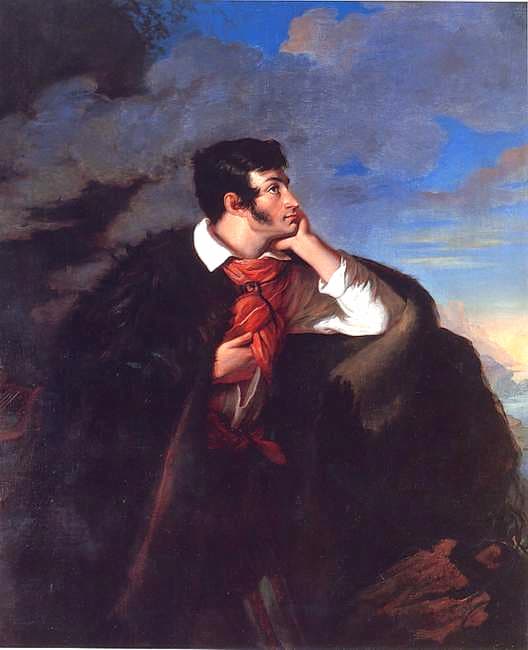
Adam Mickiewicz

Adam Mickiewicz

The Polish-Lithuanian poet Adam Mickiewicz (1798–1855) is regarded as a national poet in Poland, Lithuania and Belarus. A principle figure in Polish Romanticism, he is one of the so-called “Three Bards,” whose work was thought to give perfect expression to Polish nationalism. Chopin and Mickiewicz were close friends, particularly during the years when Chopin lived in Paris. Perhaps their most significant point of convergence was the intensity of their national feelings and the homesickness they both experienced.

Mickiewicz fondly remembered Chopin as “the sweetest figure” he had ever known. According to Robert Schumann, Mickiewicz supposedly inspired Chopin’s piano ballades, but we know with certainty that Chopin set two Mickiewicz poems. These settings are separated by about ten years, with the liltingly beautiful love song “My darling” written in 1837, and the declamatory “Out of my sight” dating from 1827. 

Out of my sight! Leave me I beg you!
Out of my heart! I cannot go against you.
Out of my thoughts! No, that ultimate surrender
Our memories could ever render.

As evening shadows lengthen
And stretch their sad imploring arms,
My face will shine brighter in your mind
The further you are from me.

In every season in places close to our hearts,
Where we have shared laughter, tears and glances,
Always and everywhere shall I be with you,
For everywhere I have left a part of my soul. 

Poetry by Bohdan Zaleski
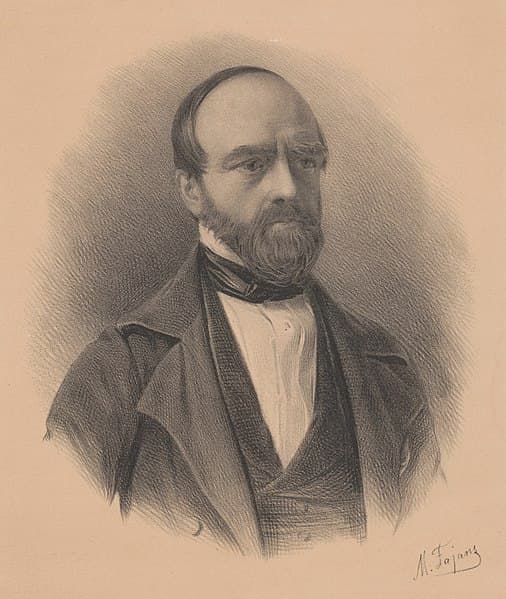
Bohdan Zaleski

Bohdan Zaleski

The Polish-Ukrainian poet Bohdan Zaleski (1802-1886) was part of the Mickiewicz circle, and an active member of a number of nationalist organizations, including the Slavonic Society and the Polish Democratic Society. Zaleski was associated with Romanticism and sentimentalism, and his love and reflective lyrics were inspired by folk poetry. Zaleski was a personal friend of Chopin, and his wife was the composer’s piano student between 1843 and 1844. In all, Chopin set four of Zaleski’s poems, and he seems to have been particularly interested in Zaleski’s historical dumkas.

Originating in Ukraine, the dumka was performed by itinerant Cossack bards and centered on historical events, often dealing with military actions. Although the narratives mainly revolve around war, they primarily impart a moral message in which one should conduct oneself properly in relationships with the family, the community, and the church. Chopin’s melody is reminiscent of a bard’s song, and the accompaniment mimics the strokes of the lyre. This is clearly a lyrical lament of a wanderer far from his homeland, a sentiment that Chopin could readily identify with.


My eyes mist over with tears from deep within me,
All around me darkness is gathering;
A dumka wells up and dies on my lips
In silence, ah, in the silence of unhappiness.

What bliss it would be to love and to sing!
Then I would dream in this alien
wilderness as I did at home;
I long to love — and there is no one.
I long to sing — and there is no one to sing to.

Poetry by Wincenty Pol
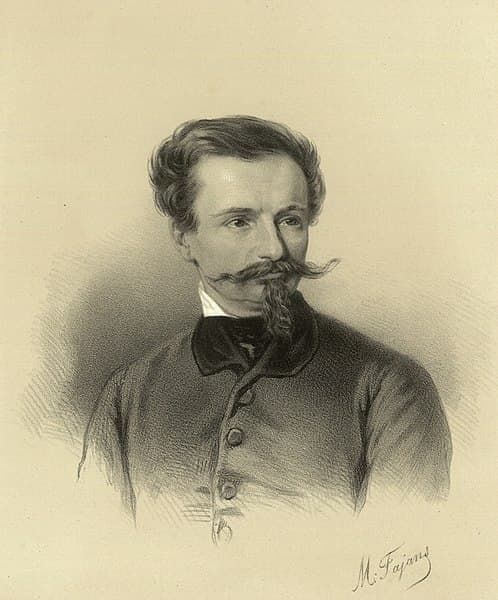
Wincenty Pol

Wincenty Pol

The Polish poet and geographer Wincenty Pol (1807-1872) fought in the Polish army during the November 1830 Uprising. This armed rebellion in the heartland of partitioned Poland was fought against the Russian Empire. A substantial segment of people from Lithuania, Belarus, and Ukraine joined the uprising, and although the insurgents achieved local successes, a numerically superior Imperial Russian crushed the uprising. Pol published a collection of highly popular poems of the revolt titled “Songs of Janusz.” Apparently, Chopin composed music to ten or twelve of these, but only “Leaves are falling” has survived.  

The leaves are falling from a tree
Which grew to maturity in freedom;
A little field bird sings
From on top of a gravemound.

O Poland,
You have fared badly!
It was all just a dream
And your children are dead.

Your hamlets have been burnt down,
Your towns destroyed,
And in the fields round about
A woman is lamenting.

Everyone left their homes,
Carrying their scythes with them;
Now there is no one left to work,
And the crops are wasting in the fields.

When the young men gathered
Near Warsaw,
It seemed as though the whole of Poland
Would cover herself with glory.

They had the upper hand all winter,
They fought the summer through;
But in the autumn
There were not even enough
adolescents left to continue.

Now the battles are over,
But all was in vain,
For none of our brethren are coming back
To their fields.

Some lie pressed beneath the sod,
Others have been led away captive,
Others are scattered throughout the world
With no home or farmland.

There is no help from heaven
Or from human hands;
The soil is lying waste
And Nature displays her charms for nothing.

The leaves are falling from the tree,
Again they are falling.
Oh, land of Poland!
If those countrymen
Who are dying for you
Had set to work
And carried away their homeland’s soil
A handful at a time,
They would already have built Poland
With their hands.

But distinguishing ourselves by a show of strength
Is nowadays beyond our imagining,
For traitors have proliferated
And the common people are too good-natured.

Chopin’s setting seems very much like a recorded improvisation. Rhapsodic in character, the song mourns the fate of a nation and of a generation rather than individual events. An expressive yet internalized interpretation takes away all of the threatening pathos, replaced with a subdued lament in an elevated mood. 

Importance and Legacy

According to scholars, “Chopin’s songs brought to the European Romantic song repertoire a character and a tone it had lacked before. They brought the simplicity of a first-hand folkloric inspiration, an almost naive, youthful tenderness, a boisterous aplomb, a nostalgic reflection, and finally a deep feeling for one’s country.” For a number of critics, these songs are regarded as artistically unimpressive, and of minor significance in the entire creative work of the composer. To be sure, Chopin himself attached so little meaning to the songs that he never had a single song published. However, he surely wanted his vocal miniatures to fleetingly stir the emotions, to draw a smile or a tear. As such, “read with an understanding of tone and style, sung and played in a natural yet intimate way, they can charm and transform, move and disturb.”
Friday, August 25, 2023

The Child Prodigies of Classical Music

From Hummel to Beethoven

In historical studies of music, compositions by children have generally not been held in high regard. The one exception, of course, is Wolfgang Amadeus Mozart, “commonly regarded as the child composer par excellence.” While the focus has so far been on childhood works by major composers, a recent publication by Barry Cooper has suggested, “that we might well look at the major works of all child composers regardless how they developed in later life.” And while it is easy to imagine a child composer writing a short song or piano piece, I was particularly interested in child composers producing large-scale compositions before the age of 16.

Johann Nepomuk Hummel

Johann Nepomuk Hummel

Johann Nepomuk Hummel

So let’s get started with our little survey of child prodigy composers with music by the 14-year-old Johann Nepomuk Hummel (1778-1837). Hummel studied with Mozart between the ages of eight and ten, and he composed a number of variations under Mozart’s tutelage. Once Hummel had moved to London, he published three sonatas for piano or harpsichord, two of them with violin or flute accompaniment. Hummel was only 14 at the time, “and he attracted a huge number of subscribers from London, Vienna, Prague, and countless other cities.

Gioachino Rossini

Gioachino Rossini

Gioachino Rossini

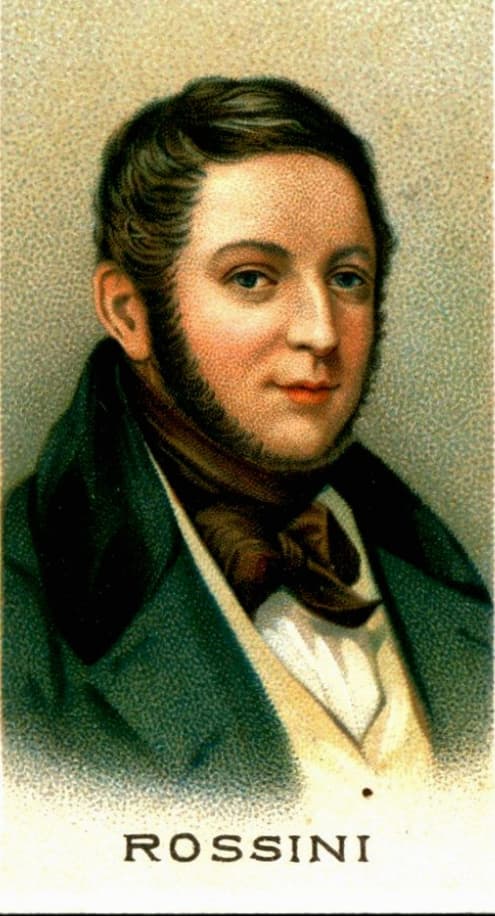
Gioachino Rossini (1792-1868) composed six string sonatas at the age of twelve in 1804. Scored for the unusual combination of two violins, cello, and double bass, “they are among the most successful works ever written by any child.” Rossini was familiar with the works of Mozart and Haydn, but it still seems incredible how these sonatas anticipate much of the sparkle of his later works. He composed them for a young merchant and claimed to have been ignorant of harmony when he wrote them. Actually, he described them as “horrendous,” and claimed to have written them within three days. However, Rossini could not deny his own personal style, including a characteristic melodic style, the use of crescendos, and the occasional use of the double bass as a kind of buffo character. These sonatas do show some surprisingly inventive and unusual features, “including unexpected keys and modulations, and spiced up percussive cross-relations.” 


Georges Enescu

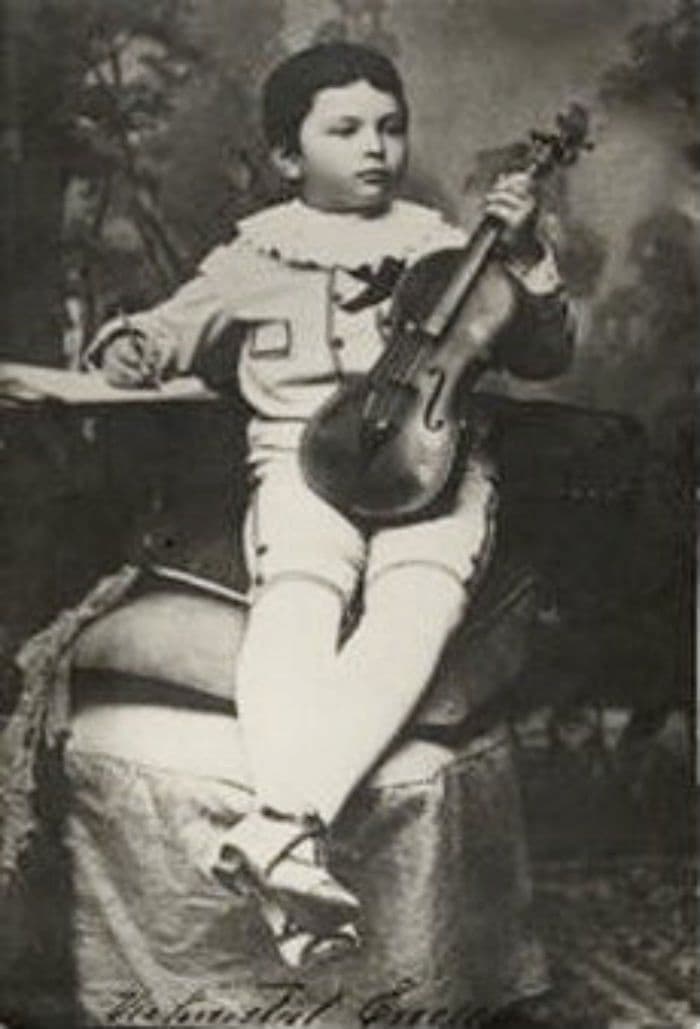
The young Georges Enescu at 3 years old

The young Georges Enescu at 3 years old

Yehudi Menuhin described Georges Enescu (1881-1955) as “the greatest musician I have ever experienced.” Such high praise is actually not surprising as Enescu had composed at least fifty works by the time he reached the age of sixteen. Almost habitually, a composer’s career is viewed as one of growth and improvements, “with the implication that early works have little or no interest.” They are often dismissed as “juvenilia,” and accorded a secondary place within the overall oeuvre. Suggestions of immaturity and youthful doodling, however, are completely out of place when speaking of Enescu. By 1895, if not before, he was “already a thorough master of the art of composition.” Enescu composed 4 Study Symphonies, and Massenet described the first symphony in D minor, as “very remarkable, extraordinary for his instinct for development.” As Cooper observes, “none of the works produced before 1897 seem to have been written with publication in mind, and indeed nearly all of them are still unpublished, though thankfully Enescu preserved the manuscripts of most of them and they are now in the Enescu Museum in Bucharest.

Frederick Arthur Gore Ouseley

Frederick Arthur Gore Ouseley

Frederick Arthur Gore Ouseley

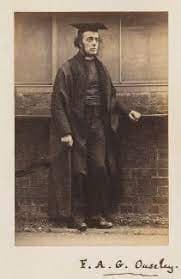
I must confess that before reading Cooper’s book on children composers, the name Frederick Arthur Gore Ouseley (1825-1889) was not known to me. As it turns out, Ouseley is “possibly the youngest child ever to compose a complete and coherent piece of music that still survives.” According to an anecdote, a very young Ouseley famously asked his father why he blew his nose in G. His father had been ambassador to Russia and Persia, and his earliest work is dated 18 November 1828, when he was aged three years and ninety-eight days. It was published many years later. These early pieces were written down by his sister Mary Jane, as Ouseley began composing long before he learned to write, “but his sister appears not to have attempted to correct his music in any way. Ouseley composed his first opera, Tom and His Mama in 1832, and most of his childhood compositions still survive, albeit only in manuscript. None of these early pieces seem to have been properly recorded. As such, I decided to feature a Prelude and Fugue written during his tenure as Vicar of St. Michael’s Tenbury as well as Warden of the College. 

Muzio Clementi

Muzio Clementi

Muzio Clementi

Musicologists have discovered that Muzio Clementi (1752-1832) composed a full-scale oratorio at the age of 12. The libretto does survive in a printed source of 1764, but the music has sadly been lost. It’s almost certain that there must have been a number of additional compositions, “as the oratorio is most unlikely to be the first thing he ever wrote. Clementi’s earliest surviving work is the Sonata per cembalo in A flat major, dated 1765. The music was not published in the composer’s lifetime, but it is identified “on the manuscript as No. 20, suggesting Clementi’s prolific activity as a composer at the age of thirteen.” In three movements, the sonata, typical in many ways of its period, demonstrates Clementi’s early technical competence, with an opening classical Allegro, followed by a contrasting slow movement and a rapid finale. As a critic writes, “The sonata is a well-constructed work in which each movement explores the structural distinction between binary form and sonata form in a different way. The finale is particularly successful, with broken-chord motifs exploited in a variety of ways.” 

Samuel Wesley

Samuel Wesley

Samuel Wesley

Samuel Wesley (1766-1837) was the younger son of the divine and hymn-writer Charles Wesley (1707-1788), “the sweet singer of Methodism,” and a nephew of John Wesley, the evangelist and leader of Methodism (1703-1791). Samuel appears to have been one of the most prolific and gifted of all child composers, “as he composed more than one hundred works by the age of sixteen. By the age of eight, Wesely had crafted the oratorio Ruth, even though it was reported that much of the work had been composed up to two years earlier. A second oratorio was completed shortly thereafter. The “Sinfonia Obligato” for violin, cello and organ, with an orchestra of strings and two horns, with ad libitum timpani is dated 27 February 1781. The unusual solo grouping is used in the outer movements, and the technical demands on the three players are considerable. As Cooper observes, “By the age of sixteen Wesley had a formidable basis for developing into a truly great composer, unfortunately, he did not fulfill his potential, and the reason may be largely his own fault.” In addition, a head injury and lack of proper training prevented him from achieving his full potential. 

Sergei Prokofiev

Sergei Prokofiev in 1900

Sergei Prokofiev in 1900

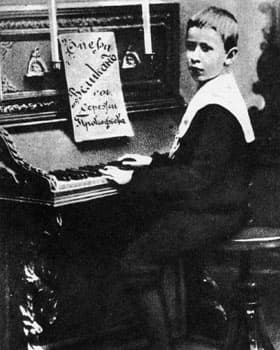
Sergei Prokofiev’s (1891-1953) early compositions already show a preference for ostinato and terrifying effects. His earliest known composition is titled “Indian Galop,” and dates from the summer of 1896. As in many cases with child composers, his mother wrote it down, as the child had not yet grasped musical notation. Prokofiev continued to compose further piano pieces throughout his childhood, totaling roughly eighty works by the time he reached the age of sixteen. By 1902, Prokofiev had completed a symphony in G with the help of his teacher Reinhold Gliére. “Altogether, sixty-one pages of this symphony survive in score, including a fully orchestrated first movement and the rest in short score.” As has been suggested, however, more significant than his instrumental compositions were his early attempts at writing operas. Velikan (The Giant) dates from February to about June 1900. It is written in vocal score and divided into three acts of seven scenes. “Velikan is notable for some extreme dynamics and some powerful music for the Giant, whose footsteps are portrayed by loud, ponderous chords that uncannily foreshadow the heavy chords accompanying the main theme in ‘The Montagues and the Capulets’ in Prokofiev’s Romeo and Juliet.” 

Max Bruch

Max Bruch

Max Bruch

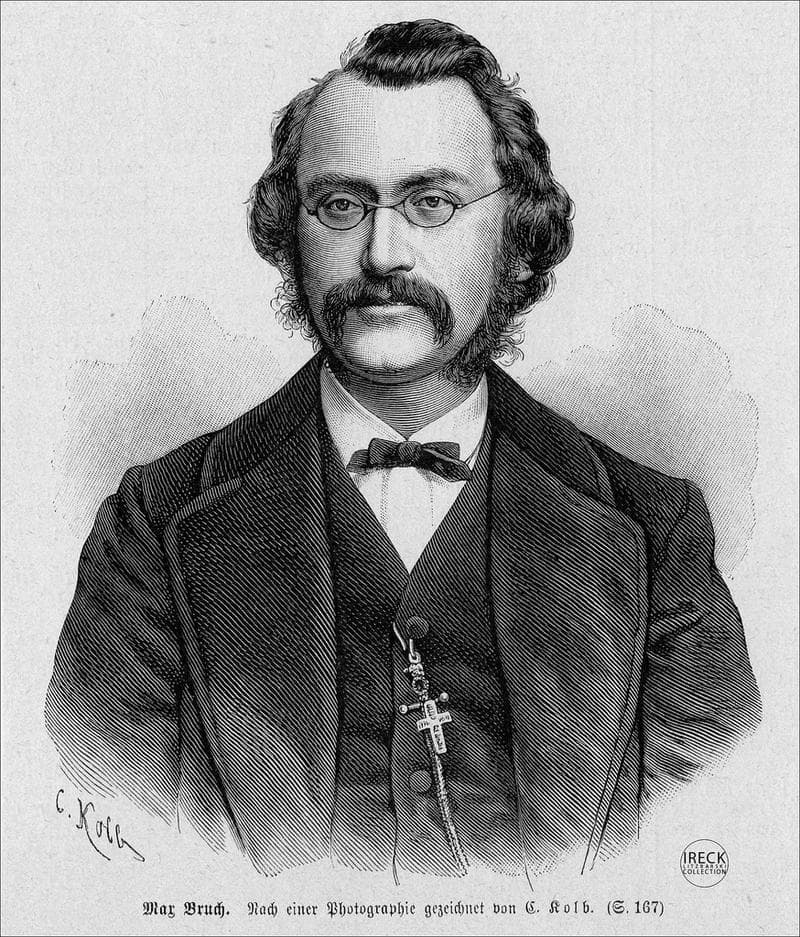
The Septet in E-flat Major by Max Bruch (1838-1920) was only published in 1987, but it was composed in 1849, when Bruch was only 11 years old. Apparently, his first composition was written at the age nine for his mother’s birthday. “Soon he composed prolifically, producing motets, psalms, piano pieces, violin sonatas, a string quartet, and even orchestral works while still a child.” Almost all these early works, which also include two piano trios and lieder, have been lost. The four movements of the septet, scored for clarinet, horn, bassoon, two violins, cello, and double bass, reveal a surprising maturity. His innate musical sensitivity allowed him to orchestrate and create melodic inventions with consummate skill. Remarkable for a composer his age, Bruch creates enchanting effects, which are in marked contrast to the virtuoso elements of the work. Without doubt, this youthful composition “bears clear features of Bruch’s later style, and much skill in form and harmonic planning.” 

George Frideric Handel

George Frideric Handel

George Frideric Handel

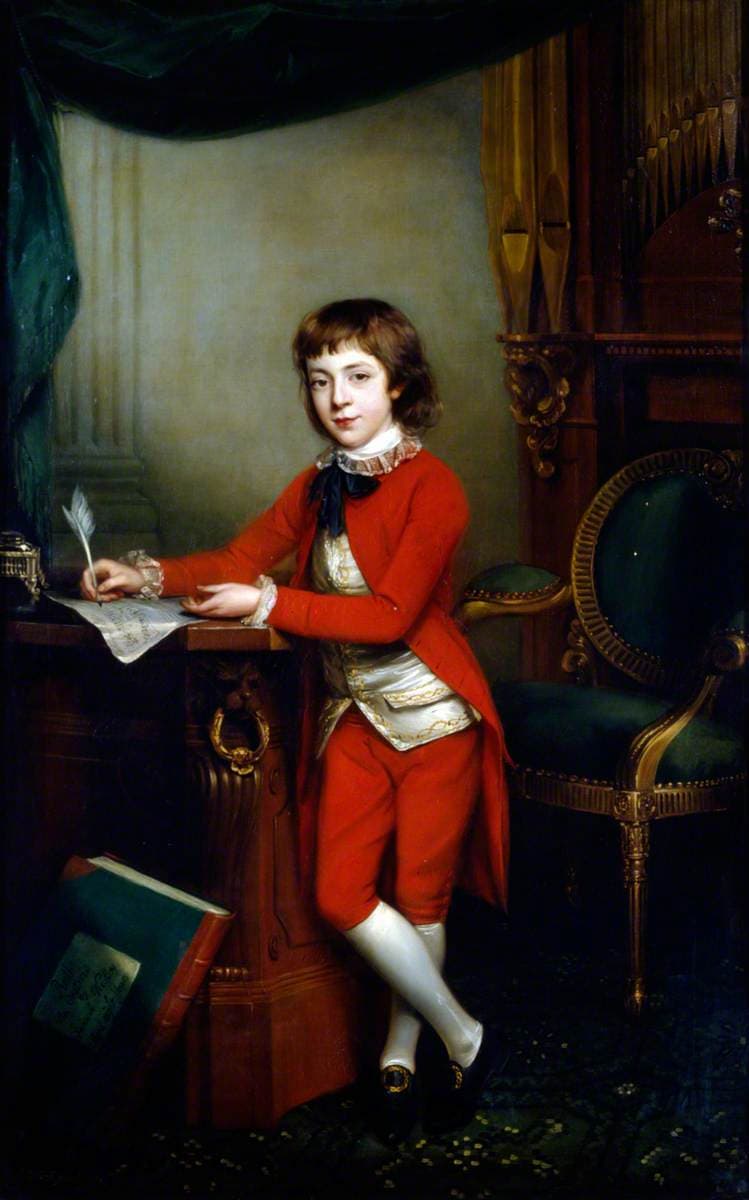
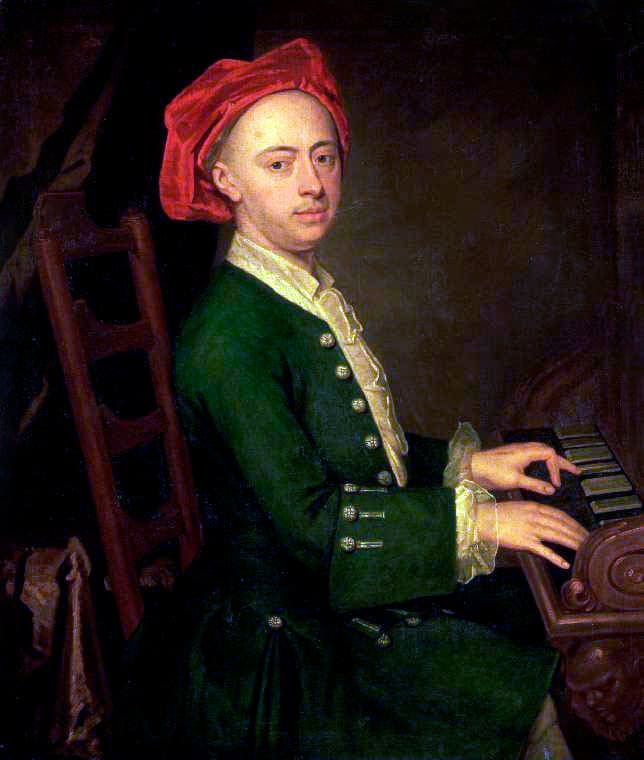
George Frideric Handel (1685-1759) apparently composed prolifically during his childhood. He is said to have written weekly compositions for the church in Halle, but none of these early works have seemingly survived. As with many other works of Handel, we are dealing with questions of authenticity when it comes to his childhood works. He is supposed to have written six oboe sonatas at the age of eleven, “works that display occasional touches of originality.” When Handel was shown a copy of the sonatas in England many years later, he actually confirmed the authenticity of the Sonatas. He also confessed that he enjoyed writing music for the oboe. “Since they do not differ greatly in style from his later music, there seem no very reliable grounds, external or internal, for dismissing the attribution to Handel, as have been done by several recent scholars.” What makes these early works suspicious, I suppose, is that the “exhibit characteristic melodic imagination and contrapuntal skill along with Handel’s renowned ability at developing whole movements out of two or three seemingly insignificant motifs.” 

Ludwig van Beethoven

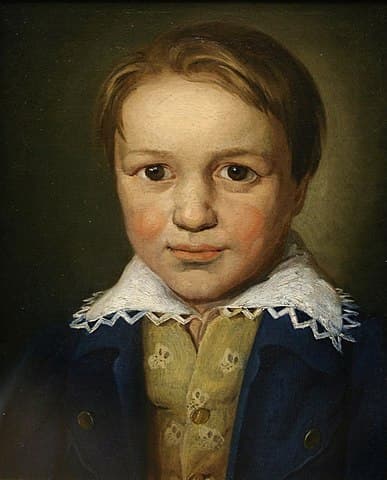
Ludwig van Beethoven at 13 years old

Ludwig van Beethoven at 13 years old

Let us conclude this first episode dedicated to child composers with Ludwig van Beethoven (1770-1827). Many of his childhood compositions are said to be derivative of works by Mozart, however, Beethoven employs a much wider dynamic range, and much more virtuosic piano figuration. When he attached a dedicatory letter to the 1783 original edition of his three early piano sonatas (WoO 47), he explained that his Muse had commanded him to write down his music. “My Muse wished it, and I obeyed and wrote.” According to Cooper, “This sense of compulsion experienced by some composers provides further evidence for an innate, genetic predisposition to composition in a few rare children, rather than a response to an external incentive.” Beethoven’s E-flat Major Piano Concerto WoO 4, was written when the composer was fourteen years old. To enhance his son’s reputation as a prodigy, Beethoven’s father claimed that the work was written when the boy was only 12. “Beethoven was not aware of this false claim until he was 40 years old, by which time he had long since disowned the piece.” The music for this work survives in only the solo piano part, and various scholars, musicologists, and performers have since reconstructed the entire concerto. A scholar writes, “While it is difficult to regard the E-flat concerto in its standard arrangement as an authentic piano concerto by Beethoven, the parentage of the solo piano manuscript is undisputed.” Please join us next time, when we will showcase early compositions by Mozart, Mendelssohn, Clara Wieck, Richard Strauss, and others.