Total Pageviews

Showing posts with label Classics with Klaus Döring. Show all posts

Friday, May 20, 2022

How Do Musicians Express Their Emotions through Music?

by 

Music is a powerful means of communication, by which people share emotions, intentions, and meanings, and our personal engagement with music, whether in a live concert, listening to a CD or via a streaming service, is driven by the medium’s ability to convey and communicate emotion. Music can arouse strong feelings, recall memories; it can promote extreme happiness or engender feelings of deep love or loss…

Like speech, music has an acoustic code for expressing emotion, and even if a piece of music is unfamiliar, we can “decode” its message. Because of this, while musicians perform music according to their own interpretations, we can still understand the basic acoustic code: a crescendo indicates increased intensity or drama; a minor key suggests seriousness or melancholy; pauses create suspense and anticipation.

For the performer, the ability to communicate emotion, or tell a story, in music requires more than the technical facility to process what’s on the score. A good understanding of the structure of the music is important for a convincing, and communicative, musical performance, allowing the musician to respond to aspects such as variations in tempo and dynamics, harmonic and melodic tension and release, phrasing, repetitions, etc. By responding to these elements, the listener is given a set of musical “signposts” which guide them through the music, and bring cohesion, interest and variety to the performance.

A performer must resolve the entire depth of the ideas contained there. How often carefully notated shadings, accents, tempo changes reveal not simply a positive characteristic of sound but rather the untold sides of the author’s concept. How many directions we find in SchumannChopinScriabin, even Beethoven that a pianist should follow not in a real sound but by addressing the subtlest hints to the imagination of a listener!
– Samuil Feinberg

Communicating emotion is the most elusive aspect of the performer’s skillset, and is the fundamental reason why people – performers and listeners – engage with music. At a basic level, music communicates specific emotions through simple musical devices, for example:

  • Happy – fast tempo, running notes, staccato, bright sound, major key
  • Sad – very slow tempo, minor key, legato, descending sequences or falling intervals, diminuendo, ritardando

But there is something else which makes a performance particularly rich in expression or communication. Performance is generally regarded as a synthesis of both technical and expressive skills. Technical skills can be taught, while expression is more instinctive: it is of course possible to act upon expression markings in the score, but in order for these to sound convincing and, more importantly, natural, the performer must draw upon other factors, including extra-musical ones.

Many performers create a vivid internal musical and artistic vision of the music they are playing. This may include an aural model; the use of metaphors or adjectives to create a narrative or picture for the music; and personal experience, including extra-musical experiences. A performer’s own emotional experiences may influence the way they convey emotion in the music. This suggests that only a performer who has actually experienced the highs and lows of romantic love can perform, for example, Schumann’s Fantasie in C with the requisite emotional insight. Of course, not every performer will have the life experience, but they can still convey emotion in their performance by awakening their imagination to bring expression and emotional depth to their playing. In addition, in a concert situation, the imagination of the listener is very much at the disposal of the performer, to be shaped and influenced through sound.

We talk about performers “communicating the composer’s intentions” (i.e. paying attention to and acting upon directions in the score such as dynamics, tempo and expression markings, articulation, rests and pauses etc) or “conveying the story of the music“, but fundamentally I think as listeners we crave a performance which touches us personally. Listening to music is a highly subjective and personal experience – we’ve all had those ‘Proustian rush’ moments when a piece of music, or a single movement or even a phrase, provokes an involuntary memory, sometimes with physical side-effects such as goosebumps or shivers (physiologically, this is the result of the release of Dopamine, the brain’s “reward” neurotransmitter). Sometimes we want to feel uplifted or transported by music, taken us out of ourselves and the mundanity of everyday life to another place, to experience something touching the spiritual or transcendent. Such moments, and the memory of them, are very special and individual.

Occasionally one is at a concert where a very palpable sense of collective concentration can be felt in the auditorium. This occurs when the performer creates an intense communication between music and listener. I experienced it, along with the rest of the Wigmore Hall audience, at a performance of Beethoven’s last three sonatas by the Russian pianist Igor Levit in June 2017. The sense of concentrated listening and suspense was extraordinary. How did Levit achieve it? I’m not sure…. a combination of exquisite tone control, musical understanding and the sheer power of the music itself.


Most people like music because it gives them certain emotions such as joy, grief, sadness, and image of nature, a subject for daydreams or – still better – oblivion from “everyday life”. They want a drug – dope -…. Music would not be worth much if it were reduced to such an end. When people have learned to love music for itself, when they listen with other ears, their enjoyment will be of a far higher and more potent order, and they will be able to judge it on a higher plane and realise its intrinsic value.
– Igor Stravinsky

Dining With Music

by 

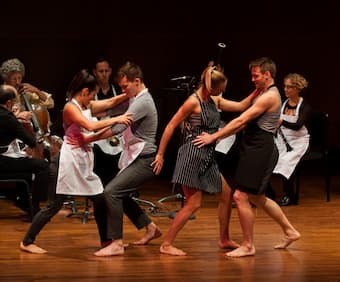
Whim W’Him Contemporary Dance company in La revue du cuisine (2015)

Whim W’Him Contemporary Dance company in La revue du cuisine (2015)

As you peek around the corners of the repertoire, there are a few pieces that reflect the daily concern with Dining. There are works that set recipes, works that show the activities in a kitchen, works that show the procession of the courses, and one that gives you the ambient sound of a large kitchen. Let’s explore!

Martinů’s La revue de cuisine (1927) was still a favourite of its composer some 50 years later. It was a one-act jazz ballet about a love triangle in the kitchen between Pot, Lid, and the adventurous Whisk to which Pot has become enamoured. ‘The forthcoming marriage between Pot (Le chaudron) and Lid (Le couvercle) is jeopardised by the adventurous Whisk (Le moulinet) to whose magic Pot has succumbed. Pot is so captivated that Lid falls off him and rolls into a corner of the kitchen. Now Dishcloth wants to seduce Lid but order loving Broom to challenge Dishcloth to a duel, which delights Whisk. The two irritated combatants fight to the bitter end. Whisk makes eyes at Pot once more but now Pot longs for Lid, but Lid is nowhere to be found. The shadow of an enormous foot appears suddenly and with one kick propels Lid out of his corner. Broom leads him back to Pot, while Whisk and Dishcloth break out into a wild dance of joy.’ Despite this wildly interesting synopsis, the work has rarely been performed as a ballet in its entirety but has had a much more successful life as a suite. One recent version in 2013 moved the scenario to that of a traveling circus. The ballet score was revised and reconstructed by Christopher Hogwood after the full score was found in the Paul Sacher Foundation Archives.


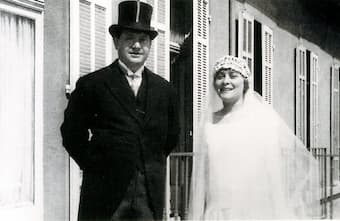
Darius and Madeleine Milhaud on their wedding day, 1925

Darius and Madeleine Milhaud on their wedding day, 1925

French composer Darius Milhaud (1895-1974) left France in 1940 when the Germans invaded and took up a post at Mills College in California. One of the changes that the Milhaud family experienced in America was the lack of household help. Cooks and maids were no longer available in war-time America. Milhaud paid tribute to his wife in 1944 in La Muse ménagère (The Household Muse), which recognizes his wife Madeleine’s ingenuity in having to take up household tasks during their time in the United States, where, as Milhaud noted, ‘servants receive higher wages than university professors.’ Her whirlwind kitchen activities are covered in the movement entitled La cuisine.


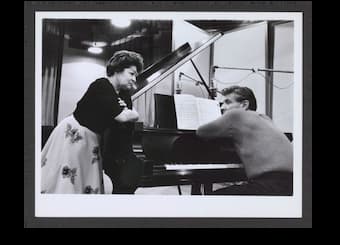
Jennie Tourel and Leonard Bernstein at a recording session, 1960

Jennie Tourel and Leonard Bernstein at a recording session, 1960

A ‘song cycle of recipes’ takes Emile Dumont’s 1899 cookbook La Bonne Cuisine Française (Tout ce qui a rapport à la table, manuel-guide pour la ville et la campagne) (Fine French Cooking “Everything That Has to Do with the Table, Manual Guide for City and Country”) as the text source for Leonard Bernstein’s 1947 work. Written for singer Jennie Tourel, it sets the recipes for Plum Pudding, Ox Tail, a Turkish dish of Tavouk Guenksis, and closes with a recipe for ‘Rabbit at Top Speed.’


Kitchen in Chateau d’Orion

Kitchen in Chateau d’Orion

In his 1961 work Grand Concerto Gastronomique for Eater, Waiter, Food and Large Orchestra, Op. 76, English composer Malcolm Arnold wrote a 6-part memorial to a great dinner. Written for the Hoffnung Festival in 1961, the work involved the actions of an off-stage chef and two on-stage actors (the Eater and the Waiter). The Prologue, with its fanfares and ‘comic gestures’ signals the beginning of the action: the Eater and the Waiter enact a ‘ceremonial napkin display’ and the meal is on. The second movement, Soup (Brown Windsor), is both ‘thickly scored and unappealing’, rather like the soup. It is in the third movement, Roast Beef, that the Englishness comes out. The movement may be short, but the performance instructions say that it must be ‘repeated and repeated slower and slower until all is finished’ and the plate of food must be ‘enormous.’ It is the Eater who determines how many repetitions of the march occur – choosing either to gulp everything down as quickly as possible or to savour every morsel, in the manner of Erik Satie’s piano piece Vexations (which 1 page of music is to be played 840 times).

This movement is followed by Cheese, and then the dessert course of Peach Melba and closes with Coffee, Brandy, Epilogue.

English composer Gavin Bryars’ work Cuisine (1993) was written for an installation at Chateau d’Orion, in Orion, France. The music was written to establish the ‘architectural acoustic’ of the space and ‘to animate the spaces in which the music was played.’

We all have our triumphs and failures in the kitchen. Each of these composers has chosen to memorialize something different for their kitchens: love affairs between the implements, the musicality of a recipe, the ceremony of a meal, or just the sound of the space.

Thursday, May 5, 2022

Vancouver pianist suffers heart failure during concerto performance, continues playing


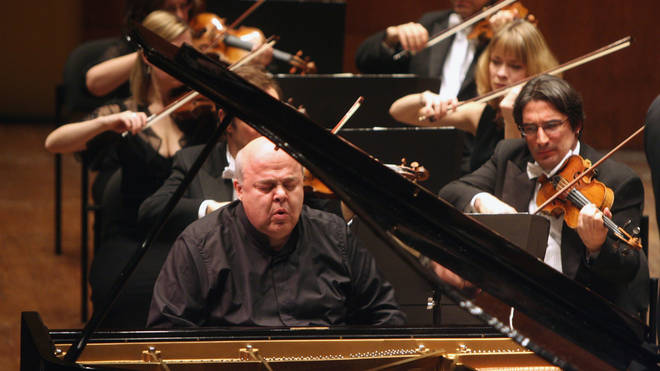
Alexander Toradze was performing with the the Vancouver Symphony
Alexander Toradze was performing with the the Vancouver Symphony. Picture: Getty

By Sophia Alexandra Hall, ClassicFM

Prior to the concert, the audience was told the pianist had been experiencing a shortness of breath.

Last week, Georgian-American pianist Alexander Toradze was scheduled to perform two concertos with the Vancouver Symphony Orchestra USA, based in Vancouver Washington.

However, the classical musician, who turns 70 next month, had been feeling unwell in the run up to the performance on Saturday 23 April. By the day of the concert, Toradze was struggling to walk unaided, so was accompanied onto the stage by Dr. Michael Liu, a medical doctor and board member of the Vancouver Symphony Orchestra.

The audience had been warned in advance that although Toradze had tested negative for coronavirus, due to experiencing a shortness of breath there was a possibility the musician wouldn’t be able to perform.

However, the virtuoso pianist played through not one, but two concertos; first, Stravinsky’s Concerto for Piano and Wind Instruments, followed by the main event, Shostakovich’s Second Piano Concerto. Toradze is recognised worldwide for his interpretation of Russian repertoire and studied at the Tchaikovsky Conservatory in Moscow as a teenager.

His performances, which both took place during the first act, were met with enthusiastic applause, but unbeknownst to the audience – and at the time Toradze himself – the pianist had experienced acute heart failure while performing. 

On Sunday, the day after the performance, Dr. Liu drove Toradze to PeaceHealth Southwest Medical Center, where doctors told the pianist what had happened on stage. Toradze was meant to be playing with the Vancouver Symphony Orchestra again tonight, but is instead being kept at the medical centre until his health stabilises.

Toradze recorded this video to reassure his fans and concerned members of the orchestra.

Describing the event as a “pretty memorable concert”, Toradze seems in good spirits and sends best wishes to all the musicians and his fans.

Saturday, April 9, 2022

MAKE MUSIC - NOT WAR!


Music - from the Greek "mousikos" and pertaining to one of the nine muses in the Greek mythology - is the art of combining sounds or sequences of notes into harmonious patterns hopefully playing to ears and satisfying to our emotions. An insipid and dry explanation - I must confess. 

Can you, my dear reader, imagine a life without music? For me, it would be such a monotonous and boring world. I don't think only about the musical "mayfly" or the so-called "musical nine days wonder". Music doesn't consists of Groove or Techno alone. I am not against these or other music trends, because each generation has its own music development. But we have greater riches of different kinds of music by going back to the Middle Ages, the Renaissance (which means 'rebirth'), the Baroque Age, the Classical Period, and the Romantic Era up to 1900. The Western tradition of music has its origins in the chant tradition of the Early Christian Era.

Everybody can develop his  or her own passion of music. When I was four or so, I grew up already with those kinds of music. I asked my parents voluntary if I could get piano lessons. It was easy for us because the church organist at that time was our neighbor and a proud owner of a grand piano. I listened my first organ recital composed by Johann Sebastian Bach. My passion of music was in stage of development that made it possible for me to join the school band. The Beatles - and Rolling Stones later - era followed - much to the disappointment of my parents and grandparents, who still dreamed of their music, such as Jazz and Swing back to the Golden Twenties.

Everybody has his or her own music philosophy. I learned from my dentist friend in Los Angeles, that her patients lose their state of anxiety by listening soft background music during having their teeth attended to. A gynecologist explainEd, that if a pregnant woman mostly listens to classical music, her child might hear, learn, find out and experience another (better?) development then other children. 

The church reformator Martin Luther (1483-1546) explained it in this way: "Many times, when I was in terrible darkness, I prayed - and I listened music, which delivered and refreshed me!" The German poet and composer E. T. A. Hoffmann said 1801: "If you start simply being speechless, music will take over!" And Ludwig van Beethoven (1770-1827), without doubt one of the true and just awesome Western composers said: "Music is utmost revelation then an wisdom and philosophy!" 

"I feel like flying after entering a church, praying and listening the music of heaven!" the German poet Friedrich Schiller (1759-1809) philosophized about music in his drama "Maria Stuart".

A simple melody can make feel us happy, sentimental, smiling or crying, aggressive or relaxed. A form of light entertainment in which songs, dialogue, dance, and humor are combined with a not too serious plot is as much as important then a dramatic opera or the single musician or street singer, not being a man of culture, but entertaining us people.

Let's develop our own passion of music, so that we might see the great resources for our daily life, if we accept, that music plays a rule in it. Make music - not war!

Friday, April 8, 2022

The Dark Childhood of Joseph Haydn

 by 

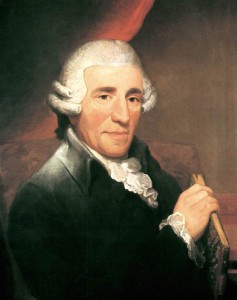
Joseph_HaydnJoseph Haydn has entered music history as a jovial, grandfatherly figure with a reputation for a quick wit. Generations later, we still chuckle at the stories behind the Surprise Symphony or the Farewell Symphony. His famous good humor is all the more striking considering his often difficult upbringing.
Joseph Haydn was born in the little town of Rohrau, Austria, on 31 March 1732, the second of twelve children. His father Mathias was a wheelwright by day and a folk musician by night. He was especially fond of accompanying himself on the harp singing folk tunes, and he would often encourage his family to sing along with him.

It’s no surprise that Joseph’s talent blossomed in this idyllic, naturally musical environment. That talent would soon change his life forever. When he was six, a distant relative named Johann Matthias Frankh visited Rohrau. Frankh was a schoolmaster and choirmaster in the town of Hainburg, and he thought that Joseph would do well to become his apprentice. Joseph’s parents hoped that such training would assist Joseph in becoming a clergyman, and so they agreed to send him away. Accordingly, Joseph Haydn left home at the age of six.

The Frankh family didn’t take very good care of their brilliant new charge. He frequently went hungry and he was beaten regularly. Later in life, he remembered being embarrassed at the dirty clothing the Frankhs forced him to wear. Nevertheless, he learned the basics of music: how to play the violin and harpsichord, and, more importantly for his immediate future, how to sing.

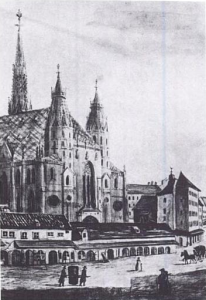
In 1739, not long after Joseph had arrived at the Frankh house, an important musician named Georg von Reutter came to town. Reutter was the director of music at St. Stephen’s Cathedral in Vienna, and he was on a tour of the smaller Austrian cities, scouting out new talent for his cathedral choirs. (A steady supply of boys was needed, since every year a certain percentage of their high voices fell victim to puberty.) During this scouting trip, Reutter heard Haydn and was deeply impressed, offering him a position as a chorister. In the spring of 1740, Joseph made his second big move, arriving in Vienna at the age of eight.

KapellhausStStephensViennaHe worked for nearly a decade at the cathedral as a chorister. He was steeped in church music, but he didn’t receive the systematic training in theory and composition that he craved. He eventually resorted to asking his father for money to buy the famous textbook Gradus ad Parnassum so that he could start to teach himself. He also still struggled to get enough to eat. But if he sang well enough, he was invited to perform at aristocratic parties, where he was fed.
By 1749, Haydn’s voice was starting to break. Apparently the Empress herself referred to his singing as “crowing.” Joseph didn’t help matters when he jokingly snipped off the pigtail of a fellow chorister. Ruetter threatened to cane Haydn for his insubordination. Haydn replied that he’d rather leave the choir than be so humiliated. Ruetter replied, “Of course you will be expelled…after you have been caned.”

So it was that a teenaged Joseph Haydn found himself humiliated, fired, and homeless. Luckily an acquaintance named Johann Michael Spangler invited the young genius to share (cramped) quarters with him, his wife, and baby son. His lodging secured, Haydn started working as a freelance musician, finally gaining a certain level of control over his life after years of lonely nights, tiny meals, and hard teachers.

Haydn was clearly more than a great composer or a quick wit. He was a survivor.

Thursday, April 7, 2022

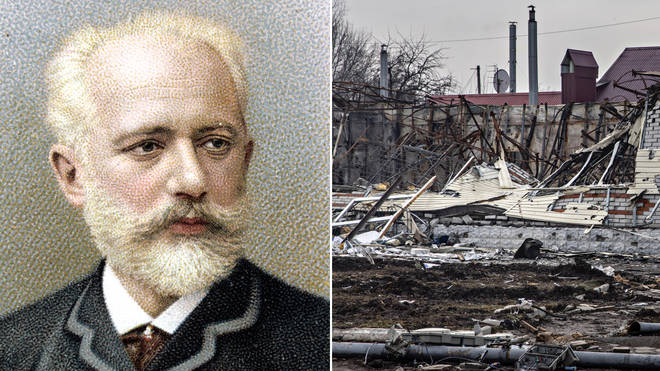
Tchaikovsky’s house destroyed by Russian army in north-east Ukraine

6 April 2022, 15:02 | Updated: 6 April 2022, 16:23

Tchaikovsky stayed in Trostyanets in his 20s; the city is now destroyed
Tchaikovsky stayed in Trostyanets in his 20s; the city is now destroyed. Picture: Getty

By Sophia Alexandra Hall, ClassicFM

One of Russia’s most famous composers once called Trostyanets home. Now the city lies in ruin. 

Trostyanets is a city in the north-east of Ukraine, which once played host to Russian composer, Pyotr Ilyich Tchaikovsky.

Aged 24, the famed 19th-century Romantic composer stayed in a villa in the city of Trostyanets, then a part of the Russian Empire. It was here he composed his first symphonic work - the overture ‘The Storm’ (1864).

The villa, like the rest of Trostyanets, now lies in ruin following the capture of the city on 1 March 2022 during the Russian invasion of Ukraine.

After a month of occupation, where civilians were reportedly killed by Russian hand grenades, Ukrainian forces used heavy shelling to gain back control of Trostyanets.

Though the Russian army have now left after a brutal month, reminders of their occupation can be seen everywhere; buildings – including the villa – have been destroyed, and the letter ‘Z’ has been graffitied on ruins and cars across the city.


Since the invasion began in February, food and water have become dangerously scarce in Trostyanets, which has a population of 25,000.

Residents now have to line up in front of the Tchaikovsky Music School for Children, next to the museum of the same name, in order to collect food.

During the first days of the Russian invasion, the concert hall at the Tchaikovsky Music School for Children was used to register Ukrainian volunteers for the Territorial Defense Forces.

While waiting in line to collect food, citizens spotted reporters from international outlets in their city and ran to them. A cacophony of testimonies were given all at once to the reporters.

“They smashed my place up.” “They stole everything, even my underwear.” “They killed a guy on my street.” “The f*****s stole my laptop and my aftershave.”


The mayor of Trostyanets has said it is too early to give an estimate as to how many of his city’s citizens were killed.

Civilians in Trostyanets were reportedly targeted by hand grenades when they protested Russian occupation, which killed two.

Due to the harrowing testimonies from the city’s residents, and other parts of Ukraine, on Monday the President of the European Commission, Ursula von der Leyen, backed an investigation into reported Russian war crimes in the country.

After a call with Ukraine’s President Volodymyr Zelenskyy, von der Leyen said that EU investigators will help Kyiv to probe reports from Ukrainian officials and NGOs that Russian forces massacred and sexually assaulted civilians in towns near the Ukrainian capital.

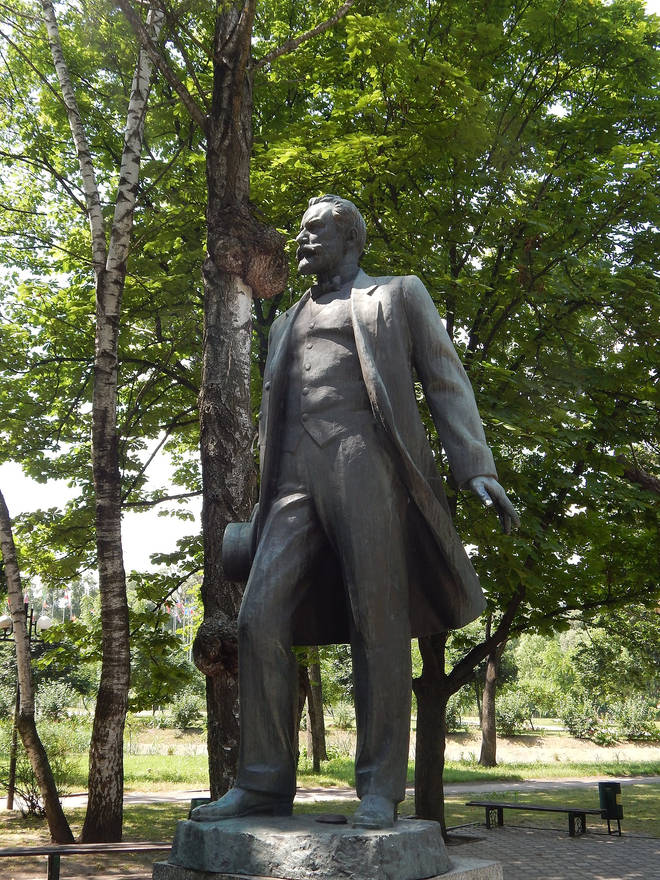
Statue of Tchaikovsky in Trostyanets central park
Statue of Tchaikovsky in Trostyanets central park. Picture: Wikimedia Commons

Tuesday, February 22, 2022

How COVID-19 made Germany’s classical music industry more sustainable

By Gaby Reucher

The pandemic prompted many German classical music festivals and orchestras to adopt more sustainable practices.


How COVID-19 made Germany’s classical music industry more sustainable


The coronavirus pandemic has had a major impact on the classical music industry in Germany, and around the world — yet there are lessons to be learned from the crisis. At least that's how Christian Höppner, Secretary General of the German Music Council, sees it: "We should now view the pandemic period as an opportunity and make cultural life fit for the future; from the point of view of sustainability, as well." It's not just about protecting nature and the environment, but also about sustainably promoting young musicians, he added.


The financial aid provided by Germany during the pandemic has been exemplary, according to Höppner. Nevertheless, many musicians have given up their profession and sought more crisis-proof work. Some prospective students who had passed notoriously difficult entrance exam even chose not to start studying music. "That would have been unthinkable before COVID-19. Then, passing an entrance exam was like winning the lottery. There has since been a very strong reorientation," says Höppner in an interview with DW.

Christian Höppner in a blue suit with a red bow tie and glasses.

Christian Höppner of the German Music Council says the pandemic has provided an opportunity for change


Sustainability from the office to the orchestra


A number of German festivals and orchestras are leading the way when it comes to how they treat both the environment and their artists. The entire staff of the Dresden Music Festival, for example, is participating in the city's "Culture for Future" pilot project on sustainability in cultural enterprises. "It starts with our attitude. We have to keep sustainability in mind in every planning process," explains artistic director Jan Vogler in an interview with DW. This is done in the office, in marketing initiatives and even in concert design.


More tickets are being sent out digitally, as are newsletters, brochures, program booklets and the festival magazine. The buffets for the artists feature regional cuisine, and glass bottles are used instead of plastic ones. The festival also relies on electric vehicles to transport artists and their instruments. It's still early in the process, says Vogler, but the team is enthusiastic about the new green steps.


A reduced carbon footprint

When air traffic came to a near global standstill in 2020 due to the coronavirus pandemic, orchestras were forced to cancel their tours. The question arose as to whether ensembles actually needed to do so much jet-setting.


Naturally, following the loosening of coronavirus restrictions, many people are longing to hear live music again, says Höppner. "But no one can avoid asking themselves how sustainable what we're actually doing is anymore" he adds.


The fact that the music touring industry needed a reboot was apparent before the pandemic, says Steven Walter, artistic director of the Beethovenfest Bonn. He would like to move away from having large orchestras go on tour and also have musicians travel less and instead spend more time at a destination — for example staying at a festival for one or two weeks and leaving their mark. "For us, this is also interesting artistically — to develop specific projects and ideas for a unique profile for the festival," says Walter.


Compensating for CO2 emissions

Yet avoiding air travel isn't always possible for the Dresden Festival or the Rheingau Music Festival, which aim to bring international artists to audiences around the world. Nevertheless, it is possible to make artists' travel more sustainable, says Dresden Music Festival artistic director Jan Vogler. "We try to take advantage of Dresden's location: Berlin, Prague and even Vienna are nearby," he adds.


Orchestras are also scheduling tours so that distances between venues are as short as possible. Recently, the Berlin Philharmonic toured Austria, Slovenia and Croatia, taking a bus between destinations. "In fact, artists also prefer this," says Vogler, "Before, they were often sent zigzagging nonsensically around the world. As long as it was feasible, no one thought about the fact that it was often an ordeal for them to manage these travel routes and the concerts."


A forest for Bach

Offsetting CO2 emissions is one way of compensating for distances driven and flown. The money goes to environmental protection projects. This allowed the Deutsche Kammerphilharmonie Bremen to be certified as climate neutral in 2020, even before the pandemic. Now, the ensemble only travels by train within Germany.


The Leipzig Bach Festival, which prior to the pandemic attracted a large international audience of 73,000 visitors to Leipzig, has also made environmental commitments. Director Michael Maul is raising funds to support the "Forest for Saxony" project and to have a "Johann Sebastian Bach Forest" planted near a former lignite mining area.


Music streaming as a solution?

Streaming and videoconferencing have been a major part of the current digital transformation, which was accelerated by the pandemic. Many industries, including the music industry, turned to streaming. Together with the Thuringia Bach Festival and the Köthener Bach Festival, the Leipzig Bach Festival founded their own platform last year to present selected concert streams that will continue after the coronavirus pandemic.


In the longer term, however, streaming, with its high energy consumption, is not all that sustainable either. Jan Vogler of the Dresden festival tries to combine meetings with concerts. "It's almost no longer conceivable for me to leave directly after a London or Paris concert. I usually stay an extra day and meet the partners we work with there."


COVID-19 restrictions in the arts industry inevitably raised the question: What is the value of culture?

"Is the music business dominated by a few big stars who make millions from it, or is culture really the daily bread one needs to live?" If the latter is true, then musical life has all the more reason to be underpinned by sustainable structures, says Christian Höppner. This is also done in relation to educating musicians.


Currently, music lessons are often substituted for short-term projects done at many schools, and funding for up-and-coming artists also tends to flow into temporary projects that are not sustainable. The pandemic, however, has shown how quickly young talent is lost.


"As an organizer, you have a responsibility in terms of human resources to protect the artists," says Beethovenfest Bonn director Steven Walter. This also applies to dealing with talent. "You can't burn them out and then drop them. It's about investing in their careers in a sustainable way, even when things aren't going so well at the moment."


This article was originally written in German.

Thursday, February 10, 2022

After the tragic death of a 12-year-old pianist...

... musicians are deciphering his unfinished composition


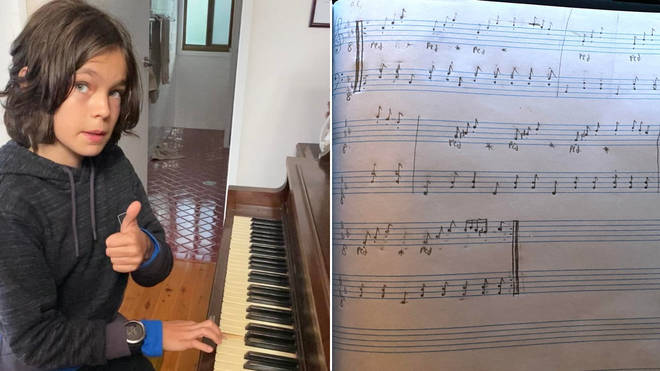
Kyan Pennell was a young pianist and composer
Kyan Pennell was a young pianist and composer. Picture: Courtesy of Amanda Brierley

By Sophia Alexandra Hall, ClassicFM

Kyan Pennell wanted to be a concert pianist, but sadly that dream was never realised.

Seven months ago, 12-year-old Kyan Pennell from Brisbane, Australia, began teaching himself music theory, performance and composition.

He scrimped and saved in order to buy his first piano, and by using YouTube tutorials, he had soon learned to play 30 pieces of classical music by memory, including Chopin’s Fantaisie Impromptu, and Beethoven’s Für Elise.

Kyan tragically died in a freak accident caused by a gate closure on his family’s property in Mary Valley on 31 January 2022.

Kyan was neurodiverse, and his family described his diagnosis as a ‘superpower’ which helped him to focus on and achieve whatever he put his mind to. He loved classical music, and Brierley shared on Facebook that he even learned non-classical pieces just so he could “bring a crowd in, and then educate them [with] the beauty of classical music”.

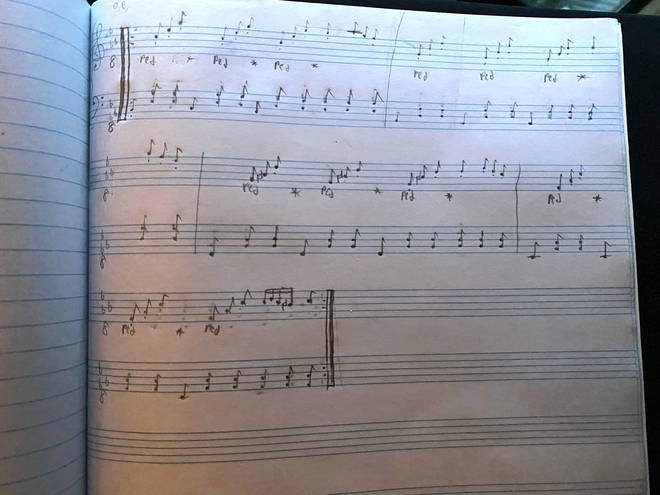
Unbeknownst to his parents, Kyan had also begun composing classical music prior to his death. When his parents were going through their late son’s belongings, they were surprised to discover an unfinished composition in the middle of a blank exercise book.

“I never heard what he was composing.” Kyan’s mother Amanda Brierley posted on Facebook, sharing a copy of his manuscript, “Is there anyone that can read music and play it and send it to us?

“It would mean the world to us to hear his composition.” It didn’t take long before musicians began responding to the post, which has now received over 150 comments, and 115 shares, with renditions of Kyan’s composition.

In her post, Brierley also explained, “he wasn’t formally trained in reading/writing music, [Kyan was] all self taught so [the notation] could be wrong, I don’t know.

“If I remember rightly he told me about this and there were bits that repeated, and changed tempo, with light and shade, but he didn’t write that down.

“This was just the intro, it is unfinished, he was building up to a grand midsection and then would do an ending, but he never got to complete what was in his mind’s eye.

“He imagined it to be performed by wind and string instruments, and of course his beloved piano.”

Kyan Pennell’s composition
Kyan Pennell’s composition. Picture: Amanda Brierley

So far Kyan’s piece has received video performances on the piano, cello, and on various music softwares. And now members of the Queensland Symphony Orchestra are meeting to record the piece in time for Kyan's funeral on Sunday 13th February.

“I am extremely humbled by the responses of people,” Amanda told ClassicFM.com. “It makes me see beauty through adversity.”

On Facebook, Amanda also responded to the musicians saying, “[Kyan] would have been so chuffed that all these wonderful people are now playing his music.

“He was so full of life, with a beautiful mind, and passion for classical music. Little did he know he was actually composing his own funeral song.

“He did tell me that many people have to die to become famous, well my beautiful boy, here we are.”

Thursday, January 20, 2022

How Beethoven’s iconic ‘da-da-da-dum’ motif was almost lost in a forgotten piano piece

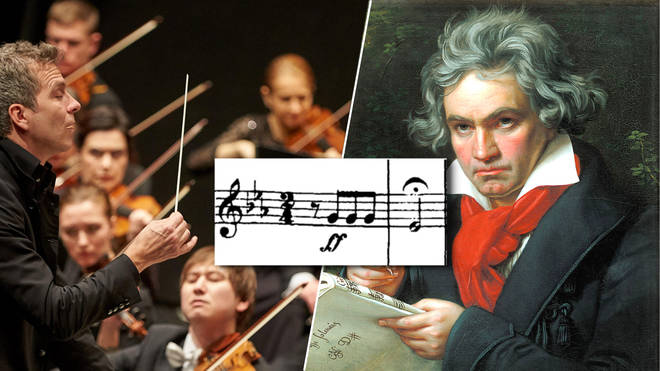
Beethoven’s Fifth Symphony started life as a piano work

Beethoven’s Fifth Symphony started life as a piano work. Picture: Alamy

By Sophia Alexandra Hall, ClassicFM London

The UK’s leading scholar on Beethoven has found that the famous opening of the Fifth Symphony began life with a totally different purpose...


Classical connoisseur, and music novice alike will recognise the famous four-note opening motif of Ludwig van Beethoven’s Fifth Symphony.

The ominous introductory theme appears in modern media, such as movies, and was also used during the Second World War as a symbol for Victory. The famed ‘da-da-da-dumm’ motif mirrored the rhythm used for the letter V in Morse code (short-short-short-long).

However, the origins of the opening theme have remained relatively unexplored, or understood; until now.

Thanks to the investigations of Professor Barry Cooper, the UK’s leading scholar on the German composer, it’s been revealed that classical music’s most iconic motif was almost simply a subsidiary theme meant for a forgotten piano piece.


In 1804, four years before the Fifth Symphony’s first performance, Beethoven wrote out the sketches of the opening theme of his next symphony.

Scholars have used this manuscript as a source of sketches for the Fifth Symphony however, thanks to Cooper’s further investigation into the score, it is clear that Beethoven was not in fact sketching a symphony – but a piano fantasia.

“It became abundantly clear to me that [these sketches were] part of the projected piano fantasia, which was being sketched immediately above the sketch in question,” explained Cooper. “I studied the page in detail as I am writing a book on ‘The Creation of Beethoven’s Nine Symphonies’.”

Cooper, who is a professor at the University of Manchester, is best known for his books on Beethoven, as well as a completion and realisation of Beethoven’s fragmentary Symphony No. 10.


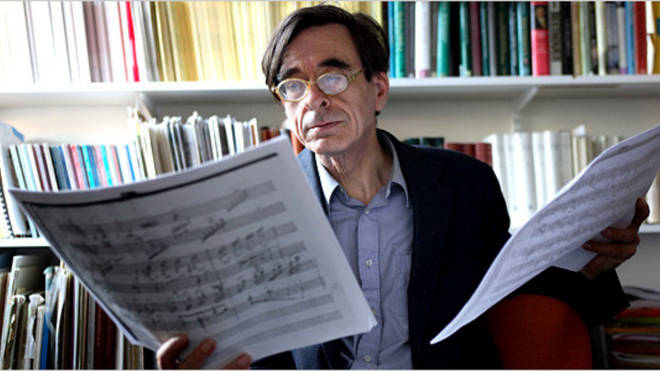
Musicologist Professor Barry Cooper
Musicologist Professor Barry Cooper. Picture: Wikimedia Commons

“The fantasia (so-called in the sketch) is in C minor, like the [fifth] symphony. Like most fantasias of the period, it would be based on contrasting sections and ideas, so the opening section is in a slow 3/8, contrasting with the later 2/4 that uses the motif that ended up in the symphony.

“The motif is then developed in the 2/4 section in a symphonic manner – which may be why Beethoven concluded it would work better in a symphony – but using piano textures rather than orchestral ones, and in a different way from how it is developed in the symphony.”

Professor Cooper notes that the find gives us a deeper understanding of how Beethoven worked as a composer.

“The sketch shows that he was prepared to transfer ideas intended for one composition into a completely different one, if it would work better there.”

Cooper surmises that Beethoven felt exactly that way about this motif, and adds the composer “strengthened the motif by placing it at the head of a symphony, and then strengthened it still further by adding dramatic pauses in later sketches and the final version”.

97-year-old pianist, and last surviving pupil of Rachmaninov, signs landmark record deal


97-year-old Ruth Slenczynska is the last-living pupil of Sergei Rachmaninov
Credit: Decca Classics


By Sophia Alexandra Hall, ClassicFM London

On Saturday January 15 2022, American pianist Ruth Slenczynska will celebrate her 97th birthday.

At this landmark age, Slenczynska has achieved an astonishing nine-decade long career, having begun performing as a child prodigy in the 1920s.

To mark the occasion, Slenczynska has announced her resigning with the record label, Decca Classics for her first album with the company since the 1960s; Slenczynska’s new solo piano album, My Life in Music is due to be released later this year.

When asked about the album Slenczynska responded, “Whoever heard of a pianist my age making another album?

“Music is meant to bring joy. If mine still brings joy to people, then it is doing what it is supposed to do”.


Ruth Slenczynska
Ruth Slenczynska. Picture: Meredith Truax

Born in California in 1925, Slenczynska was the daughter of Polish immigrants. She made her concert debut at the age of just four years old, and one year later, performed a work of Beethoven on television (watch below).

At six, Slenczynska made her European concert debut in Berlin, and now 92 years later, this legendary performer is still enchanting audiences across the globe with her piano skills.

Notably, Slenczynska is considered to be composer-pianist Sergei Rachmaninov’s last living pupil.

It is thought that the young pianist even once stepped in for the great Russian musician at the last minute when he was unable to perform due to an injury.

According to sources, the two would often drink tea together and to this day, Slenczynska wears a Fabergé egg necklace which Rachmaninov is said to have gifted her.

Slenczynska also had connections with another prominent composer, American Samuel Barber, and heard his famed Adagio for Strings before the work even had a title.

Slenczynska has performed for four United States Presidents, including playing a Mozart duet with President Harry S. Truman, and performing at President John F. Kennedy’s inauguration.


During lockdown, Slenczynska uploaded videos of herself performing Beethoven sonatas to YouTube, to celebrate the German composer’s 250th anniversary.

Despite her age, the pianist is still an active performer and most recently played at Chopin International Festival and Friends in October 2021 in the Polish Embassy in New York. Next month she will be celebrating her 97th birthday with a recital at Lebanon Valley College, Pennsylvania, on 6 February.

Slenczynska’s album, My Life in Music, explores the music of Chopin, a composer who had a heavy influence on the young pianist’s childhood.

According to her memoir, Forbidden Childhood, Slenczynska was made to practise all 24 Études before breakfast every morning by her father, Josef Slenczynski, who was a skilled violinist.

She would subsequently earn a reputation as one of the most celebrated Chopin interpreters of her time.

The album also features music from composers such as Debussy, Grieg and Bach, who all provide memories of her beloved piano mentors and teachers.