Total Pageviews

Friday, February 13, 2026

Mozart’s Musical Journey 13 February 1782: Piano Concerto No. 5, K. 175 with new Finale K. 382


Mozart at the Keyboard

Mozart at the Keyboard

Trying to establish himself in Vienna, Wolfgang Amadeus was incredibly busy as he writes to his sister. “You must not suppose, from my not answering you, that you and your letters are troublesome. I shall always, dearest sister, with the utmost delight receive a letter from you, and if indispensable business (in pursuit of my livelihood) permitted it, God knows I would answer you at once… Our father when he has finished his duties in church, and you when you have done with your few pupils, can both do as you please for the rest of the day, and write letters full of doleful litanies, but not so with me. At six o’clock in the morning I have my hair dressed, and have finished my toilet by seven o’clock. I compose till nine. From nine to one I give lessons. I then dine, unless I am invited out, when dinner is usually at two o’clock, sometimes at three. I cannot begin to work before five or six o’clock in the evening, and I am often prevented doing so by some concert, otherwise I compose till nine o’clock.”

Mozart PianoMozart was in a real rush as he was putting together the program for his first public concert in Vienna. Scheduled for 3 March 1782, Mozart revived one of his Salzburg piano concertos and composed a completely new Finale movement. He would subsequently report that the “new concerto finale was making a furor in Vienna.” Mozart also prepared the concerto K. 415, numbers from Lucio Silla and Idomeneo, and a free fantasy. But work was not the only thing to keep him busy, as he continues in his “I then go to my dear Constanze, though our pleasure in meeting is frequently embittered by the unkind speeches of her mother, which I will explain to my father in my next letter. Thence comes my wish to liberate and rescue her as soon as possible. At half-past ten or eleven I go home, but this depends on the mother’s humor, or on my patience in bearing it. Owing to the number of concerts, and also the uncertainty whether I may not be summoned to one place or another, I cannot rely on my evening writing, so it is my custom to compose for a time before going to bed. I often sit up composing until one, and rise again at six.”

Hélène Jourdan-Morhange: The Great Violinist Who Ravel Loved


Today we’re looking at the life and career of Hélène Jourdan-Morhange: her early education, the tragedies that shattered her life, her profoundly influential friendships with Ravel and other composers, and her groundbreaking later work as a writer and radio producer.

Childhood and Early Music Studies

Hélène Jourdan-Morhange

Hélène Jourdan-Morhange

Hélène Morhange was born on 30 January 1888.

She began playing the violin as a young child. She was prodigiously gifted, entering the Paris Conservatoire in 1898 at the age of ten.

Among her fellow students was legendary pianist Alfred Cortot.

From the age of thirteen, her teacher was Édouard Nadaud, who taught at the Conservatoire between 1900 and 1924.

In 1906, she won the Conservatoire’s first prize in violin. She was just eighteen years old.

Performing in Parisian Salons

Hélène Jourdan-Morhange (first woman on the left)

Left to right: Luc-Albert Moreau, Jourdan-Morhange, Madeleine Grey, Germaine Malançon, and Maurice Ravel (1925)

As a young woman, she played in some of Paris’s most famous salons.

These private performances advertised musicians’ abilities to fellow artists and wealthy patrons.

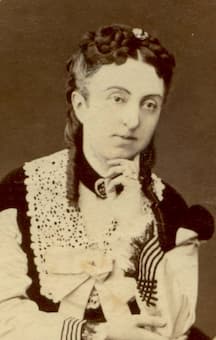
Eugènie Murat

Eugènie Murat

One famous salon that Morhange played at belonged to Princess Eugènie Murat, an eccentric, wealthy woman whose sapphic tendencies during her widowhood were well-known.

Like many in her social set, Princess Murat delighted in using powerful drugs like hashish and cocaine. According to one legend, she rented a submarine so she could partake in private.

Winnaretta Singer

Winnaretta Singer

Morhange was also a regular at the salon of Princess Edmond de Polignac, an American heiress with the maiden name of Winnaretta Singer.

A lesbian herself, Princess Polignac entered into a friendly lavender marriage with the gay Prince Edmond de Polignac.

After their marriage, she used her money and her newfound social status to entertain – and seduce – the cream of musical Parisian society.

Thanks to these women, Morhange was on the front lines of Parisian art, literature, and music from an early age.

Marriage and War

Hélène Jourdan-Morhange and her husband Jacques Jean Raoul Jourdan

Hélène Jourdan-Morhange and her husband Jacques Jean Raoul Jourdan

In 1913, at the age of twenty-five, Morhange married painter Jacques Jean Raoul Jourdan. (Interestingly, she hyphenated her surname, instead of changing it entirely…a somewhat unusual choice in the 1910s.)

The summer of the following year, World War I began, and he left to fight.

He died in March 1916 at the Battle of Verdun, one of the longest battles of the war.

Jourdan-Morhange was devastated, and his violent loss would haunt her for years.

During the war, she partnered with pianist Juliette Meerowitch, a student of Cortot’s who was well-known for championing the work of Erik Satie.

Their friendship became deeply meaningful. She began processing the death of her husband and the trauma of the war by talking to Meerowitch and playing with her.

Befriending Ravel  

Another important new friend was Maurice Ravel. She met him after performing Ravel’s piano trio, a piece that he had rushed to finish before the war began, fearing he wouldn’t survive the conflict. (In fact, he was so convinced that he was about to die that he dryly referred to the trio as being “posthumous.”) He was deeply impressed by her playing and musicianship.

Hélène Jourdan-Morhange (on the left) with Maurice Ravel

Hélène Jourdan-Morhange (on the left) with Maurice Ravel

When he was working on his orchestral showpiece La Valse, he wrote her a letter asking a question about how he should orchestrate a particular part.

Tragically, in 1920, two years after the end of the war, Jourdan-Morhange’s recital partner, Juliette Meerowitch, died suddenly while touring in Brussels.

After this second great loss, coming so close on the heels of the loss of her husband, Jourdan-Morhange began spending more time with Ravel. At the time, Ravel was also in mourning after the death of his beloved mother, so he understood her grief. And of course, both musicians were grappling with the loss of many of their friends in the war.

It’s no surprise that they ended up becoming good friends and colleagues. There are rumours that Ravel thought about marrying her, but there’s no evidence they ever embarked on a romantic relationship.

Inspiring Ravel

Portrait of Hélène Jourdan-Morhange by her husband Jacques

Portrait of Hélène Jourdan-Morhange by her husband Jacques

Around this time, Ravel was asked to write a piece to honour Claude Debussy, who had died of cancer in the closing months of the war.

He began the work in 1920 but continued working on it over the following two years.

In 1922, Jourdan-Morhange premiered the resulting piece: Ravel’s Sonata for Violin and Cello, sometimes known as his Duo, with cellist Maurice Maréchal.

Ravel’s Sonata for Violin and Cello   

He also began his G-major violin sonata.

Historian Jillian C. Rogers has an intriguing theory about these and other Ravel works in her 2021 book Resonant Recoveries: French Music and Trauma Between the World Wars. She believes that the repetitive, flowing rhythms that became integral to Ravel’s musical language originated, in part, from a desire to provide music to his friends that was soothing to practice. Those flowing, repetitive rhythms are in full evidence in the violin sonata.

The sonata took five years to finish, only finally coming to fruition in 1927.

Unfortunately, by that time, Jourdan-Morhange couldn’t premiere it. She was enduring yet another tragedy: chronic pain that no doctor could diagnose, which was keeping her from playing the violin.

It has been theorised that this pain might have originated from arthritis, rheumatism, or an overuse injury.

But whatever the cause, it was severe and long-lasting enough to permanently remove her from the concert stage.

She was forced to make do with accepting the work’s official dedication. Violinist Georges Enescu ended up premiering it, with Ravel on the piano.   

Ravel’s Death

After finishing the violin sonata, Ravel did not have many good years left in him.

In October 1932, he was in a taxi accident that appears to have caused or triggered neurological issues.

(Some historians have suggested that he had Pick’s disease, an incurable early-onset dementia similar to Alzheimer’s.)

By 1937, he could no longer compose. He complained bitterly to his friends and colleagues: he could hear music in his head, but could no longer write it down. He told Jourdan-Morhange that he was frustrated because he felt he had so much left to give the world musically.

Maurice Ravel

Maurice Ravel

Although it was difficult to see her dear friend in such pain, Jourdan-Morhange spent as much time as she could with him in his final illness.

She later spoke about the long walks they took together in nature. He could identify birds with ease based on their songs, but hearing music at concerts became extremely difficult and even traumatic for him.

His condition worsened. After a failed exploratory brain surgery, Ravel died in December 1937.

A Second Marriage and a New Career

After twenty years of living with painter Luc-Albert Moreau, Jourdan-Morhange married him in 1946.

During the interwar period, while living with Moreau, Jourdan-Morhange had become very close to author Colette, who lived nearby.

Colette encouraged Jourdan-Morhange that even if she could no longer play the violin, she could at least write about music.

So in addition to teaching, Jourdan-Morhange began writing, submitting reviews and reminiscences to a variety of different French journals.

After World War II ended, she also began producing radio programs for RDF (Radiodiffusion française).

Partnership with Perlemuter

Vlado Perlemuter

Vlado Perlemuter

In 1950, she produced and co-hosted a radio series with pianist Vlado Perlemuter, who had studied Ravel’s entire piano output with the composer in his early twenties.

During the radio shows, Perlemuter would play the works, and he and Jourdan-Morhange would both talk about what interpretive ideas Ravel had in mind.

Perlemuter playing Ravel’s Toccata from Le tombeau de Couperin   

The transcriptions and translations of these programs were later published as Ravel According to Ravel. They serve as an important window into his famously exacting ideas.

In the late 1940s, Jourdan-Morhange became one of the founding members of the Maurice Ravel Foundation, which sought to memorialise his life and career.

She once wrote of Ravel, “His friends and those close to him looked for him in his work, sometimes remembering him in a rhythm, an unpredictable harmony, the fleeting memory of a look, a tender expression, where their lost friend was wholly revealed to them.”

Remembering Her Musical Colleagues

Hélène Jourdan-Morhange

Hélène Jourdan-Morhange

Her memories of Ravel and the other great composers whose works she inspired and championed contain valuable insights.

During the radio program with Perlemuter, she said:

“So Ravel used to say everything that had to be done, but above all…what was not to be done. No worldly kindness restrained him when he was giving his opinion… Having worked on the Sonata, the Duo and the Trio with Ravel when I was a violinist, I recognise in Perlemuter’s interpretations all the idiosyncrasies, all Ravel’s wishes: exaggerated swells, crescendi which explode in anger, turns which die on a clear note, the gentle friction of affectionate cats…and in all this fantasy, strict time in expression and rigour even in rubato.”

Of course, Ravel wasn’t the only composer she knew well. She wrote down a couple of evocative memories about composer Gabriel Fauré, too:

“It would be difficult for me to describe his special wishes in the way that I could with Ravel. Just one directive stands out, and very strongly so: play in time without slowing, without even taking time to ‘prepare’ those voluptuous harmonies that the slightest hesitation might underline for the audience’s ears… Fauré, completely kind as he was, could be terribly direct with those who struck him as snobbish – most usually fashionable ladies.”

However, when it came to the music of French composer Pierre Boulez, she was puzzled. In 1950, she wrote in a review:

“It’s difficult for me to follow Pierre Boulez, because I admit I was so bored by his 30-to-35-minute-long sonata that I forbid myself from talking about it… I don’t understand. I am one of those listeners who demand from music what the Greek philosophers called a ‘moral force.’ It was Aristotle who saw people’s faces relax and their expressions lighten when a performance was beautiful… Well, the audience the other evening didn’t radiate goodness; rather, it was boiling.”

Conclusion

Hélène Jourdan-Morhange died on 15 May 1961. She was 73 years old.

Much is still left to rediscover about her life and career, as well as the profound influence she had on Ravel and the other Parisian composers who surrounded them both.

But even with the sketchy biographical information we have about her today, it is clear that she was a major force in French classical music between the wars. She should be remembered and celebrated more often.

Best Yuja Wang Encores (Born on February 10, 1987) Confetti, Fireworks, and Fingers on Fire


Some pianists impress you. Some intimidate you. Some make you want to practice. Yuja Wang does something far more dangerous. She makes you believe, just for a second, that the piano might be capable of flight. Then she laughs, changes shoes, and proves it again.

Yuja Wang

Yuja Wang

To hear Yuja play is to witness total command without a trace of heaviness. Her fingers are so impossibly fast that your eyes can’t follow. And it’s all fearlessly clear and comes with ease as notes sparkle, dart, tease, explode, and vanish.

Classical music has long suffered from performers who behave as if joy were somehow unprofessional. Yuja Wang is the antidote. She smiles at the keyboard. She dares. She risks. She throws off ten encores like confetti and somehow makes each one feel like a gift.

Talking about encores, to celebrate her birthday on 10 February, let’s listen to her most jaw-dropping encores, explosions of adrenaline, personality, joy and irresistible brilliance.  

Blink and You’ll Miss It

Rimsky-Korsakov’s “Flight of the Bumblebee” in the arrangement of Cziffra lands like a perfectly timed firework. It’s short, explosive, and utterly irresistible. In fact, it’s a full-blown adrenaline rush.

The piano under her hands doesn’t buzz so much as ignites, flashing past in a blur of precision, speed, and wicked delight.

But it’s not just the incredible velocity that makes this a truly jaw-dropping encore. It’s Yuja’s control that is out of this world. Every note is clean, every accent alive, and every phrase shaped with a wink. How on earth can she make something so ferocious sound so joyful?   

Mozart Meets Modern Fireworks

Yuja Wang takes Mozart’s “Alla Turca” and gleefully rockets it out of the 18th century and straight into now. What starts as a familiar classical wink suddenly sparkles, swerves and struts with crisp elegance, colliding with high-octane brilliance.

And if you’re wondering what magic potion she’s using, the arrangement itself feels like a delicious hybrid. It’s a mischievous mash-up of Arcadi Volodos’ pianist extravagance and Fazil Say’s jazzy bite.

Both are filtered through Yuja’s own fearless instinct, with the result that Mozart becomes part jazz club and part keyboard acrobat. It’s utterly alive, Mozart with lipstick, sneakers, and bursting fireworks.

Where Stillness Turns Electric

Yuja Wang

Yuja Wang

After fireworks and bravura in the main concert, Yuja Wang occasionally turns to something hypnotic in her encore. Just listen to how Philip Glass’ “Etude No. 6” is taking over the room. The steady pulse begins almost innocently, and then, without warning, it transforms.

Repetition becomes propulsion, and simplicity turns into pure electricity. Every return of the loop feels newly charged, all nudged forward with razor-sharp rhythm and luminous clarity.

As an encore, it’s genius. This is a different kind of thrill; it’s cool, focused, and irresistible. You feel the pulse in your chest, the precision in your bones, and suddenly the hall is vibrating with the quiet, unstoppable confidence of modern music played by someone who absolutely owns it.  

Turbocharged Tea for Two

When Yuja Wang launches into “Tea for Two,” the piano becomes a playground of swing, sparkle, and sheer joy. Inspired by Art Tatum’s legendary jazz arrangements, she takes this familiar tune and turns it into a whirlwind of dazzling runs and playful flourishes.

Every phrase seems to giggle and wink at the audience. It’s not just an encore but a celebration. Let’s call it a little surprise that lifts the hall into laughter and applause.

Everything is effortless: the tricky leaps, the double-note passages, and the rapid-fire ornaments. It basically is unbelievable, as Yuja Wang rolls speed, clarity, and sheer brilliance all into one.  

Rocket-Powered Virtuosity

When Yuja Wang dives into Kapustin’s “Toccatina,” she turns the piano into a dazzling jazz-fuelled rocket ship. Yuja attacks this mischievous whirlwind, part classical precision and part big-band swagger, with that signature fearless confidence.

There is plenty of blinding speed and a blizzard of notes, and Yuja Wang brings sheer personality to every measure. Those dizzying runs don’t just fly; they dance, laugh, and flirt.

This is pure joy, reckless brilliance, and rhythmic exhilaration all wrapped into one ridiculously entertaining encore. Those tricky rhythmic twists trip me up every time, but Yuja makes it gleam like polished crystal.   

Polka Rocket

If virtuosity had a theme song, Yuja Wang would be playing it at full throttle on a grand piano. Just listen to her attack the Cziffra arrangement of Strauss’ “Tritsch-Tratsch Polka.” This isn’t a polka, it’s rock-fuelled finger gymnastics.

Every rapid-fire scale, cascading arpeggio, and whirlwind octave is executed with a precision that makes your jaw drop. She spins Cziffra’s mercilessly difficult passagework with the same ease that a cat might chase a laser pointer.

The almost absurdly difficult technical foundation is made seemingly effortless. By the final barrelling chords, you’re certainly not hearing a polka. You’re riding a rollercoaster designed by a piano wizard where exhilaration is mandatory.   

Melody in Bloom

Yuja Wang

Yuja Wang

Yuja Wang’s take on Gluck’s Melodie from Orfeo ed Euridice (arranged by Sgambati) is like stepping into a sunlit garden of sound. What makes this encore so enchanting is how it contrasts with the firecracker pyrotechnics we usually associate with her.

This encore just delicately floats, with each phrase shaped by a singer’s breath and a painter’s eye for nuance. And with that subtle pedal work that lets the harmonies shimmer underneath, the whole piece just starts to glow.

Here, it’s all about touch, tone and whispered elegance. Yuja caresses each note, letting every delicate turn of the melody bloom. If you really needed proof that Yuja isn’t all about speed and power, this encore showcases her exquisite musicality in every shimmering phrase.  

Horowitz Showstopper

If you’re looking for a whirlwind in a flamenco dress, look no further than Yuja Wang attacking Horowitz’s “Carmen Fantasy Variations.” It’s fiery, dazzling, and absolutely irresistible.

Each variation bursts with personality. One moment it’s a playful flirt, the next a sultry smoulder, and then suddenly she’s launching into a thunderous cascade of scales and arpeggios that leave you breathless.

It’s pure pyrotechnics, but with Yuja, there’s never a sense of chaos, as every blazing run and daring leap is impeccably shaped and perfectly timed. Her touch is electric, and she takes us on a thrilling and utterly exuberant ride through Bizet, Horowitz, and her own unstoppable personality. 


From Counterpoint to Confetti

Here is an encore that Yuja doesn’t play all the time, and it’s not so easy to get good footage of it. However, this Katsaris piano paraphrase of Bach’s “Badinerie” is exactly what Yuja ordered.

In the original, it’s already a cheeky and sprightly dance full of twirls and infectious energy. In Katsaris’s arrangement, however, the infectious spirit is out of this world. Every phrase is packed with tiny virtuosic flourishes, surprising little detours, and sparkling commentary that feels like musical confetti.

And then Yuja steps in, and it feels like a burst of personality. Her rhythmic zing and tonal sparkle bring out the humour and brilliance in Bach’s counterpoint, letting every nimble twist shine. By the time she’s finished, it’s less a performance and more a joyous celebration with a distinctly modern and joyful twist.   

Desert Moon Dance Party

For another novel encore, let’s turn to Yuja Wang’s take on “Danzón No. 2” by Arturo Márquez. This sizzling orchestral showpiece has been cleverly reimagined for solo piano by Leticia Gómez Tagle. And under Yuja’s fingers, it becomes an irresistibly sultry dance party under a desert moon.

From the very first syncopated accents, Yuja brings out the seductive rhythmic flair, her fingers teasing and flirting with the melody like a dancer drawing you into the floor.

The way she balances rhythmic excitement with expressive nuance gives the piano version both the heartbeat of the dance and the sparkle of a showpiece. What can I say? It’s full of flirtatious flair, sparkling fingers, and irresistible joy.

Fingers on Fire

Yuja Wang

Yuja Wang

How about concluding this blog with a lightning bolt, taking a bow? That’s what’s happening when Yuja Wang attacks Prokofiev’s “Toccata.” Her fingers fly with a kind of joyful fearlessness, rapid-fire scales and cascading octaves included.

Every percussive blast is landing with dazzling precision. But here’s the magic. It’s not just a technical tour de force, but even in the midst of this relentless energy, every note sings. Her hands are literally everywhere at once, yet nothing sounds cluttered or mechanical.

I just feel a sense of giddy exhilaration, the kind of thrill that makes you grin and hold your breath at the same time. This is virtuosity that doesn’t just impress the brain. It sweeps the soul along, turning blistering technique into pure musical storytelling.

Whirlwind of Wonder

Yuja Wang doesn’t just play encores. She creates joy, she redefines possibilities, and she reminds us that the piano can dance, soar, and even flirt with the sky.

To love Yuja Wang’s playing is to love risk, brilliance, humour, glamour, and precision, all wrapped into one fearless artist who walks onstage as if she belongs there completely.

But here is the truth. After all the fireworks, the flirts, the sparkling confetti of scales, runs, and octaves, you realise you’ve witnessed more than an encore marathon.

We’ve glimpsed the essence of Yuja Wang. She is a whirlwind of brilliance, bravura, and unabashed delight. And honestly? I can’t wait to see what she’ll throw at the keys next.

7 Classical Pieces That Were Secret Love Letters


Many composers have turned to music when emotions were too intense for letters or speech to express.

In fact, some of the most iconic pieces in the repertoire began as deeply personal love letters, whether hopeful, obsessive, nostalgic, or even forbidden.

Today we’re looking at seven unforgettable works of classical music that were written as love letters, ranging from Berlioz’s feverish Symphonie fantastique to Janáček’s volatile Intimate Letters.

Together, they reveal how love and romantic obsession have shaped classical music.  In 1827, Berlioz became infatuated with Irish actress Harriet Smithson after seeing her perform the role of Ophelia in Hamlet.

She didn’t speak French, and he didn’t speak English, and she – understandably – ignored his repeated requests to meet.

Consequently, the lovelorn Berlioz channeled his unrequited passion into his Symphonie fantastique.

Harriet Smithson

Harriet Smithson

Over the course of five imaginative movements, the symphony’s autobiographical hero experiences a variety of love-induced (and drug-induced) visions.

The dreamy “idée fixe” melody in the opening movement represents the beloved.

In the second movement, that theme is transformed into a waltz at a ball, where she appears, then vanishes.

Next, a peaceful rural scene is disturbed by his doubt about her love.

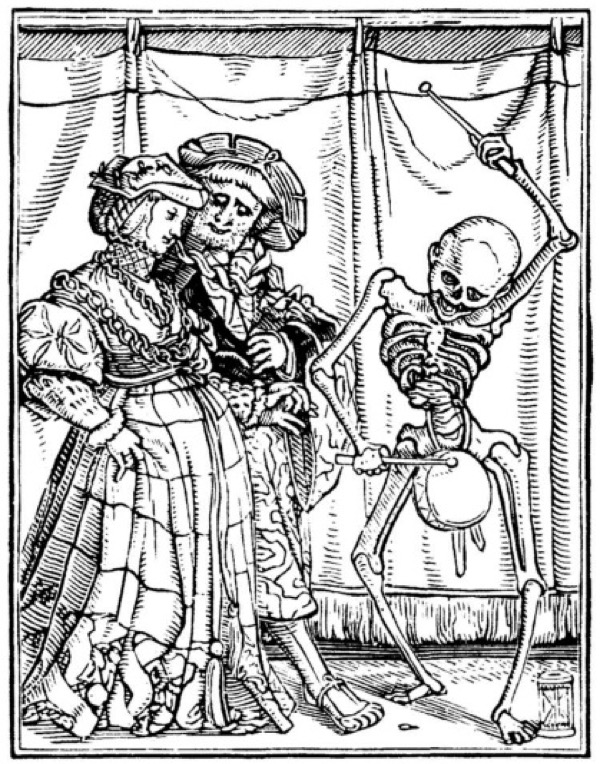
Opium-fueled nightmares of murdering his beloved and being executed follow, culminating in a macabre “Witches’ Sabbath” where the beloved’s theme returns in a grotesque manner.

This emotionally charged fantasy was Berlioz’s way of immortalising his love and despair.

Six years later, in October 1833, Hector Berlioz ended up marrying Harriet Smithson. The marriage was a nightmare, but that’s a story for another day.

In the late 1830s, composer Robert Schumann was in love with virtuoso pianist Clara Wieck.

Separated by Clara’s disapproving father, Robert poured his emotions into a piano piece called Ruines in early 1836.

Later he added two movements to the piece, creating a new work to help fundraise for a Beethoven monument in Bonn, Germany. It became known as the Fantasie.

But although the outside world might have seen it as a work written to pay tribute to Beethoven, it was still meant to be a love letter. In a March 1838 letter to Clara, Schumann confessed that the Fantasie contained “perhaps the most impassioned music I have ever written.”

Clara Wieck Schumann

Clara Wieck Schumann

Schumann even embedded a secret message in the music. In the quiet coda of the first movement, he quotes a phrase from Beethoven’s “An die ferne Geliebte” (“To the Distant Beloved”) – “Nimm sie hin denn, diese Lieder” (“Take then these songs, beloved”).

We went into detail about how Robert Schumann’s Fantasie is a love letter to Clara  .

The Siegfried Idyll was composed as an intimate musical love letter to Richard Wagner’s second wife, Cosima.

On Christmas morning, 1870, the day after her 33rd birthday, Cosima awoke in their villa to the sound of music rising up the stairs.

Wagner had assembled a 13-player ensemble on the staircase to surprise her with this sweet and tender piece.

The Siegfried Idyll incorporates themes from Wagner’s opera Siegfried (the year before, they had named their infant son Siegfried) and a German lullaby that was meaningful to their family.

Cosima recounted waking to “such music!… Richard came into my room with the children and offered me the score of the symphonic birthday poem. I was in tears.”

Cosima and Richard Wagner

Cosima and Richard Wagner

This piece was initially meant to be a private message of love. Only later did financial need cause Wagner to publish it, in 1878.

Even today, the Siegfried Idyll remains a touching musical portrait of marital love and domestic bliss.

Edward Elgar – Salut d’Amour (“Liebesgruß”), Op. 12 (1888)   

Elgar wrote this piece as an engagement present to his fiancée, Caroline Alice Roberts, in the summer of 1888.

Alice was a poet and had given Elgar a poem she wrote (“The Wind at Dawn”) as a token of love. Elgar responded in kind with this musical greeting of love.

Alice Roberts and Edward Elgar

Alice Roberts and Edward Elgar

He originally titled it “Liebesgruß” (“Love’s Greeting”) and dedicated it “à Carice” – a contraction of Caroline Alice.

They would later name their daughter “Carice.”

“Salut d’Amour” is imbued with the gentle charm of a love letter, featuring a singing melody, warm harmonies, and a sweet violin line.

Elgar’s publisher later used the French title Salut d’Amour to appeal to the commercial market, but its true origin remains that private exchange between two lovers.

Johannes Brahms – Intermezzo in A-major, Op. 118, No. 2 (1893)   

By 1893, Brahms was in his sixties, and his musical soulmate Clara Schumann had been a widow for nearly four decades.

Both were feeling their age, especially Clara, who was thirteen years his senior.

Brahms’s set of Six Pieces for Piano, Op.118 was published with a dedication to Clara.

Black and white collage of composer Johannes Brahms and Clara Schumann

Clara Schumann and Johannes Brahms

The A-major Intermezzo (marked Andante teneramente, or “tenderly”) is often seen as Brahms’s musical love note to her…and maybe a kind of thank-you note, as well as a goodbye.

Its gently arching melody and warm harmonies exude a truly pungent, poignant mix of love and nostalgia.

Alban Berg – Lyric Suite (1926)   

For decades, the Lyric Suite was admired as an abstract, modernist masterpiece.

Only in the 1970s did musicologists discover that Berg had actually woven a hidden romantic narrative into the work.

Hanna Fuchs-Robettin

Hanna Fuchs-Robettin © The Guardian

Through the use of cyphers and musical quotes, the Lyric Suite became Berg’s private love letter to his married lover, Hanna Fuchs-Robettin.

He subtitled several movements with suggestive indications: “amoroso” (lovingly), “appassionato” (passionately), “estatico” (ecstatically), and “delirando” (deliriously).

He also embedded both his and Hanna’s initials as musical notes (A–B-flat for “Alban Berg” and B-natural–F for “Hanna Fuchs”) throughout the score.

He even slipped in the famous “Tristan chord” from Wagner’s opera Tristan und Isolde (the quintessential musical symbol of adulterous love) as a reference to their circumstances.

In the final movement, marked Adagio appassionato, Berg quoted a clandestine message: a melody from Zemlinsky’s Lyric Symphony that set the words “Du bist mein eigen” (“You are my own”) – explicitly tying the music to the idea of the lovers’ union.

In short, this is among the most carefully crafted works in the history of classical music, taking on two seemingly opposed identities simultaneously: an expressive atonal string quartet and a secret love letter.

Leoš Janáček – String Quartet No. 2 “Intimate Letters” (1928)   

In his sixties, composer Leoš Janáček fell in love with Kamila Stösslová, a married mother who was nearly forty years his junior. Over the last decade of his life, he sent her over seven hundred letters.

This quartet, which Janáček nicknamed “Intimate Letters”, was inspired by his love for her: a love that is, from a modern perspective, deeply uncomfortable to ponder.

Kamila Stösslová

Kamila Stösslová in 1917

Among the unsettling words he wrote to her: “Our life is going to be in this piece… I composed the first movement as my impression when I saw you for the first time… It will be beautiful, strange, unrestrained, inspired… this piece was written in fire.”

The first movement’s surging motif depicts his first glimpse of Kamila (“the chilling mystery of an encounter”), while later movements reference a tender shared moment. Janáček even imagines having a love child with her.

The third movement he called one of the “Love Letters”, and the finale ends in “great longing and fulfilment.”

As disturbing as its backstory may be when seen through a modern lens, Janáček’s “Intimate Letters” quartet is still remarkable for its emotional expressivity and autobiographical inspiration.

Conclusion

From Berlioz’s hallucinatory visions to Janáček’s fevered late-in-life obsession, these love letters in music reveal just how vulnerable composers can be when writing under the influence of romantic and erotic obsession.

Each work distills a private emotion into something listeners can still feel generations later, whether it’s Schumann’s yearning, Wagner’s domestic warmth, or Berg’s encoded passion.

If you want to understand the emotions behind some of classical music’s most famous works, these seven musical love letters are a great place to start!