Total Pageviews

Friday, January 23, 2026

Jazz Funk,Soul,Boogie & Dance

 Jazz Funk,Soul,Boogie & Dance


The Emotions ~ BEST OF MY LOVE
Sheila Hutchinson-Witt (born January 17, 1953) is an American soul and R&B singer-songwriter, best known as the lead vocalist and a founding member of the Grammy Award-winning vocal group The Emotions.
She is celebrated for her powerful, clear soprano and was a driving force behind the group’s transition from gospel roots to international pop stardom in the 1970s.
Sheila was born in Chicago, Illinois, the youngest of three sisters born to Joseph and Lillian Hutchinson. Her musical journey was a family affair from the beginning:
#thehutchinsonsunbeams: Under the mentorship of their father, a guitarist, Sheila and her sisters (Wanda and Jeanette) began performing gospel music as children.
They were so talented that by the late 1950s, they were already appearing on television (such as The Jerry Van Dyke Show) and opening for gospel legend #mahaliajackson.
In the late 1960s, the sisters transitioned to secular R&B and renamed themselves The Emotions.
They signed with Stax Records, where Sheila’s songwriting talent emerged. At just 16 years old, she wrote the group's first major hit, "So I Can Love You" (1969). They toured with many of the Stax artists, including #thestaplesingers and others including the Jackson 5, #slyandthefamilystone, The O'Jays and Stevie Wonder.
Their career reached its peak in the mid-70s when they began collaborating with Maurice White - EWF Legacy.
Major career highlights included:
"Best of My Love" (1977): This disco-infused track, primarily handled by Wanda Hutchinson, with strong harmonies and contributions from her sisters Sheila and Jeanette Hutchinson, and youngest sister Pamela Hutchinson, who joined for this hit, creating that iconic layered sound, spent five weeks at #1 on the Billboard Hot 100 and won a Grammy Award for Best R&B Vocal Performance.
"Boogie Wonderland" (1979): A massive collaboration with Earth, Wind & Fire that cemented the group's place in music history.
Beyond her group work, Sheila's voice has been sought after for guest features, including #garryglenn’s "Feels Good to Feel Good" (1987).
Sheila Hutchinson is often cited as one of the most influential female vocalists of the "Girl Group" era. Her ability to blend gospel-inflected "call and response" with sophisticated R&B arrangements became a template for future stars like Mariah Carey (who famously sampled "Best of My Love" for her hit "Emotions").
"Best of My Love" is a song by American band the Emotions from their fourth studio album Rejoice (1977). It was composed by Maurice White and Al McKay of Earth, Wind & Fire, and produced by White and Clarence McDonald.
Released as the album's lead single on June 9, 1977, the song topped both the US Billboard Hot 100 and US Billboard R&B charts. It also reached the top five in the UK and Canada, the top 10 in New Zealand, and the top 20 in Australia.
"Best of My Love" won a Grammy at the 20th Annual Grammy Awards (1977) for Best R&B Performance By A Duo Or Group With Vocals; it also won an American Music Award for Favourite Soul/R&B Single.
"Best of My Love" has been covered by Mary J. Blige, #ellaeyre, #SheenaEaston, #Unchain and #samanthajade. It has been sampled by #delasoul, Lisa Lisa and #cultjam, Girl Talk, #kylieminogue, #candcmusicfactory, #KeyshiaCole, #mariahcarey and #Tamia. The song was also sampled in #PaulRussell's 2023 single, "Lil Boo Thang".
Maurice White and McKay wrote "Best Of My Love" specifically for the group. For White, writing this song was a way of expressing a positive feeling in a style much better suited for The Emotions than for his band. White says he would have never written this song for Earth, Wind & Fire.
That's Wanda Hutchinson going after the big high notes in this song. Maurice White had her sing an octave higher than what she was used to. Said Hutchinson, "When my range got higher, the intensity of my vibrato sharpened a little."
This was featured in the films Boogie Nights (1998) and Summer Of Sam (1999).
Songwriter Maurice White sued Mariah Carey and C+C Music Factory for plagiarizing this song for Mariah's 1991 #1 hit "Emotions" (C+C produced the song for Mariah). Said White, "Sampling is one thing, but she took the whole song." The lawsuit was settled out of court."
Song: Best Of My Love
Artist: The Emotions
Album: Rejoice
Label: Columbia
Released: June 9, 1977
Genres: Funk/Soul, R&B, Pop
Style: Disco, Disco Gospel, Dance-Pop, Chicago Soul.
Written By: Maurice White, Al McKay.
Producers: Maurice White, Clarence McDonald.
Personnel:
Lead Vocals: Wanda Hutchinson
Backing Vocals, Harmonies: Sheila Hutchinson, Jeanette, Pamela
Clarence McDonald: Piano, Clavinet
Paulinho da Costa: Percussion
Al McKay:Guitar
Larry Dunn: Synthesizer
Verdine White: Bass
Fred White: Drums
Tom Tom 84 (Thomas Washington): String and Horn Arrangements.

ARTE A Continent in Conversation


arte.tv title photo

At the heart of this vision are the people shaping its programming and outreach. We spoke in particular to Katharina Kloss, head of European Offers, who oversees content in English, Spanish, Polish, Italian, and Romanian; Sophie Roche, project manager for ARTE Concert; and Thomas Hammer, social media manager, driving engagement across YouTube, Facebook, and Instagram.

About 56% of the programmes are documentaries, 19% feature films, drama and series, 14% news-related programmes, while 5% feature music and other performing arts.

The programming and outreach team embody ARTE’s mission to unite audiences across borders through innovative storytelling. In our conversation, we explore how the network’s unique Franco-German roots and pan-European outlook continue to influence its programming philosophy, and what it takes to bring culture to life for a continent.

Arte Concert

Culture Without Borders

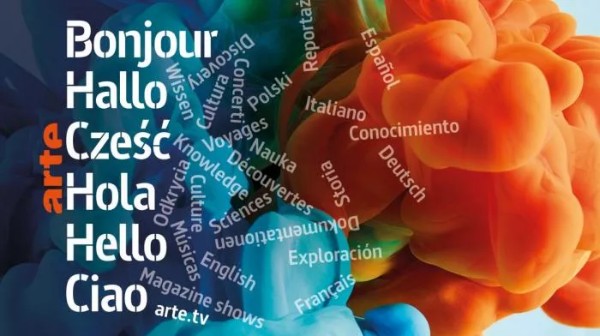
Arte.tv different languages

Talking to the people behind ARTE, you sense immediately that this is not a platform built by committee, but by conviction. What began as a Franco-German cultural experiment has, over the past decade, quietly become one of Europe’s most ambitious shared spaces for art, ideas, and storytelling.

With support from the European Union since 2015, ARTE has moved decisively beyond its original axis, opening itself to audiences in English, Spanish, Polish, Italian, and Romanian.

The result is not merely a broader reach, but a different way of thinking. Culture no longer exported from a centre, but shaped through many voices at once. Today, roughly three-quarters of Europeans can encounter ARTE’s programmes in their own language, a radical concept in a media landscape still largely divided by borders.

That multilingual ambition is not merely a technical add-on, but it informs how ARTE curates, commissions, and frames its work. Opera seasons stream live from houses across the continent, while ArteKino gives arthouse cinema, so often squeezed out of commercial circuits, the visibility and care it deserves.

Cinema Arte

Between Tradition and Urgency

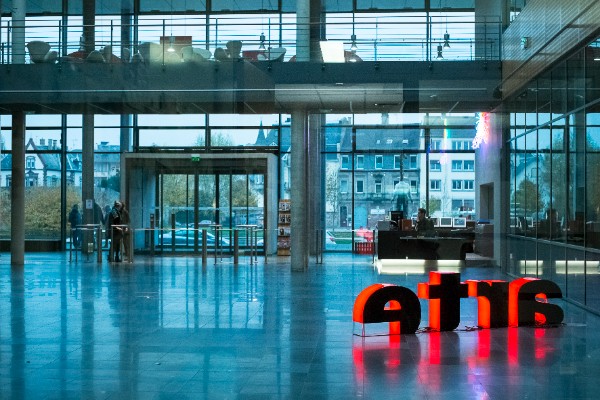
Arte site

© Michel NICOLAS

Emerging directors sit alongside canonical filmmakers, and contemporary social questions coexist with lovingly restored classics. Long-form documentaries remain central, lingering on human stories that resist simplification and refuse to stay neatly within national lines.

When Europe fell silent during the pandemic, ARTE did not retreat into archival comfort. Instead, it leaned into the possibilities of the moment. Daniel Hope’s Christmas Home Concerts offered intimacy at a time of isolation, while United We Stream turned shuttered clubs into unlikely stages, broadcasting electronic music from empty rooms in Berlin, Barcelona, New York, and Detroit.

These options were not substitutes for live culture, but acts of cultural solidarity, essentially reminders that shared experience could survive even enforced distances.   

When Culture Goes Live

ARTE Concert, launched long before livestreaming became ubiquitous, embodies this spirit most clearly. Nearly 900 performances a year, spanning opera, classical music, jazz, pop, metal, hip-hop, and experimental forms, unfold not as disposable content, but as events.

Often they are framed in unexpected ways with musicians performing among museum artworks, artists interacting with visual installations, or concerts that incorporate live sign-language translation as a creative presence rather than an afterthought.

Emerging artists such as Hania Rani or Amaia are featured not at the end of a hype cycle, but at the moment when local recognition begins to ripple outward across Europe.   

Unity Through Curiosity

Arte summer tour

At the heart of all this lies a stubbornly unfashionable idea. Culture should be public, ad-free, and accessible, not because it is profitable, but because it is a shared good.

In an age of algorithmic acceleration, misinformation, and shrinking attention spans, ARTE’s commitment to editorial independence and artistic risk feels quietly radical. Public media here is not a defensive gesture, but a forward-looking one.

If ARTE succeeds, it is because it understands something easily forgotten. Europe is not unified by sameness, but by curiosity. Culture still has the power to resonate and connect, just as democracy requires spaces for complexity, imagination, and trust.

Why Mozart Still Makes Us Laugh


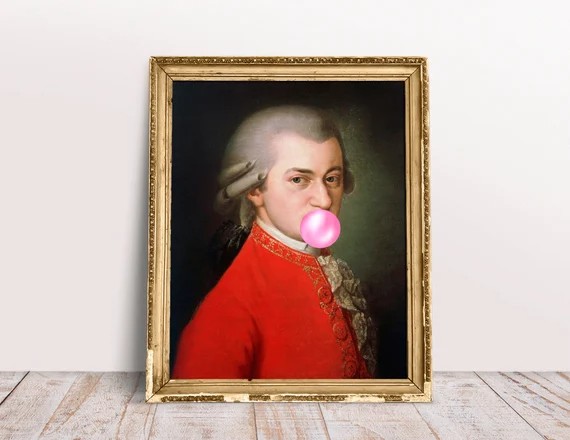
Mozart’s music doesn’t stand politely in the corner, but it nudges you in the ribs, rolls its eyes, and occasionally trips over its own feet on purpose.

What makes Mozart remarkable is not just that he was brilliant, but that he is very funny. And not accidentally funny, or funny because you know a lot of music, but genuinely and immediately funny in the way human beings recognise across centuries.

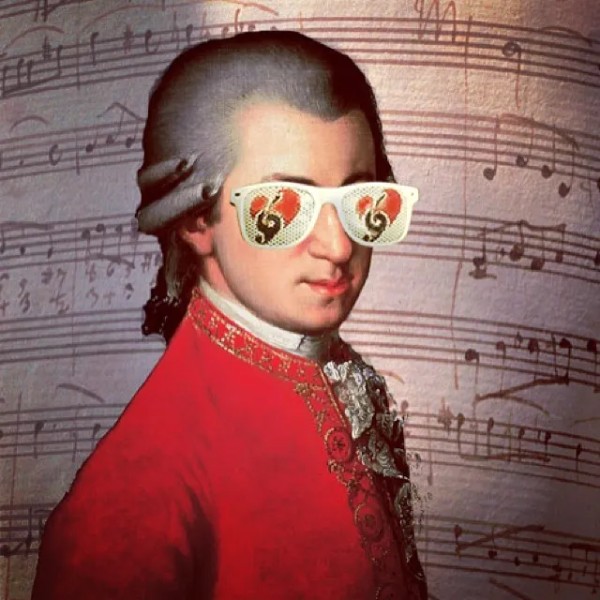
Mozart meme

As we celebrate Mozart’s 270th birthday on 27 January 2026, it becomes clear that his humour still works because it is rooted in human behaviour. Things like vanity, impatience, swagger, awkwardness, and the joy of seeing someone slightly overdo things.   

The Oldest Joke in the Book

Many Mozart jokes work on surprise, basically the same mechanism as a good punchline. You think you know where something is going, and then it doesn’t go there at all. Take the “Overture” to The Marriage of Figaro.

It hurtles forward at breakneck speed, bubbling with excitement, as if everyone is late and lying about it. There is no grand introduction, no dignified scene-setting. The music bursts in mid-thought, like someone already halfway through a conversation.

It’s funny because it feels completely uncontrolled and is barely containing its own energy. It’s perfect for setting up an opera where plans unravel almost immediately.   

Mockery with a Smile

If Mozart had lived today, he might have loved parody videos. His A Musical Joke K. 522 is exactly that. It’s a straight-faced spoof of bad composers and overconfident amateur performers.

The brilliance of the piece lies in how sincerely it pretends to be respectable. Nothing is signposted as a joke. The music smiles politely and behaves itself, at least at first. The opening sounds harmless enough, but soon, tiny cracks begin to show.

Harmonies arrive where they clearly shouldn’t, and melodies wander off mid-thought, distracted by something more interesting. Instruments appear not to be listening to one another, each cheerfully pursuing its own idea while the others carry on regardless.

By the end, the whole thing unravels into a glorious mess. Everyone tries to finish together and fails spectacularly. What makes the piece genuinely funny is Mozart’s restraint. He doesn’t push the joke too far or turn it into a caricature. Mozart knows exactly how close he has to stay to reality.  

When Seduction Becomes a Spreadsheet

Funny Mozart

Mozart’s operas are funny because the music refuses to keep secrets. Characters may try to present themselves as noble, innocent, or in control, but the orchestra has other ideas. It whispers, comments, contradicts, and occasionally bursts out laughing.

The result is comic timing of the highest order as people expose themselves not through what they say, but through what the music reveals behind their backs. Nowhere is this clearer than in Don Giovanni, and especially in Leporello’s famous “Catalogue Aria.” On paper, it is a list, but in practice, it becomes one of the most devastating comic portraits in opera.

The tune bounces along with brisk, almost businesslike cheer, as if Leporello were reading out the contents of a ledger or ticking items off a grocery list. The music is jaunty, efficient, and oddly proud of its own organisation. Meanwhile, the content grows more and more outrageous. Seductions blur into compulsions, and charm slides into predation.

The audience is left laughing slightly uncomfortably at the sheer absurdity of treating moral catastrophe as clerical work. That mismatch is the joke. The music sounds far too pleased with itself. Don Giovanni is never defended, never excused, and never directly condemned; he is simply reduced to a spreadsheet.    

Sighs, Schemes, and Smirks

In Così fan tutte, the trio “Soave sia il vento” sounds tender, heartfelt, and almost heartbreakingly sincere. And yet, if you know the story, the audience is in on the joke. Every note of beauty is delivered while the characters are actively deceiving each other, pretending to be someone they are not, and scheming with near-perfect dramatic obliviousness.

The humour here is both cruel and gentle. It’s cruel because the characters’ emotions are on display while they are lying, flirting, and swapping identities in ways that would make any bystander raise an eyebrow.

It’s gentle because Mozart never mocks them harshly but simply allows the gap between intention and reality to become laughably obvious. Think of it as the operatic equivalent of someone sending a perfectly earnest text while their friends know they’re setting up a prank.

The music is flawless and serious, while the characters are recognisably human, full of vanity, desire, and clueless overconfidence. It is a masterclass in operatic comedy. It is heartbreakingly beautiful, meticulously tender, and yet utterly aware of how ridiculous human behaviour can be.  

The Art of Instant Distraction

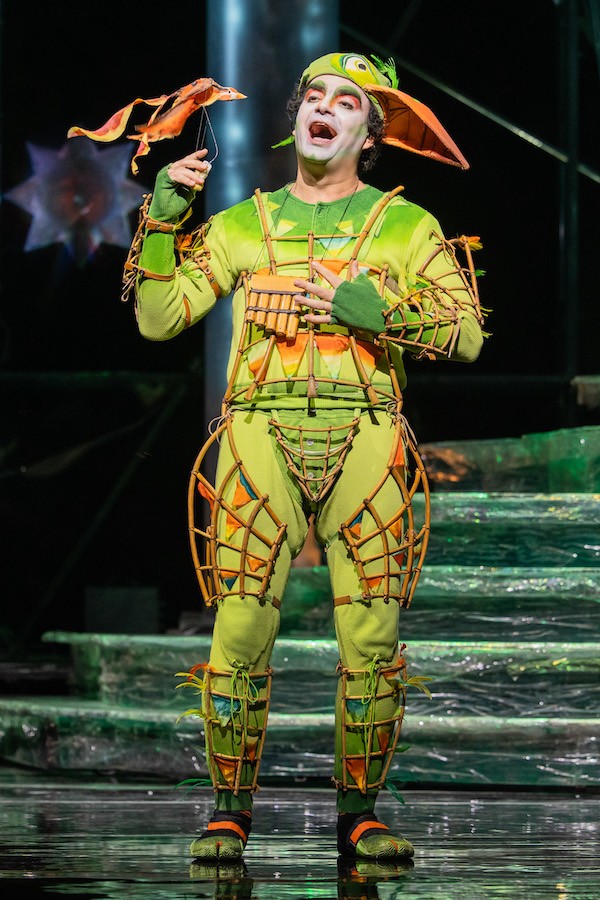
And then there is “Papageno in The Magic Flute, one of Mozart’s most delightful comic creations. Papageno’s charm lies not in heroism or sophistication but in his stubborn ordinariness. He whistles, he sulks, he panics, and he makes mistakes that are at once ridiculous and utterly relatable.

One of the best examples is his aria “Ein Mädchen oder Weibchen,” in which Papageno fantasises about finding a partner. The melody is simple, almost plodding, bouncing along like a man trying to march confidently while tripping over his own feet.

He repeats the same ideas with childlike insistence, each iteration more desperate and endearing than the last. And then comes the aria’s comic peak. Papageno, in a moment of theatrical despair, threatens suicide only to be instantly distracted by the sound of bells signalling food or the promise of a wife.

Mozart perfectly times the orchestra to underline the absurdity. Papageno’s despair evaporates in a beat, replaced by delight, leaving the audience laughing at his quick flip-flop between panic and pleasure. Papageno is a reminder that life is absurd, chaotic, and sometimes wonderfully silly.  

Not-So-Final Farewells

One of Mozart’s favourite comic tricks is the fake ending. It’s the musical equivalent of saying goodbye three times, waving, and then standing in the doorway like he forgot something important.

It’s a subtle kind of mischief as the music seems to promise closure, only to pull the rug out from under the listener’s expectations. Take the final movement of the “Jupiter Symphony.” Just when you are leaning back, convinced the piece has triumphantly concluded, Mozart nudges the orchestra forward for one more cheeky flourish.

The effect is delightful as the listener is caught between surprise and admiration, laughing along with the composer’s playful audacity. This is comic timing in its purest, non-verbal form. The music is alive, aware of its audience, and utterly confident in its ability to provoke a smile.

Mozart’s genius was never just in the notes he wrote, but in the way he invited us to laugh at life itself. Mozart understood the absurd, unpredictable, and wonderfully human side of existence. Two hundred and seventy years on, his music still grins, nudges, and winks, reminding us that brilliance and humour should live happily together.

Thursday, January 22, 2026

This music can listen forever! Sergey Chekalin! Divine, Unsurpassed music.


Snow was falling! The most beautiful melody in the world!