Some of you would say this song it's not german, that it is Czech, but of one thing we can be really sure, this song it's perfect to sing and drink a good Pint with our folks..
With all the respect for all the cultures, let just enjoy the music and share our memories and thoughts with everybody.
Thanks for watching.
Pictures taken from my trip to Germany and some other locations. 2013 -2019
Showing posts with label Classics with Klaus Döring Klassik mit Klaus Döring. Show all posts
Showing posts with label Classics with Klaus Döring Klassik mit Klaus Döring. Show all posts
Thursday, August 10, 2023

Tuesday, August 8, 2023
Eugen Doga - his music and his life

Eugen Doga (born 1 March 1937) is a Soviet composer of Moldovan descent.
A creator of three ballets "Luceafărul", "Venancia", "Queen Margot", the opera "Dialogues of Love", more than 100 instrumental and choral works – symphonies, 6 quartets, "Requiem", church music, and other, plus music for 13 plays, radio shows, more than 200 movies, more than 260 songs and romances, more than 70 waltzes; he is also the author of works for children, the music for the opening and closing ceremonies of the Olympic Games in 1980 in Moscow.
In Moldova, the years 2007 and 2017 (when the composer celebrated his 70th and 80th birthdays, respectively) were declared the Year of Eugen Doga. Chișinău's main pedestrianised thoroughfare has been named Eugen Doga Street in his honour.
The World Intellectual Property Organization (Geneva) in recognition of his outstanding achievements in music awarded him with a special certificate in 2007.
Biography
Youth and education
Doga was born on 1 March 1937 in the village of Mocra in the Rîbniţa District (then in Moldavian Autonomous Soviet Socialist Republic), in a Romanian family.
The childhood of the composer coincided with a period of historical cataclysms – the war, repressions, hunger, poverty, exhausting hard work (the composer's memories of his childhood[.
After finishing seven years at school, Eugen Doga with his friends went to Chișinău (barefoot and without money, as he recalled later to enroll in the School of Music of which he learned about when listening to a homemade radio. He was admitted to the music school, despite having no prior training. Thanks to his natural talent and hard work, Eugen Doga managed to quickly catch up, mastered musical notation and learned to play cello. He still has the fondest memories of his cello teacher Pablo Giovanni Baccini, who with his personal example greatly influenced the future destiny of the composer.
"My second teacher, an old man by the name of Pavel Ivanovich Bachinin, became my salvation. I always think of him with joy. He scheduled my first lesson at 6 o'clock in the morning. I came in – he was already sitting there playing the piano. I liked him a lot – intelligent, very musical, and tactful. He worked with me every morning from 6:00 to 8:30, before lectures, for two and a half years. He taught me not only to play the cello, but simply to be a decent human being. He never said the word 'must', never used the imperative mood. However, through his own example, his attitude, he had taught me a lot,"- says Eugen Doga.
In 1951–1955 he studied at the Music School in Chișinău, specializing in cello, and then at the Conservatory where one of his classmates was a future opera star Maria Bieșu. She made her debut with his song.White flower garden" (Floare de dalbă liadă) on the Moldovan television. Paralysis of the left hand prevented a career of a musician – this was due to the fact that he used to live in a basement. Doga studied for another 5 years at the Art Institute "Gavriil Musicescu",[15] in the class of Professor S. Lobel specializing in composition. 1 January 1957 for the first time in his work, "New Year song" (Cântec de anul nou) was performed on the Moldovan radio children's choir and orchestra under the baton Shiko Aranova.In 1963, he wrote his first string quartet.
After graduating from the Conservatory in Chişinău, he performed as cellist in the Orchestra of the State Committee of the Moldavian Soviet Socialist Republic for television and radio (1957–1962), taught at the Music College "Stefan Neaga" from Chişinău (1962–1967), and worked from 1967 to 1972 at the repertory-editorial Board of the Ministry of Culture of Moldova.
He made his compositional debut in 1963, with a string quartet, later becoming the author of many musical compositions, theater scores and film soundtracks
Caballé and Carreras in Prague - Die lustige Witwe (Lippen schweigen)
Franz Lehár: Die lustige Witwe (Lippen schweigen)
Montserrat Caballé, José Carreras
1/5/1994
Praha / Prague - Rudolfinum
Česká filharmonie/Czech Philharmonic Orchestra
Řídí/conducted: Enrique Ricci
Monday, August 7, 2023
The Best of Sibelius
Jean Sibelius (8 December 1865 – 20 September 1957), was a Finnish composer and violinist of the late Romantic and early-modern periods. He is widely recognized as his country's greatest composer and, through his music, is often credited with having helped Finland to develop a national identity during its struggle for independence from Russia.
The core of his oeuvre is his set of seven symphonies, which, like his other major works, are regularly performed and recorded in his home country and internationally. His other best-known compositions are Finlandia, the Karelia Suite, Valse triste, the Violin Concerto, the choral symphony Kullervo, and The Swan of Tuonela (from the Lemminkäinen Suite). Other works include pieces inspired by nature, Nordic mythology, and the Finnish national epic, the Kalevala, over a hundred songs for voice and piano, incidental music for numerous plays, the opera Jungfrun i tornet (The Maiden in the Tower), chamber music, piano music, Masonic ritual music, and 21 publications of choral music.
Sibelius composed prolifically until the mid-1920s, but after completing his Seventh Symphony (1924), the incidental music for The Tempest (1926) and the tone poem Tapiola (1926), he stopped producing major works in his last thirty years, a stunning and perplexing decline commonly referred to as "The Silence of Järvenpää", the location of his home. Although he is reputed to have stopped composing, he attempted to continue writing, including abortive efforts on an eighth symphony. In later life, he wrote Masonic music and re-edited some earlier works while retaining an active but not always favourable interest in new developments in music.
The Finnish 100 mark note featured his image until 2002, when the euro was adopted. Since 2011, Finland has celebrated a Flag Day on 8 December, the composer's birthday, also known as the "Day of Finnish Music". In 2015, the 150th anniversary of the composer's birth, a number of special concerts and events were held, especially in the city of Helsinki.
Jean Sibelius
1. Allegretto
2. Andante ma rubato
3. Vivacissimo
4. Finale, Allegro moderato
5. At the Castle Gate
6. M lisande
7. By the Seashore
8. By a Spring in the Park
9. The Three Blind Sisters
10. Pastorale
11. M lisande at the Spinning Wheel
12. Entr acte
13. M lisande s Death
REWIND: The first Filipino musical group to enter US Billboard Hot 100 chart
Aug 8, 2023 00:15 AM
AT A GLANCE
The Billboard Hot 100 singles chart premiered on Aug. 4, 1958. These days, the songs in the US chart are based on physical and digital sales, online streaming, and radio airplay.

Long before Jake Zyrus (Charice) hit the Billboard Hot 100 US chart with the songs "Pyramid" and "Note to God" in 2010, the Filipino musical group dubbed The Rockey Fellers debuted on the prestigious musical chart in May 1963.
The Rockey Fellers are composed of Doroteo Malignat and his sons Tony, Eddie, Junior, and Albert.
Their hit song "Killer Joe," inspired by the King of Discotheque Killer Joe Piro," peaked the Billboard Hot 100 singles at No. 16. It was written by Bert Russell, Bob Medley, and Bob Elgin also in 1963.

The Rocky Fellers (YouTube)
The Rockey Fellers followed "Killer Joe '' with another hit song entitled "Like the Big Guys Do" which reached No. 55 on the same chart.
But the success of The Rockey Fellers was cut short following the British invasion of the US music scene.
The Billboard Hot 100 singles chart premiered on Aug. 4, 1958. These days, the songs in the US chart are based on physical and digital sales, online streaming, and radio airplay.
Click below to listen to the first Filipino group that rocked the Billboard Hot 100 chart:
https://youtu.be/zzT6VXteGSQ?list=OLAK5uy_nfGftKT-bK-KCKIFUzmQtgyIMn_r7_G_k
Tuesday, August 1, 2023
Tango "La Cumparsita" - Accordion - Nikolay Navitsky
Eric Clapton - 22 May 2023, London, Tribute To Jeff Beck - COMPLETE
Eric Clapton - 22 May 2023, London, Tribute To Jeff Beck - COMPLETE
Pink Floyd Reunion - Time
🤣 Orchestra plays THE HISTORY OF MUSIC - cavemen to Barbie
 • Funny! Orchestra ... to "The Funniest Classical Orchestra Ever" • Funniest Classica... - this is the guy that actually does on a concert stage what others just talk about. Find out what Rainer did next http://bit.ly/1hGR52j Rainer and his Orkestra are on tour in Autumn 2020
 Monday, July 31, 2023
Stairway to Heaven with Amazing Gimnazija Kranj Symphony Orchestra
Gimnazija Kranj Great Spring Concert 2012 in Gallus Hall, Cankarjev dom. 20.th concert anniversary. Music, Rhythm and Dance. 10 years of Gimnazija Kranj Symphony Orchestra. Also a celebration of 20th year of our lead sponsor: Hranilnica Lon bank. They performed legendary rock ballad: Stairway to Heaven. Arrangement: Marjan Peternel. Sold out concert and amazing performance.
Sponsor: Hranilnica Lon d.d., Kranj. Conductor: Nejc Bečan; concert direction: Primož Zevnik; glasba: Led Zeppelin

Victor Borge - Mozart !
Borge here focuses on Mozart and eventually describes and plays an imaginary opera by the composer.
Børge Rosenbaum (3 January 1909 – 23 December 2000), known professionally as Victor Borge, was a Danish comedian, conductor, and pianist who achieved great popularity in radio and television in the United States and Europe. His blend of music and comedy earned him the nicknames "The Clown Prince of Denmark", "The Unmelancholy Dane" and "The Great Dane".
Sunday, July 30, 2023
Friday, July 28, 2023
Orson Welles | The 3rd Man (1949) Film-Noir, Thriller | Colorized Movie,...
• The Third Man (19...
Director: Carol Reed
Writers: Graham Greene, Orson Welles, Alexander Korda
Cast: Orson Welles, Joseph Cotten, Alida Valli
Genres: Colorized classic, Film-Noir, Mystery, ThrillerThursday, July 27, 2023
10-year-old pianist plays Chopin’s Fantaisie Impromptu with extraordinary command and poise
By Kyle Macdonald


Pianist Jeneba Kanneh-Mason is now one of the nation’s finest young musicians. This performance from 2013 gives an incredible insight into her developing talent.
Meet a 10-year-old who was in full command of music, giving a performance beyond her years.
The Fantaisie-Impromptu is a piece for solo piano at a breathless tempo, with rapid rolling broken chords in the left hand and flowing semi-quavers in the right. Composed in 1834, the fantasy showcases the full virtuosity, poetry and inventiveness of Chopin’s writing.
As fiendish and technical as it is, a talented pianist will have command of the notes. But as with the greatest music performances, it’s the expression, emotion and poetry beyond those notes that hit the heart.
And that’s just what we got from this talented youngster ten years ago. It’s a five-minute window into the musical ability of a prodigy who has already gone on to achieve great things.
The young player is Jeneba Kanneh-Mason, the third youngest of the seven siblings of the Kanneh-Mason family.
It was filmed by her father Stuart Mason for the family’s , which has showcased the almost unbelievable musical talents of the two brothers and five sisters as they have lived and grown with music.
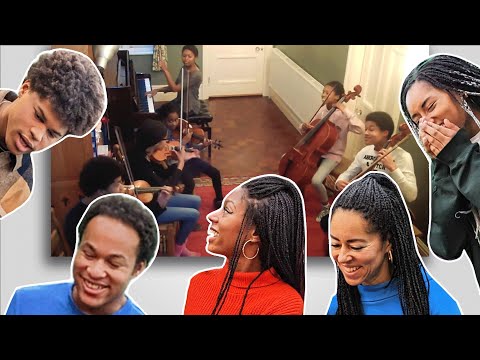
“Jeneba plays Chopin with sensitivity and maturity beyond her tender age of only 10,” commented one YouTube user, on this performance.
“Such technical ability and such emotion,” remarked another.
This video was recorded a few months after the young pianist gained Grade 8 Distinction and won the Nellie Greenhill Memorial Prize from the Associated Board for the highest marks in the Nottingham area.
Jeneba is now aged 20, and is studying at the Royal College of Music, where she holds the Victoria Robey Scholarship and studies piano with Vanessa Latarche.
Her talents now extend to great piano concertos with recent performances including , Ravel and Saint-Saëns’ concertos, as well as Florence Price’s Piano Concerto in One Movement with Chineke! Orchestra.
Jeneba was also among the young performers that were showcased at Classic FM’s Rising Stars with Julian Lloyd Webber in 2022. Watch her intoxicating performance of Liszt’s rollicking Hungarian Rhapsody No.2 below.
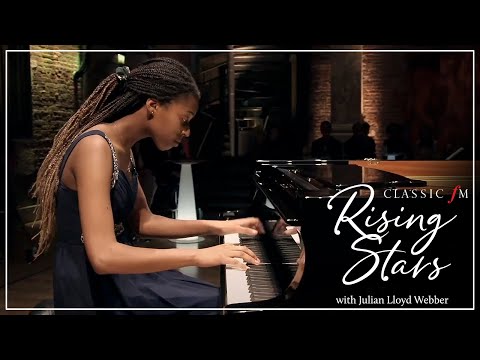
That raw talent and sense of poetry in music-making has only grown over a decade. She is a very special musician and one to watch into the future.
Romeo proposes to Juliet, after stunning ballet duet on stage at Verona Arena
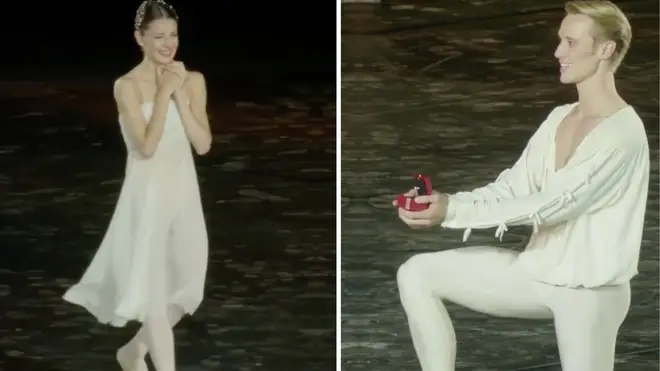
A real life-Romeo proposed to his Juliet, on stage during a ballet celebration at the Arena di Verona.
On a balmy night in July, a Romeo and Juliet ‘Pas de deux’ ended in a proposal, for these two dancers in Verona.
Timofej Andrijashenko and Nicoletta Manni had been together for seven years, and both dance at in Milan as primo ballerino and prima ballerina.
The pair had just performed the duet scene from ’s ballet Romeo and Juliet on the stage of the Arena di Verona, the Italian city’s famously atmospheric open-air theatre, and were enjoying the audience’s applause.
As the ovation began to quieten, much to the delight of the audience, Timofej then ever so gracefully made the descent onto one knee. Shakespearean romance then became reality, as he popped the question to a stunned Nicoletta, whose reaction was all elation and adoration.
Speaking afterwards to Italian news agency ANSA, Nicoletta confessed she was “the only one who did not know” about the proposal.
Read more:
The show, aptly named ‘Roberto Bolle and Friends’, was put on by the Italian dancer Robert Bolle in the summer of 2022.
Bolle, who is principal dancer étoile at La Scala Theatre Ballet, happens to be a friend of Timofej’s. After Timofej confided in his friend about his plans, Bolle suggested the romantic setting, and asked the couple to dance the Romeo and Juliet dance.
From that point on, all behind the scenes of the show were involved in the elaborate staging.
Nicoletta’s brother, a lighting designer for the production, had hidden the ring on stage, for Timofej to pick up at the end of their duet.
At that moment, “time had slowed down,” Timofej told ANSA. “It seemed to me that it would never end, until I saw Nicoletta’s eyes looking at me.”
Timofej had also organised for Nicoletta’s parents to be in the audience that night, along with other close friends of theirs.
“I did not know that my boyfriend had organised everything perfectly, without telling me,” Nicoletta said. “He had invited my parents… my brother is a light-designer and is working at the Arena.
“All our dearest ones were there, without my knowledge.”
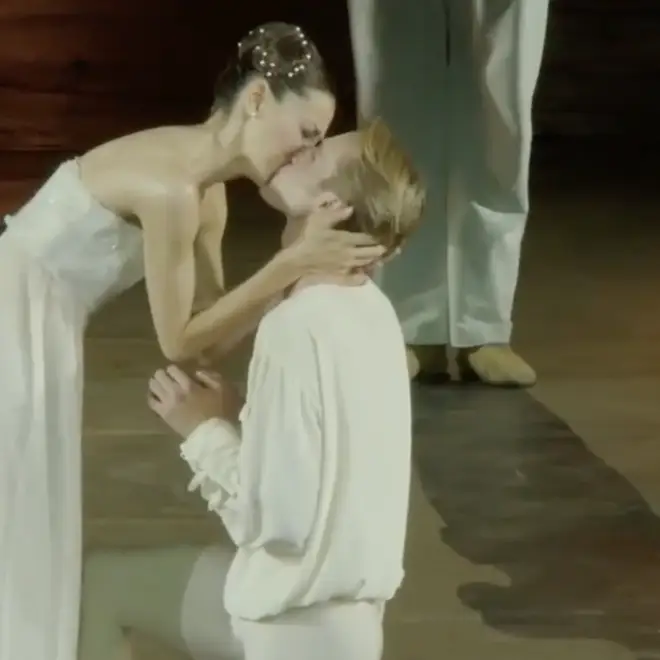
Timofej waited until after the final applause, and waited until the other dancers had moved into their places.
“Let’s say that I haven’t recovered yet, I was already very happy to be able to play Juliet in Verona, her city, to dance the duo with Tima, the man I love, my Romeo,” she told the news agency.
It was the perfect setting – Verona, famous for its connection to the Shakespearean couple, and the city to which people from all over the world flock to indulge in the fantasy.
Nicoletta added that much like Romeo and Juliet, “Our love will be immortal”, before adding, “… but less tragic!”
Subscribe to:
Comments (Atom)