Total Pageviews

Tuesday, November 4, 2025

Music to help us through difficult times

Multiple studies show that music can do wonders for our mental health. So which pieces do we turn to when times are tough?


David soothes King Saul’s troubled mind with his lyre © Getty


Music cannot work a magic spell. It can, however, do wonderful things. In recent issues of BBC Music Magazine, we have explored the benefits to mental health of listening and playing music, not least when it comes to alleviating depression, though in fact this is a subject that has been addressed literally centuries ago – Greek philosophers Plato and Aristotle both discuss it, and the Old Testament (1 Samuel 16: 14-23) tells of how David’s skills on the lyre would ease King Saul’s troubled mind.

So, taking the science and anecdotal evidence as read, let’s turn to the here and now. What pieces do people turn to during difficult times, when spirits are low? For some, the way out of the abyss may lie in something light and upbeat, for some it might be something soothingly placid, while others turn to something empathetically sorrowful. Here, four BBC Music writers, plus the magazine’s own editorial staff, share their choices of works to alleviate the gloomiest of times.

Read on to discover the music that helps us through difficult times...

Vaughan Williams: Symphony No. 5 – Romanza

Sir Antonio Pappano conducts the Romanza from Vaughan Williams's Symphony No. 5 with the London Symphony Orchestra in 2024

It may sound counterintuitive, but when going through difficult times I have always found that listening to slow, meditative, even melancholy music helps me to work through that negative emotion rather than attempting to mask it with lighter, brighter fare. If ever I’m in need of a good, cleansing cry, listening to John Williams’s score for ET will absolutely do the trick – just a few bars are enough to bring tears to my eyes.    

But for something deeper – even spiritual – I turn to Vaughan Williams’s Fifth Symphony and the third movement Romanza, which not only conveys a poignant feeling of nostalgia, but an uplifting sense of beauty. It’s that modal tension between major and minor – or, in other words, between sadness and joy – that allows me to experience unhappiness and loss, couched in an elegant structure. The essence of catharsis.   

For the ultimate recording, I turn to Bernard Haitink conducting the London Philharmonic Orchestra (EMI Classics, 1995). Haitink doesn’t allow himself to wallow in emotion, his tempos perfectly poised – so that VW’s homage to a world gone forever never descends into schmaltz. 

Charlotte Smith

Mahler: Rückert-Lieder  – ‘Ich bin der Welt abhanden gekommen’

Claudio Abbado conducts the Lucerne Festival Orchestra in – ‘Ich bin der Welt abhanden gekommen’ featuring mezzo Magdalena Kožena

A death foretold enables grief to secure a head start. How to navigate it? Nothing quite equals music in teaching us how to reconcile with impending loss. The Requiem aeternam from Duruflé’s Requiem, Fauré’s seraphic setting of the In Paradisum and the obligato-oboe-enriched opening aria of Bach’s Cantata BWV170, ‘Vergnügte Ruh’, all invited spiritual solace; but in the event, secularism won out as Mahler, enshrined in the symbiotic sublimity of mezzo Janet Baker and conductor John Barbirolli, plus the poetry of Rückert at its most simply distilled, became an inescapable, endless, go-to.    ‘Ich bin der Welt abhanden gekommen’ (I am lost to the world) from the Rückert-Lieder is a heartfelt leave-taking swaddled in tenderness and reassurance. Orchestrally enlarged, beseeching cor anglais and anchoring harp already tremble on the edge of eternity before Baker floats the vocal line with a radiant serenity that intensifies with every passing bar. The final lines, as Rückert rests at last ‘in my heaven, in my love, in my song’, are achingly poignant – the perfect musical incarnation (without the ambiguity) of Philip Larkin’s conclusion to his poem ‘An Arundel Tomb’: ‘what will survive of us is love’. Forty years on, goodnight mum! 

Paul Riley

JS Bach: Violin Partita No.2 – Chaconne  

Viktoria Mullova performs the Chaconne from Bach’s Violin Partita No. 2

I don’t remember the first time I heard the Bach Chaconne, but I do remember how it made me feel. The monumental fifth movement from the Violin Partita No. 2 – its duration surpassing the previous four movements combined – demands complete surrender from its listener. 

Its tortured opening chords hurl you into a world of exquisite pain, and through its meticulous structure – a series of variations of varying harmonic and melodic complexity – it becomes one long cry of anguish. The Chaconne, particularly in Jascha Heifetz’s 1971 recording, feels like it encompasses every pain in the world. Some believe that Bach composed it in mourning his wife, but whether that’s true or not, for me it has always signalled a sense of shared universal tragedy; it tears you open so you can start to heal.    

  • In the midst of the piece’s outcry, D minor becomes D major, and, in that moment, you can breathe. That temporary respite offers a hope that even in heartbreak, everything might be okay. The Chaconne has always prompted in me a process of release; its passages encompass the confusion and desperation of grief yet somehow offer a sublime solace and freedom in embracing it. Violinist Joshua Bell described it, beautifully, as ‘one of the greatest achievements by any man in history… a spiritually powerful piece, emotionally powerful, structurally perfect’.

Miranda Bardsley

L Boulanger: Psalm 130, ‘Du fond de l’abîme’

The Radio Philharmonic Orchestra and 'Het Groot Omroepkoor' perform Lili Boulanger’s Psalm 130, 'Du fond de l'abîme' conducted by James Gaffigan

‘Never give up hope!’ says today’s received wisdom. But what if hope is the thing that keeps you stuck: by clinging desperately to the impossible, you rule out living the possible? That’s what struck me forcefully when listening to Lili Boulanger’s magnificent but disturbing choral-orchestral setting of Psalm 130, ‘Du fond de l’abîme’ – ‘From out of the depths’. 

Stunningly gifted, lauded on all sides, Boulanger wrote it as she faced painful death at the age of just 24. There are moments of hope, but the French word ‘espère’ goes on a journey in which all radiance, all comfort is slowly wrung out of it. If the music weren’t so exquisitely beautiful, it would be unbearable.    

What it did for Boulanger herself I can only guess, but for me, one wintry afternoon 15 years ago, it made me realise that my deeply troubled and troubling mother could never be the mother I’d always hoped she could be, and that for my sake – and perhaps also for hers – that hope had to die. As mezzo Ann Murray took up the desolate solo at the heart of ‘Du fond de l’abîme’, I thought I’d never stop sobbing. But it was a release, and if I’m now better able to face the world as it is, I owe that at least partly to Lili Boulanger.

Stephen Johnson

More music that helps us through difficult times...

Recomposed by Max Richter: Vivaldi – The Four Seasons

Max Richter and Daniel Hope perform ‘Spring’ from Richater/Vivaldi’s Four Seasons Recomposed

I did not know – nor care – what had happened to the sleeve. It was surplus to requirements: the record on the turntable had not been changed for some weeks. The process of choosing, and listening, to a physical album had become a treasured evening ritual, but at this point in my life, back in 2012, newness was unbearable. The risk of disappointment or displeasure was too great – in fact, any emotional response needed to be carefully managed. Music had to be upbeat (but not jolly, saccharine or too energising) and easy to listen to (but not easy listening), simultaneously raising a depressive mood and neutralising a higher one. The same went for books, films, food, conversations: selection had become an exhausting and dangerous chore.    

Now, the familiar yellow centre spun on the record player, in the same way it had for many nights. Strings blurred with electric crackles; a well-worn violin melody etched its way into life. Max Richter’s reimagining of Vivaldi’s Four Seasons somehow fitted my nonsensical cultural brief, comforting in its familiarity yet with enough invention to maintain interest. It’s not a work that will induce tears, terror or toil, and that, in this context, was its strength. It remains in my collection – reunited with its case.

Claire Jackson

Rubbra: Symphony No. 5

BBC National Orchestra of Wales conducted by Richard Hickox performs Rubbra’s Symphony No. 5

In the later years of her life, deliberately though now unhappily single, my mother leaned on me heavily – for solace, for company, for daily communication. I found myself wrestling with a lot of different feelings, including guilt and sadness on her behalf, but also exasperation at her daily demands on my time and energy. I also found my emotional resources constantly depleted in the quest to reassure her that she’d be OK – that I was here. 

During this period, I sought out music of peace and contemplation to recharge my fast-draining emotional batteries. And I found that the symphonies of Edmund Rubbra provided just the calm and pause for nourishment that I needed. A deeply spiritual man, Rubbra wrote music of inner stillness, balance and contemplation, rather than drama or showmanship. Unlike many of his mid-20th-century contemporaries, he avoided angular dissonance and preferred flowing, modal harmonies that feel rooted in ancient chant and Renaissance polyphony.    


Even his symphonies, though complex, rarely feel turbulent. Instead, they create a sense of spaciousness. And among them, the work that most often took me to a quiet, unhurried place was No. 5. Its final movement has an uplifting, meditative calm that can always renew me.

Steve Wright

More music that helps us through difficult times...

Rachmaninov: Piano Concerto No. 2

Anna Fedorova performs Rachmaninov’s Piano Concerto No. 2 with Nordwestdeutsche Philharmonie conducted by Martin Panteleev

Whenever I feel down, I play Rachmaninov. Not just because his music offers a healthy dose of doom-and-gloom and allows for a good emotional wallow, but because his Second Piano Concerto holds a special place in my memory. 

Let me take you back: I’d just joined an orchestra for the first time as a nervous and clueless young teenager with barely any experience of playing with other people. I had no idea what to expect, but it certainly wasn’t those opening piano chords, tolling like great bells, and then suddenly being swept along by the stirring, surging minor-key melody. More than that: I was playing that melody! And it wasn’t complicated – even a fledgling viola player like me could manage the basically stepwise writing. I went home totally overwhelmed by the experience. Who knew music could be like that?    

The spark and thrill of discovering Rachmaninov for the first time has always stuck with me. It’s become a symbol of possibility: don’t give up now, because something totally unexpected that will change your life for the better could be just round the corner. Or at the very least, you might encounter a brilliant piece of music that can transport you to another place for half an hour.

Rebecca Franks

Tchaikovsky Symphony No. 6, ‘Pathétique’ – Allegro molto vivace

Orchestre Philharmonique de Radio France conducted by Myung-Whun Chung performs the Allegro molto vivace from Tchaikovsky’s Symphony No. 6

To be honest, when my spirits are at their lowest, I want to be surrounded by silence – playing music is likely to prove more of an irritant than a balm. There is, however, one exception: the third-movement march from Tchaikovsky’s ‘Pathétique’ Symphony, a reliable friend whose company I’ve enjoyed since my parents played it in the car when I was a youngster (LSO, Leopold Stokowski, coffee-coloured cassette case). 

Right from the outset, it was all about the frisky main tune, based on a pair of perky perfect-fourth intervals and first played in full by the clarinet – which, as I’d sussed from the cat in Prokofiev’s Peter and the Wolf, is the orchestra’s most genial, happy-go-lucky member. I often found myself humming that tune to cheer myself up in gloomier moments – not least, as a boarder at the world’s most wretched choir school – and doing so still works its magic today.    


Of course, I appreciate now that in the context of the whole symphony, and particularly the collapse into abject misery that follows, the third movement’s projection of optimism can be viewed as hollow or even desperate. However, my nine-year-old self didn’t see it that way, and – as a standalone piece, at least – it still defiantly says to my adult self ‘Cheer up, JP. There are better times ahead.’   

Monday, November 3, 2025

Sandra Maria Magdalena


Sergei Rachmaninoff Piano Concerto No. 2, Adagio. Yuja Wang Breathtaking...


THE MOST BEAUTIFUL MELODY EVER WRITTEN. A world stops, time slows down, and every note is a whisper of deep emotion. Immergiti nell'Adagio di Rachmaninoff. This video is dedicated to the exquisite Second Movement (Adagio sostenuto) from Sergei Rachmaninoff's Piano Concerto No. 2 in C minor, Op. 18. This movement is revered as one of the most sublime and romantic pieces in all of classical music. We feature the stunning interpretation by world-renowned pianist Yuja Wang, known for her combination of technical brilliance and profound emotional depth. The Adagio sostenuto is famous for its: Pensive Piano Opening: The gentle arpeggios that create a feeling of floating and reflection. Haunting Flute & Clarinet Dialogue: The beautiful interchange between the solo winds and the piano. Soaring Main Melody: The central theme, often cited as the pinnacle of Romantic melody, carrying a deep sense of longing and hope. This piece is more than just a piano concerto movement; it's the soundtrack to heartbreak and reconciliation, famously used in films like Brief Encounter. Experience the magic of Rachmaninov (Rachmaninoff) at his most lyrical, brought to life by the unparalleled artistry of Yuja Wang and the orchestra.

DEEP PURPLE & ORCHESTRA For the very first time the entire "Concerto"...


Unfortunately, the original “Concerto for Group and Orchestra by Jon Lord” has been released both cut and sometimes horribly asynchronously. Not even the death of the Maestro has been used as an opportunity to release a remastered version of this legendary master piece. To be honest: that´s a shame! It took me a pretty long time to equalize the slightly different speeds of CD and DVD, to find suitable scenes to fill especially the missing parts of Movement I (almost 4´18´´) and Movement III (almost 2´43´´) and then finally to put it all together synchronously as far as possible. Due to the fact that for most of Ian Paice´s drum solo in Movement III there is no video material yet I decided to use stills instead of editing. So, and as far as I know, for the very first time here is the entire “Concerto” on video. I hope you enjoy it like I do. And of course I still hope for a speedy and professionally remastered official release on BD!

Stairway to Heaven with Amazing Gimnazija Kranj Symphony Orchestra


The Best of Rachel Portman (Part1) | Some of the best movie soundtracks


Friday, October 31, 2025

The Best Performances “Nessun dorma” by Giacomo Puccini

by 

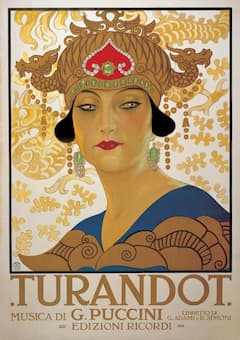
Poster of Puccini's Turandot, 1926

Poster of Puccini’s Turandot, 1926

Talk about a strange story. Calaf is one of three suitors for the hand of the prickly Princess Turandot. Her suitors must solve three riddles, with any single wrong answer resulting in execution. Calaf manages to solve all three riddles but Turandot still refuses to marry him. So Calaf comes up with a bizarre challenge. If the Princess is able to guess his name before dawn the next day, she may execute him. However, if she can’t guess his name correctly, she must marry him. That puts the Princess in bit of a bind, and she declares “Nessun dorma” (None shall sleep) in the entire kingdom until Calaf’s name is discovered. If her minions are not able to come up with the correct name by morning, everybody will be executed. Calaf is rather hopeful that he will win this strange little wager, and begins to sing one of the best-known tenor arias in all of opera.  

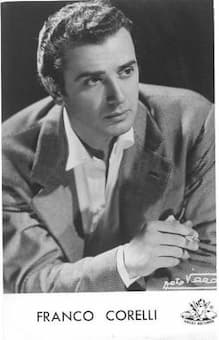
Franco Corelli

Franco Corelli

Luciano Pavarotti called Franco Corelli “the greatest dramatic tenor that ever lived.” So it is only fitting that we start this selection of best performances with him. Franco Corelli (1921-2003) was closely connected with the dramatic tenor roles of the Italian repertory. In his heyday he was called the “prince of tenors,” celebrated for his “powerful voice, electrifying top notes, clear timbre, and passionate singing style.” Audiences just loved him for his charismatic stage presence and his handsome features. Whenever audiences are enthralled, critics are not far behind. They found him “self-indulgent in terms of phrasing and expression,” acknowledging however, that “his performance possessed its own kind of logic.” And that’s certainly true of his drawn-out rendition of “Nessun dorma,” which I personally consider one of the best performances ever.   

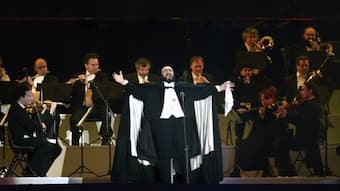
Luciano Pavarotti

Luciano Pavarotti

Speaking of Luciano Pavarotti. Regardless whether or not you enjoy his rendition of “Nessun dorma,” he is single-handedly responsible for making the tune as popular as it is today. There is no arguing about the fact that his voice has a remarkable quality, and it’s a sound that is instantly recognizable. In his best performances, he produces a remarkable security throughout his entire range, and Pavarotti is beautifully capable of producing the most delicious cantabile lines. Of course, his diction is flawless and his “vincero” at the end of “Nessun dorma” is simply spectacular. Some critics have suggested that in concerts of operatic arias and lighter materials that have become his principal activity in his later years, Pavarotti “makes much the same sound in whatever role he sings.” That may well be the case, but let’s not forget that by that time Pavarotti had become a brand. And he certainly turned “Nessun dorma” into cultural shorthand for opera.   

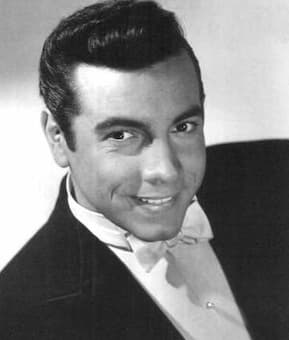
Mario Lanza

Mario Lanza, 1950

Pavarotti clearly wasn’t the first pop star tenor. That distinction probably belongs to the American tenor Mario Lanza (1921-1959). He studied to be a professional singer but did not appear on operatic stages with any kind of frequency. However, he had the looks, the voice and great acting talent and signed a multi-year film contract with a Hollywood studio. As such, Lanza was the first tenor to break through into popular consciousness. He was dubbed the “new Caruso,” and José Carreras paid tribute to Lanza during a worldwide concert tour, saying, “If I’m an opera singer, it’s thanks to Mario Lanza.” His rendition of “Nessun Dorma,” as part of the film “Serenade,” gives us a taste of his magnetism and vocal ability. At the time of his death in 1959 Lanza was still considered “the most famous tenor in the world.”   

Beniamino Gigli

Beniamino Gigli, 1914

Beniamino Gigli (1890-1957) is widely regarded as one of the greatest operatic tenors of all time. He came to international prominence after the death of Enrico Caruso in 1921. Audiences called him “Caruso Secondo,” but he said that he much preferred to be known as “Gigli Primo.” While Caruso had a most powerful and heroic voice, Gigli’s voice, particularly during his early career, was known for “its beautifully soft and honey-like lyrical quality.” As he grew older, his voice developed some dramatic qualities, which enabled him to tackle heavier roles. Gigli was said to be overemotional during his performances, “often resolving to sobbing and, in some cases, exaggerations.” In the featured studio recording of “Nessun dorma” there is none of this exaggeration or theatricality. The focus is purely on the music, as a matter of fact, and I absolutely love the immense beauty and technical facility of his unique voice.

“Nessun dorma” (Placido Domingo)    

Placido Domingo

Placido Domingo

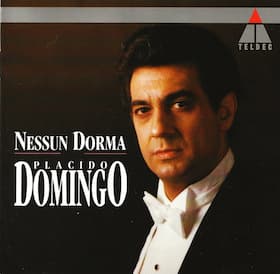
Placido Domingo (b. 1941) really doesn’t need any kind of special introduction. He has been around operatic and other stages for decades, and recorded over a hundred complete operas in Italian, French, German, Spanish, English and Russian. Astonishingly, his repertoire includes a massive 151 different roles. He sang his first Calaf in 1969 at Verona with Birgit Nilsson, and following his voice’s natural progression he has now turned towards the baritone repertoire. In fact, Domingo did start out as a baritone as he had always had a rich lower register. Throughout his career, Domingo’s “voice has been extremely attractive and quite individual in timbre, having considerable liquidity… The bottom sometimes has a trace of huskiness, which he often turns to coloristic effect.” There can be no doubt that Domingo possesses a combination of lyrical flexibility and dramatic power that allowed him versatility across the entire tenor repertory. And such is certainly the case in the featured performance of “Nessun dorma.”   

Jussi Björling

Jussi Björling

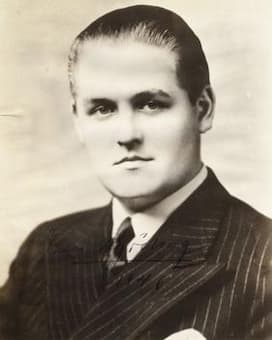
Puccini could definitely write a great melody full of growing passion and reaching for the stars; in a word, perfect tearjerkers. And for me personally, Jussi Björling (1911-1960) delivers the best performance of “Nessun dorma.” His vocal timbre had remarkable clarity and warmth, and his sound “excelled in its rare plasticity, suavity, and flexibility, and was at the same time saturated with succulent ardor.” His upper register was shining and resonant, the middle captivated with great flexibility. It’s no wonder that Björling was considered “the living embodiment of the bel canto tradition,” but without the usual emotional exaggeration. In his “Nessun dorma” he never interrupts the beauty of the phrase with declamation, exaggerated accents or a sense of melodrama. There is simply a concentrated narrative tone tinged with the emotions of a sleeping volcano. Everybody it seems has had a go at “Nessun dorma;” which performances do you like best?

Six Composer Children Overshadowed by Their Parents

 by 

But for the children of these composers, their names – and the growing legacies that became associated with them – could become overwhelming to be associated with.

Today, we’re looking at the stories of six composer children who, at one point or another, found themselves overshadowed by their famous composer parents.

Carl Philipp Emanuel Bach (1714–1788)

Son of: Johann Sebastian Bach

Carl Philipp Emanuel Bach

Carl Philipp Emanuel Bach

Over the course of his life, composer Johann Sebastian Bach had twenty children. He outlived all but nine. Of those nine, four were sons who became professional composers.

In the eyes of history, none of them measured up to their father.

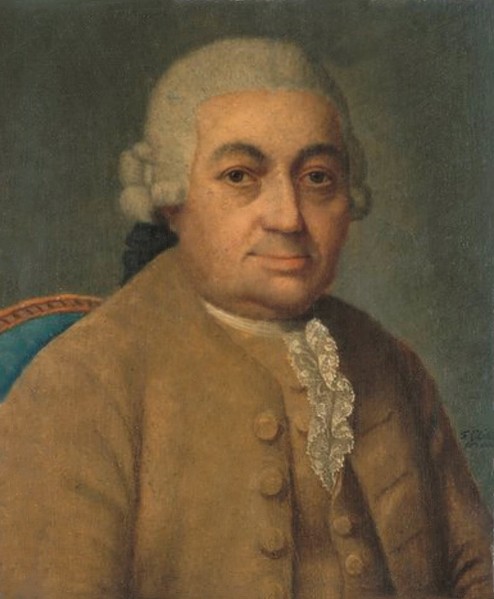
Of the Bach children, the most successful was Carl Philipp Emanuel Bach, often remembered as C.P.E. Bach today.

His father has emerged as a pillar of the Baroque era. In contrast, C.P.E. Bach became a bridge between the Baroque era and the Classical and Romantic eras.

He is especially well-known for his contributions to the Empfindsamer Stil, or “sensitive style.” This style of music emphasised expressing “true and natural” emotions, rather than adhering to the carefully contrived structures celebrated in his father’s generation.   

Franz Xaver Wolfgang Mozart (1791–1844)

Son of: Wolfgang Amadeus Mozart

Franz Xaver Wolfgang Mozart

Franz Xaver Wolfgang Mozart

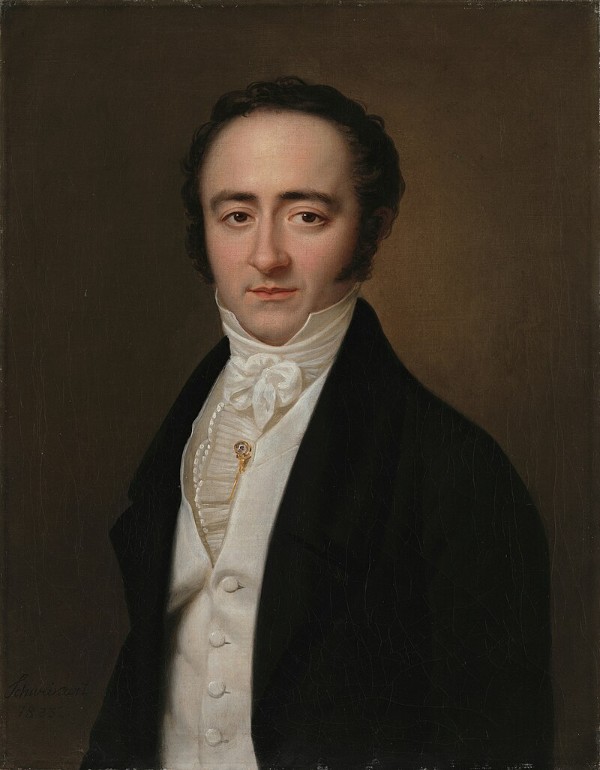
Franz Xaver Mozart was just four months old when his father, Wolfgang Amadeus Mozart, died at 35.

When he died, Franz Xaver’s mother, Constanze, became an impoverished widow. She understood two things well: her economic vulnerability as a young single mother in 1790s Vienna, and the value of her husband’s genius.

She marketed her son as “W.A. Mozart Jr.,” hoping to continue the mythology of her husband.

Franz turned into a capable pianist and a refined composer, but his music never reached the heights of his father’s. (Few composers did!)

When he died in 1844, his tombstone was inscribed with “May his father’s name be his epitaph, as his veneration for him was the essence of his life.”   

Siegfried Wagner (1869–1930)

Son of: Richard Wagner

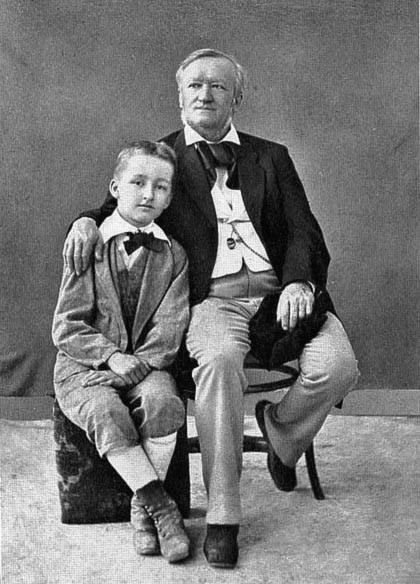
Richard and Siegfried Wagner

Richard and Siegfried Wagner

The only son of Richard Wagner and Cosima Liszt (herself the daughter of Franz Liszt), Siegfried Wagner was born into a multigenerational musical dynasty.

Born in 1869, he began composing around 1882, but didn’t commit to music until a decade later.

In 1908, he officially succeeded his strong-willed mother, Cosima, as head of the Bayreuth Festival, but her influence weighed heavily on him until she died in 1930…which happened just a few months before his own.

Over the course of his career, he wrote around a dozen operas in a style similar to his father’s, but they never achieved a permanent foothold in the repertoire.

When it came to continuing the Wagnerian dynasty, Siegfried felt both personal and societal pressure. He was a queer man and had important romantic relationships with men throughout his life, but his mother wanted him to marry to continue the dynasty.

At 45, he finally succumbed to her wishes and got married…to an 18-year-old, with whom he had four children in quick succession. The Wagner name would continue.  

Felix Schumann (1854–1879)

Son of: Robert and Clara Schumann

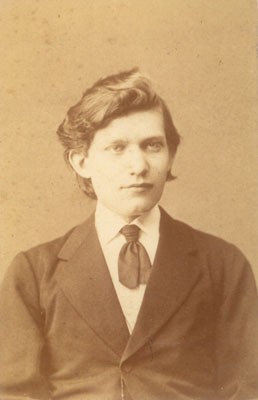
Felix Schumann

Felix Schumann

The love story of Robert and Clara Schumann is famous in classical music history: two seemingly star-crossed lovers who had to take Clara’s controlling father to court in order to be together.

But the drama of their love story didn’t end with their marriage in 1840.

They had eight children together. Read more about “what happened to Robert and Clara Schumann’s children?

The youngest, Felix, was born in 1854, after his father, Robert, had suffered a suicide attempt and moved to a mental hospital. Robert would die just a few years later.

Felix grew into a gifted poet with a measure of musical talent, but he was also constantly compared to Robert.

As if that wasn’t enough pressure, his perfectionist mother, Clara – one of the greatest pianists of her generation, male or female – constantly fretted over all her children. She asked him if he ever published his poetry, to do so under a pseudonym, so if the work failed, it wouldn’t bring shame on his father’s name.

His surrogate father figure, Johannes Brahms was impressed enough by Felix’s poetry that he set some of it to music.

Felix came down with tuberculosis during his adolescence. After great suffering, he died in 1879 at the age of twenty-four, leaving open the question of whether his work could ever have competed with his parents’.   

Imogen Holst (1907–1984)

Daughter of: Gustav Holst

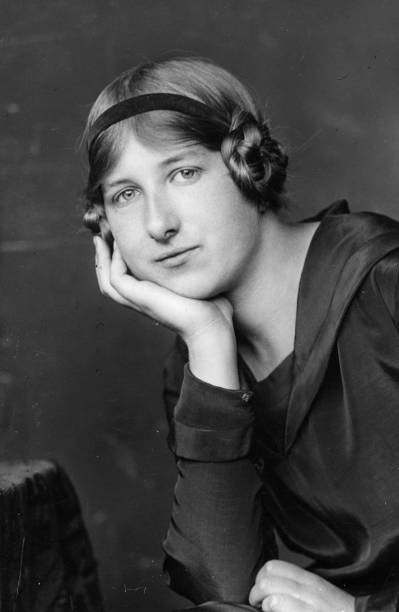
Imogen Holst

Imogen Holst

Imogen Holst was a gifted composer, conductor, and musicologist. However, much of her career was spent preserving and amplifying her father’s legacy.

She also became an invaluable assistant and creative partner to Benjamin Britten, with whom she worked closely at Aldeburgh.

The work she did on behalf of her father and Britten was incredibly important, but it also often overshadowed her own considerable accomplishments.

During her lifetime, her works, which include chamber music, choral pieces, and educational writing, were often overlooked.

As the priorities of audiences and presenters evolve and the works of women composers are re-examined, perhaps her works will be performed more often and contribute to her own legacy instead of just her father’s.   

Soulima Stravinsky (1910–1994)

Son of: Igor Stravinsky

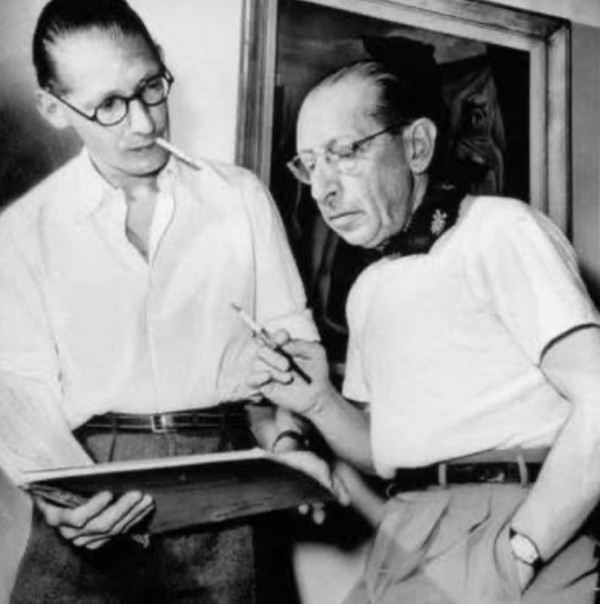
Soulima and Igor Stravinsky

Soulima and Igor Stravinsky

Soulima Stravinsky’s father, Igor, redefined twentieth-century music with The Rite of Spring when Soulima was just a toddler.

He studied piano with Isidor Philipp (who taught Aaron Copland) and Nadia Boulanger (who taught almost every important twentieth-century composer), and appeared in Paris in 1934, performing piano and orchestra works by his father. (He would record them with him in 1938.)

During World War II, Soulima joined the French army. After the war was over, in 1948, he joined his father in America and restarted his musical career there.

He taught at the School of Music of the University of Illinois between 1950 and 1978.

He wrote a number of pieces, but he is known professionally for his pedagogical works. Of course, generally speaking, he’s best remembarence.

Pablo Picasso (Born on October 25, 1881) Fragmented Melodies

by 

Can you imagine a world where jagged geometric shapes dance to the swelling strings of a symphony orchestra? That’s the unlikely yet captivating intersection of Pablo Picasso and classical music.

Picasso, the Spanish maestro of modern art, revolutionised painting with his Cubist explosions, but his life was equally tuned to the rhythms of Stravinsky, the melodies of Satie, and the operatic arias of his era.

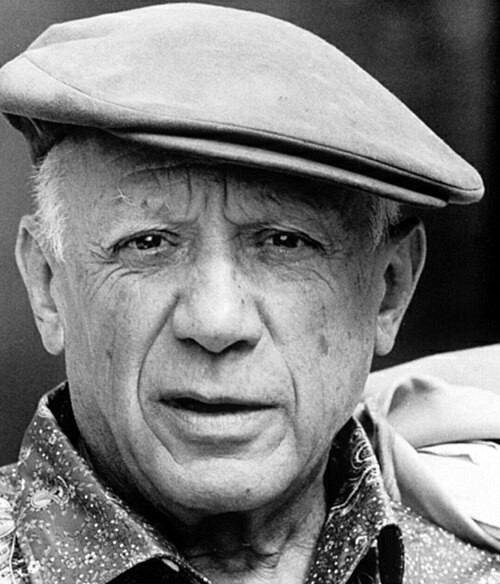
Pablo Picasso

Pablo Picasso

Far from a mere backdrop, music was Picasso’s muse, collaborator, and even co-conspirator in defying artistic norms. To celebrate his birthday on 25 October, let’s explore how his canvases echoed symphonic structure and what composers inspired his brushstrokes.   

Erik Satie: Parade

Cabaret Rhythms and Salon Symphonies

Picasso’s relationship with music began in his bohemian youth in late 19th-century Barcelona and Paris. Born on 25 October 1881, he grew up in a Spain where flamenco guitars twanged alongside Wagnerian operas seeping in from Europe.

As a young artist in the Montmartre cabarets, Picasso immersed himself in the sounds of his time, listening to the ragtime jazz creeping from America, but more profoundly to the classical repertoire that filled Parisian salons.

He was no passive listener as music shaped his creative process. Friends recalled him humming arias while sketching, his studio often alive with phonograph records spinning Debussy’s impressionistic waves or Mozart‘s playful minuets.   

Montmartre Rag – Mitchell’s Jazz Kings (1922)

Fractured Harmonies

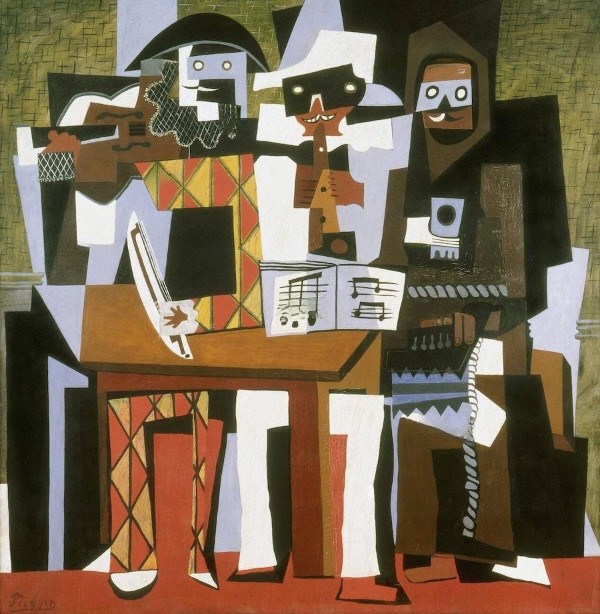
Pablo Picasso: Three Musicians

Pablo Picasso: Three Musicians, 1921

In his own words, “Music is something I mistrust intensely. It goes too fast, or perhaps my mind can’t keep up,” yet he could not stay away and doodled musical instruments in notebooks and painted violinists as alter egos.

Around 1907, together with Georges Braque, Pablo Picasso stumbled upon the idea of cubism. This wasn’t just a visual disruption, but it mirrored the fractured harmonies of contemporary music.

Picasso attended the premiere of Stravinsky’s Rite of Spring, and the primal rhythms and dissonant clashes are captured in his canvases. Just take his “Three Musicians,” with an angular guitar and clarinet fragments pulsing like atonal motifs.   

Visual Echoes

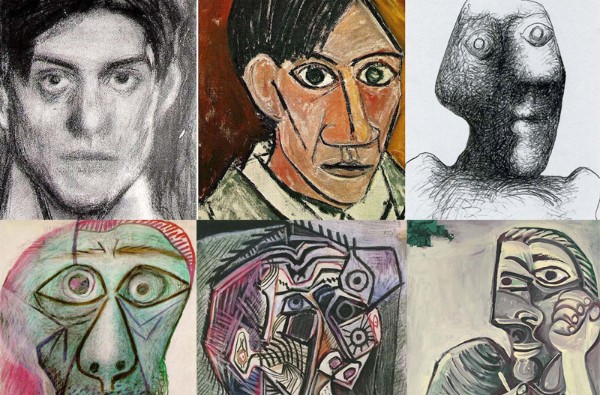
Self portraits of Pablo Picasso

Self portraits of Pablo Picasso

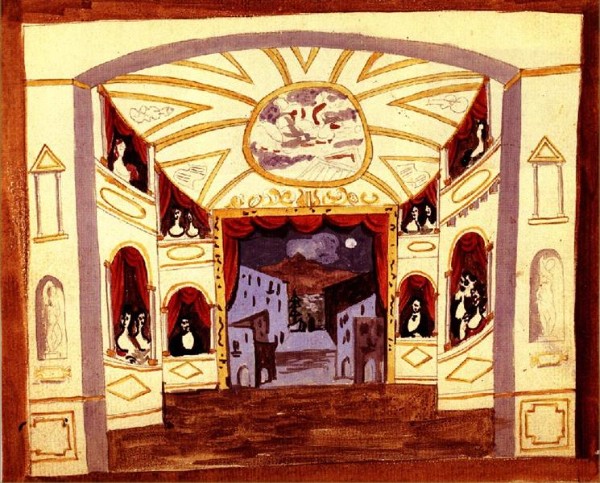
Picasso painted the sound of disruption itself, turning harmony into controlled chaos. He was fascinated by the fusion of art, dance, and music into grand spectacles, and he collaborated with Erik Satie in Parade and with Igor Stravinsky in Pulcinella.

Despite his deep immersion in musical culture, designing sets for various ballets and depicting guitars, harps, and musicians, there is no evidence of Picasso playing a musical instrument.

His engagement with music was primarily auditory, visual, and collaborative rather than performative. And in his own statement, he emphasised his role as a listener and visual   y

Synesthetic Rebellion

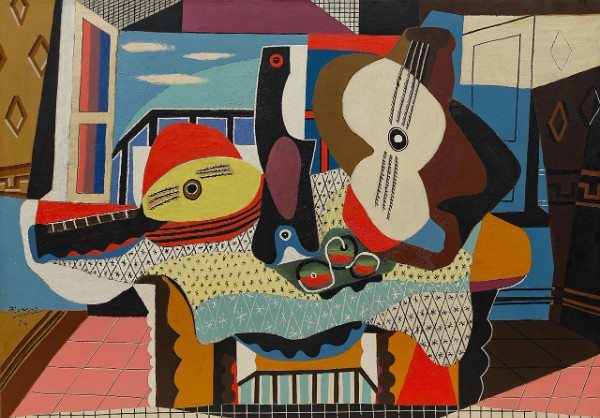
Pablo Picasso: Mandolin and Guitar

Pablo Picasso: Mandolin and Guitar

He once described music as “another dimension” of creativity but deferred to specialists, saying in a 1935 interview, “I paint what music sounds like.” Picasso’s instrument was the canvas, as he claimed to hear colours and forms as musical equivalents. As he related to his friend Guillaume Apollinaire, “music and art are the same thing… I start a painting with a rhythm in my head, like a jazz tune.”

There is no evidence that Picasso had a liking for the structured counterpoint of Bach, the elegant gallantries of Mozart, or the heroic symphonism of Beethoven. These impressions clashed with his preference for raw emotion and fragmentation.

He did draw on ancient Greco-Roman forms visually, but musically he stuck to contemporaries over the “old masters.” He certainly did dislike traditional classical ballet and prioritised Spanish vitality over high European canon.    

Visceral Visions

Scene design for Stravinsky's Pulcinella, 1920

Scene design for Stravinsky’s Pulcinella, 1920

Both Picasso and classical music were rule-breakers in eras craving change. Their innovations of dissonance and fragmentation demanded that audiences reassemble the pieces, much like a Rubik’s Cube of sound and sight.

In Picasso’s synesthetic vision, music wasn’t mere accompaniment but a structural force. He orchestrated forms on canvas, layering auditory echoes into visual polyphony. Picasso’s dislike for conventional classical giants like Beethoven stemmed not from disdain but from irrelevance. For him, they lacked the visceral disruption he craved.

Instead, he championed music’s revolutionary edge, suggesting that true creation thrives in sensory rebellion. As Picasso once quipped, “I paint objects as I think them, not as I see them,” much like composers hearing inner symphonies. Picasso didn’t just appreciate classical music; he repainted its soul.