Total Pageviews

Friday, December 5, 2025

From Musical Royalty to Tragic Heroine Violinist and Conductor Alma Rosé

Alma Rosé

Alma Rosé

Alma Rosé, a top-class artist – violinist, conductor, ensemble leader and actress, is most remembered today for her amazing courage. She was the conductor and founder of the celebrated women’s orchestra Wiener Walzermädeln–but she is primarily remembered as the conductor of the infamous women’s orchestra in the Nazi death camp Auschwitz. While she kept her musicians alive, she tragically perished.
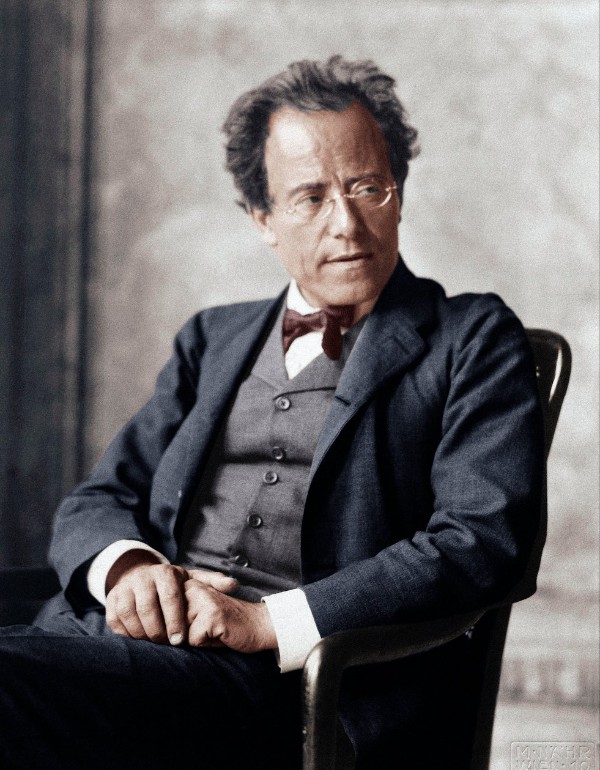
Gustav Mahler
Gustav Mahler

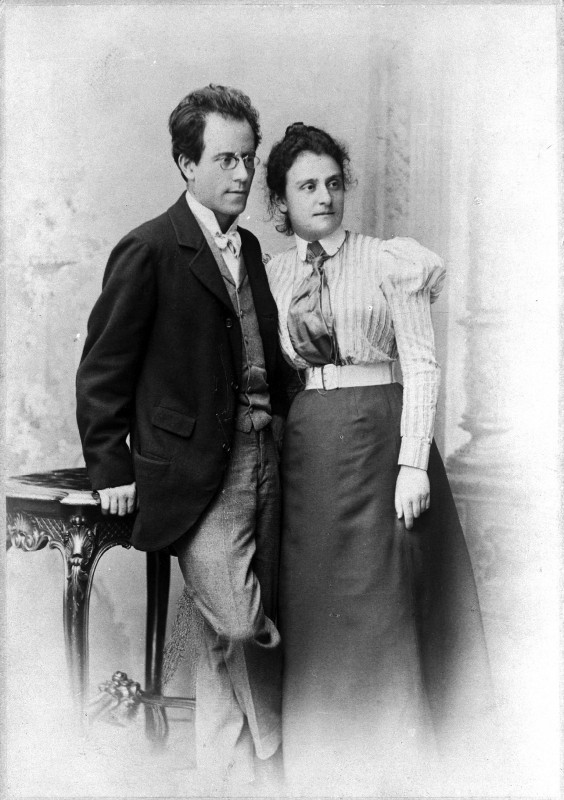
Justine and Gustav Mahler

Justine and Gustav Mahler

Alma came from musical royalty: Alma’s mother, Justine Mahler, was the younger sister of legendary composer Gustav Mahler. As Mahler’s niece, she had contact with and was surrounded by the musical stars of early 20th-century Germany and Vienna. Her father, violinist Arnold Rosenblum, also a great influence, was the concertmaster of the Vienna Philharmonic.
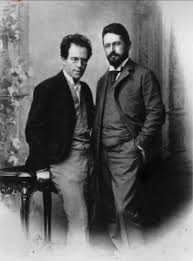
Gustav Mahler and Arnold Josef Rosé

Gustav Mahler and Arnold Josef Rosé

To be accepted in Vienna into the upper echelons of society, it was not advantageous to be Jewish. Rosé Austrianized his name from Rosenblum to Rosé in 1882. Mahler also felt he had to convert, and he did so in 1897 to Catholicism.
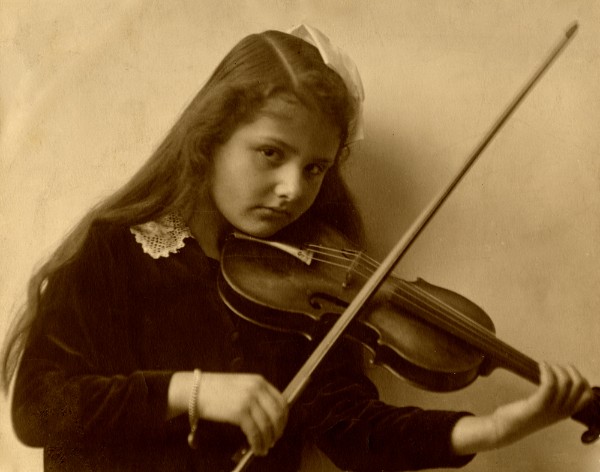
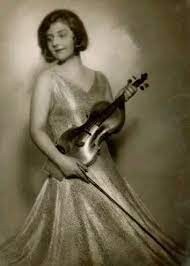
The young Alma Rosé

The young Alma Rosé

Rosé, a superb violinist, founded and performed with the internationally renowned Rosé String Quartet. The Rosé quartet gave premieres of both Brahms and Schoenberg. That’s an indication of the group’s longevity, and we are fortunate to have a recording from 1910, albeit a bit scratchy!     
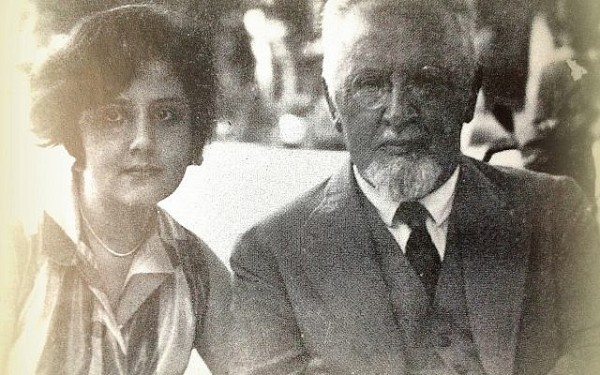
Alma und Arnold Rosé, Date unknown

Alma and Arnold Rosé, Date unknown © Gustav Mahler–Alfred Rosé Collection, Music Library, Western University, London, Canada

Arnold was Alma’s first teacher, and soon Alma was proficient enough to make her Viennese debut in 1926, at the Musikverein, playing Bach‘s Concerto for Two Violins in D minor, BWV 1043 as a soloist performing with her father. We can hear them together playing the Largo movement on this rare recording from 1928. There are no other known sound recordings of Alma.   

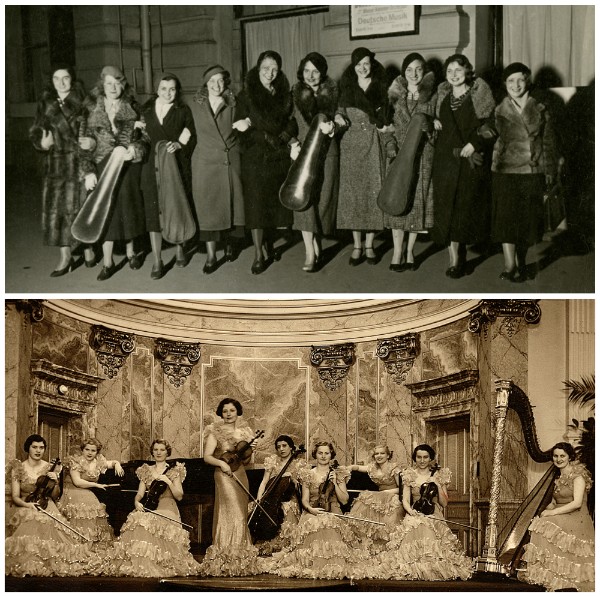
In 1930, at the age of 24, Alma married the brilliant young Czech violinist Váša Příhoda and took Czechoslovakia citizenship. Alma hoped to stand out from the shadow of the two great violinists in her life, her father and her husband. She established something different, founding a touring women’s orchestra in 1932. The nine to fifteen-member Wiener Walzermädeln (Viennese Waltzing Girls) donned elegant and feminine matching gowns, sometimes wearing charming caps, and played the most popular music of the time, the Viennese waltz. Austria had become synonymous with the waltz, a popular genre in the 1800s and homeland of the Waltz King, Johann Strauss II. The Walzermädeln toured with enormous success all throughout Europe in the early 30s.
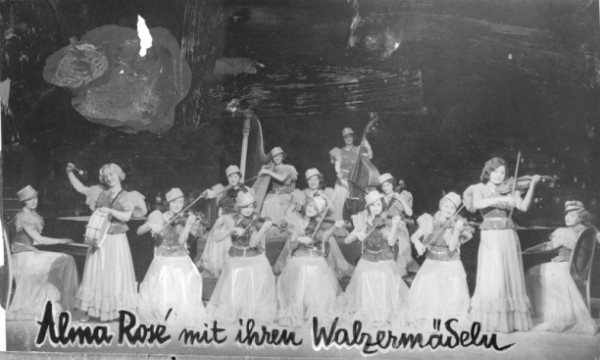
The Viennese Waltz Girls (below: Alma Rosé standing) 1933

The Viennese Waltz Girls (Bottom: Alma Rosé standing) 1933
© Gustav Mahler–Alfred Rosé Collection, Music Library, Western University, London, Canada
Alma Rosé as a young girl around 1914

Alma Rosé as a young girl around 1914 © Gustav Mahler–Alfred Rosé Collection, Music Library, Western University, London, Canada

The music they would’ve played includes Johann Strauss’s charming waltzes, marches, and polkas such as Artists Waltz Op.316, his Persian March Op. 289 and his Champagne Polka Op. 211.

The group continued to perform all over Europe, from Warsaw to Rome, until the political climate in Austria became increasingly alarming, when Hitler came to power in Germany. The last concert of the Viennese Waltzing Girls was at Vienna’s Ronacher Theater on New Year’s Eve 1937, bringing their performances to an end. Only a few weeks later, the Nazi “Anschluss” (annexation) of Austria took place in March 1938. The Rosé family members were immediately barred from performing. Alma’s father, after 57 years, was removed from positions at both the Opera and the Vienna Philharmonic, ignominiously ousted.

As Jews, the Rosé family understood the serious risks to their family. During the troubling years of the 1930s, they’d felt helpless, as Alma’s mother, Justine, Mahler’s sister, was gravely ill. When she died in the late summer of 1938, they began to formulate a plan to escape.

Alma’s brother Alfred and his wife Maria Rosé-Schmutzer fled shortly afterwards, a complicated getaway via the Netherlands, then by ship to New York, finally arriving in London, Ontario, Canada.

Alma stayed behind to care for her father. Here is an extraordinary documentary to listen to.  

By April 26, 1938, the Regulation on the Registration of the Assets of Jews was put into place. All Jewish people, as well as non-Jewish partners in so-called Mischehen (mixed marriages), were forced to declare their assets if they exceeded RM 5,000. The Rosé family, prominent members of society, were targeted by the Nazis. What would become of their violins? Arnold owned a rare 1718 Stradivarius and Alma, an exquisite Guadagnini from 1757.
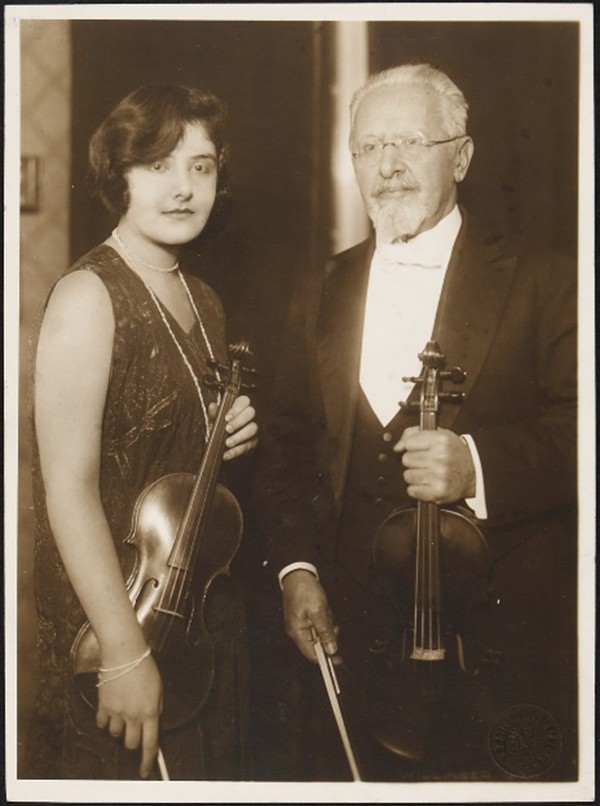
Alma and Arnold Rosé with their violins, Atelier Willinger, undated

Alma and Arnold Rosé with their violins, Atelier Willinger, undated © KHM-Museumsverband, Theatermuseum

Alma couldn’t risk the confiscation of the violins by the Nazis, but to conceal such valuable assets was a huge risk, especially for well-known personalities. It would require courageous action, clear-headed thinking, and a foolproof scheme to save them.

Undaunted, Alma’s declaration listed both violins, but their pedigree was cleverly hidden. She filled out the required document, “two Italian violins for personal use”, without the names of the makers of the instruments, which would have immediately revealed their value.

The ploy worked. It helped enormously that Alma’s Czech married name and her Czechoslovakian citizenship disguised who she truly was, a critical factor that contributed to a successful flight from the Nazis.

Alma fled to London in early 1939. Arnold followed her a few weeks later at the last possible moment before the borders were tightly closed. After such an incomparable and illustrious career, Arnold was forced to leave Austria penniless.
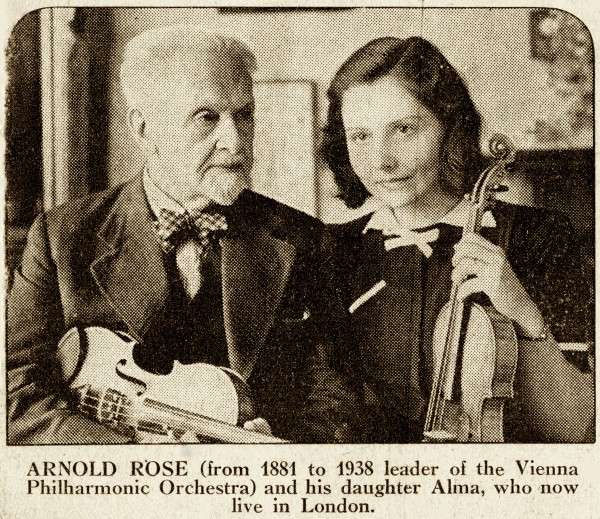
Alma and Arnold Rosé on newspaper

Once they’d escaped, they were plagued by financial problems that became overwhelming. The refugees flocking to London, mainly European musicians, were barred from performing and teaching. Alma succeeded in taking both instruments with her, but as hunger became a constant, the Rosés adamantly refused to sell their violins.

In desperation, Alma signed a contract for a two-month engagement at the Grand Hotel Central in The Hague – a venue where she and the Wiener Walzermädeln had performed with great success. Alma played several house concerts and extended her stay as additional engagements opened up for her in the Netherlands.

For a few months, she was able to resume her successful concert life. But the Germans occupied the Netherlands in May of 1940. The enemies were once again at her heels. Alma and Příhoda had divorced in 1935, and she’d married Constant August van Leeuwen Boomkamp, a medical student, to continue to evade detection.

It didn’t help Alma. This time, she was trapped. Alma was arrested at a train station in France and sent to Drancy for several months. Established in August 1941, the Drancy camp in France became a major transit camp for the deportations of Jews from France. Almost 65,000 Jews were deported from Drancy to terrifying destinations, including Auschwitz. Fewer than 2,000 of them survived.

On July 18, 1943, Alma was deported to Auschwitz-Birkenau. Almost immediately, she was sent to the dreaded and horrifying medical experimentation block—Block 10. She’d been registered under her husband’s name, so once again, Nazi officials did not realise who she was.

Fortuitously, a request was made for a violinist for a VIP’s birthday celebration in the camp. The Nazis, after all, loved their music. She played for them, and her virtuosity quite impressed the officials.

They transferred Alma to Birkenau and, in August 1943, selected her to be the conductor of the women’s orchestra.

Alma seemed to have no fear of the SS guards who respected her musicianship. Taking advantage of her position, Alma requested and somehow managed some privileges.

Her orchestra received a special barracks, which contained an unheard-of living and practicing area, with a small heater. The dwelling even had a wooden floor! Alma convinced the authorities that the instruments had to be protected against the cold and dampness. Downright luxurious compared to the bare barracks of others.

Alma began to work tirelessly on the ensemble’s quality. The group was made up of mostly amateurs who played a wide array of instruments, including violin, accordion, flute, guitars, and mandolins. Alma endeavoured to keep the players with less talent on as assistants rather than dismissing them, which was a life-saving gesture in the context of Auschwitz.

Rosé was a strict and thorough taskmistress, pushing her musicians to the limits of their endurance. It was paramount to do everything she could to make them sound professional, because the Nazis knew their music. Alma couldn’t risk mediocrity. The women rehearsed daily for eight hours a day, thereby evading the slave labour workforce.

The SS required the orchestra to play daily at the camp gates as prisoners departed for and arrived from slave labour morning and evening, and when captives were marched to the crematoriums.

The Auschwitz orchestra also performed regular Sunday concerts for selected prisoners and the camp staff; they made regular visits to the infirmary, played during elite visits to the camp, and had to be available for individual SS demands like birthday parties.

Although Alma drove herself and the musicians, she was respected by her orchestra, valued for both her violin playing and her conducting.  Above all, she understood that if they were to survive, they had to please the SS. Surely, if they played well enough, they would be allowed to live.

Drawing of Alma Rosé in Auschwitz

Drawing of Alma Rosé in Auschwitz

Rosé arranged pieces for her orchestra from whatever sheet music she had available and from melodies she recalled from memory: music by MozartSchubertVivaldi, Johann Strauss, and Franz Liszt, and from German hits, movie and operetta tunes.

Playing music gave them all moments of respite, allowing them to float somewhere above or beyond the camp atmosphere.

Alma Rosé’s final concert was at a private SS party on April 2, 1944.

Suddenly and inexplicably ill, she was taken to the infirmary with head and stomach pains and a high fever. On 4 April 1944, she was declared dead. There are still questions about her death. Could it have been suicide or poisoning by jealous functionaries? Many insist that she fell victim to accidental food poisoning or a sudden infection.

Unbelievably enough, the SS approved an observance in her memory —to recognise her unique status, perhaps the only time in the history of the camps that SS officers honoured a dead Jewish prisoner.

For the musicians, however, their grief was mixed with fear. Former member Silvia Wagenberg remembered:

When she died, I thought, now it’s over; either they will send us somewhere else — then we’re done for, or we’ll be gassed right away.  It is hardly measurable what Alma meant for the orchestra.”

All but two of the orchestra members survived the war. Anita Lasker-Wallfisch, a cellist, was one of them, saved by playing in the Auschwitz women’s orchestra.

When the war was finally over, Lasker-Wallfisch settled in Britain, where she met and married her husband, Peter Wallfisch. She was the founding member of the British Chamber Orchestra, touring internationally with the group. Anita refused to go to Germany for many decades until in 1994, she realised she must relate her experiences during the war.
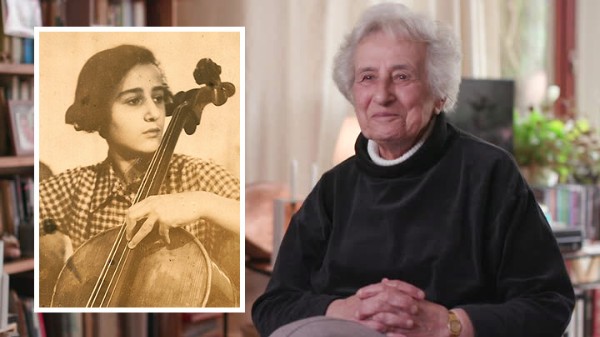
Anita Lasker-Wallfisch

Anita Lasker-Wallfisch

Anita Lasker-Wallfisch, now 100 years old. She has eloquently related her experiences in numerous documentaries about her life. Two poignant things she’s said jump out for me: “As Long as We Can Breathe, We Can Hope,” and Music takes you out into a different sphere. You get away from your horrible realities…You could lose yourself in music, untouchable.”

Please listen to two short examples of Lasker-Wallfisch’s testimonies.   

The piece that is featured in this clip by the BBC, Robert Schumann’s Träumerei is ironically enough, from his “Scenes from Childhood”, this movement is entitled “Dreaming.”

It is deeply troubling that Alma perished alongside so many millions. It’s impossible to imagine that under these horrific circumstances, musical ensembles were established in several concentration camps, including an orchestra that my father joined after being liberated. Somehow, the musicians continued to perform, and music saved their lives.

Even after the war, music enabled survivors to build a new life. My father was one of them. A cellist too, after months as a slave labourer in the copper mines of Bor, Yugoslavia, my father played 200 concerts from 1946-1948 in a 17-member orchestra in the displaced persons camps throughout Bavaria. Their mandate—to bring morale-boosting programs to those still languishing in DP camps waiting for news of loved ones or the right paperwork to leave Europe. In 1948, two of the concerts my father played in Landsberg, Germany, were with Leonard Bernstein performing and conducting, before he was as famous as he was to become.

If you’d like to read more about these times, I tell our family story in my book The Cello Still Sings – A Generational Story of the Holocaust and of the Transformative Power of Music.

There’s a wonderful book about Alma Rosé by Richard Newman, Alma Rosé: Vienna to Auschwitzand watch for a new documentary now in production, Alma Rosé, directed and produced by Francine Zuckerman of z films. (More details from @almarosefilm)

Eight Pieces of Classical Music With the Weirdest Names


Today, we’re looking at eight compositions with particularly weird titles, from Mozart’s cheeky “Leck mir den Arsch” to La Monte Young’s “Composition 1960 #7: to be held for a long time.”

We’re also looking at the fascinating stories behind them.

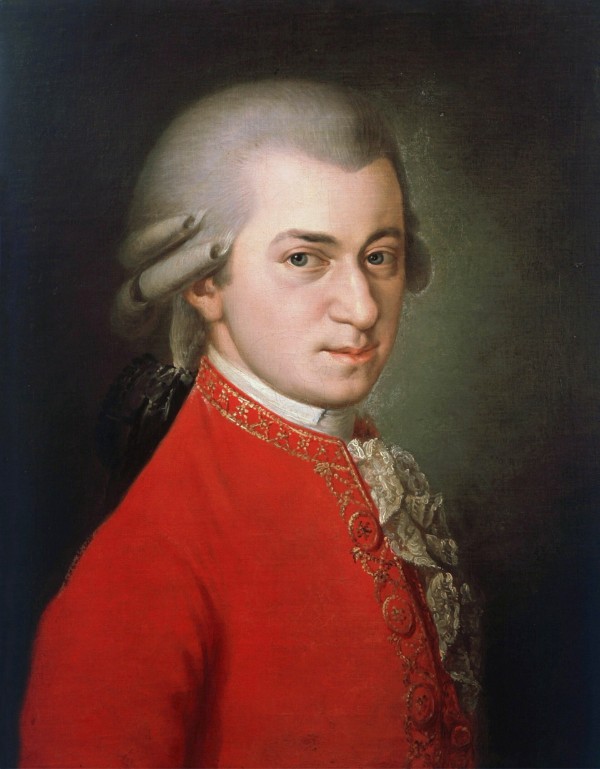
Wolfgang Amadeus Mozart: Leck mir den Arsch fein recht schön sauber (Lick my Arse for Six Voices) (ca. 1782)   

Wolfgang Amadeus Mozart loved two things especially dearly: composing and scatological humour.

In fact, so much scatological humour appears in his letters that some scandalised editors of his correspondence actually scrubbed it from their editions!

Occasionally, his sense of humour boiled over from his letter-writing into his compositions, like in his three-part canon “Leck mich im Arsch”, which was likely meant to be a silly party song for his friends.

Wolfgang Amadeus Mozart

Wolfgang Amadeus Mozart

Translated to English, the expression “Leck mich im Arsch” means something equivalent to “kiss my ass.”

It’s a phrase that has no right to be arranged so cleverly or to sound so good…which of course is part of the joke!

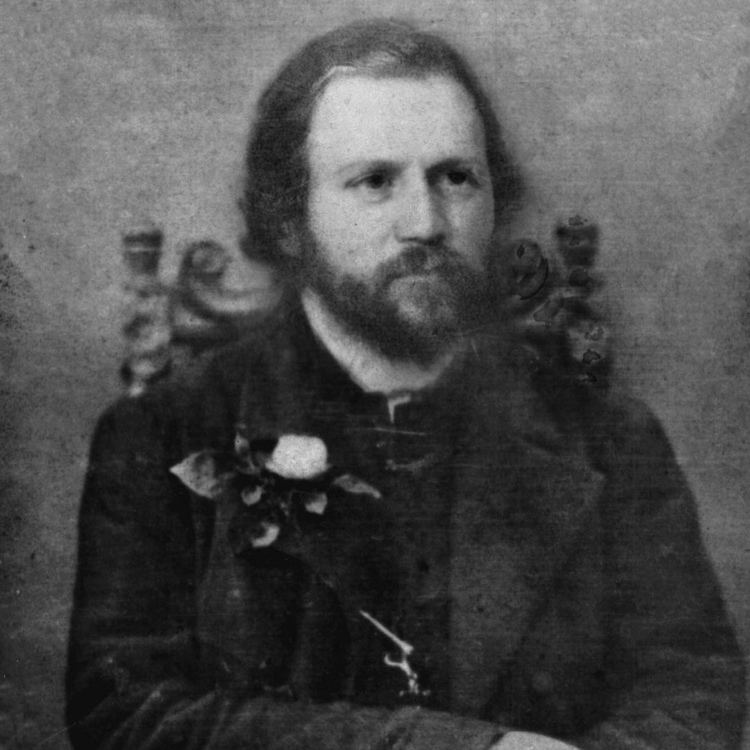
Charles-Valentin Alkan: Funeral March on the Death of a Parrot (1859)   

Composer Charles-Valentin Alkan is one of the most intriguing figures in classical music history.

He was a piano prodigy born in 1813 who, in the 1830s, was often mentioned in the same breath as Chopin and Liszt.

Charles-Valentin Alkan

Charles-Valentin Alkan

However, after Alkan had a son out of wedlock in his mid-twenties, he withdrew from the concert stage for a time. He resumed his performing career in the mid-1840s. But after losing a prestigious job at the Paris Conservatoire and the devastating early death of Chopin, Alkan withdrew from public life again, focusing on studying and composing.

In 1859, Alkan wrote this parody funeral march, drawing from the pompous tradition of grand opera. It was composed for four voices, three oboes, and one bassoon.

The lyrics translated are “Have you eaten, Jaco? And what? Ah!” This is the French equivalent of the English expression “Polly wants a cracker?”

Alkan takes himself so seriously that if you just heard the music alone, you’d never guess the gentle, winking absurdity of the premise.

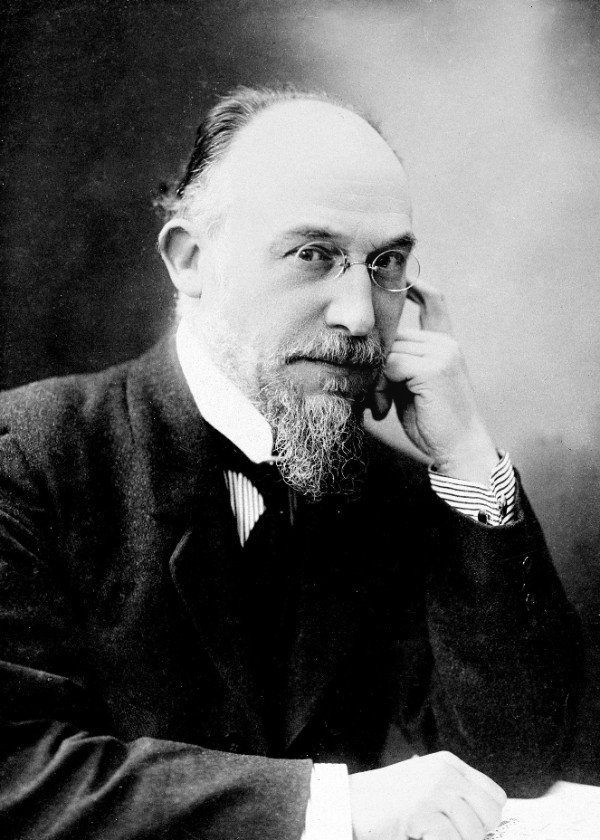
Erik Satie: Trois morceaux en forme de poire (Three Pieces in the Form of a Pear) (1903)   

Composer Erik Satie specialised in absurdity, and his four-hand piano suite “Trois morceaux en forme de poire” offers absurdity in abundance.

The first joke is that, despite the title, the suite consists of seven pieces, not three.

According to legend, the “pear” part of the title originated with a criticism Claude Debussy leveled at Satie: namely, that Satie didn’t pay enough attention to form.

Erik Satie

Erik Satie

Satie then chose a deliberately absurd shape so he could answer any criticism by Debussy by saying, “but it’s in the form of a pear!”

In France, pears also have a cultural connotation with the archetype of a fool or simpleton, meaning the joke may have been on Debussy, Satie himself, or maybe both!

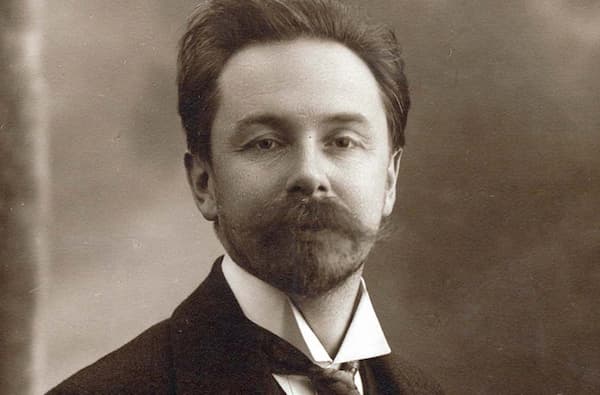
Alexander Scriabin: The Poem of Ecstasy (1905-08)   

Composer Alexander Scriabin believed that his life’s mission extended far beyond writing music.

In 1903, he began writing a work called Mysterium, which he continued working on for over a decade, until his death.

Alexander Scriabin

Alexander Scriabin

He wanted to stage a performance of it during a weeklong festival in the foothills of the Himalayas, after which he believed the end of the world would come, and human consciousness itself would shift.

In 1905’s The Poem of Ecstasy, we get a taste of his intense conviction and creative energy in a work that was actually finished. The narrative of the Poem follows a spirit achieving consciousness.

Scriabin wrote in his own notes for the piece:

“When the Spirit has attained the supreme culmination of its activity and has been torn away from the embraces of teleology and relativity, when it has exhausted completely its substance and its liberated active energy, the Time of Ecstasy shall arrive.”

Charles Ives: Like a Sick Eagle (c. 1906)   

Charles Ives’s brief song “Like a Sick Eagle” contain just the first five lines of John Keats’s poem “On Seeing the Elgin Marbles”:

My spirit is too weak—mortality
Weighs heavily on me like unwilling sleep,
And each imagined pinnacle and steep
Of godlike hardship tells me I must die
Like a sick eagle looking at the sky.

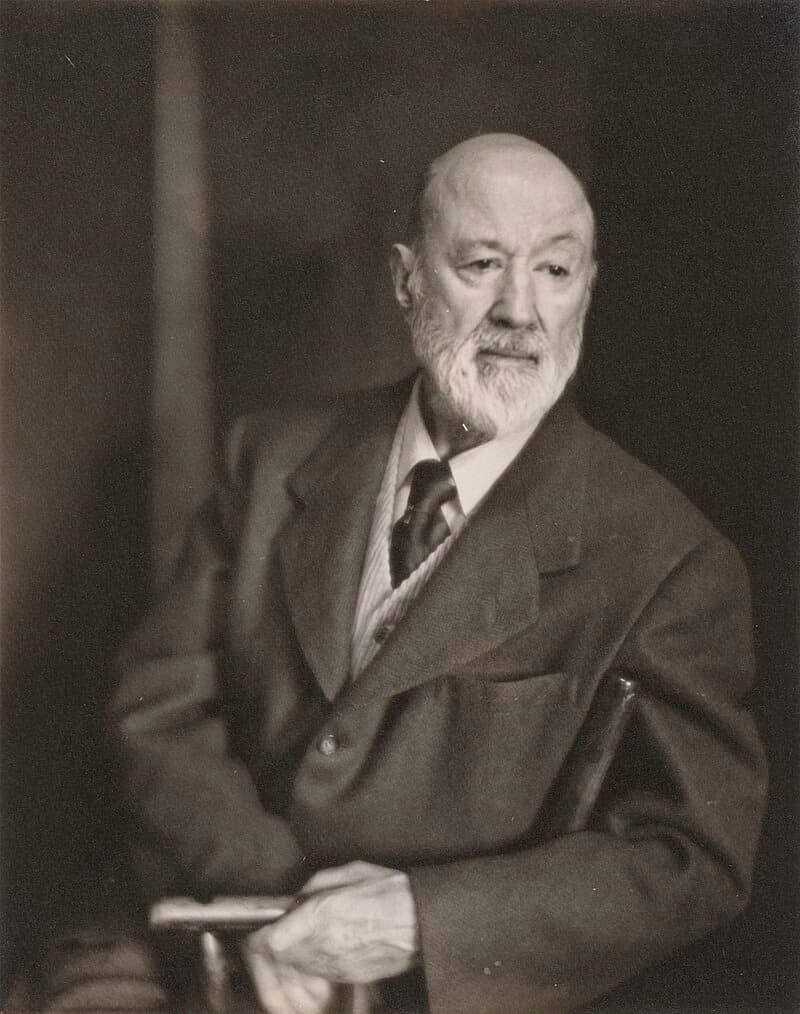
Clara Sipprell: Charles Ives (Washington, DC: National Portrait Gallery, Smithsonian Institution)

Clara Sipprell: Charles Ives (Washington, DC: National Portrait Gallery, Smithsonian Institution)

Ives conveys the staggering weakness of the once-mighty bird through a spare accompaniment and ghostly vocal line.

The end result is deeply haunting and unsettling.

Darius Milhaud: Le Boeuf sur le toit (The Ox on the Roof) (1919-20)   

During World War I, composer Darius Milhaud served in the French diplomatic service, spending two years in Brazil. Not surprisingly, the rich musical culture of South America rubbed off on Milhaud’s music.

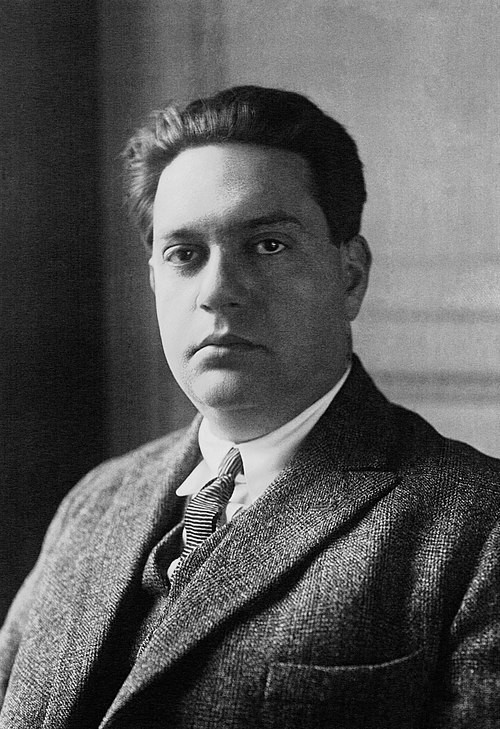
Darius Milhaud

Darius Milhaud

Milhaud himself once claimed that the title “Le Boeuf sur le toit” (which translates to “The Ox on the Roof”) was a reference to a Brazilian folk song.

However, there are potential alternate explanations, too:

  • It’s the name of an imaginary cafe and dance hall (a real version opened a couple of years after Milhaud’s score was staged as a ballet).
  • There is an old Parisian legend of a man who adopted a calf and brought it into his apartment, where it grew too large to be moved.
  • Among musicians, the phrase “faire un boeuf” was slang for “to have a jam session.” When a cafe hosting a jam session was too small to host a group, musicians would be directed to the roof.

Regardless of exactly what the title refers to, the phrase is playful and evocative.

Paul Hindemith: Overture to the Flying Dutchman as Sight-read by a Bad Spa Orchestra at 7 in the Morning by the Well (c. 1925)   

Composer and violinist/violist Paul Hindemith had a tongue-in-cheek sense of humour, as evidenced by this work, which is exactly what it sounds like: Hindemith’s idea of what an under-rehearsed ensemble might sound like while sight-reading Wagner’s Flying Dutchman Overture.

In it, he pokes fun at out-of-practice musicians trying to play a work beyond their technical abilities.

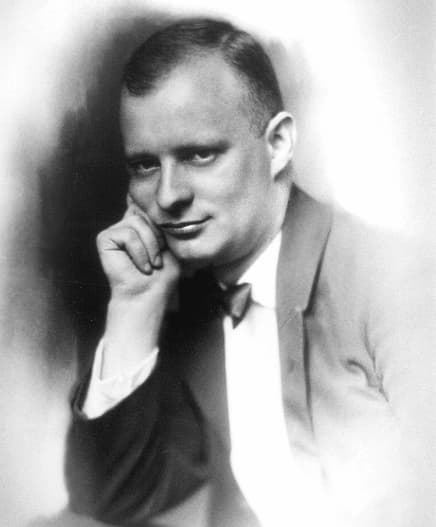
Paul Hindemith, 1923

Paul Hindemith, 1923

You can hear their struggles: intonation issues, accidental entrances, wobbly cues.

At the end, the players inexplicably launch into a rendition of Émile Waldteufel’s The Skater’s Waltz.

La Monte Young: Composition 1960 #7: to be held for a long time (1960)   

American composer La Monte Young was born in 1935. He is widely recognised as one of the first minimalists, and he has a special interest in sustained tones and musical drones.

The only instructions for the piece are that a B and an F-sharp are to be held “for a long time”. How long? It’s up to the performers – and perhaps the audience – to decide.

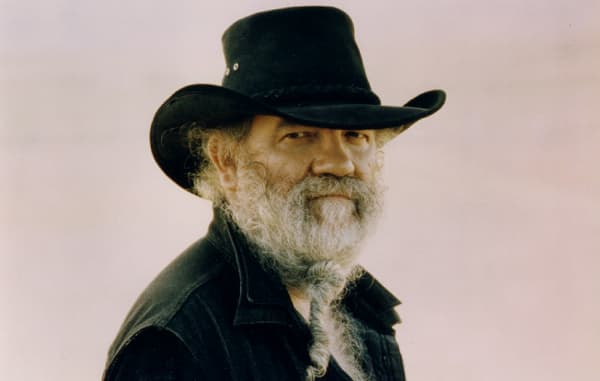
La Monte Young

La Monte Young

Conclusion: The Weird and Witty World of Classical Music

Whether channeling apocalyptic mystical forces or memorialising a dead parrot, all of the composers above embraced a spirit of weirdness when it came to conceiving and naming their works.

These weird names pique our curiosity and invite us to listen with curiosity and fresh ears. Share with your music-loving friends, and let us know which one of these quirky works is your favorite.

Tuesday, December 2, 2025

HAUSER - Christmas Special - Part 1


Urlaub / Vacation

Unser Übersetzungsbüro ist geschlossen: vom 20. Dezember 2025 bis  7. Januar 2026.

Our translation agency will be closed: from December 20, 2025 to January 7, 2026.

Übersetzerdienste - Translation Services

Even after retiring as German Consul, I am still accredited as a German translator and interpreter for the German, Swiss and Austrian Embassy.

Friday, November 28, 2025


Contemporary classical composers you need to discover today

New music of such variety, imagination and originality, there is something here for everyone

Caroline Shaw

What were you doing when you were 30 years old? Caroline Shaw is unlikely to forget, for this was her age when she received the Pulitzer Prize for music. The year was 2013, and the accolade was for her a cappella piece Partita (2009-11) for eight voices. Composed for the vocal group Roomful of Teeth, of which she was (and still is) a member, the work was released on their Grammy-winning self-titled debut album in October 2012. It didn’t receive its full premiere until November the following year, when it was performed by the group at (Le) Poisson Rouge in New York.

Partita for eight voices made Shaw the youngest ever recipient of the Pulitzer Prize for music. And in 2019, The Guardian ranked it as the 20th greatest work of classical music since 2000. All this for good reason – the piece is a vocal joyride. It begins with spoken word: ‘To the side. To the side. To the side and around’ – followed by a wall of harmonised euphoria. It continues with tides of song gathering and then drifting apart; flooding in and falling back. The work as a whole is inventive and pulls out all the stops when it comes to what a mouth and a pair of lungs can do: speech, whispers, sighs, wordless melodies and sundry other vocal techniques. It was inspired by artist Sol LeWitt’s Wall Drawing 305 – ‘born’, as Shaw says, ‘of a love of surface and structure, of the human voice, of dancing and tired ligaments, of music, and of our basic desire to draw a line from one point to another’.


Anna Clyne

Cultural considerations are not the only things that have recently brought a host of female composers to prominence. Half a century ago the wholly different talents of Lutyens, Maconchy and Thea Musgrave need not have feared comparison with their male contemporaries – a situation mirrored now with the emergence of a new generation on the new music scene, from among whom Anna Clyne is striking for the rapidity with which her output has evolved into a mature idiom always lucid in its compositional craft and immediate in its emotional impact.

Born in London, Clyne studied music at the University of Edinburgh then at the Manhattan School of Music where her tutors included Julia Wolfe – a founder member of the influential ensemble Bang on a Can, which commissioned and performed several of her earlier pieces. Clyne had begun composing around the age of 10, and although the first acknowledged works date from her early twenties, an essentially youthful delight in the discovering as well as realising of unusual combinations of sound is a constant across all her music that emerged at this time.


Hildur Guðnadóttir

Every aspect of a traditional ‘classical’ composer’s craft requires a degree of compromise. Notation, no matter how meticulously realised, can never fully represent the work as conjured in the composer’s imagination; and no performance or recording can ever fully recreate every intention of a score – so it becomes a compromise upon a compromise. This isn’t to say, of course, that the whole business of writing and recording music is a fruitless exercise, it is simply that each element of the process that requires the music to be ‘translated’ into another medium moves the music further from the composer’s initial conception – sometimes for better, sometimes for worse.

Advances in the affordability and accessibility of recording technology over the last few decades have made it possible to write and record entire albums’ worth of music from home, practically alone, on nothing more than a laptop. It’s a model that has been widespread in pop music for years, but there are also many composers who are self-producing recordings of great interest to Gramophone readers, and one of the most compelling and successful is Hildur Guðnadóttir.


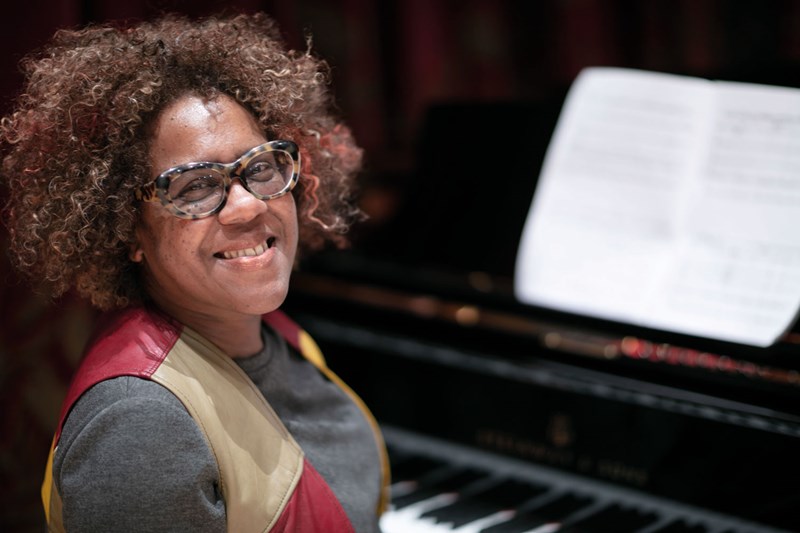
Errollyn Wallen

An influential figure and inspirational role model for young musicians, respected and admired by fellow composers and performers, and recognised by the pillars of the British musical establishment, Errollyn Wallen is a leading figure in today’s classical music world. But the journey that she has taken has been nothing if not unconventional. Indeed, it could never have been any other way.

She was born in Belize, and at the age of two moved to London with her parents. She became a musician almost by accident, owing to the fact that she came from a musical family: her father was a fine amateur singer who wrote songs and introduced his young daughter to jazz, blues and the recordings of Ella Fitzgerald. Being a keen dancer, Wallen first experienced classical music at a ballet class when an accompanist suddenly started playing Chopin. She was absolutely mesmerised and immediately set about exploring classical music – in both its traditional and its more contemporary forms.


Sofia Gubaidulina

As the Soviet system gradually lost its grip on power through the 1980s, a diverse range of compositional voices was released into the wider musical world. A generation of ‘unofficial’ composers, effectively an underground movement in the 1960s and ’70s, suddenly came to prominence. Western audiences were introduced to the sophisticated polystylism of Alfred Schnittke, the esoteric serialism of Edison Denisov, the serene tintinnabulation of Arvo Pärt – and to Sofia Gubaidulina. Her music was, and remains, difficult to categorise. She is a religious maximalist, who employs an often brutal modernist language to express and explore dimensions of her Christian faith. Her music always seems immediate and spontaneous, yet is underpinned by sophisticated mathematical procedures. And, while she embraces joy, hope and light in her music, she does so via extreme contrasts, often leading her listeners through dark and unsettling places on her very individual path to transcendence.

Gidon Kremer brought Gubaidulina’s music to international attention when he gave the premiere of her violin concerto Offertorium in Vienna in 1981. The Soviet authorities almost succeeded in preventing the concert from taking place, but it was made possible by Gubaidulina’s enterprising Western publisher, Jürgen Köchel, who smuggled the score out of the country to get it to Kremer. The premiere was a great success, and Kremer continued to spread the word in the following years, giving performances of the concerto with leading orchestras around the world.


Jennifer Higdon

Higdon

'Jennifer Higdon’s myriad accolades and accomplishments are impressive by any standard, but particularly in the world of contemporary classical music. She’s won a Pulitzer Prize and a Grammy Award. Her music is in such high demand that she’s able to compose exclusively on commission. And her champions include top-tier soloists, ensembles and orchestras. According to a recent survey of US orchestras, Higdon is one of the most performed living American composers.

'Yet Higdon’s most striking achievement doesn’t fit so easily into a biography, and that’s how thoroughly her music has filtered into every stratum of classical music culture in the United States. Glance through the ‘Upcoming Performances’ page of her official website and you’ll find that her work is being played not only by the Houston Symphony and Philadelphia Orchestra, but also by municipal, community, and high school ensembles across the country. On the surface, it appears to be a simple formula: Higdon writes music that audiences like to hear and musicians find gratifying to play. But is it really so simple?..'


Lera Auerbach

Auerbach

'In an age of multitasking habits, polymodal perceptions and multisensory experiences, we are all now expected to become polymaths. As Vinnie Mirchandani put it in his preface to The New Polymath (Wiley: 2010): ‘[We] can no longer be just one person but a collection of many.’ But in trying to become too many people, what is lost? Identity, depth, talent? Genius, perhaps?

'Lera Auerbach is a polymath in the original sense of the word – as defined and defended by Renaissance writers and thinkers; but she is also very much an artist of her time. Apart from being a successful composer and concert pianist, she’s a painter, sculptor, librettist and author of several books of poetry and prose, but for Auerbach these extramusical activities are not exercises in dilettantism: all art forms are interconnected and designed to nourish and sustain each other...'


Sally Beamish

Beamish

'In a way, music was Sally Beamish’s first language. Her mother, a violinist, taught her to read and write notes at the age of four – before she could play an instrument, before she could even read or write words. She would draw little flowers or faces on the manuscript and her mum would interpret how the graphic notation might sound. ‘I always wanted to make my own stuff,’ she says. ‘I’ve made my own clothes, written stories, painted…’ When she started learning piano aged five, she constructed herself a little exercise book.

'Today Beamish is one of the UK’s busiest and most warmly respected composers, with commissions coming in thick and fast for scores ranging from large-scale ballet and oratorios to chamber, theatre and solo works. At 60 she already has a catalogue of more than 200 pieces and that number is rising fast: this year she has been writing three piano concertos, among several other projects. For many listeners, the great appeal of Beamish’s music is the space it finds between softness and steel – her knack of blending folk-flecked lyricism, emotional candour, a sense of the natural world and a propulsive way with rhythm plus real economy, directness, luminous orchestrations and rigour of craft. She’s the kind of composer who seems to know exactly what she wants a piece to say and finds the most compassionate and least fussy way of saying it...'


Augusta Read Thomas

Thomas

'American classical music this past quarter-century has been dominated by the minimalist aesthetic that came to the fore as a reaction against the modernist thinking which had previously held sway. Currently it represents a virtual lingua franca in terms of its influence on mainstream composers. Others, however, have looked back (not in anger and still less out of nostalgia) to an era in which aspects of modernism were linked to a freely evolving tonality so that new possibilities were opened up for exploration. Only recently has this approach regained prominence, with Augusta Read Thomas being among its leading exponents.

'Born in Glen Cove, Long Island, in April 1964, Thomas studied at Yale University and later at the Royal Academy of Music in London and Chicago’s Northwestern University. To speak of influences is often unnecessarily subjective, yet two composers with whom she came into contact during this period were to leave their mark on her music in the most direct and positive sense. From Jacob Druckman (1928-96) she absorbed the value of instrumental colour as a formal and expressive component rather than just an external dressing, while in Donald Erb (1927-2008) she had the example of an orchestrator who was second to none in this respect among American composers of his generation. What this gave to Thomas’s music from the outset was its clarity of conception and precision of gesture (whether in the briefest of instrumental miniatures or in large-scale orchestral works), which act as the focus for her often intricate textures and iridescent harmonies – thereby ensuring that her work exudes an immediacy and a communicativeness whatever its degree of complexity and dissonance...'


Unsuk Chin

Chin

'Curiouser and curiouser. Listening to the music of Unsuk Chin can feel like an adventure in Alice’s Wonderland. We start in familiar territory, with simple and attractive musical ideas, but these gradually weave into complex and unsettling textures. Soon we are down the rabbit hole, and nothing is quite what it seems. The music appears stable, until a subtle change in harmony casts it in an entirely new light. Perspectives change, motifs and melodies twist and distort. Simplicity gives way to beguiling complexity. Then everything stops, often with a thump from the percussion, and we are left contemplating the bizarre turn of events. Was it all a dream?

'Unsuk Chin has been fascinated by Alice in Wonderland since childhood, and it has inspired much of her music, most notably her 2007 Alice opera. But her take on the story is distinctive. The opera is full of moments of intrigue and wonder, but these are set against stark representations of the tale’s brutal absurdity – a fantastical yet always lucid conception, typical of Chin. As a Korean based in Germany, she has an outsider’s perspective on European culture, and her music regularly highlights its ingrained paradoxes. She is a voice of reason, bringing order to the surreal. Above all, she brings clarity, however complex her music becomes, with every note remaining audible, every motivation clear...'


Anna Thorvaldsdóttir

Anna Thorvaldsdóttir

Before notating her works conventionally via the five lines of the musical stave, Anna Thorvaldsdóttir literally draws them. The pristine pencil illustrations this process spawns are something to behold. One of them is reproduced on the cover – and inside the booklet, in a more complete version – of what was the first album to feature her music and her music alone: Rhízoma.

The drawing features a consistent yet bumpy horizon of two almost-horizontal lines in counterpoint. Beneath that, multiple roots gather towards a single, thick trunk before breaking into four branches, fraying outwards at their end points (it could be a forbidding volcano; it could be a weedy turnip). Thoughts in text form are scattered around in meticulous block capitals: ‘In constant development’ / ‘Bell like’ / ‘I predict that the duration of this piece will be approximately 12-14 minutes’.

Speaking at an open question-and-answer session in Copenhagen in January, Thorvaldsdóttir explained that she uses drawings like these as compositional aids, devices for ‘mapping where a piece is going’. But they contain vital structural clues for the rest of us. In the case of this particular drawing – an image of the piece Streaming Arhythmia (2007) – we can trace how the biology of subterranean roots or ‘rhizomes’ has influenced the development of the music. The sketch also bears an uncanny resemblance to the landscape of Thorvaldsdóttir’s Iceland: a barren and highly atmospheric terrain characterised by black rock, dark moss, starkly outlined volcanic peaks and a total lack of trees.


Olga Neuwirth

Olga Neuwirth

The music of Olga Neuwirth (b1968) is richly allusive, moving freely between reference points as varied as Monteverdi, Weill, Miles Davis and Klaus Nomi. She has cited influences from Boulez to the Beastie Boys. Yet if there’s one artist whose aesthetic approach seems particularly close to hers, it isn’t a musician at all – it is film-maker David Lynch, the maverick director behind such cult classics as Twin Peaks (1990-91; 2017), Lost Highway (1997) and Mulholland Drive (2001). Bizarre juxtapositions, surreal narrative twists, vivid images of obscure significance: his films are not just strange but also uncanny – even inexplicable at times – as they journey into dreamlike worlds in which the standard rules of time, space and sense seem to drift away. Music may be a more abstract medium than film, but Neuwirth’s work proves its ability to be just as fascinatingly unfathomable. Her music is enthralling and provocative not despite its strangeness, but because of it.

The Lynch comparison is one that Neuwirth provoked herself when she turned Lost Highway, the film that some call Lynch’s very strangest, into an opera in 2002-03, in collaboration with her Nobel Prize-winning compatriot Elfriede Jelinek. It is hard to imagine a more audacious choice of film to receive the operatic treatment, but Neuwirth’s fragmentary, multidimensional music creates something that somehow does seem to be the kindred spirit of the original. At one point in both film and opera (some time before he inexplicably transforms into a car mechanic), the protagonist Fred explains why he doesn’t own a video camera. ‘I like to remember things my own way,’ he says. ‘How I remembered them. Not necessarily the way they happened.’ Perhaps the opera takes a similar approach in adapting the film, twisting it into new shapes – hyper-expressionist vocal acrobatics for one character, deadpan spoken word for another, eerie falsetto vocalise for a third – while retaining the plot and enhancing the noir undercurrent. In fact, perhaps that is what all opera does anyway, taking the kernel of a story and heightening its intensity through clipped lines of text and sweeping currents of music. To be sure, opera seldom portrays events ‘the way they happened’.


Kaija Saariaho

Kaija Saariaho

Kaija Saariaho (b1952 in Helsinki) is one of the foremost women composers on the planet and one of the leading creative figures of her generation of either gender; a truly original artist with a very distinctive musical style and personal voice, developed and refined over decades. The awards she has received over the years are indicative of this, including the Kranichsteiner Prize (1986), the Nordic Council Music Prize (2000, for Lonh), the Grawemeyer (2003, for her first opera, L’amour de loin), the Nemmers Prize in Composition (2007), the Wihuri Sibelius Prize (2009) and the Léonie Sonning Music Prize (2011).

Yet she is also a very private person, with much about her biography that is largely unknown, not least that she was born Kaija Laakkonen: the ‘trademark’ name of Saariaho is her first husband’s. She studied with Heininen at the Sibelius Academy, with other members of a miraculous generation of Finnish composers including Esa-Pekka Salonen and Magnus Lindberg. Further studies followed with Brian Ferneyhough and Klaus Huber; equally formative influences were Tristan Murail and Gérard Grisey, the principal exponents of spectral music (music placing timbre and sound ahead of other compositional considerations), leading her to IRCAM and 30 years’ residence in Paris, latterly with her second husband, Jean-Baptiste Barrière. Although she made an initial breakthrough with the orchestral Verblendungen (1984), it was with her dazzling, enchanting nonet-with-electronics Lichtbogen (‘Arches of Light’, 1986) that she burst onto the wider scene. Its ethereal, hypnotic textures were inspired by the aurora borealis, and the use of electronics proved prophetic for her future career. More important still was the combination of sonic delicacy and an inner steel – which makes her works beguiling to the ear yet robust and compelling as structures.


Thea Musgrave

Thea Musgrave

Asked once whether she had any advice for young composers, Thea Musgrave replied: ‘Don’t, unless you really have to; then you’ll do it anyway.’ Musgrave – the Scottish composer, conductor, pianist and teacher who turns 90 this month – has lived by her own advice. There’s a clear-sighted rationality to her approach, to the way she speaks about her music, to the way she adheres to deadlines and writes practical, non-fussy scores that endear her to commissioners and orchestral musicians.

But beneath the pragmatism, Musgrave’s music is all about drama. Whether in her searingly perceptive operas or her non-narrative instrumental works, she has long been fascinated by the innate drama of human behaviour: the psychological dance of conversation, interaction, confrontation and appeasement. She’s a composer who recognises that music mirrors life, that music can shape the way we live, that the emotional and even physical makeup of musicians is integral to the impact of any performance. To put it simply, her work speaks directly and compassionately about all of us. ‘There are basic human truths,’ she says, and it is those truths that she probes in her music.


Roxanna Panufnik

Roxanna Panufnik

There’s a different kind of revolution taking place in today’s contemporary music, and at its heart lies Roxanna Panufnik. Hers is not a radical revolution designed to overhaul the old order completely, à la Schoenberg or Cage. Instead, here is a quiet revolution that utilises music’s power to unite people from different cultures, religious backgrounds and political persuasions: a revolution that is more John Lennon than John Cage.

In Panufnik’s own words: ‘I’m on a mission to shout from the rooftops the beauty of all these different faiths’ music. It’s about bringing us together. Too often we don’t think about what we have in common, but instead about our tiny fraction of difference from each other.’

The importance of music’s social and political function was, of course, not lost on Roxanna’s father. The well-known, much admired and highly regarded Polish composer Sir Andrzej Panufnik (1914-91) was forced to escape the oppressive post-war climate of his native country in 1954. He arrived in London and some nine years later married author and photographer Camilla Jessel. Roxanna was born in 1968.