by Maureen Buja
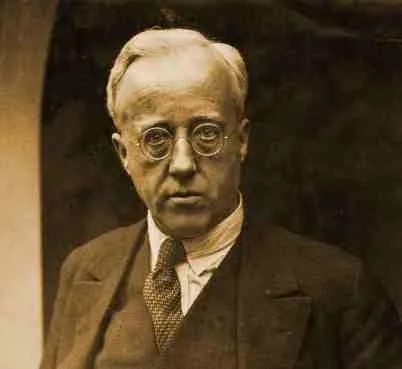
Gustav Holst
By the 1920s, much of this home music-making had been supplanted by the home radio. Recordings also became available, and with a record player, you could have your own orchestra in your drawing room.
In the early 20th century, however, the piano still held sway, and in this new recording by the piano duo of Tessa Uys and Ben Schoeman, one major work by Gustav Holst and two by Edward Elgar are presented. The transcriptions of Holst’s The Planets, Elgar’s Introduction and Allegro, and the Salut d’Amour give us something back of music in the home.
Gustav Holst’s suite for large orchestra, The Planets, brought Holst’s name into the spotlight. Although admired by his musical friends, few others knew of this Cheltenham-born composer.
The original layout of The Planets was for two pianos, and it was only orchestrated later. Holst suffered from neuritis, an inflammation of the nervous system, and it was easier for him to compose for two pianos than work through a large symphonic score.
With the success of the orchestral version, particularly in a time when astrology and the study of the stars were in fashion, Holst’s two-piano version was set aside and only published some 30 years after the orchestral premiere.
In the two-piano version, the big works, such as Mars, seem too light, but the lighter movements, such as Venus, The Bringer of Peace or Neptune, The Mystic, come across beautifully. One of the particularly good movements in the two-piano version is the flight of Mercury, The Winged Messenger.
Gustav Holst: The Planets – III. Mercury, The Winged Messenger (Ben Schoeman, Tessa Uys pianos)
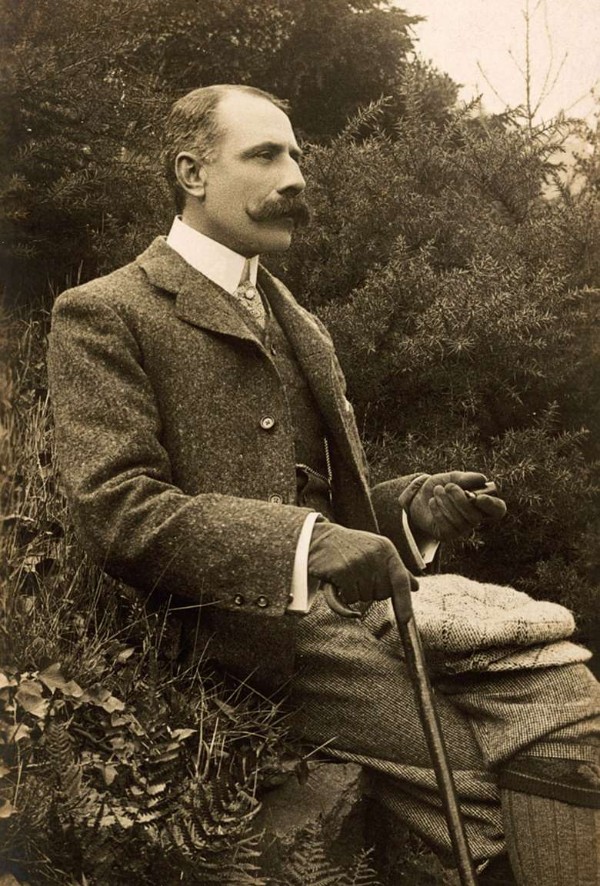
Edward Elgar
The other English composer who rose from relative obscurity to international fame was Edward Elgar. As in the case of Holst, the piano transcriptions of Elgar’s Introduction and Allegro, and the Salut d’Amour have largely been ignored with the greater fame of their orchestral versions. Whereas Holst made his transcriptions as part of his compositional process, Elgar’s works were done by other hands. Introduction and Allegro was transcribed by Otto Singer II, who made his name with his piano transcriptions of Bruckner’s symphonies. Introduction and Allegro (1905) was written for the string section of the London Symphony Orchestra, with Elgar conducting the premiere.
The second Elgar work, Salut d’Amour, originally entitled Liebesgruß (Love’s Greeting) but retitled in French by Elgar’s German publishers, was a wedding present to his fiancée, Caroline Alice Roberts. Their marriage in 1889 was done with her family’s disapproval, but proved to be a love-match in all the good ways. This melody is probably the most famous of Elgar’s light works, and in his publisher’s catalogue were some 25 different arrangements for all manner of ensembles.

Tessa Uys and Ben Schoeman, piano duo
The two-piano format made important orchestral works accessible for home consumption. In the case of these three works, which are far better known in their orchestral versions, we can hear both the advantages of the genre and some of its limitations.
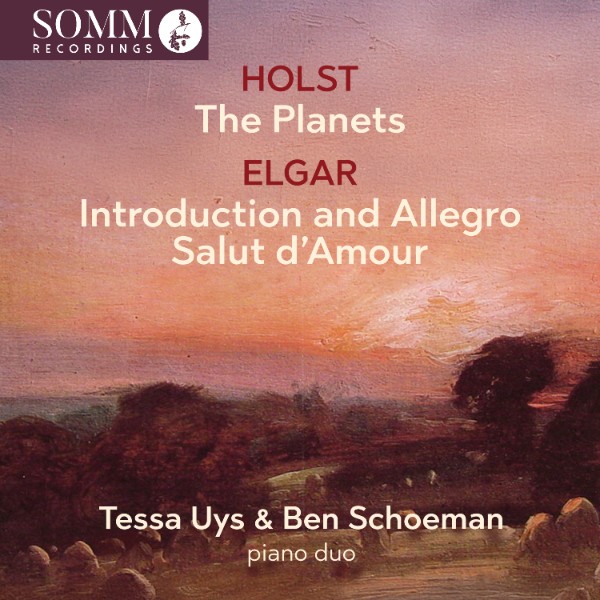
Holst: The Planets / Elgar: Introduction and Allegro, Salut d’Amour
Tessa Uys and Ben Schoeman, piano duo
SOMM Recordings: SOMMCD 0709
Official Website


No comments:
Post a Comment