It's all about the classical music composers and their works from the last 400 years and much more about music. Hier erfahren Sie alles über die klassischen Komponisten und ihre Meisterwerke der letzten vierhundert Jahre und vieles mehr über Klassische Musik.
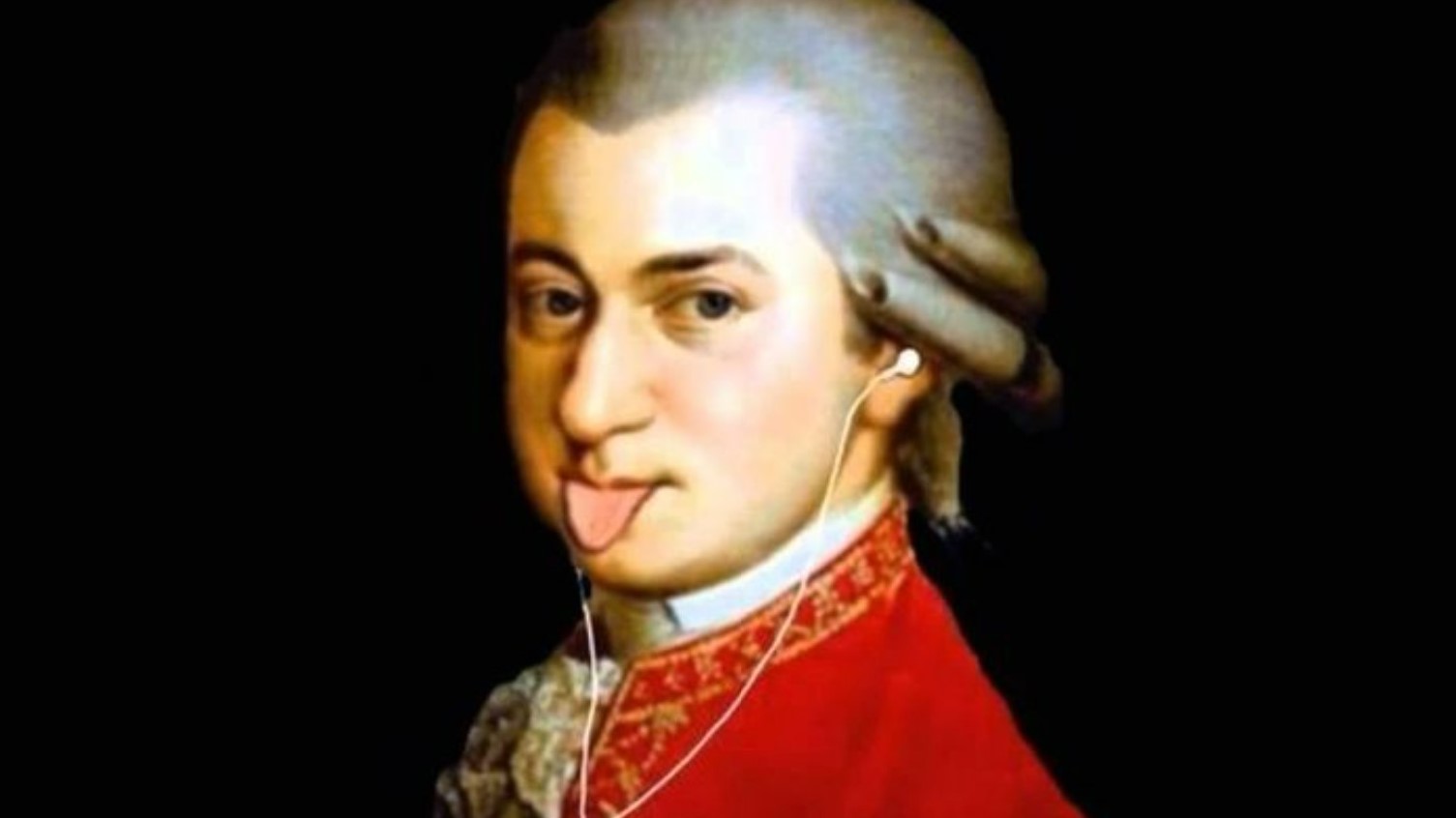
Once hailed as Time magazine’s top ten cultural figures of the millennium, Wolfgang Amadeus Mozart (1756-1791) should perhaps also be known as one of the most foul-mouthed classical musicians of all time.
Although the musical genius has passed away for more than 250 years, thanks to the preservation of Mozart’s works, we know for a fact that the prodigy fancied using vulgar language and referring to anal matters in his compositions.
“Kiss my Ass”: Mozart’s Use of Vulgar Language
“Leck mich im Arsch”, which literally translates into “lick my ass” or “kiss my ass” in modern terms, is the title of one of Mozart’s canons which he composed at the age of 26.
Such offensive language was not only evident in his work, but was also prevalent throughout his daily life. Over ten percent of Mozart’s letters are found to contain evidence of scatology, an investigation by Simkin reveals. Scatology is the study of faeces, and in Mozart’s case, it refers to the obsession of obscene language and references to excretory functions (and not in the medical sense). Mozart wrote to his cousin Maria Anna Tekla Mozart on 5 November 1777 saying “I sh*t on your nose, so it runs down your chin”, according to a translation by Spaethling in 2000; and to his father on 17 October 1777, Mozart wrote, “…But I sang a whole different text ‘P.E, o oh you prick, why don’t you kiss my ass…”
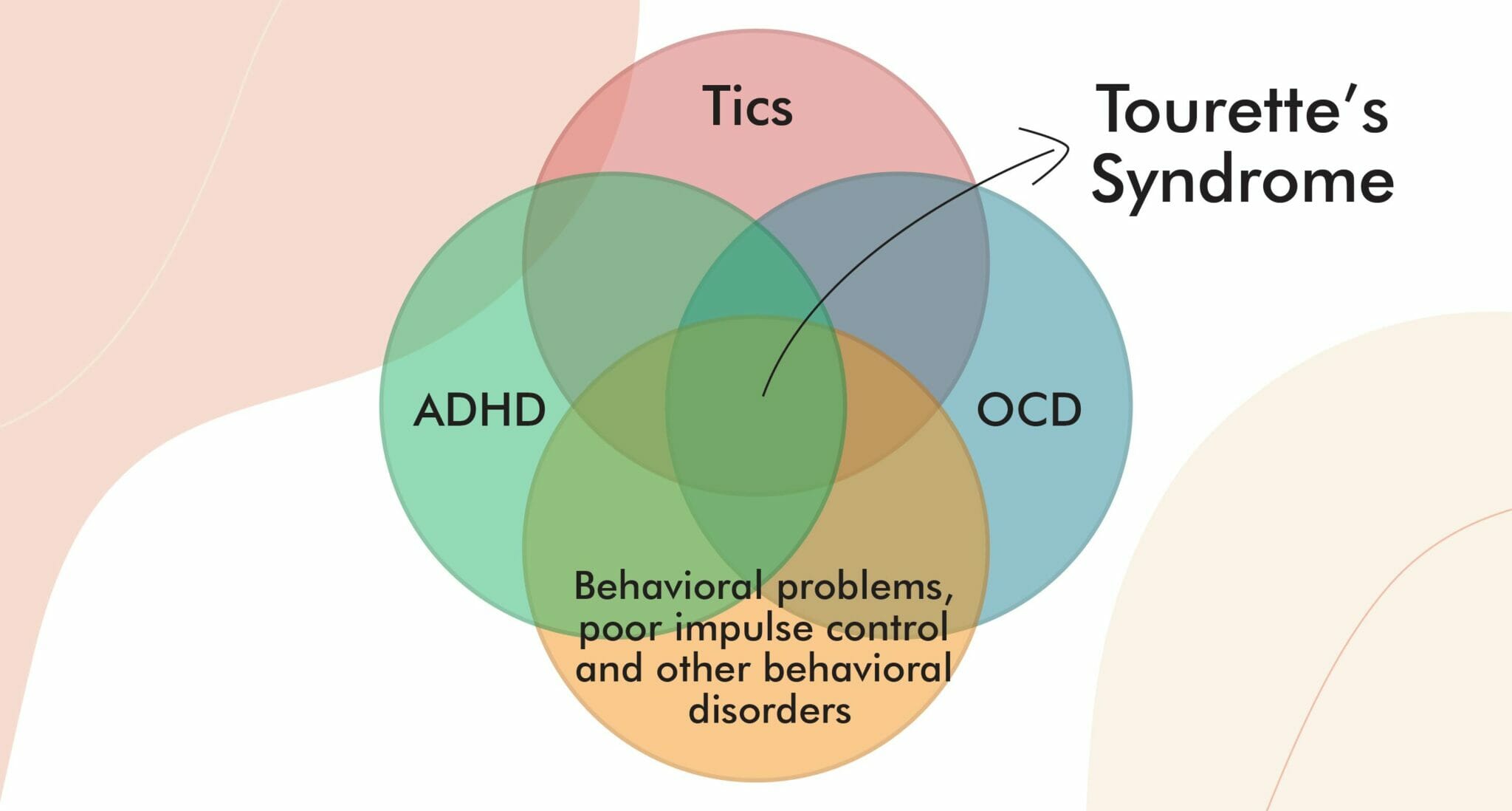
This is because one of the occasional symptoms of Tourette’s Syndrome is Coprolalia. Coprolalia refers to the involuntary and often compulsive swearing of obscene words or taboo remarks. It comes from the greek word “κόπρος” (kopros), meaning faeces, and “λαλιά” (lalia) from lalein, which means “to talk”. Despite the amount of attention drawn to the condition, it is actually not a necessary symptom required for a Tourette diagnosis. Only about 10% of Tourette patients are reported to suffer from it.
On the contrary, it is the presence of motor and vocal tics (which last for at least one year) that characterise Tourette’s syndrome. Tics are sudden, repetitive movements or sounds that a person makes, usually unconsciously or with only very little control of the muscle groups.
Common tics include blinking the eyes very hard, shoulder shrugging, foot stomping, repeated sniffing, repetitive shouting, constant clearing of the throat or grunting. Some tics may even result in self harm, due to head banging or punching one self. Tics can sometimes be worsened when the person is under stress, excitement or anxiety. Patients have described the need to complete a tic or repeatedly carry out the tic in order to decrease the urge or sensation.
Although the exact neuropathology and the cause of the condition is not properly understood, research suggests that it is caused by nerve communication problems in the brain. Disturbance in the balance in neurotransmitters such as dopamine, serotonin and norepinephrine may also play a role in Tourette’s. These include abnormalities in parts of the brain, including the basal ganglia, frontal lobes and cortex.
Question: Did Mozart have a neurological disorder, or was it simply his unique personality?
Some argue that Mozart, as a genius in his own right, simply couldn’t care less about what others thought, and did not have an actual neurobehavioral condition. After all, he lived under the public eye as a child prodigy and was aggravated in life by the enormous demands of his father and society. A bit of strong language was simply a way for him to let out his frustrations, and to demonstrate his inner disrespect of the nobilities at the time.
Furthermore, the image of a respectable Mozart was probably just a creation of the late 1790s, where society was a little bit more conservative than it is today. It is said that the title of the “Kiss my ass” was changed to “Lasst uns froh sein” when published, meaning, “let’s be happy”. Mozart’s widow, Constanze, is also said to have ensured that Mozart’s letters would not be published immediately upon his death, and that obscene parts of Mozart’s letters would be eliminated in the very first edition.
Some even go on to say that the scatology in Mozart’s letter was simply typical of the conversation styles in southern Mavaria and Salzburg region at that time.
Yet, the case for Mozart’s Tourette syndrome was suggested for the first time at the World Congress of Psychiatry in Vienna in 1983, citing records that show that Mozart was prone to unpredictable and erratic behavior. For example, he had a tendency to trash hotel rooms and refuse to clean. He also had an impressive medical history of possible diseases, leading to the many mysteries surrounding both his life and death.
Nevertheless, the seemingly endless lists of Mozart’s neurobehavioral problems are only speculations. His life was after all very short, especially in today’s terms, so it will remain forever a mystery whether Mozart had a unique personality or an actual neurological disorder.
What we do know however, is that regardless of how foul-mouthed Mozart was, his music will continue to fill our concert halls, shopping malls, and even play on the phone while you are left on hold.
References:
Jankovic Ashoori and Joseph Aidin. (November, 2007). Mozart’s movements and behaviour: a case of Tourette’s syndrome? Accessed 3 September, 2013 at National Center for Biotechnology Information: http://www.ncbi.nlm.nih.gov/pmc/articles/PMC2117611/
Kammer Thomas. (2007). Mozart in the Neurological Department– Who has the Tic? Neurological Disorders in Famous Artists – Part 2 Frontiers in Neurology and Neurosciences, Vol 22, Basel, Karger, Page 184-192.
Kenyon Nicholas. (16 September, 2005). Myth, Muzak and Mozart. Accessed 5 September 2013 at The Guardian: http://www.theguardian.com/music/2005/sep/16/classicalmusicandopera.mozart
National Institutes of Health. (January 2012). National Institute of Neurological Disorders and Stroke. Accessed 17 September 2013 at Tourette Syndrome Fact Sheet: https://www.ninds.nih.gov/tourette-syndrome-fact-sheet
December is packed with some of the most famous (and infamous) anniversaries in classical music history.
It’s the month when Beethoven’s Fifth and Sixth Symphonies were heard for the first time in a freezing Viennese hall – the month when Tchaikovsky’s Nutcrackerdazzled St. Petersburg audiences – and the month when Bach’s Christmas Oratorio first stunned Leipzig churchgoers on Christmas Day.
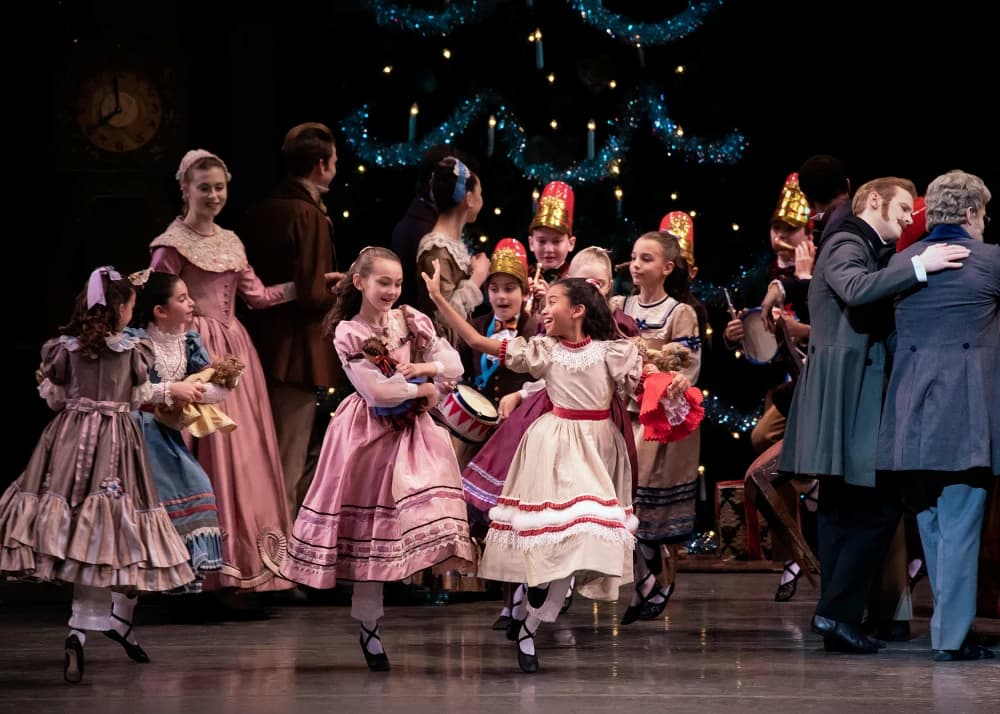
The Nutcracker with Charlotte Nebres as Clara, 2019 (photo by Erin Baiano / New York City Ballet)
It’s also the month that saw the birth of Maria Callas, Jean Sibelius, and Olivier Messiaen…as well as the death of Wolfgang Amadeus Mozart, whose death on 5 December 1791 marked one of the greatest losses in the history of music.
Today, we’re looking at some of the most important December anniversaries in classical music history.
1 December 1944
Premiere of Bartók’s Concerto for Orchestra
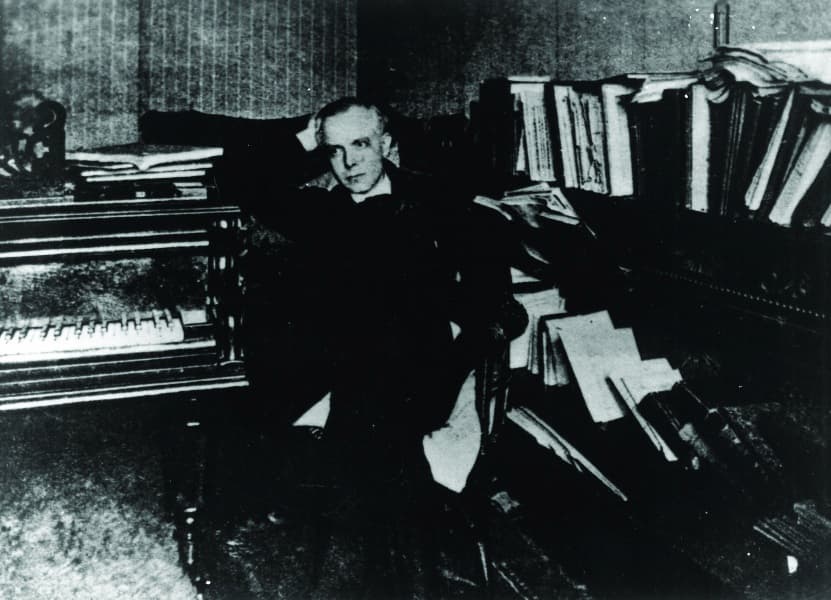
Béla Bartók
This Concerto for Orchestra by exiled composer Béla Bartók first burst to life in Boston on this day in 1944.
World war was raging, and Bartók was terminally ill. Yet despite that, Bartók succeeded in creating one of the greatest musical masterpieces of the twentieth century.
We wrote an article about Bartók’s heartbreaking final illness and the conditions under which he wrote the Concerto.
2 December 1923
Birth of Maria Callas
Maria Callas sings an excerpt from Norma
Born in New York to Greek parents, Maria Callas grew up to become the operatic diva of the twentieth century, making countless classic recordings and inspiring multiple biopics.
Marriage of Johann Sebastian Bach and Anna Magdalena Wilcke Bach
Excerpts from Bach’s Notebook for Anna Magdalena Bach
When he was 36, Johann Sebastian Bach wed the gifted young court soprano Anna Magdalena Wilcke, who was 20.
So began a personal and professional partnership that would shape classical music history for centuries to come.
Anna Magdalena Bach
We wrote here about what happened to the thirteen (!) children born during their marriage, as well as the surviving children from Bach’s first marriage.
4 December 1881
Premiere of Tchaikovsky’s Violin Concerto
Tchaikovsky’s violin concerto was a bit of a flop when it made its Vienna debut on this day in 1881, but nowadays it’s one of the most beloved concertos ever written, for any instrument.
We wrote here about the secret gay love affair that helped to inspire the concerto after Tchaikovsky’s disastrous marriage.
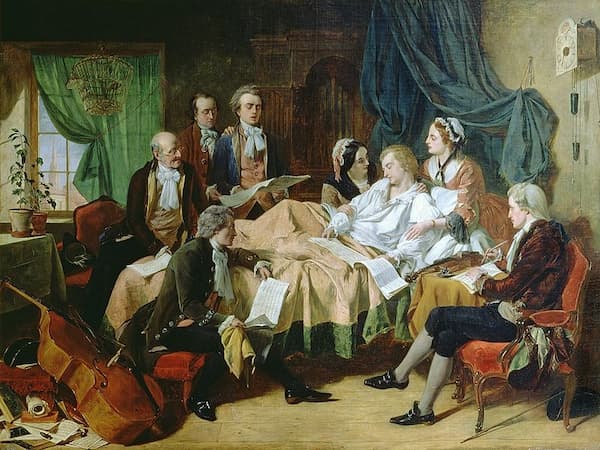
5 December 1791
Death of Wolfgang Amadeus Mozart
Mozart’s short, incandescent life ended in Vienna when he was just 35 years old. His unfinished Requiem would be his final work.
Henry Nelson O’Neil: The Last Hours of Mozart, 1860s
Born in a poor Silesian village in 1933, Górecki would grow up to become a major composer.
His Symphony of Sorrowful Songs became a blockbuster hit in the 1970s. We wrote about the extraordinary story behind the symphony, and how it accidentally became a classic.
7 December 1842
First concert of the Philharmonic Society of New York
In early December 1842, the Philharmonic Society of New York launched what would become America’s oldest symphony orchestra, today known as the New York Philharmonic.
8 December 1865
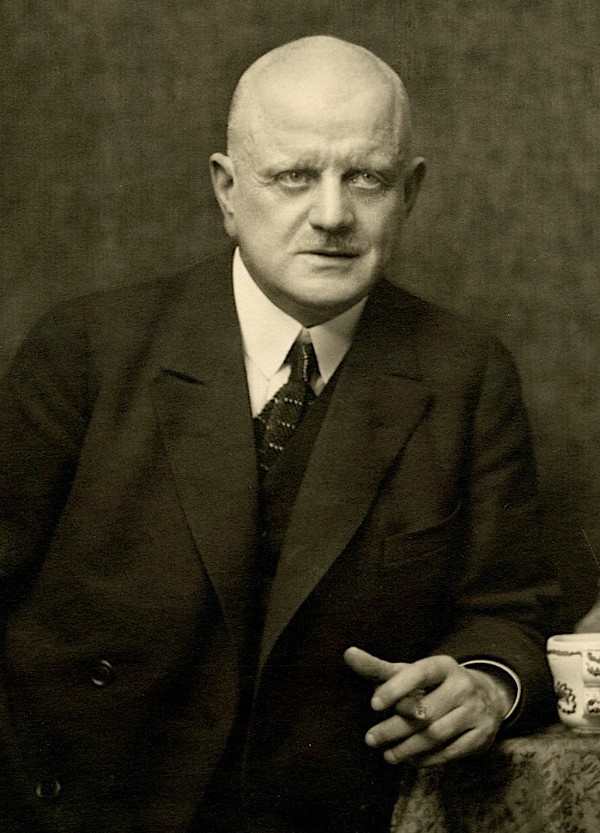
Birth of Jean Sibelius
Jean Sibelius grew up to create the sound world of an entire nation: his beloved Finland.
His musical portrayals of snowy horizons and fierce defiance, colored by moments of triumph and tragedy, are unforgettable.
Jean Sibelius, 1923
Find out how Sibelius grew into Finland’s greatest composer.
9 December 1745
Birth of Maddalena Laura Lombardini Sirmen
A Venetian violin virtuosa trained by the famous Baroque violinist Giuseppe Tartini, Lombardini Sirmen composed and toured Europe to acclaim, proving that an eighteenth-century woman could hold her own against the composers and soloists of her day.
Her first violin concerto was praised by none other than Mozart’s father.
We wrote an article with thirteen intriguing facts about Lombardini Sirmen’s life and music.
10 December 1908
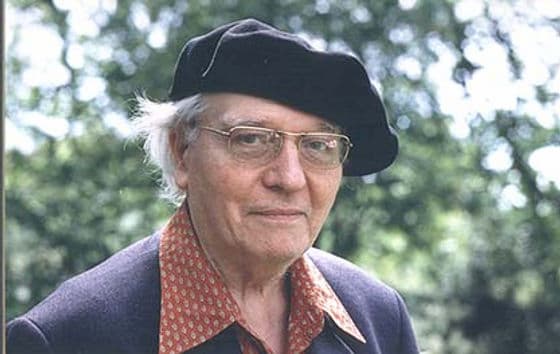
Birth of Olivier Messiaen
Olivier Messiaen
French composer Olivier Messiaen wrote timeless music that incorporates birdcalls, a veritable rainbow of instrumental colours, and his staunch Catholic faith into radiant soundscapes.
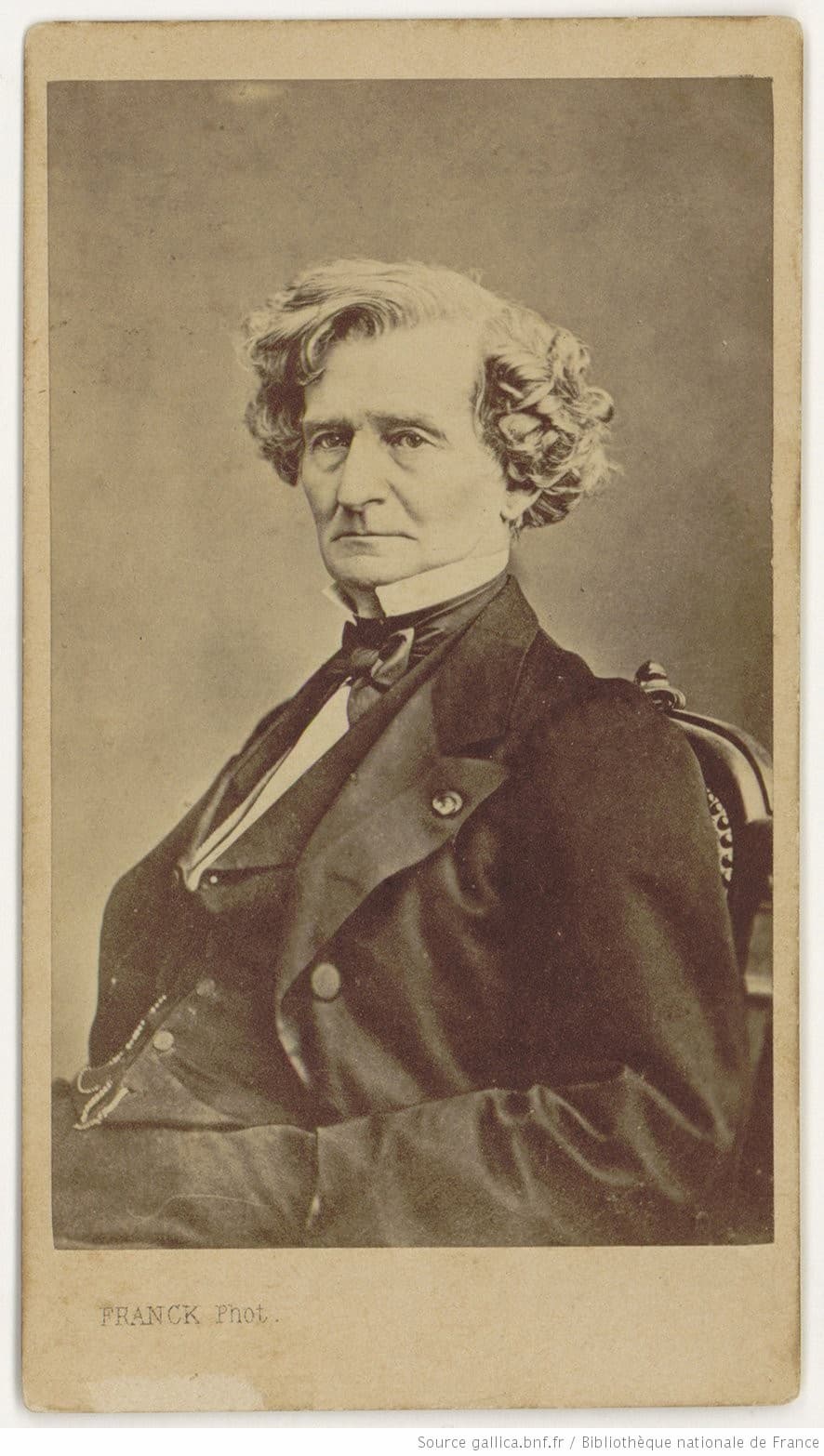
Hector Berlioz was born in provincial La Côte-Saint-André, France.
His groundbreaking orchestration and dramatic storytelling helped shape the Romantic Era, and his terrifying obsession with actress Harriet Smithson gave birth to his famous Symphonie fantastique.
We looked at why Berlioz was considered to be such a rebellious enfant terrible.
12 December 1891
Premiere of Johannes Brahms’s Clarinet Quintet
Johannes Brahms’s Clarinet Quintet, Op. 115 is one of his final and most introspective works: a bittersweet masterclass in melancholy.
Viennese composer Marianna Martines died on this day at age 63.
A student of Haydn and admired by Mozart, she was one of the few women composers to gain recognition in eighteenth-century Vienna.
We looked at Marianna Martines’s extraordinary life story and how she was able to compete with the great male composers in her orbit.
14 December 1789
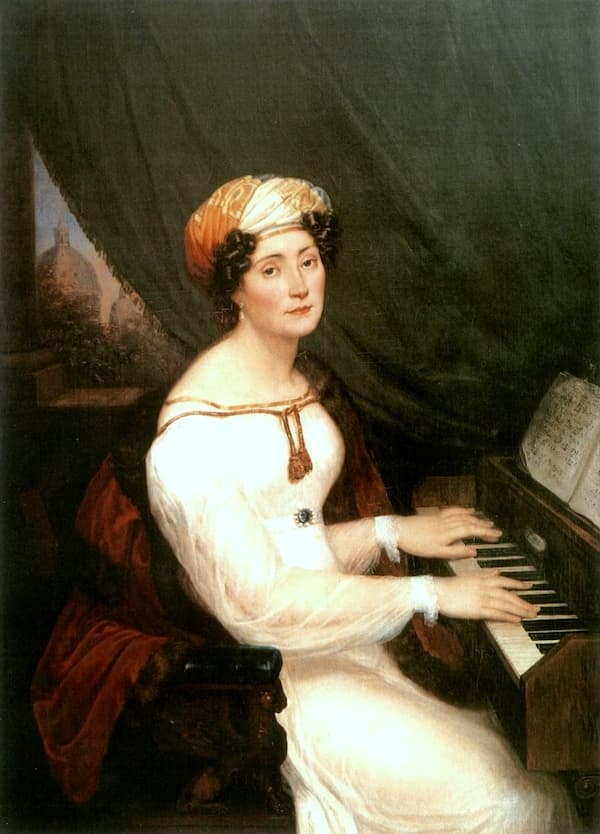
Birth of Maria Szymanowska
Maria Szymanowska
Maria Szymanowska was a pioneering concert pianist and composer whose distinctly Polish style anticipated the idiom of poetic pianism later perfected by Chopin.
Violinist Ida Haendel was born in Chelm, Poland, on this day in 1924.
A child prodigy who debuted with a number of major orchestras before she turned ten, she sustained one of the longest classical music careers of the century.
She credited her survival of World War II to her musical talents.
We celebrated Ida Haendel and her trademark big hair and high heels.
Composer and educator Zoltán Kodály was born in Kecskemét, Hungary, on this day in 1882.
Renowned for his choral works and passion for music education, he helped shape Hungary’s modern musical identity, and his pedagogical ideas are still widely embraced today.
Ludwig van Beethoven was baptised in Bonn. We observe the date of his baptism because we don’t know for sure which day he was born, although many people believe it would have been December sixteenth.
Of course, we all know that he became the most influential composer of his generation!
Tchaikovsky’s ballet The Nutcracker and opera Iolanta premiered as a double bill at the Mariinsky Theatre in St. Petersburg in 1892, the year before his death.
Both works quickly became staples of the repertoire.
We wrote about The Nutcracker’s premiere and why it is helping to ensure future classical music audiences.
19 December 1888
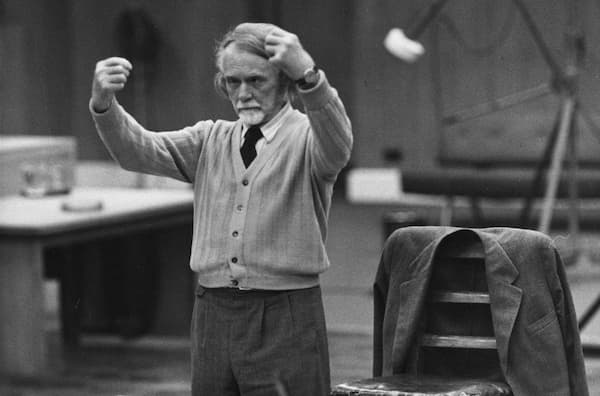
Birth of Fritz Reiner
Conductor Fritz Reiner was born in Budapest in 1888.
His controlling precision on the podium helped to define the Chicago Symphony Orchestra’s sound during his tenure there as music director…and made him a few enemies along the way.
We wrote an article discussing Reiner’s rocky relationship with his principal cellist János Starker.
20 December 1948
Birth of Mitsuko Uchida
Mitsuko Uchida plays Mozart’s Piano Concerto No. 20
Japanese pianist Mitsuko Uchida was born in Tokyo on this day in 1948.
Celebrated for her insightful interpretations of Mozart, Schubert, and Beethoven, she is one of today’s leading interpreters of the classical canon.
We wrote an article about Uchida’s childhood and how she became so passionate about the piano.
21 December 1953
Birth of András Schiff
Pianist and conductor András Schiff was born in Budapest on this day in 1953.
Known for his thoughtful musicianship and deep commitment to Bach and Beethoven, he remains one of the most respected pianists of his generation.
Premieres of Beethoven’s Symphonies No. 5 and No. 6, Piano Concerto No. 4, and Choral Fantasy
During Christmas break in 1808, at Vienna’s luxurious Theater an der Wien, Beethoven conducted a marathon concert featuring the premieres of his Fifth and Sixth Symphonies, the Fourth Piano Concerto, and the Choral Fantasy—all in a single evening.
It is likely the most famous concert in classical music history.
We looked at how Beethoven pulled off this multi-hour monster concert.
23 December 1893
Premiere of Humperdinck’s Hänsel und Gretel
Engelbert Humperdinck’s opera Hänsel und Gretel premiered in Weimar under the baton of composer Richard Strauss. The work became an enduring Christmas favourite.
We wrote about what makes Hänsel und Gretel this Christmas classic so charming.
24 December 1835
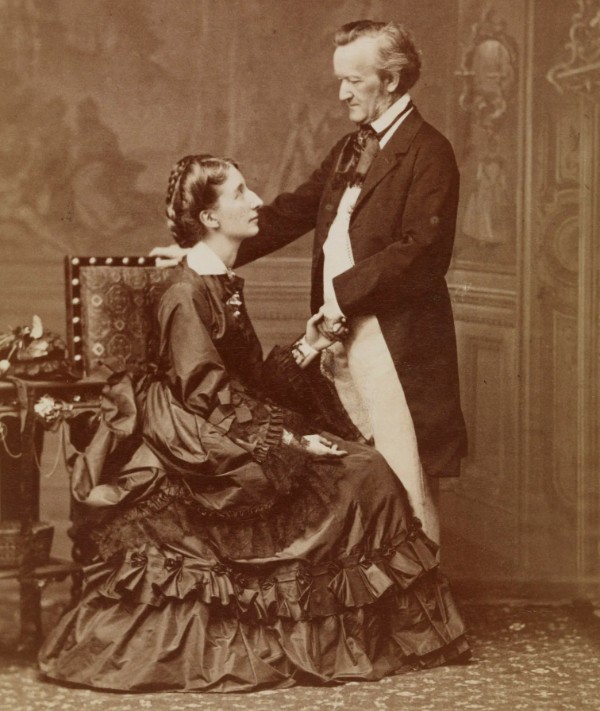
Birth of Cosima Liszt Wagner
Richard Wagner and Cosima von Bülow Wagner
Cosima Liszt, daughter of Franz Liszt and later wife of Richard Wagner, was born on Lake Como on Christmas Eve in 1835.
She would become the formidable custodian of Wagner’s legacy at Bayreuth, and although she wasn’t a composer herself, one of the most influential women in nineteenth and even twentieth-century music.
Find out the unforgettable way that Wagner celebrated Cosima’s birthday in style in 1870.
25 December 1734
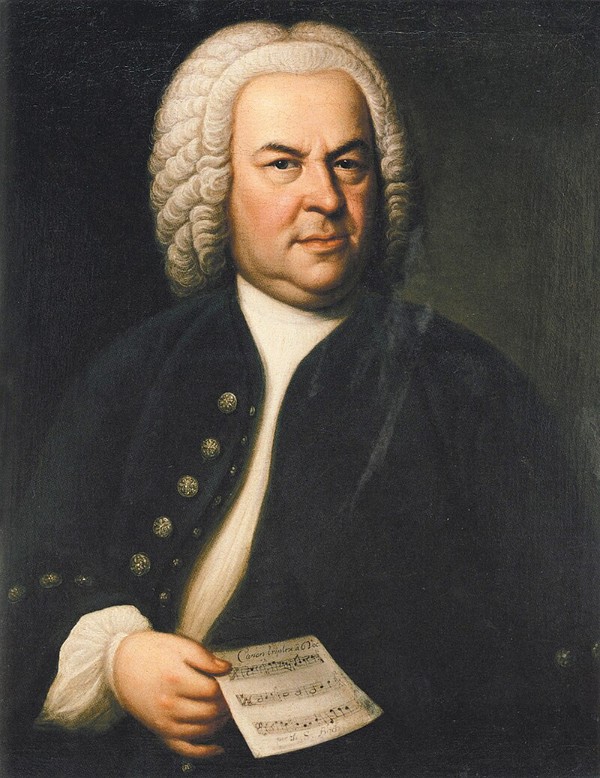
Premiere of Bach’s Christmas Oratorio, Part I
Elias Gottlob Haussmann: J.S. Bach, 1746 (Leipzig: Bach-Archiv)
J
The first part of Bach’s six-part Christmas Oratorio was premiered in Leipzig in 1734.
This first part celebrates the birth of Jesus.
26 December 1926
Premiere of Sibelius’s Tapiola
One of Jean Sibelius’s final orchestral masterpieces, Tapiola, premiered in New York in 1926.
The work’s haunting soundscape reflected the composer’s imminent – and infamous – soft retirement, which would last for decades, until the end of his life.
We wrote an article called Ten Pieces to Make You Love Sibelius.
27 December 1944
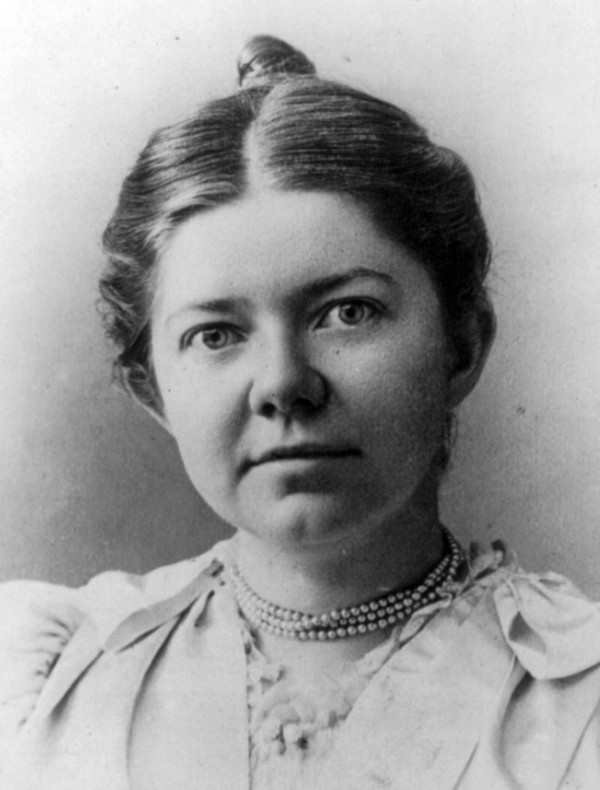
Death of Amy Beach
Amy Beach
Trailblazing American composer Amy Beach was best known for her Gaelic Symphony (the first woman-written symphony ever played by a major American orchestra) and numerous gorgeous piano works.
We wrote about Amy Beach’s fascinating life – and her staggering early genius.
28 December 1916
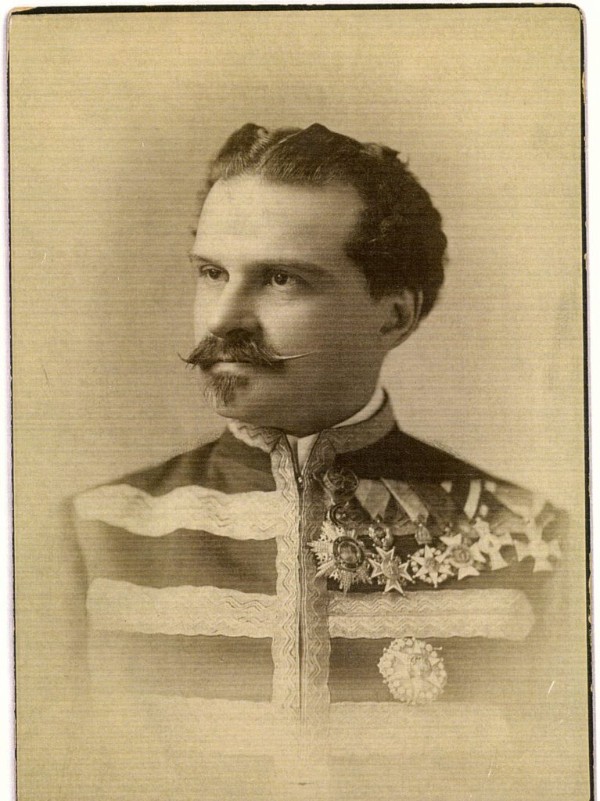
Death of Eduard Strauss
Eduard Strauss
Eduard Strauss, the younger and last-surviving brother of Johann Strauss II, died at age 81.
His passing marked the end of the original Strauss family line of waltz composers.
We told the story of the wildly dysfunctional Strauss family dynasty.
29 December 1876
Birth of Pablo (Pau) Casals
Cellist Pablo Casals was born in El Vendrell, Catalonia.
His firm stance against twentieth-century fascism and his revival of Bach’s Cello Suites made him a moral as well as musical icon.
A Pulitzer and Grammy winner, Jennifer Higdon is one of the most frequently performed American composers of the twenty-first century.
Back in 2019 we talked with her about her string quartet Voices appearing at the Intimacy of Creativity festival.
Conclusion
From Bach’s Christmas Oratorio to Beethoven’s Fifth Symphony and Tchaikovsky’s Nutcracker, December is filled with classical music anniversaries that changed the course of music history.
The month brings together composer birthdays, landmark premieres, and tragic deaths.
Each and every anniversary is an opportunity to remember how rich the legacy of the art is…and how much it has to give to future generations.
What do you find to be the most meaningful December anniversary in classical music history?
The French cantata, emerging in the late 17th century and flourishing through the early 18th century, represents a distinctive musical form that blended Italianate influences with the expressive and refined aesthetic of French Baroque music. Originating around 1700, the French cantata was heavily influenced by the Italian cantata, introduced to France through composers like Marc-Antoine Charpentier, who studied in Rome under Giacomo Carissimi.
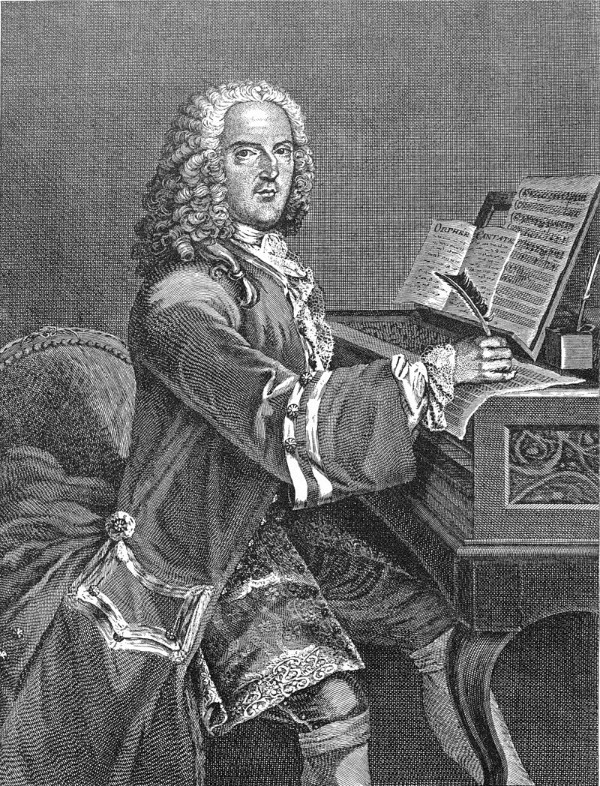
Louis-Nicolas Clérambault: Orphée
Blending Elegance and Innovation
French composers adapted the form to suit national tastes, emphasising clarity of text, elegant melodic lines, and a more restrained emotional palette compared to the dramatic intensity of their Italian counterparts. Typically written for solo voice with continuo and sometimes additional instruments like violins or flutes, French cantatas were often performed in intimate settings, such as salons or private concerts, reflecting the cultural emphasis on refinement and intellectual discourse.
Composers like Louis-Nicolas Clérambault, André Campra, and Élisabeth Jacquet de La Guerre crafted cantatas that drew on mythological, pastoral, or moral themes, aligning with the French preference for narrative clarity and poetic sophistication. The development of the French cantata was also tied to the cultural politics of the time, as “composers navigated the tension between Italian musical innovation and the conservative preferences of the French court under Louis XIV,” which favoured the tragédie en musique of Jean-Baptiste Lully.
By the mid-18th century, the French cantata began to wane in popularity as musical tastes shifted toward larger-scale operatic works and the emerging galant style, which prioritised simplicity and accessibility over the intricate counterpoint and formal complexity of the Baroque cantata. Nevertheless, the genre remained a significant vehicle for compositional experimentation, particularly in its integration of French lyricism with Italian virtuosity.
Clérambault: Orphée
Louis-Nicolas Clérambault
Louis-Nicolas Clérambault (1676–1749) was born into a musical family in Paris, and he served as organist at the prestigious Saint-Sulpice and held posts at the French court. Primarily celebrated for his contributions to the French cantata and sacred music, Clérambault infused Italianate virtuosity with the elegant clarity of the French style. In all, he composed a total of 25 French cantatas that stand as the pinnacle of his compositional output.
His works, often set to mythological or pastoral texts, reflect the refined tastes of the Parisian salons where they were performed. The Orpheus myth, with its themes of love, loss, and the transformative power of music, provided Clérambault with a compelling narrative canvas. In Orphée, Clérambault sets a French text that traces Orpheus’s descent into the underworld to retrieve Eurydice, his beloved, emphasising his anguish and fleeting hope through poignant airs and dramatic recitatives.
The cantata’s structure alternates between recitative, which advances the narrative, and lyrical airs, which delve into emotional reflection. A striking feature is the “Air tendre” where Orpheus pleads with Pluto, marked by a lilting, almost hypnotic melody that mirrors Orpheus’s legendary musical charm. Clérambault’s use of chromatic harmonies and suspensions heightens the sense of longing, while his instrumental writing echoes the vocal line, creating a dialogue that feels intimate yet expressive.
The cantata also subtly engages with contemporary cultural currents, as Orpheus symbolised the artist’s divine gift, a theme resonant with the French court’s self-image as a patron of the arts under Louis XIV and beyond. The work reflects the French Baroque’s fascination with emotional depth, rhetorical clarity, and refined artistry. Clérambault’s Orphée stands out for its emotional directness and compact form, making it ideal for the salon setting where aristocratic patrons valued subtlety over spectacle.
Campra:Arion
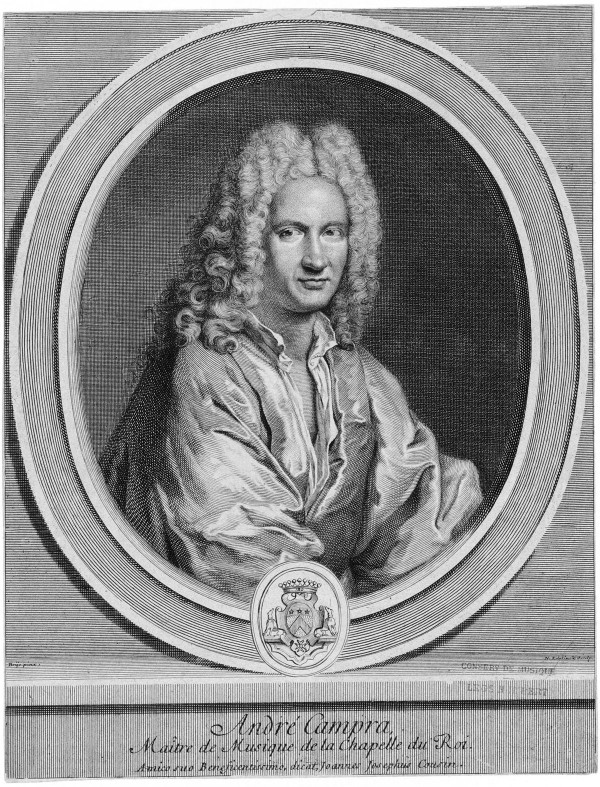
André Campra
André Campra (1660–1744) was born in Aix-en-Provence and initially pursued a career in the church, serving as maître de musique at Notre-Dame in Paris. He gained fame for his opera but also applied his skill to the cantata genre by merging national traditions. As he writes in 1708, “As cantatas have become fashionable, I thought I should, at the request of many people, provide some for the public in my own way.”
“I have tried, as far as I could, to combine the delicacy of French music with the liveliness of Italian music: perhaps those who have completely abandoned the taste for the former will be satisfied by the way in which I have treated this little piece. I am as convinced as anyone of the merits of the Italians, but our language cannot tolerate certain things that they get away with. Our music has beauties which they cannot help admiring and try to imitate. I have endeavoured above all to preserve the beauty of the singing, the expression, and our way of reciting.”
Arion is a secular French cantata from his Cantates françoises of 1714, and it draws its story from the classical tale of Arion, a legendary Greek musician. In the story, Arion’s lyrical prowess saves him when sailors attempt to murder him for his wealth, as dolphins, enchanted by his song, carry him to safety.
Campra’s setting of this myth uses the narrative to showcase the power of music, a theme that resonated deeply with the aristocratic audiences of early eighteenth-century France. Structurally, Arion follows the typical French cantata form, with alternating recitatives and airs accompanied by a small ensemble. The opening prelude establishes a pastoral tone, while the recitatives narrate Arion’s plight with dramatic shifts in tempo and dynamics. The airs, particularly those depicting Arion’s song to the dolphins, feature ornate vocal lines with agréments, reflecting the French emphasis on expressive nuance.
de Montéclair:Pan et Syrinx
Michel Pignolet de Montéclair
The French Baroque composer and theorist Michel Pignolet de Montéclair (1667–1737) was known for his contributions to opera, cantatas, and music pedagogy. Born in Andelot, he moved to Paris, where he joined the orchestra of the Paris Opéra and later became a respected teacher. A versatile musician, he also authored influential treatises on music theory and performance, and his compositions bridged the refined tastes of the French court with the innovative trends of the early 18th century, leaving a lasting impact on the Baroque repertoire.
The cantata Pan et Syrinx draws on Ovid’s Metamorphoses, which recounts how Pan, enamoured with the chaste nymph Syrinx, chases her until she transforms into reeds to escape him, from which Pan crafts his iconic panpipes. This tale of desire, transformation, and the origins of music provided Montéclair with a rich narrative for a cantata performed with a small ensemble in salon settings.
Alternating between recitatives that narrate the story and airs that explore the characters’ emotions, Montéclair’s music vividly captures the drama. The sprightly, dance-like melodies in the opening prelude evoke Pan’s playful pursuit, contrasted by lyrical, flowing airs for Syrinx’s pleas for freedom.
His use of text painting is particularly striking, such as in passages where the flute mimics the sound of Pan’s reeds or where chromatic harmonies underscore Syrinx’s fear. The structure reflects the French Baroque’s emphasis on clarity and emotional directness, while Montéclair’s inclusion of pastoral elements, like the lilting rhythms and flute obligatos, ties the work to the era’s fascination with idyllic nature.
Dornel: Le Tombeau de Clorinde
Cover page Louis-Antoine Dornel’s Le Tombeau de Clorinde
Louis-Antoine Dornel (c. 1680–1765) was a composer, harpsichordist, organist, and violinist, active in Paris during the early 18th century. Likely born in Béthemont-la-Forêt or Presles, he served as organist at Sainte Madeleine-en-la-Cité, a position he secured over Jean-Philippe Rameau, and later as maître de musique at the Académie Française. Dornel’s compositions include chamber music, harpsichord suites, and a number of cantatas that contributed to the vibrant cultural exchange of the French Baroque.
Le Tombeau de Clorinde dates from 1723 and draws on the tragic story of Clorinde, a character from Torquato Tasso’s epic Jerusalem Delivered. It tells the story of Clorinde, a Saracen warrior-princess, who is tragically killed in combat by her Christian lover Tancred, who was unaware of her identity.
This narrative of doomed love and mourning provided Dornel with a dramatic framework. Typically performed by a solo voice, most often a baritone with a small ensemble including violin and continue, Le Tombeau alternates between recitatives and airs to convey the story’s emotional arc.
The opening recitative, “Dans l’horreur d’un combat,” sets a sombre tone, depicting the horror of battle, while subsequent airs, such as “Ô vous, Manes sacrées,” express Tancred’s grief with lyrical depth and ornamented vocal lines. Dornel’s music employs a good amount of text painting, with descending melodic figures and chromatic harmonies evoking sorrow, and the violin’s obbligato lines intertwine with the voice to heighten the lament’s intimacy.
de La Guerre:Judith
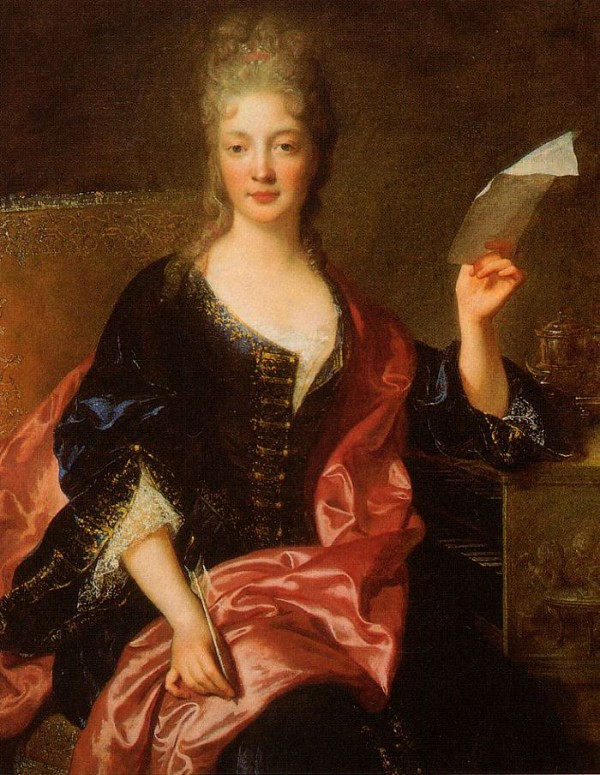
Élisabeth Jacquet de La Guerre
Élisabeth Jacquet de La Guerre (1665–1729) was a French Baroque composer, harpsichordist, and singer, celebrated as one of the most gifted musicians of her time. Born into a musical family in Paris, she performed as a child prodigy at the court of Louis XIV, earning royal patronage. Trained by her father, she excelled in composing across genres, and while her output consists largely of harpsichord music, she was the first woman to have an opera performed at the Académie royale de musique (the Opéra) in Paris. She was also the first composer in France to publish sacred cantatas, including Judith of 1708.
The cantata is rooted in the Book of Judith, recounting Judith’s heroic act of seduction and assassination of the Assyrian general Holofernes to save her people. The music for Judith emphasises spiritual depth, aligning with the period’s growing interest in sacred music for private settings during the Regency of Louis XV. The cantata’s structure, with its compact yet expressive form, highlights Jacquet de La Guerre’s innovative approach to text setting, using subtle dynamic shifts and harmonic progressions to convey Judith’s transformation from supplicant to victor.
Her instrumental writing, particularly for the violin, anticipates the more integrated textures of later Baroque music. The opening recitative sets the scene with vivid imagery of the Assyrian threat, using declamatory vocal lines to evoke urgency. The subsequent airs, such as those depicting Judith’s prayer of triumph, feature lyrical melodies adorned with French ornaments. Her use of text painting is notable, with rising melodic lines for Judith’s resolve and darker, chromatic harmonies for Holofernes’s menace.
The work also holds cultural significance as a product of a female composer navigating a male-dominated field, with Jacquet de La Guerre’s dedication of her cantatas to the Elector of Bavaria reflecting her ambition to gain recognition beyond France. Judith thus stands as a testament to her compositional skill and the French cantata’s role as a vehicle for both artistic and moral expression in the early eighteenth century.
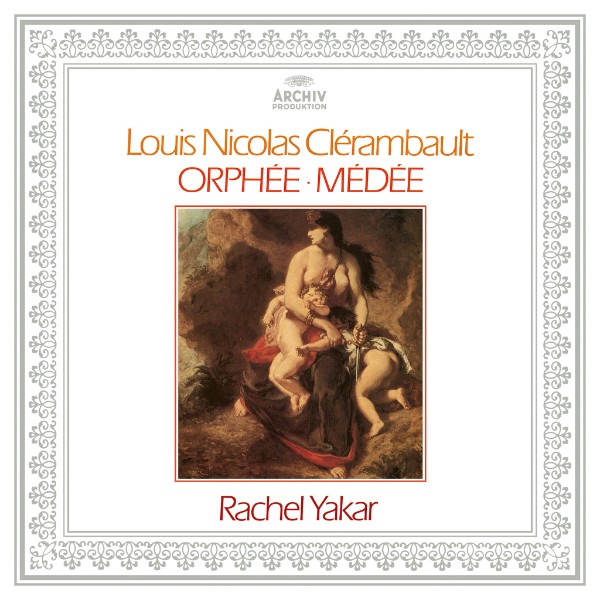
Clérambault: Medée
Louis-Nicolas Clérambault’s Médée, a secular French cantata from his Cantates françoises of 1713, showcases his mastery of dramatic vocal music and emotional intensity. Drawing on the mythological tragedy of Medea, the sorceress who exacts vengeance on her unfaithful lover Jason, this cantata captures the raw passion and turmoil of its protagonist in a form designed for intimate salon performances.
This tale of love, betrayal, and vengeance provided Clérambault with a dramatic narrative ideally suited to the French cantata’s expressive capabilities. Performed typically by a solo soprano with a small ensemble of violin, flute, and continuo, Médée alternates between recitatives and airs to convey the protagonist’s emotional descent.
The opening recitative, “Ingrate, tu trahis,” sets a tempestuous tone, with declamatory vocal lines and shifting harmonies that mirror Medea’s rage. The airs, such as “Dieux cruels, dieux vengeurs,” feature florid melodies and French ornaments, which emphasise her anguish and resolve. Jagged melodic contours and chromatic dissonances evoke Medea’s tormented psyche, while the instrumental parts amplify the drama.
The text, crafted with elegant prosody, allows Clérambault to balance rhetorical clarity with intense emotion, creating a vivid portrait of a woman consumed by betrayal. Performed in the refined setting of Parisian salons, Médée appealed to aristocratic audiences who valued the French Baroque’s blend of mythological storytelling and musical sophistication, reflecting the era’s fascination with strong and complex female figures.
Closing Thoughts
The French cantata was a major poetic and musical genre of the 18th century. Born in the 17th century and originally imported from Italy, it took many different forms in France. Initially it was simply transplanted in its original language and form but soon translated and developed to accompany the French poetic style, undergoing a dialectic change.
The decline of the French cantata by the 1740s coincided with the rise of public concerts, such as the Concert Spirituel, “which favoured orchestral and sacred music over chamber genres.” Scholarly analysis has highlighted the French cantata’s role as a cultural artefact, reflecting the tensions between tradition and innovation in French music, as well as the social dynamics of patronage and performance in the aristocratic salons of the period. Its legacy endures in the way it shaped the development of French vocal music, influencing later genres like the opéra-comique and the mélodie.