Total Pageviews

Friday, October 31, 2025

Ten Saddest Works Written by Grieving Composers

by 

Some of the most powerful works of classical music ever are connected to the deaths of loved ones: spouses, siblings, friends, and others.

From Johann Sebastian Bach’s Chaconne, composed after the sudden death of his wife, to John Corigliano’s Symphony No. 1, a searing response to the AIDS crisis, all of these works demonstrate how grief has inspired composers over generations.

Today we’re looking at just a few of these unforgettable classical compositions.

Johann Sebastian Bach: Chaconne (c. 1720)

For his wife, Maria Barbara Bach  

Given the limited amount of documentation that survives about his life, there is a lot we don’t know about Johann Sebastian Bach.

However, we do know that Bach’s monumental Chaconne – the final movement to his Partita No. 2 for solo violin – was written around the time of the death of his first wife, Maria Barbara Bach.
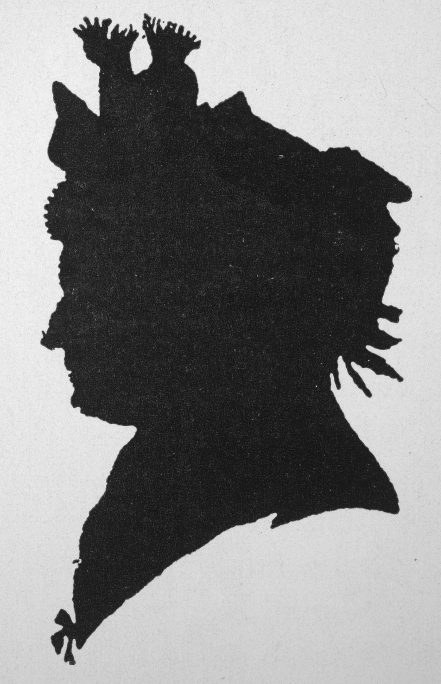
A silhouette of Maria Barbara Bach

A silhouette of Maria Barbara Bach

Her death occurred in the summer of 1720 while Bach was traveling to Carlsbad with his employer, Prince Leopold of Anhalt-Köthen. After two months away, he returned home to find her dead and buried.

The theory has been floated that the Chaconne was Bach’s response to her death: a heartbreaking outcry for solo violin that is technically demanding and lasts for a full quarter of an hour.

We’ll never know for sure, but it’s tempting to believe that this was his musical response to his grief.

Felix Mendelssohn: String Quartet No. 6 (1847)

For his sister, Fanny Mendelssohn Hensel   

Felix Mendelssohn and his older sister Fanny were artistic soulmates. Both were astonishing child prodigies who aided in each other’s musical development. But because of their gender, Felix was encouraged to pursue a career as a composer, while Fanny was prevented from doing so.
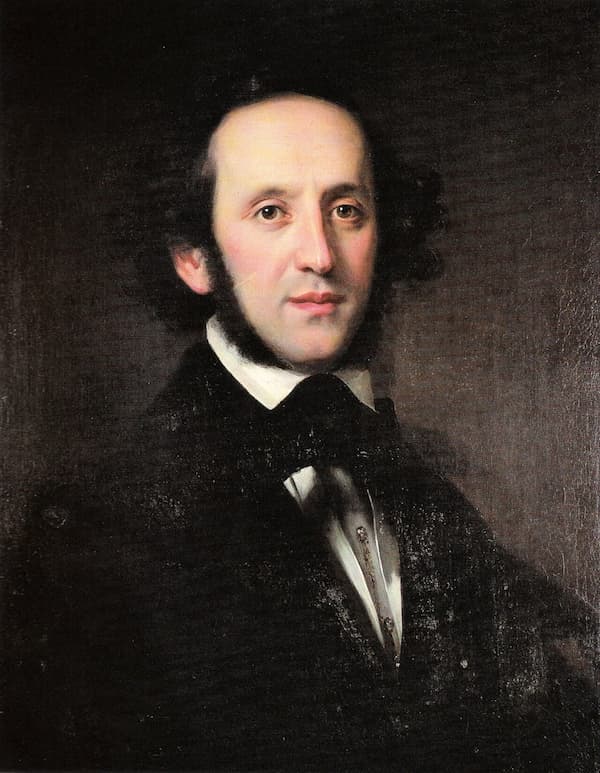
Felix Mendelssohn

Felix Mendelssohn

Fanny’s sudden death in 1847 from a stroke devastated Felix. In response, he composed this fierce, raw quartet in the throes of grief, clearly trying to find a way to make sense of a world without her. The music veers manically from fury to heartbroken lamentation.

This is Felix’s last major work. He died just a few months later…also from a stroke.
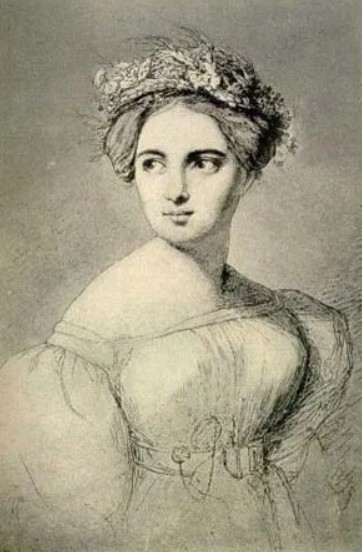
Fanny Mendelssohn

Fanny Mendelssohn

Johannes Brahms: A German Requiem (1865-68)

For his mother   

Johannes Brahms was famously tight-lipped about what specific events inspired his music. However, it is widely accepted that at least portions of his German Requiem were a response to the death of his mother in 1865, as well as the death of his mentor Robert Schumann in 1856.

When writing his Requiem, Brahms chose not to use the text of the traditional Latin Requiem Mass. Instead, he compiled passages from the German Bible, focusing on passages that provide comfort to the living.
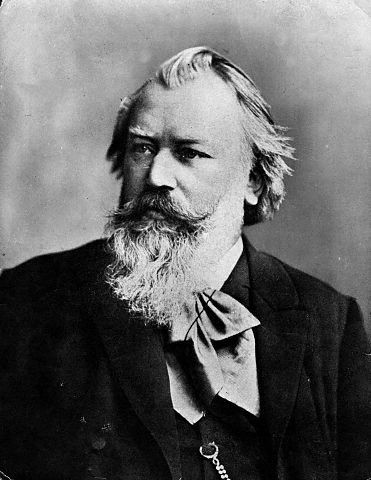
Johannes Brahms

Johannes Brahms

As a result, this Requiem is less about the wrath (or beauty) of the afterlife, and more about addressing the emotional needs of the mourners left behind.

Modest Mussorgsky: Pictures at an Exhibition (1874)

For his friend Viktor Hartmann   

Composer Modest Mussorgsky met artist Viktor Hartmann in 1868. Both men were passionate about the idea of creating overtly Russian art, and they became good friends.

Tragically, Hartmann died in 1873 of an aneurysm. After his death, Mussorgsky visited a massive tribute exhibition of Hartmann’s artwork. The experience inspired him to recreate Hartmann’s art in a piece of music.

Modest Mussorgsky

Modest Mussorgsky

The piano suite that resulted, Pictures at an Exhibition, took just three weeks to write.

Every movement in Mussorgsky’s piano suite portrays a different piece of art. In between, variations on a “Promenade” theme appear again and again, symbolising Mussorgsky walking from one image to the next, contemplating the work of his dead friend in a new way each time.

Pyotr Ilyich Tchaikovsky: Piano Trio (1881-82)

For his friend and colleague Nikolai Rubinstein   

Tchaikovsky initially resisted composing a piano trio, doubting his ability to write for this particular instrumentation.

Despite those doubts, he began writing one in December 1881, nine months after the death of his friend and colleague, pianist Nikolai Rubinstein.
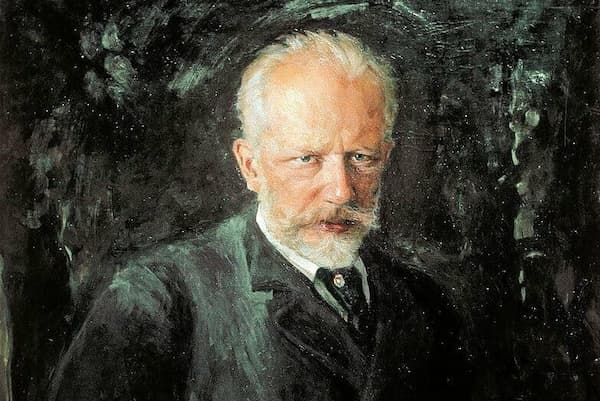
Nikolai Dmitrievich Kuznetsov: Pyotr Ilyich Tchaikovsky, 1893

Nikolai Dmitrievich Kuznetsov: Pyotr Ilyich Tchaikovsky, 1893

The first movement begins with one of Tchaikovsky’s most melancholy melodies.

The second movement is a set of variations, each passing by like pages of a photo album. In the end, the last variation fades into a heartbreaking version of the opening theme, now cast as a funeral march.

Tchaikovsky inscribed the score with “À la mémoire d’un grand artiste” (“To the memory of a great artist”).

It was premiered at a private performance on 23 March 1882, the first anniversary of Rubinstein’s death.

Franz Liszt: La Lugubre Gondola I (1882-85)

For his son-in-law Richard Wagner   

Franz Liszt had a complex relationship with Richard Wagner, who married his daughter Cosima in 1870. (Both Richard and Cosima had been married to other people when they began their relationship.)
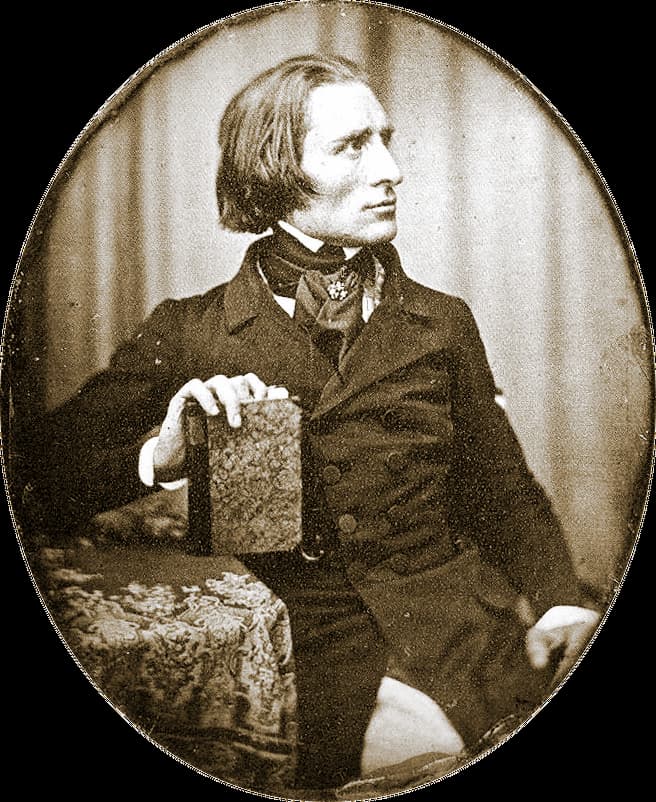
Hermann Biow: Franz Liszt, 1943

Hermann Biow: Franz Liszt, 1943

Despite occasional personal friction between them, Liszt’s respect for Wagner’s music predated the marriage by many years.

In late 1882, Liszt came to visit Wagner and his daughter at their home in Venice. The first version of his piece “La lugubre gondola” (“The Gloomy Gondola”) was written that December. It’s a grim work that seems to portend catastrophe.

Catastrophe struck a couple of months later, when Richard died suddenly. His death sent shockwaves across the European music world.
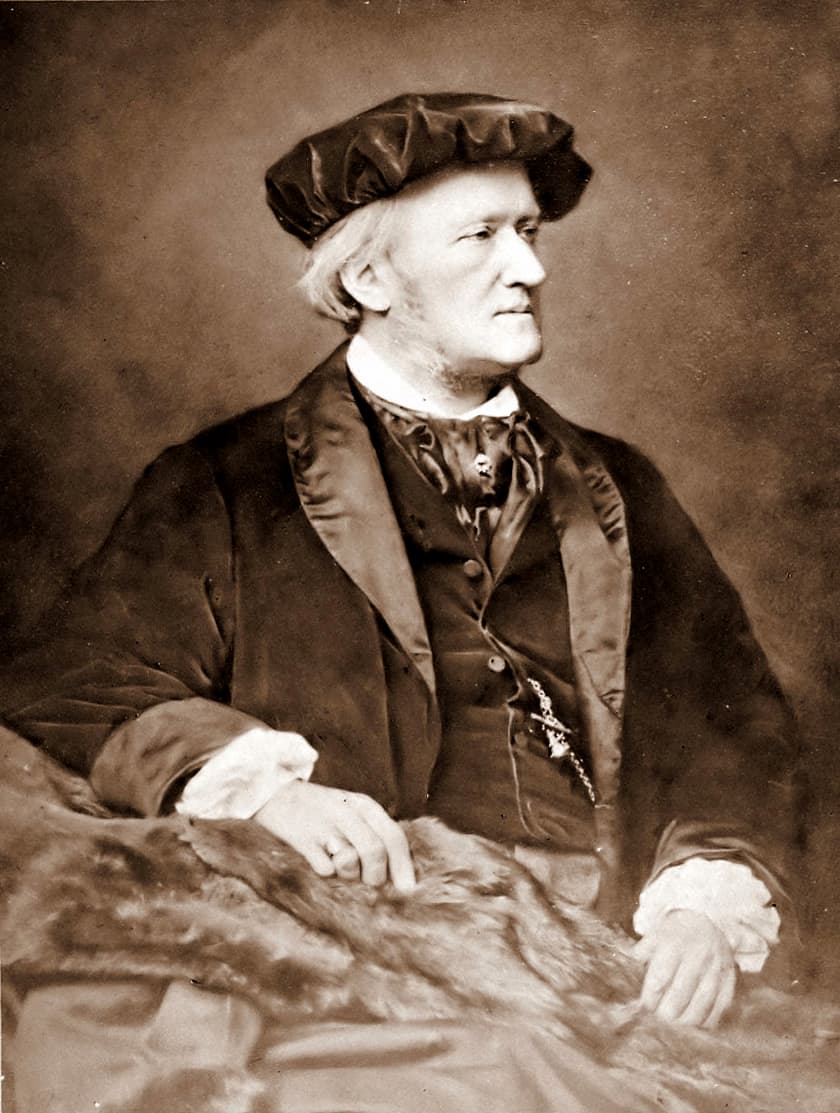
Richard Wagner

Richard Wagner

After Richard’s death, Liszt returned to “La lugubre gondola” and rewrote it. This version is known as “La lugubre gondola I.”

The music is strange, dark and stark, and filled with an uneasy, uncomfortable sense of dread.

Maurice Ravel: Le Tombeau de Couperin (1914-17)

For six friends who died in World War I    

Each movement of Le Tombeau de Couperin is dedicated to a different friend lost in the war, but you’d never guess it: this is light, airy, seemingly carefree music.

Ravel believed that paying tribute to the fallen with joyful music was the best way to honour them.
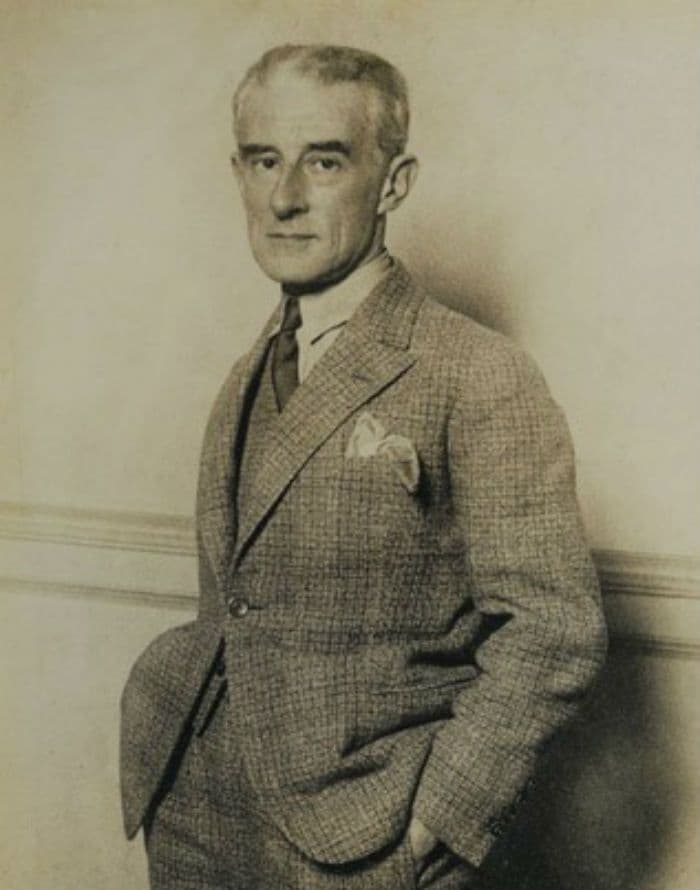
Maurice Ravel

Maurice Ravel

The suite was premiered by pianist Marguerite Long, the widow of the man portrayed in the work’s Toccata movement.

By writing in a style reminiscent of French Baroque composer François Couperin, Ravel promoted French cultural identity during wartime…while also creating an emotional outlet for pianists and audiences struggling during the epidemic of wartime grief.

Dmitri Shostakovich: Piano Trio No. 2 (1943-44)

For his friend Ivan Sollertinsky     

Critic, musicologist, and all-around polymath Ivan Sollertinsky was a dear friend of composer Dmitri Shostakovich. Reportedly, he spoke around thirty languages.

In February 1944, Sollertinsky died in his sleep at the age of 41. Officially, the cause was heart trouble, but dark rumours have circulated suggesting that he was murdered by the Soviet secret police.
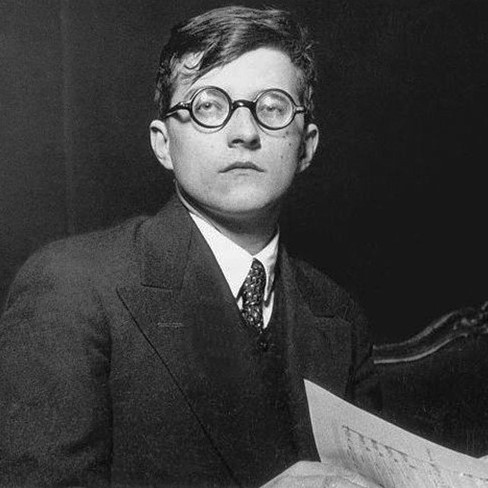
Dmitri Shostakovich

Dmitri Shostakovich

Shostakovich wrote to his widow:

“I cannot express in words all the grief I felt when I received the news of the death of Ivan Ivanovich. Ivan Ivanovich was my closest and dearest friend. I owe all my education to him. It will be unbelievably hard for me to live without him.”

Shostakovich had begun working on his second piano trio in December 1944. He turned the second movement into a dance both exuberant and macabre (Sollertinsky’s sister thought it was a musical portrait of her late brother). That was followed by a Largo: a heartbreaking goodbye to a beloved friend.

John Corigliano: Symphony No. 1 (1988-89)

For his friends who died of AIDS    

John Corigliano’s searing first symphony is a monument to the lives lost during the AIDS crisis.

In the program notes for the premiere, he wrote:

“During the past decade, I have lost many friends and colleagues to the AIDS epidemic, and the cumulative effect of those losses has, naturally, deeply affected me. My First Symphony was generated by feelings of loss, anger, and frustration. A few years ago, I was extremely moved when I first saw ‘The Quilt,’ an ambitious interweaving of several thousand fabric panels, each memorialising a person who had died of AIDS, and, most importantly, each designed and constructed by his or her loved ones. This made me want to memorialise in music those I have lost, and reflect on those I am losing.”
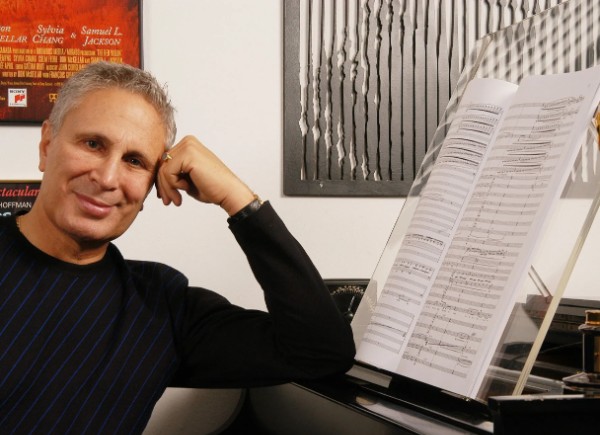
John Corigliano

John Corigliano

The first movement (called “Apologue: Of Rage and Remembrance”) is dedicated to a pianist friend, the second to a music executive, and the third to a cellist.

Anna Clyne: Within Her Arms (2008-09)

For her mother   

In 2008, composer Anna Clyne’s mother died. That same year, she began a fifteen-part string work she’d call Within Her Arms.

The work received rave reviews from critics across America. The New Yorker’s Alex Ross described it as “a fragile elegy for fifteen strings; intertwining voices of lament bring to mind English Renaissance masterpieces of Thomas Tallis and John Dowland, although the music occasionally breaks down into spells of static grief, with violins issuing broken cries over shuddering double-bass drones.”
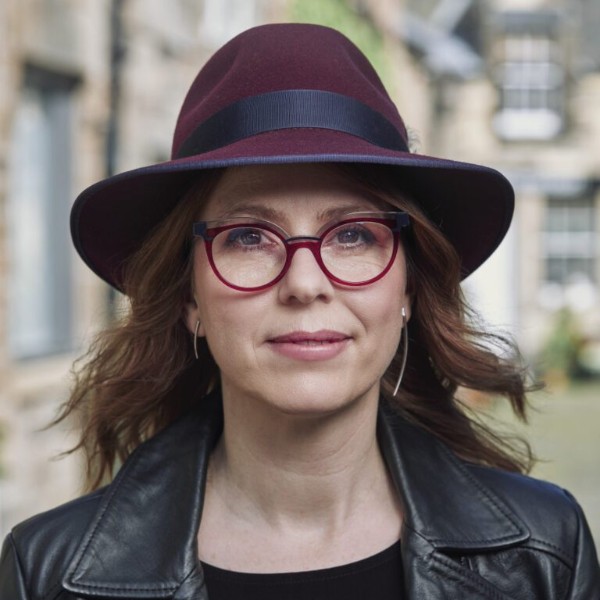
Anna Clyne

Anna Clyne

In the work’s official program notes, Clyne chose not to write any explanation herself, but rather to quote a poem by the poet Thich Nhat Hanh. That fragment includes the lines:

Earth will keep you tight within her arms dear one—
So that tomorrow you will be transformed into flowers-
This flower smiling quietly in this morning field—
This morning you will weep no more dear one—
For we have gone through too deep a night…

Thursday, October 30, 2025

The Best of Classical Music🎻 Mozart, Vivaldi, Bach, Paganini, Beethoven,...


Freddie Mercury - The Great Pretender (Official Video Remastered)


Freddie Mercury was a man of many talents and many different sides. The songs he wrote for and with Queen filled stadiums around the globe and have rightly gone down in history, but he also embarked on a solo career that took him from the clubs of Munich and New York to the great opera houses of the world. He was the ultimate showman, but he kept his private life away from the prying eyes of the media; a larger than life rock star who loved disco, classical music and ballet. He was a restless spirit, a true chameleon who revelled in his own contradictions. All the different sides of this iconic musician can be found on Freddie Mercury: Messenger Of The Gods - The Singles. All formats released September 2nd 2016. This memorable video, Directed by David Mallet, accompanied Freddie Mercury's seventh solo single. This is a cover version originally recorded by The Platters in the 1960s. The two 'lady' backing vocalists are none other than Freddie's good friends Peter Straker and a certain Mr Roger Taylor, from a band called Queen. The single was released in the UK on 23 February 1987.

10 Best Classic Rock Songs of All Time | You Still Can't Forget!


Top 10 Classic Rock songs of all time, the songs that shook the world are back. If you are a fan of classic rock, this video is for you. From legendary names like Queen, Led Zeppelin, to hits that last forever - all are on this list. 🎧 Listen again - Feel again - And vote for the rock song you can't forget. 🎶 Tracklist with Timestamps: 00:00 Best Classic Rock Songs of All Time 0:37 Bohemian Rhapsody - Queen 02:15 Sweet Child o’ Mine - Guns N’ Roses 03:44 Smoke on the Water - Deep Purple 05:02 Free Bird - Lynyrd Skynyrd 07:57 Dream On - Aerosmith 09:22 Whole Lotta Love - Led Zeppelin 10:38 Back in Black - AC/DC 11:48 You Really Got Me - The Kinks 13:19 Stairway to Heaven - Led Zeppelin

HAUSER - Tara's Theme (from "Gone with the Wind")


Monday, October 27, 2025

Freddie Mercury & Montserrat Caballé - Barcelona


Graham Nash, Judy Collins, Art Garfunkel -- "Imagine" -- 43rd Annual Joh...


Friday, October 24, 2025

Martha Argerich: Fifteen Facts About One of the Greatest Pianists Ever

by 

Martha Argerichs simultaneously one of the most celebrated and most enigmatic of classical music stars. Many people call her the greatest pianist of her generation – and others, the greatest pianist who ever lived!

Today, we are taking a look at the life and career of this fascinating woman and looking at fifteen facts you might not have known about her.

1. Martha Argerich was a precocious child.

Martha Argerich as a kid

Martha Argerich as a kid

She began kindergarten before her third birthday. One day, a schoolmate teased her that she couldn’t play piano. She then proceeded to sit down and play a piece by ear that their teacher had just played for them. She was just three years old.

2. Her first piano teacher was Italian pianist Vincenzo Scaramuzza.

He said of her that she may have been six, but she had the soul of a 40-year-old.

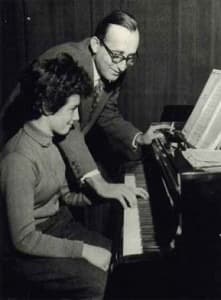
3. When she was a teenager, her family moved to Europe, and she began studying with one of the quirkiest pianists of all time.

Friedrich Gulda and Martha Argerich

Friedrich Gulda and Martha Argerich

His name was Friedrich Gulda, and he flouted convention by doing things like playing a concert in the nude and even faking his own death. His rebellious spirit appealed to Argerich, and although she only studied with him for eighteen months, she has cited him as one of the most important influences in her musical life.

4. When she was sixteen years old, she won two major competitions within the span of three weeks:

The Geneva International Music Competition and the Ferruccio Busoni International Competition.

5. When she was a young woman, she gave up the piano for three years.

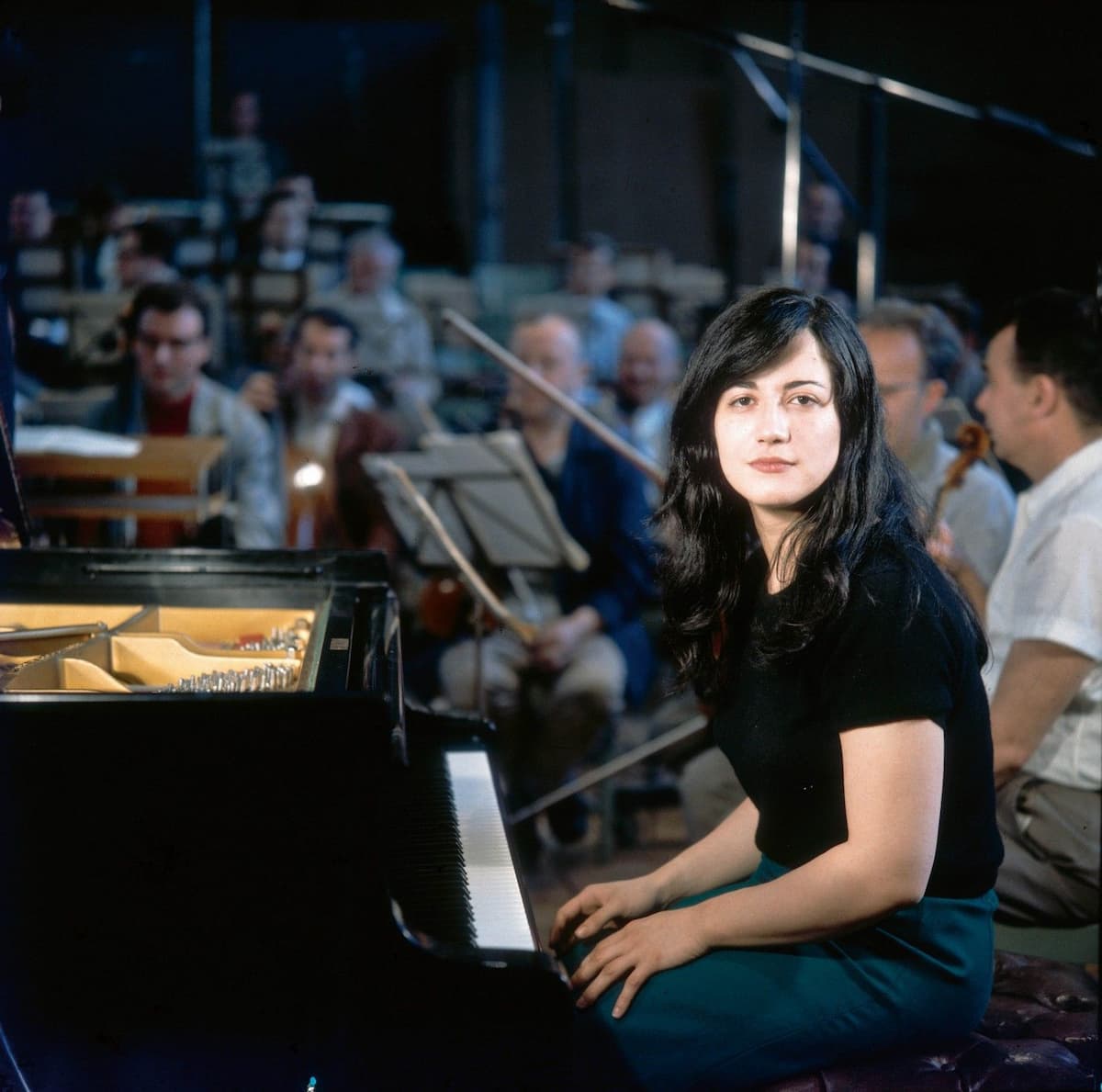
Martha Argerich

Martha Argerich

During this time, she considered becoming a doctor or a secretary. Luckily for listeners, she returned to the keyboard, and she won the 1965 Chopin competition when she was twenty-four, shortly after her break and after having given birth to her first child.

6. Her personal life has been tumultuous.

Her first husband was composer and conductor Robert Chen, a friend whom she was married to briefly in 1964. In 1969, she married conductor Charles Dutoit, who became a trusted musical collaborator. In the 1970s she was partnered with pianist Stephen Kovacevich. She had three daughters, one during each relationship.  

7. Argerich was an unconventional mom.

She liked having her kids at home rather than sending them to school, and she fostered a bohemian atmosphere, often staying up all night and sleeping well past noon. She did not have custody of her first daughter, Lyda Chen, and didn’t see her very often until she was a teenager. The two have reconciled and, according to a 2016 profile in the Washington Post, mother and daughter remain close.

8. Martha Argerich speaks six languages:

Spanish (her native language), Portuguese, French, English, German, and Italian. She spoke French at home when raising her daughters.  

9. She can feel “lonely” onstage.

To combat this, she has shied away from solo repertoire and focused on chamber music and concerto performances, where she has other musicians to bounce ideas off of.

10. She is notorious for canceling appearances, due to incapacitating stage fright.

This happens so often that she doesn’t sign contracts. She also loathes giving interviews, which is why you read so few of them.

11. Her repertoire is relatively small.

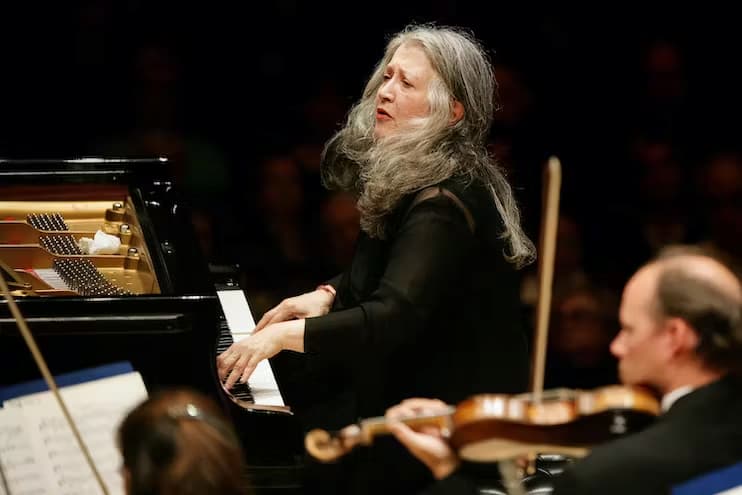
Martha Argerich with The Philadelphia Orchestra, 2008

Martha Argerich with The Philadelphia Orchestra, 2008 © carnegiehall.org

She doesn’t like to perform pieces that she doesn’t feel a deep connection with. Her favorite composers, and the composers she feels the deepest connection to, include SchumannRavel, and Chopin.

Martha Argerich: Schumann Piano Concerto in A minor, Op. 54 (2022)  

12. She loves Beethoven’s fourth piano concerto so much that she has never played it in public.

She also says that hearing Stephen Kovacevich playing this concerto was the thing that made her fall in love with him. She believes she will never play it in public. It’s the only Beethoven piano concerto that she hasn’t performed.

13. She travels the world with a stuffed Paddington bear.

Argerich’s oldest daughter told Gramophone in 2021, “She is always hugging her Paddington Bear and it is falling to pieces. This is the bear that Stéphanie [her youngest daughter] offered her to protect her during her travels, and has been traveling for at least 25 years, and recently had a change of clothes which was very complicated because we could not find exactly the right red hat and blue outfit.”

14. Martha Argerich was diagnosed with malignant melanoma in 1990.

She was forty-nine years old. It was treated and went into remission, but then returned five years later. Luckily, an experimental treatment in California resulted in Argerich becoming cancer-free.

15. In 2012 Stéphanie Argerich filmed a thoughtful documentary about her mother called Bloody Daughter.

In it, Martha Argerich comes across as a magnetic presence, simultaneously intense and childlike. In a poignant voiceover, Stéphanie says, “My mother is a supernatural being in touch of something beyond the reach of ordinary mortals. In fact, I’m the daughter of a goddess.”

The Ukrainian Factor in Tchaikovsky’s Piano Concerto No. 1

by 

Pyotr Ilyich Tchaikovsky: Piano Concerto No. 1 in B-flat minor, Op. 23 (1875)

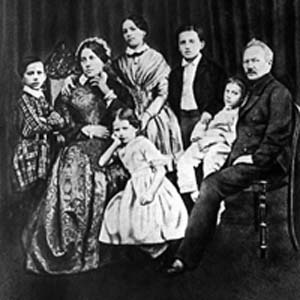
The Tchaikovsky family in 1848. Left to right: Pyotr (nicknamed Petya), Alexandra Andreyevna (mother), Alexandra (sister), Zinaida, Nikolay, Ippolit, Ilya Petrovich (father)

The Tchaikovsky family in 1848. Left to right: Pyotr (nicknamed Petya), Alexandra Andreyevna (mother), Alexandra (sister), Zinaida, Nikolay, Ippolit, Ilya Petrovich (father) © englishwordplay.com

Even at the best of times, the relationship between Russia and the Ukraine has been somewhat troubled. Although they share much of their early history, the Mongol invasion in the 13th century initiated a distinct division between the Russian and Ukrainian people. Tensions escalated over subsequent centuries, and from the mid 17th century, the Ukraine was gradually absorbed into the Russian Empire. In 1918, Ukraine declared its full independence from the Russian Republic, and it took two treaties to calm the military conflict. In 1922, both Ukraine and Russia were founding members of the Union of Soviet Socialist Republics, and both were signatories to the termination of the union in December 1991. Ever since, acute and ongoing territorial and political disputes have shaped the tenuous relationship between the two countries. You only have to listen to the daily news to know what I mean!

The reason for this brief historical overview is simple. Textbooks on music history consider Pyotr Ilyich Tchaikovsky (1840–1893) “an outstanding Russian composer,” and rather conveniently overlook the fact that the composer had Ukrainian roots. His paternal grandfather Pyotr Fyodorovich Chaikovsky was born in the Ukrainian village of Mykolayivka, and he trained as a doctor at the Kyiv Academy. His military service took him throughout Russia, but his son Ilya Chaikovsky (1795–1880) remained close to the Ukrainian roots of his father. And the same is certainly true for his son Pyotr Ilyich. Although born in the Russian town of Votkinsk, Tchaikovsky annually spent several months in the Ukraine, where he composed over 30 works. Tchaikovsky wrote: “I found the peace of mind here that I had unsuccessfully sought in Moscow and Petersburg.”

Tchaikovsky knew and loved Ukrainian folklore for its melodiousness and profound lyricism, and these important cultural and musical influences found their way into some of his best-known compositions, including the Piano Concerto No.1 in B-flat minor, Op. 23.

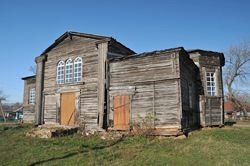
The house where Tchaikovsky used to stay in Ukraine

The house where Tchaikovsky used to stay in Ukraine

Nikolai Rubinstein was generally regarded as the foremost Russian pianist of his time, and he greatly encouraged Tchaikovsky’s creative effort. However, their friendship became severely strained when Tchaikovsky dedicated, and presented his first Piano Concerto to Rubinstein. Tchaikovsky recalled that “I played the entire work for Rubinstein, but he did not say a single word. When he finally spoke, a torrent of insults poured from his mouth. My concerto was worthless and unplayable. Passages were so fragmented, so clumsy, so badly written that they were beyond rescue. The work was bad, vulgar and I had shamelessly stolen from other composers.” To consider the work unplayable is one thing, but to call it vulgar hints at a fundamental dislike of its Ukrainian influences. Needless to say, Tchaikovsky hastily changed the dedication to Hans von Bülow, who gave the first performance of the work on October 25, 1875 in Boston.

The first movement inscribed “Allegro non troppo” opens with a majestic introduction, broadly voiced in the orchestra and forcefully punctuated by widely spaced chords in the piano. This memorable tune—scored in the unusual key of D-flat major—is first heard in the orchestra and later taken over by the soloist. Surprisingly, the soloist proceeds straightaway into an extensive piano cadenza. Once the strings articulate the theme once more, the introduction comes to a close, and astoundingly, this theme is never heard again. Soft horn calls and a brass chorale announce the movement properly, with its first theme derived from an Ukrainian folk tune. Maintaining a perfectly balanced discourse between the orchestra and soloist, Tchaikovsky energetically emphasizes the rhythmic qualities of this tune. The lyrical contrast, which unfolds in two sentimental melodies, is first introduced by the orchestra and then repeated by the solo piano. A highly virtuosic interlude provides the segue-way for an extended development section, which continues to alternate passages of dramatic expression with virtuoso displays by the soloist.

A gentle and introspective dance, introduced by the flutes, opens the “Andantino” movement. For the most part, the piano performs an accompanimental function, as this lilting theme is sounded by the cello and oboe. However, in the central “Prestisssimo”, based on the French tune “Il faut s’amuser et rire” (It’s all fun and laughter), a very demanding piano part is reinstated, before a brief cadenza returns us to the opening dance.

The concluding “Allegro” opens with another Ukrainian folk-song, broadly contrasted by an expansive romantic theme, first sounded in the strings. Russian and French influences notwithstanding, it becomes immediately apparent that Tchaikovsky’s Ukrainian musical roots creatively shaped this venerable warhorse of the concerto repertory.