Tuesday, February 4, 2025

Raymond Lefevre & Orchestra - La reine de Saba (Live, 1987) (HQ)
Raymond Lefevre & Orchestra - La reine de Saba (Live, 1987) (HQ)
Monday, February 3, 2025
Music is an important part of our life (I)

Music is an important part of our life as it is a way of expressing our feelings as well as emotions. No matter where you are living on this globe. Some people consider music as a way to escape from the pain of life. It gives you relief and allows you to reduce stress. ... Music plays a more important role in our life than just being a source of entertainment.
Music affects our emotions. When we listen to sad songs, we tend to feel a decline in mood. When we listen to happy songs, we feel happier. Upbeat songs with energetic riffs and fast-paced rhythms (such as those we hear at sporting events) tend to make us excited and pumped up.
Music means the world to me. It makes me think about how it relates to life and I love the beats. Music is a way to express yourself, keep you company while you're alone, and always give you something to do. Music is a way of expressing me and being able to relate to other people.
It won't be a surprise to most that music can affect the human brain emotionally. ... Happy, upbeat music causes our brains to produce chemicals like dopamine and serotonin, which evokes feelings of joy, whereas calming music relaxes the mind and the body.
Music is a form of art; an expression of emotions through harmonic frequencies. ... Most music includes people singing with their voices or playing musical instruments, such as the piano, guitar, drums or violin. The word music comes from the Greek word (mousike), which means "(art) of the Muses.
%20(1).jpg)
Music is love. David Crosby sang this wonderful song already in 1971. "Everybody's sayin' music is love
Everybody'sayin' it's, you know it is..."Music tells stories. Well, composers and musicians use music to tell stories. From all over the world. Music can be used to depict characters, places, actions and even emotions. Music is often used to heighten a mood, or to express a thought or feeling when mere words are not enough.
“[Music] can propel narrative swiftly forward, or slow it down. It often lifts mere dialogue into the realm of poetry. It is the communicating link between the screen and the audience, reaching out and enveloping all into one single experience.” The best stories engage all of the senses.
One of the great things about music in general, and in particular concert music, is that playing it opens up a whole new world of experience that further enhances the mind, physical coordination, and expression. Music lovers, who are also amateur performers, may choose to play in community ensembles (orchestra, band, choir), take lessons, perform with others, compose, and nearly anything else a professional musician may do, while maintaining their regular lives. All of this involves intense physical coordination in performing an instrument alone or with others, while reading musical notation, and adding delicate or strong nuanced changes to the music that only a performer can bring. In general, to an amateur musician, music can provide an escape from everyday life or an alternative means of expressing one's own capabilities. It is an important part of their lives and fills a need or an urge to create music.
I have been a music lover since my 4th birthday. Meanwhile, living as a German expat in the Philippines, I found out that Filipinos and Germans are music lovers. Among indigenous Filipinos, one important function of music is to celebrate or commemorate important events in the human life cycle. Fortunately, until today, these rich indigenous musical traditions live on. They serve as a reminder of the Filipinos' long history of musical talent and ingenuity.
Such is the case of Philippine music which today is regarded as a unique blending of two great musical traditions – the East and the West. ... The majority of Philippine Music revolves around cultural influences from the West, due primarily to the Spanish and American rule for over three centuries.
Becoming a German expatriate in the Philippines already 1999, I have attended many music events. I fell in love with Filipino classical music. So what does music really mean to Filipinos? It simply tells them where they've been and where they could go. It tells a story that everyone can appreciate and relate to, which is why it's a big part of every Filipino culture.
Music of the Philippines (Filipino: Himig ng Pilipinas) include musical performance arts in the Philippines or by Filipinos composed in various genres and styles. The compositions are often a mixture of different Asian, Spanish, Latin American, American, and indigenous influences.
Notable folk song composers include the National Artist for Music Lucio San Pedro, who composed the famous "Sa Ugoy ng Duyan" that recalls the loving touch of a mother to her child. Another composer, the National Artist for Music Antonino Buenaventura, is notable for notating folk songs and dances. Buenaventura composed the music for "Pandanggo sa Ilaw".
(To be continued!)
Musik ist ein wichtiger Teil unseres Lebens, da sie eine Möglichkeit ist, unsere Gefühle und Emotionen auszudrücken. Ganz gleich, wo Sie auf der Welt leben. Manche Menschen betrachten Musik als eine Möglichkeit, dem Schmerz des Lebens zu entfliehen. Sie verschafft Ihnen Erleichterung und hilft Ihnen, Stress abzubauen. ... Musik spielt in unserem Leben eine wichtigere Rolle als nur eine Quelle der Unterhaltung zu sein.
Musik beeinflusst unsere Emotionen. Wenn wir traurige Lieder hören, verschlechtern sich unsere Stimmung. Wenn wir fröhliche Lieder hören, fühlen wir uns glücklicher. Fröhliche Lieder mit energischen Riffs und schnellen Rhythmen (wie sie wir bei Sportveranstaltungen hören) machen uns aufgeregt und munter.
Musik bedeutet mir die Welt. Sie bringt mich zum Nachdenken darüber, wie sie sich auf das Leben bezieht, und ich liebe die Beats. Musik ist eine Möglichkeit, sich auszudrücken, Gesellschaft zu leisten, wenn man allein ist, und immer etwas zu tun zu haben. Musik ist eine Möglichkeit, mich auszudrücken und mit anderen Menschen in Kontakt zu treten.
Die meisten werden nicht überrascht sein, dass Musik das menschliche Gehirn emotional beeinflussen kann. ... Fröhliche, schwungvolle Musik veranlasst unser Gehirn, Chemikalien wie Dopamin und Serotonin zu produzieren, die Glücksgefühle hervorrufen, während beruhigende Musik Geist und Körper entspannt.
Musik ist eine Kunstform; ein Ausdruck von Emotionen durch harmonische Frequenzen. ... Bei den meisten Musikstücken singen Menschen mit ihrer Stimme oder spielen Musikinstrumente wie Klavier, Gitarre, Schlagzeug oder Geige. Das Wort Musik kommt vom griechischen Wort (mousike), das „(Kunst) der Musen“ bedeutet.
Musik ist Liebe. David Crosby sang dieses wunderbare Lied bereits 1971. „Alle sagen, Musik ist Liebe.
Alle sagen, es ist Liebe, du weißt, es ist …“
Musik erzählt Geschichten. Nun, Komponisten und Musiker verwenden Musik, um Geschichten zu erzählen. Aus aller Welt. Musik kann verwendet werden, um Charaktere, Orte, Handlungen und sogar Emotionen darzustellen. Musik wird oft verwendet, um eine Stimmung zu heben oder einen Gedanken oder ein Gefühl auszudrücken, wenn bloße Worte nicht ausreichen.
„[Musik] kann eine Erzählung schnell vorantreiben oder verlangsamen. Sie erhebt bloße Dialoge oft in den Bereich der Poesie. Sie ist die Kommunikationsverbindung zwischen der Leinwand und dem Publikum, die alles erreicht und in ein einziges Erlebnis einhüllt.“ Die besten Geschichten sprechen alle Sinne an.
Eines der großartigen Dinge an Musik im Allgemeinen und Konzertmusik im Besonderen ist, dass das Spielen eine ganz neue Erfahrungswelt eröffnet, die den Geist, die körperliche Koordination und den Ausdruck weiter verbessert. Musikliebhaber, die auch Amateurmusiker sind, können sich dafür entscheiden, in Gemeinschaftsensembles (Orchester, Band, Chor) zu spielen, Unterricht zu nehmen, mit anderen aufzutreten, zu komponieren und fast alles andere zu tun, was ein professioneller Musiker tun kann, während sie ihrem normalen Leben nachgehen. All dies erfordert eine intensive körperliche Koordination beim Spielen eines Instruments allein oder mit anderen, beim Lesen von Noten und beim Hinzufügen feiner oder starker nuancierter Änderungen zur Musik, die nur ein Musiker vornehmen kann. Im Allgemeinen kann Musik für einen Amateurmusiker eine Flucht aus dem Alltag oder eine alternative Möglichkeit zum Ausdruck der eigenen Fähigkeiten sein. Sie ist ein wichtiger Teil ihres Lebens und befriedigt ein Bedürfnis oder einen Drang, Musik zu machen.
Ich bin seit meinem 4. Geburtstag ein Musikliebhaber. Währenddessen habe ich als deutscher Expat auf den Philippinen herausgefunden, dass Filipinos und Deutsche Musikliebhaber sind. Eine wichtige Funktion der Musik für die einheimischen Filipinos besteht darin, wichtige Ereignisse im menschlichen Lebenszyklus zu feiern oder zu gedenken. Glücklicherweise leben diese reichen einheimischen Musiktraditionen bis heute weiter. Sie erinnern an die lange Geschichte des musikalischen Talents und Einfallsreichtums der Filipinos.
Dies ist der Fall bei der philippinischen Musik, die heute als einzigartige Mischung zweier großer Musiktraditionen gilt – des Ostens und des Westens. ... Der Großteil der philippinischen Musik dreht sich um kulturelle Einflüsse aus dem Westen, die hauptsächlich auf die über drei Jahrhunderte andauernde spanische und amerikanische Herrschaft zurückzuführen sind.
Als ich 1999 als deutscher Auswanderer auf die Philippinen kam, besuchte ich viele Musikveranstaltungen. Ich verliebte mich in die klassische philippinische Musik. Was bedeutet Musik also den Filipinos wirklich? Sie erzählt ihnen einfach, wo sie waren und wohin sie gehen könnten. Sie erzählt eine Geschichte, die jeder schätzen und mit der sich jeder identifizieren kann, weshalb sie ein großer Teil jeder philippinischen Kultur ist.
Musik der Philippinen (Philippinisch: Himig ng Pilipinas) umfasst musikalische Darbietungskünste auf den Philippinen oder von Filipinos, die in verschiedenen Genres und Stilen komponiert wurden. Die Kompositionen sind oft eine Mischung verschiedener asiatischer, spanischer, lateinamerikanischer, amerikanischer und indigener Einflüsse.
Zu den bemerkenswerten Komponisten von Volksliedern gehört der National Artist for Music Lucio San Pedro, der das berühmte „Sa Ugoy ng Duyan“ komponierte, das an die liebevolle Berührung einer Mutter für ihr Kind erinnert. Ein anderer Komponist, der National Artist for Music Antonino Buenaventura, ist bekannt für die Notation von Volksliedern und Tänzen. Buenaventura komponierte die Musik für „Pandanggo sa Ilaw“.
Southeast Asia on the Piano by Charisse Baldoria
May I invite you all to support a project by a good pianist friend of mine who is launching her 2nd CD which features Southeast Asian music.
For the first time, a CD album will gather together piano pieces inspired by gong-chime ensembles (gamelan) from Bali, Java and the Philippines, including a world premiere recording of Philippine National Artist Ramon P. Santos' Gong-An suite for piano.
Performed by Charisse Baldoria, the album was created to develop appreciation for the beauty and richness of Southeast Asian music and culture.
The music was written by composers from the Philippines, Europe, the United States, Canada, and New Zealand, for solo piano, two pianos, and a trio with violin and percussion.
Find out more about this project here.
For the first time, a CD album will gather together piano pieces inspired by gong-chime ensembles (gamelan) from Bali, Java and the Philippines, including a world premiere recording of Philippine National Artist Ramon P. Santos' Gong-An suite for piano.
Performed by Charisse Baldoria, the album was created to develop appreciation for the beauty and richness of Southeast Asian music and culture.
The music was written by composers from the Philippines, Europe, the United States, Canada, and New Zealand, for solo piano, two pianos, and a trio with violin and percussion.
Find out more about this project here.
Sunday, February 2, 2025
Monday Mood ˚✮
Monday Mood ˚✮
 ✮˚
✮˚"𝐒𝐢𝐧𝐠𝐢𝐧𝐠 𝐢𝐬 𝐚 𝐰𝐚𝐲 𝐨𝐟 𝐞𝐬𝐜𝐚𝐩𝐢𝐧𝐠. 𝐈𝐭'𝐬 𝐚𝐧𝐨𝐭𝐡𝐞𝐫 𝐰𝐨𝐫𝐥𝐝. 𝐈'𝐦 𝐧𝐨 𝐥𝐨𝐧𝐠𝐞𝐫 𝐨𝐧 𝐞𝐚𝐫𝐭𝐡." – 𝐄𝐝𝐢𝐭𝐡 𝐏𝐢𝐚𝐟
Through every note, we find a beautiful escape. Singing takes us to a place where we can leave behind the troubles of the world and immerse ourselves in the pure joy of music. It's a journey beyond the ordinary, where our voices create a new, enchanting realm.


Friday, January 31, 2025


Famous Quotes from Wolfgang Amadeus Mozart
by Hermione Lai, Interlude
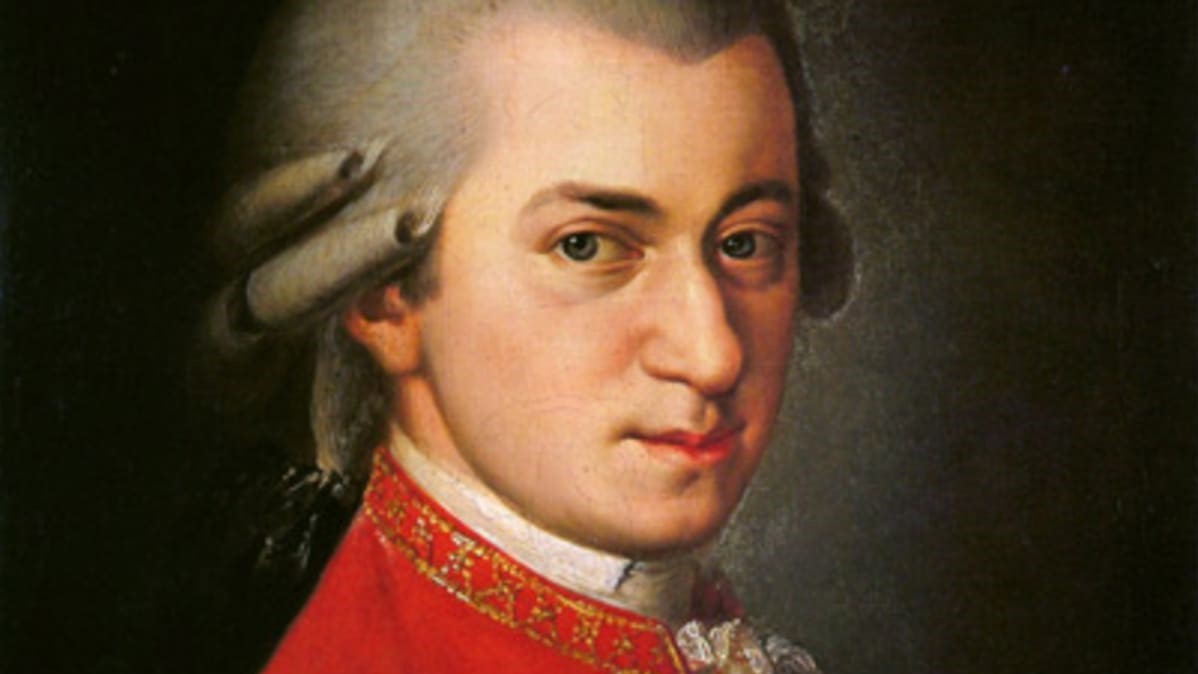
Wolfgang Amadeus Mozart
If we can trust current scholarly opinion, Mozart was a distinguished letter writer. In fact, he is described as “the most eloquent among musicians of his time.” During his travels he was a faithful correspondent, he wrote loving letters to his wife, and long money-seeking letters to friends and patrons. And as we all know, he also wrote some rather naughty letters to his cousin. As an artist profoundly inspired by the theatre, Mozart was an exceptional judge of character. And his letters are not “exotic discoveries suitable for being marveled at in a distant cabinet, but are bearers of communications.”
Wolfgang Amadeus Mozart: Clarinet Concerto, K. 622
The Mozart letters are full of both trivial and important observations about the people he met, comments on the reactions to his music, satirical remarks on incompetent professions, thoughts on other composers, the process of performing, and his own methods of composition. But writing a blog on famous quotes from Wolfgang Amadeus Mozart is not so easy. His use of language, his “use of dialect, semantics, and phonology can be difficult for the 21st-century readers to fully understand.” Nevertheless, here are some famous quotes from Wolfgang Amadeus Mozart that present an informal and intimately detailed portrait of a genius.
“Nothing is more enjoyable than a quiet life and to obtain that, one must be industrious”
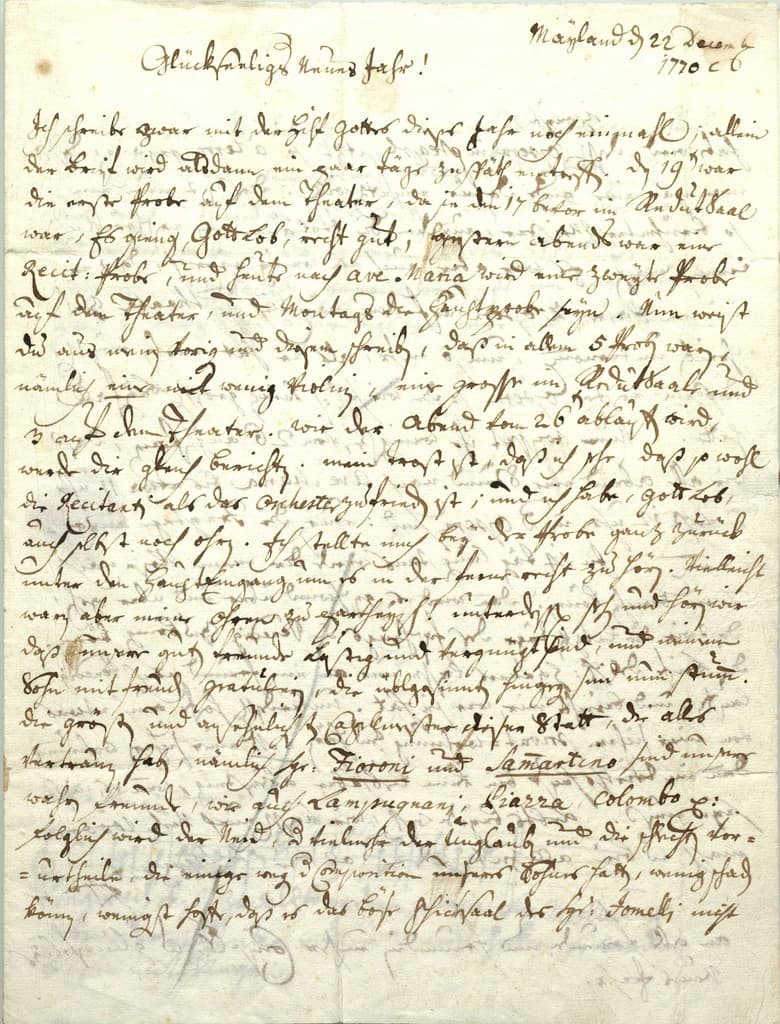
Mozart’s letters
As he wrote to his wife on 8 October 1791, Mozart was probably longing for a life exclusively dedicated to music, without all that financial stuff. He did have a habit of exaggerating his financial difficulties, but he certainly liked fine clothing, expensive apartments, and enjoyed living beyond his means. Some commentators have suggested that he might well have had a gambling problem as well. But one thing is for sure, he was incredibly industrious as a composer. The amount and quality of music composed during his short life is simply staggering. He left us roughly 800 works in virtually every genre of his time of the highest possible quality imaginable.
Wolfgang Amadeus Mozart: Piano Concerto No. 10 for two pianos in E-flat Major, K. 365 “Allegro”
“Friends who have no religion cannot be long our friends”
Mozart was baptized a Catholic, and the church played an important role in his life. He was raised in a strict religious household with his father enforcing family prayer, fasting, the veneration of saints, regular attendance at mass, and frequent confession. In the words of Leopold Mozart, “God must come first! From his hands, we receive our temporal happiness and our eternal salvation.”
It is hardly surprising that the above famous quote from Wolfgang Amadeus Mozart originates in a letter written to his father in 1782. However, Mozart’s relationship to religion was ambivalent, and his famous quote does not provide reliable information about his convictions but is probably a disguise in order to please his father. But that doesn’t mean that he didn’t compose some of the most spiritual and devotional religious music in existence.
Wolfgang Amadeus Mozart: Ave verum corpus, K. 618
“Constanze is not ugly, but anything but beautiful; all her beauty consists of two little black eyes and a handsome figure”
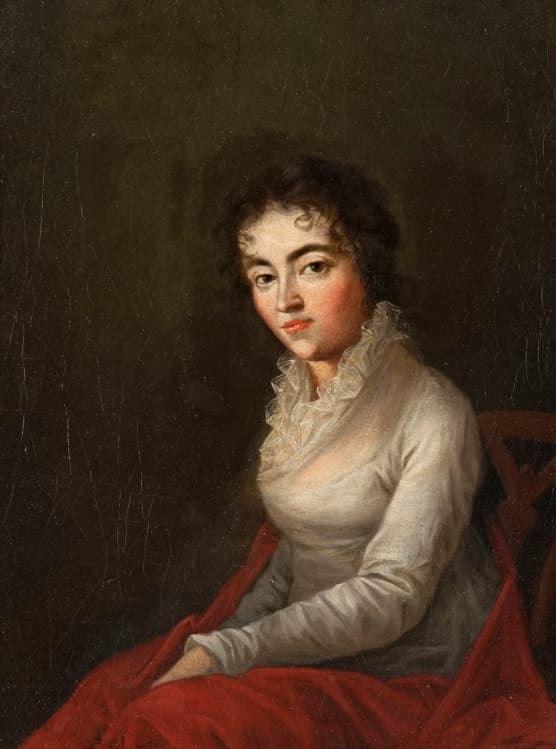
Constanze Mozart
Wolfgang Amadeus Mozart married Constanze Weber on 4 August 1782. Their courtship had not been smooth, and the relationship faced stiff opposition from Leopold Mozart. Leopold did not consider Constanze a good match for his son and didn’t want the marriage to go ahead. A good many letters went back and forth, with Mozart praising the talents of his love and Leopold refusing to let his mind be changed.
It probably didn’t help that the couple moved in together before they were married, making it a real disgrace for the time. Her mother threatened to call the police if she didn’t return home. In the end, Leopold could not prevent the marriage and in order to save face, his consent arrived in the mail one day after the happy event.
Wolfgang Amadeus Mozart: Piano Sonata No. 11 in A Major, K. 331
“To win applause one must write stuff so simple that a coachman might sing it”
Wolfgang Amadeus Mozart always placed great emphasis on elegant, natural, and singing melodies. He always wanted to communicate through melody. Mozart was essentially an operatic composer, and that particular style carried over into his instrumental works as well. In order to effectively perform Mozart’s music, we need to think like an opera singer but with simplicity of melody that can be easily sung by a coachman as well. In a related famous quote, Mozart wrote, “Melody is the essence of music.”
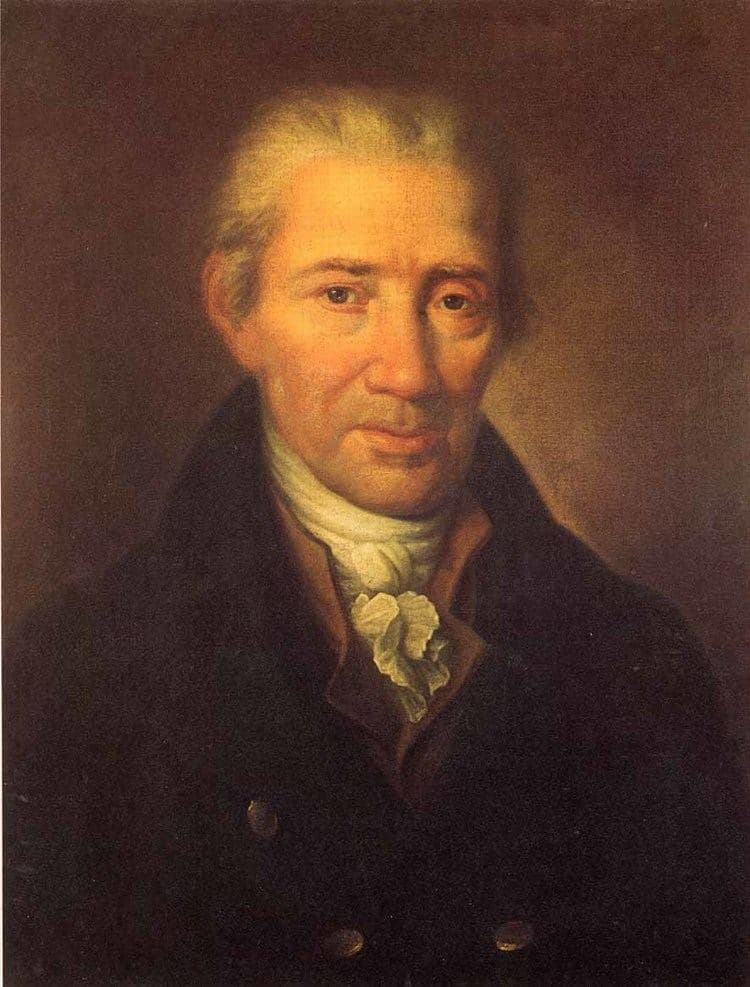
Antonio Salieri
To be sure, Mozart melodies are some of the most memorable pieces of music ever written. Mozart melodies are frequently described as flowing and beautiful, with an unmatched lightness and elegance. Some writers compare them to the sounds of a flowing river or the gentle flutter of a butterfly’s wing. But while they are light and airy, they have deep emotional qualities. Mozart’s melodies have a way of touching the soul and stirring emotions. Remember the Salieri movie, when the jealous composer commented upon hearing a Mozart melody that he had heard the voice of God?
Wolfgang Amadeus Mozart: Le Nozze di Figaro, “Voi che sapete”
“It is a mistake to think that the practice of my art has become easy to me. I assure you, dear friend, no one has given so much care to the study of composition as I”
Wolfgang Amadeus Mozart was a true child prodigy, and he is very often considered an exceptional and singular musical genius. As a performer, he quickly acquired superstar status and began to compose at the tender age of five. He completed his first symphony before celebrating his eighth birthday and finished his first opera by the age of twelve. And while his natural ability is undisputed, he remained a student throughout his life.
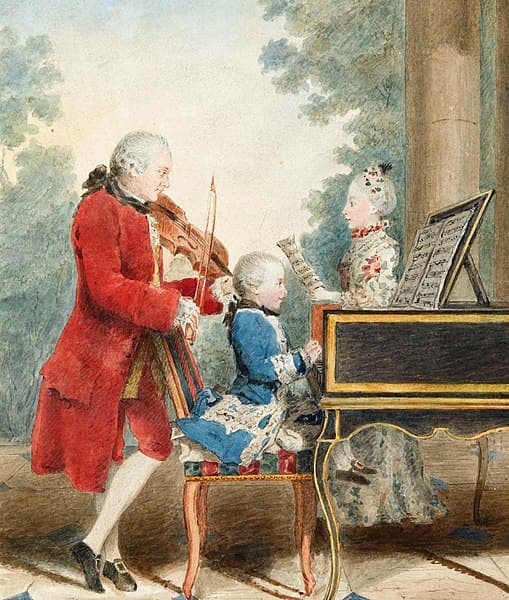
The Mozart family playing chamber music
Mozart unrelentingly integrated, synthesized, and transformed stylistic and musical conventions to produce compositions of universal appeal and stunning individuality. There simply seems to have been no genre or compositional technique in which Mozart was not comfortable. Mozart certainly worked on his compositional craft after he moved to Vienna, and for the first time saw musical manuscripts by J.S. Bach and Handel. He immediately started a concentrated study of counterpoint and began to improvise fugues in the style of Bach. And it was the synthesis of the Classical and learned styles of music that made the true genius of Mozart’s music.
Wolfgang Amadeus Mozart: String Quintet in D Major, K. 593
“How popular I would be if I were to lift the national German stage to recognition in music!”
Music had always played an essential role in the daily lives of Habsburg royalty. However, music at court and the opera had been dominated by the highly popular Italian style. However, Emperor Joseph II was eager to challenge that convention by advocating the “Singspiel,” a German-language music drama. His push for an autonomous German opera brought Wolfgang Amadeus Mozart in direct competition with Antonio Salieri. Salieri was a well-respected star, and Mozart was the new kid in town when the Emperor challenged both composers to write an opera on the same subject, one in the Italian style and the other taking up the challenge for German opera.
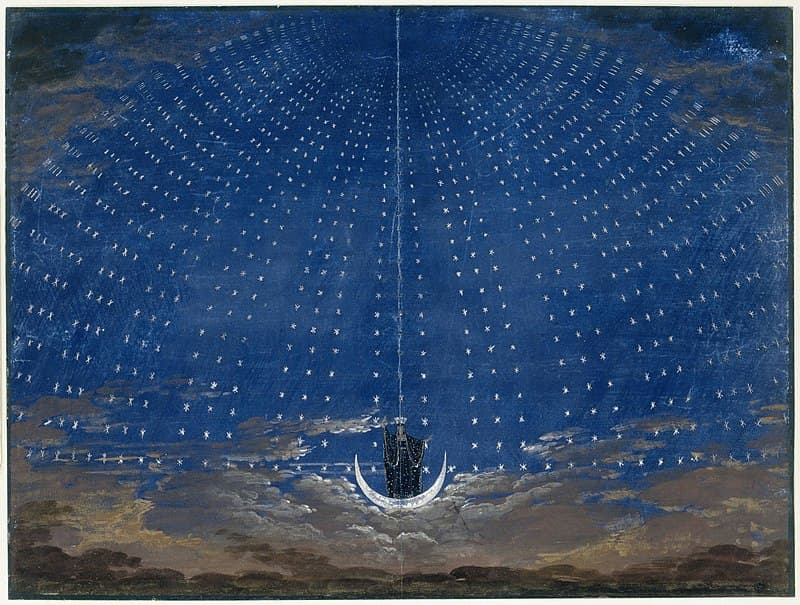
Karl Friedrich Schinkel: Stage set for the Queen of the Night (in Mozart’s Magic Flute)
It wasn’t much of a competition as Salieri’s Prima la Musica, poi le Parole (First the Music and then the Words) in the fashionable Italian style, soundly defeated Mozart’s Schauspieldirector (The Impresario). The plan of the Emperor, who was hoping for Mozart and German opera to win the day, failed badly that evening. However, Mozart soon demonstrated his mastery of both genres with Le nozze di Figaro and the Magic Flute. And in the end, of course, he did accomplish what he set out to do in his famous quote.
Wolfgang Amadeus Mozart: The Magic Flute, “Queen of the Night”
“I care very little for Salzburg and not at all for the archbishop; I shit on both of them”
The city of Salzburg has always been a small but pretentious provincial town. A few selected families got very rich from the salt trade, and they controlled and dominated virtually all aspects of civic and ecclesiastical life. That ruling civic elite had very little interest in having a gifted composer interfere with their conservative practices. Mozart was the musical servant of Archbishop Hieronymus von Colloredo, and he was well aware of Mozart’s distaste for the city and for his own person.
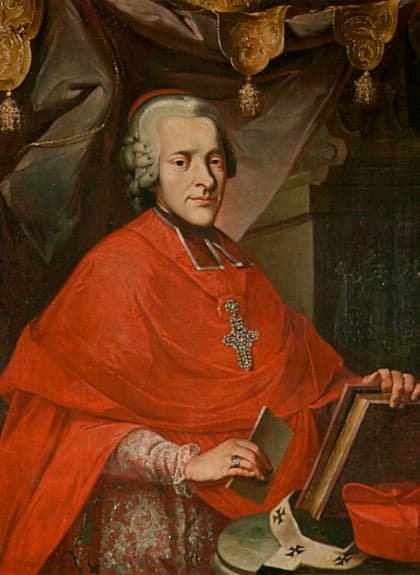
Hieronymus von Colloredo (1732-1812), Prince-Archbishop of Salzburg
The Archbishop became exceptionally annoyed with Mozart’s frequent absences resulting in a number of heated arguments. Breaking with the Archbishop was not going to be easy, and Mozart lobbied and even begged his father for support. He wanted to be a freelance musician, and was rightfully tired of being “spoken to as if I had been some miserable beggar.” Their working contract was resolved in May 1781, when the chief chamberlain delivered a swift kick to Mozart’s backside. Isn’t it ironic that present-day Salzburg continues to reap the financial rewards of a relationship that never existed?
“Death, when we come to consider it closely, is the true goal of our existence”
Wolfgang Amadeus Mozart lived during a period of history when high mortality was simply a fact of life. Several of his siblings died in childhood, and the union of Wolfgang and Constanze produced six children, but only two survived infancy. Wolfgang was deeply affected by the death of his father, and his mother died of a long and painful illness. His own health had started to deteriorate at the age of five. He suffered from rheumatism, which frequently caused kidney infections that confined him to bed.
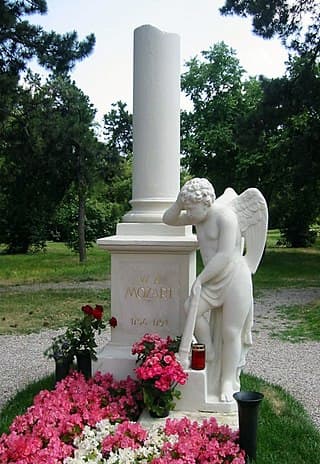
Austria, Vienna, St. Marx Cemetery, The gravestone of Wolfgang Amadeus Mozart
Mozart had plenty of time to consider his own mortality, and he writes, “I have formed during the last few years such close relationships with this best and truest friend of mankind that death’s image is not only no longer terrifying to me, but is indeed very soothing and consoling, and I thank my God for graciously granting me the opportunity… of learning that death is the key which unlocks the door to our true happiness. I never lie down at night without reflecting that, young as I am, I may not live to see another day.”
Wolfgang Amadeus Mozart: Mass in C minor, K. 427 “Kyrie”
“Shit in your bed and make it burst”
The nine surviving letters by Wolfgang Amadeus Mozart to his cousin Maria Anna Thekla Mozart are known as the “Bäsle Letters.” She was the daughter of one of the brothers of Mozart’s father Leopold, and in his letters Mozart famously uses direct and frank language, which is sometimes drastically vulgar and spiced with anal-erotic fantasies. This kind of scatological humor has puzzled scholars, and more recently, it is claimed to originate in psychiatric conditions from which Mozart supposedly suffered.
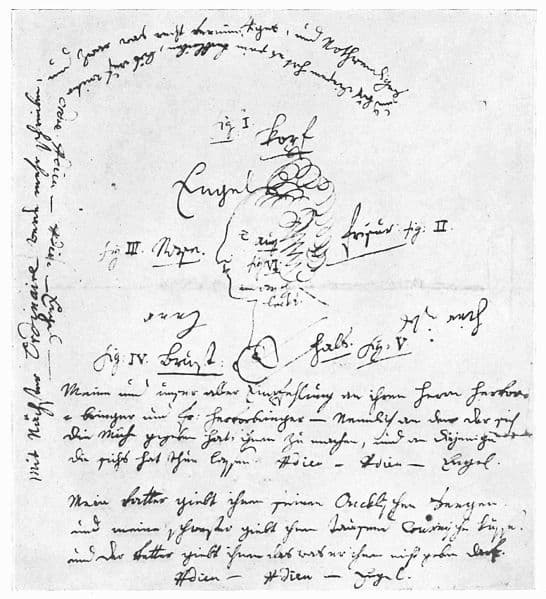
A drawing by Mozart in his Basel Letters to her cousin Maria Anna Thekla
For some commentators, “Mozart was able for a moment to forget the continuous pressures of an uncertain future, and allowed his light-hearted and humorous side of his character to come through.” One thing for sure, “these letters embarrass us, and we have tried to suppress them, trivialize them, or explain them away with pathological excuses.” It might well be that 18th-century scatological humor was far more public and mainstream, and it might well have suggested a political dimension. In a letter to his father, he describes the aristocrats present at a concert in Augsburg as “Duchess Smackarse, Countess Pleasurepisser, the Princess Stinkmess, and the two Princes Potbelly von Pigdick.”
Wolfgang Amadeus Mozart: “Leck mich am Arsch” (Kiss my Ass), K. 231
“What’s even worse than a flute? – Two flutes!”
We still don’t know for certain if this famous quote can be wholly attributed to Wolfgang Amadeus Mozart. However, we do know that he did not like the sound of the solo flute and found it difficult to compose for the instrument. As he was struggling to fulfill a commission for the wealthy amateur flautist he truly loathed, he writes to his father. “I never have a quiet hour here… besides, one is not always in the mood for working. I could certainly scribble things the whole day long, but when a composition of this kind goes out into the world, naturally I do not want to be ashamed of my name on the title page. Moreover, you know I am quite powerless to write for an instrument (the flute) which I cannot bear.”
As we might well imagine, countless famous quotes by Wolfgang Amadeus Mozart have been misattributed. I guess, if you are famous and dead, people are ever so happy to put words in your mouth. What is your favorite Mozart quote?
Subscribe to:
Posts (Atom)
-
The BoholTimes MUSIC can raise someone’s mood, get them excited, or make them calm and relaxed. Music also – and this is important – allow...
-
2,261,443 views May 15, 2019 SUNTORY HALL Munich Philharmonic conducted by Valery Gergiev, Tokyo Suntory Hall Dec 1, 2018 00:05 - 15:5...
-
Yes, this first piano concerto by Tschaikowsky still brings tears into my eyes. Tchaikovsky (or Tschaikowsky) was the second of six survi...


