Total Pageviews

Showing posts with label Emily E. Hogstad. Show all posts

Friday, March 27, 2026

10 of the Saddest Piano Pieces in Classical Music History

 by Emily E. Hogstad,  March 23rd, 2026


In addition to the inherent sadness of the music itself, we’re also going to look at what was happening in the lives of the composers around the time they wrote each of these pieces.

As you’ll see, many of the saddest piano pieces in classical music history were shaped by grief, upheaval, illness, exile, or personal crisis.

From Bach’s years in mourning, to Mozart’s frightening leap into independence, to Chopin’s terminal illness, to Brahms’s late-in-life loneliness, and to Rachmaninoff’s experience of the Russian Revolution, every piece on this list – whether deliberately or not – captures a composer’s reaction to a time when life got overwhelming.

J.S. Bach – Prelude in B-minor, arranged by Alexander Siloti (1722)   This piece has a unique background.

Nineteenth-century Russian pianist Alexander Siloti took Bach’s Prelude and Fugue in E-minor from the Well-Tempered Clavier and rearranged it in B-minor: a darker and more mysterious key.
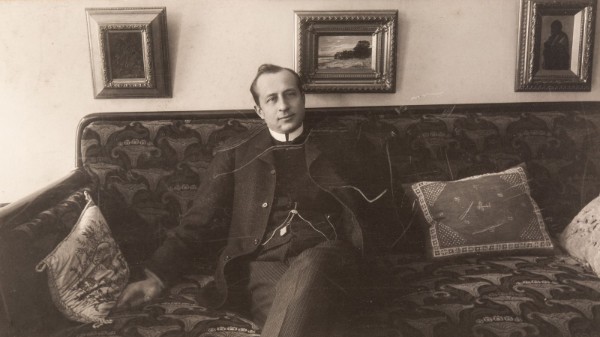
Alexander Siloti

Alexander Siloti

Bach wrote the Well-Tempered Clavier in 1722, a pivotal year in his life.

It’s hard to say exactly what he was feeling emotionally at this time, because none of his personal letters or diaries has survived.

But his wife Maria Barbara had died shortly before, in the summer of 1720. She was only 35 years old and had given birth to seven of his children.

Maybe he drew on his grief when writing this particular movement. We’ll never know. But it’s certainly one of the most melancholy piano pieces ever written.

Mozart – Fantasy in D-minor, K. 397 (1782)   

This unfinished fantasy comes from 1782, the year after Mozart disobeyed his loving but controlling father’s wishes and relocated to Vienna to start a hugely risky freelance career.

To help support himself, he taught aristocratic patrons and wrote works to play in glittering salons to entertain them. There was no guarantee his plan was going to work.
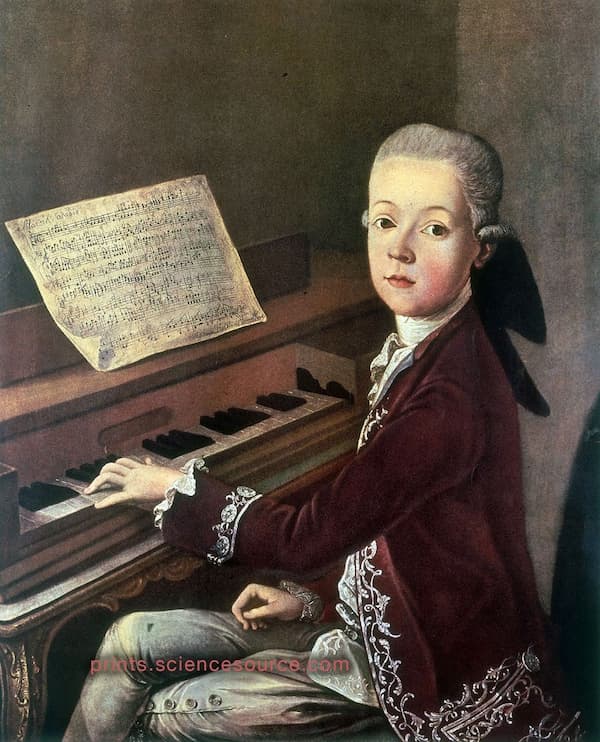
The D-minor Fantasy captures emotions one might feel in a moment of transition: worry, restlessness, and a willingness to improvise.

If it seems unfinished, that’s because it is. We don’t know why, but Mozart abandoned the piece before completing it.

Another composer tacked on ten measures after Mozart’s death, making the work playable in concert and bringing the work to a close – albeit an abrupt one.

The fragmentary quality that results mirrors the unsettled, transitional quality of Mozart’s life in 1782…and the unsettled quality of any listener going through a similar life change.

C.P.E. Bach – Fantasia in F-sharp-minor (c. 1787)   

The melancholic, virtuosic Fantasia in F-sharp-minor was written near the end of C.P.E. Bach’s career, while he was serving at the court of Frederick the Great.

By the mid-1780s, C.P.E. Bach had spent his entire career in the shadow of his father J.S. Bach, the greatest giant of the Baroque Era. (His mother, by the way, was the wife that Bach had lost in 1720.)
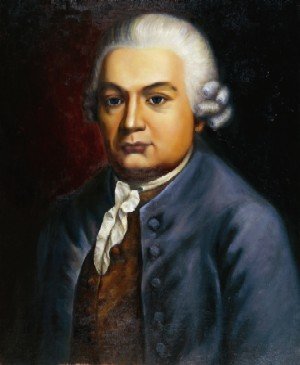
C.P.E. Bach

Carl Philipp Emanuel Bach

Meanwhile, his students would become well-known composers during the Classical Era.

He was one of the composers who had built a bridge between the two generations.

It’s very possible that he was reflecting on his life and legacy around the time he wrote this confessional fantasia, with its unpredictable surging sighs that ultimately all collapse into melancholy meanders.

Chopin – Nocturne No. 13 in C-minor, Op. 48, No. 1 (1841)  

In 1841, Chopin was at the height of his artistic maturity, but facing increasing physical frailty, thanks to his tuberculosis diagnosis.

He and his lover, authoress George Sand, had settled into a domestic rhythm in Paris and at her family home in rural France.
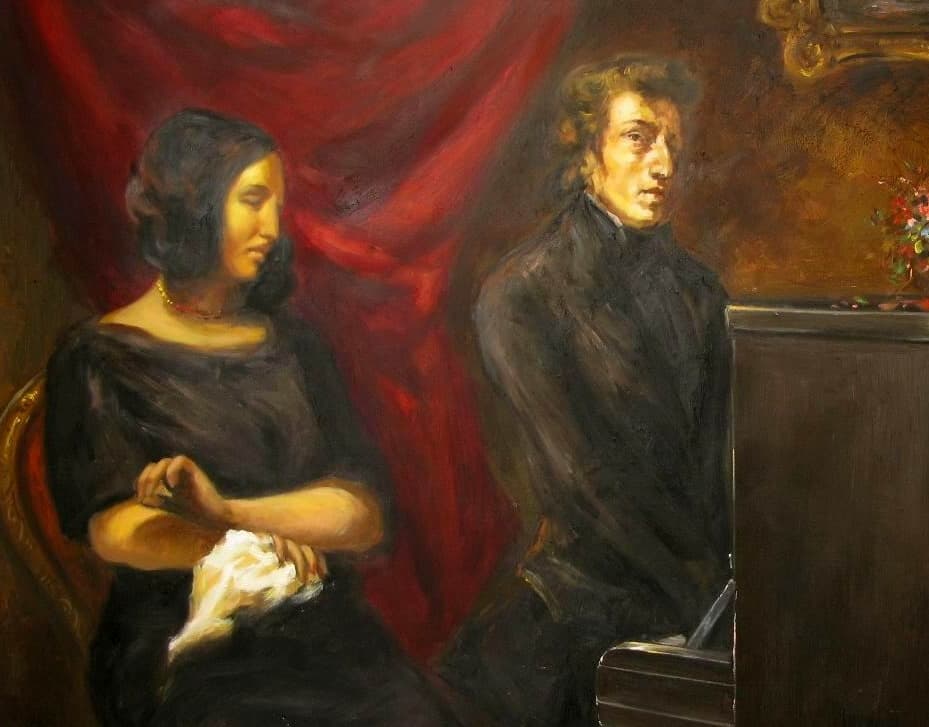
Portrait of Frédéric Chopin and George Sand by Eugène Delacroix

Portrait of Frédéric Chopin and George Sand by Eugène Delacroix

But their relationship, and the relationship between Sand and her two teenage children, were all starting to show cracks.

Chopin was also deeply homesick for his Polish homeland, continually distressed by Polish politics and his status as a permanent exile.

The C-minor Nocturne is one of his darker pieces for solo piano: elegant and melancholy, but bitterly so.

Its quiet, contrasting middle section is a cry from the heart of a man who was feeling increasingly sick, isolated, and vulnerable.

Grieg – Lyric Pieces, Book I, Op. 12, No. 1, “Arietta” (c. 1866)  

Over the course of his career, between 1867 and 1901, Edvard Grieg published 66 “Lyric Pieces” for solo piano.

This brief “Arietta” was the very first one, written around the time of his marriage to his wife, soprano Nina Hagerup.

In 1901, a few years before his death, he reused the theme in his very last Lyric Piece, “Efterklang” (“Remembrances”).

Edvard Grieg | “Remembrances” Op. 71 No. 7 from “Lyric pieces” (by Vadim Chaimovich)   

Was he remembering a sad thing in particular? It’s possible: in 1868, the year after the lullaby-like Arietta was written, he and his wife had their only surviving baby, Alexandra.

Alexandra died of meningitis when she was still an infant, and the couple never had any more children.

That was just one of the many struggles that he and Nina survived as a married couple.
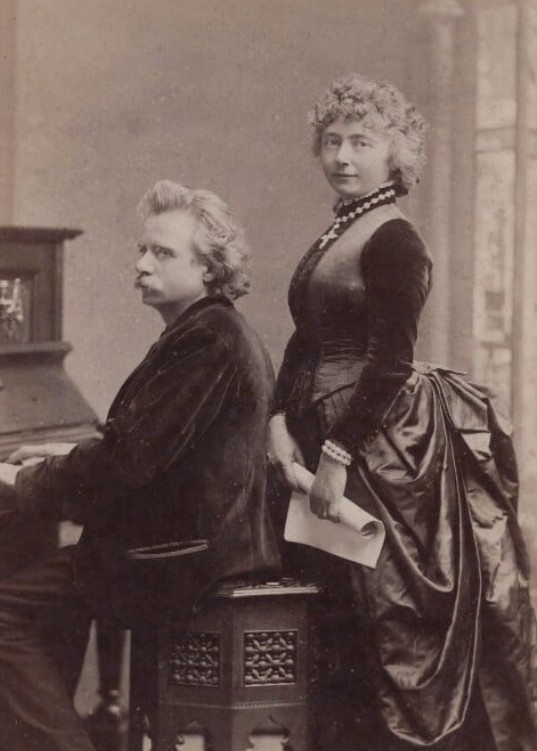
Edvard Grieg and Nina Hagerup Grieg

Edvard Grieg and Nina Hagerup Grieg

Although their relationship was occasionally rocky, they were married until he died.

Maybe turning a 35-year-old theme into a quiet waltz was his way of communicating that he – and they – had made it through decades of marriage, despite the troubles and tragedies they’d endured to get there.

Scriabin – Prelude in E minor, Op. 11, No. 4 (1888)   

Alexander Scriabin was born into a noble Russian family in 1871. His mother was a concert pianist but, tragically, died when he was just a year old.

After he was widowed, Scriabin’s father decided to follow his own family’s tradition of joining the military, leaving his baby son with his grandmother, great-aunt, and aunt.

His aunt played piano, which little Alexander loved. As a child, he begged to be played with. He grew up to play the piano himself, studying under Rachmaninoff’s infamously strict teacher Nikolai Zverev.
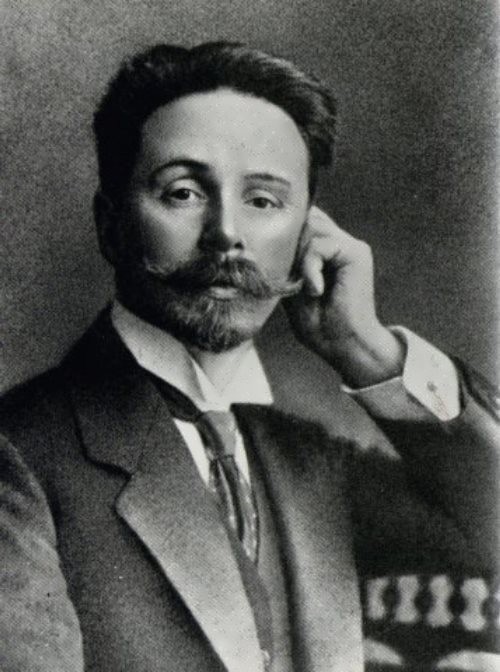
Alexander Scriabin

Alexander Scriabin

At one point, Alexander tried to assemble an orchestra of local children to try his hand at conducting, but the venture ultimately failed, leaving him in tears.

In short, he was a wounded loner during his childhood, and you can perhaps hear some of that in this early Chopin-inspired prelude, written in 1888, the year he turned seventeen.

Rarely has teen angst been so elegantly channeled.

Brahms – Intermezzo in E-flat-minor, Op. 118, No. 6 (1893)   

The Op. 118 set of piano pieces is a product of Brahms’s final years: a period in which he was preoccupied with nostalgia and mortality. By 1893, Brahms was nearing sixty and contemplating retirement.

To make matters worse, pianist Clara Schumann, his musical soulmate who was thirteen years his senior, was in failing health. And they’d found themselves in a quarrel.
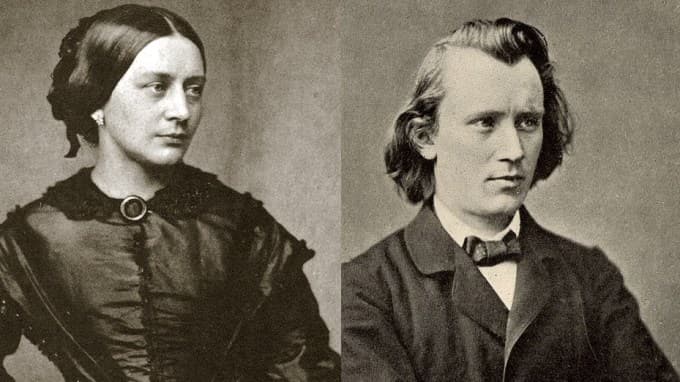
Black and white collage of composer Johannes Brahms and Clara Schumann

Clara Schumann and Johannes Brahms

Brahms wrote his Op. 118 and 119, in part, as a gruff but meaningful olive branch to her.

The E-flat-minor Intermezzo is one of his most despairing creations for solo piano. Many of Brahms’s works can feel emotionally subdued compared to more demonstrative contemporaries like Tchaikovsky or Dvořák, but this one is unusually frank about expressing sadness.

Happily, after receiving the scores for his Ops. 118 and 119, Clara Schumann wrote back to him, and they resolved their differences before their deaths, which would occur in 1896 and 1897, respectively.

Janáček – In the Mists: I. Andante (1912)   

Janáček composed In the Mists during an agonising period of professional stagnation.

He was 58 and felt deeply alone. His beloved daughter Olga had died in 1903, and his marriage had been deeply strained ever since.

He was also having trouble getting his work performed. He feared that his composing career was coming to a close and that he hadn’t fulfilled his potential.
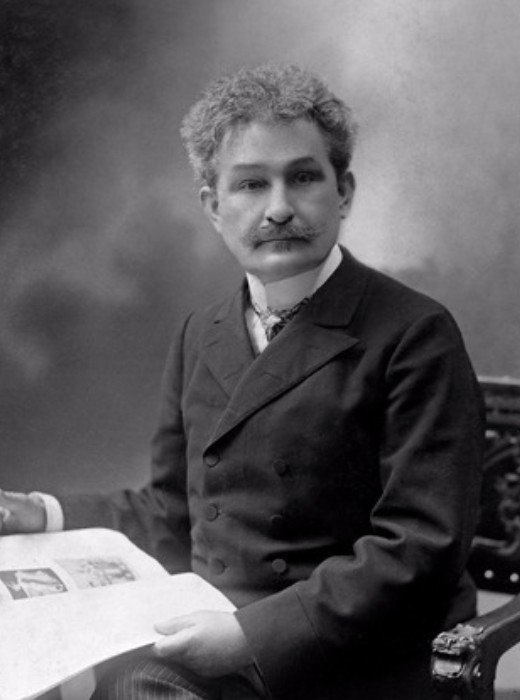
Leoš Janáček

Leoš Janáček

The first movement of In the Mists drifts through blurry, seemingly improvisatory harmonies.

It captures the emotions of a man facing professional disappointment and wandering through obscurity.

Rachmaninoff – Étude-tableau in E-minor, Op. 39, No. 5 (c. 1917)   

Rachmaninoff wrote his Op. 39 between 1916 and 1917, right as the world seemed to be collapsing around him.

World War I was ongoing, and revolution was coming. By 1917, it became clear to Rachmaninoff that the genteel aristocratic world he’d been born into was doomed – and never returning.

While writing this piece, he was struggling with fears about the safety of his family and friends, the necessity of exile and the loss of property and possessions, the end of his Russian career, and the fear of starting over in another country while in his mid-forties.

When he fled Russia later that year, he took these etudes with him. They are some of the last works he ever wrote on Russian soil, and they sound like an unhappy, unwilling goodbye.

Glass – Etudes: No. 5 (1994)   

Philip Glass’s official description of his first ten etudes is very matter-of-fact:

Book 1 (Etudes Nos. 1 through 10) had a twin objective – to explore a variety of tempi, textures, and piano techniques. At the same time, it was meant to serve as a pedagogical tool by which I would improve my piano playing. In these two ways, Book 1 succeeded very well. I learned a great deal about the piano, and in the course of learning the music, I became a better player.
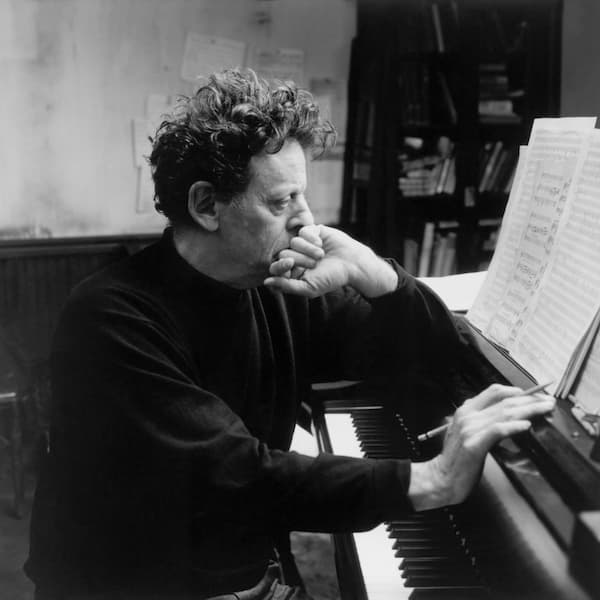
Philip Glass

Philip Glass

The first six etudes – including the fifth – were commissioned by conductor and pianist Dennis Russell Davies for his fiftieth birthday.

This piece was written during a difficult period in Glass’s life. His wife, artist Candy Jernigan, died of liver cancer in 1991, just weeks after being diagnosed. She was only 39.

“She was going to live forever, as far as I was concerned. It was a big shock for everybody, particularly the kids,” he told The Guardian in 2001.

It’s unclear whether Glass deliberately meant to portray this feeling in his fifth etude, but he captures the quiet repetitive numbness that a person can feel after the sudden death of a loved one.

Conclusion

Whether you’re searching for heartbreaking piano music, reflective pieces for difficult days, or just music to set a melancholy mood, these ten pieces stand apart. They are some of the saddest in the entire piano repertoire.

They all remind us of the humanity we share with the great composers, and testify to how music will always be one of the most powerful ways a person can process change, loss, disappointment, and grief.

Friday, March 13, 2026

The Tragic Story Behind Leoš Janáček’s “Elegy on the Death of Daughter Olga”

As it turns out, his marriage was just as dramatic as any of his operas.

Leoš Janáček

Leoš Janáček

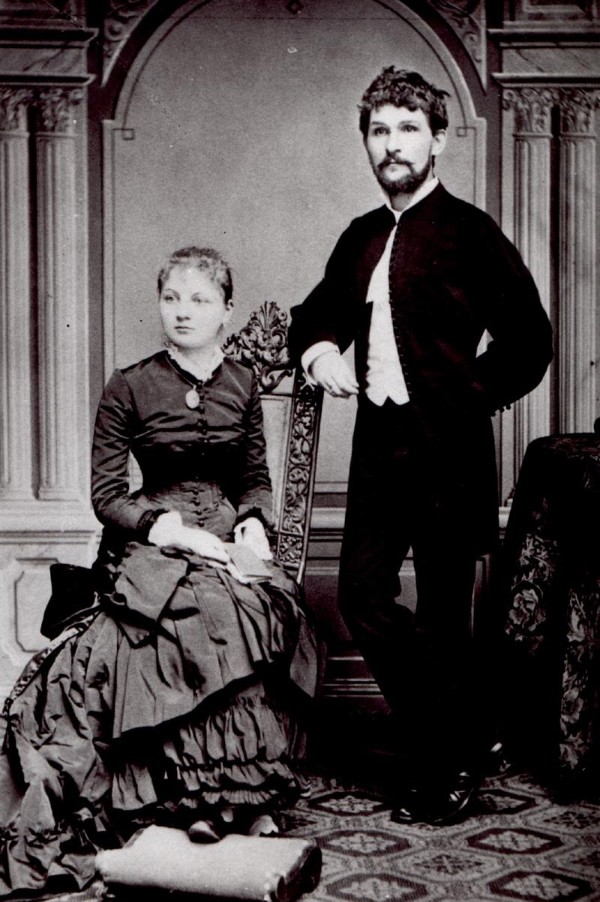
In 1876, he began teaching piano to his future wife, Zdenka Schulzová, the very young daughter of his boss. The two later married despite a large age gap, and the relationship became a rocky one.

Their daughter, Olga Janáková, became the emotional heart of a fractured family, and her tragic early death in 1903 inspired some of Janáček’s most personal music, including the Elegy on the Death of Daughter Olga.

Today, we’re looking at the story of Janáček’s tumultuous marriage, his family struggles, and the music he wrote that was shaped by his wife, Zdenka, and daughter, Olga.

Meeting Zdenka

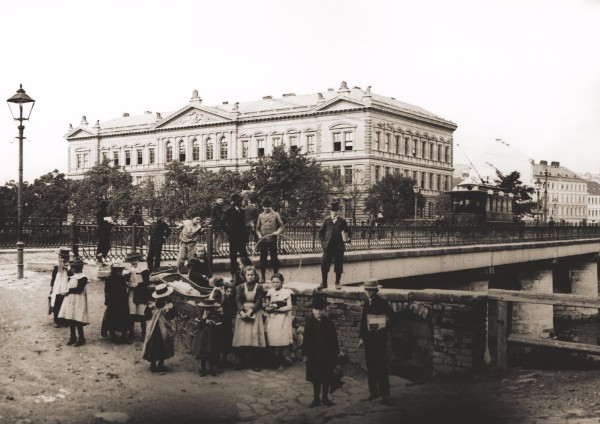
Brno Teachers’ Institute

Brno Teachers’ Institute

In 1876, twenty-two-year-old composer Leoš Janáček began teaching music at the Brno Teachers’ Institute.

His boss, the Institute’s director Emilian Schulz, believed in his talent and had secured the teaching job for the impoverished composer.

Schulz also hired Janáček to teach his twelve-year-old daughter Zdenka piano.

The Schulzes lived in the back of the school, so Janáček would walk from the school back to their home to give her lessons.

It wasn’t long before he began taking a romantic interest in her.  

During the 1879-1880 school year, he left Brno to study in Leipzig. One of the pieces he wrote there was the Zdenka Variations, inspired by his now 14-year-old piano student.

He also spent a few months at the Vienna Conservatory, but, ever prickly, hated his time there, so he returned to Brno. He proposed to Zdenka, and she accepted.

Zdenka Schulzová

Zdenka Schulzová

In the summer of 1881, two weeks before Zdenka’s sixteenth birthday, she and Janáček were married.

The Birth of Olga

A few months later, she became pregnant with their first baby, who arrived in August 1882.

Janáček refused to be present at the birth, despite Zdenka’s wishes. In fact, he only went to see the baby after he was scolded by a priest.

They named her Olga. She would eventually become the apple of her father’s eye…but it would take a while.

The parents’ messy relationship staggered on after Olga’s birth. Janáček became increasingly focused on his flirtations and affairs with other women, ignoring Zdenka.

To her great fury, she once found him hiding a letter from a paramour. He burned the letter before she could finish reading the whole thing, but that did nothing to quell her fury.

The Janáček’s Divorce

Leoš and Zdenka Janáček

Leoš and Zdenka Janáček

Things got so bad between them that in mid-1884, they divorced.

But as soon as Zdenka became forbidden to him, the attraction reignited. He began courting her again. Thinking he had changed, she had their divorce annulled.

Vladimir Janáček

Vladimir Janáček

In May 1888, they had another baby, Vladimir. Zdenka later remembered that Janáček spent more time with him than he had with Olga because Vladimir was a boy.

But when both she and Vladimir grew ill, and a doctor recommended hiring a wet nurse, Janáček resorted to his old ways, refusing to pay for the expense. Zdenka’s parents chipped in instead.

The Marriage Deteriorates

Predictably, the brief separation had done nothing to address the root problems in their marriage.

According to Zdenka, Janáček hated it when she visited her parents. After she disobeyed his orders and went to see them anyway, he locked the door and left her outside while he whistled inside.

He also allowed her such a small allowance that she and the children began to starve. Once again, she had to come to her parents’ house begging.

“My husband didn’t notice anything: he never cared about how I lived and whether I needed anything,” she later wrote.     

The Loss of Vladimir

Unfortunately, both Olga and Vladimir were sickly children.

Vladimir died at the age of two in 1890, devastating the entire family. Janáček was especially heartbroken by Vladimir’s loss, as he’d already started to show some signs of musical talent…which Olga never had.

Six-year-old Olga was inconsolable, crying at her brother’s casket until her face was stained with tears.

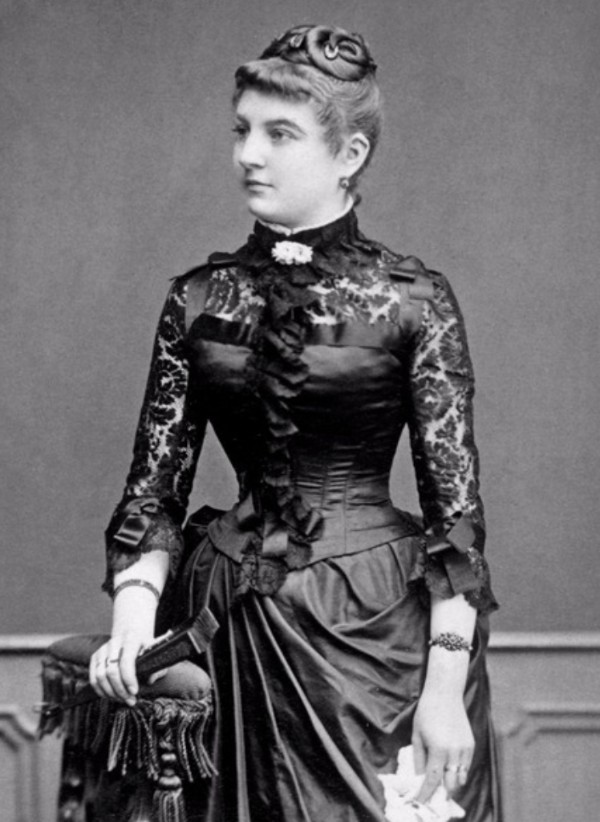
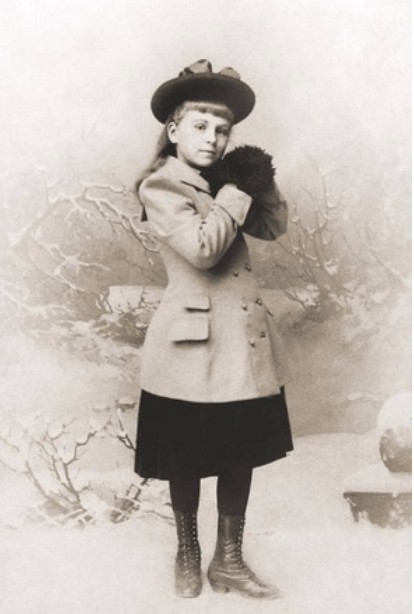
Olga Janáková

Olga Janáková

Although their relationship was falling apart again, Zdenka asked Janáček if they could have another child. He refused.

She later remembered that it was at that point that she finally lost all of her attraction to him, although there were moments sprinkled throughout the rest of the marriage where they were friends again.

Olga’s Childhood

In the year of Vladimir’s death, Olga fell ill with inflamed joints, followed by heart trouble. She endured a lot of chronic pain and was kept from many physical activities during her childhood.

Especially after Vladimir’s life and death, Olga became the emotional glue of the family.

Zdenka later wrote admiringly that Olga “grew up into a lovely girl. Her skin was delicate and smooth with a peach-bloom to it; like her father, she had a dimple in her chin.”

Although he’d been neglectful of her when she was a baby, as she grew up, Janáček gradually became closer and closer to her.

Historian Mirka Zemanová writes of Olga’s teenage years:

“By then, Olga was almost as tall as Janaček. She was slim and had inherited her father’s features and his olive complexion; like Janáček, she was a smart dresser. She had her mother’s blue eyes and long, thick, beautiful hair the colour of ‘dark gold’. Her feet were tiny, and she wore shoes just like those for Cinderella. At her school, she was an outstanding pupil; she had an excellent memory, and her surviving letters show wit and style beyond her years. Everyone seemed to love her — she was sweet-natured, generous and sincere. Yet her letters also reveal a strain of melancholy, confirmed by her photographs: there is great sweetness in her face, but a pensive look in her eyes.”

Janáček eventually bonded with Olga over her interest in the arts (she eventually became an enthusiastic amateur singer), as well as her fascination with the Russian language and Russian culture, a passion that he shared.

Olga’s Final Years

Olga Janáková

Olga Janáková

In 1900, when she was seventeen, she met a medical student at a dance, and they fell in love.

Janáček was upset. Olga (rightly) pointed out that her mother had been even younger when their relationship had begun.

Olga and the medical student were an item for quite a while until Olga began hearing “rumours about his character”, in the words of Zemanova, and she broke up with him. His response was shocking: he threatened to find her and shoot her for breaking up with him.

In response, the Janáčeks sent Olga to St. Petersburg to visit her uncle, ostensibly so she could improve her Russian, but also for her own safety. Janáček chaperoned her there in March 1902, then returned to Brno.

Unfortunately, tragedy struck during the visit: in late April, Olga came down with typhoid fever. She seemed to make a recovery, then fell ill again in June.

Both Zdenka and Janáček traveled to St. Petersburg to be with her. Zdenka stayed while Janáček returned to Brno to keep working.

She improved enough by July to travel back to Brno, but it was to be a temporary reprieve.

In the midst of Olga’s illness, Janáček finished his opera Jenůfa. Olga asked to hear it played on the piano, since she was convinced she wouldn’t survive to see it produced; Janáček agreed. Meanwhile, Zdenka was so upset, she went into the kitchen, unable to listen.   

Janáček stayed by Olga’s bedside and, always fascinated by the “speech melodies” of others, notated his daughter’s final words and vocalisations.

“I don’t want to die; I want to live.”

“Such fear, I will resist it.”

“I’m dying; I’m dying.” (Janáček noted that she repeated this one until she became incoherent.)

He noted that his response to her was “God be with you, my darling.”

Olga died on 26 February 1903. She was just 21 years old.

The Aftermath of Olga’s Death

Olga’s death completely shattered both Janáček parents.

Janáček’s grief manifested in physical gestures. He tore at his hair and shouted, “My soul!” over and over again.

Zdenka later wrote in her memoirs:

“We stayed in our dining room alone. Abandoned, silent. I looked at Leoš. He sat in front of me, destroyed, thin, grey-haired.”

He left the final page of Jenůfa in his daughter’s coffin.   

Ultimately Janáček processed the loss by paying tribute to Olga in his music. Most memorably, he dedicated the opera Jenůfa to her memory.

Elegy on the Death of Daughter Olga

But the music that was most pointedly about her was his 1903 Elegy on the Death of Daughter Olga.

The elegy is a cantata for tenor, chorus, and piano. He used a text by poet Marfa Veveritsa, a poet friend of Olga’s who shared the father and daughter’s love of Russian culture.

It was only premiered 27 years after its composition, two years after Janáček died.

Elegy on the Death of Daughter Olga   

The Elegy isn’t often performed today, but it is a searing work that provides vitally important context to what was happening during the composition of Jenůfa, as well as the family relationships that formed Leoš Janáček as both a human and an artist. 

Friday, March 6, 2026

The Best Waltzes by the Great Composers

by Emily E. Hogstad  March 2nd, 2026


Using just three beats per bar, the waltz can suggest intimacy, seduction, nostalgia, aristocratic splendour, demonic frenzy, or even civilizational collapse.

best waltzes in classical music

The following ten works trace the evolution of the waltz from Schubert’s salon to Ravel’s catastrophic whirl and beyond. Together, they show how composers transformed a simple dance into one of classical music’s most versatile and revealing genres.

Franz Schubert – Valses nobles, D. 969   

Schubert wrote hundreds of dances – waltzes, Ländler, etc. – for domestic music-making in Vienna. But the Valses nobles, D. 969, written in the final year of his life, are something finer.

These aren’t ballroom miniatures; they’re personal statements. Harmonies turn unexpectedly inward; phrases stretch and sigh. Each is fleeting.

Their interiority and small scale make them an intriguing early evolution of the genre. They mark one of the first moments when the waltz became something to listen to, rather than something to dance.

Frédéric Chopin – Waltz in C-sharp minor, Op. 64, No. 2   

Chopin rarely intended his waltzes for dancing; they’re more psychological studies disguised as salon music.

His Waltz in C-sharp minor, Op. 64 No. 2, alternates between elegant charm and darker introspection.

Its shifting moods and subtle rubato transform the triple meter into something fluid and conversational. At times, it gets sarcastic or even acerbic, due in part to its minor key and unstable middle section.

Franz Liszt – Mephisto Waltz No. 1   

Liszt’s Mephisto Waltz No. 1 was not a waltz written for polite society.

Inspired by a scene from Nikolaus Lenau’s verse drama Faust, the Devil interrupts a village wedding and seduces the dancers into frenzy. The music is dazzling, demonic, virtuosic beyond reason.

Here, the waltz becomes temptation itself: it’s seductive, theatrical, dangerous.

Johann Strauss II – The Blue Danube, Op. 314   

If one piece defines the Viennese waltz, it is The Blue Danube.

Over the course of his career, Strauss perfected the formula: a graceful introduction, a sequence of unforgettable melodies, and then a glowing coda.

The rhythmic lilt feels effortless, as though the orchestra itself is gliding. This is the traditional Viennese waltz at its most radiant: aristocratic, irresistible, and intoxicating.

Johannes Brahms – Waltz in A-flat major, Op. 39, No. 15   

Brahms was a huge admirer of Strauss’s work, but his own waltzes are more private.

The A-flat major Waltz, Op. 39, No. 15, is brief and tender. Its warm harmonies and gentle phrasing feel nostalgic, or even autumnal.

Brahms distills the Viennese dance into something intimate and reflective. It’s a waltz meant for a quiet room, not a grand ballroom like Strauss’s.   

Pyotr Ilyich Tchaikovsky – Waltz from Swan Lake    

In Tchaikovsky’s hands, the waltz became a theatrical spectacle.

The Act I Waltz from his ballet Swan Lake is sweeping and luminous, filled with expansive melodies and rich orchestration.

It evokes aristocratic celebration, but Tchaikovsky’s gift for bittersweet harmonies also lends it an undercurrent of melancholy longing.

Claude Debussy – La plus que lente    

By 1910, almost a century after the genre’s ascendance, some waltzes had become nostalgic, even ironic.

Debussy’s “La plus que lente” (“slower than slow”) is both affectionate and gently mocking. The harmonies drift, colours blur, and the musical gestures seem to sigh.

This is a waltz that is filtered through French aesthetics and weary Belle Epoque sophistication.

Maurice Ravel – La valse   

Ravel’s La valse begins in a murky haze. Gradually, fragments of rhythm emerge from darkness, eventually coalescing into a glittering Viennese dance.

But then the elegance grows distorted. The orchestration becomes violent, grotesque, even unhinged.

Ravel always claimed that La valse wasn’t meant to be a portrait of the collapse of Europe after World War I. But it still feels like an autopsy of the collapse: the waltz falling victim to its own sophistication and grandeur.

Sergei Prokofiev – Waltz from Cinderella        

After Ravel’s shattering waltz, Prokofiev restores glamour to it – but with a similar edge.

The grand waltz from his ballet Cinderella is lush yet harmonically angular. The melodies shimmer, but the harmonies and rhythms here carry a modern bite.

This is fairy-tale elegance viewed through the darker, more jaded lens of the turbulent 20th century.

Dmitri Shostakovich – Waltz No. 2 (Suite for Variety Orchestra)    

By mid-century, the waltz had become a vehicle for irony as much as elegance.

Shostakovich’s Waltz No. 2 sounds charming at first, almost kitschy. But the sweetness is slightly exaggerated, the orchestration a touch garish. There’s something theatrical and faintly tragic beneath the surface.

This waltz music is smiling through clenched teeth.

Conclusion

From Schubert’s Viennese miniatures to Shostakovich’s Soviet irony, the waltz has proved remarkably adaptable.

It can whisper or seduce. It can glitter. It can burn the ballroom to the ground…all in ¾ time.

If you had to choose a favourite, which waltz would it be?

Friday, February 20, 2026

6 of the Most Romantic Symphonies in Classical Music History


For one, a symphony can be stylistically of the Romantic Era – Romantic-with-a-capital-R, full of sweeping melodies, warm orchestral colour, and heart-tugging harmonies.

But a symphony can also be romantic in a more personal sense: when it springs from a composer’s love for someone – or even somewhere.

Today, we’re looking at six symphonies that are Romantic in both senses of the word: stylistically of the era, and emotionally rooted in a love story.

All six of these works remain among the most popular romantic symphonies in the classical repertoire.

Romantic classical symphonies

Berlioz – Symphonie fantastique (1830)

The Love Story

This symphony’s autobiographical program was directly inspired by Berlioz’s own tumultuous love life and romantic fixations.

In 1827, after seeing Irish actress Harriet Smithson perform the role of Ophelia in Shakespeare’s Hamlet, Berlioz became obsessively infatuated with her.

Although the production was in English, Smithson’s performance was so gripping that it electrified Parisian audiences.

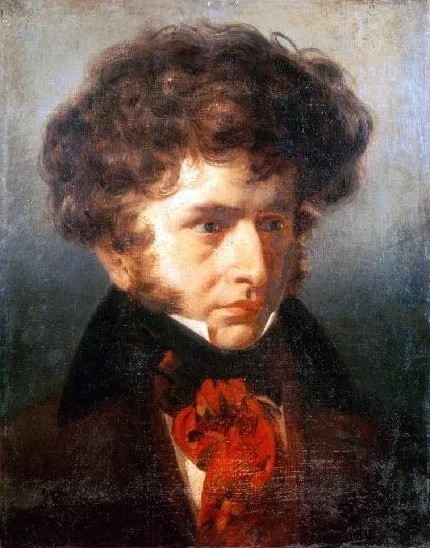
Hector Berlioz in 1832

Hector Berlioz in 1832

One audience member in particular was electrified: Hector Berlioz.

He fell in love not with Smithson as a person – he wouldn’t get to know her for quite some time – but rather with her talent and appearance, as well as the many Romantic Era ideals she represented.

While in the throes of this fixation, Berlioz channeled his infatuation into a symphony.   

The music is programmatic and, in Berlioz’s own words, follows a “young artist of morbidly sensitive temperament” (a not-so-subtle stand-in for himself) as he plunges from ardent passion into the depths of delusion.

The beloved’s tender theme (idée fixe) is first heard in the symphony’s opening movement, but it later curdles into a vulgar fiddle tune in the witches’ sabbath, symbolising how his idealised love has turned into a nightmare.

The orchestration here is noteworthy, featuring an expanded percussion section, new instruments like the English horn, and striking effects like col legno bowing, where string players tap the wood of their bows on the strings to create spooky sounds.

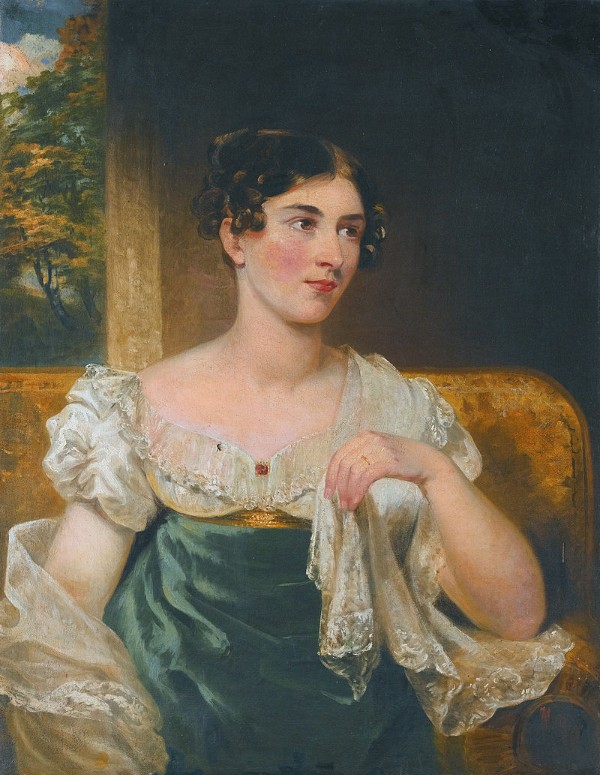
Harriet Smithson

Harriet Smithson

Berlioz kept trying to get Smithson’s attention. He sent her numerous letters and even went so far as to stalk her lodgings, to no avail. In fact, she didn’t even attend the symphony’s 1830 premiere.

However, two years later, she finally heard a performance. She was astonished that she had inspired such a work, and they soon began dating.

They married in 1833. The marriage collapsed within a matter of years. But this symphony, the spark of inspiration that signaled the start of their relationship, remains a revolutionary Romantic Era statement that out-survived their love – and them.

Mendelssohn – Symphony No. 4, “Italian” (1833)

The Love Story

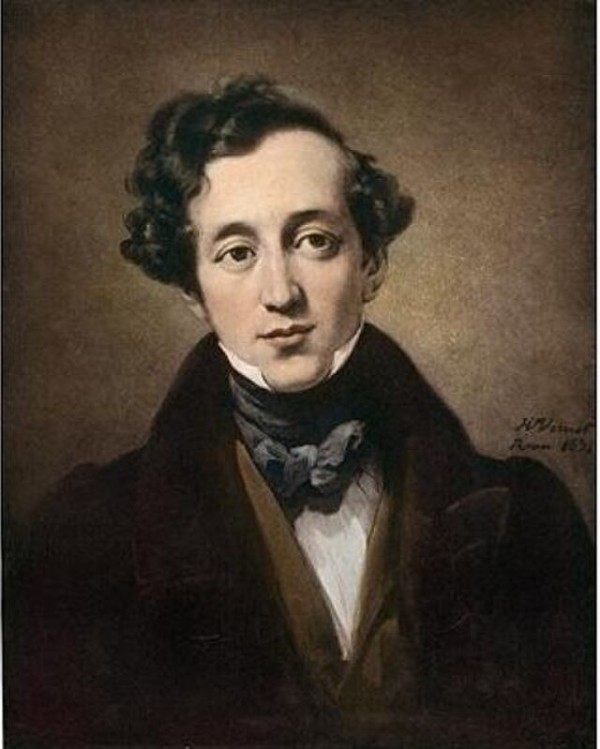
Horace Vernet: Felix Mendelssohn, 1831

Horace Vernet: Felix Mendelssohn, 1831

Felix Mendelssohn was not undergoing a tortured love affair while writing the Italian Symphony.

In fact, this work is more influenced by a place he loved than a person: the “romance” here is between the composer and Italy itself.

Mendelssohn’s letters from his 1830–31 Italian journey are ecstatic in their admiration.

“This is Italy! … the supreme joy in life. And I am loving it,” he wrote to his family.   

Each movement of the symphony takes on a different aspect of the life he observed in Italy. The joyful first movement is followed by a slow movement reflecting a religious procession he saw in Naples. The dance of the third movement is a standard minuet and trio, and the final movement incorporates two different Italian dances, the quick Roman saltarello (a jumping dance), and the Neapolitan tarantella.

Its joy makes it one of the most “Romantic” – if not overtly romantic – symphonies of the era. Read more about Mendelssohn’s Symphony No. 4.

Schumann – Symphony No. 1 “Spring” (1841)

The Love Story

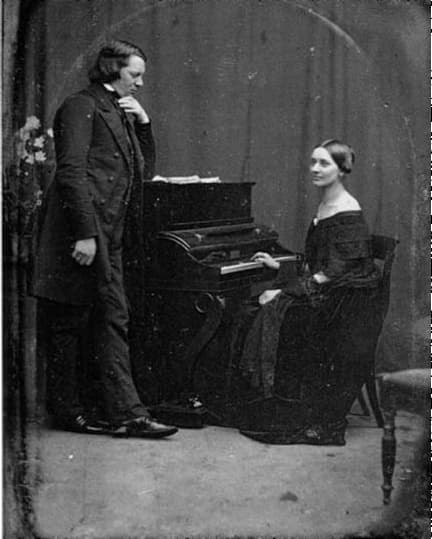
Robert and Clara Schumann

Robert and Clara Schumann

The “Spring” Symphony emerged from the happiest period of Robert Schumann’s life: his first year of marriage to pianist Clara Wieck.

After years of struggling to win the approval of Clara’s father, the star-crossed lovers were finally able to marry in September 1840.

This personal triumph sparked an extraordinary burst of creativity. 1840 had been Robert’s “Year of Song,” when he poured his love into over a hundred love songs.

But by 1841, with Clara’s encouragement, he had turned to the symphony.

She wrote in her diary:

“It would be best if he composed for orchestra; his imagination cannot find sufficient scope on the piano… His compositions are all orchestral in feeling… My highest wish is that he should compose for orchestra – that is his field! May I succeed in bringing him to it!”

As for his part, Robert later said that the work was inspired not just by spring’s external imagery but by his own “spring of love” (“Liebesfrühling”).   

Astonishingly, Schumann sketched this symphony out over just four days in January 1841. It exudes all of the exuberance you might expect from such an energetic start.

Schumann wanted the opening trumpet fanfare “to sound as if it came from on high, like a summons to awakening,” heralding spring’s (and love’s) arrival. This motto theme, bold and hopeful, recurs as a unifying idea.

He crafted music that somehow sounds like spring, featuring buoyant rhythms, anticipatory tremolo passages in the strings, and woodwind passages that resemble birdsong.

Throughout, the symphony’s tone is one of youthful hope, excitement, and, importantly, satisfaction. It’s very much in line with Romantic Era ideas and idealism about the rejuvenating power of both love and nature.

Tchaikovsky – Symphony No. 4 (1877)

The Love Story

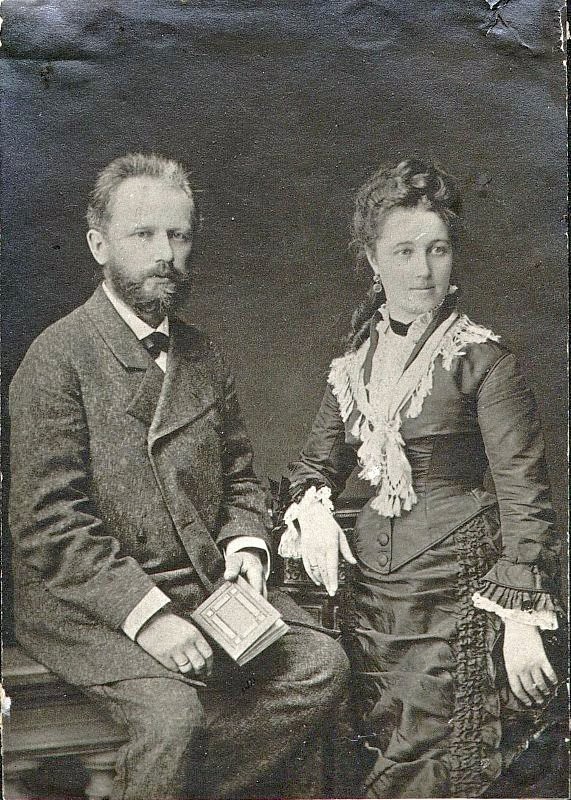
Tchaikovsky with his wife Antonina Milykova

Tchaikovsky with his wife Antonina Milykova

Few symphonies are as closely tied to a composer’s personal emotional life as Tchaikovsky’s Fourth.

Written in 1877, it coincided with a period of acute turmoil in Tchaikovsky’s romantic and emotional life.

That year, against his better judgment, Tchaikovsky entered into a hasty marriage with a young conservatory student, Antonina Miliukova – a marriage that proved disastrous and lasted only weeks before he fled her forever.

Tchaikovsky may have hoped marriage might quell rumours about his homosexuality, but the reality drove him to a nervous breakdown.   

During the aftermath of this catastrophic marriage, Tchaikovsky poured his inner despair and conflict into his fourth symphony.

He described the opening fanfare as the “Fate” that hangs over a person’s life: a concept that colored the entire symphony.

In a candid letter to his patroness and confidante, Nadezhda von Meck, Tchaikovsky admitted: “I was very depressed last winter when writing the symphony, and it is a faithful echo of what I was experiencing.”

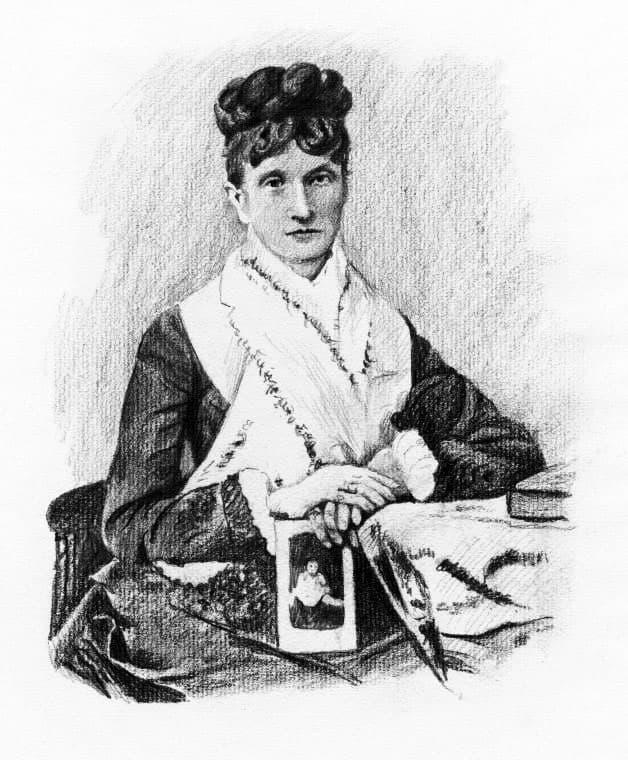
Madame von Meck, who became Tchaikovsky’s benefactor in 1877, actually played a critical role in the symphony’s creation and the composer’s life at that particular time.

She provided financial support so he could quit teaching, along with an emotionally intimate – if strictly epistolary – friendship.

Nadezhda von Meck

Nadezhda von Meck

The dedication of the fourth symphony even reads “To my best friend”: Tchaikovsky’s tribute to von Meck, and a thank-you for helping to usher him through an especially trying time in his life.

It’s ironic that one of the most infamous marital breakdowns in classical music history inspired one of the standout symphonies of the Romantic Era.

Mahler – Symphony No. 5 (1901–02)

The Love Story

Alma Schindler in 1902

Alma Schindler, 1902

The years 1901–1902, when Mahler composed his Fifth Symphony, were momentous in his personal life, especially in terms of romantic love.

In November 1901, Gustav Mahler met Alma Schindler, a young composer and socialite from Vienna.

Their whirlwind courtship was intense; by March 1902, they were married. (Alma was pregnant at their wedding.)

This intense new love had a profound impact on Mahler, and we see its reflection most clearly in the symphony’s Adagietto.   

According to Alma’s testimony, the Fifth’s Adagietto (which starts at the 46:15 mark in the video above) was Mahler’s love song to her.

Historians have noted that Alma’s picturesque storytelling isn’t always strictly accurate, but the following story remains persuasive. Apparently, he left her a small poem with the Adagietto’s manuscript, saying: “How much I love you, my sun, I cannot tell you in words – only my longing and my love and my bliss.”

Today, the Adagietto is regarded as the wordless love letter from Mahler to his new wife, communicating in music what he felt he was unable to say in words.

It provides a transcendent counterbalance to the earthiness of the rest of the symphony, enhanced by its orchestration for strings and harp alone.

Rachmaninoff – Symphony No. 2 (1907)

The Love Story

Sergei Rachmaninoff and Natalia Satina

Sergei Rachmaninoff and Natalia Satina

The creation of his Symphony No. 2 marked a particularly redemptive chapter in Rachmaninoff’s professional life: one shaped by the support and love he found in his marriage.

A decade earlier, in 1897, Rachmaninoff’s first symphony had premiered to disastrous reviews (one critic likened it to “a program symphony about the Ten Plagues of Egypt”).

The fiasco of that premiere sent the young composer into a deep depression and a creative block. He recovered only with the help of therapy and through composing his successful Second Piano Concerto (1901).

During that same period, he fell in love with and became engaged to Natalia Satina, his cousin and childhood sweetheart.

After overcoming significant obstacles (including family disapproval and Orthodox Church restrictions on cousin marriage), Sergei and Natalia married in 1902 on a rainy spring day.

By the time he was writing the second symphony in 1906, Rachmaninoff had been happily married for a few years and was a father. His first daughter, Irina, was born in 1903, and his second, Tatiana, was born in 1907.

Enjoying such a stable, loving home life provided Rachmaninoff with a foundation of emotional security that was crucial to his productivity after the turmoil of his earlier years.  

In late 1906, he and Natalia moved to Dresden specifically to escape the pressures of Moscow so that he could focus on composition in peace.

There, with his wife and daughter by his side, he worked on the symphony – though not without bouts of self-doubt.

At one point, he nearly abandoned the score, calling it “boring and repulsive” in a typical burst of self-criticism, before eventually returning to it.

It’s easy to imagine that the heartfelt outpouring of the symphony – especially its incandescent Adagio – was nurtured by the contentment and warmth of Rachmaninoff’s married life.

The triumphant premiere of the symphony in early 1908 in St. Petersburg was a vindication; the public and critics hailed it, and it earned Rachmaninoff a prestigious Glinka Award.

Today it remains one of the symphonic highlights of the late Romantic Era, beloved for its lush string writing and deeply felt, warmly expressed emotion.

Conclusion

Romanticism in symphonic music wasn’t just an artistic movement; it was also a way for composers to transform their private longing, devotion, and emotional crisis into publicly performed art.

From Berlioz’s hallucinatory passion in the Symphonie fantastique to Rachmaninoff’s newfound confidence in his Second, these six works reveal how love – fulfilled, frustrated, or otherwise – shaped some of the most powerful music of the Romantic Era.

Taken together, they show just how deeply composers’ love stories shaped their compositions, and why these pieces remain so easy to love even today.