Vistas a la página totales

Mostrando las entradas con la etiqueta Emily E. Hogstad. Mostrar todas las entradas

viernes, 3 de abril de 2026

Heartstopping Memory Lapses From Classical Music History

Even the greatest classical musicians – those renowned the world over for their superhuman discipline and focus – have moments when everything just goes blank.

In an era when memorisation is seen as a prerequisite for performing, memory lapses have destroyed confidence and ended careers.

However, these mistakes also highlight the humanity of the musicians who made them…and will hopefully make you feel a little less alone every time you step onstage yourself!

Adelina de Lara, ca. 1907
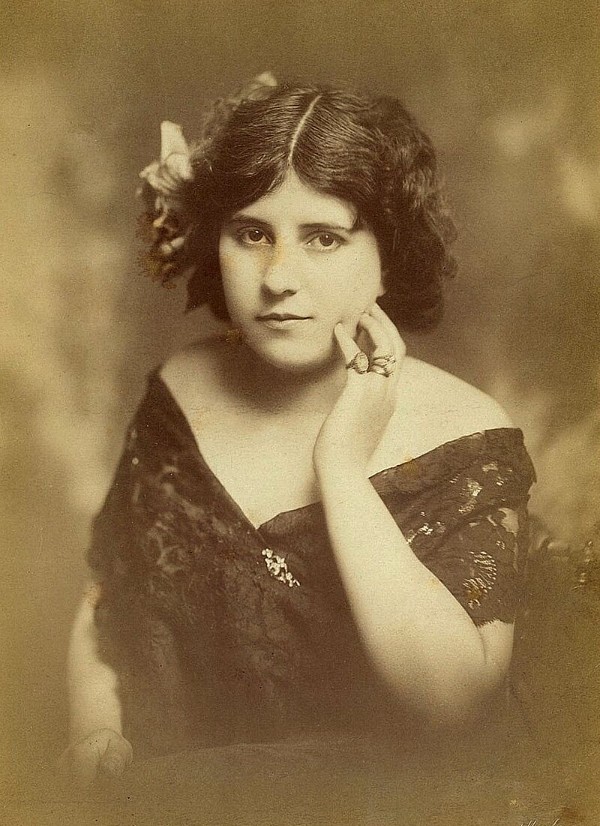
Adelina de Lara

Adelina de Lara

Adelina de Lara was a British pianist born in 1872. Although she is forgotten today, she led a colourful life and career.

In 1955, at the age of 83, she published a remarkably frank memoir called Finale.

In it, she discusses a life-changing memory lapse that traumatised her so badly that she refused to play concertos again for decades afterwards.

She was performing the Robert Schumann piano concerto with conductor Landon Ronald in Birmingham. (The exact date of the concert is unclear, but it would have been sometime around 1907.)

The morning of the concert, Landon told her that she was playing “splendidly” and that he was looking forward to the concert.

He then made a fateful throwaway remark: “The last three times I have conducted the Schumann concerto, the pianist’s memory has failed during the performance!”  

De Lara immediately had a physical reaction. The way she describes it sounds like what we might call a panic attack today: chills, weak knees, an adrenaline rush, and a sudden inability to concentrate.

As she’d recount in her book decades later:

“I played the second movement and began the third. I was making fine progress; Landon was conducting superbly. And then, at the repetition of the brilliant third subject — it happened! I played a phrase with both hands an octave lower than it is written. Only one bar — but I lost my head. It put me right out — panic seized me.”

Landon stopped the orchestra. She rushed backstage and burst into tears. Nobody came to check on her. She was scheduled to play solo works by Chopin after the intermission, but she was so horrified she fled to her hotel instead.

She wrote in her memoir:

“It was the worst thing I could have done. I blamed only myself, but after all these years, other musicians have told me Landon was to blame. He should have gone on directing the orchestra, and I could have come in again.”

She returned to her home in London the next day. Her partner asked what had happened. After she explained, he told her the memory slip wasn’t the problem; it was the fact that she hadn’t gone back to try a second time. In response, she declared that she’d never play another concerto again.

Adelina de Lara ended up having a nervous breakdown over the event. And true to her word, she didn’t accept a single concerto invitation for 27 years afterwards.

Still, she had regrets:

“Only when I did at last play successfully the Schumann Concerto from memory with Claud Powell, conductor of the Guildford Symphony Orchestra, did I write to Landon and tell him. It was a few years before his death. This letter shows how foolish I had been to let my nerves get the better of me for so long. If only I had had it sooner!”  

Olga Samaroff, 1917
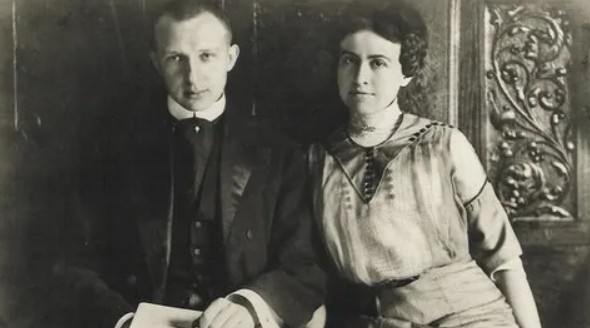
Olga Samaroff and Leopold Stokowski

Olga Samaroff and Leopold Stokowski

Pianist Olga Samaroff – the exotic stage name of American pianist Lucy Hickenlooper – made a disastrous early marriage to a wealthy Russian man in 1900. He forced her to give up her performing career, which was just taking off at the time.

Four years later, she left him and sailed back to America to reinvent herself as a piano soloist. Her hard work paid off, and she became a prominent pianist in both the United States and Europe.

Around 1905, she met the organist and choirmaster at St. Bartholomew’s Church in New York City, a man by the name of Leopold Stokowski. She liked him and pulled strings to help get him the music directorship at the Cincinnati Symphony, which assured his American career.

They ended up marrying in 1911. In June 1912, Stokowski was hired to become the music director of the Philadelphia Orchestra, a post he would retain for decades.

Although Samaroff cut back somewhat on her concert career after the wedding, they did still enjoy performing together, with Stokowski on the podium and Samaroff at the piano.   

Unfortunately, their marriage ran into trouble quickly. Stokowski was terminally unfaithful to Samaroff. World War I was difficult on both of them, given their sympathy for German musical culture. Minor irritations grew more heated, and they started hating the sound of hearing the other practice.

The marital tension came to a head in January 1917, when Samaroff had a major memory lapse in Pittsburgh while on tour with the Philadelphia Orchestra and Stokowski. It was so severe that she was forced to stop and walk backstage to collect herself.

A few months later, she, like Adelina de Lara, had a mental breakdown over it. But she was able to rally and returned to the concert stage before the end of the year. And in 1923, she divorced Stokowski.

Josef Hassid, 1940
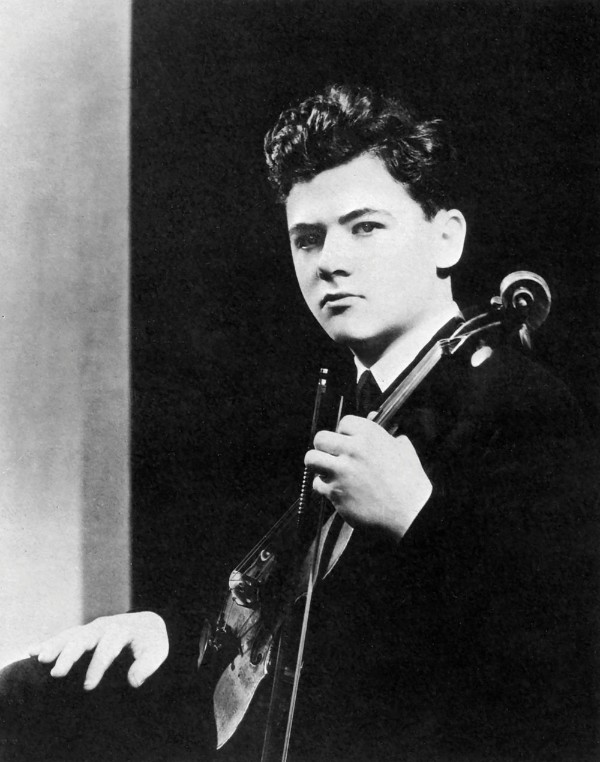
Josef Hassid

Josef Hassid

Josef Hassid, born in 1923 in Poland, is widely considered to be one of the greatest violinists to have ever lived.

In 1935, the year he turned twelve, he competed in a legendary year of the Henryk Wieniawski Violin Competition. His fellow competitors included violin giants Ginette Neveu and David Oistrakh.

While competing, he suffered a memory lapse. However, he was extended grace and allowed to continue.

In the end, he earned an honorary diploma. Fifteen-year-old Neveu placed first in the competition; 27-year-old Oistrakh second.

Still, despite the memory slip, it was clear that Hassid was headed for a major career.

He became one of the best-loved students of violin teacher Carl Flesch, who taught many of the great violinists of the early twentieth century.   

In early 1940, the year he turned seventeen, he made his concerto debut in London in the Tchaikovsky concerto, but suffered more memory lapses during the performance.

They continued with some frequency in the months to come.

A reviewer noted it in a performance of the Brahms concerto in March 1941:

“The solo performance was scarcely more than that of a clever student who has worked hard to memorise the concerto but is still liable to be thrown off his stroke, even to the point of forgetting his notes occasionally.”

He was suffering in his personal life, too. He had extreme mood swings and became unable to recognise people.

In June 1941, he was involuntarily committed to a mental institution and diagnosed with schizophrenia. He received insulin treatment and electroshock therapy.

In October 1950, after his father’s death, his doctors performed a lobotomy on him. He developed meningitis after the surgery and died at the age of 26.

Artur Schnabel, 1946
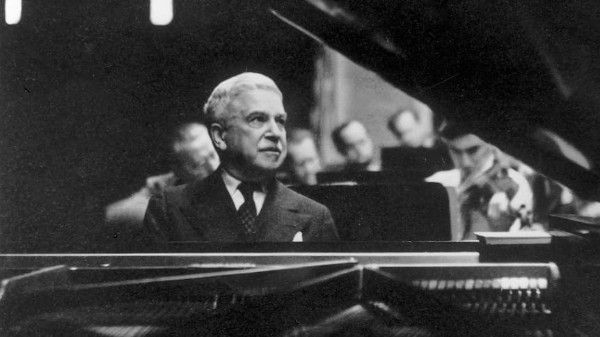
Artur Schnabel

Artur Schnabel

In 1946, while playing Mozart’s Piano Concerto No. 23 with the New York Philharmonic, pianist Artur Schnabel had a memory lapse in the third movement.

He had to stop, stand, and look at the conductor’s score before continuing.

When the live performance was issued on disc, a version without the mistake was included.

In 1991, the National Public Radio program “Fresh Air with Terry Gross” ran a brief segment about this infamous performance, which includes the audio of the breakdown. Contributor and critic Lloyd Schwartz declared the messier version his favourite.   

Arturo Toscanini, 1954
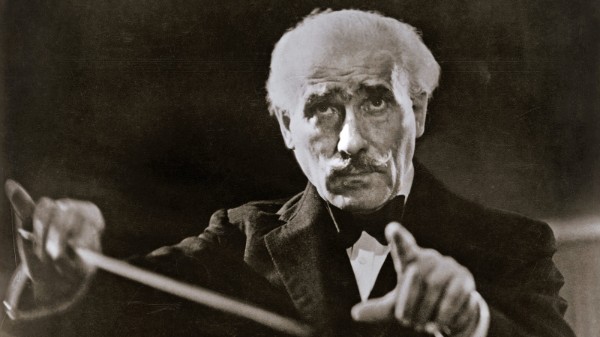
Arturo Toscanini

Arturo Toscanini

On 4 April 1954, indomitable and indefatigable 87-year-old maestro Arturo Toscanini led the NBC Symphony Orchestra in the Bacchanale from the opera Tannhauser. The concert was being broadcast nationally, and millions were listening.

But to his horror, he suffered a memory lapse halfway through the piece. He froze, with his arms falling to his side, his body unsure what to do. The principal cellist had to save the day by cuing in his colleagues.

The experience shook Toscanini so deeply that he decided never to conduct again.   

Arthur Rubinstein, 1964
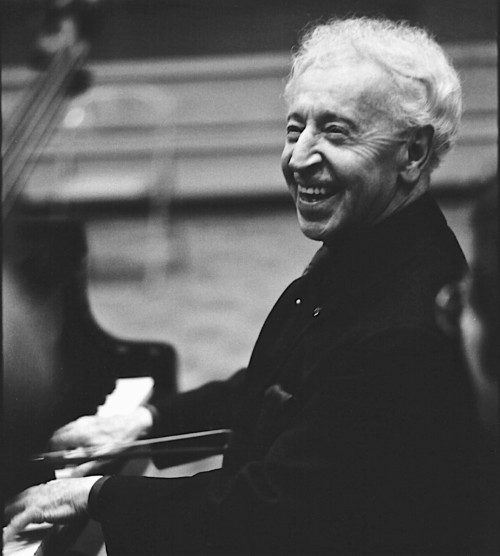
Arthur Rubinstein

Arthur Rubinstein

Once, while concertizing in Moscow in 1964, Rubinstein had a memory lapse playing the scherzo from Chopin’s second piano sonata…and video exists.

Without giving any outward indication that anything was wrong, Rubinstein tried repeating the passage.

When that didn’t work to get him out of his jam, he simply ad-libbed a transition to the next section!

One wonders how many in the audience were any the wiser as to what happened.

The ironic thing is, Chopin himself disapproved of his students playing from memory: he felt that it was disrespectful to the composer and to the music. It was his colleagues, Franz Liszt and Clara Schumann, who popularised the practice, not Chopin!   

Conclusion

For audiences, a memory slip might last only seconds…or perhaps not even register at all!

However, just the memory of a single one can haunt a performer for decades. Some musicians never recovered from theirs; the others figured out how to do the mental work to get back onstage.

It’s important to remember that memory lapses are almost inevitable. They’re also nothing to be ashamed of; on the contrary, they demonstrate a musician’s humanity and artistry. And that humanity is the whole reason anyone wants to hear what you have to say in the first place!

First 5 Women Composers Who Won the Prix de Rome


The Prix de Rome, associated with the Paris Conservatory, was a fiercely competitive award that offered its winners the chance to create with fellow prizewinners for a few years at the Villa Medici in Rome.

For much of its history, women were excluded from even entering. Fortunately, that changed in the early twentieth century.

It didn’t take long before a string of extraordinary women began proving they were up to the challenge of competing in the Prix de Rome…and winning it.

Today, we’re looking at the lives and legacies of the first five women Prix de Rome laureates – Lili Boulanger, Marguerite Canal, Jeanne Leleu, Elsa Barraine, and Yvonne Desportes – and tracing how their courage and creativity contributed to an especially rich era in French music.

About the Prix de Rome

The Prix de Rome was a prestigious French arts prize established in the seventeenth century, during the reign of Louis XIV. An award specifically for musical composition was created in the early 1800s.

For generations, the composition prize was effectively a boys’ club, closed to female competitors.

That changed in 1903, when French Education Minister Joseph Chaumié announced that women would be allowed to enter the competition.

Nadia Boulanger

Nadia Boulanger

Composer Hélène Fleury-Roy won a third prize in 1904, and Nadia Boulanger won a Second Grand Prix in 1908, but neither won the grand prize.

Hélène Fleury-Roy and Nadia Boulanger may have put cracks in the glass ceiling…but the Prix de Rome would require the right woman at the right time to shatter the glass ceiling outright.

Lili Boulanger (1913)

D’un matin de printemps   

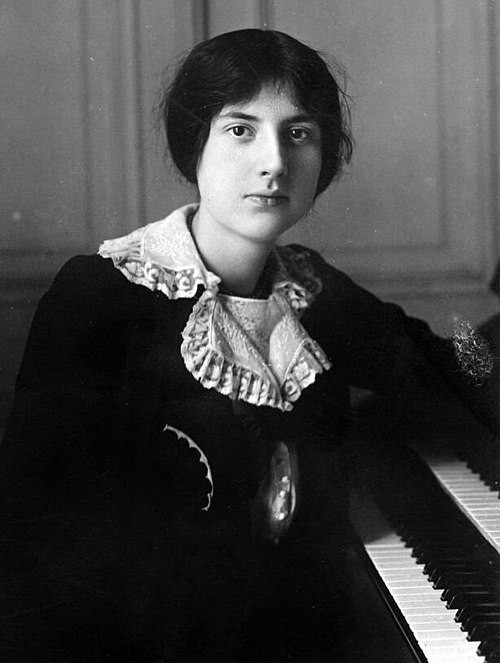
Lili Boulanger came from a distinguished musical family.

Her father was a composer and professor who had once won the Prix de Rome himself, and her elder sister Nadia Boulanger was also a talented musician who helped to teach Lili as a child.

Henri Manuel: Lili Boulanger, 1913

Henri Manuel: Lili Boulanger, 1913

Lili’s talents were evident early in life, but so were her health struggles. She suffered from chronic illness (likely Crohn’s disease or tuberculosis) that made day-to-day functioning difficult.

Despite these challenges, Lili dreamed of following in her father’s footsteps and winning the Prix de Rome, and watched her sister make a go at it herself.

In 1912, Lili competed for the first time, but collapsed from illness and had to withdraw.

Undeterred, she returned the following year, and in 1913 her cantata Faust et Hélène made her the unanimously chosen winner.

Faust et Hélène   

Boulanger’s Prix de Rome victory was hailed in the press as a breakthrough for women in music.

It also became symbolic of the progress of women’s liberation more broadly.

One newspaper contrasted her success with the actions of militant suffragettes, noting that “a maiden of France has gained a better victory” than window-smashing protesters.

Learn more about the Boulanger sisters’ relationship and their attempts to win the Prix de Rome.

Marguerite Canal (1920)   

Born in Toulouse to a musical family, Canal entered the Paris Conservatory at age eleven. She excelled in her studies, taking first prizes in harmony, accompaniment, and fugue.

It was a promising start, but Canal’s path to her Prix de Rome win required years of patience…and persistence.

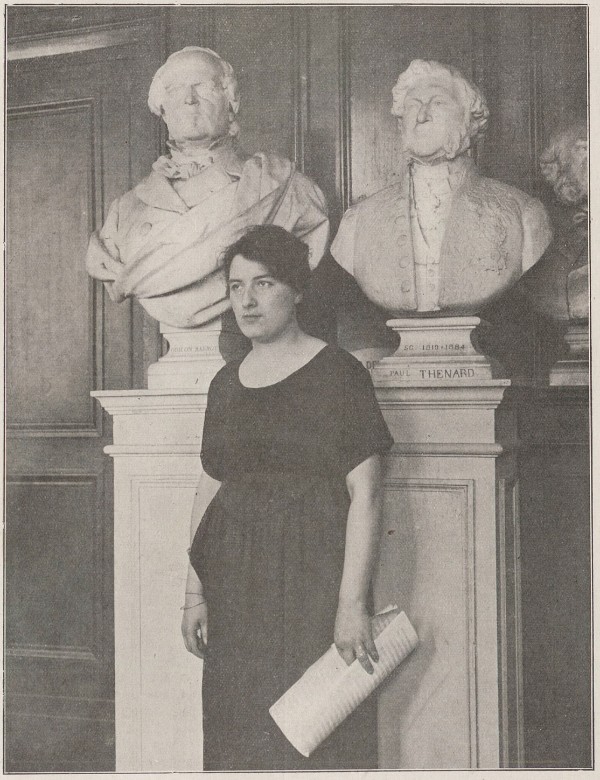
Marguerite Canal

Marguerite Canal

She first entered the competition in 1914, the year after Lili Boulanger, but didn’t win.

Then the competition was suspended during World War I, so she couldn’t try again until after the Armistice.

During that time, she faced devastating personal loss; her soldier brother died in the opening weeks of the war. (She would try for years to write a requiem for him, to no success.)

In 1919, when the Prix de Rome was reinstated, she came tantalisingly close to winning, earning a Second Grand Prix (a runner-up prize).

Finally, in 1920, she succeeded in her quest, becoming the second woman ever to win the first grand prize with her cantata Don Juan.

Canal spent the years between 1921 and 1924 at the Villa Medici in Rome, where she composed prolifically. One of the works dating from that time was her charming violin sonata.  

After returning to France, Canal joined the faculty of the Paris Conservatory, where she taught for several decades.

Her composing activity slowed as her teaching duties grew in number, but she still completed over a hundred works, including Trois Esquisses méditerranéennes for piano (1930).

Jeanne Leleu (1923)

Quatuor pour piano et cordes   

Pianist and composer Jeanne Leleu was born into a musical family and entered the Paris Conservatory at the age of nine.

At eleven, she made musical history by participating in the premiere performance of Ravel’s Ma Mère l’Oye (Mother Goose Suite).

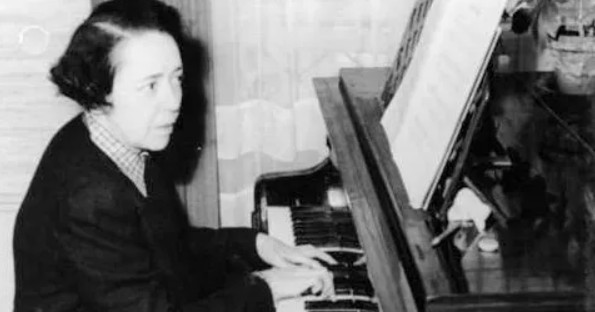
Jeanne Leleu

Jeanne Leleu

Initially trained as a pianist (she won a premier prix in Alfred Cortot’s piano class in 1913 at the age of fifteen), Leleu eventually turned her focus to composition, studying with Georges Caussade and Charles-Marie Widor at the Conservatory.

In 1922 she earned the Conservatory’s first prize in composition, and Widor encouraged her to attempt the Prix de Rome competition.

Leleu competed for the Prix twice. She failed to clinch the top award during her first attempt in 1922, but in 1923, she won the Premier Grand Prix for her cantata Béatrix.

She took up residency at the Villa Medici in Rome between 1923 and 1927.

Among the works she composed were the Six Sonnets de Michel-Ange (1924) for voice and orchestra, as well as an orchestral suite, Esquisses italiennes (1926), which reflected her impressions of Italy.

In the late 1930s and 1940s, Leleu also composed for the stage: her ballet Un jour d’été was produced at the Opéra-Comique in 1940, and another ballet Nautéos premiered in Monte Carlo in 1947 (later reaching the Paris Opéra and even Covent Garden in London by 1954).

In addition to being a prolific composer, Jeanne Leleu became an influential teacher. In 1954, she was appointed Professor of Harmony at the Paris Conservatory, a position she held until 1965.

Elsa Barraine (1929)   

Elsa Barraine was born into a musical family; her father was a cellist in the Paris Opéra orchestra.

She herself entered the Paris Conservatory as a teenager, studying composition in Paul Dukas’s famous class (her classmates included Olivier Messiaen and Claude Arrieu), where she more than held her own.

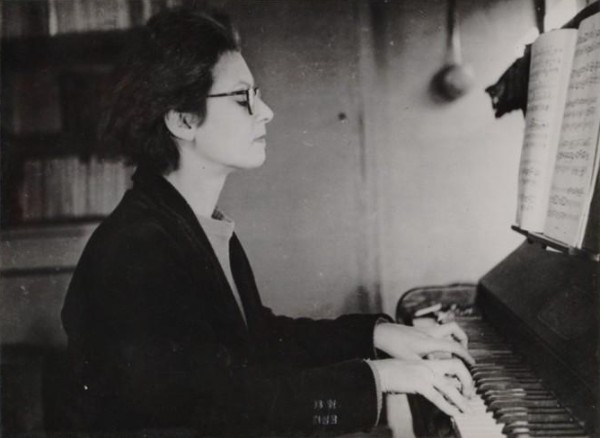
Elsa Barraine

Elsa Barraine

In 1928, while still a student, she took part in the Prix de Rome competition and was awarded the Second Grand Prix for her cantata Héraklès à Delphes.

The following year, 1929, she tried again and succeeded in winning the Premier Grand Prix de Rome with her cantata La Vierge guerrière (“The Warrior Virgin”). She was just nineteen years old, and one of the youngest ever winners.

Elsa Barraine’s subsequent career was multifaceted. During the rise of fascism in Europe in the 1930s, she began using her compositions to send political and social messages.

In 1933, she composed Pogromes, a symphonic poem protesting anti-Semitic violence.

During the Nazi occupation of France, Barraine – whose father was Jewish – was dismissed from her positions by Vichy racial laws.

She went underground and joined the French Resistance, operating under the alias “Catherine Bonnard.” At one point, she was arrested by the Gestapo, but fortunately, a sympathetic police officer helped secure her release.  

Barraine survived the war and, after the liberation of France, took on new leadership roles in the music industry.

Between 1944 and 1946 she worked with the Orchestre National, and in 1953 she became a professor at the Paris Conservatory. She also worked in French radio and as a music journalist.

Even as she assumed all of these roles, Barraine continued to compose.

Her catalog includes two symphonies (dating from 1931 and 1938), chamber works such as a wind quintet (1931) and Suite astrologique (1945), choral pieces, and music influenced by her Jewish heritage (e.g. Trois Chants Hébraïques, 1935).

Though her music was long neglected, recent performances and recordings have revived interest in her powerful, distinctly humanist compositions.

Yvonne Desportes (1932)   

Desportes studied at the Paris Conservatory, where her teachers included the renowned composer Paul Dukas (for composition) as well as Marcel Dupré and others.

She was a particularly hardworking, dedicated musician: she won premier prizes in harmony (1927) and fugue (1928) at the Conservatory.

Yvonne Desportes

Yvonne Desportes

She was keen to add the Prix de Rome to that list.

In 1929, her first attempt, she failed to advance to the final round.

In 1930 she returned and earned the Deuxième Second Grand Prix (essentially third place) for her cantata Actéon, with critics praising the delicacy and “femininity” of her harmonic writing.

In the 1931 contest she did even better, winning the Premier Second Grand Prix.

(Notably, that year another woman, Henriette Puig-Roget, won the third-place prize. It was the first time two female composers had ever both been laureates in the same Prix de Rome year.)

Finally, on her fourth attempt in 1932, Yvonne Desportes won the Premier Grand Prix de Rome. She was 25.

She spent the standard residency in Rome and then embarked on a prolific career.   

Desportes composed in many genres – orchestral, chamber, choral, and educational music – and ultimately produced over 500 works.

In addition to composing, she also embraced teaching. Desportes joined the faculty of the Paris Conservatory, where she taught for decades, and she wrote numerous music theory and solfège textbooks that were widely used in French music education for years.

Conclusion

The achievements of these five women – Lili Boulanger, Marguerite Canal, Jeanne Leleu, Elsa Barraine, and Yvonne Desportes – are highlights of a particularly rich era in French musical history.

Over the course of the two tempestuous decades between 1913 and 1932, they broke the glass ceiling of the famously male-dominated Prix de Rome. In the process, they proved they were just as capable as their male colleagues.

Strikingly, all five of them went on to have prestigious musical careers after their wins, helping to clear the way for all the women composers who would follow them in the generations to come.

They are important parts not just of French culture, but of classical musical culture, period.

When Was the First Public Classical Music Concert?


But by the seventeenth and eighteenth centuries, a new idea began to take shape: audiences paying musicians to play music for them.

This evolution from sacred service to ticketed performance changed European culture forever and laid the groundwork for the modern concert tradition we still enjoy today.

Today, we’re asking the question, how did paid public classical music concerts start?

Italy and the Ospedales

It took longer than you might think for the concept of public concerts to flourish in Europe. Each country came to the idea in a different way.

Chronologically, the earliest paid public concerts probably took place in Italy, especially in Venice, where a network of orphanages and music schools developed during the sixteenth and seventeenth centuries.

These institutions, known as ospedales, took in orphans or unwanted children (many of them girls, or the unwanted children of prostitutes), and taught the most talented of them how to perform music.

Read more about the Ospedales, and Vivaldi’s connections to them.

They would hold religious services, such as Vespers, with musical accompaniment, then encourage attendees to donate.

These donations helped keep the institutions running, allowing them to continue their charitable work and musical training… all while funding future concerts.

A re-enactment of a Vivaldi performance at the Ospedale   

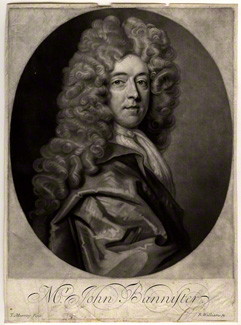
John Banister’s English House Concerts

John Banister

John Banister
© Unraveling Musical Myths

In December 1672, an English violinist named John Banister began giving daily concerts at his home. This is the first record of money-making concerts in London.

During each show, he’d play instrumental music, songs inspired by literature, and the like.

He charged a shilling admission fee for the experience and took requests from the audience.

The venture must have been worthwhile, because he continued mounting these concerts until shortly before his death in 1679.

Banister’s 1667 work inspired by Shakespeare’s The Tempest   

Bach and the Collegia Musica

In present-day Germany, ensembles called collegia musica sprang up around the time of the Reformation and focused on the performance of instrumental music.

In 1700, Telemann founded a new incarnation of the old Leipzig collegia musica, and Bach led the group between 1729 and 1737.

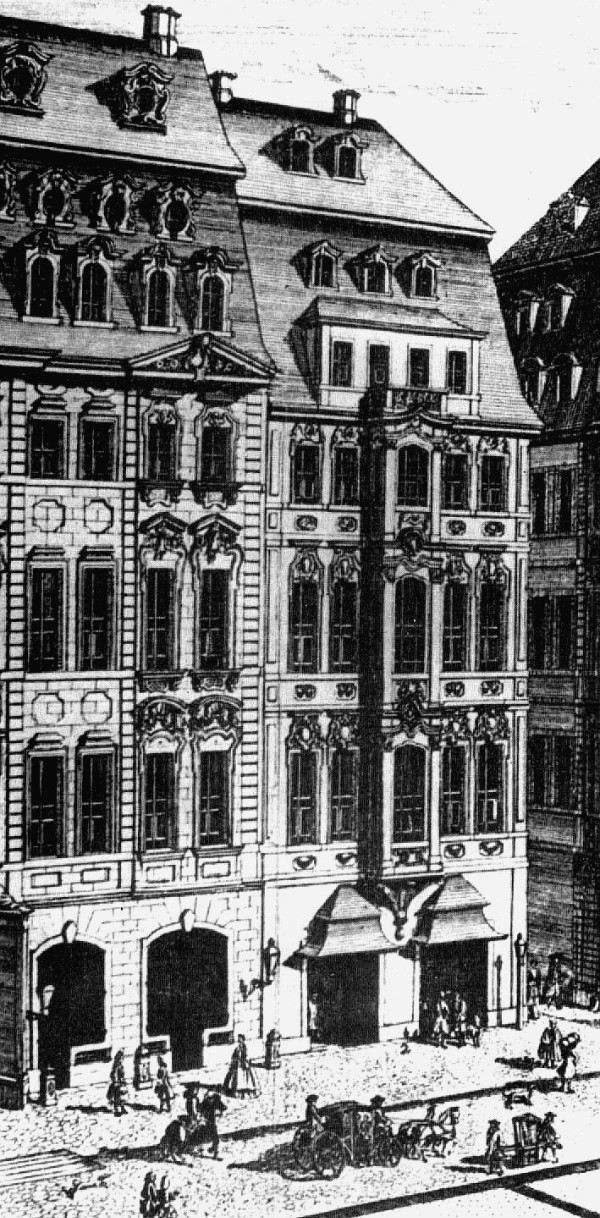
Zimmermann's coffee house

Zimmermann’s coffee house

During the eighteenth century, the Leipzig players gave weekly concerts at a local coffee shop.

In the early 1730s, Bach wrote a secular cantata for this gathering called Schweigt stille, plaudert nicht, or “Be still, stop chattering.”

Bach’s Coffee Cantata   

It’s commonly known as the Coffee Cantata today because it extols the virtues of the drink with lyrics such as “If I couldn’t, three times a day, be allowed to drink my little cup of coffee, in my anguish I will turn into a shriveled-up roast goat.”

The societies were closed to amateurs, but allowed members of the public to attend for a price.

To sum up, as Enlightenment ideals spread, and secularisation and education became increasingly important values in European life, musicians and audiences came closer and closer to the modern idea of giving public concerts.

The stage was set for an official concert series to take off.

France’s Concert Spirituel

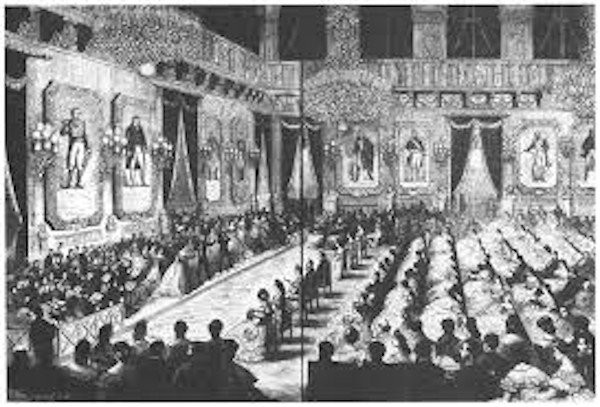
Concert Spirituel

Concert Spirituel

The Concert Spirituel series began when a royal musician grew fed up with the quirks of the religious calendar.

Royal court musician and woodwind player Anne Danican Philidor founded the Concert Spirituel series in Paris in 1725.

At the time, it was common for Catholic countries to shut down their opera houses to mark various Christian holidays, especially Advent (roughly the month before Christmas) and Lent (the forty days preceding Easter).

However, Philidor had an idea. What if the calendar could be filled with performances of spiritually uplifting non-operatic music, especially instrumental music?

Philidor’s Sonate in D Minor for recorder and basso continuo   

Philidor was willing to test the economic validity of his theory. He paid the Paris Opera impresario 1000 livres a year for the rights to perform, agreeing to mount no opera.

Philidor staged the first performance on 18 March 1725, between 6pm and 8pm.

The venue was the magnificent Salle des Cent Suisses (Hall of the Hundred Swiss Guards) in the Tuileries Palace in Paris.

That first program included a number of works by court composer Michel Richard Delalande, including a violin suite, a capriccio, and a handful of religious works, as well as Arcangelo Corelli’s Christmas Concerto.

Corelli’s Christmas Concerto   

The Growth of the Concert Spirituel

Music from the Concert Spirituel   

Philidor continued to give a number of concerts, expanding the series, but he died in 1728.

After his death, other musicians took on the leadership roles at the Concert Spirituel. Astonishingly, the concert series continued for decades, under a variety of leaders.

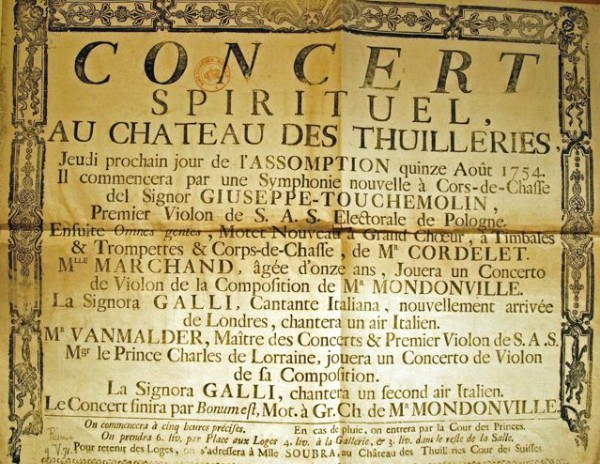
Concert Spirituel poster

Concert Spirituel poster

Between 1734 and 1748, the Académie Royale de Musique oversaw the series. It survived into its third decade, which was no small feat, but it also didn’t reach any new heights of cultural relevance.

Things changed between 1748 and 1762, when entrepreneurs and impresarios Joseph-Nicolas-Pancrace Royer and Gabriel Capperan took charge and made investments in the series.

They increased the size of the orchestra, redecorated the concert hall, and hired expensive Italian singers.

The result was that the series became more prestigious – and profitable – than ever.

The Economics of the Concert Spirituel

The Concert Spirituel series may have been open to all paying audiences, but the tickets were priced for the wealthy.

Admission was by ticket, often advertised in newspapers. Prices were steep: mid-eighteenth-century ticket prices ranged roughly 2–6 livres depending on the seat, and were approximately 4 livres on average.

Before the French Revolution, middle-class workers such as clerks and schoolteachers earned between 600 and 900 livres annually. So a single ticket would have cost around two to three days’ worth of wages for them: doable for a middle-class person if you were particularly passionate about music, but certainly not geared toward the middle class or working class as a whole.

The Final Years

The Concert Spirituel’s greatest years were its last ones.

Between 1777 and 1790, Paris Opera singer Joseph Legros led the series. He dropped seventeenth-century motets from the programs and emphasised new music instead.

He commissioned composers like Johann Christian BachJoseph Haydn, and Wolfgang Amadeus Mozart (1778’s Paris Symphony was written for the series, arguably an organisational high point).

Mozart’s Symphony No. 31 (“Paris”)   

The final concert of the Concert Spirituel took place in the spring of 1790. By that time, the world had changed. Revolution was in the air. The Bastille had been stormed the summer before, and the Romantic Era and cultural upheaval of the Napoleonic Era were just around the corner. Public classical music concerts geared toward the middle class were about to become bigger than ever before.

Conclusion

By the late eighteenth century, Europe had transformed the idea of music-making.

What began in Venetian orphanages as devotional outreach evolved into a sophisticated culture of ticketed public performance.

The Concert Spirituel in Paris was the culmination of this movement, bringing together musicians, aristocrats, and the rising middle class in one shared musical space.

Given a few generations, the concept spread across the continent, shaping the modern concert hall tradition that still defines classical music today.

viernes, 27 de marzo de 2026

10 of the Saddest Piano Pieces in Classical Music History

 by Emily E. Hogstad,  March 23rd, 2026


In addition to the inherent sadness of the music itself, we’re also going to look at what was happening in the lives of the composers around the time they wrote each of these pieces.

As you’ll see, many of the saddest piano pieces in classical music history were shaped by grief, upheaval, illness, exile, or personal crisis.

From Bach’s years in mourning, to Mozart’s frightening leap into independence, to Chopin’s terminal illness, to Brahms’s late-in-life loneliness, and to Rachmaninoff’s experience of the Russian Revolution, every piece on this list – whether deliberately or not – captures a composer’s reaction to a time when life got overwhelming.

J.S. Bach – Prelude in B-minor, arranged by Alexander Siloti (1722)   This piece has a unique background.

Nineteenth-century Russian pianist Alexander Siloti took Bach’s Prelude and Fugue in E-minor from the Well-Tempered Clavier and rearranged it in B-minor: a darker and more mysterious key.

Alexander Siloti

Alexander Siloti

Bach wrote the Well-Tempered Clavier in 1722, a pivotal year in his life.

It’s hard to say exactly what he was feeling emotionally at this time, because none of his personal letters or diaries has survived.

But his wife Maria Barbara had died shortly before, in the summer of 1720. She was only 35 years old and had given birth to seven of his children.

Maybe he drew on his grief when writing this particular movement. We’ll never know. But it’s certainly one of the most melancholy piano pieces ever written.

Mozart – Fantasy in D-minor, K. 397 (1782)   

This unfinished fantasy comes from 1782, the year after Mozart disobeyed his loving but controlling father’s wishes and relocated to Vienna to start a hugely risky freelance career.

To help support himself, he taught aristocratic patrons and wrote works to play in glittering salons to entertain them. There was no guarantee his plan was going to work.

The D-minor Fantasy captures emotions one might feel in a moment of transition: worry, restlessness, and a willingness to improvise.

If it seems unfinished, that’s because it is. We don’t know why, but Mozart abandoned the piece before completing it.

Another composer tacked on ten measures after Mozart’s death, making the work playable in concert and bringing the work to a close – albeit an abrupt one.

The fragmentary quality that results mirrors the unsettled, transitional quality of Mozart’s life in 1782…and the unsettled quality of any listener going through a similar life change.

C.P.E. Bach – Fantasia in F-sharp-minor (c. 1787)   

The melancholic, virtuosic Fantasia in F-sharp-minor was written near the end of C.P.E. Bach’s career, while he was serving at the court of Frederick the Great.

By the mid-1780s, C.P.E. Bach had spent his entire career in the shadow of his father J.S. Bach, the greatest giant of the Baroque Era. (His mother, by the way, was the wife that Bach had lost in 1720.)

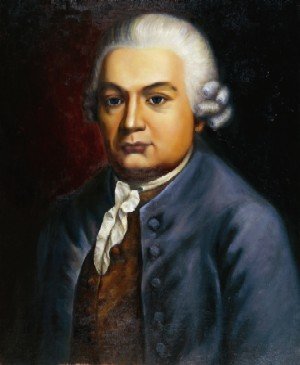
C.P.E. Bach

Carl Philipp Emanuel Bach

Meanwhile, his students would become well-known composers during the Classical Era.

He was one of the composers who had built a bridge between the two generations.

It’s very possible that he was reflecting on his life and legacy around the time he wrote this confessional fantasia, with its unpredictable surging sighs that ultimately all collapse into melancholy meanders.

Chopin – Nocturne No. 13 in C-minor, Op. 48, No. 1 (1841)  

In 1841, Chopin was at the height of his artistic maturity, but facing increasing physical frailty, thanks to his tuberculosis diagnosis.

He and his lover, authoress George Sand, had settled into a domestic rhythm in Paris and at her family home in rural France.

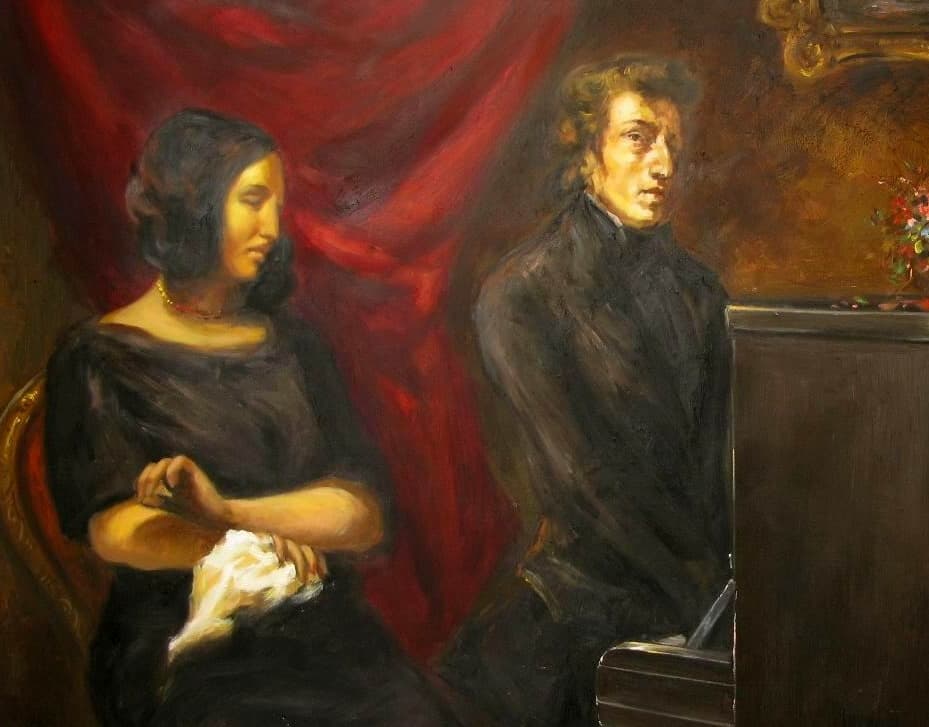
Portrait of Frédéric Chopin and George Sand by Eugène Delacroix

Portrait of Frédéric Chopin and George Sand by Eugène Delacroix

But their relationship, and the relationship between Sand and her two teenage children, were all starting to show cracks.

Chopin was also deeply homesick for his Polish homeland, continually distressed by Polish politics and his status as a permanent exile.

The C-minor Nocturne is one of his darker pieces for solo piano: elegant and melancholy, but bitterly so.

Its quiet, contrasting middle section is a cry from the heart of a man who was feeling increasingly sick, isolated, and vulnerable.

Grieg – Lyric Pieces, Book I, Op. 12, No. 1, “Arietta” (c. 1866)  

Over the course of his career, between 1867 and 1901, Edvard Grieg published 66 “Lyric Pieces” for solo piano.

This brief “Arietta” was the very first one, written around the time of his marriage to his wife, soprano Nina Hagerup.

In 1901, a few years before his death, he reused the theme in his very last Lyric Piece, “Efterklang” (“Remembrances”).

Edvard Grieg | “Remembrances” Op. 71 No. 7 from “Lyric pieces” (by Vadim Chaimovich)   

Was he remembering a sad thing in particular? It’s possible: in 1868, the year after the lullaby-like Arietta was written, he and his wife had their only surviving baby, Alexandra.

Alexandra died of meningitis when she was still an infant, and the couple never had any more children.

That was just one of the many struggles that he and Nina survived as a married couple.

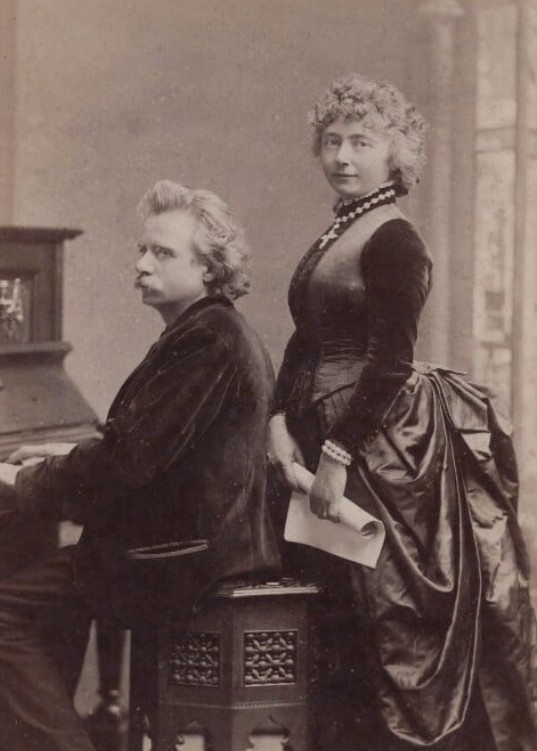
Edvard Grieg and Nina Hagerup Grieg

Edvard Grieg and Nina Hagerup Grieg

Although their relationship was occasionally rocky, they were married until he died.

Maybe turning a 35-year-old theme into a quiet waltz was his way of communicating that he – and they – had made it through decades of marriage, despite the troubles and tragedies they’d endured to get there.

Scriabin – Prelude in E minor, Op. 11, No. 4 (1888)   

Alexander Scriabin was born into a noble Russian family in 1871. His mother was a concert pianist but, tragically, died when he was just a year old.

After he was widowed, Scriabin’s father decided to follow his own family’s tradition of joining the military, leaving his baby son with his grandmother, great-aunt, and aunt.

His aunt played piano, which little Alexander loved. As a child, he begged to be played with. He grew up to play the piano himself, studying under Rachmaninoff’s infamously strict teacher Nikolai Zverev.

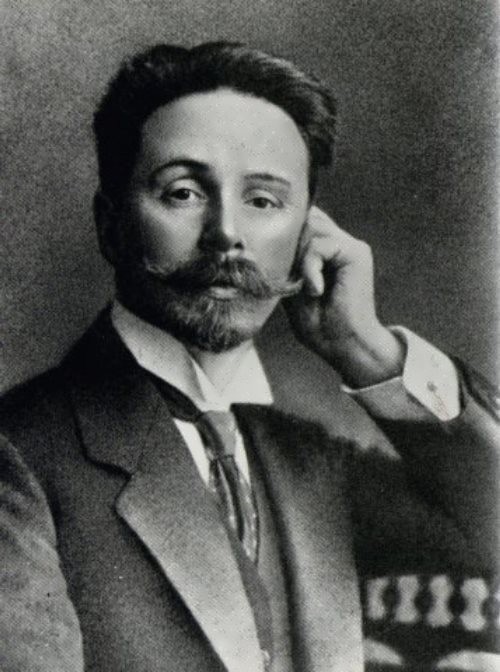
Alexander Scriabin

Alexander Scriabin

At one point, Alexander tried to assemble an orchestra of local children to try his hand at conducting, but the venture ultimately failed, leaving him in tears.

In short, he was a wounded loner during his childhood, and you can perhaps hear some of that in this early Chopin-inspired prelude, written in 1888, the year he turned seventeen.

Rarely has teen angst been so elegantly channeled.

Brahms – Intermezzo in E-flat-minor, Op. 118, No. 6 (1893)   

The Op. 118 set of piano pieces is a product of Brahms’s final years: a period in which he was preoccupied with nostalgia and mortality. By 1893, Brahms was nearing sixty and contemplating retirement.

To make matters worse, pianist Clara Schumann, his musical soulmate who was thirteen years his senior, was in failing health. And they’d found themselves in a quarrel.

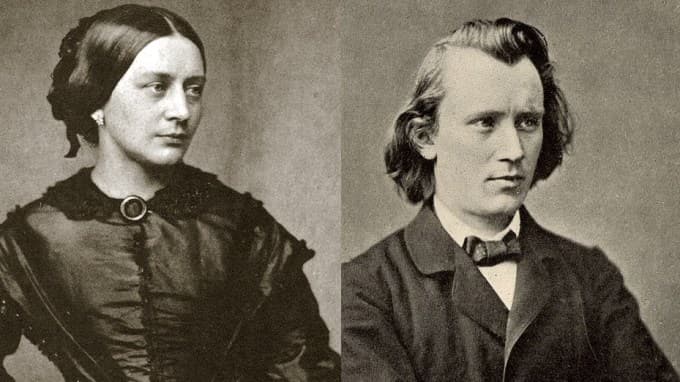
Black and white collage of composer Johannes Brahms and Clara Schumann

Clara Schumann and Johannes Brahms

Brahms wrote his Op. 118 and 119, in part, as a gruff but meaningful olive branch to her.

The E-flat-minor Intermezzo is one of his most despairing creations for solo piano. Many of Brahms’s works can feel emotionally subdued compared to more demonstrative contemporaries like Tchaikovsky or Dvořák, but this one is unusually frank about expressing sadness.

Happily, after receiving the scores for his Ops. 118 and 119, Clara Schumann wrote back to him, and they resolved their differences before their deaths, which would occur in 1896 and 1897, respectively.

Janáček – In the Mists: I. Andante (1912)   

Janáček composed In the Mists during an agonising period of professional stagnation.

He was 58 and felt deeply alone. His beloved daughter Olga had died in 1903, and his marriage had been deeply strained ever since.

He was also having trouble getting his work performed. He feared that his composing career was coming to a close and that he hadn’t fulfilled his potential.

Leoš Janáček

Leoš Janáček

The first movement of In the Mists drifts through blurry, seemingly improvisatory harmonies.

It captures the emotions of a man facing professional disappointment and wandering through obscurity.

Rachmaninoff – Étude-tableau in E-minor, Op. 39, No. 5 (c. 1917)   

Rachmaninoff wrote his Op. 39 between 1916 and 1917, right as the world seemed to be collapsing around him.

World War I was ongoing, and revolution was coming. By 1917, it became clear to Rachmaninoff that the genteel aristocratic world he’d been born into was doomed – and never returning.

While writing this piece, he was struggling with fears about the safety of his family and friends, the necessity of exile and the loss of property and possessions, the end of his Russian career, and the fear of starting over in another country while in his mid-forties.

When he fled Russia later that year, he took these etudes with him. They are some of the last works he ever wrote on Russian soil, and they sound like an unhappy, unwilling goodbye.

Glass – Etudes: No. 5 (1994)   

Philip Glass’s official description of his first ten etudes is very matter-of-fact:

Book 1 (Etudes Nos. 1 through 10) had a twin objective – to explore a variety of tempi, textures, and piano techniques. At the same time, it was meant to serve as a pedagogical tool by which I would improve my piano playing. In these two ways, Book 1 succeeded very well. I learned a great deal about the piano, and in the course of learning the music, I became a better player.

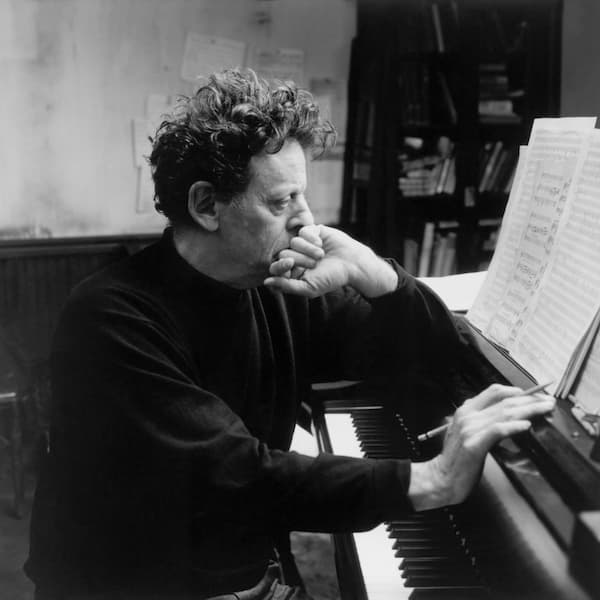
Philip Glass

Philip Glass

The first six etudes – including the fifth – were commissioned by conductor and pianist Dennis Russell Davies for his fiftieth birthday.

This piece was written during a difficult period in Glass’s life. His wife, artist Candy Jernigan, died of liver cancer in 1991, just weeks after being diagnosed. She was only 39.

“She was going to live forever, as far as I was concerned. It was a big shock for everybody, particularly the kids,” he told The Guardian in 2001.

It’s unclear whether Glass deliberately meant to portray this feeling in his fifth etude, but he captures the quiet repetitive numbness that a person can feel after the sudden death of a loved one.

Conclusion

Whether you’re searching for heartbreaking piano music, reflective pieces for difficult days, or just music to set a melancholy mood, these ten pieces stand apart. They are some of the saddest in the entire piano repertoire.

They all remind us of the humanity we share with the great composers, and testify to how music will always be one of the most powerful ways a person can process change, loss, disappointment, and grief.