The Prix de Rome, associated with the Paris Conservatory, was a fiercely competitive award that offered its winners the chance to create with fellow prizewinners for a few years at the Villa Medici in Rome.
For much of its history, women were excluded from even entering. Fortunately, that changed in the early twentieth century.
It didn’t take long before a string of extraordinary women began proving they were up to the challenge of competing in the Prix de Rome…and winning it.
Today, we’re looking at the lives and legacies of the first five women Prix de Rome laureates – Lili Boulanger, Marguerite Canal, Jeanne Leleu, Elsa Barraine, and Yvonne Desportes – and tracing how their courage and creativity contributed to an especially rich era in French music.
About the Prix de Rome
The Prix de Rome was a prestigious French arts prize established in the seventeenth century, during the reign of Louis XIV. An award specifically for musical composition was created in the early 1800s.
For generations, the composition prize was effectively a boys’ club, closed to female competitors.
That changed in 1903, when French Education Minister Joseph Chaumié announced that women would be allowed to enter the competition.
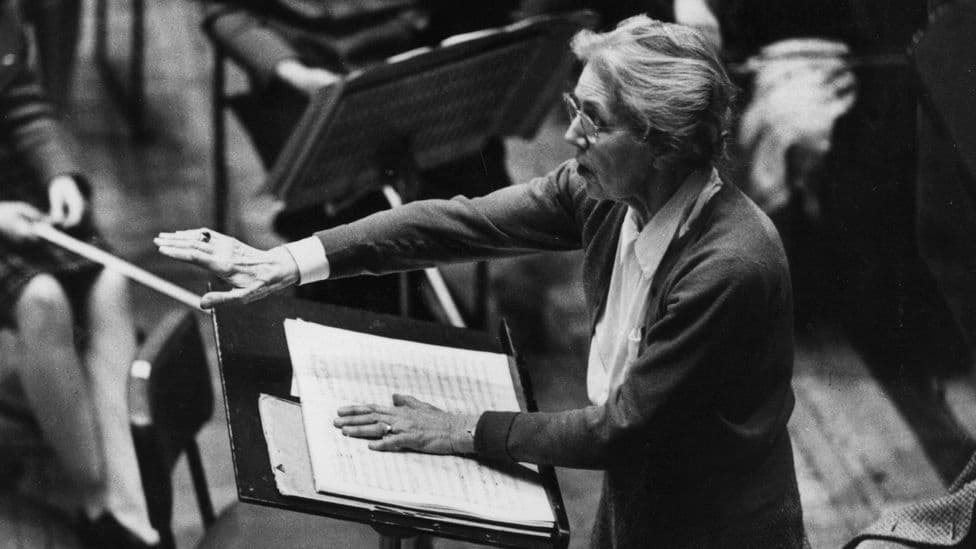
Nadia Boulanger
Composer Hélène Fleury-Roy won a third prize in 1904, and Nadia Boulanger won a Second Grand Prix in 1908, but neither won the grand prize.
Hélène Fleury-Roy and Nadia Boulanger may have put cracks in the glass ceiling…but the Prix de Rome would require the right woman at the right time to shatter the glass ceiling outright.
Lili Boulanger (1913)
D’un matin de printemps
Lili Boulanger came from a distinguished musical family.
Her father was a composer and professor who had once won the Prix de Rome himself, and her elder sister Nadia Boulanger was also a talented musician who helped to teach Lili as a child.
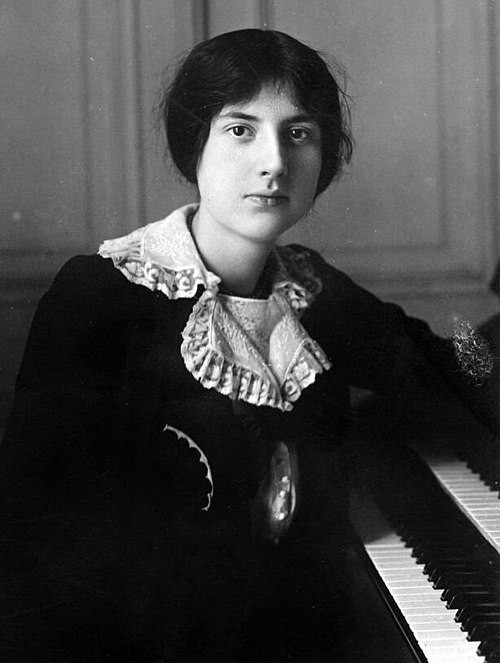
Henri Manuel: Lili Boulanger, 1913
Lili’s talents were evident early in life, but so were her health struggles. She suffered from chronic illness (likely Crohn’s disease or tuberculosis) that made day-to-day functioning difficult.
Despite these challenges, Lili dreamed of following in her father’s footsteps and winning the Prix de Rome, and watched her sister make a go at it herself.
In 1912, Lili competed for the first time, but collapsed from illness and had to withdraw.
Undeterred, she returned the following year, and in 1913 her cantata Faust et Hélène made her the unanimously chosen winner.
Faust et Hélène
Boulanger’s Prix de Rome victory was hailed in the press as a breakthrough for women in music.
It also became symbolic of the progress of women’s liberation more broadly.
One newspaper contrasted her success with the actions of militant suffragettes, noting that “a maiden of France has gained a better victory” than window-smashing protesters.
Learn more about the Boulanger sisters’ relationship and their attempts to win the Prix de Rome.
Marguerite Canal (1920)
Born in Toulouse to a musical family, Canal entered the Paris Conservatory at age eleven. She excelled in her studies, taking first prizes in harmony, accompaniment, and fugue.
It was a promising start, but Canal’s path to her Prix de Rome win required years of patience…and persistence.
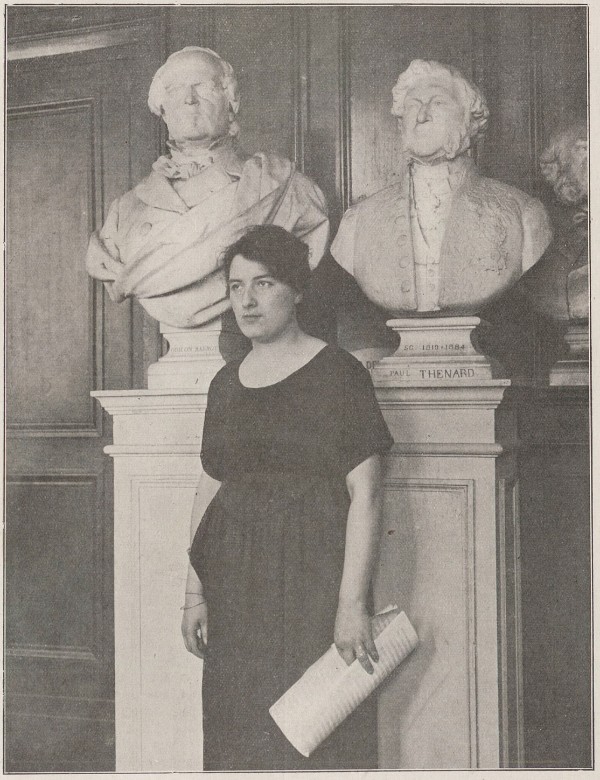
Marguerite Canal
She first entered the competition in 1914, the year after Lili Boulanger, but didn’t win.
Then the competition was suspended during World War I, so she couldn’t try again until after the Armistice.
During that time, she faced devastating personal loss; her soldier brother died in the opening weeks of the war. (She would try for years to write a requiem for him, to no success.)
In 1919, when the Prix de Rome was reinstated, she came tantalisingly close to winning, earning a Second Grand Prix (a runner-up prize).
Finally, in 1920, she succeeded in her quest, becoming the second woman ever to win the first grand prize with her cantata Don Juan.
Canal spent the years between 1921 and 1924 at the Villa Medici in Rome, where she composed prolifically. One of the works dating from that time was her charming violin sonata.
After returning to France, Canal joined the faculty of the Paris Conservatory, where she taught for several decades.
Her composing activity slowed as her teaching duties grew in number, but she still completed over a hundred works, including Trois Esquisses méditerranéennes for piano (1930).
Jeanne Leleu (1923)
Quatuor pour piano et cordes
Pianist and composer Jeanne Leleu was born into a musical family and entered the Paris Conservatory at the age of nine.
At eleven, she made musical history by participating in the premiere performance of Ravel’s Ma Mère l’Oye (Mother Goose Suite).
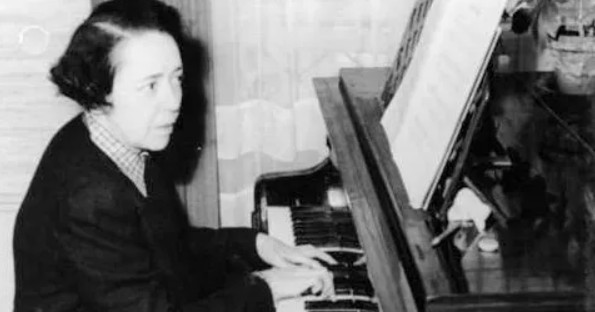
Jeanne Leleu
Initially trained as a pianist (she won a premier prix in Alfred Cortot’s piano class in 1913 at the age of fifteen), Leleu eventually turned her focus to composition, studying with Georges Caussade and Charles-Marie Widor at the Conservatory.
In 1922 she earned the Conservatory’s first prize in composition, and Widor encouraged her to attempt the Prix de Rome competition.
Leleu competed for the Prix twice. She failed to clinch the top award during her first attempt in 1922, but in 1923, she won the Premier Grand Prix for her cantata Béatrix.
She took up residency at the Villa Medici in Rome between 1923 and 1927.
Among the works she composed were the Six Sonnets de Michel-Ange (1924) for voice and orchestra, as well as an orchestral suite, Esquisses italiennes (1926), which reflected her impressions of Italy.
In the late 1930s and 1940s, Leleu also composed for the stage: her ballet Un jour d’été was produced at the Opéra-Comique in 1940, and another ballet Nautéos premiered in Monte Carlo in 1947 (later reaching the Paris Opéra and even Covent Garden in London by 1954).
In addition to being a prolific composer, Jeanne Leleu became an influential teacher. In 1954, she was appointed Professor of Harmony at the Paris Conservatory, a position she held until 1965.
Elsa Barraine (1929)
Elsa Barraine was born into a musical family; her father was a cellist in the Paris Opéra orchestra.
She herself entered the Paris Conservatory as a teenager, studying composition in Paul Dukas’s famous class (her classmates included Olivier Messiaen and Claude Arrieu), where she more than held her own.
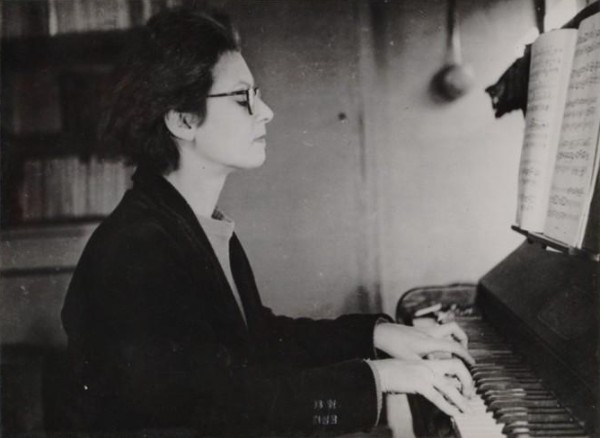
Elsa Barraine
In 1928, while still a student, she took part in the Prix de Rome competition and was awarded the Second Grand Prix for her cantata Héraklès à Delphes.
The following year, 1929, she tried again and succeeded in winning the Premier Grand Prix de Rome with her cantata La Vierge guerrière (“The Warrior Virgin”). She was just nineteen years old, and one of the youngest ever winners.
Elsa Barraine’s subsequent career was multifaceted. During the rise of fascism in Europe in the 1930s, she began using her compositions to send political and social messages.
In 1933, she composed Pogromes, a symphonic poem protesting anti-Semitic violence.
During the Nazi occupation of France, Barraine – whose father was Jewish – was dismissed from her positions by Vichy racial laws.
She went underground and joined the French Resistance, operating under the alias “Catherine Bonnard.” At one point, she was arrested by the Gestapo, but fortunately, a sympathetic police officer helped secure her release.
Barraine survived the war and, after the liberation of France, took on new leadership roles in the music industry.
Between 1944 and 1946 she worked with the Orchestre National, and in 1953 she became a professor at the Paris Conservatory. She also worked in French radio and as a music journalist.
Even as she assumed all of these roles, Barraine continued to compose.
Her catalog includes two symphonies (dating from 1931 and 1938), chamber works such as a wind quintet (1931) and Suite astrologique (1945), choral pieces, and music influenced by her Jewish heritage (e.g. Trois Chants Hébraïques, 1935).
Though her music was long neglected, recent performances and recordings have revived interest in her powerful, distinctly humanist compositions.
Yvonne Desportes (1932)
Desportes studied at the Paris Conservatory, where her teachers included the renowned composer Paul Dukas (for composition) as well as Marcel Dupré and others.
She was a particularly hardworking, dedicated musician: she won premier prizes in harmony (1927) and fugue (1928) at the Conservatory.
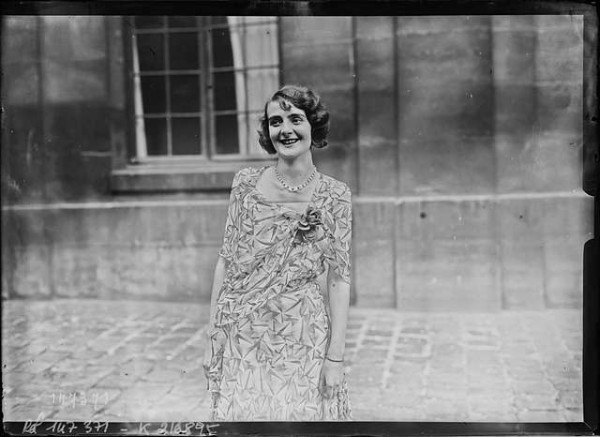
Yvonne Desportes
She was keen to add the Prix de Rome to that list.
In 1929, her first attempt, she failed to advance to the final round.
In 1930 she returned and earned the Deuxième Second Grand Prix (essentially third place) for her cantata Actéon, with critics praising the delicacy and “femininity” of her harmonic writing.
In the 1931 contest she did even better, winning the Premier Second Grand Prix.
(Notably, that year another woman, Henriette Puig-Roget, won the third-place prize. It was the first time two female composers had ever both been laureates in the same Prix de Rome year.)
Finally, on her fourth attempt in 1932, Yvonne Desportes won the Premier Grand Prix de Rome. She was 25.
She spent the standard residency in Rome and then embarked on a prolific career.
Desportes composed in many genres – orchestral, chamber, choral, and educational music – and ultimately produced over 500 works.
In addition to composing, she also embraced teaching. Desportes joined the faculty of the Paris Conservatory, where she taught for decades, and she wrote numerous music theory and solfège textbooks that were widely used in French music education for years.
Conclusion
The achievements of these five women – Lili Boulanger, Marguerite Canal, Jeanne Leleu, Elsa Barraine, and Yvonne Desportes – are highlights of a particularly rich era in French musical history.
Over the course of the two tempestuous decades between 1913 and 1932, they broke the glass ceiling of the famously male-dominated Prix de Rome. In the process, they proved they were just as capable as their male colleagues.
Strikingly, all five of them went on to have prestigious musical careers after their wins, helping to clear the way for all the women composers who would follow them in the generations to come.
They are important parts not just of French culture, but of classical musical culture, period.

No hay comentarios.:
Publicar un comentario