Jumlah Paparan Halaman

Selasa, 14 April 2026

Franz Ignaz Danzi


Wind Quintets at 200

Two hundred years ago, on 13 April 1826, Franz Ignaz Danzi (1763-1826) died in Karlsruhe, aged 62. He had known Wolfgang Amadeus Mozart in his youth, had mentored the young Carl Maria von Weber, and had been a contemporary of Ludwig van Beethoven.

Danzi was most famous for his wind quintets, and he composed nine such works between 1820 and 1824. These are genial and gentle works, modest in reach, but beautifully crafted in every detail.
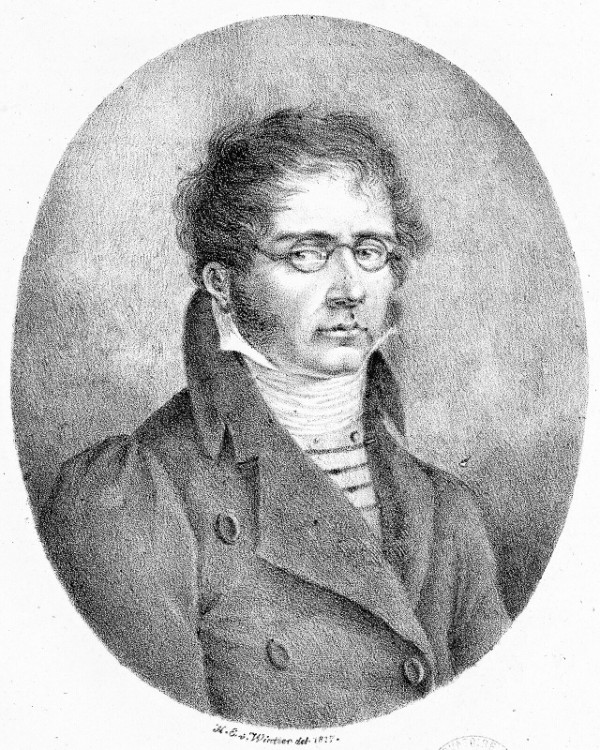
Franz Ignaz Danzi

Franz Ignaz Danzi

The wind quintets were written in part to raise the level of musicianship at the court of Karlsruhe. But that’s not the only reason why wind players should know this music. To commemorate the 200th anniversary of Danzi’s death, why don’t we explore the wind quintets in a little more detail? 

Beyond the Jolly Exterior

Franz Danzi was described as a plump little man with a rounded head and clever eyes which always seemed good-humoured. Don’t let this jovial description fool you. Franz Danzi was a highly competent musician and composer.

He joined the cello section of the famous Mannheim Orchestra at the age of 15, and performed with them for many years. Two of his early stage works were performed in Munich, and he then married the celebrated singer and pianist Margarethe Marchand.

The couple embarked on a concert tour that lasted several years, and Danzi eventually enjoyed some success as an opera composer. Success as an opera composer generally translated into employment opportunities, and such was the case for Danzi.

He took up a post in Stuttgart in 1807, but resigned in 1812 citing poor health. However, within the same year he accepted the post of Kapellmeister at the court in Karlsruhe. By that time he had been cultivating a close friendship with Carl Maria von Weber, and he was highly supportive of Weber’s quest to promote serious German-language opera.  

The orchestra at Karlsruhe was not in great shape, and the Allgemeine Musikalische Zeitung reported in 1817 that Danzi had to stamp the beat with his foot to keep the orchestra together, especially at important entries.

One way of improving the orchestra, especially the wind section, was to compose dedicated wind quintets. The combination of flute, oboe, clarinet, French horn and bassoon, however, was not new, as this instrumentation had been established by Anton Reicha.
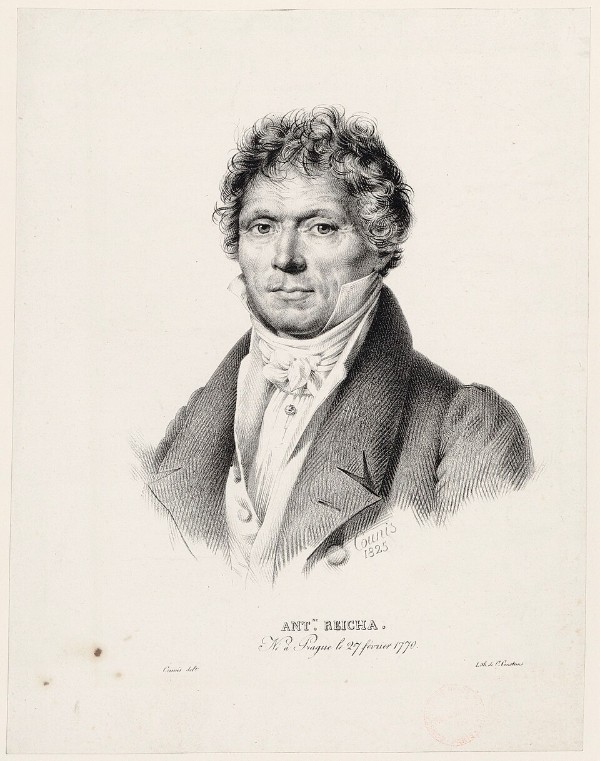
Anton Reicha

Anton Reicha

Reicha was born in Prague, educated in Bavaria, and later became a French citizen. He was friendly with Ludwig van Beethoven, and counted Franz Liszt, Hector Berlioz, and César Franck among his students. Even Chopin considered studying with him, but ultimately decided otherwise.

He is best known today for his 24 wind quintets, composed in Paris between 1811 and 1820. Most of his later wind quintets were premiered in the foyer of the Théâtre Favart by some of the world’s finest wind soloists. Immediately popular, they were played all over Europe shortly thereafter.   

Reicha’s Mission

In his memoirs, Reicha claimed that his wind quintets filled a void. “At that time, there was a dearth not only of good classical music, but of any good music at all for wind instruments, simply because composers knew little of their technique.”

Since Reicha was a flautist, he systematically explored the possibilities of the wind ensemble and came up with a formal variant that could accommodate a great number of principal themes.

The wind quintets also received commercial interest from music publishers during his lifetime. They appeared with Simrock in Bonn and Cologne, with Boieldieu and Richault in Paris, and with Schott in Mainz.

By some accounts, Franz Danzi started to write wind quintets after the tremendous financial success of Reicha’s first set of works, published in 1817. Since Danzi had a gift for writing flowing melodies and had a connection to publishers, he lavished considerable care on his own wind quintets.  

Modest Yet Masterful

The nine wind quintets by Danzi are dedicated to Reicha and published in groups of three. They display a remarkable unity of form. All of them follow the popular four-movement pattern. Sonata form first movements are followed by song-form seconds, and a minuet that occasionally approaches a scherzo character. These works all concluded with rondo finales.

The Danzi wind quintets are modest in reach, yet beautifully crafted in every detail. Players must have solid basic technique and good intonation. However, they focus primarily on ensemble balance rather than extreme virtuosity. And that makes them very approachable for amateurs and students.

Danzi beautifully blends the colourful combinations of the five instruments, with clever use of timbral contrasts. Frequently, the oboe or flute presents the leading melodies, the horn provides harmonic support, and the bassoon anchors the bass line.

Melodic lines are frequently passed between upper winds, with the horn and bassoon providing harmonic foundation and occasional soloistic moments. Danzi always chooses an instrumental combination that suits the character of the material.

Affectionate Respect

I was not able to find specific contemporary reviews of the Danzi wind quintets, but his compositions were overall praised for their melodic quality and craftsmanship. Since his wind quintets were published shortly after Reicha’s more ambitious sets, they seemed to have been positioned as practical and accessible works.

Danzi, as an orchestral cellist and conductor, brought plenty of practical knowledge to these compositions. Composed in the 1820s when Beethoven and Schubert were pushing boundaries, the wind quintets are looked upon with affectionate respect rather than profound intellectual scrutiny.

Essentially, the wind quintets represent a polished late-Classical sensibility. When compared with Beethoven’s contemporary late string quartets, it becomes obvious that Danzi composed in a courtlier vein, favouring elegant and conversational music-making.

Because of their modest technical demands and a focus on ensemble cohesion, they make excellent teaching and community ensemble pieces. They are regularly performed and frequently recorded. If you are looking for charm and playability without all that Beethovenian intensity, the Danzi wind quintets are an ideal choice

Isnin, 13 April 2026

The world of Beethoven is stunning enough


The world of Beethoven is stunning enough......but this ladiy's piano playing is out of this world! Piano Concerto No. 4, Op. 58 by Ludwig van Beethoven is beautifully interpreted by Hélène Grimaud with the Orchestre de Paris under Christoph Eschenbach. Her playing is poetic and introspective, blending delicacy with depth, while the orchestra provides a rich, expressive backdrop of lyrical strength.

https://www.ganjingworld.com/s/Q83YNV6xmv

Ahad, 12 April 2026

11 of the happiest pieces of classical music ever written


The happiest pieces of classical music ever written
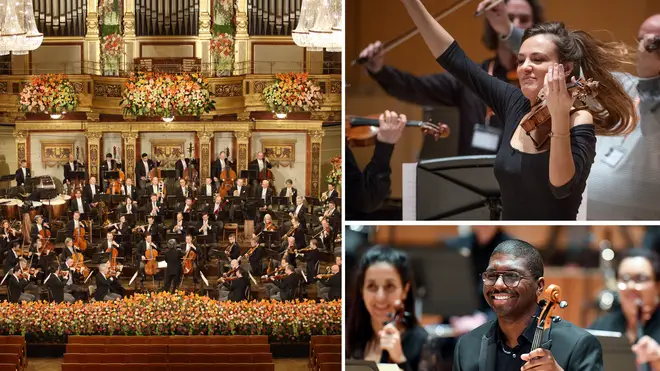
The happiest pieces of classical music ever written. Picture: PA / Chris Christodoulou

By Rosie Pentreath

Jolly and joyful classical music is abundant in the output of many of the world’s greatest composers. Here’s a selection of our favourite cheerful tunes.

There’s nothing quite like music for dictating our moods and lifting the spirits. And classical music’s collection of pieces on the joyful side of things is vast and irrepressible.

The happiest tunes and most cheerful melodies have us smiling, humming and skipping a step – and they can bring us a glimmer of sunny joy, even on the darkest day.

To help you complete your most ebullient playlist, here are your suggestions, and ours, of some of the most uplifting classical music there is.

  1. Beethoven: ‘Ode to Joy’ from Symphony No. 9

    The ‘Ode to Joy’ in the final movement of Beethoven’s ‘Choral’ Ninth Symphony is as triumphant as the title suggests. A final outpouring of the most triumphant music, it’s based on German poet Friedrich Schiller’s poem, Ode to Joy, which bids ‘all creature drink of joy!’      Symphonic joy from start to finish, Russian composer Prokofiev’s 1917, Symphony No. 1 – dubbed ‘Classical’ – is packed with the most uplifting melodies. The final movement especially, marked ‘Vivace’ (which means ‘lively’), practically bursts with happiness.

  2. Sergei Prokofiev - Symphony No. 1 'Classical Symphony', op. 25 IV. Finale: Molto Vivace

  3. William Grant Still: Symphony No. 1 ‘Afro-American’, third movement

    The third movement of William Grant Still’s ‘Afro-American’ Symphony is subtitled ‘Humour’, and contains joyful blues-y motives, reminiscent of George Gershwin’s infectious ‘I Got Rhythm’. As the movement progresses it swells with hope, and leaves us on a high with its syncopated, rhythmic tunes.

    William Grant Still: "Afro-American" Symphony | The Orchestra Now

  4. Tchaikovsky: ‘Dance of the Sugar Plum Fairy’ from The Nutcracker

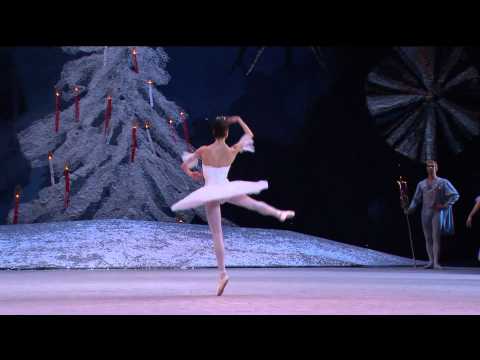
    Classic FM presenter Anne-Marie Minhall has named the ‘Dance of the Sugar Plum Fairy’ her happiest piece of classical music. It’s twinkly and cheerful, and challenges you not to smile.

    Pyotr Ilyich Tchaikovsky / Nina Kaptsova - Dance of the Sugar Plum Fairy / 2010

  5. Piazzolla: Libertango

    The ‘Libertango’ from Argentine composer, Piazzolla, is infectiously rhythmic and lively. And once the rhythm section establishes its irresistible driving beat it’s got this melody that drips with hope, aspiration and seems to speak of something very exciting just up ahead. A wonderful piece.    

  6. Mozart: Piano Sonata No. 17

  7. Much of Mozart’s music is gleeful, and this piano concerto is especially joyful. The final movement, especially, positively picks you up, spins you around and puts you down gently – it has to contain the friendliest melodies in all music.

    Mozart Piano Sonata no.17 in B-flat K. 570

  8. Copland: Hoe Down

    The ‘Hoe Down’ from Copland’s ballet, Rodeo, is frantically cheerful. It skips, jumps and leaps with energy and evokes the most carefree and exhilarating barn dance you’ve ever been to in your life.

    NYO-USA Performs Copland’s “Hoe-Down” from Rodeo

  9. Gershwin: Walking the Dog

    Walking the Dog is a jazzy piece composed for the Fred Astaire and Ginger Rogers film, Shall We Dance. It originally accompanied the ‘promenade’ scene that saw a dog walked on the deck of a ship, and it may well encourage you to take a turn or two yourself.

    George Gershwin | Promenade - Walking The Dog (1937) I Sebastian Manz & Friends

  10. Holst: ‘Jupiter’ from The Planets

    The seven planets in Holst’s famous orchestral suite were all given a job to do by the English composer. While Mars is responsible for bringing war, and Venus chases that up with peace; Saturn ushers in grey hairs on us all as the ‘Bringer of Old Age’, it’s Jupiter’s job to bring us jollity. And bring us jollity it really does! Just give it a listen…

    Gustav Holst - Jupiter from Planets

  11. Clara Schumann: Sonata for Piano, ‘Scherzo’

    Clara Schumann’s mighty G minor Piano Sonata allows itself a sunny interlude in the third movement ‘scherzo’. It jumps into a major key and gives us light, sunny melodies before descending back into its darker, more existential mood for the final movement.

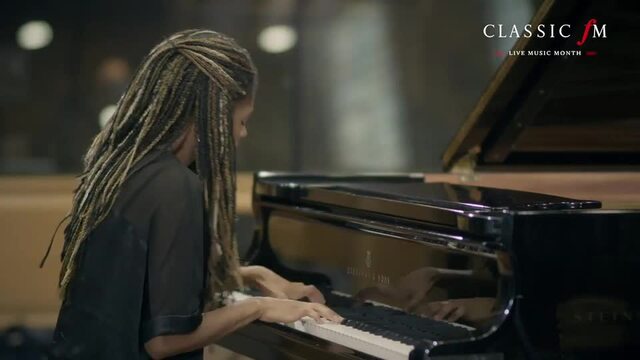
    Live Music Month: Isata Kanneh-Mason performs Clara Schumann’s Piano Sonata (III)

  12. Vivaldi: ‘Spring’ from Four Seasons

    If the word ‘happy’ translated into a musical melody, we’re pretty sure its the first movement ‘Allegro’ of Vivaldi’s ‘Spring’ from the Four Seasons violin concertos. It chirps and chirrups like the most jubilant garden bird, like the breeze ushering the start of summer… pretty much what Vivaldi was getting at, then. But is it too earnestly cheery? Some people thought so when they called it ‘infuriating’ when it was used as telephone hold music by the UK government’s Department of Work Pensions.


Opol music fest boosts tourism, local sales


Large crowd filling the beach venue on the opening night of the OpolFrolic Music Festival in Opol, Misamis Oriental.
FESTIVAL CROWD. A sea of people fills the opening night of OpolFrolic, a three-day music festival in Opol, Misamis Oriental, which runs from April 9 to 11. The event aims to boost local tourism and economic activity. (Photo by Shiela Mae Butlig)

CAGAYAN DE ORO CITY — Good music, a sea of people, and a calming ocean breeze brought a “Siargao vibe” to Opol, Misamis Oriental as the local government kicked off a three-day music festival aimed at easing the impact of the economic slowdown.   Spearheaded by Mayor Jay Francis Bago, the “OpolFrolic” Music Festival highlighted local tourism by featuring homegrown and provincial bands, drawing thousands of attendees.

Discover more
Southeast Asians & Pacific Islanders
Geographic Reference
Hotels & Accommodations

Bago said the event serves not only as a platform for local artists but also as a driver of economic activity. More than 50 local merchants joined the festival, with several vendors reporting sold-out products as early as 10 p.m. on opening night.

“Para gyud ni sa tourism ug economic activity. Dugay na namo ni ginabuhat aron matabangan ang atong vendors nga maipakita ug mabaligya ilang produkto,” Bago said.

Among the beneficiaries was barbecue vendor Marie Bahian, who joined the festival for the second time.

“Halin kaayo among barbecue. Daghan kaayo tao—buyag gyud,” she said.

Festivalgoer Joseph Chu from Cagayan de Oro praised the initiative, saying it offered a much-needed break from daily stress.

“Good job, Opol. Makahatag gyud ni ug pahulay sa hunahuna, especially sa krisis nga atong giatubang karon,” he said.

The festival, held at Marvilla Beach Resort, runs from April 9 to 11 with free admission. Featured performers include Cebu’s Phylum Band, Tribu CDO, Oh Caraga, Herbal, Softkeys, Chasing, and Nobela.

Bago emphasized that beyond entertainment, the festival aims to build a sustainable cultural scene while boosting the local economy through tourism-driven activities.