Jumlah Paparan Halaman

Jumaat, 10 April 2026

Sabine Meyer (Born on March 30, 1959) & Mozart Rediscovering the Clarinet Concerto

 by Georg Predota  March 30th, 2026


Born on 30 March 1959 in the rolling hills of southern Germany, Sabine Meyer grew up in a family dedicated to the clarinet. Her grandfather, her father, and her older brother all played the clarinet, and by the age of eight, she made the instrument her own.

As she later recalled, “The modulation of the sound, playing with your breath… right from the start I had the feeling: That’s my instrument.” And she was incredibly talented, making her professional debut at the age of sixteen and accepting an invitation from Herbert von Karajan to join the Berlin Philharmonic at twenty-three.

Sabine Meyer

Sabine Meyer

The appointment caused a sensation and met with plenty of resistance from some colleagues, and after a brief period of orchestral playing, she embarked on a glittering international career as a soloist.

On the occasion of Sabine Meyer’s birthday, let us explore her lifelong love affair with Mozart, and specifically with the Clarinet Concerto K. 622.   

Unrivalled Masterpiece

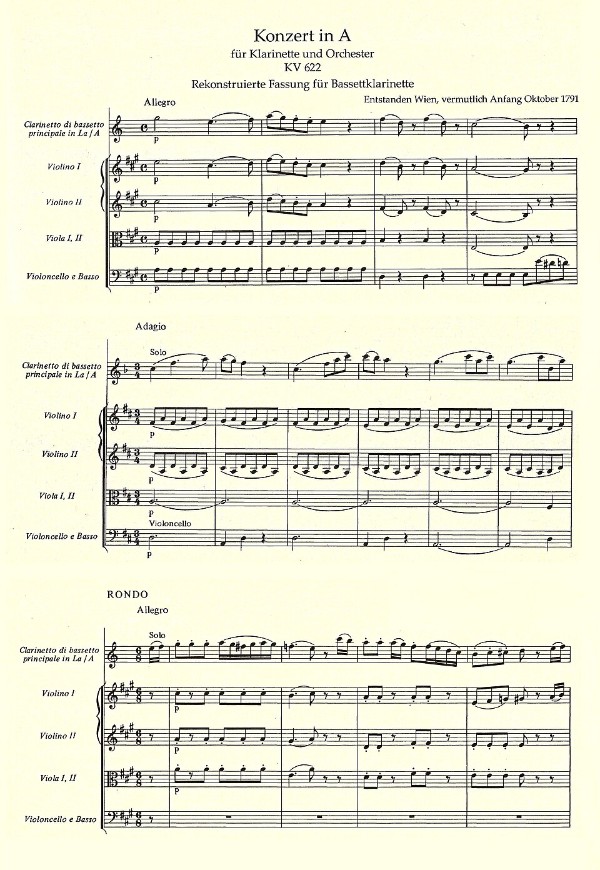
Mozart's Clarinet Concerto, KV 622 music score

Mozart’s Clarinet Concerto, KV 622 music score

In an interview, Meyer called the Mozart Clarinet Concerto “the best composition ever written for a wind instrument. Everything else pales in insignificance beside it. The concerto lives alongside me. It is incredibly deep and rich in expression, colour, and compositional ideas.” (Schwarz, Bachtrack, 2018)

Meyer finds in Mozart’s works a remarkable inner richness. Although the surface unfolds gracefully and seemingly effortlessly, Mozart reveals an incredible depth of expression. Economy and elegance are ever-present, but Mozart is able to say profound things in the most natural and unforced way.

With Mozart, every melodic line carries emotional weight, and the interaction between soloist and orchestra feels perfectly balanced. For Meyer, no other wind-instrument composition comes close to this level of perfection in blending emotional profundity with pure beauty.   

Basset Clarinet

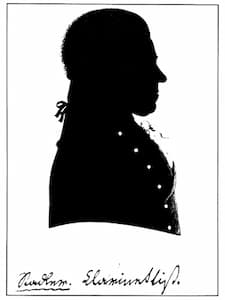
Silhouette of Anton Stadler

Silhouette of Anton Stadler

Mozart composed the Clarinet Concerto for Anton Stadler and for the basset clarinet. Yet, for much of its history, it has been performed on the modern instrument. The basset clarinet is essentially an extended version of the soprano clarinet featuring additional keys that extend the lower range down a major third.

And according to Meyer, it is the only instrument that should be exclusively used. “The work was composed for a basset clarinet, and today we know much more about its history and original version than 40 years ago.”

“Of course, you can play it on the flute or viola or even on a normal A clarinet. But those are adaptations, and these instruments don’t have the astounding range of the basset clarinet which Mozart explicitly used in his concerto.” (Schwarz, Bachtrack, 2018)  

No Compromise

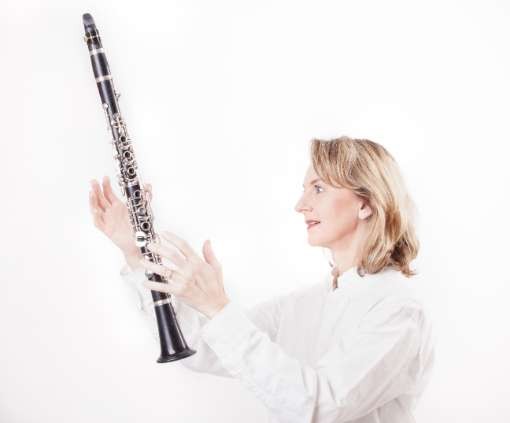
Sabine Meyer

Sabine Meyer © Christian Ruvolo

In an earlier interview with Bruce Duffie, Sabine Meyer and her husband Reiner forcefully argued for the use of the basset clarinet. “You have to use the basset clarinet as it is the original instrument for this concerto… This is what Mozart wanted.”

Asked if it was wrong to use the standard clarinet, she answered resoundingly yes. Her husband explained in more detail. “You should imagine a pianist who plays a Mozart concerto on a piano that has four tones missing.”

“For any Mozart Concerto, it is impossible. No one would do it, but it has been done to the Clarinet Concerto for nearly two hundred years. I don’t think anybody should play it on a normal clarinet with orchestra, but students and music schools must do it because it’s very expensive to buy a basset clarinet for only this one piece.” (Duffie, Sabine Meyer, 1994)   

The Perfect Union

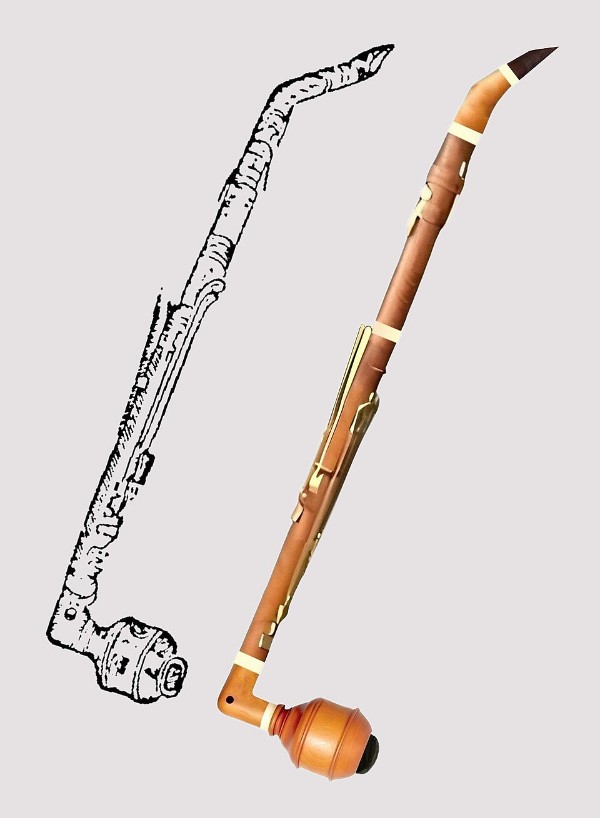
Basset clarinet by Anton Stadler 1789 (sketch) with replica

Basset clarinet by Anton Stadler 1789 (sketch) with replica

The combination of Sabine Meyer and the basset clarinet provides a compelling interpretation of Mozart’s clarinet masterpiece. The instrument restores Mozart’s original intentions and allows every passage to flow naturally without transpositions.

Because the lower range is extended, we hear a darker and more velvety tone that produces a richer palette of colours. Some critics have suggested that those low passages now descend with natural elegance, giving the music a more satisfying architectural shape.

Once you combine Meyer’s refined artistry with the authentic sound of the basset clarinet, you are treated to a new listening experience. I would suggest that this combination produces an intuitive understanding of the concerto’s true character.

10 Greatest Piano Concertos (And the Most Popular Performance of Each)

 by Emily E. Hogstad  April 6th, 2026


Over the next 250 years, composers have created thousands of piano concertos.

Most have since fallen into obscurity…but a handful still dominate in concert halls, on recordings, and on our YouTube algorithms.

There’s no such thing as an objective top ten, but here’s our subjective one: a list of the ten greatest piano concertos in classical music, a brief overview of what makes each one so appealing, and a link to the most popular YouTube performance of each concerto.

10. Bartók – Piano Concerto No. 3 (1945)   

Bartók wrote his Third Concerto while terminally ill, determined to leave behind a piece of music that could help support his wife, pianist Ditta Pásztory, after his death.

The concerto is luminous while retaining folkish charm, and far less aurally thorny than his earlier concertos.

Its slow movement, marked Adagio religioso and starting at 8:17, is particularly sublime: a deeply moving farewell from one great artist to another.
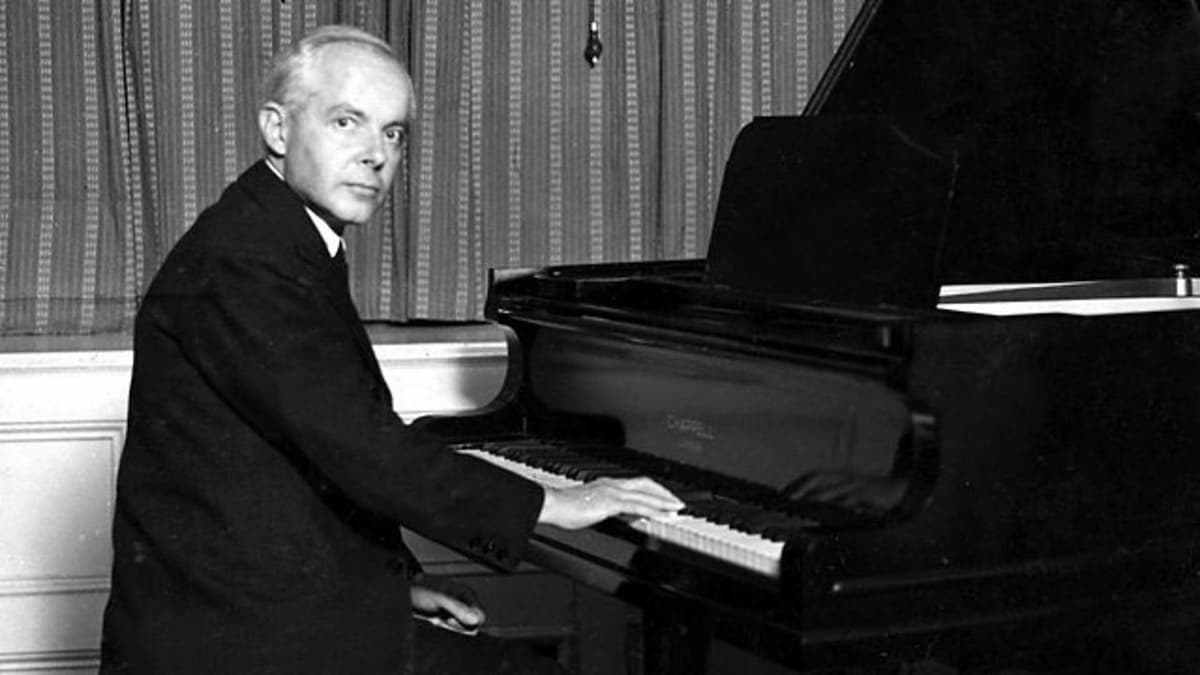
Béla Bartók at the piano

Béla Bartók

Bartók died before finishing the orchestration; his friend Tibor Serly completed the final bars.

The concerto quickly became one of his most beloved and most performed works.

We wrote about Bartók’s love affair with Ditta.

9. Ravel – Piano Concerto (1931)   
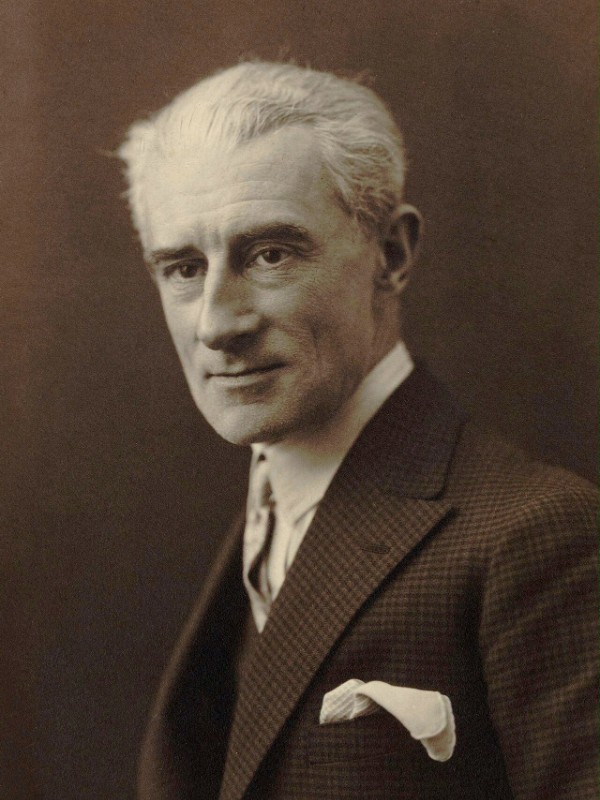
Maurice Ravel in 1925

Maurice Ravel in 1925

Inspired by a number of sources – including GershwinMozartSaint-Saëns, and the rhythms of Basque music and jazz – Ravel spent three years between 1929 and 1931 writing a piano concerto that combined virtuosity with beauty and bite.

Ravel initially planned to premiere it himself, but by the early 1930s, his physical stamina had declined, so the brilliant pianist Marguerite Long took the solo role.

The result is one of the twentieth century’s most stylish and crowd-pleasing piano concertos.

Its bustling first movement kicks off with one of the most famous moments in the entire repertoire: a snappy whip crack!

We wrote an article about the many inspirations behind Ravel’s concerto.

8. Prokofiev – Piano Concerto No. 3 in C major (1921)   

Prokofiev assembled this concerto from sketches dating back to 1913 and completed it in 1921, after fleeing Russia during the Revolution.
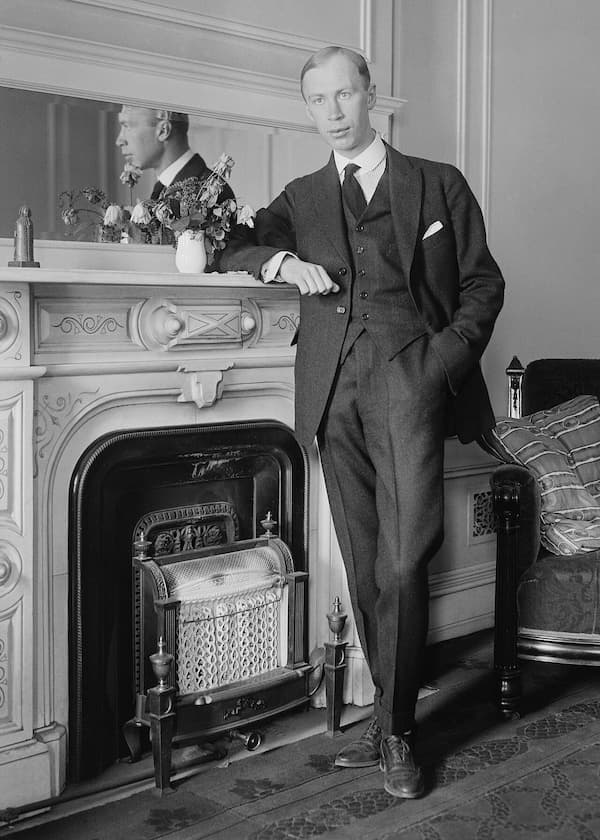
Sergei Prokofiev, 1918

Sergei Prokofiev, 1918

It became his breakout showpiece as a touring pianist: bright, sardonic, rhythmically charged, and technically brutal in the best possible way.

The brilliant dialogue between piano and orchestra, especially in the finale (which Prokofiev labeled “an argument”), established the Third as one of the true virtuoso warhorses of the century.

7. Brahms – Piano Concerto No. 1 (1858) or Piano Concerto No. 2 (1881)   

Brahms wrote two piano concertos at very different times in his life. Both remain popular today, and the most frequently viewed video of each combines both concertos, so on this list, they’ll be sharing seventh place.
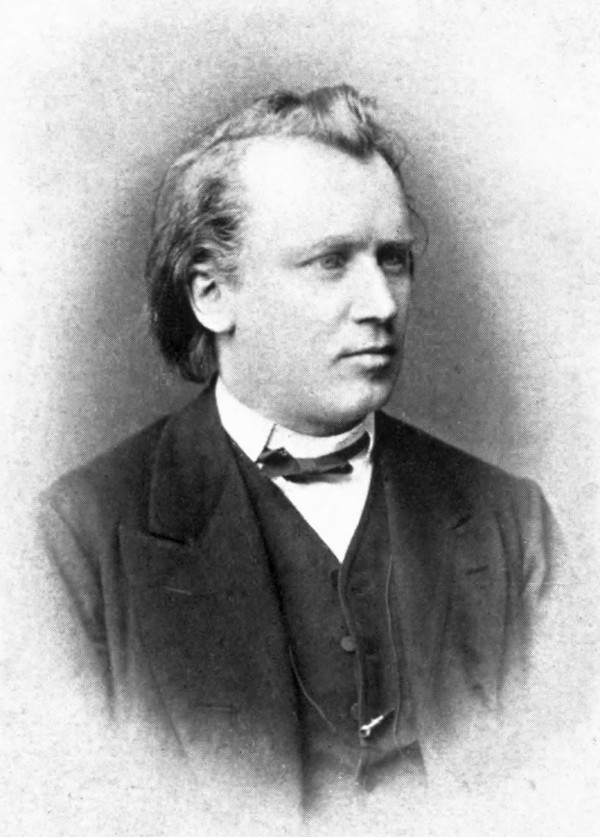
Johannes Brahms, c. 1872

Johannes Brahms, c. 1872

Brahms’s first concerto was born out of a time of intense personal crisis. Brahms was 25; his mentor Robert Schumann had suffered a mental breakdown and died two years earlier; and he was in love with virtuoso pianist Clara Schumann…who was also Robert’s widow.

The work initially began life as a symphony before becoming a stormy concerto that radiates heartbreak and raw grandeur.

The Second Concerto is in many ways its opposite: expansive, confident, autumnal. Brahms joked that its four movements made it “a very small piano concerto,” knowing full well it was a massive, symphonic epic.

The famous cello solo in the slow movement remains one of the most breathtaking moments in all Romantic orchestral music.

Read more about Brahms’s second piano concerto.

6. Grieg – Piano Concerto (1868)   

Grieg composed his only piano concerto at age 24 while living in Denmark, drawing heavily on Norwegian folk music and the natural landscapes he missed so dearly.

He even modeled its opening on Robert Schumann’s piano concerto, which he deeply admired, right down to the timpani-backed flourish.
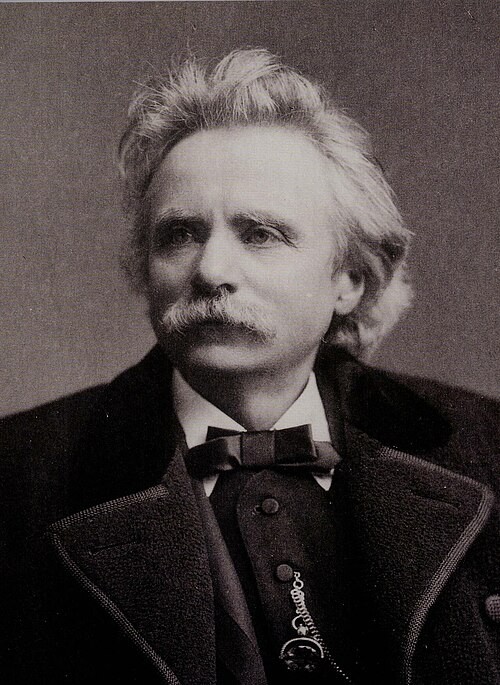
Edvard Grieg

Edvard Grieg

Premiered in Copenhagen and revised many times throughout Grieg’s life, it became one of the most recognisable concertos ever written.

Its sweeping lyricism and cinematic piano part have made it a staple of the repertoire for over a century. It seems just as urgent today as it did in 1868.

Looking for other interpretations to compare? We made this list of the best recordings of Grieg’s Piano Concerto to help you find your favourite. (You might be surprised about what we thought about this particular performance.)

5. Beethoven – Piano Concerto No. 5 (1809)  

Beethoven wrote his final piano concerto during Napoleon’s siege of Vienna, composing amidst cannon fire and political chaos.

Although the subtitle “Emperor” wasn’t given or sanctioned by Beethoven, listeners heard something imperial in the work’s nobility and scale, and the name stuck.
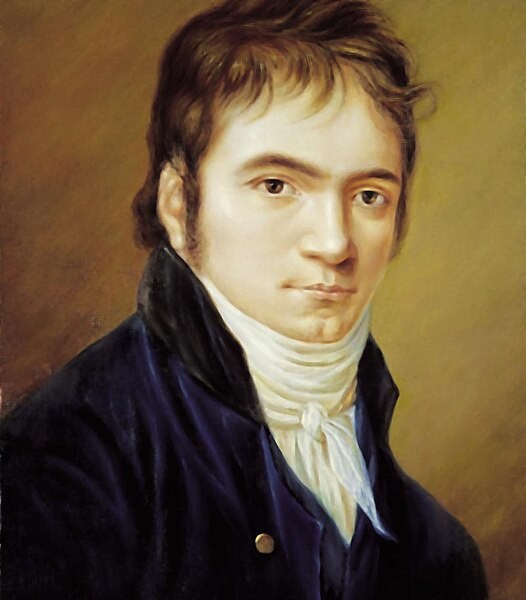
Christian Honeman: Ludwig van Beethoven, 1803 (Beethovenhaus Bonn)

Christian Honeman: Ludwig van Beethoven, 1803 (Beethovenhaus Bonn)

With its opening cadenza-like flourish and its seamless transition between the last two movements, the concerto redefined what a piano concerto could sound like.

Because Beethoven’s deafness prevented him from playing the premiere, his student Carl Czerny introduced it to the world.

It became a template for the next generation of the emotional impact a Romantic piano concerto could have.

We wrote about what the premiere of the Emperor Concerto was really like, and how this masterpiece was initially received.

4. Tchaikovsky – Piano Concerto No. 1 (1875)   

Tchaikovsky struggled to find a pianist who believed in this concerto: its original dedicatee, Nikolai Rubinstein, infamously declared it unplayable.

Hurt but undeterred, Tchaikovsky gave the premiere to German pianist Hans von Bülow instead.

From the iconic horn-and-piano opening to the fiery finale rooted in Ukrainian folk tunes, the concerto marries virtuosity with full-blooded emotions.
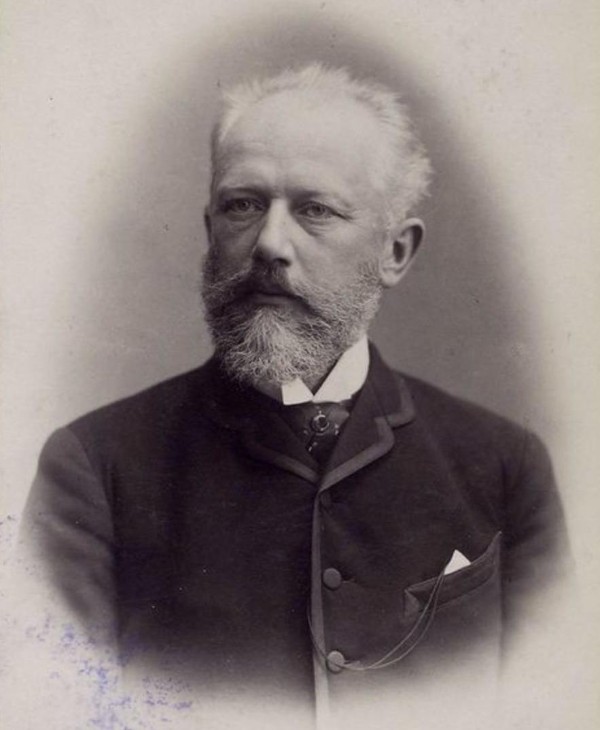
Pyotr Ilyich Tchaikovsky

Pyotr Ilyich Tchaikovsky

Rubinstein was mistaken to ever criticise it so harshly, and eventually he realised it: he later retracted his criticism.

Today, it is arguably the most recognisable piano concerto ever written.

We looked at the history and premiere of Tchaikovsky’s first concerto.

3. R. Schumann – Piano Concerto (1845)   

Robert Schumann originally wrote the first movement of this concerto as a Phantasie for his new wife, Clara, wanting to showcase her talents as one of Europe’s finest pianists.

Upon her urging, he later expanded it into a full concerto, crafting a deeply sincere work that feels more like heartfelt chamber music than an extroverted virtuoso showpiece.
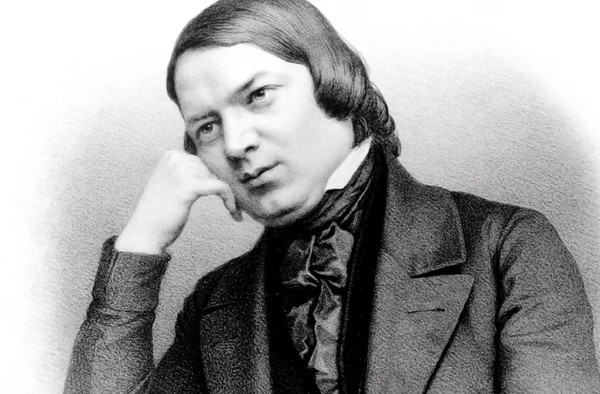
Robert Schumann

Robert Schumann

In addition to being an all-around great piano concerto, it also captures the emotional intimacy of the Schumann marriage, featuring dialogue between soloist and orchestra, great tenderness, some agitation, and a final burst of joy.

2. Mozart – Piano Concerto No. 21 (1785)   

Mozart wrote this concerto at the height of his Vienna popularity, during a period when he was tossing off masterpieces at astonishing speed.

He premiered it himself in a Lenten subscription concert. Lent was a time of year when, in deference to the season, opera was not presented, and instrumental music reigned supreme. During these forty days, listeners were starved for operatic drama, and Mozart delivered.

The middle movement – with its floaty, aria-like melody – became famous in pop culture after it was used in the 1967 film Elvira Madigan.
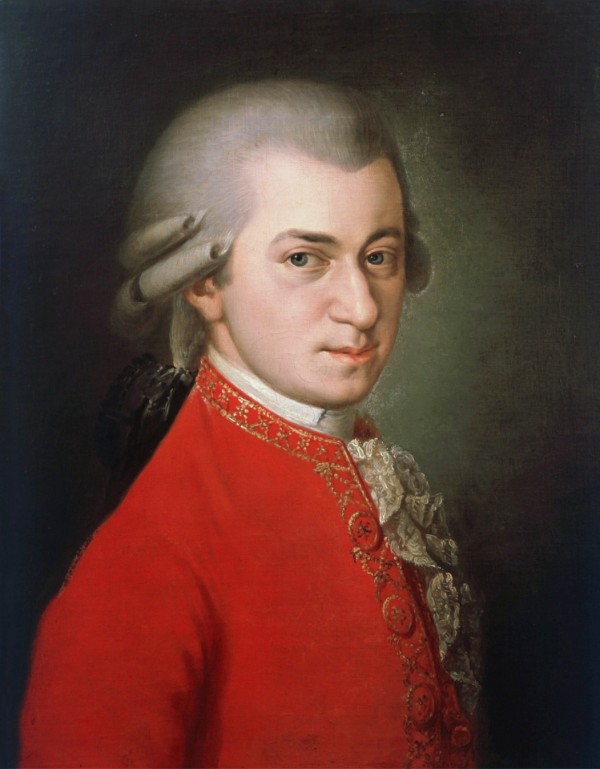
Barbara Krafft: W. A. Mozart, 1819 (Gesellschaft der Musikfreunde)

Barbara Krafft: W. A. Mozart, 1819 (Gesellschaft der Musikfreunde)

The concerto as a whole shows Mozart at full command of drama, humour, and operatic lyricism, with sparkling outer movements that would be at home in any overture.

Read and find out why these Mozartean Viennese piano concertos are so magical.

1. Rachmaninoff – Piano Concerto No. 2 (1901)   

Rachmaninoff’s Second Concerto emerged from the composer’s deep depression.

After the catastrophic premiere of his first symphony, he stopped composing entirely until hypnotist Dr. Nikolai Dahl helped him rebuild his confidence.

The concerto is both a self-resurrection and a confession: dark, sweeping, vulnerable, and unforgettable.
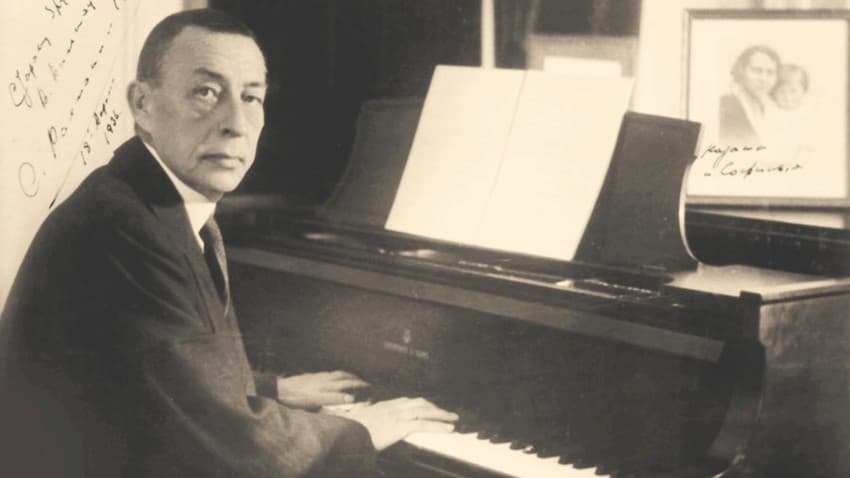
Sergei Rachmaninoff

Sergei Rachmaninoff

Its melodies have proved to be irresistible to popular culture and have been featured in everything from classic 1940s films to modern pop songs (“All By Myself”).

One simple statistic proves what a hit this work is: just this one performance alone has garnered 47 million views.

We looked at the story behind how Rachmaninoff’s concerto turned into “All By Myself” here…and why the Rachmaninoff estate collected so much money in royalties.

Conclusion

Taken together, these ten concertos trace more than two centuries of musical evolution: from Mozart’s crystalline classicism to Rachmaninoff’s brooding late-Romantic sweep, from Brahms’s symphonic weight to Bartók’s luminous farewell.

Each piece survived changing fashions because it offers something listeners continually return to: deep emotion, irresistible drama, and the thrill of watching a virtuoso pianist in full flight.

Whether you’re discovering these masterworks for the first time or revisiting old favourites, the performances linked above offer a window into why these concertos remain cornerstones of the repertoire.

Their popularity isn’t an accident; it’s proof of the piano concerto’s enduring power.

12 Forgotten Women Composers Born In the Baroque Era

The Baroque Era, lasting roughly from 1600 to 1750, was a golden age for classical music, yet the names most often celebrated today are almost entirely male.

However, a remarkable group of women composers were writing music for royal courts, church services, and private salons across Europe.

These women not only mastered composition but often had to fight to get anyone to take them seriously as artists.

Here are twelve female composers of the Baroque and early Classical eras whose works deserve to be heard and celebrated once again.

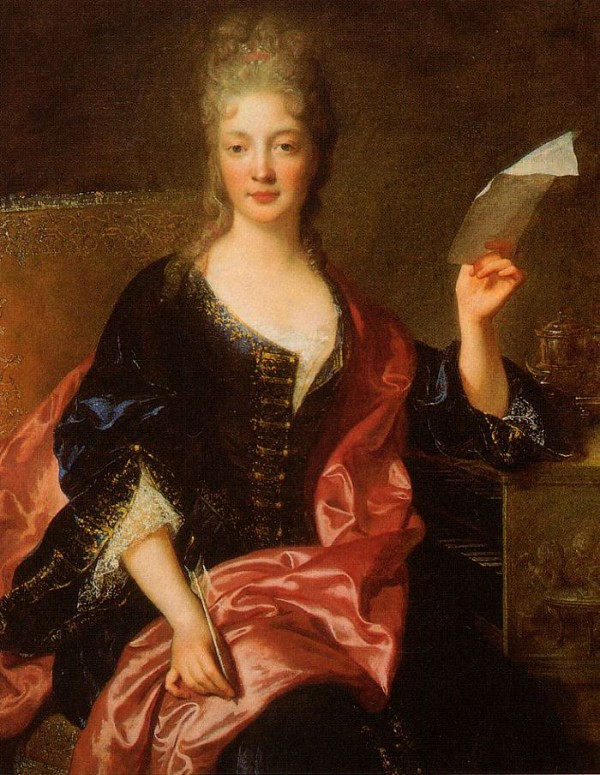
Élisabeth Jacquet de La Guerre (1665–1729)   

Élisabeth Jacquet de La Guerre was born in Paris in 1665 to a musical family.

She was a prodigy and performed for Louis XIV at the age of five. She ultimately joined the French court as a musician and continued dedicating works to the king for the rest of her life.

Élisabeth Jacquet de La Guerre

Élisabeth Jacquet de La Guerre

She published her first works – a book of harpsichord pieces – in 1687, when she was 22.

She went on to compose sonatas, cantatas, ballets, operas, and more.

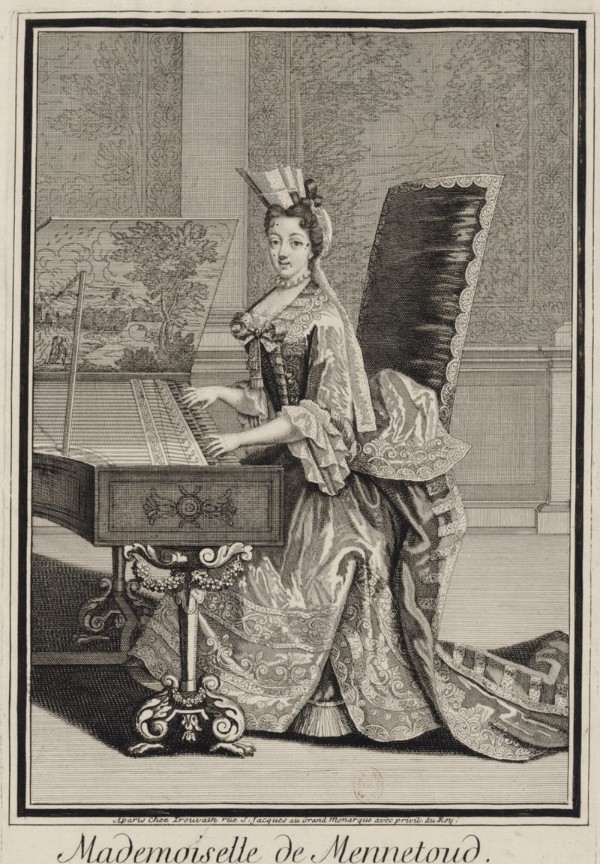
Françoise-Charlotte de Senneterre Ménétou (1679–1745)   

Françoise-Charlotte de Senneterre Ménétou was born to an aristocratic French family in 1679. When she was nine, she (like Jacquet de La Guerre) appeared before Louis XIV.

Françoise-Charlotte de Senneterre Ménétou

Françoise-Charlotte de Senneterre Ménétou

In 1691, when she was twelve, the first collection of her works was published. She became the youngest woman composer to have her music published by the royal printer.

She married at nineteen and gave birth to her only surviving son the following year.

Camilla de Rossi (fl. 1670–1710)   

There is much we still don’t know about Camilla de Rossi, such as her birth and death dates.

We do know that she was active in the late part of the seventeenth century and early part of the eighteenth century in northern Italy and Austria.

She was commissioned by Emperor Joseph I of Austria (who reigned between 1705 and 1711) to write four oratorios, which were all performed at the royal chapel.

She has been praised by performers and scholars for the emotional impact of her vocal parts and her expertise at instrumental writing.

Maria Margherita Grimani (1680–fl.1720)   

Maria Margherita Vitalini was born in 1680. She married a lawyer professor who worked at the University of Bologna.

During the eighteenth century, Italian composers were fashionable to hire in Vienna. Grimani became the first woman to have an opera performed at the Vienna Court Theater.

She also wrote oratorios to celebrate Emperor Charles VI’s military triumphs.

We don’t know when or where she died.

Rosanna Scalfi Marcello (ca. 1704–fl. 1742)   

We don’t know when Rosanna Scalfi Marcello was born or died, but she was professionally active in Vienna between 1723 and 1742.

A dramatic legend survives about her life. Apparently, as a young woman, she was a Venetian gondola singer.

Composer and nobleman Benedetto Marcello was enchanted by her voice, took her on as a student, and then married her.

Unfortunately, it was illegal for a nobleman to marry a commoner, and after Marcello died, Rosanna was left scrambling for financial support…which his family would not provide to her.

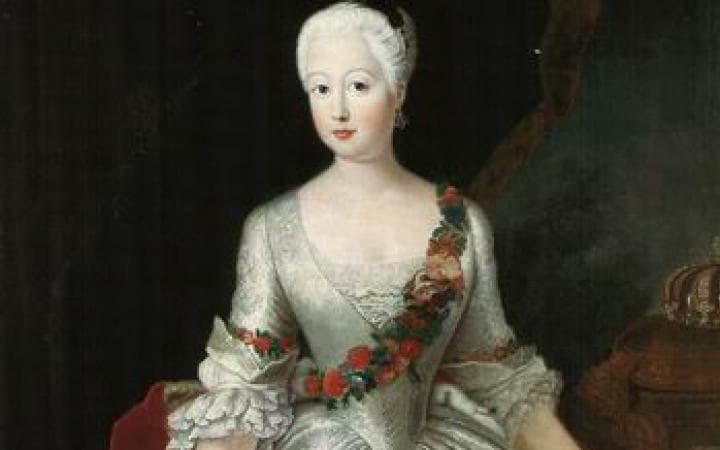
Wilhelmine of Prussia (1709–1758)  

Wilhelmine is best remembered today as the older sister of Frederick the Great. Both suffered extensive physical and emotional abuse during their childhood.

After her brother was caught attempting to flee the country with his male lover, the family was in need of some good publicity.

Wilhelmine of Prussia

Wilhelmine of Prussia

A reluctant Wilhelmine agreed to get married to Frederick, Margrave of Brandenburg-Bayreuth. The couple worked to make Bayreuth a center of architecture and intellectualism.

Wilhelmine was a talented musician and composer. In 1740, she wrote an opera for her husband’s birthday.

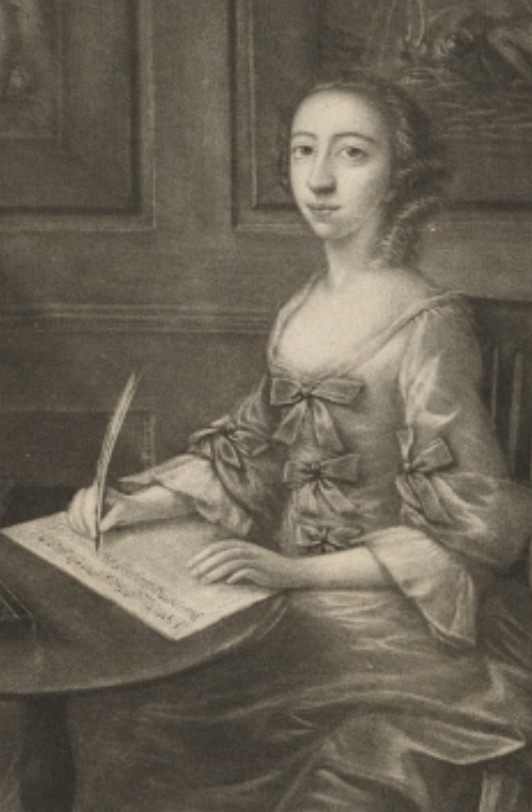
Maria Teresa Agnesi Pinottini (1720–1795)   

Maria Teresa Agnesi was born in Milan in 1720 to minor nobility. Her sister Maria Gaetana Agnesi, two years her senior, was a mathematics and language prodigy.

Maria Teresa’s music was being performed and commented upon by foreign travelers when she was still in her teens.

Maria Teresa Agnesi Pinottini

Maria Teresa Agnesi Pinottini

She married in 1752, but unfortunately struggled financially, especially after her husband died young.

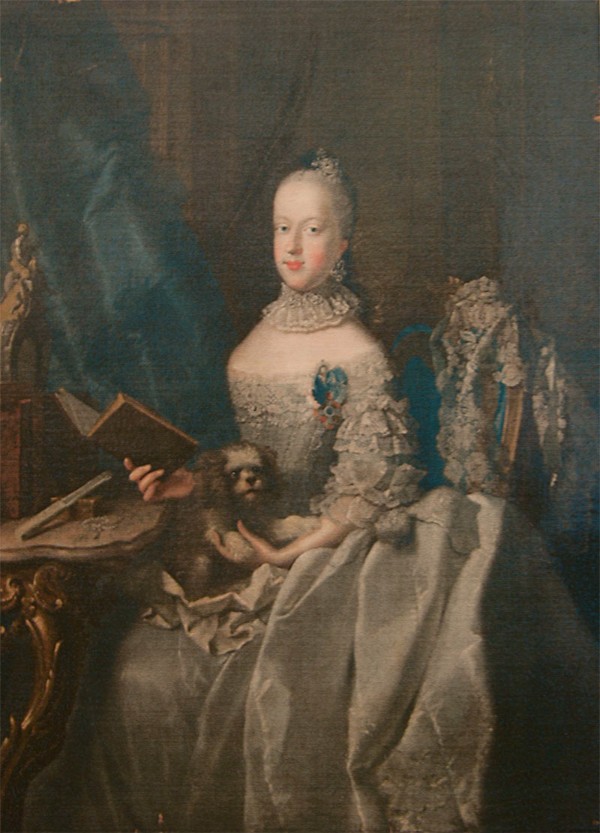
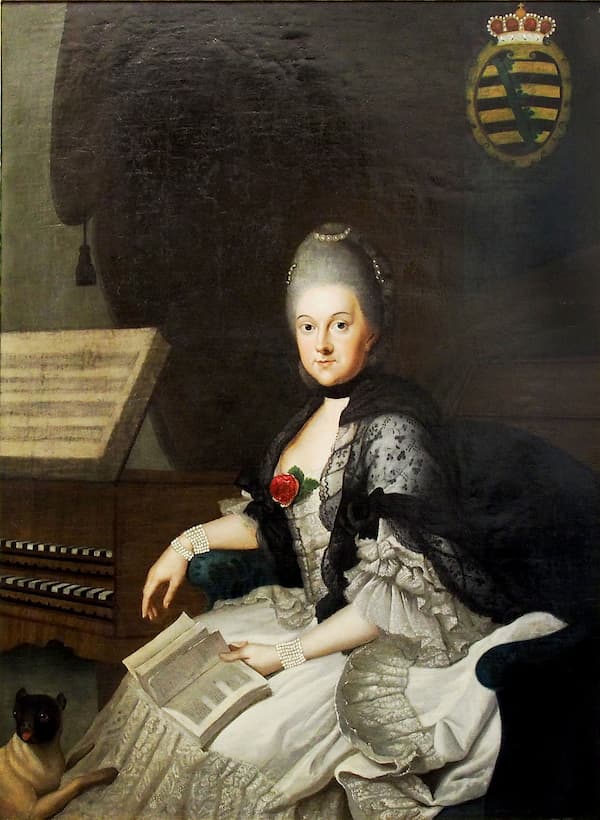
Anna Amalia of Prussia (1723–1787)  

Princess Anna Amalia of Prussia was the much younger sister of Wilhelmine.

She suffered the same abusive childhood that her siblings had, and used her music studies to escape the cruelty she endured.

Anna Amalia, Princess of Prussia

Anna Amalia of Prussia

Her first teacher was her older brother Frederick, and she learned to play the violin, harpsichord, and the flute (his specialty).

She managed to avoid being married off to a foreign stranger, albeit narrowly, and in 1755 was elected princess-abbess of the Free Secular Imperial Abbey of Quedlinburg.

This position gave her the income and prestige and allowed her to study music and compose.

During her adulthood, she took lessons from Johann Kirnberger, who had once studied with Johann Sebastian Bach.

Elisabetta de Gambarini (1731–1765)   

Elisabetta de Gambarini was born in Middlesex, England, in 1731 to a nobleman from Lucca, Italy.

She sang in a production of Handel’s Occasional Oratorio in February of 1746, when she was fourteen. The oratorio had been finished just days before the performance. She later went on to sing in a number of other Handel performances.

Elisabetta de Gambarini

Elisabetta de Gambarini

Her Opus 1, The Six Sets of Lessons for the Harpsichord, was published in 1748, making her the first British woman to publish keyboard music. She continued composing and publishing for years to come.

She married in March 1764 and died less than a year later, in February 1765. She left behind one daughter, birth date unknown; it is possible that she died in childbirth.

Anna Bon (1738–post-1769)   

Anna Bon was born in 1738 in Bologna to a librettist father and singer mother.

She began studying at the Ospedale della Pietà in Venice when she was just four years old. The school was famous for its effective training of high-level women musicians.

By eighteen, she rejoined her family, who had settled in Bayreuth. She was named court “chamber music virtuosa”, and dedicated her Op. 1 to the reigning margrave there in 1756.

By 1767, she had married a singer and gone to Thuringia, but we don’t know much more about her, or when she died.

Duchess Anna Amalia of Brunswick-Wolfenbüttel (1739–1807)   

The duchess was born in 1739 in Schloss Wolfenbüttel in Wolfenbüttel, part of a genealogical web of European royalty. Her niece would become Queen Caroline, wife of Britain’s George IV.

As part of her royal education, she studied theology and music. Music was in her blood; her mother was an amateur composer.

Duchess Anna Amalia of Brunswick-Wolfenbüttel

Duchess Anna Amalia of Brunswick-Wolfenbüttel

She married the Duke of Saxe-Weimar-Eisenach in 1756, when she was just sixteen. Her husband died two years later while she was pregnant with their second son, so she stepped up to lead the regency.

She used her new power to promote the arts and intellectualism in Weimar. Although her court was never wealthy, she helped to attract and support Goethe and Schiller during pivotal times in their artistic development.

She died in 1807 at the age of 67.

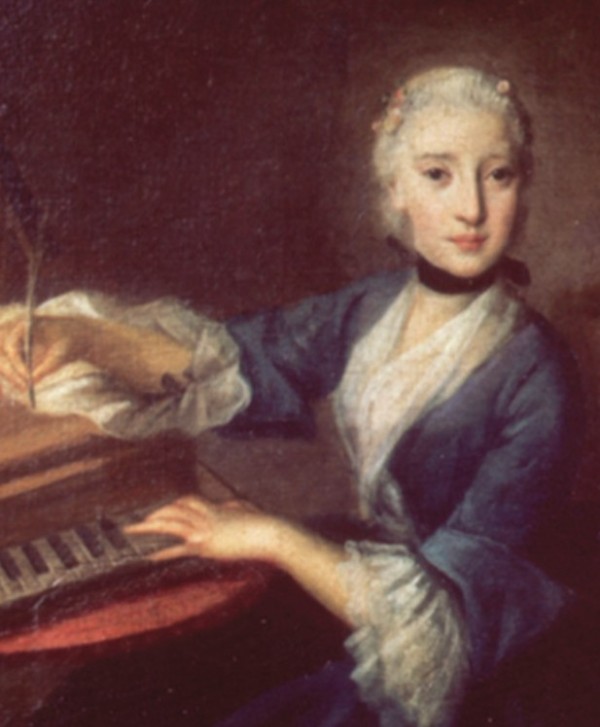
Anne Louise Brillon de Jouy (1744–1824)  

Anne Louise Brillon de Jouy was born in Paris in 1744 to a royal tax clerk and his wife. She began her keyboard studies as a little girl.

In 1763, she married a tax clerk named Jacques Brillon de Jouy, who was more than twice her age at the time. They had two daughters together.

Anne Louise Brillon de Jouy

Anne Louise Brillon de Jouy

She continued composing and music-making even after her marriage. (She would eventually write close to a hundred works.)

Instead of making a name for herself on the public stage, she became famous for her twice-a-week salons in her home, which were attended by the greatest musicians of the age.

In 1767, Boccherini dedicated his Six Sonatas for Pianoforte and Violin, Op. 5, to her, praising her abilities. (The pianoforte was, at the time, a relatively new instrument.)

Meanwhile, composer and music historian Charles Burney declared her “one of the greatest lady-players on the harpsichord in Europe.”

She also befriended political figures such as Benjamin Franklin, who became a long-term correspondent.

Conclusion

The stories of these women from France, Italy, Austria, Prussia, and beyond remind us that the Baroque era’s musical landscape was far richer and more diverse than its surviving canon suggests.

Each of these composers carved out a space for female creativity and musicality in a world that rarely made room for it.

Who is your favourite woman composer from the Baroque Era?