Jumlah Paparan Halaman

Jumaat, 3 April 2026

Why Do We Feel Good Listening to Classical Music?


why do we feel good listening to classical music

The Science Behind Classical Music and the Brain

Music, in general, has profound effects on the brain, but classical music is often credited with unique benefits. Studies show that listening to classical compositions can stimulate neural activity, enhance memory, and even aid in mental health treatment.

  1. Impact on Brain Waves Classical music has been shown to influence brain wave activity, particularly in promoting relaxation and focus. The human brain operates on different frequencies, such as:

    • Beta waves (14-30 Hz): Associated with active thinking and problem-solving.
    • Alpha waves (8-14 Hz): Linked to relaxation and a meditative state.
    • Theta waves (4-8 Hz): Related to creativity and deep relaxation.
    • Delta waves (0.5-4 Hz): Common during deep sleep.
  2. Classical music, especially compositions with slow tempos and harmonious structures, tends to encourage the production of alpha and theta waves. These states help with stress reduction, creativity, and overall mental clarity.

  3. Neurotransmitter Release and Emotional Regulation Listening to classical music can trigger the release of important neurotransmitters, such as:
    • Dopamine: The “feel-good” chemical associated with pleasure and motivation.
    • Serotonin: Linked to mood regulation and reduced anxiety.
    • Oxytocin: Often called the “love hormone,” which fosters feelings of connection and trust.
  4. These biochemical responses explain why many people experience a sense of calm and happiness when listening to classical music.

Does Mozart and Bach Really Improve Mood and Intelligence?

The idea that listening to classical music, particularly Mozart, can enhance intelligence has been popularised through the term The Mozart Effect.” This theory suggests that listening to Mozart’s compositions can temporarily boost cognitive abilities.
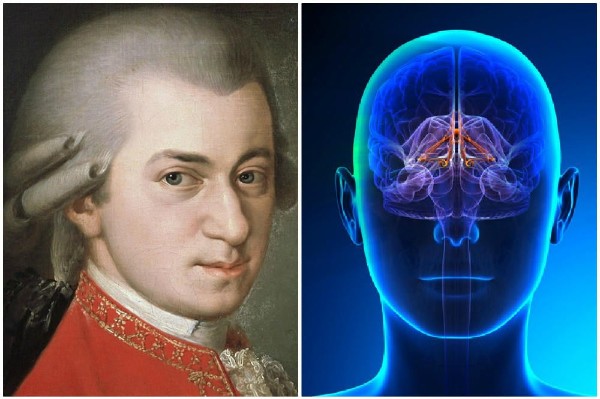
Mozart's music effect on the brain

© learning-mind.com

  1. Origins of the Mozart Effect The concept gained traction in 1993 when a study conducted by Rauscher, Shaw, and Ky reported that students who listened to Mozart’s Sonata for Two Pianos in D Major performed better on spatial reasoning tasks. However, the effects were temporary and did not indicate a lasting increase in intelligence.

  2. Criticism and Further Research While the original study sparked public interest, later research found that the Mozart Effect is more about enhancing mood and focus rather than directly increasing IQ. Listening to enjoyable music, regardless of genre, has been linked to improved concentration and cognitive function.

  3. Why Bach and Mozart Are Special Despite the controversy, composers like Bach and Mozart are known for their structured, harmonious compositions, which have a soothing and stimulating effect on the brain. Their music is often used in therapy sessions, workplaces, and schools to improve focus, creativity, and relaxation.  

Scientific Studies on Classical Music’s Benefits

Research has continually reinforced the positive effects of classical music on mental and physical well-being. Some notable findings include:

  1. Stress and Anxiety Reduction

    • A study published in Psychoneuroendocrinology found that classical music significantly lowers cortisol levels (the stress hormone), helping individuals relax and cope with anxiety.

    • Another study demonstrated that patients who listened to classical music before surgery experienced lower blood pressure and reduced preoperative anxiety.
  2. Improved Memory and Learning

    • Research conducted by the Stanford University School of Medicine found that classical music helps the brain absorb and interpret new information more effectively. This is particularly useful for students and individuals engaging in complex learning tasks.

    • Classical compositions with a moderate tempo can aid in memory retention, as they provide an ideal background for studying and problem-solving.
  3. Pain Management and Healing

    • Hospitals have incorporated classical music into recovery programs, as studies suggest it can help reduce pain perception and enhance the healing process.

    • Patients recovering from surgery have reported experiencing less discomfort when exposed to soothing classical pieces.
  4. Better Sleep Quality

    • Classical music, particularly pieces with a slow tempo and minimal percussion, can help individuals fall asleep faster and achieve deeper sleep cycles.

    • A study conducted by researchers at the University of Toronto found that listening to classical music before bed improved sleep patterns and overall sleep quality.

Why Does Classical Music Feel So Good?

There are multiple reasons why classical music has a uniquely positive effect on our emotions and mental state:

Music and the brain

© hub.yamaha.com

  1. Predictable Structure and Harmony Classical compositions often follow well-defined structures that create a sense of balance and order. This predictability can be soothing to the brain, reducing mental fatigue and stress.

  2. Lack of Lyrics Unlike pop or rock music, classical music is predominantly instrumental. The absence of lyrics allows the brain to focus without distraction, making it an excellent aid for concentration and meditation.

  3. Richness in Sound and Complexity Classical music contains intricate harmonies and dynamic contrasts that engage different parts of the brain. This complexity can be mentally stimulating while simultaneously providing relaxation.

  4. Timeless Beauty and Emotional Depth From the gentle melodies of Chopin’s nocturnes to the grandeur of Beethoven’s symphonies, classical music evokes a wide range of emotions, providing listeners with deep emotional experiences and a sense of catharsis.  

The Power of Classical Music in Everyday Life

Listening to classical music is more than just an auditory pleasure; it is a scientifically supported method for improving mental health, cognitive abilities, and emotional well-being. Whether you are seeking relaxation, focus, or inspiration, incorporating classical compositions into your daily routine can provide lasting benefits.

While the “Mozart Effect” may not permanently raise IQ levels, classical music remains one of the most effective tools for enhancing mood, reducing stress, and fostering mental clarity. The next time you need a boost in concentration or a moment of peace, consider turning on a piece by Mozart, Bach, or Beethoven—you may be surprised at just how much it transforms your state of mind.

Heartstopping Memory Lapses From Classical Music History

Even the greatest classical musicians – those renowned the world over for their superhuman discipline and focus – have moments when everything just goes blank.

In an era when memorisation is seen as a prerequisite for performing, memory lapses have destroyed confidence and ended careers.

However, these mistakes also highlight the humanity of the musicians who made them…and will hopefully make you feel a little less alone every time you step onstage yourself!

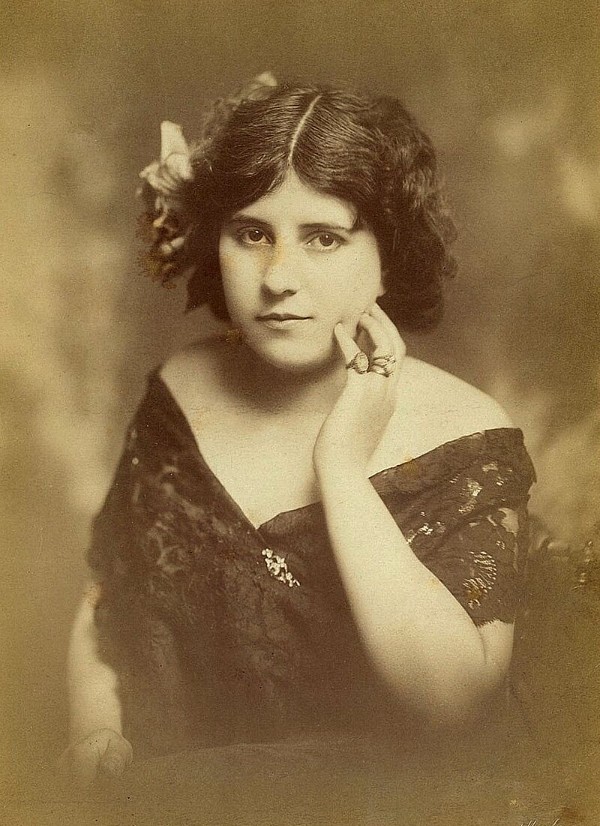
Adelina de Lara, ca. 1907

Adelina de Lara

Adelina de Lara

Adelina de Lara was a British pianist born in 1872. Although she is forgotten today, she led a colourful life and career.

In 1955, at the age of 83, she published a remarkably frank memoir called Finale.

In it, she discusses a life-changing memory lapse that traumatised her so badly that she refused to play concertos again for decades afterwards.

She was performing the Robert Schumann piano concerto with conductor Landon Ronald in Birmingham. (The exact date of the concert is unclear, but it would have been sometime around 1907.)

The morning of the concert, Landon told her that she was playing “splendidly” and that he was looking forward to the concert.

He then made a fateful throwaway remark: “The last three times I have conducted the Schumann concerto, the pianist’s memory has failed during the performance!”  

De Lara immediately had a physical reaction. The way she describes it sounds like what we might call a panic attack today: chills, weak knees, an adrenaline rush, and a sudden inability to concentrate.

As she’d recount in her book decades later:

“I played the second movement and began the third. I was making fine progress; Landon was conducting superbly. And then, at the repetition of the brilliant third subject — it happened! I played a phrase with both hands an octave lower than it is written. Only one bar — but I lost my head. It put me right out — panic seized me.”

Landon stopped the orchestra. She rushed backstage and burst into tears. Nobody came to check on her. She was scheduled to play solo works by Chopin after the intermission, but she was so horrified she fled to her hotel instead.

She wrote in her memoir:

“It was the worst thing I could have done. I blamed only myself, but after all these years, other musicians have told me Landon was to blame. He should have gone on directing the orchestra, and I could have come in again.”

She returned to her home in London the next day. Her partner asked what had happened. After she explained, he told her the memory slip wasn’t the problem; it was the fact that she hadn’t gone back to try a second time. In response, she declared that she’d never play another concerto again.

Adelina de Lara ended up having a nervous breakdown over the event. And true to her word, she didn’t accept a single concerto invitation for 27 years afterwards.

Still, she had regrets:

“Only when I did at last play successfully the Schumann Concerto from memory with Claud Powell, conductor of the Guildford Symphony Orchestra, did I write to Landon and tell him. It was a few years before his death. This letter shows how foolish I had been to let my nerves get the better of me for so long. If only I had had it sooner!”  

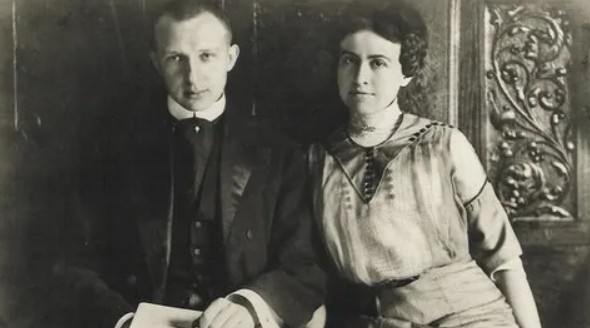
Olga Samaroff, 1917

Olga Samaroff and Leopold Stokowski

Olga Samaroff and Leopold Stokowski

Pianist Olga Samaroff – the exotic stage name of American pianist Lucy Hickenlooper – made a disastrous early marriage to a wealthy Russian man in 1900. He forced her to give up her performing career, which was just taking off at the time.

Four years later, she left him and sailed back to America to reinvent herself as a piano soloist. Her hard work paid off, and she became a prominent pianist in both the United States and Europe.

Around 1905, she met the organist and choirmaster at St. Bartholomew’s Church in New York City, a man by the name of Leopold Stokowski. She liked him and pulled strings to help get him the music directorship at the Cincinnati Symphony, which assured his American career.

They ended up marrying in 1911. In June 1912, Stokowski was hired to become the music director of the Philadelphia Orchestra, a post he would retain for decades.

Although Samaroff cut back somewhat on her concert career after the wedding, they did still enjoy performing together, with Stokowski on the podium and Samaroff at the piano.   

Unfortunately, their marriage ran into trouble quickly. Stokowski was terminally unfaithful to Samaroff. World War I was difficult on both of them, given their sympathy for German musical culture. Minor irritations grew more heated, and they started hating the sound of hearing the other practice.

The marital tension came to a head in January 1917, when Samaroff had a major memory lapse in Pittsburgh while on tour with the Philadelphia Orchestra and Stokowski. It was so severe that she was forced to stop and walk backstage to collect herself.

A few months later, she, like Adelina de Lara, had a mental breakdown over it. But she was able to rally and returned to the concert stage before the end of the year. And in 1923, she divorced Stokowski.

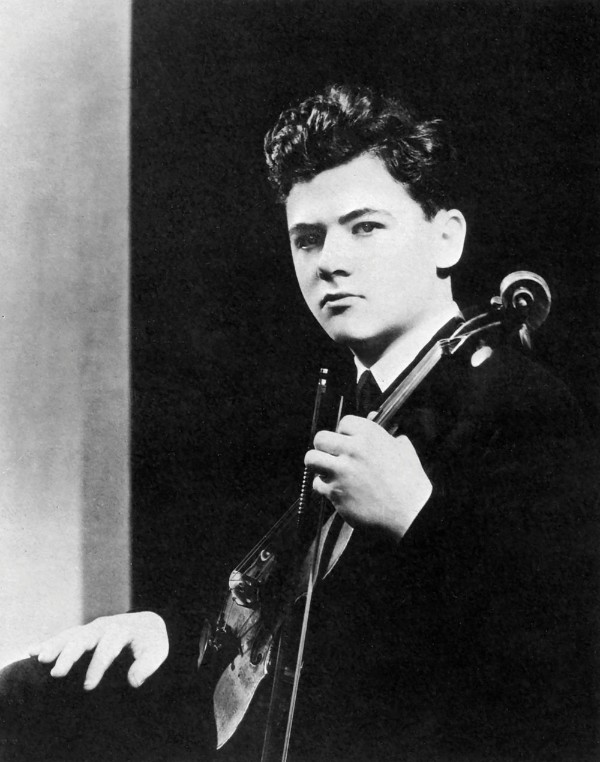
Josef Hassid, 1940

Josef Hassid

Josef Hassid

Josef Hassid, born in 1923 in Poland, is widely considered to be one of the greatest violinists to have ever lived.

In 1935, the year he turned twelve, he competed in a legendary year of the Henryk Wieniawski Violin Competition. His fellow competitors included violin giants Ginette Neveu and David Oistrakh.

While competing, he suffered a memory lapse. However, he was extended grace and allowed to continue.

In the end, he earned an honorary diploma. Fifteen-year-old Neveu placed first in the competition; 27-year-old Oistrakh second.

Still, despite the memory slip, it was clear that Hassid was headed for a major career.

He became one of the best-loved students of violin teacher Carl Flesch, who taught many of the great violinists of the early twentieth century.   

In early 1940, the year he turned seventeen, he made his concerto debut in London in the Tchaikovsky concerto, but suffered more memory lapses during the performance.

They continued with some frequency in the months to come.

A reviewer noted it in a performance of the Brahms concerto in March 1941:

“The solo performance was scarcely more than that of a clever student who has worked hard to memorise the concerto but is still liable to be thrown off his stroke, even to the point of forgetting his notes occasionally.”

He was suffering in his personal life, too. He had extreme mood swings and became unable to recognise people.

In June 1941, he was involuntarily committed to a mental institution and diagnosed with schizophrenia. He received insulin treatment and electroshock therapy.

In October 1950, after his father’s death, his doctors performed a lobotomy on him. He developed meningitis after the surgery and died at the age of 26.

Artur Schnabel, 1946

Artur Schnabel

Artur Schnabel

In 1946, while playing Mozart’s Piano Concerto No. 23 with the New York Philharmonic, pianist Artur Schnabel had a memory lapse in the third movement.

He had to stop, stand, and look at the conductor’s score before continuing.

When the live performance was issued on disc, a version without the mistake was included.

In 1991, the National Public Radio program “Fresh Air with Terry Gross” ran a brief segment about this infamous performance, which includes the audio of the breakdown. Contributor and critic Lloyd Schwartz declared the messier version his favourite.   

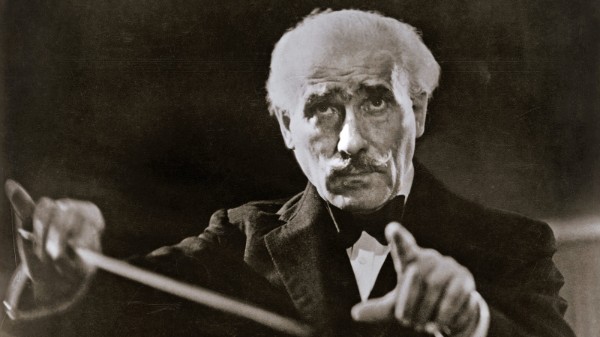
Arturo Toscanini, 1954

Arturo Toscanini

Arturo Toscanini

On 4 April 1954, indomitable and indefatigable 87-year-old maestro Arturo Toscanini led the NBC Symphony Orchestra in the Bacchanale from the opera Tannhauser. The concert was being broadcast nationally, and millions were listening.

But to his horror, he suffered a memory lapse halfway through the piece. He froze, with his arms falling to his side, his body unsure what to do. The principal cellist had to save the day by cuing in his colleagues.

The experience shook Toscanini so deeply that he decided never to conduct again.   

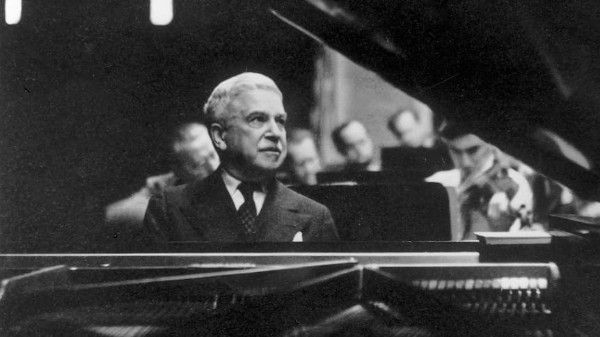
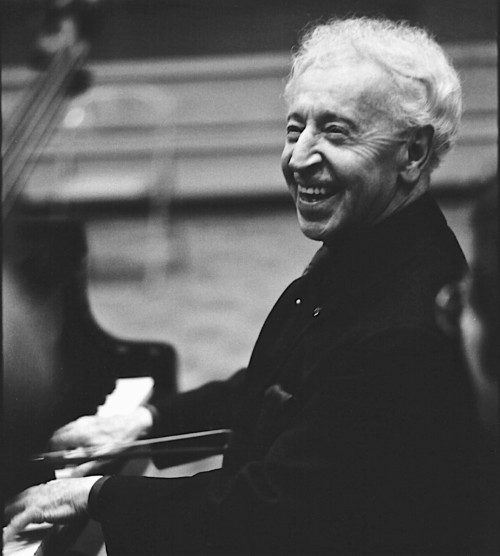
Arthur Rubinstein, 1964

Arthur Rubinstein

Arthur Rubinstein

Once, while concertizing in Moscow in 1964, Rubinstein had a memory lapse playing the scherzo from Chopin’s second piano sonata…and video exists.

Without giving any outward indication that anything was wrong, Rubinstein tried repeating the passage.

When that didn’t work to get him out of his jam, he simply ad-libbed a transition to the next section!

One wonders how many in the audience were any the wiser as to what happened.

The ironic thing is, Chopin himself disapproved of his students playing from memory: he felt that it was disrespectful to the composer and to the music. It was his colleagues, Franz Liszt and Clara Schumann, who popularised the practice, not Chopin!   

Conclusion

For audiences, a memory slip might last only seconds…or perhaps not even register at all!

However, just the memory of a single one can haunt a performer for decades. Some musicians never recovered from theirs; the others figured out how to do the mental work to get back onstage.

It’s important to remember that memory lapses are almost inevitable. They’re also nothing to be ashamed of; on the contrary, they demonstrate a musician’s humanity and artistry. And that humanity is the whole reason anyone wants to hear what you have to say in the first place!

New to classical music?

 BBC Music Magazine


New to classical music? Here’s ten works we are sure will get you hooked... Daniel Jaffé counts down ten great classical music pieces for beginners
May be an image of violin, piano and text that says 'These ten great works will inspire a lifelong love of of classical music WWW.CLASSICAL-MUSIC.COM CLASSICAL MUSIC Brughtbyou.by BOG BOGMUSIC BnugtbyubeeGmU/SIC mUsIC'

Behind the Curtain: Brahms’ Funeral Music


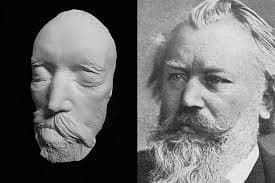
Death mask of Johannes Brahms

Death mask of Johannes Brahms

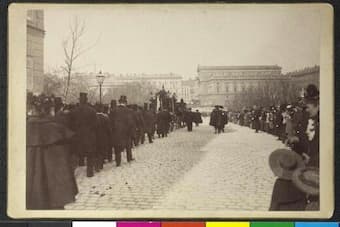
The funeral procession was organized by the Society of the Friends of Music. Brahms had served this association in various capacities for decades, and the Brahms casket was picked up from his residence adjacent to the church of St. Charles. Dignitaries from all walks of life and from all over Europe had gathered, including the composers Antonin Dvořák and Ferruccio Busoni, the pianist Emil Sauer and members of the “Female String Quartet of Vienna,” amongst numerous others. The procession stopped in front of the famous building of the Society—the New Year’s Concert of the Vienna Philharmonic is performed there every year—and a choir sang “Farewell,” from Brahms’ Songs and Romanzes Op. 93a. The procession then passed by the opera house and continued to the protestant church in the Dorotheergasse. The church choir sang the Bach chorale setting of “Jesus my sure Defense,” and Max Kalbeck reports, “Since everybody attending was Catholic, nobody knew the text or the music.”  

The church was clearly unable to accommodate the huge number of mourners, but the service got properly underway with the church choir singing an arrangement of Mendelssohn’s “It is certain in God’s wisdom,” from his 6 Songs Op. 47.

Felix Mendelssohn: 6 Gesänge, Op. 47, No. 4 “Es ist bestimmt in Gottes Rath”   

Funeral Procession for Johannes Brahms

Funeral Procession for Johannes Brahms

In his Eulogy, the pastor honored “a high priest in the truly beautiful art, and a powerful ruler in the kingdom of tones. A soul full of wonderful melodies has breathed its last sigh, and a noble man has completed his earthly troubles. Master Johannes Brahms did not die as his spirit has overcome death and ascended into the bright, blissful world of pure harmony and peace.” Schubert’s “Wanderers Nachtlied I,” setting the famed poem by Goethe, musically reinforced the message of the eulogy.

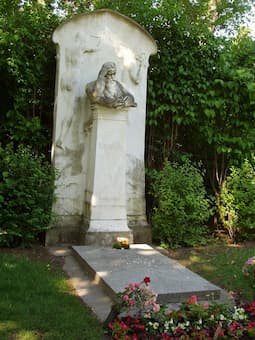
Grave of Johannes Brahms

Grave of Johannes Brahms,
Central Cemetery, Vienna

Brahms had no special wishes regarding the music to be performed at his funeral, but apparently he had quietly mentioned to a friend that he wanted to be buried close to Beethoven and Schubert at the Vienna Central Cemetery. His casket arrived there in the evening of April 6, accompanied by close friends and colleagues. In both the eulogy and the short address at the open gravesite, the speakers made reference to the 4 Serious Song, which Brahms, already sensing the end, had completed shortly before his death. For many listeners then and now, these songs represent “sounds from a higher realm, where love and peace reign forever.” Given the current struggles with Corona around the world, that’s certainly a message to keep in mind.


First 5 Women Composers Who Won the Prix de Rome


The Prix de Rome, associated with the Paris Conservatory, was a fiercely competitive award that offered its winners the chance to create with fellow prizewinners for a few years at the Villa Medici in Rome.

For much of its history, women were excluded from even entering. Fortunately, that changed in the early twentieth century.

It didn’t take long before a string of extraordinary women began proving they were up to the challenge of competing in the Prix de Rome…and winning it.

Today, we’re looking at the lives and legacies of the first five women Prix de Rome laureates – Lili Boulanger, Marguerite Canal, Jeanne Leleu, Elsa Barraine, and Yvonne Desportes – and tracing how their courage and creativity contributed to an especially rich era in French music.

About the Prix de Rome

The Prix de Rome was a prestigious French arts prize established in the seventeenth century, during the reign of Louis XIV. An award specifically for musical composition was created in the early 1800s.

For generations, the composition prize was effectively a boys’ club, closed to female competitors.

That changed in 1903, when French Education Minister Joseph Chaumié announced that women would be allowed to enter the competition.

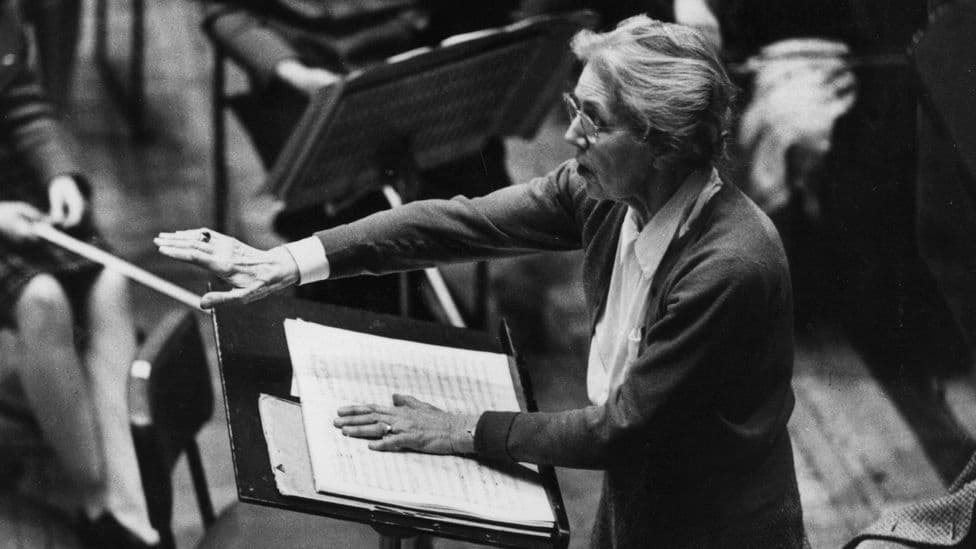
Nadia Boulanger

Nadia Boulanger

Composer Hélène Fleury-Roy won a third prize in 1904, and Nadia Boulanger won a Second Grand Prix in 1908, but neither won the grand prize.

Hélène Fleury-Roy and Nadia Boulanger may have put cracks in the glass ceiling…but the Prix de Rome would require the right woman at the right time to shatter the glass ceiling outright.

Lili Boulanger (1913)

D’un matin de printemps   

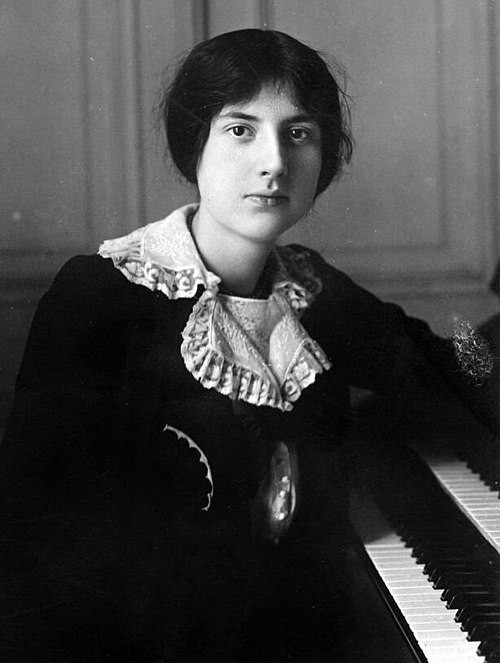
Lili Boulanger came from a distinguished musical family.

Her father was a composer and professor who had once won the Prix de Rome himself, and her elder sister Nadia Boulanger was also a talented musician who helped to teach Lili as a child.

Henri Manuel: Lili Boulanger, 1913

Henri Manuel: Lili Boulanger, 1913

Lili’s talents were evident early in life, but so were her health struggles. She suffered from chronic illness (likely Crohn’s disease or tuberculosis) that made day-to-day functioning difficult.

Despite these challenges, Lili dreamed of following in her father’s footsteps and winning the Prix de Rome, and watched her sister make a go at it herself.

In 1912, Lili competed for the first time, but collapsed from illness and had to withdraw.

Undeterred, she returned the following year, and in 1913 her cantata Faust et Hélène made her the unanimously chosen winner.

Faust et Hélène   

Boulanger’s Prix de Rome victory was hailed in the press as a breakthrough for women in music.

It also became symbolic of the progress of women’s liberation more broadly.

One newspaper contrasted her success with the actions of militant suffragettes, noting that “a maiden of France has gained a better victory” than window-smashing protesters.

Learn more about the Boulanger sisters’ relationship and their attempts to win the Prix de Rome.

Marguerite Canal (1920)   

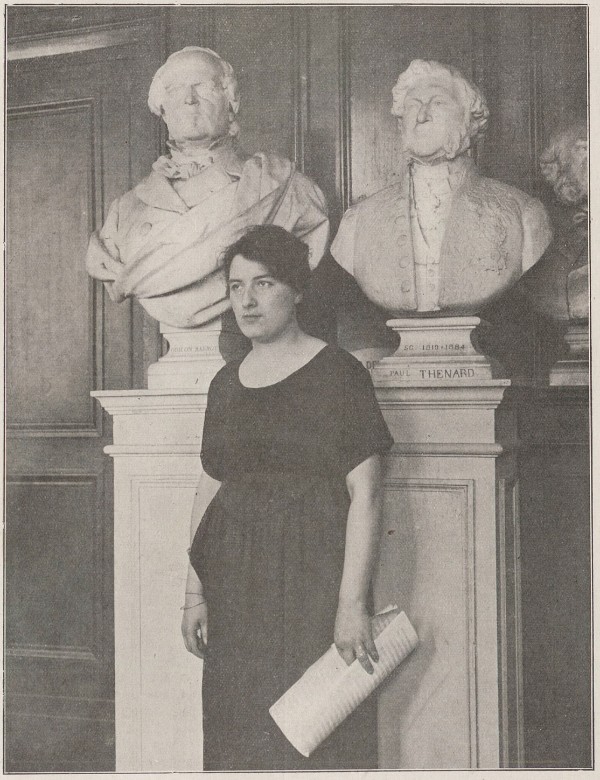
Born in Toulouse to a musical family, Canal entered the Paris Conservatory at age eleven. She excelled in her studies, taking first prizes in harmony, accompaniment, and fugue.

It was a promising start, but Canal’s path to her Prix de Rome win required years of patience…and persistence.

Marguerite Canal

Marguerite Canal

She first entered the competition in 1914, the year after Lili Boulanger, but didn’t win.

Then the competition was suspended during World War I, so she couldn’t try again until after the Armistice.

During that time, she faced devastating personal loss; her soldier brother died in the opening weeks of the war. (She would try for years to write a requiem for him, to no success.)

In 1919, when the Prix de Rome was reinstated, she came tantalisingly close to winning, earning a Second Grand Prix (a runner-up prize).

Finally, in 1920, she succeeded in her quest, becoming the second woman ever to win the first grand prize with her cantata Don Juan.

Canal spent the years between 1921 and 1924 at the Villa Medici in Rome, where she composed prolifically. One of the works dating from that time was her charming violin sonata.  

After returning to France, Canal joined the faculty of the Paris Conservatory, where she taught for several decades.

Her composing activity slowed as her teaching duties grew in number, but she still completed over a hundred works, including Trois Esquisses méditerranéennes for piano (1930).

Jeanne Leleu (1923)

Quatuor pour piano et cordes   

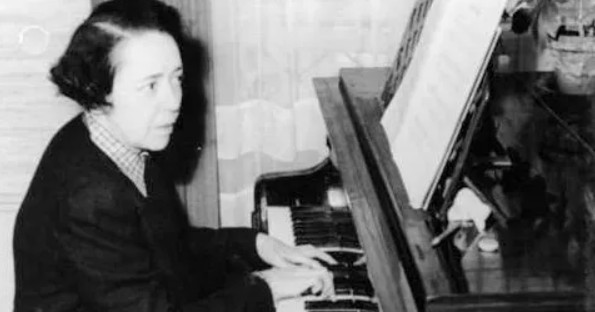
Pianist and composer Jeanne Leleu was born into a musical family and entered the Paris Conservatory at the age of nine.

At eleven, she made musical history by participating in the premiere performance of Ravel’s Ma Mère l’Oye (Mother Goose Suite).

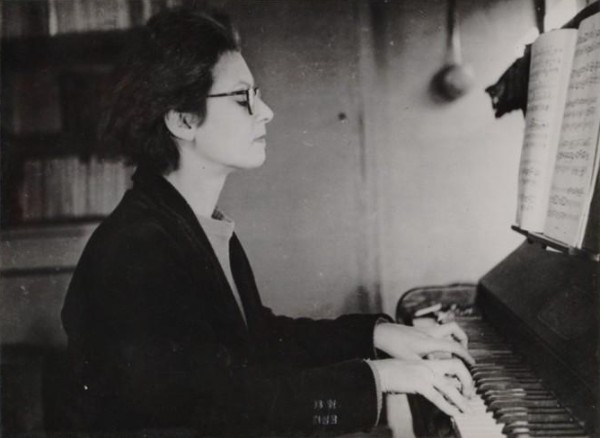
Jeanne Leleu

Jeanne Leleu

Initially trained as a pianist (she won a premier prix in Alfred Cortot’s piano class in 1913 at the age of fifteen), Leleu eventually turned her focus to composition, studying with Georges Caussade and Charles-Marie Widor at the Conservatory.

In 1922 she earned the Conservatory’s first prize in composition, and Widor encouraged her to attempt the Prix de Rome competition.

Leleu competed for the Prix twice. She failed to clinch the top award during her first attempt in 1922, but in 1923, she won the Premier Grand Prix for her cantata Béatrix.

She took up residency at the Villa Medici in Rome between 1923 and 1927.

Among the works she composed were the Six Sonnets de Michel-Ange (1924) for voice and orchestra, as well as an orchestral suite, Esquisses italiennes (1926), which reflected her impressions of Italy.

In the late 1930s and 1940s, Leleu also composed for the stage: her ballet Un jour d’été was produced at the Opéra-Comique in 1940, and another ballet Nautéos premiered in Monte Carlo in 1947 (later reaching the Paris Opéra and even Covent Garden in London by 1954).

In addition to being a prolific composer, Jeanne Leleu became an influential teacher. In 1954, she was appointed Professor of Harmony at the Paris Conservatory, a position she held until 1965.

Elsa Barraine (1929)   

Elsa Barraine was born into a musical family; her father was a cellist in the Paris Opéra orchestra.

She herself entered the Paris Conservatory as a teenager, studying composition in Paul Dukas’s famous class (her classmates included Olivier Messiaen and Claude Arrieu), where she more than held her own.

Elsa Barraine

Elsa Barraine

In 1928, while still a student, she took part in the Prix de Rome competition and was awarded the Second Grand Prix for her cantata Héraklès à Delphes.

The following year, 1929, she tried again and succeeded in winning the Premier Grand Prix de Rome with her cantata La Vierge guerrière (“The Warrior Virgin”). She was just nineteen years old, and one of the youngest ever winners.

Elsa Barraine’s subsequent career was multifaceted. During the rise of fascism in Europe in the 1930s, she began using her compositions to send political and social messages.

In 1933, she composed Pogromes, a symphonic poem protesting anti-Semitic violence.

During the Nazi occupation of France, Barraine – whose father was Jewish – was dismissed from her positions by Vichy racial laws.

She went underground and joined the French Resistance, operating under the alias “Catherine Bonnard.” At one point, she was arrested by the Gestapo, but fortunately, a sympathetic police officer helped secure her release.  

Barraine survived the war and, after the liberation of France, took on new leadership roles in the music industry.

Between 1944 and 1946 she worked with the Orchestre National, and in 1953 she became a professor at the Paris Conservatory. She also worked in French radio and as a music journalist.

Even as she assumed all of these roles, Barraine continued to compose.

Her catalog includes two symphonies (dating from 1931 and 1938), chamber works such as a wind quintet (1931) and Suite astrologique (1945), choral pieces, and music influenced by her Jewish heritage (e.g. Trois Chants Hébraïques, 1935).

Though her music was long neglected, recent performances and recordings have revived interest in her powerful, distinctly humanist compositions.

Yvonne Desportes (1932)   

Desportes studied at the Paris Conservatory, where her teachers included the renowned composer Paul Dukas (for composition) as well as Marcel Dupré and others.

She was a particularly hardworking, dedicated musician: she won premier prizes in harmony (1927) and fugue (1928) at the Conservatory.

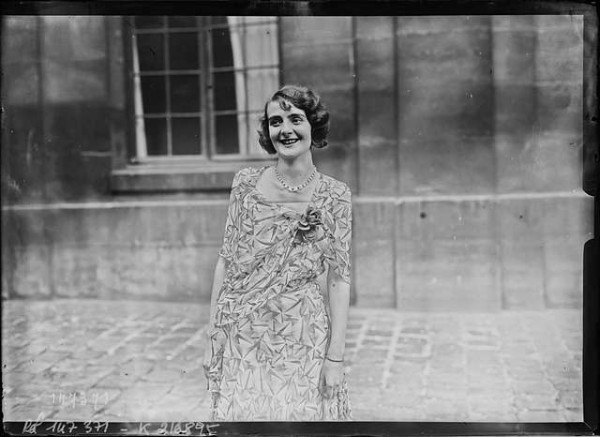
Yvonne Desportes

Yvonne Desportes

She was keen to add the Prix de Rome to that list.

In 1929, her first attempt, she failed to advance to the final round.

In 1930 she returned and earned the Deuxième Second Grand Prix (essentially third place) for her cantata Actéon, with critics praising the delicacy and “femininity” of her harmonic writing.

In the 1931 contest she did even better, winning the Premier Second Grand Prix.

(Notably, that year another woman, Henriette Puig-Roget, won the third-place prize. It was the first time two female composers had ever both been laureates in the same Prix de Rome year.)

Finally, on her fourth attempt in 1932, Yvonne Desportes won the Premier Grand Prix de Rome. She was 25.

She spent the standard residency in Rome and then embarked on a prolific career.   

Desportes composed in many genres – orchestral, chamber, choral, and educational music – and ultimately produced over 500 works.

In addition to composing, she also embraced teaching. Desportes joined the faculty of the Paris Conservatory, where she taught for decades, and she wrote numerous music theory and solfège textbooks that were widely used in French music education for years.

Conclusion

The achievements of these five women – Lili Boulanger, Marguerite Canal, Jeanne Leleu, Elsa Barraine, and Yvonne Desportes – are highlights of a particularly rich era in French musical history.

Over the course of the two tempestuous decades between 1913 and 1932, they broke the glass ceiling of the famously male-dominated Prix de Rome. In the process, they proved they were just as capable as their male colleagues.

Strikingly, all five of them went on to have prestigious musical careers after their wins, helping to clear the way for all the women composers who would follow them in the generations to come.

They are important parts not just of French culture, but of classical musical culture, period.