Total Pageviews

Friday, December 20, 2024

Ludwig van Beethoven: A “Bagatelle” Tribute

by Georg Predota

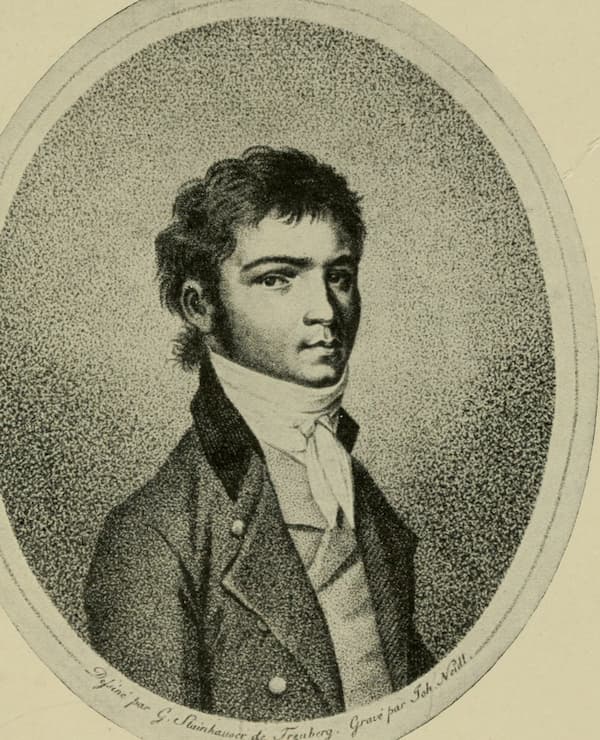
Ludwig van Beethoven at 26 years old

Ludwig van Beethoven at 26 years old

However, virtuosity is all but one aspect of Beethoven’s piano repertoire, as he was able to compose music with “glowing passion, exuberance, heroism, nobility and dramatic pathos.” His 32 piano sonatas and the late variation sets are at the pinnacle of piano literature, but Beethoven also composed three sets of what he titled “Bagatelles.” 

That particular title implies no specific form, and Beethoven himself called the first six of his Op. 119 “Kleinigkeiten,” or trifles. So, just how serious are these Bagatelles? Well, some of the bagatelles were originally planned as movements for piano sonatas but were subsequently rejected by Beethoven before publication. This seems to suggest that some of the bagatelles, as potential sonata movements, are the compositional equal to sonata movements in quality and completeness.
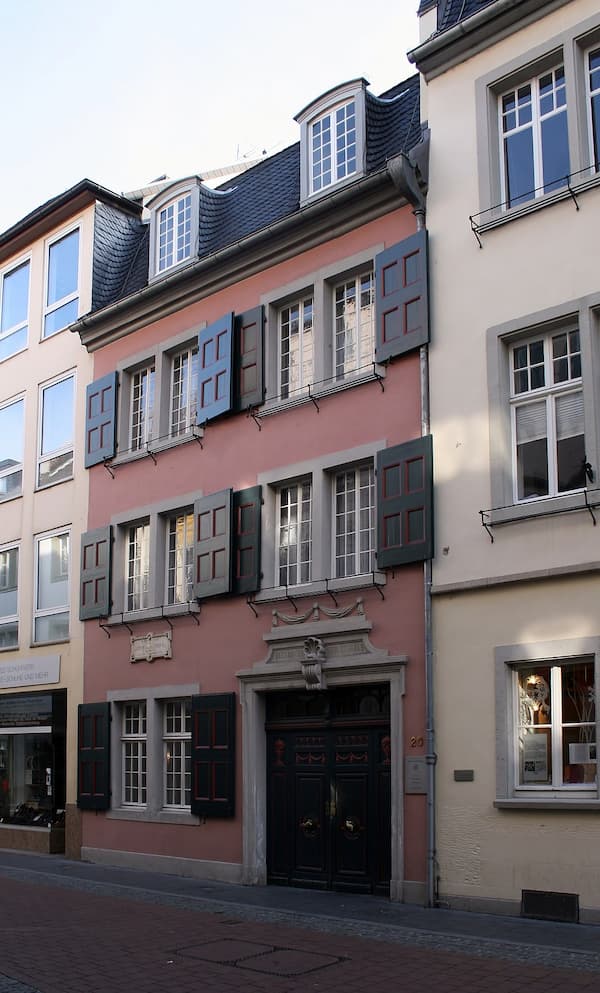
Beethoven's house of birth in Bonn, 2008

Beethoven’s house of birth in Bonn, 2008

One thing for sure, the bagatelles are a series of short and sometimes light-hearted piano works in a variety of contrasting characters and moods. It’s hardly surprising that some scholars consider Beethoven’s bagatelles to be the first 19th-century character pieces. To celebrate Beethoven’s baptism on 17 December, let us briefly explore his Bagatelles Op. 33, Op. 119, and Op. 126.

Bagatelles Op. 33

The first of Beethoven’s three published sets of Bagatelles was issued in 1803 by Bureau d’Arts et d’Industrie. The surviving sketches and the nature of the music suggest that Beethoven simply compiled a number of separate pieces that originated anywhere between boyhood and the start of the new century. All 7 Bagatelles display conventional musical forms and styles, and most are written in three-part form.
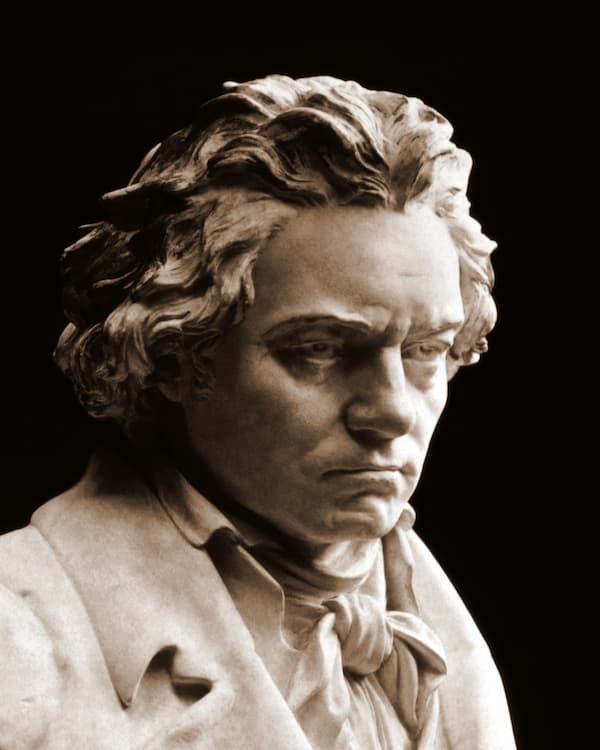

Photograph of bust statue of Ludwig van Beethoven by Hugo Hagen

Photograph of bust statue of Ludwig van Beethoven by Hugo Hagen

Beethoven thoroughly revised his Bagatelles shortly before publication. At the same time, however, he was incredibly busy and worked on his Piano Concerto No. 3, the Symphony No. 2 and the oratorio “Christ on the Mount of Olives.” We still don’t know exactly why Beethoven devoted so much time to the Bagatelles, but Paul Lewis suggests that “in light of Beethoven’s rising fame, it was to satisfy a growing demand from students and amateurs for easy pieces from his pen.”

We find a simple and innocent tune in No. 1, garnished with plenty of ornamentation and light-hearted transitions. No. 2 has the character of a scherzo that humorously manipulates rhythm and accents, while No. 3 appears folk-like in its melody and features a delicious change of key in the second phrase. The A-Major Bagatelle No. 4 is essentially a parody of a musette with a stationary bass pedal, and the minor-mode central section offers harmonic variety.

Beethoven provides some musical humour in No. 5 as this playful piece is a parody of dull passagework. In a really funny moment, the music gets stuck on a single note repeated over and over, like Beethoven can’t decide what to do next. In the end, he decides to repeat what he has already written before. In No. 6, we find a tune of conflicting characters, with the first phrase being lyrical and the second phrase being tuneful. The beginning of No. 7 almost suggests Beethoven’s Waldstein Sonata.

Bagatelles Op. 119
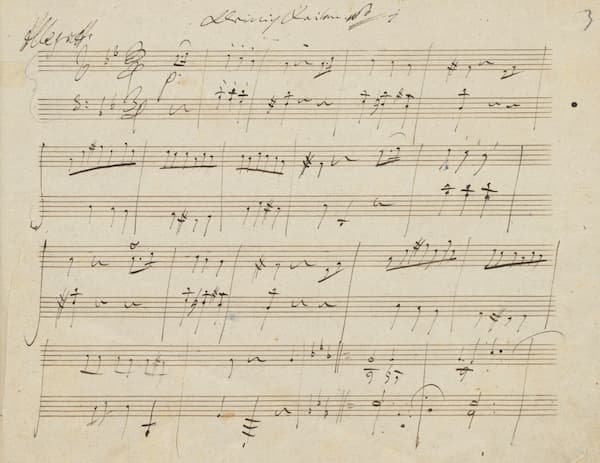
Beethoven's Bagatelles Op. 119 No. 1 manuscript

Beethoven’s Bagatelles Op. 119 No. 1 manuscript

In 1823, Beethoven was finishing his late piano sonatas Op. 109, 110, and 111, and he was working on the Diabelli Variations and the Missa Solemnis. In that year, he wrote to Ferdinand Ries in London, “you are receiving six bagatelles or trifles, and again another five, which belong together, in two parts. Dispose of them as favourably as you can.” Ries sold the set to the London publisher Clementi, who issued all eleven pieces in 1823. This edition is titled “Trifles for the Piano Forte, consisting of eleven pleasing pieces composed in various styles.” 

Essentially, in Beethoven’s Op. 119, we are dealing with two different collections combining old and new works. The set builds on five miniatures, which Beethoven composed in 1820 for the third and final volume of Friedrich Starke’s Wiener Piano-Forte-Schule (Viennese School of Piano Playing). Eventually, these 5 bagatelles became Nos 7-11 of Op. 119. Nos 1-5 had already been completed, or possibly sketched, much earlier and dated from around 1800. The central bagatelle in this set was the last to be composed, probably in late 1822, shortly before publication.

In the 1820s, Beethoven’s Leipzig publisher Carl Friedrich Peters was initially interested in publishing the first bagatelles but later emphatically rejected them as he wrote to Beethoven, “I’ve had them played by several people, and not one of them will believe me that they are by you. I asked for “Kleinigkeiten,” but these are really too small… I will say no more about it, other than that I will never print these but will rather lose the fee I have already paid.” And he added, “the pieces are not worth the money, and you should consider it beneath your dignity to waste time with such trivia that anyone can write.”

However, in Beethoven’s mind these miniatures were by no means inferior to his more extended piano works but “were simply ideas that were complete in themselves.” He actually enjoyed writing these little pieces, and he highly valued his “trifles.” Imogen Cooper writes, “Op. 119 form a compendium of technique and piano texture in concise form, as is appropriate for a piano tutor.” We may add, however, that Beethoven may not have always had the amateur performer in mind, given the technical challenges written into some of these “Kleinigkeiten.”

No. 1 presents a rather nostalgic opening, while a busy No. 2 unfolds with triplets surrounding the theme in the right hand. Written in the style of an Allemande, No. 3 promises a point of reflection, but it is interrupted by the opening waltz. A lyrical No. 4 is juxtaposed by an almost pompous No. 5, and No. 6 is the most varied and developed. Trills dominate No. 7, while a tranquil No. 8 features some intriguing harmonic progressions.

No. 9 unfolds in the character of a Ländler and features heavily accented syncopation. No. 10 is noteworthy because of its extreme brevity. Lasting only a few seconds and fitting into a single system of printed music, it is Beethoven’s shortest work, perhaps one of the shortest works of any composer of note. Finally, No. 11 rounds off the set in a mood of graceful contemplation.


Bagatelles Op. 126
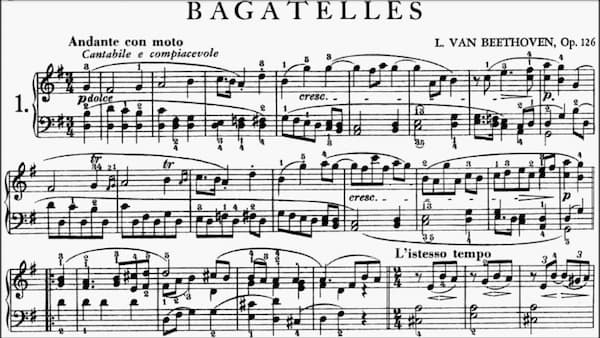
Beethoven's Bagatelle Op. 126 music score

Beethoven’s Bagatelle Op. 126

When Beethoven offered the Bagatelles Op. 126 to the publishers Schott & Co. in November 1824, he described them as “6 Bagatelles or Trifles for solo piano, some of which are rather more developed and probably the best pieces of this kind I have written.” Contrary to his earlier Bagatelle settings, Op. 126 was conceived as an integral group of pieces which Beethoven labelled a “cycle of little pieces.”

Designed as a unified cycle from the outset, the Bagatelles are alternately lyrical and introspective, and fast and dramatic, “with the two threads drawn together in the final number; and their keys form a descending chain of thirds, beginning in G major and minor, and ending in E flat major.” And let us not forget that Op. 126 was Beethoven’s last work for the piano offering a concentration of musical thoughts typical of his late style.


As Paul Lewis writes, “Typical of that style is a native fluency in contrapuntal writing paired with freedom from formal constraints in applying it, along with a willingness to write his contrapuntal voices several octaves apart. Beethoven, the architect of massive, great formal structures, shows himself in these pieces as a master of the miniature, deftly creating an immediate impression with his opening gestures and developing his motives with unfettered originality.”

Beethoven treats his material with a great deal of freedom, transforming it through intricate ornamentation as in No. 1. Full of driving energy, No. 2 channels the music into playful directions while the noble simplicity of No. 3 is sustained through many changes in texture. The contrapuntal opening of No. 4 is contrasted by a dream-like section, with plenty of unexpected harmonic and mood changes.

The quietly expressive No. 5 creates a gentle flow with triplet patterns and subtle syncopations, while No. 6 starts and ends with an energetic, turbulent section, framing a central, more composed segment that begins like a barcarolle. The opening Presto dismisses the slower section and the piece ends abruptly. As a commentator wrote, it ends “almost if dismissing the introspective nature of the preceding music; a fitting way for Beethoven to conclude his piano compositions.”

In terms of compositional style, the Bagatelles are comparable to the late string quartets, particularly with the second movement of Op. 132. And to be sure, the relationship between the late bagatelles and Beethoven’s late period works has been the subject of various studies. It uses the same musical language but “offers a musical universe in just a couple of minutes.”

Stylistically, the late Bagatelles looked forward to the foundations of romanticism as the expression of personal emotions became increasingly important. To some observers, Beethoven’s late Bagatelles are the first character pieces, a genre that gained unprecedented prominence later in the century. As Maurice Hinson suggests, “Beethoven’s Op. 126 are, if anything in music can be, self-portraits, as they express his moods and frame of mind the day he composed them.”

As you might have expected, we can’t really talk about Beethoven Bagatelles without mentioning the Bagatelle in A minor, WoO 59. One of the most popular short pieces by the composer, this Bagatelle goes by the nickname “Für Elise.” Probably composed around 1810, it was reworked in the early 1820s. It was first published only in 1867, four decades after the composer’s death, in an appendix to a collection of Beethoven letters and hitherto unknown works.

The inscription “Für Elise” remains a mystery, and various theories suggest young women in or around Beethoven’s circle. The distinctive theme with the repeated neighbour-note is supported by arpeggiated chords shared between the hands. As a scholar reports, in some of the sketches from the early 1820s, Beethoven contemplated “a somewhat more sophisticated layout of the arpeggios, but these did not find their way into a definite version of the work.”

The Beethoven Bagatelles offer a diverse and evolving body of work, displaying the composer’s creative exploration in this genre of short and expressive piano pieces. They evolved from playful themes and structure to pieces of greater sophistication by blending dense harmonic landscapes with sudden shifts in mood, texture, and rhythm.

“The Little Drummer Boy”

10 Beautiful versions for Christmas

By Hermione Lai

The Little Drummer Boy ornament

The Little Drummer Boy ornament

One of the most beloved and enduring Christmas carols is “The Little Drummer Boy.” It is a heartwarming and simple story about a poor boy who offers the gift of music to the newborn Jesus. Evoking a sense of humility, innocence, and devotion, it’s no wonder that it is a favourite during the holiday season. With Christmas once again around the corner, I wanted to share 10 beautiful versions of this delightful and touching carol with you.

“The Little Drummer Boy” The Harry Simeone Chorale (1965) 

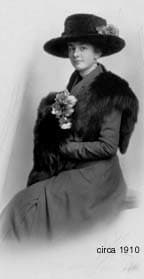
Katherine Kennicott Davis

Katherine Kennicott Davis

Katherine Kennicott Davis

To me, this lovely Christmas carol initially sounded like an ancient melody, but I was wrong. It was written only in 1941 by the American composer Katherine Kennicott Davis. David studied music at the New England Conservatory of Music in Boston, and also with Nadia Boulanger in Paris. She taught music at two Schools for Girls in Massachusetts and in Philadelphia.

For the choirs at her schools, Davis composed well over 600 compositions, and she also contributed to a multiple-volume set of music and books for educational purposes. Much of her music was published by Schirmer in Boston. Davis left all of the royalties and proceeds from her compositions to Wellesley College’s Music Department, her alma mater, where she studied in her youth.

“The Little Drummer Boy” Bing Crosby/David Bowie (1977) 

Marching Rhythm

The Little Drummer Boy

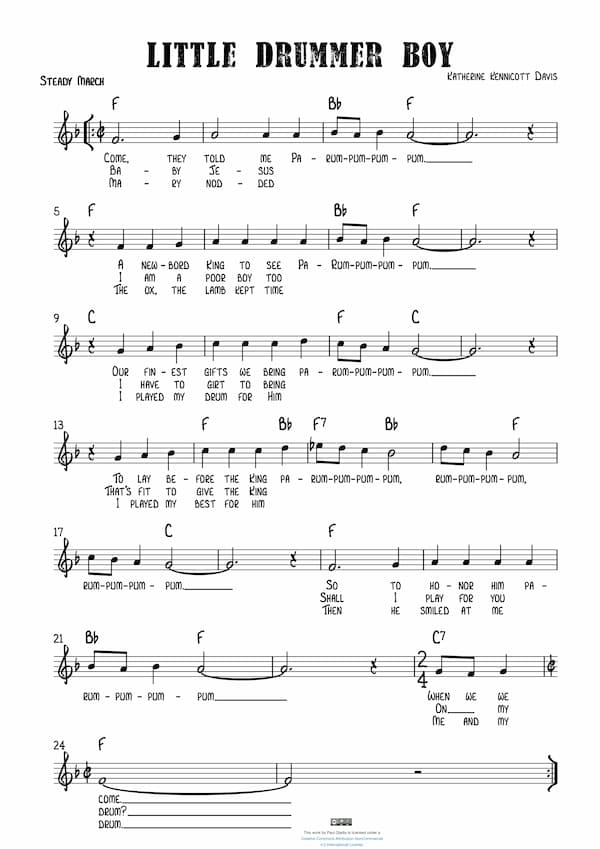
The Little Drummer Boy music score

One of the most prominent features of this beloved Christmas carol is the rhythm. And you can hear how it plays a role in telling the song’s simple and heartfelt message. It’s almost military-like, and while the basic 4/4 rhythm is straightforward, there are moments of syncopation in the vocal line. The steady drumming beat is both humble and profound.

Davis originally called the song “Carol of the Drums,” and she might have suggested that it is based on a Czech carol. However, the chair of the music department at Wellesley College writes. “One day, when Davis was trying to take a nap, she was obsessed with this song that came into her head, and it was supposed to have been inspired by the French song “Patapan.” ‘Patapan’ translated in her mind to ‘pa-rum-pum-pum,’ and it took on a rhythm.”

“The Little Drummer Boy” Celtic Woman 

Lyrics

The text of this wonderful carol centres on the themes of humility, generosity, and sacrifice. The narrator is a poor boy who offers the newborn King his musical talent and drumming skills. In a way, the act of giving something of personal value rather than material wealth is a fundamental Christian idea rooted in love and devotion.

Verse 1

Come, they told me
Pa-rum pum pum pum
A newborn King to see
Pa-rum pum pum pum
Our finest gifts we bring
Pa-rum pum pum pum
To lay before the King
Pa-rum pum pum pum
Rum pum pum pum, rum pum pum pum

“The Little Drummer Boy” Pentatonix (2014) 

Refrain

Refrain

So to honour Him
Pa-rum pum pum pum
When we come.

The recurring “pa-rum pum pum pum” serves both as a musical refrain and a symbolic gesture. It reflects the sound of a drum, and the repeated drumbeats communicate a sense of ritual and prayer. We might even hear the drumbeat as a metaphor for the boy’s heart beating in rhythm with his faith and his desire to honour Jesus. It also becomes a symbol of unity and community as the boy’s humble gift is part of a universal offering of love.

“The Little Drummer Boy” Thom Hell/Ulvo Andreas (2020)

Second Verse

Second Verse

Little baby, pa-rum pum pum pum
I am a poor boy too, pa-rum pum pum pum
I have no gift to bring, pa-rum pum pum pum
That’s fit to give a King, pa-rum pum pum pum
Rum pum pum pum, rum pum pum pum.
Shall I play for you, pa-rum pum pum pum
On my drum?

In the second verse the poor boy is directly addressing the newborn Jesus Christ. The lines take on an almost lullaby-like quality. As the boy identifies himself as poor, he establishes a connection between them, as both are humble. The boy acknowledges that he has no valuables or conventional gifts, and by recognising his poverty, the boy also becomes vulnerable. He does offer something more valuable than material riches, and that’s the gift of music.

“The Little Drummer Boy” André Rieu/Mik Falize (2023) 

Third Verse

Third Verse

Mary nodded
Pa-rum pum pum pum
The ox and lamb kept time
Pa-rum pum pum pum
I played my drum for Him
Pa-rum pum pum pum
I played my best for Him
Pa-rum pum pum pum
Rum pum pum pum, rum pum pum pum

Then He smiled at me, Pa rum pum pum pum
Me and my drum.

The final verse continues with the sentiments introduced in the previous two. The boy’s humble gift of drumming is accepted and acknowledged by Mary, and even the animals, who keep time, participate in the sacred moment. The boy offers his sincere devotion, and we understand that true worship comes from the heart.

“The Little Drummer Boy” Jackson 5 (1970) 

The Hit

Initially, “The Carol of the Drum” was not really popular. Remember, it was written during World War II and the public preferred songs like “I’ll be Home for Christmas.” The famous Trapp Family Singers recorded a version in 1951, which provided some exposure. However, it wasn’t until 1958 that “The Carol of the Drum” became an instant hit. At that time, a famous orchestra and choir director, Harry Simeone, got hold of the song.

For one, he renamed the song “The Little Drummer Boy,” and blended voices to create a drum beat. For added effect, he also added finger cymbals. The album and song were an enormous success, “with the single scoring in the top 40 of the U.S. music charts from 1958 to 1962.” But Simeone wasn’t alone, as by 1962, the carol had been recorded more than a hundred times. By the end of that decade, only two other Christmas songs had generated more success, “White Christmas” and “Rudolph the Red-Nosed Reindeer.”

“The Little Drummer Boy” Tori Amos (2007) 

Merry Christmas

“The Little Drummer Boy” is one of those Christmas carols that transcends generations. Its universal message of giving, humility, and love resonates with people of all ages and backgrounds, and it continues to be a Christmas favourite year after year. Every year, we welcome new recordings, and the cello version by Hauser is brand-new, dating from November 2024.

“The Little Drummer Boy” Hauser (2024)

It is not a biblical story, but the song holds a special place in Christmas music history due to its gentle reminder that Christmas is not just about wealth or material gifts but about the simple, heartfelt offering of one’s talents, love, and devotion. Whether performed in churches, homes, or concerts, “The Little Drummer Boy” continues to inspire and bring joy to listeners worldwide during the holiday season. We wish you happy and peaceful holidays.

Thursday, December 19, 2024

Casablanca 1942 - As Time Goes By (original song Dooley Wilson)


Wednesday, December 18, 2024

Scorpions & Vanessa-Mae - Still Loving You (Taratata, 28 Apr 1996)


Tuesday, December 17, 2024

Mariah Carey - Oh Santa! (Official Music Video) ft. Ariana Grande,


Friday, December 13, 2024

When Simple is Necessary: Fauré’s Berceuse

by Maureen Buja

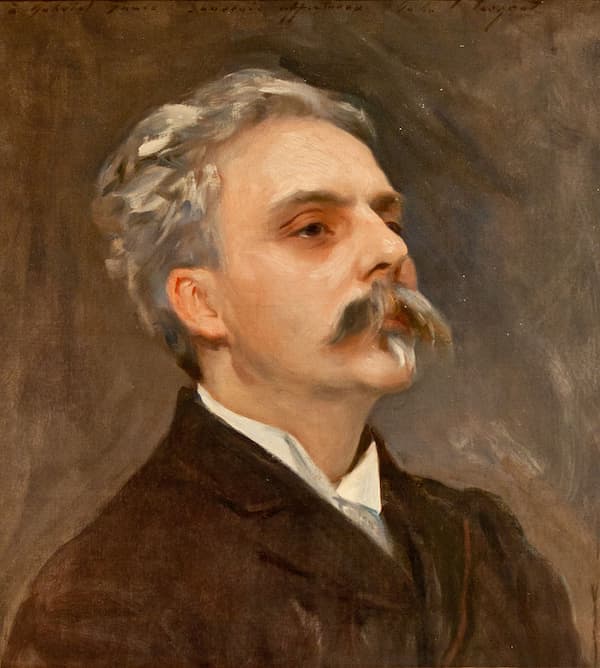
John Singer Sargent: Gabriel Fauré, 1899 (Paris: Musée de la Musique)

John Singer Sargent: Gabriel Fauré, 1899 (Paris: Musée de la Musique)

Fauré made his name at two major French churches as an organist. First at the Église Saint-Sulpice, where he started as the choirmaster in 1871 under the organist Chares-Marie Widor before moving to the Église de la Madeleine in 1874, where he was deputy organist under Camille Saint-Saëns, taking over when the senior organist was on one of his frequent tours. Although he was recognised as a leading organist and played it professionally for some 40 years, he didn’t appreciate its size, with one commentator saying, ‘for a composer of such delicacy of nuance, and such sensuality, the organ was simply not subtle enough’.

In 1879, he wrote a little Berceuse that was quickly appreciated by violinists. Fauré himself didn’t quite see what the fuss was about, but the work went into the repertoire of many violinists in the late 19th century and was recorded by the great Belgian violinist Eugène Ysaÿe.

The premiere of the work was given in February 1880 at the Société Nationale de Musique (which Fauré was a founding member) with the violinist Ovide Musin and the composer at the piano. The French publisher Julien Hamelle was at the performance and quickly put the work into print, where it sold over 700 copies in its first year alone.

It has been arranged for cello, violin and orchestra, and even as a vocalise for text-less voice and harp. 

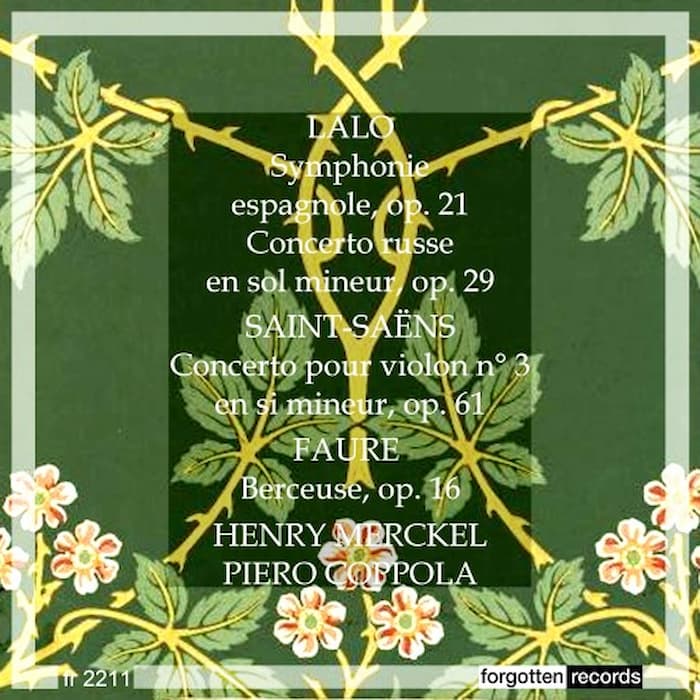
This recording was made in 1935, with violinist Henry Merckel, under Piero Coppola leading the Orchestre des Concerts Pasdeloup.

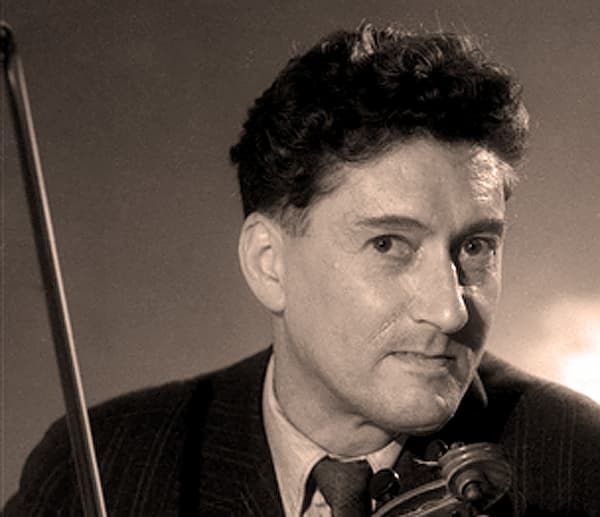
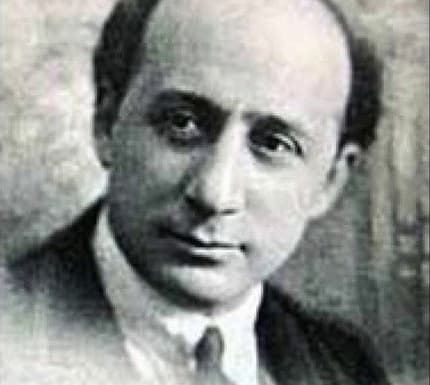
Henry Merckel

Henry Merckel

Henry Merckel (1887–1969) was a classical violinist from Belgium who graduated from the Paris Conservatoire in 1912. He had his own string quartet and was concertmaster of the Paris Conservatoire Orchestra (now known as the Orchestra de Paris) from 1929 to 1934, and also served as concertmaster of the Paris Opera Orchestra from 1930 until 1960.

Piero Coppola

Piero Coppola

The Italian conductor Piero Coppola (1888–1971) studied piano and composition at the Milan Conservatory. He graduated in 1910 and, in 1911, was already conducting at La Scala. He is known for his recordings of Debussy and Ravel in the 1920s and 1930s, including the first recordings of Debussy’s La Mer and Ravel’s Boléro, with his Debussy recordings being praised as ‘close to Debussy’s thoughts’. From 1923 to 1934, he was the artistic director of the recording company La Voix de son Maître, the French branch of The Gramophone Company, under whose name this recording was made.

The Orchestre des Concerts Pasdeloup, founded in 1861 by Jules Pasdeloup, is the oldest symphony orchestra in France. They scheduled their concerts for Sundays to catch concert-goers who weren’t able to make evening concerts. It started out with the name of Concerts Populaires and ran until 1884. It was started up again in 1919 under Serge Sandberg as the Orchestre Pasdeloup.

lalo-saint-saens-faure-merckel-coppola-front

Performed by

Henry Merckel
Piero Coppola
Orchestre des Concerts Pasdeloup

Recorded in 1935

César Franck (1822-1890): A Birthday Tribute

by Hermione Lai

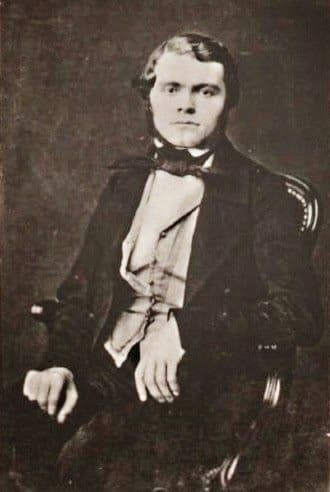
César was a child genius who loved drawing and playing the piano. His father spotted these talents early and decided to market his young son as a piano prodigy. We come across irresponsible and ambitious parents in the arts all the time, but Nicholas-Joseph was especially aggressive.

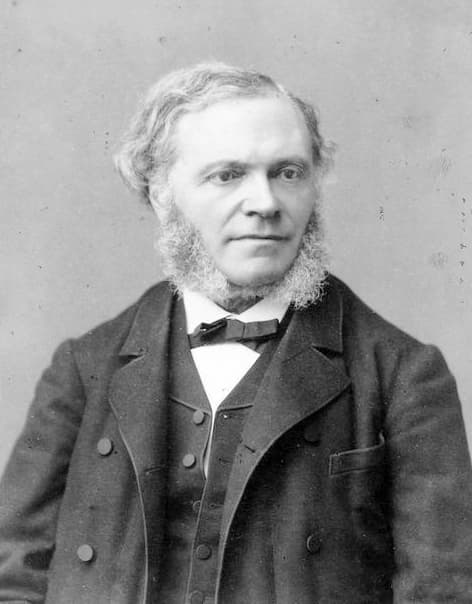
The young César Franck

The young César Franck

He took his son from one concert tour to the next and made him enrol at the Conservatoire, only to withdraw him from his studies for lengthy concert tours. Much later in life, César confided in his diary, “my father had grand ideas of money flowing like a river towards us, but unfortunately, it was not so.”

The press took strong exception to the highly aggressive promotional efforts of his father, and only at the age of 24 did César Franck walk out of his parent’s house, making a clear break. But life wasn’t easy as his compositions received only mixed reactions and were not embraced by the public. On the anniversary of his birth on 10 December, we decided to pay tribute to this marvellous composer who played an important role in French music.

Violin Sonata in A major, 

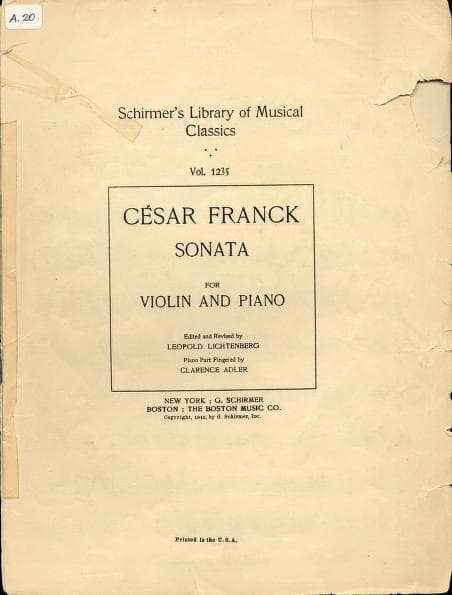
Let’s get started with Franck’s most famous work, the Violin Sonata in A major. Written in 1886, it is like a musical rollercoaster, full of twists and turns. It is a vibrant and passionate piece that is already a favourite for violinists and audiences. Actually, it’s considered a cornerstone of the violin repertoire and is cherished for its rich thematic material and emotional depth.

One can easily hear Franck’s famous “cyclic structure,” which just means that themes reappear in different movements. This creates a wonderful sense of unity throughout the piece. The opening theme sweeps you into a world of deep emotions, but just when you think it’s getting serious, the music lightens up and dances through playful, joyful passages.

César Franck's Violin Sonata

César Franck’s Violin Sonata

The way the violin and piano work together is like a conversation, with each instrument taking turns to lead, complement, and surprise the other. With its lush harmonies and soaring melodies, the sonata has this magical ability to move you, making you feel like you’re on an exciting adventure through sound. This piece is a true gem of the late Romantic period, brimming with passion, warmth, and joy.

Symphony in D minor 

Initially, nobody much liked Franck’s D-minor symphony. It was first performed in 1889 with critics unsure about its place in the symphonic tradition. Some found the work bold and thrilling, while others were critical of the harmonic language and the overall structure. It was just too unconventional for its time. Times have changed, however, and today, it is considered one of Franck’s greatest masterpieces, full of emotional power and depth.

The music is like a thrilling, whirlwind musical journey. It’s packed with rich and sweeping themes and plenty of dramatic contrasts. The more I listen to it, the more it feels almost cinematic. There is bold and fiery energy from the very beginning, and just listen to these almost heroic declarations in the interaction between strings and brass. But it’s not all drama, as the second movement offers lush and lyrical melodies in a quiet conversation between the string and woodwinds.

The third movement is a bit of a surprise, as it is almost mischievous at times. It seems full of life and certainly puts a smile on your face. In the finale, Franck pulls out all the stops. He takes all the themes and musical ideas that have been bubbling throughout the piece and brings them together in a thrilling and triumphant conclusion. It is a masterpiece containing intense drama, moments of reflection, and pure moments of joy.

Trois Pièces for Organ

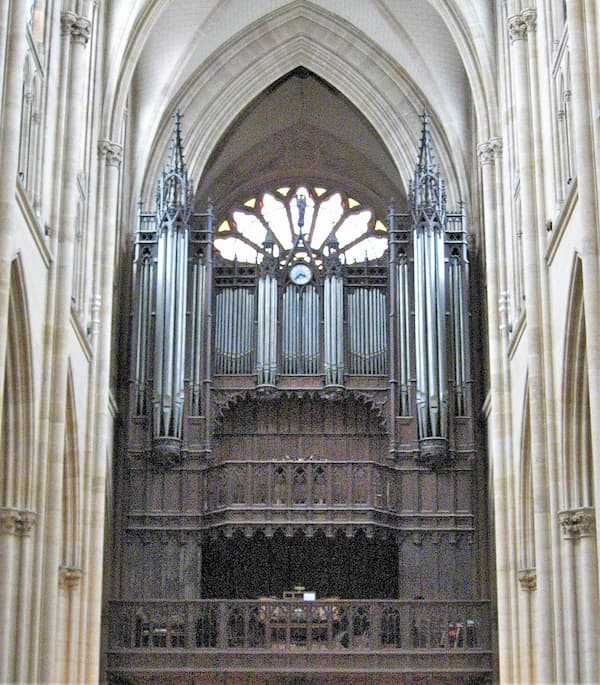
Organ of Sainte-Clotilde, Paris

Organ of Sainte-Clotilde, Paris


Franck had always aspired to become an organist, and when he was appointed at the church of Sainte-Clotilde, his dream became a reality. As he later explained, “if you only knew how I love this instrument. It is so supple beneath my fingers and so obedient to all my thoughts.” His improvisations became legendary, and his organ compositions stand at the apex of the Romantic organ repertoire.

Franck’s Three Pieces for Organ are like musical gems, each with its own distinct character, but all combining the composer’s genius for combining passion, drama, and tenderness. Composed in 1878, these pieces are full of vivid contrasts and stunning harmonic colours, almost like sweeping landscapes painted with sound.

The “Fantaisie” transports us into a grand cathedral with organ pipes resonating through the space. Expansive chords and soaring themes offer a diverse musical flow, with moments of turbulent energy followed by calm reflections. The powerful sound of the organ takes centre stage in the “Pièce Héroïque.” It is majestic and commanding, full of energy, and almost like a call to arms. But even within this intensity, there are tender moments that add layers of emotional depth. The “Cantabile” returns to a more intimate and serene space. It is the heart of the set, a gentle and lyrical work that contrasts with the fiery drama of the previous movements.

Prelude, Fugue, and Variation

As I wrote in the introduction, Franck was an exceptional pianist. For a time, he seemed to be in competition with Franz Liszt. They personally met on a couple of occasions, and Liszt later wrote to a friend. “He will find the road steeper and rockier than others may, for, as I have told you, he made the fundamental error of being christened César-Auguste, and, in addition, I fancy he is lacking in that convenient social sense that opens all doors before him.”

Clearly, Franck was never comfortable under the glaring light of the virtuoso stage, and to prove that point, he composed the “Prelude, Fugue, and Variation” in 1884. Franck was at the height of his maturity as a composer, and this beautiful and intricate work, initially for organ but later arranged for solo piano, reflects Franck’s rich harmonic language and his deep understanding of counterpoint. It’s basically a homage to Bach, and each section offers a different way of approaching the initial theme.

Franck introduces us to a beautifully simple theme that is immediately inviting and conversational. The real fun begins in the “Fugue” when Franck stretches out the theme, and each new entry of the theme adds its own twist. He also incorporates surprising harmonic turns or playful rhythms, with each voice giving a new level of depth to the original theme. In the “Variation”, he dresses the theme in different costumes, with each variation showing a new side of its character. He certainly is having fun exploring all the possibilities of what the theme has to offer.

The Cursed Hunter

Pierre Petit: César Franck

Pierre Petit: César Franck


I just love a good story translated into music. And that is exactly what Franck did in 1883 when he composed “The Cursed Hunter.” It tells the story of the count of the Rhineland who commits the sacrilege of going hunting on a Sunday. He happily ignores the sound of the bells and the singing of the faithful on their way to Mass. But very soon, his horse stopped, and his hunting horn fell silent. A terrifying voice utter a horrendous curse; the huntsman is condemned to ride forever, pursued by demons.

Franck’s symphonic poem, and he composed five such colourful stories in music, is a wild ride through a dark and eerie forest full of dramatic twists and unexpected turns. He brings the legend of the hunter to life with a mix of spooky moments and frantic energy. It all starts with a somewhat mysterious theme, setting the mood for the cursed ride.

The music continues to build, and the orchestra bursts into action with various bold and sweeping melodies that hint at danger. As you might expect from this story, the rhythm is relentless as it mimics the endless chase. Darker and more ominous tones suggest the curse, but finally, it seems that the chase might be over. It all ends in a dramatic and unresolved way, but it is clear that the hunter won’t escape. What a thrilling and atmospheric work, full of suspense and excitement; that’s why I love symphonic poems.

Symphonic Variations 

Franck composed his Symphonic Variations for piano and orchestra in 1885. One of Franck’s most approachable compositions, it showcases the composer’s love for harmonic complexity and his mastery of orchestration. However, it also contains moments of deep emotional richness.

The principal theme is introduced by the piano. It is an elegant and simple theme, almost a dreamy melody that is then echoed and explored by the full orchestra. What is really fun about this piece is how Frank takes that theme and spins it into something new and exciting with every variation. He offered different moods, tempos, and textures, alternating between light and playful utterances and bold and dramatic statements.

A real highlight of this work is the interaction between the piano and orchestra, with the theme constantly evolving. It certainly reveals the composer’s deep understanding of both thematic development and orchestral colour. To be sure, Franck uses his gift for blending beauty and drama in a mixture of elegance and compositional genius. It’s a wonderful example of blending tradition with innovation, and it is one of the composer’s most accessible works.

“Nocturne” 

The mélodies by César Franck were only known to a small circle of connoisseurs during his lifetime. Today, however, they are recognised for their expressive power and the composer’s ability to merge lyrical melodies with rich and complex harmonies. A scholar wrote, “His contributions to the French mélodie genre helped bridge the gap between the more traditional Romantic style and the more modern, impressionistic approaches that were developing around the turn of the 20th century.”

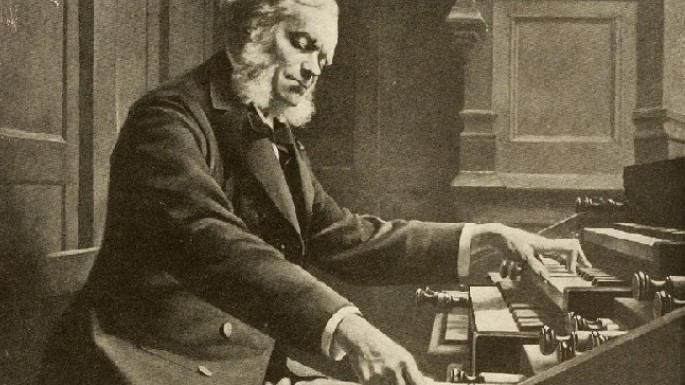
César Franck at the organ

César Franck at the organ

One of my favourite is “Nocturne,” composed in 1882. It is the setting of a poem by Paul Verlaine and captures the serene and contemplative atmosphere of the night. The gently flowing melody is both lyrical and expressive, with the piano providing a shimmering backdrop. And you can hear how Franck’s chromatic harmonic and shifts of tonality enhance the sense of longing conveyed in Verlaine’s text. What a wonderful mélodie, both tender and sophisticated, as it fuses emotional depth with harmonic complexity.

Panis Angelicus (Angelic Bread)

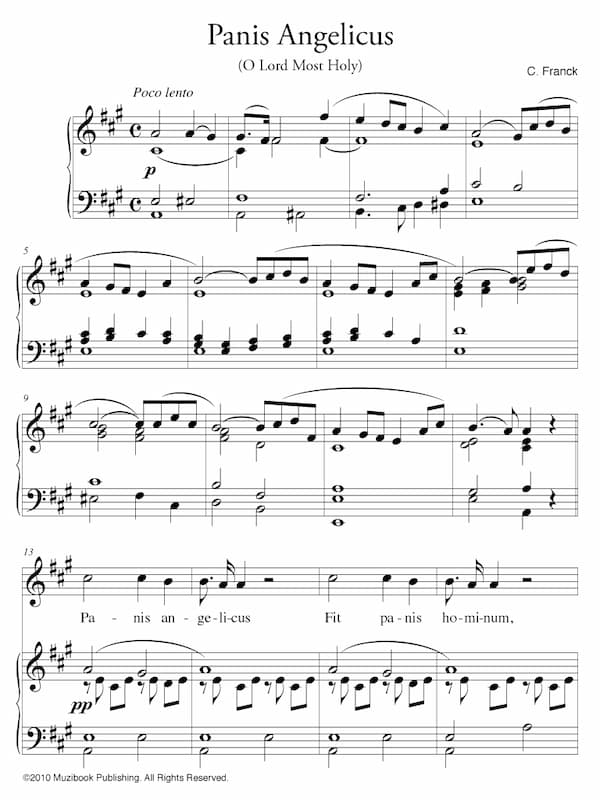
César Franck's Panis Angelicus

César Franck’s Panis Angelicus

Stanley Sadie described César Franck as “a man of utmost humility, simplicity, reverence and industry.” We have seen that his reputation rests largely with a few large-scale orchestral and instrumental works of his later years. However, most of his compositions are associated with his employment as an organist, a position he held for over 30 years. Naturally, he composed a vast number of organ compositions, but we also find numerous sacred vocal works.

Among his most celebrated compositions is a musical setting of “Panis Angelius,” a serene piece that feels like a musical prayer. The title refers to the Eucharist, and it was composed in 1872 as part of a larger work. The music perfectly captures a sense of reverence and tranquillity, and the simple melody is surrounded by lush harmonies that give it an almost heavenly quality.

Franck’s setting has been described as invoking a sense of “serene anxiety.” This musical paradox also governs the vocal line, as the soloist performs a melody of angelic lyricism enriched by surprising harmonic inflection and the occasional strain of chromatic intonation.

I hope you enjoyed our little excursion into the musical world of César Franck, a world full of emotional intensity and spirituality. Franck was a wonderful composer whose reputation, especially outside of France, took a little longer to develop. But his influence remains powerful, specifically in organ music and in late-Romantic orchestral and chamber works. Happy Birthday Mr. Franck.