But by the seventeenth and eighteenth centuries, a new idea began to take shape: audiences paying musicians to play music for them.
This evolution from sacred service to ticketed performance changed European culture forever and laid the groundwork for the modern concert tradition we still enjoy today.
Today, we’re asking the question, how did paid public classical music concerts start?
Italy and the Ospedales
It took longer than you might think for the concept of public concerts to flourish in Europe. Each country came to the idea in a different way.
Chronologically, the earliest paid public concerts probably took place in Italy, especially in Venice, where a network of orphanages and music schools developed during the sixteenth and seventeenth centuries.
These institutions, known as ospedales, took in orphans or unwanted children (many of them girls, or the unwanted children of prostitutes), and taught the most talented of them how to perform music.
Read more about the Ospedales, and Vivaldi’s connections to them.
They would hold religious services, such as Vespers, with musical accompaniment, then encourage attendees to donate.
These donations helped keep the institutions running, allowing them to continue their charitable work and musical training… all while funding future concerts.
A re-enactment of a Vivaldi performance at the Ospedale
John Banister’s English House Concerts
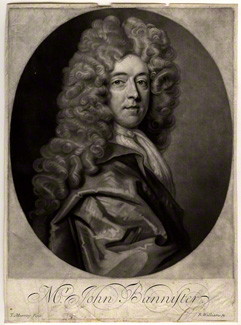
John Banister
© Unraveling Musical Myths
In December 1672, an English violinist named John Banister began giving daily concerts at his home. This is the first record of money-making concerts in London.
During each show, he’d play instrumental music, songs inspired by literature, and the like.
He charged a shilling admission fee for the experience and took requests from the audience.
The venture must have been worthwhile, because he continued mounting these concerts until shortly before his death in 1679.
Banister’s 1667 work inspired by Shakespeare’s The Tempest
Bach and the Collegia Musica
In present-day Germany, ensembles called collegia musica sprang up around the time of the Reformation and focused on the performance of instrumental music.
In 1700, Telemann founded a new incarnation of the old Leipzig collegia musica, and Bach led the group between 1729 and 1737.
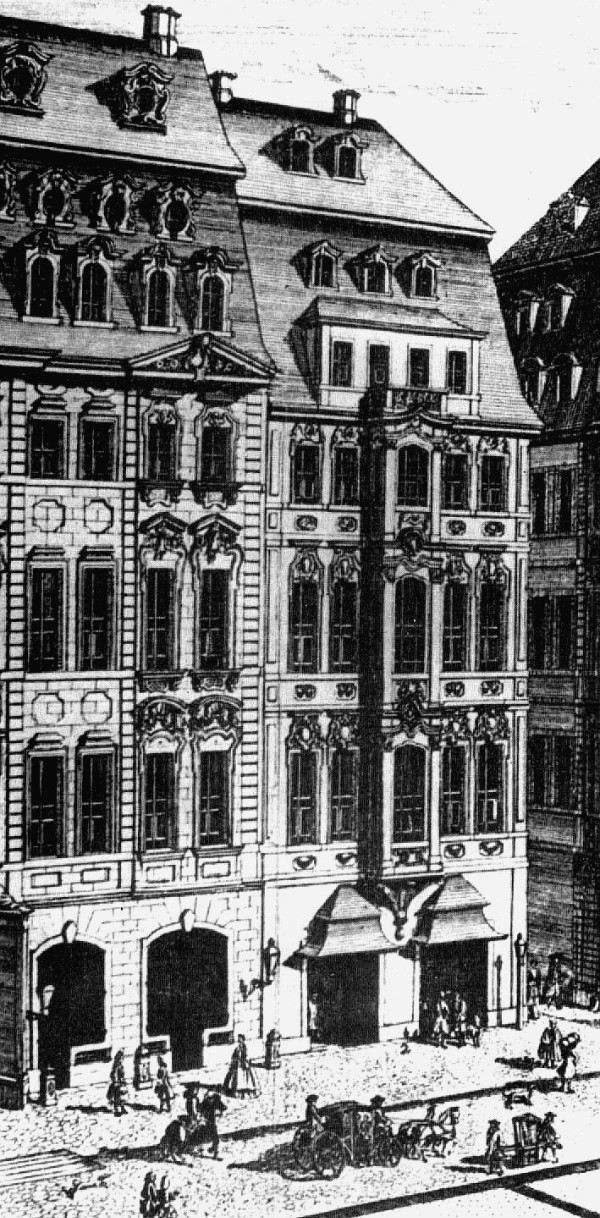
Zimmermann’s coffee house
During the eighteenth century, the Leipzig players gave weekly concerts at a local coffee shop.
In the early 1730s, Bach wrote a secular cantata for this gathering called Schweigt stille, plaudert nicht, or “Be still, stop chattering.”
Bach’s Coffee Cantata
It’s commonly known as the Coffee Cantata today because it extols the virtues of the drink with lyrics such as “If I couldn’t, three times a day, be allowed to drink my little cup of coffee, in my anguish I will turn into a shriveled-up roast goat.”
The societies were closed to amateurs, but allowed members of the public to attend for a price.
To sum up, as Enlightenment ideals spread, and secularisation and education became increasingly important values in European life, musicians and audiences came closer and closer to the modern idea of giving public concerts.
The stage was set for an official concert series to take off.
France’s Concert Spirituel
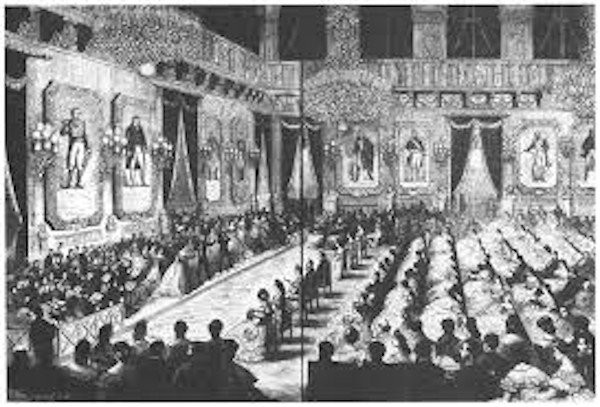
Concert Spirituel
The Concert Spirituel series began when a royal musician grew fed up with the quirks of the religious calendar.
Royal court musician and woodwind player Anne Danican Philidor founded the Concert Spirituel series in Paris in 1725.
At the time, it was common for Catholic countries to shut down their opera houses to mark various Christian holidays, especially Advent (roughly the month before Christmas) and Lent (the forty days preceding Easter).
However, Philidor had an idea. What if the calendar could be filled with performances of spiritually uplifting non-operatic music, especially instrumental music?
Philidor’s Sonate in D Minor for recorder and basso continuo
Philidor was willing to test the economic validity of his theory. He paid the Paris Opera impresario 1000 livres a year for the rights to perform, agreeing to mount no opera.
Philidor staged the first performance on 18 March 1725, between 6pm and 8pm.
The venue was the magnificent Salle des Cent Suisses (Hall of the Hundred Swiss Guards) in the Tuileries Palace in Paris.
That first program included a number of works by court composer Michel Richard Delalande, including a violin suite, a capriccio, and a handful of religious works, as well as Arcangelo Corelli’s Christmas Concerto.
Corelli’s Christmas Concerto
The Growth of the Concert Spirituel
Music from the Concert Spirituel
Philidor continued to give a number of concerts, expanding the series, but he died in 1728.
After his death, other musicians took on the leadership roles at the Concert Spirituel. Astonishingly, the concert series continued for decades, under a variety of leaders.
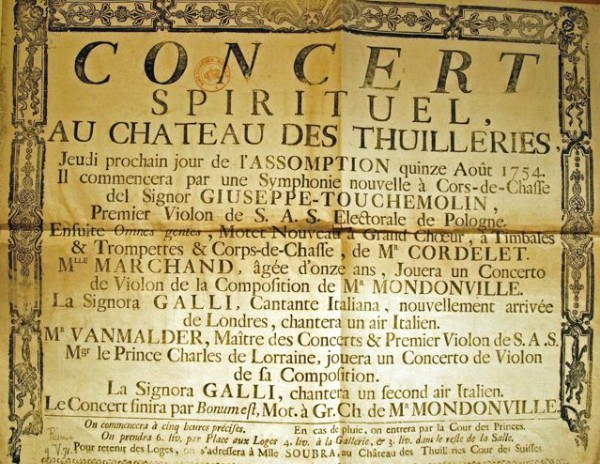
Concert Spirituel poster
Between 1734 and 1748, the Académie Royale de Musique oversaw the series. It survived into its third decade, which was no small feat, but it also didn’t reach any new heights of cultural relevance.
Things changed between 1748 and 1762, when entrepreneurs and impresarios Joseph-Nicolas-Pancrace Royer and Gabriel Capperan took charge and made investments in the series.
They increased the size of the orchestra, redecorated the concert hall, and hired expensive Italian singers.
The result was that the series became more prestigious – and profitable – than ever.
The Economics of the Concert Spirituel
The Concert Spirituel series may have been open to all paying audiences, but the tickets were priced for the wealthy.
Admission was by ticket, often advertised in newspapers. Prices were steep: mid-eighteenth-century ticket prices ranged roughly 2–6 livres depending on the seat, and were approximately 4 livres on average.
Before the French Revolution, middle-class workers such as clerks and schoolteachers earned between 600 and 900 livres annually. So a single ticket would have cost around two to three days’ worth of wages for them: doable for a middle-class person if you were particularly passionate about music, but certainly not geared toward the middle class or working class as a whole.
The Final Years
The Concert Spirituel’s greatest years were its last ones.
Between 1777 and 1790, Paris Opera singer Joseph Legros led the series. He dropped seventeenth-century motets from the programs and emphasised new music instead.
He commissioned composers like Johann Christian Bach, Joseph Haydn, and Wolfgang Amadeus Mozart (1778’s Paris Symphony was written for the series, arguably an organisational high point).
Mozart’s Symphony No. 31 (“Paris”)
The final concert of the Concert Spirituel took place in the spring of 1790. By that time, the world had changed. Revolution was in the air. The Bastille had been stormed the summer before, and the Romantic Era and cultural upheaval of the Napoleonic Era were just around the corner. Public classical music concerts geared toward the middle class were about to become bigger than ever before.
Conclusion
By the late eighteenth century, Europe had transformed the idea of music-making.
What began in Venetian orphanages as devotional outreach evolved into a sophisticated culture of ticketed public performance.
The Concert Spirituel in Paris was the culmination of this movement, bringing together musicians, aristocrats, and the rising middle class in one shared musical space.
Given a few generations, the concept spread across the continent, shaping the modern concert hall tradition that still defines classical music today.