jueves, 6 de febrero de 2025

Antonio Jesus Naguiat Molina - his music and his life

Antonio Jesus Naguiat Molina was born on the 26th of December, 1894, in Quiapo, Manila. He is the son of Juan Molina, a customs inspector during the final years of the Spanish regime, and Simeona Naguiat. Antonio Molina was married to Pilar Siauingco with whom he had six children - among them are: Rostia, a pianist; Exequiel (Lito), a jazz artist and journalist; and, Antonio Maria, Jr., a US-based conductor and composer.
His most important orchestral works are Misa Antoniana Grand Festival Mass (1964) and Ang Batingaw (1972). Among his chamber music compositions are Prelude and Romanz for cello and piano (1928) and Bontok Rhapsody. Some of his piano works are Malikmata (1939) and We Were Moonlight (1941).
Antonio Sr.'s father founded the 22-piece Orquestra Molina, whose members lived and rehearsed in the family residence. At 12, Antonio Sr. could play the violin. The bandurria, mandolin, guitar, laud, bajo de unas and octavina, and the cello all followed later.
He received his Bachelor's degree in 1909 at the Colegio de San Juan de Letran. Prior to that, he also went to the Escuela de Catolica de Quiapo, where he began his first formal schooling. In 1919, he enrolled at the University of the Philippines (UP) Conservatory of Music. His teachers included Nicanor Abelardo and the Conservatory Director, Robert Schofield. He obtained his teacher's diploma in 1923. From 1922 to 1924, he concertised extensively in Hanoi and other parts of Indo-China. He also taught at the UP Conservatory of Music and then at the Centro Escolar University. He functioned both as organizer and conductor of Philippine choral and rondalla music groups wherein he was also actively involved. He conducted the premiere of the Bach's Christmas Oratorio on the 14th of December, 1947, the first performance of Mozart's opera, Don Giovanni, and the first television choral concert to be presented in the Philippines.
Molina's first composition, "Matinal" (1912), is preserved in an unpublished volume called Miniaturas, Vol. I. According to the composer, they are called Miniaturas because they do not seem to have arrived at a category of serious musical works. They are merely combinations of melody and harmony conceived during a moment of enthusiasm, passion, or humour, and later written down. They are products of inspiration and instinct, and not of technical studies in music. He then wrote a set of waltzes, Lamentos de mi Patria (Laments of my Fatherland) in 1913, and "Hatinggabi", his most famous violin piece (1915).
His hundreds of compositions include a sarswela entitled "Ana Maria", done while he was still in school. His most important orchestral works are Misa Antoniana Grand Festival Mass (1964) and Ang Batingaw (1972). Among his chamber music compositions are Prelude and Romanz for cello and piano (1928) and Bontok Rhapsody. Some of his piano works are Malikmata (1939) and We Were Moonlight (1941). His major works are composed of chamber music, choral, piano, violin, theatre, voice and violoncello music. Many of his works still have not been published.
Antonio Molina received numerous awards such as the Conductor of the Year Award (1953) from the Music Lovers' Society, the UP Conservatory Alumni Award and the Phi Kappa Beta Award (1972), among others. He was the first musician to be conferred the National Artist Award (12th June, 1972).
Antonio Molina, Sr. died on the 29th of January, 1980.
Why does classical music make us cry?


Catchy music makes you tap your foot. Emotive music catches you off guard and without warning, has your eyes pricking and nose running. So why do we have this physiological response to music?
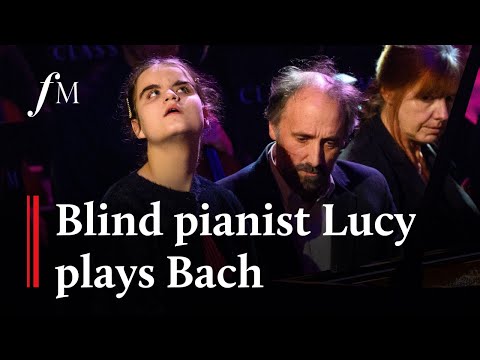
Think about your favourite piece of music… and then imagine hearing it live for the first time. If you’re having a trouble, have a listen to this beautiful piece of Bach for solo piano:
Or if that didn’t conjure up much, try this – the stirring second movement of Rachmaninov’s Second Piano Concerto:

If you felt a lump in your throat or a stinging sensation in your eyes, you wouldn’t be alone. Music can elicit highly emotional responses – a 2017 survey of 892 adults found that nearly 90% had experienced feeling like crying when listening to music.
Outside of musical enjoyment, crying can be a great cathartic release, helping to relieve stress when we’re feeling sad or anxious. Tears contain stress hormones, which are released from our bodies when we cry. But why do we cry to music?
IT can feel like music speaks directly to our hearts. Think of the other emotional contexts music is used in, from rousing hymns at weddings, to poignant elegies at , and rousing marches at graduations as we begin our adult lives.
Shedding a few tears to music is considered a healthy response. It can help us process our deepest emotions in a safe setting – in a concert hall, surrounded by fellow music lovers, at a ceremony, or perhaps at home, listening to a recording.
One of the main purposes of music is to communicate something beautiful for our collective appreciation. So if the music makes you cry, it’s probably doing its job right.
When we feel an emotional response to the music, it can be down to familiarity. Music conjures of memories of the past – of a loved one, a dream or a family member – and hearing great classical music can help connect us to times gone by, creating create a sense of poignancy that this music was also enjoyed by audiences over 200 years ago.
Tears are often invoked when the musical choices feel familiar. In the build-up to the great pianistic climax in Rachmaninov’s concerto, anticipation builds and the reward circuit in our brain is triggered, as the ‘expected’ moment in the music finally arrives and the feeling of tension and anticipation is released.

Our physiological reactions can be down to pure musical appreciation – the feeling of awe we experience at experiencing art performed at a high level.
We might feel awestruck at the virtuosity of the performers, or the intricacy of the musical writing. Techniques like long melodic phrases, harmonic tension and resolve, and changes in intensity can elicit feelings of satisfaction, hope and even hopelessness.
that dramatic changes in dynamics, rhythm and texture can light up the brain, and that satisfying harmonic journeys can trigger the reward-related regions of our brains.
When words are difficult, music can communicate the unsayable – that’s a paraphrase of a quote by Hans Christian Andersen, who once said, “Where words fail, music speaks”.
The point is, there’s also something to be said for the wordlessness of orchestral music. Much like a , the narrative created with music and no words can make us feel on a deeper level that speaks to everyone universally.
Whether you cry or get goosebumps while listening to music can also depend on your personality type. .
miércoles, 5 de febrero de 2025
Lucrecia Kasilag Divertissement for piano and Orchestra (Allegro Moderato}
Short Biography of Filipina composer Lucrecia Roces Kasilag
Lucrecia Kasilag passed away on 16th August, 2008 at the age of 90.

What do composers Ryan Cayabyab, Louie Ocampo, and Ogie Alcasid think about the current state of Filipino music?
AT A GLANCE
During a press conference for the upcoming show "OAC: Original and Absolute Classics" which will be held at the North Solaire Ballroom in Quezon City on Feb. 13, the trio discussed the growing variety of musical styles and the rising recognition of Filipino artists locally and internationally.

Renowned composers Ryan Cayabyab and Louie Ocampo have offered high commendations for the Original Pilipino Music (OPM) scene, celebrating its remarkable evolution and heightened success in recent years.
During a press conference for the upcoming show "OAC: Original and Absolute Classics" which will be held at the North Solaire Ballroom in Quezon City on Feb. 13, the trio discussed the growing variety of musical styles and the rising recognition of Filipino artists locally and internationally.
Their optimistic view of the current direction of OPM shows a lively artistic community. This community keeps creating new works while honoring the rich cultural heritage of the country.
"Yung dating pinapanaginip ko dati, nangyayari na ngayon. I hope you understand noon pa man 1960s and 1970s nag-uusap na kami ng mga fellow composers. Iisa lang ang dream namin: makapasok kami sa international (scene). At mailagay ang Filipino performers sa international stage.
"Ngayon naging hit na ang BINI at SB19 at marami na ang sumusunod. Ano ang ibig sabihin noon? Actually tuwang-tuwa kami na andyan na. Ang kailangan na lang ay ang walang humpay na suporta," said Ryan, the National Artist for Music, on this thoughts about the current state of the local music industry.
Ryan feels impressed and moved by how consumers are embracing Filipino music. It’s great to see this positive change in taste that celebrates cultural connection.

"Parang nagpapalit na ang taste ng Filipino music consumers. Dati ang playlist nila ay punong-puno ng foreign music. Pero ang balita ko ay mas marami na ang nakikinig sa OPM music. I'm not talking about Filipino music na gawa namin (Louie, Ogie, and Ryan). (It seems like the taste of Filipino music consumers is changing. Before, their playlist was full of foreign music. But my news is that more people are listening to OPM music. I'm not talking about Filipino music that we (Louie, Ogie and Ryan) made.)"
"Tandaan ninyo sa music ang consumer ay mga bata. So yung mga batang consumer ng pop music, ang pinapakinggan nila ay yung mga gawa ng batang songwriters. Siyempre naman nagkakaintindihan sila dahil pareho ang kanilang mga language. Naiintindihan naman yun. (Remember that in music, the consumers are children. So the young consumers of pop music, what they listen to are the works of young songwriters. Of course, they understand each other because they speak the same language. That's understandable)," Ryan also said.
Ryan stated that comparing old and new music is pointless because they exist on different levels.
"Yung mga matatanda na lumalapit sa akin sinasabi nila mas maganda raw ang mga awit noong era nila. Bakit ngayon ang papangit ng kanta hindi namin maintindihan? Isa lang sagot ko palagi. Hindi kayo ang market niyan. Matanda na kayo. Hindi para sa inyo 'yang music na yan kaya hindi ninyo gusto. (The older people who come to me say that the songs of their era were better. Why are songs so bad now, we don't understand? I always have one answer. It's not your market. You're old. That music isn't for you, that's why you don't like it).
Ryan urged fellow music lovers to explore new possibilities within the realm of music.
"Matanda na kayo. Hindi para sa inyo yang music na yan kaya hindi ninyo gusto. But once you open your mind to the possibilities, that's how it is. Ang audience talaga ng popular music ay sa mga bata. (You're old. That music isn't for you, so you don't like it. But once you open your mind to the possibilities, that's how it is. The audience for popular music is children)," the musician and conductor added.

Ryan, 70, is the composer behind the OPM classics "Kay Ganda ng Ating Musika," "Tuwing Umuulan at Kapiling Ka," "Kahit Ika'y Panaginip Lang," "Kailan," "Can This Be Love?", Kumukutikutitap," and more. He mentioned writing a song entitled "Di Ko Masabi" for Stell, a member of SB19.
"So basically ang music ko ngayon ay ginagawa ko na rin para sa mga kasama ko or baka yung mga makalusot din na bago. May nakalusot naman ngayon na kinanta ni Stell. So ganun yun eh. (So basically, I'm making my music now for my friends or maybe for those who have already made it through. Something that Stell sang has made it through now. So that's it).
"Kung gusto mo ng swimming sa malaking ocean, kailangan makisanib ka rin sa mga sikat. So now the state of Filipino music is enviable. At ang dami nila hindi lang SB19 at Ben&Ben. Papasok silang lahat dyan na mga bago. Ang galing!" (I believe you need to collaborate with the well-known artists. The current state of Filipino music is admirable, and there are many artists, not just SB19 and Ben&Ben. It's wonderful!)," said Ryan.
Louie, 64, mentioned that the OPM scene is moving quickly and is proud of it.
"I feel I'm slowing down kasi ang bibilis nila. The current state of OPM is moving fast, and I'm happy for everyone. Hindi ko na mahabol kasi ang bilis. This makes us want to work harder and keep up with the young ones. Several sounds are coming out, but to me, it's still OPM. (I feel like I'm slowing down because they're speeding up. The current state of OPM is moving fast, and I'm happy for everyone. I can't catch up because of the speed).
"I may not be comfortable with it. But I must learn to grasp it because these are the youth na gumagawa ng mga kanta. So, I must open my mind and see where it is headed. (I may not be comfortable with it. But I must learn to grasp it because these youth make songs. So, I must open my mind and see where it is headed).

"I remember when I was growing up, my dad would tell me ano ba yang mga kanta mo, hindi maganda. Tapos hindi katulad ng mga kanta namin dati. With what I hear today, I need to embrace it because it is the soundtrack of the youth. You cannot take it away from them because it's their experience. We have to ride with it. (I remember that growing up, my dad would tell me, 'What are your songs? They're not good. They're not like our songs before.' With what I hear today, I need to embrace it because it is the soundtrack of the youth. You cannot take it away from them. We have to ride with it).
"So, I'm happy with OPM because it is so aggressive and alive. I hope it stays that way for the decades to come. I'm proud of OPM," Louie said.
Louie composed the unforgettable songs "Ewan," "Kahit Isang Saglit," "Tell Me," "Be My Lady," "Closer You and I," and more.
Ogie Alcasid
In the enchanting pre-Valentine’s showcase, the talented trio of Ogie, Ryan, and Louie will mesmerize the audience as they perform a selection of beloved Original Pilipino Music (OPM) classics.
They will entertain the audience with their engaging presence and romantic songs. Guests can expect a memorable evening that celebrates love and rich musical traditions.
"Sa dami ng kanta namin, mahirap isiksik sa isang concert. Pero pasensya na po sa ibang kanta na hindi naisali. Sa ibang concert na lang. (With so many songs, it's hard to fit them into one concert. But I'm sorry for the other songs that weren't included. They'll be included in another concert).
"Our musical director, Paolo Bustamante, has given us the blueprint of what will happen. I grew up with Paolo, although I did not grow up. It wasn't hard to prepare for this show. (Our musical director, Paolo Bustamante, has given us the blueprint of what will happen. I grew up with Paolo, although I did not grow up. It wasn't hard to prepare).

Ogie, 57, hopes to take the "OAC" show to various parts of the country and abroad.
"I'm praying that it doesn't end there. We can tour together and do many things together. I want to do campus shows and introduce our music to the younger people," he said.
Ogie composed the memorable hits "Bakit Ngayon Ka Lang," "Kung Mawawala Ka," "Kailangan Kita," "Sa Kanya," "Nandito Ako," "Huwag Ka Lang Mawawala," etc.
Dream projects
Ryan, Ogie, and Louie excitedly shared their dream projects. Each offered a unique vision that reflected their passion and commitment to positive change.
"Ang dami ko pang gustong gawin. Hindi ko pa nagagawa yung piano concerto ko, although last year, nakagawa na ako ng full symphonic work. I'm doing things now na palagay ko meron akong oras para sa sarili ko. I finally found time to do things na para sa nararamdaman ko ngayon. (I still have so much I want to accomplish. I haven't finished my piano concerto yet, although last year I completed a full symphonic work. I'm currently focusing on activities that allow me to express how I feel at this moment. Finally, I've found the time to pursue things that are important to me)," said Ryan.
Louie answered: "I always wanted to develop something with a song, orchestral, or simple piano piece. Pero ang dream ko medyo weird eh. Gusto kong gumawa ng something na hindi acceptable na magiging uso. Something weird tapos magiging pop. Something different. I don't know what it is, but maybe the universe will hit me, and I will do something different.
"Maybe people will not like it initially, but uso na pala yun later. I want to do a musical and develop a new catalog of songs. I've written hundreds of songs, so I could write another hundred songs I can share with everyone before I go. Yun ang dream ko na hindi ko pa nauumpisahan," he said.
Ogie said he wrote a musical which is expected to be staged in 2026.
"I'm working on it already. It's about yung musical na sinulat namin. Itatanghal na namin in 2026. By the end of the year, siguro, we will have auditions. I will likely play a role.
"I am hoping my wife will also say yes. Sinulat namin ito medyo matagal na pero sa kaka-polish, we really want to come up with something appealing kasi it's a really good story and makes use of songs na hindi pilit. (I am hoping my wife will also say yes. We wrote this for a while, but in the final polish, we really wanted to come up with something appealing because it's a really good story and makes use of a song that isn't forced).
"Nakakatakot din na project because gagastusan din namin at sa dami ng musical, ayaw naman namin sabihin bakit ganun lang ang ginawa namin. Gusto naming kagiliwan ito ng mga manonood. (It's also a scary project because we'll have to spend a lot of money and with so many musicals, we don't want to say why we did it that way. We want the audience to enjoy it)," Ogie said.
martes, 4 de febrero de 2025
Raymond Lefevre & Orchestra - La reine de Saba (Live, 1987) (HQ)
lunes, 3 de febrero de 2025
Music is an important part of our life (I)

Music is an important part of our life as it is a way of expressing our feelings as well as emotions. No matter where you are living on this globe. Some people consider music as a way to escape from the pain of life. It gives you relief and allows you to reduce stress. ... Music plays a more important role in our life than just being a source of entertainment.
%20(1).jpg)
“[Music] can propel narrative swiftly forward, or slow it down. It often lifts mere dialogue into the realm of poetry. It is the communicating link between the screen and the audience, reaching out and enveloping all into one single experience.” The best stories engage all of the senses.
Such is the case of Philippine music which today is regarded as a unique blending of two great musical traditions – the East and the West. ... The majority of Philippine Music revolves around cultural influences from the West, due primarily to the Spanish and American rule for over three centuries.
Notable folk song composers include the National Artist for Music Lucio San Pedro, who composed the famous "Sa Ugoy ng Duyan" that recalls the loving touch of a mother to her child. Another composer, the National Artist for Music Antonino Buenaventura, is notable for notating folk songs and dances. Buenaventura composed the music for "Pandanggo sa Ilaw".
Southeast Asia on the Piano by Charisse Baldoria
For the first time, a CD album will gather together piano pieces inspired by gong-chime ensembles (gamelan) from Bali, Java and the Philippines, including a world premiere recording of Philippine National Artist Ramon P. Santos' Gong-An suite for piano.
Performed by Charisse Baldoria, the album was created to develop appreciation for the beauty and richness of Southeast Asian music and culture.
The music was written by composers from the Philippines, Europe, the United States, Canada, and New Zealand, for solo piano, two pianos, and a trio with violin and percussion.
Find out more about this project here.
domingo, 2 de febrero de 2025
Monday Mood ˚✮
Monday Mood ˚✮
 ✮˚
✮˚

